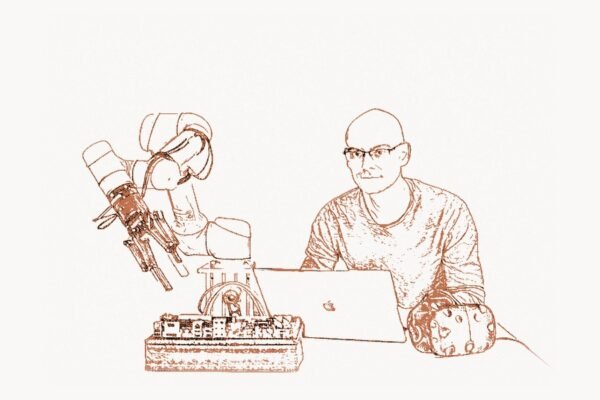
Covariant builds AI that gives industrial robots the ability to see, reason, and manipulate objects they’ve never encountered before. Their Covariant Brain platform enables robotic arms in warehouses and fulfillment centers to handle the enormous variety of items that flow through modern supply chains — something traditional pre-programmed robots simply can’t do.
The core challenge Covariant tackles is called robotic manipulation: teaching machines to pick up, move, and sort physical objects reliably. This sounds simple but is actually one of the hardest problems in AI. A warehouse robot might encounter tens of thousands of different products in different packaging, orientations, and conditions. Covariant’s AI learns to handle this variety through a combination of reinforcement learning and large-scale data from real-world deployments.
Founded by researchers from UC Berkeley’s AI lab, including Pieter Abbeel, one of the most cited robotics researchers in the world, Covariant emerged from years of academic work on robot learning. The company has deployed systems with major logistics and retail companies that process millions of picks in production environments.
Covariant raised over $200 million and developed what they call the Covariant Foundation Model for robotics — essentially a large AI model trained on physical manipulation data. This foundation model approach mirrors what happened in language AI, where large pre-trained models dramatically improved performance. The company aims to do the same for robotics, creating general-purpose manipulation intelligence that transfers across different tasks and environments.