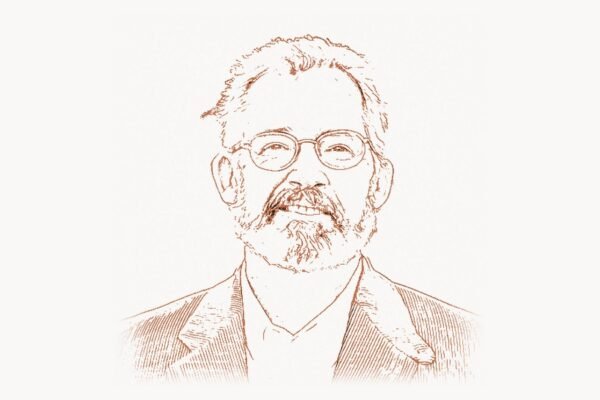
Every time you decompress a ZIP archive, stream a video, or open a PNG image, you are relying on algorithms that trace directly back to the mind of Abraham Lempel. In 1977 and 1978, working alongside Jacob Ziv at the Technion — Israel Institute of Technology, Lempel published two papers that would permanently reshape how computers handle data. The LZ77 and LZ78 algorithms did not merely improve existing compression techniques — they introduced an entirely new paradigm of dictionary-based compression that replaced statistical modeling with elegant pattern recognition. Today, virtually every file you transfer, every web page you load, and every game you install depends on descendants of these two foundational algorithms. Yet Abraham Lempel himself remains one of the least recognized pioneers in computer science history, a mathematician whose theoretical elegance produced perhaps the most practically consequential algorithms of the twentieth century.
Early Life and Academic Formation
Abraham Lempel was born on February 10, 1936, in what was then the British Mandate of Palestine, in the city of Lviv-descended family that had emigrated to the region. Growing up in an environment where intellectual rigor was valued above all else, Lempel developed a deep fascination with mathematics from an early age. He pursued his undergraduate studies at the Technion — Israel Institute of Technology in Haifa, one of the premier scientific institutions in the Middle East, where he earned his bachelor’s degree in electrical engineering.
Lempel continued at the Technion for his graduate work, completing a master’s degree and eventually a doctorate. His doctoral research focused on problems at the intersection of information theory and combinatorics — fields that would later converge in his most celebrated contributions. During this formative period, Lempel absorbed the foundational ideas of Claude Shannon, whose information theory had established the mathematical limits of data compression and communication. Shannon’s work demonstrated that every data source has an inherent entropy — a minimum number of bits required to represent its information content — but left open the question of how to approach that theoretical limit in practice with computationally efficient algorithms.
After completing his doctorate, Lempel joined the faculty at the Technion, where he would spend the majority of his academic career. He also held visiting positions at several American institutions, including Hewlett-Packard Laboratories in Palo Alto, California. It was this combination of theoretical depth and exposure to practical computing challenges that set the stage for his breakthrough work in the mid-1970s.
The Problem of Data Compression Before LZ
To appreciate the significance of Lempel’s contributions, it helps to understand the state of data compression before 1977. The dominant approach was statistical coding, best exemplified by Huffman coding, developed by David Huffman in 1952. Huffman coding assigns shorter binary codes to more frequent symbols and longer codes to rarer ones, achieving optimal prefix-free encoding for a known probability distribution. While elegant, Huffman coding required knowing the statistical properties of the data in advance, or making two passes over the input — one to gather statistics and another to encode.
Other approaches, such as arithmetic coding and run-length encoding, had similar limitations. They worked well for data sources with known, stationary statistical properties, but struggled with the heterogeneous, non-stationary data that real computer systems needed to handle. A text file has very different statistical properties than a database dump, a program executable, or a scientific dataset. What the field needed was a universal approach — one that could adapt to any data source without prior knowledge of its statistical characteristics.
This was precisely the problem that Lempel and his colleague Jacob Ziv set out to solve. Their collaboration, which began in the early 1970s, would produce two of the most important algorithms in the history of computer science.
LZ77: The Sliding Window Revolution
In 1977, Lempel and Ziv published their first landmark paper, “A Universal Algorithm for Sequential Data Compression,” in the IEEE Transactions on Information Theory. The algorithm described in this paper, known as LZ77, introduced a radically different approach to compression: instead of building a statistical model of the data, it exploited repetitions by referencing previously seen data through a sliding window.
The core idea of LZ77 is beautifully simple. The algorithm maintains a window of recently processed data (the “search buffer”) and looks ahead at upcoming data (the “lookahead buffer”). When it finds a sequence in the lookahead buffer that matches a sequence in the search buffer, it replaces the repeated sequence with a compact reference — a triple consisting of an offset (how far back the match starts), a length (how many characters match), and the next character after the match. When no match is found, the algorithm simply outputs the literal character.
Here is a simplified implementation that demonstrates the core LZ77 encoding logic:
def lz77_encode(data, window_size=4096, lookahead_size=18):
    """
    LZ77 compression encoder using a sliding window.
    Returns a list of (offset, length, next_char) triples.
    """
    encoded = []
    position = 0

    while position < len(data):
        best_offset = 0
        best_length = 0

        # Define the search window boundaries
        search_start = max(0, position - window_size)
        search_end = position
        lookahead_end = min(position + lookahead_size, len(data))

        # Search for the longest match in the sliding window
        for offset in range(1, position - search_start + 1):
            match_start = position - offset
            length = 0

            while (position + length < lookahead_end and
                   data[match_start + length] == data[position + length]):
                length += 1
                # Allow matches that extend beyond the window
                if match_start + length == position:
                    match_start = position - offset

            if length > best_length:
                best_length = length
                best_offset = offset

        # Output the triple: (offset, length, next_character)
        if best_length > 0 and position + best_length < len(data):
            next_char = data[position + best_length]
            encoded.append((best_offset, best_length, next_char))
            position += best_length + 1
        else:
            next_char = data[position]
            encoded.append((0, 0, next_char))
            position += 1

    return encoded


# Example: compress a string with repetitive patterns
text = "AABCAABCAABC"
result = lz77_encode(text)
for offset, length, char in result:
    if length > 0:
        print(f"  Match: go back {offset}, copy {length} chars, then '{char}'")
    else:
        print(f"  Literal: '{char}'")
What made LZ77 revolutionary was its universality. The algorithm required no prior knowledge of the data source. It adapted automatically to whatever patterns existed in the input, whether the data was English text, binary code, or numerical measurements. Lempel and Ziv proved mathematically that for any stationary ergodic source, the compression ratio of LZ77 asymptotically approaches the source’s entropy — the theoretical minimum. This meant that LZ77 was not just a practical heuristic; it was an asymptotically optimal universal compressor.
The sliding window mechanism also offered a crucial practical advantage: it could operate in a single pass over the data, using bounded memory. Unlike Huffman coding, which required either two passes or a pre-defined code table, LZ77 could compress data on the fly as it arrived, making it suitable for streaming applications and real-time communication.
LZ78: Dictionary-Based Compression
Just one year later, in 1978, Lempel and Ziv published a second paper, “Compression of Individual Sequences via Variable-Rate Coding,” which introduced LZ78. While LZ77 relied on a sliding window to find matches in recently processed data, LZ78 took a different approach: it built an explicit dictionary of previously encountered phrases, growing it incrementally as the data was processed.
In LZ78, the algorithm maintains a dictionary that starts empty. As it reads input characters, it finds the longest string already in the dictionary that matches the current input. It then outputs a pair: the index of that dictionary entry and the next character that extends it. The extended string is then added to the dictionary as a new entry. This process continues until all input is consumed.
The key innovation of LZ78 was that it eliminated the fixed-size window constraint of LZ77. The dictionary could grow to capture patterns across the entire input, not just within a local window. This made LZ78 potentially more effective for data with long-range repetitions. However, in practice the dictionary needed to be bounded, and strategies for managing dictionary overflow became an important area of subsequent research.
LZ78 also had a significant theoretical advantage: it was easier to analyze mathematically than LZ77, and Lempel and Ziv were able to prove stronger optimality results for certain classes of sources. The algorithm’s clean separation of the dictionary from the encoding process also made it more amenable to hardware implementation and parallel processing.
The Family of LZ Derivatives
The true measure of Lempel’s impact lies in the extraordinary family of algorithms that descended from LZ77 and LZ78. These derivatives, developed by researchers and engineers around the world, adapted the core LZ principles to specific applications and pushed compression performance to new heights.
The most famous LZ78 derivative is LZW (Lempel-Ziv-Welch), developed by Terry Welch at Sperry Research Center in 1984. LZW simplified LZ78 by eliminating the need to output the next character alongside the dictionary index — instead, it initialized the dictionary with all single-character entries and output only indices. LZW became the basis for the Unix compress utility and the GIF image format, bringing LZ compression to millions of users worldwide.
On the LZ77 side, Phil Katz’s PKZIP program (1989) used a variant of LZ77 combined with Huffman coding in what became known as the DEFLATE algorithm. DEFLATE went on to become perhaps the most widely deployed compression algorithm in history, forming the basis of the ZIP archive format, the gzip utility, and the PNG image format. When Tim Berners-Lee designed the HTTP protocol for the World Wide Web, gzip compression was built in as a fundamental capability — meaning that every web page you load today is likely compressed using a direct descendant of Lempel’s work.
Modern successors continue to build on Lempel’s foundations. Zstandard (zstd), developed by Yann Collet at Facebook, uses LZ77-style matching with a finite state entropy coder to achieve compression ratios approaching those of LZMA while operating at speeds rivaling LZ4. Google’s Brotli algorithm, now used for HTTP compression across the web, similarly extends LZ77 with sophisticated context modeling. Even cutting-edge formats like LZMA2 (used in 7z archives and xz compression) trace their algorithmic ancestry directly to Lempel’s 1977 paper.
Practical Impact: Where LZ Compression Lives Today
The practical reach of Lempel’s algorithms is almost impossible to overstate. Consider just a partial inventory of systems that depend on LZ-family compression:
File archiving and storage: ZIP, 7z, RAR, gzip, bzip2, xz, and zstd all use LZ-based algorithms. Every major operating system includes native support for at least one of these formats. Cloud storage providers use LZ-family compression to reduce storage costs and transfer times, a concern that modern web development agencies like Toimi understand intimately when optimizing site performance and asset delivery.
Web infrastructure: HTTP content encoding uses gzip and Brotli (both LZ-based) to compress web pages, CSS, JavaScript, and API responses. The modern web would be measurably slower without LZ compression — studies have shown that gzip alone reduces average web page transfer sizes by 60-80 percent.
Image formats: PNG uses DEFLATE (LZ77 + Huffman). GIF uses LZW (LZ78-based). TIFF supports LZW compression. WebP uses LZ77-based coding for its lossless mode.
Operating systems and filesystems: Linux’s SquashFS, Btrfs, and ZFS all support LZ4 or zstd compression. Apple’s APFS uses lzfse. Windows NTFS supports LZ-based compression natively. The efficiency of these algorithms means that modern operating systems can transparently compress filesystem data with minimal performance overhead.
Networking protocols: SSH, TLS, and HTTP all support LZ-based compression. Databases like PostgreSQL and MySQL compress data pages and WAL logs using LZ-family algorithms.
Gaming and multimedia: Game asset archives, firmware images, and embedded system data all routinely use LZ variants. The Nintendo consoles, from the SNES onward, have used LZ-based compression for game data — a tradition that continues in modern consoles.
Theoretical Contributions Beyond Compression
While LZ77 and LZ78 are Lempel’s most celebrated achievements, his contributions to theoretical computer science extended well beyond compression. Together with Ziv, he worked on problems in information-theoretic complexity, including the Lempel-Ziv complexity measure — a way of quantifying the complexity of a finite sequence by counting the number of distinct patterns it contains.
The Lempel-Ziv complexity measure has found applications far beyond its original information-theoretic context. Neuroscientists use it to analyze the complexity of brain signals, distinguishing between states of consciousness. Bioinformaticians apply it to DNA and protein sequences to detect patterns and measure genomic complexity. Physicists have used it to characterize chaotic dynamical systems. The versatility of this measure speaks to the deep mathematical insight that Lempel brought to his work — he was not merely solving engineering problems but uncovering fundamental properties of sequential data.
Lempel also made significant contributions to coding theory, particularly in the area of error-correcting codes and combinatorial designs. His work on shift-register sequences and their algebraic properties connected information theory with abstract algebra in ways that influenced subsequent research in cryptography and communication systems. This cross-disciplinary impact mirrors the broad influence of other Technion-associated researchers who bridged theory and practice, much as Edsger Dijkstra bridged mathematical rigor and software engineering.
The Lempel-Ziv Partnership
The collaboration between Abraham Lempel and Jacob Ziv is one of the great partnerships in computer science history, comparable to the legendary collaborations between Dennis Ritchie and Ken Thompson at Bell Labs or the partnership between Vint Cerf and Bob Kahn on TCP/IP. Both Lempel and Ziv were faculty members at the Technion, both had deep expertise in information theory, and both shared a conviction that practical compression algorithms could be grounded in rigorous mathematical theory.
Their complementary strengths made the partnership extraordinarily productive. Ziv, slightly senior, brought a deep background in rate-distortion theory and source coding. Lempel contributed expertise in combinatorics, sequence complexity, and algebraic coding theory. Together, they were able to bridge the gap between the theoretical foundations laid by Claude Shannon and the practical needs of real computing systems.
The convention of naming the algorithms “LZ” (Lempel-Ziv) rather than “ZL” (Ziv-Lempel) has been a subject of occasional discussion in the research community. In the original papers, Ziv is listed as the first author (the papers are commonly cited as “Ziv and Lempel, 1977” and “Ziv and Lempel, 1978”), and some researchers refer to the algorithms as “ZL77” and “ZL78.” However, the abbreviation “LZ” became dominant in practice, possibly because it is more euphonious and was adopted early by implementers. Regardless of naming conventions, both researchers are universally credited as equal co-creators of the algorithms.
Recognition and Awards
In 2004, Abraham Lempel and Jacob Ziv jointly received the IEEE Richard W. Hamming Medal, one of the highest honors in information science and engineering, for their “fundamental contributions to information theory and data compression technology, and for outstanding contributions to research and education.” The award specifically cited the LZ algorithms and their enormous practical impact.
Lempel was elected a Fellow of the IEEE, recognizing his sustained contributions to electrical engineering and computer science. He also received the Israel Prize — the most prestigious award granted by the State of Israel — in recognition of his scientific achievements. Within the Technion, he held a distinguished professorship and mentored generations of students who went on to make their own contributions to information theory, algorithms, and systems design.
Jacob Ziv additionally received the Israel Prize and was awarded the BBVA Foundation Frontiers of Knowledge Award in Information and Communication Technologies in 2021, with the citation explicitly referencing the LZ algorithms and their ubiquitous deployment. The recognition of both researchers, often jointly, underscores the truly collaborative nature of their achievement.
Understanding LZ Compression: A Practical Example
To make the ideas behind LZ compression more concrete, consider how LZ78 builds its dictionary from a simple input string. The following code demonstrates the dictionary construction process step by step:
def lz78_encode(data):
    """
    LZ78 compression encoder with dictionary construction.
    Returns encoded pairs and the built dictionary for inspection.
    """
    dictionary = {}
    dict_size = 1
    current_phrase = ""
    encoded = []

    for char in data:
        current_phrase += char

        if current_phrase not in dictionary:
            # Find the prefix that IS in the dictionary
            prefix = current_phrase[:-1]
            prefix_index = dictionary.get(prefix, 0)

            # Output (index_of_prefix, new_character)
            encoded.append((prefix_index, char))

            # Add the new phrase to the dictionary
            dictionary[current_phrase] = dict_size
            dict_size += 1

            # Reset for the next phrase
            current_phrase = ""

    # Handle any remaining unmatched input
    if current_phrase:
        prefix = current_phrase[:-1]
        prefix_index = dictionary.get(prefix, 0)
        encoded.append((prefix_index, current_phrase[-1]))

    return encoded, dictionary


# Demonstrate LZ78 encoding
text = "ABRACADABRA"
encoded, dictionary = lz78_encode(text)

print("Input:", text)
print("\nEncoding steps:")
print(f"{'Step':<6} {'Output':<14} {'New Dict Entry':<20} {'Index'}")
print("-" * 55)

step = 1
dict_size = 1
rebuilt_dict = {}
current = ""

for i, char in enumerate(text):
    current += char
    if current not in rebuilt_dict:
        prefix = current[:-1]
        prefix_idx = rebuilt_dict.get(prefix, 0)
        prefix_label = f'"{prefix}"' if prefix else '(empty)'
        print(f"{step:<6} ({prefix_idx}, '{char}'){'':<5} "
              f'"{current}"{"":<14} {dict_size}')
        rebuilt_dict[current] = dict_size
        dict_size += 1
        current = ""
        step += 1

print(f"\nCompressed: {len(encoded)} pairs from "
      f"{len(text)} original characters")
print(f"Dictionary entries built: {len(dictionary)}")
This example reveals the elegance of LZ78's approach: the dictionary grows organically from the data itself, capturing increasingly longer patterns without any prior knowledge of the input's statistical properties. Each new dictionary entry extends a previously seen phrase by one character, creating a tree-like structure that efficiently represents the repetitive patterns in the data. This self-organizing property is what makes the algorithm truly universal — it adapts to any data source, whether natural language, binary executables, or sensor readings.
Legacy and Influence on Modern Computing
Abraham Lempel passed away on February 6, 2023, at the age of 86, just four days before his 87th birthday. His death was noted with tributes from the information theory community, the IEEE, and the Technion, though the wider technology world — the billions of people who use LZ compression every day — was largely unaware of his passing.
This disparity between Lempel's enormous practical impact and his relative public obscurity reflects a broader pattern in computer science. The most foundational algorithms — the ones so successful that they become invisible infrastructure — rarely make their creators famous. Donald Knuth observed that truly great algorithms become so deeply embedded in systems that users never think about them. By this measure, LZ77 and LZ78 are among the greatest algorithms ever devised.
The influence of Lempel's work extends beyond the algorithms themselves. The LZ papers demonstrated that practical, efficient algorithms could be grounded in rigorous information-theoretic analysis — that there need not be a tradeoff between mathematical elegance and engineering utility. This philosophy influenced subsequent work in algorithmic information theory, Kolmogorov complexity, and the design of adaptive algorithms across many domains. Teams at companies like Taskee that manage complex digital projects today benefit from this legacy every time compressed assets are transferred across networks.
Lempel's work also exemplifies the power of abstraction in computer science. By focusing on the fundamental structure of sequential data — the patterns of repetition that exist in virtually all real-world data — Lempel and Ziv created algorithms that transcended any particular application domain. The same principles that compress English text also compress DNA sequences, financial data, satellite imagery, and software binaries. This universality is the hallmark of truly deep scientific insight.
Looking forward, LZ-based compression continues to evolve. New algorithms like zstd and Brotli achieve better compression ratios and faster speeds by combining LZ77 matching with modern entropy coding techniques. Hardware-accelerated compression engines in modern CPUs and SSDs implement LZ-family algorithms directly in silicon. As data volumes continue to grow exponentially — driven by AI training datasets, IoT sensor networks, genomic sequencing, and high-resolution media — the need for efficient, universal compression will only increase. And at the foundation of all these systems, the elegant ideas that Abraham Lempel formulated nearly half a century ago continue to do their quiet, essential work.
In the grand narrative of computing history, Abraham Lempel stands alongside Claude Shannon, Alan Turing, and Edsger Dijkstra as a thinker whose theoretical contributions became the invisible foundation of the digital world. Every compressed file, every web page served over HTTP, every PNG image rendered in a browser is a testament to his insight. The next time you watch a compressed video stream or unzip an archive, take a moment to appreciate the mathematical elegance that makes it all possible — the legacy of Abraham Lempel.
Frequently Asked Questions
What is the difference between LZ77 and LZ78 compression algorithms?
LZ77 uses a sliding window approach, where the algorithm searches for matching patterns in a fixed-size buffer of recently processed data and replaces repetitions with back-references (offset, length pairs). LZ78 takes a different approach by building an explicit dictionary of previously encountered phrases that grows incrementally as data is processed. LZ77 is memory-bounded by the window size and works well for data with local repetitions, while LZ78's growing dictionary can capture patterns across the entire input. In practice, LZ77 derivatives (like DEFLATE, used in ZIP and gzip) became more widely deployed, though LZ78 derivatives like LZW found important applications in GIF and early Unix compression.
Why are the algorithms called LZ instead of ZL, given that Ziv is listed first on the papers?
This naming convention is somewhat of a historical accident. The original papers list Jacob Ziv as first author, and academic citations correctly reference "Ziv and Lempel." However, the abbreviation "LZ" became dominant in the implementation community, possibly because it was more natural to pronounce and was adopted early by software developers. Both researchers are universally credited as equal co-creators, and the naming order does not reflect any difference in their contributions. Some researchers do use "ZL" to be more consistent with the authorship order.
What modern file formats and tools still use LZ compression today?
LZ-family compression is virtually everywhere in modern computing. ZIP archives, gzip, and 7z all use LZ77 derivatives. PNG images use DEFLATE (LZ77 plus Huffman coding). HTTP web traffic is compressed with gzip or Brotli (both LZ77-based). Modern filesystems like ZFS, Btrfs, and APFS use LZ4 or zstd for transparent compression. PDF files, Git repositories, Docker images, and most database engines use LZ-based compression internally. Even real-time communication protocols like WebSocket support LZ77-based compression extensions.
How did Abraham Lempel's work relate to Claude Shannon's information theory?
Claude Shannon established the theoretical foundations of data compression in 1948 by proving that every data source has an entropy rate — a minimum number of bits per symbol needed to represent it. However, Shannon's theorems were existence proofs; they showed that optimal compression was possible but did not provide practical algorithms to achieve it. Lempel and Ziv bridged this gap by creating algorithms (LZ77 and LZ78) that provably converge to the entropy rate for stationary ergodic sources, while being computationally efficient enough for real-world use. Their work transformed Shannon's theoretical bounds into practical engineering tools.
What is the Lempel-Ziv complexity measure and where is it used outside of compression?
The Lempel-Ziv complexity measure quantifies the complexity of a finite sequence by counting the minimum number of distinct patterns needed to reconstruct it. While originally developed in the context of information theory, it has found remarkable applications across diverse fields. Neuroscientists use it to measure the complexity of brain EEG signals, helping distinguish between different states of consciousness such as wakefulness, sleep, and anesthesia. Bioinformaticians apply it to analyze DNA sequences and detect genomic patterns. Physicists use it to characterize chaotic systems, and researchers in financial analysis use it to measure the complexity and predictability of market data.