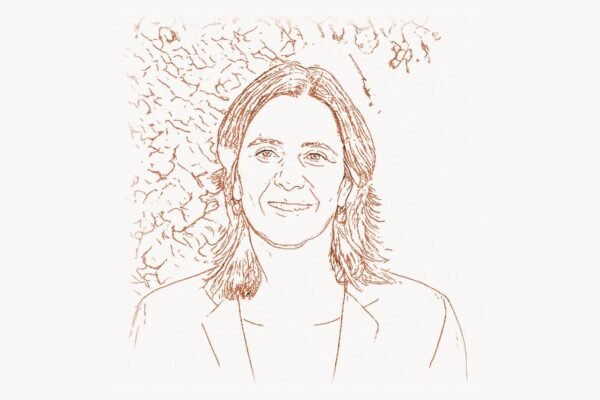
In October 1842, an Italian mathematician named Luigi Menabrea published a paper in French describing Charles Babbage’s proposed Analytical Engine — a mechanical general-purpose computer that Babbage had been designing since 1837. At the request of Charles Wheatstone, a young English mathematician named Augusta Ada King, Countess of Lovelace, translated the paper into English. But she did far more than translate. Ada Lovelace appended a set of notes to the translation that were more than twice the length of the original paper. Those notes, published in 1843, contained what is now recognized as the first computer program ever written — a detailed algorithm for the Analytical Engine to compute Bernoulli numbers. More remarkably, the notes contained a vision of computing that went far beyond anything Babbage himself had imagined. While Babbage saw his Engine as a calculator — a machine for crunching numbers — Lovelace saw that it could manipulate any symbols, not just numbers. She speculated that the Engine could compose music, produce graphics, and perform operations of any kind, provided they could be expressed in terms the machine could process. This insight — that a general-purpose computing machine could work with any form of information, not just arithmetic — is the foundational concept of modern computer science. It anticipated Alan Turing’s universal machine by nearly a century. Lovelace was 27 years old when she published these notes, and she would die just nine years later at age 36. In that brief life, she produced the intellectual framework for the entire digital age.
Early Life and Path to Technology
Augusta Ada Byron was born on December 10, 1815, in London, England. She was the only legitimate child of the poet George Gordon Byron, 6th Baron Byron (Lord Byron), and Anne Isabella Milbanke, Baroness Wentworth. Her parents’ marriage was brief and disastrous: Byron left England when Ada was just five weeks old, and she never met her father again. He died in Greece in 1824, when Ada was eight.
Ada’s mother, Lady Byron, was herself mathematically educated — Byron had called her “the Princess of Parallelograms” — and she was determined that Ada would not inherit her father’s volatile, poetic temperament. She insisted on a rigorous education in mathematics, science, and logic, hoping these disciplines would serve as a counterweight to any inherited Byronic tendencies. Ada was tutored by some of the leading intellectuals of the day, including William Frend (a social reformer and mathematician), William King (her future husband’s family physician and tutor), Mary Somerville (one of the most prominent scientists in Europe), and Augustus De Morgan (the mathematician who formalized De Morgan’s laws, now fundamental to Boolean algebra and digital logic).
The combination of rigorous mathematical training and imaginative intelligence made Lovelace unusual among the scholars of her era. She called her approach “poetical science” — the application of imagination and metaphor to mathematical and scientific thinking. This fusion of artistic and analytical sensibilities is precisely what enabled her to see possibilities in Babbage’s machine that Babbage himself missed.
On June 5, 1833, at the age of 17, Ada attended a dinner party where she met Charles Babbage, then 41, who was the Lucasian Professor of Mathematics at Cambridge (the same chair once held by Isaac Newton and later by Stephen Hawking). Babbage showed her a small working section of his Difference Engine — a mechanical calculator designed to compute polynomial functions — and Ada was captivated. A friendship and intellectual collaboration began that would produce the most important document in the prehistory of computing.
The Breakthrough: Note G and the First Algorithm
The Technical Innovation
Babbage’s Analytical Engine, which he designed between 1837 and 1840 (and which was never completed during his lifetime), was a remarkable machine. It had a “Store” (memory) that could hold 1,000 numbers of 50 decimal digits each. It had a “Mill” (processing unit) that could perform addition, subtraction, multiplication, and division. It could read instructions from punched cards (borrowed from the Jacquard loom, which used punched cards to control weaving patterns). And critically, it supported conditional branching — the ability to execute different instructions depending on the result of a calculation — and looping, the ability to repeat a sequence of instructions.
In her translation notes, Lovelace described a detailed algorithm — what she called a “diagram” — for computing Bernoulli numbers using the Analytical Engine. Bernoulli numbers are a sequence of rational numbers with deep connections to number theory, and computing them requires iteration, variable storage, and arithmetic operations. Lovelace’s algorithm specified the exact sequence of operations the Engine would perform, the allocation of variables to memory locations, and the management of intermediate results. It was, in every meaningful sense, a computer program.
# Ada Lovelace's algorithm for Bernoulli numbers (1843)
# Translated into modern Python
# This is a faithful implementation of the logic in Note G

# Lovelace computed Bernoulli numbers using this recursive approach
# She specified each operation, each variable, each loop iteration
# for Babbage's Analytical Engine

from fractions import Fraction

def bernoulli_lovelace(n):
    """
    Compute the nth Bernoulli number.
    Ada Lovelace's Note G algorithm, modernized.

    She used the recurrence relation:
    B(0) = 1
    Sum from k=0 to n of C(n+1, k) * B(k) = 0

    Lovelace mapped each variable to a specific
    column in the Analytical Engine's Store (memory):
    V1, V2, V3... for coefficients
    V4, V5, V6... for intermediate results
    """
    B = [Fraction(0)] * (n + 1)
    B[0] = Fraction(1)

    for m in range(1, n + 1):
        # This loop corresponds to Lovelace's "Operation cards"
        # She specified exactly which cards to use and in what order
        s = Fraction(0)
        for k in range(m):
            # Binomial coefficient C(m+1, k)
            coeff = Fraction(1)
            for i in range(k):
                coeff = coeff * Fraction(m + 1 - i, i + 1)
            s += coeff * B[k]
        B[m] = -s / Fraction(m + 1)

    return B[n]

# First several Bernoulli numbers — what Lovelace computed:
# B(0) = 1, B(1) = -1/2, B(2) = 1/6, B(4) = -1/30
# B(6) = 1/42, B(8) = -1/30

for i in range(9):
    result = bernoulli_lovelace(i)
    if result != 0:
        print(f"B({i}) = {result}")
But the algorithm in Note G, while historically important, was not Lovelace’s most significant contribution. Her deepest insight was conceptual. In Note A, she wrote about the Analytical Engine’s ability to operate on things other than numbers. She recognized that the machine could manipulate any objects “whose mutual fundamental relations could be expressed by those of the abstract science of operations.” In other words, any domain that could be formalized — music, logic, language, relationships between symbols — could potentially be processed by the Engine.
She also identified the critical distinction between what the Engine could and could not do. In a passage that anticipates debates about artificial intelligence by over a century, she wrote that the Engine “has no pretensions whatever to originate anything. It can do whatever we know how to order it to perform.” This statement — sometimes called “Lady Lovelace’s Objection” — was directly addressed by Alan Turing in his 1950 paper on machine intelligence. The question of whether machines can “originate” anything, or merely execute instructions, remains central to AI philosophy today.
Why It Mattered
Lovelace’s notes were published as part of “Sketch of the Analytical Engine” in Taylor’s Scientific Memoirs, Vol. 3, in 1843. They were signed only with her initials, “A.A.L.” — a common practice for women publishing scientific work in the Victorian era. The notes received limited attention at the time, partly because the Analytical Engine was never built and partly because the computing concepts they described were simply too far ahead of their time to be widely understood.
The notes were rediscovered in the 20th century as the history of computing was being written. B.V. Bowden republished them in 1953 in Faster Than Thought, an early history of computing. Alan Turing referenced Lovelace’s objection about machine originality in his 1950 paper. As historians of computing studied the Analytical Engine in detail, they recognized that Lovelace’s Note G contained a genuine algorithm — not just a mathematical formula, but a step-by-step procedure specifying operations, sequencing, variables, and iteration. This makes it the first computer program, predating the first actual computer by approximately a century.
Lovelace’s conceptual insight — that a general-purpose computing machine could manipulate symbols of any kind, not just numbers — is arguably more important than the specific algorithm. This insight is the foundation of the stored-program computer concept, of programming languages, of software as an independent discipline. When a JavaScript program manipulates strings, when a Python script processes images, when a database engine performs relational operations on abstract data — these are all realizations of the vision Lovelace articulated in 1843.
Beyond Note G: Other Contributions
Lovelace’s notes contain several other insights that were ahead of their time. In Note B, she described how the Analytical Engine could use punched cards for programming, making an explicit analogy to the Jacquard loom: “The Analytical Engine weaves algebraical patterns just as the Jacquard loom weaves flowers and leaves.” This metaphor — the computer as a loom weaving patterns of information — captures the essence of programmable computing with remarkable elegance.
She discussed the concept of what we now call subroutines — reusable sequences of operations that could be invoked from different parts of a program. She recognized that the same set of operation cards could be reused for different calculations, anticipating the modern concept of functions and procedures that are fundamental to all programming frameworks.
Lovelace also explored the idea of using the Engine for scientific modeling and simulation. She suggested that the machine could be used to model physical phenomena, provided the underlying mathematics was understood — an anticipation of computational science and simulation that did not become practical until the development of electronic computers in the 1940s and 1950s.
Her correspondence with Babbage (portions of which survive) reveals a collaborative relationship in which Lovelace frequently pushed Babbage to think more broadly about his machine’s capabilities. She was not merely a translator or documentarian; she was an intellectual partner who brought a unique perspective to the project. Her mathematical training, combined with her imaginative “poetical science” approach, allowed her to see implications that Babbage’s more mechanically oriented mind did not grasp.
Beyond her work with Babbage, Lovelace was interested in a wide range of scientific topics. She studied electrical science, animal magnetism, and the relationship between mathematics and music. She maintained correspondence with leading scientists of her era, including Michael Faraday and Charles Wheatstone. She was also a keen amateur musician, and her interest in the mathematical structure of music informed her speculation that the Analytical Engine could compose music.
Philosophy and Engineering Approach
Key Principles
Lovelace’s intellectual approach was characterized by what she called “poetical science” — the application of imagination and intuition to rigorous mathematical analysis. She believed that mathematics was not merely a tool for calculation but a language for expressing fundamental truths about the world. This perspective allowed her to see the Analytical Engine not as a fancy calculator but as a universal symbol-manipulating machine.
She was also deeply concerned with the question of what machines could and could not do. Her observation that the Engine could only do what it was instructed to do — that it could not “originate” anything — shows a sophisticated understanding of the distinction between mechanical execution and creative intelligence. This distinction remains at the heart of debates about artificial intelligence, and Lovelace’s formulation of it has been discussed by virtually every major figure in AI research, from Turing to Marvin Minsky to modern researchers working on large language models.
Lovelace’s approach to documentation was meticulous. Her notes are not vague descriptions — they are precise specifications. The Bernoulli number algorithm specifies exact operations, exact variable assignments, exact sequencing. She developed a tabular notation for describing the algorithm’s execution that is remarkably similar to a modern trace table or debugger output. This precision — the insistence on specifying exactly what the machine should do at each step — is the essence of programming.
/* Lovelace's variable tracking — her tabular notation modernized */
/* She tracked each variable's value at each step of execution */
/* This is essentially a debugger trace from 1843 */

/* Her notation for the Bernoulli algorithm tracked: */
/* - Which operation card was active (instruction pointer) */
/* - Which variables were being read/written (register allocation) */
/* - The intermediate values at each step (state tracking) */

/* Modern equivalent of her approach: */
struct AnalyticalEngineState {
    int operation_card;        /* Current instruction (program counter) */
    double store[1000];        /* The Store: 1000 variables, 50 digits each */
    double mill_input_1;       /* First operand in the Mill (ALU) */
    double mill_input_2;       /* Second operand */
    double mill_output;        /* Result of operation */
    char   operation;          /* +, -, *, / */
};

/* Lovelace specified a complete trace of this state
   for the Bernoulli computation — showing the machine's
   behavior at every single step.

   This level of specification goes beyond mathematics;
   it is genuine computer programming, a century before
   electronic computers existed. */
Her interdisciplinary thinking was unusual for her era and remains relevant today. She drew connections between mathematics, music, logic, and mechanical engineering that few of her contemporaries could see. This capacity for cross-domain thinking — seeing how ideas from one field could illuminate problems in another — is increasingly recognized as essential for innovation in computing, from bioinformatics to computational design to machine learning.
Legacy and Modern Relevance
Ada Lovelace died on November 27, 1852, at the age of 36, from uterine cancer — the same age at which her father had died. She had been ill for several years and suffered greatly in her final months. She was buried, at her request, next to her father at the Church of St. Mary Magdalene in Hucknall, Nottinghamshire — beside the father she had never known.
Her recognition as a computing pioneer grew throughout the 20th century. In 1979, the U.S. Department of Defense named its new programming language “Ada” in her honor. Ada (the language) was designed for large-scale, safety-critical systems — military, aerospace, air traffic control — and its emphasis on reliability and formal specification echoes Lovelace’s meticulous approach. Ada is still in active use: it powers the Boeing 777 flight control system, the Airbus A380, the Paris Metro signaling system, and numerous military systems worldwide.
In 2009, journalist Suw Charman-Anderson founded Ada Lovelace Day, celebrated annually on the second Tuesday of October, to recognize the achievements of women in science, technology, engineering, and mathematics (STEM). The day has grown into an international celebration with events at universities, tech companies, and cultural institutions worldwide.
Lovelace has appeared on a British Royal Mail stamp (2015), a Microsoft Bing logo (2012), and Google Doodle (2012). The British Computer Society awards the Lovelace Medal annually for outstanding contributions to the understanding or advancement of computing. The Ada Lovelace Institute (founded 2018 in London) researches the ethical implications of AI and data, connecting Lovelace’s legacy to contemporary questions about machine intelligence and society.
The debate about the extent of Lovelace’s contribution continues among historians. Some argue that Babbage himself developed the Bernoulli number algorithm and that Lovelace merely documented it. Others point to correspondence in which Babbage acknowledged Lovelace’s intellectual contributions and to the notes themselves, which contain insights (particularly about the Engine’s potential for non-numerical applications) that appear nowhere in Babbage’s own writings. The scholarly consensus, supported by detailed analysis of the correspondence and manuscripts, is that while Babbage provided the mathematical foundation, Lovelace independently developed the algorithm’s specific implementation for the Engine and, more importantly, articulated the conceptual vision of general-purpose computing that went well beyond Babbage’s own understanding.
What is beyond dispute is the historical significance of her work. The notes of 1843 contain the first published algorithm designed for a general-purpose computing machine, the first articulation of the idea that computers could process any kind of information (not just numbers), the first discussion of machine limitations that anticipated AI debates by a century, and a vision of computing’s possibilities that took over 100 years to realize. Every programmer, every operating system, every web application, every line of code written today exists within the conceptual framework that Ada Lovelace described in 1843.
Key Facts
- Born: December 10, 1815, London, England
- Died: November 27, 1852, London, England (aged 36)
- Known for: Writing the first computer program, articulating the concept of general-purpose computing
- Key projects: Notes on the Analytical Engine (1843), including Note G (Bernoulli number algorithm)
- Recognition: Ada programming language named in her honor (1979), Ada Lovelace Day (annual since 2009), BCS Lovelace Medal
- Education: Private tutoring by Augustus De Morgan, Mary Somerville, and other leading mathematicians and scientists
- Family: Daughter of Lord Byron (poet) and Anne Isabella Milbanke; married William King, 1st Earl of Lovelace, in 1835
Frequently Asked Questions
Who is Ada Lovelace?
Augusta Ada King, Countess of Lovelace (1815–1852), born Ada Byron, was an English mathematician and writer who is recognized as the first computer programmer in history. She wrote extensive notes on Charles Babbage’s proposed Analytical Engine, including a detailed algorithm (Note G) for computing Bernoulli numbers — the first algorithm designed for implementation on a general-purpose computing machine. She was also the first person to recognize that a computer could be used for purposes beyond pure calculation.
What did Ada Lovelace create?
Lovelace created the first computer program: a step-by-step algorithm for computing Bernoulli numbers on Charles Babbage’s Analytical Engine, published in 1843. She also articulated the conceptual framework for general-purpose computing — the idea that a programmable machine could manipulate any symbols (not just numbers), including music, language, and logic. She developed a tabular notation for tracking program execution that anticipated modern debugging tools. The Ada programming language (1979), used in safety-critical systems worldwide, was named in her honor.
Why is Ada Lovelace important?
Lovelace is important because she wrote the first computer program nearly a century before electronic computers existed, and more significantly, she was the first person to articulate the concept of general-purpose computing. Her insight that Babbage’s machine could process any kind of information — not just numbers — is the foundational idea of modern computer science. Her discussion of machine limitations (that machines cannot “originate” anything) framed a debate about artificial intelligence that continues today. She demonstrated that computing, from its very inception, was as much about vision and conceptual thinking as about engineering and mathematics.