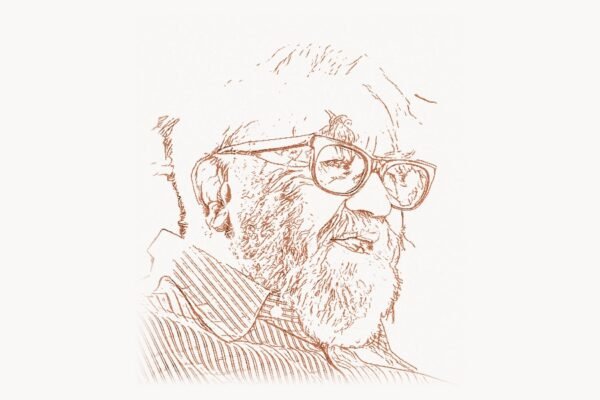
When Amazon Web Services needed a leader who could bridge the gap between Silicon Valley innovation and Fortune 500 boardrooms, they turned to Adam Selipsky — a seasoned executive who had already helped build AWS from a startup experiment into the world’s dominant cloud platform, then proved he could do it again at Tableau. His return to AWS in 2021 as CEO marked a pivotal moment in cloud computing history: the transition from infrastructure disruption to enterprise transformation. Under Selipsky’s leadership, AWS deepened its focus on industry-specific solutions, generative AI services, and the kind of white-glove enterprise engagement that turned skeptical CIOs into cloud evangelists.
Early Life and Education
Adam Selipsky grew up in the United States with an early appreciation for both technology and business strategy. He attended Harvard College, where he earned his Bachelor of Arts degree, developing the analytical thinking and communication skills that would later define his leadership style. After completing his undergraduate studies, Selipsky pursued an MBA at Harvard Business School, graduating with distinction. This dual Harvard education gave him a rare combination of liberal arts breadth and business acumen — a profile that would prove invaluable in an industry often dominated by pure technologists.
Before entering the technology sector, Selipsky spent several years at the management consulting firm McKinsey & Company. There, he worked with large enterprises on strategy engagements, gaining firsthand exposure to how Fortune 500 companies evaluated technology investments, managed organizational change, and approached digital transformation. This consulting background became a secret weapon: while many tech leaders understood servers and APIs, Selipsky understood procurement cycles, board-level risk calculations, and the politics of enterprise IT decisions.
Career and Technical Contributions
Selipsky’s career trajectory reads like a masterclass in enterprise cloud strategy. He joined Amazon in 2005, just as Jeff Bezos was preparing to launch what would become the most consequential platform shift since the personal computer. As one of the earliest members of the AWS team, Selipsky helped shape the go-to-market strategy for services like Amazon S3 and Amazon EC2 — the building blocks that would eventually underpin millions of businesses worldwide.
Technical Innovation
During his first stint at AWS (2005–2016), Selipsky served as Vice President of Sales, Marketing, and Support. While his role was not that of a systems architect, his contributions were deeply technical in their impact. He was instrumental in translating AWS’s technical capabilities into enterprise-ready propositions. Under his leadership, AWS developed its enterprise support tiers, compliance certifications, and the kind of service-level agreements that made risk-averse CIOs comfortable migrating mission-critical workloads to the cloud.
One of Selipsky’s key innovations was recognizing that enterprise adoption required more than just raw compute power — it required an ecosystem. He championed the AWS Partner Network (APN), which grew to include tens of thousands of consulting firms and technology partners. This ecosystem approach transformed AWS from a technology vendor into a platform that enterprises could build entire digital strategies around. Consider a typical enterprise cloud migration architecture that Selipsky’s team helped standardize:
# AWS Enterprise Migration Architecture — Landing Zone Pattern
# This CloudFormation pattern reflects the multi-account strategy
# that Selipsky's team championed for enterprise customers

AWSTemplateFormatVersion: '2010-09-09'
Description: Enterprise Landing Zone — Core Account Structure

Resources:
  OrganizationRoot:
    Type: AWS::Organizations::Organization
    Properties:
      FeatureSet: ALL

  SecurityOU:
    Type: AWS::Organizations::OrganizationalUnit
    Properties:
      Name: Security
      ParentId: !GetAtt OrganizationRoot.RootId

  ProductionOU:
    Type: AWS::Organizations::OrganizationalUnit
    Properties:
      Name: Production
      ParentId: !GetAtt OrganizationRoot.RootId

  StagingOU:
    Type: AWS::Organizations::OrganizationalUnit
    Properties:
      Name: Staging
      ParentId: !GetAtt OrganizationRoot.RootId

  SharedServicesOU:
    Type: AWS::Organizations::OrganizationalUnit
    Properties:
      Name: SharedServices
      ParentId: !GetAtt OrganizationRoot.RootId

  # Service Control Policy — restrict regions for compliance
  RegionRestrictionSCP:
    Type: AWS::Organizations::Policy
    Properties:
      Name: RestrictToApprovedRegions
      Description: Limits workloads to approved AWS regions
      Type: SERVICE_CONTROL_POLICY
      Content:
        Version: '2012-10-17'
        Statement:
          - Sid: DenyUnapprovedRegions
            Effect: Deny
            Action: '*'
            Resource: '*'
            Condition:
              StringNotEquals:
                'aws:RequestedRegion':
                  - us-east-1
                  - us-west-2
                  - eu-west-1
                  - eu-central-1
This multi-account landing zone pattern became the standard playbook for enterprises migrating to AWS, reflecting the governance and compliance frameworks that Selipsky recognized as essential for large-scale adoption. His insight was that enterprise cloud was not a technology problem — it was a trust problem.
After leaving AWS in 2016, Selipsky took the CEO role at Tableau Software, the data visualization company. At Tableau, he oversaw the company’s transition from a desktop-first product to a cloud-native analytics platform. He led the launch of Tableau Online (later Tableau Cloud), expanded the company’s enterprise customer base, and navigated its $15.7 billion acquisition by Salesforce in 2019. This experience deepened his understanding of how enterprises consume data services — knowledge that proved directly relevant when he returned to AWS.
Selipsky returned to AWS as CEO in July 2021, succeeding Andy Jassy (who moved up to lead all of Amazon). His return coincided with a critical inflection point: the rise of generative AI. Under Selipsky’s leadership, AWS launched Amazon Bedrock, a managed service for building generative AI applications with foundation models from providers like Anthropic, AI21 Labs, and Stability AI. He also oversaw the expansion of AWS’s custom silicon program, including the Trainium and Inferentia chips designed to reduce the cost of AI training and inference.
Why It Mattered
Selipsky’s enterprise-first approach fundamentally changed how the cloud industry operated. Before his work at AWS, cloud computing was largely perceived as a tool for startups and web-native companies. The idea that a global bank, a government agency, or a healthcare system would run critical workloads on shared infrastructure seemed far-fetched. Selipsky and his team systematically dismantled those objections.
The AWS Partner Network alone generated hundreds of billions of dollars in economic activity, creating an ecosystem that rivals the impact of platforms like Windows or iOS. By making enterprise adoption feasible, Selipsky accelerated the broader cloud transition by years. Today, more than 90% of Fortune 500 companies use AWS — a statistic that traces directly to the enterprise strategy he helped architect. For teams evaluating modern project management solutions, this kind of enterprise-grade cloud infrastructure is what makes scalable SaaS products possible in the first place.
Other Notable Contributions
Beyond his core AWS and Tableau work, Selipsky has contributed to the broader technology ecosystem in several ways. He has been a prominent advocate for cloud sustainability, pushing AWS to meet its goal of powering operations with 100% renewable energy. Under his leadership, AWS expanded its Climate Pledge commitments and invested in sustainable data center design, including custom cooling systems and water recycling programs.
Selipsky also championed AWS’s industry-specific cloud initiatives. Recognizing that healthcare, financial services, and government agencies have unique regulatory requirements, he oversaw the launch of specialized cloud offerings tailored to these sectors. AWS HealthLake, AWS GovCloud expansions, and financial services compliance frameworks all reflect his belief that cloud computing must adapt to industry realities rather than forcing industries to adapt to cloud conventions.
His advocacy for AI democratization has also been significant. Rather than positioning AWS as a builder of proprietary foundation models (as competitors like Google and Microsoft did), Selipsky articulated a “model-agnostic” strategy — giving customers the freedom to choose from multiple AI providers through services like Bedrock. This approach resonated with enterprises wary of vendor lock-in and established AWS as the neutral platform for generative AI deployment. Here is an example of how straightforward it became to invoke foundation models through Bedrock under this strategy:
import boto3
import json

# AWS Bedrock — Invoking a foundation model
# This pattern reflects the model-agnostic approach Selipsky championed:
# one API, multiple providers, enterprise-grade security

bedrock_runtime = boto3.client(
    service_name='bedrock-runtime',
    region_name='us-east-1'
)

def generate_enterprise_summary(document_text: str) -> str:
    """
    Generate a business summary using a foundation model via Bedrock.
    The same API pattern works across Claude, Titan, Llama, and others —
    exactly the vendor flexibility Selipsky positioned as AWS's advantage.
    """
    payload = {
        "anthropic_version": "bedrock-2023-05-31",
        "max_tokens": 1024,
        "temperature": 0.3,
        "messages": [
            {
                "role": "user",
                "content": f"Summarize the following enterprise document "
                           f"in 3 key bullet points:\n\n{document_text}"
            }
        ]
    }

    response = bedrock_runtime.invoke_model(
        modelId='anthropic.claude-3-sonnet-20240229-v1:0',
        contentType='application/json',
        accept='application/json',
        body=json.dumps(payload)
    )

    result = json.loads(response['body'].read())
    return result['content'][0]['text']


# Example: processing a quarterly earnings transcript
transcript = """
Q3 revenue increased 12% year-over-year to $23.1 billion,
driven primarily by growth in compute and database services.
Enterprise migration commitments grew 35% as organizations
accelerated their digital transformation initiatives...
"""

summary = generate_enterprise_summary(transcript)
print(summary)
This single, unified API approach — where enterprises could switch between AI providers without rewriting their applications — became a powerful differentiator for AWS in the generative AI race. It reflected Selipsky’s long-standing belief that the platform wins by empowering choice, not restricting it.
Philosophy and Key Principles
Selipsky’s leadership philosophy centers on a few core principles that set him apart in the tech industry. First, he believes deeply in customer obsession over competitor obsession — an Amazon cultural tenet that he has applied with particular rigor. Rather than chasing competitor announcements, he has consistently directed AWS to focus on solving specific customer pain points, even when those solutions are not headline-grabbing.
Second, Selipsky champions what he calls “meeting customers where they are.” This means recognizing that enterprise cloud adoption is not a binary switch but a multi-year journey. His approach to hybrid cloud — through services like AWS Outposts and Local Zones — reflects an understanding that many enterprises need to operate across on-premises and cloud environments simultaneously. This pragmatism contrasts with the “cloud-only” rhetoric that dominated the industry for years.
Third, he is a strong advocate for the power of ecosystem thinking. From the AWS Partner Network to the Bedrock marketplace of AI models, Selipsky consistently builds platforms that attract third-party participation. His philosophy echoes the insights of other ecosystem builders like Larry Ellison, who recognized that enterprise platforms succeed when they become indispensable to an entire industry, not just individual customers.
Finally, Selipsky emphasizes long-term thinking in a short-term industry. AWS’s investments in custom silicon (Graviton, Trainium, Inferentia), sustainability infrastructure, and multi-year enterprise deals all reflect a willingness to sacrifice short-term margins for long-term strategic advantage. For organizations managing complex projects across distributed teams, modern task management platforms embody similar principles — building flexible, long-term infrastructure rather than quick fixes.
Legacy and Impact
Adam Selipsky’s legacy in cloud computing is defined by a deceptively simple insight: technology adoption at enterprise scale is fundamentally a human problem, not a technical one. While Werner Vogels architected the distributed systems that made AWS possible, Selipsky built the organizational, commercial, and strategic frameworks that made AWS accessible to the world’s largest and most cautious organizations.
Under his combined tenures, AWS grew from a small team selling basic compute and storage to a $100 billion annual revenue business with over 200 fully featured services. The enterprise migration playbooks his team developed became industry standards, adopted not just by AWS customers but by the broader cloud ecosystem. His emphasis on compliance, governance, and multi-account architecture influenced how every major cloud provider — including Microsoft Azure and Google Cloud — approached enterprise sales.
His tenure at Tableau added another dimension to his legacy. By successfully transitioning Tableau from desktop to cloud and steering its acquisition by Salesforce, Selipsky demonstrated that enterprise software transformation was possible without destroying the product culture that made a company special. This experience informed his approach at AWS, where he balanced rapid innovation with the stability that enterprise customers demand.
The generative AI chapter of Selipsky’s AWS tenure may prove to be his most significant. By positioning AWS as a model-agnostic platform rather than a model provider, he made a strategic bet that the value in AI would accrue to the platform layer — the infrastructure, security, and governance services that enterprises need to deploy AI responsibly. This mirrors the early AWS playbook: rather than competing with customers, build the platform that makes everyone else more successful.
Selipsky’s influence extends beyond any single company. He helped establish the template for enterprise cloud leadership — a role that requires equal fluency in distributed systems architecture, corporate strategy, regulatory compliance, and ecosystem management. Leaders like Mark Russinovich at Azure and Matei Zaharia at Databricks have operated in a cloud landscape that Selipsky helped shape. The enterprise cloud market that exists today — worth over $600 billion annually — owes much of its structure and scale to the playbooks he wrote.
Key Facts
| Category | Details |
|---|---|
| Full Name | Adam Selipsky |
| Education | BA, Harvard College; MBA, Harvard Business School |
| Known For | CEO of AWS, former CEO of Tableau Software |
| Early Career | Management Consultant at McKinsey & Company |
| AWS First Tenure | 2005–2016 (VP of Sales, Marketing, and Support) |
| Tableau CEO | 2016–2021 (oversaw Salesforce acquisition at $15.7B) |
| AWS CEO | 2021–present (succeeded Andy Jassy) |
| Key AWS Initiatives | Amazon Bedrock, AWS Partner Network, custom silicon (Graviton, Trainium), industry clouds |
| AWS Revenue (2024) | Over $100 billion annually |
| Leadership Philosophy | Customer obsession, ecosystem thinking, long-term investment |
Frequently Asked Questions
What did Adam Selipsky do before becoming CEO of AWS?
Before returning to AWS as CEO in 2021, Selipsky served as CEO of Tableau Software from 2016 to 2021, where he oversaw the company’s transition to cloud-native analytics and its $15.7 billion acquisition by Salesforce. Prior to that, he spent eleven years at AWS (2005–2016) as Vice President of Sales, Marketing, and Support, where he helped build the enterprise go-to-market strategy from the ground up. His career began at McKinsey & Company, where he worked on strategy engagements for large enterprises — experience that proved critical for understanding how Fortune 500 companies evaluate cloud adoption.
How has AWS changed under Adam Selipsky’s leadership?
Under Selipsky’s leadership, AWS has deepened its enterprise focus in several key areas. The most notable shift has been the rapid buildout of generative AI services, particularly Amazon Bedrock, which offers enterprises access to multiple foundation models through a single API. He has also expanded AWS’s custom silicon program with chips like Trainium2 and Graviton4, aimed at reducing costs for AI and general-purpose workloads. Additionally, Selipsky has pushed AWS deeper into industry-specific cloud solutions for healthcare, financial services, and government — sectors where regulatory compliance requirements demand specialized infrastructure and tooling.
What is Amazon Bedrock and why is it significant?
Amazon Bedrock is a fully managed AWS service that allows enterprises to build generative AI applications using foundation models from multiple providers, including Anthropic, Meta, Mistral AI, and Amazon’s own Titan models. Its significance lies in the model-agnostic approach: rather than locking customers into a single AI provider, Bedrock lets organizations experiment with and deploy different models through a unified API. This reflects Selipsky’s broader philosophy of platform neutrality — the same approach that made AWS successful in compute and storage is now being applied to the AI layer. For enterprises concerned about vendor lock-in, Bedrock offers flexibility while maintaining AWS’s enterprise-grade security and compliance controls.
How did Selipsky’s experience at Tableau influence his AWS leadership?
Selipsky’s five years as Tableau CEO gave him direct experience with the challenges of transitioning a successful on-premises product to a cloud-native model — precisely the journey many AWS enterprise customers are undertaking. At Tableau, he learned how to manage the cultural tension between product innovation and enterprise stability, how to maintain developer community enthusiasm during platform transitions, and how to execute a major acquisition without losing product identity. These lessons informed his approach at AWS, where he has balanced aggressive innovation in areas like generative AI with the reliability and backward compatibility that enterprise customers require. His Tableau experience also deepened his understanding of the data analytics layer — a perspective that has shaped AWS’s strategy around data services like Redshift, Athena, and QuickSight.