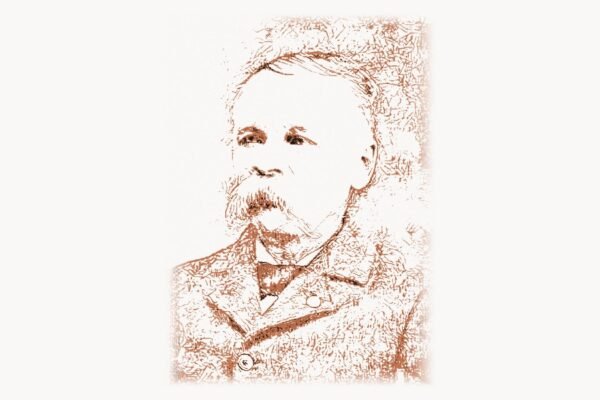
In the early 2010s, when most enterprises still treated their data centers like fortresses, one architect was quietly dismantling the monolith at the world’s largest streaming platform. Adrian Cockcroft didn’t just migrate Netflix to the cloud — he rewrote the playbook on how internet-scale systems should be built, deployed, and operated. His advocacy for microservices, open-source tooling, and cloud-native architecture became a blueprint that reshaped the entire software industry. From Sun Microsystems research labs to the executive suites of AWS, Cockcroft’s career traces the evolution of distributed computing itself.
Early Life and Education
Adrian Cockcroft was born and raised in the United Kingdom, where he developed an early fascination with computing during the era when personal computers were just beginning to enter households. He studied applied physics at the City University London (now City, University of London), graduating with a degree that combined theoretical rigor with practical engineering — a combination that would define his entire career approach. His physics background gave him a deep appreciation for systems thinking: understanding how individual components interact to produce emergent behaviors, a perspective that would later inform his architecture philosophy at massive scale.
During his university years, Cockcroft was drawn to the intersection of hardware and software, particularly how operating systems managed resources across complex systems. This curiosity led him naturally toward Unix and the burgeoning workstation market of the late 1980s, setting the stage for a pivotal move to one of Silicon Valley’s most influential companies.
The Sun Microsystems Years: Building Performance Expertise
Cockcroft joined Sun Microsystems in 1988, at a time when the company was defining the workstation and server market. Over his tenure of more than a decade, he became one of Sun’s most recognized technical voices, specializing in system performance analysis and capacity planning. His work centered on understanding how Solaris systems behaved under load — diagnosing bottlenecks, optimizing kernel parameters, and helping enterprise customers extract maximum performance from their hardware.
His expertise culminated in the publication of Sun Performance and Tuning: Java and the Internet, which became the definitive reference for Solaris system administrators and performance engineers. The book was notable for its methodical, data-driven approach to performance analysis — Cockcroft insisted on measurement before optimization, a principle he carried throughout his career. He also contributed to the development of performance monitoring tools and methodologies that influenced how an entire generation of engineers approached system diagnostics.
At Sun, Cockcroft worked alongside many of the engineers who shaped modern computing. The company’s contributions to Java under James Gosling, NFS, and SPARC architecture created a rich technical environment. Cockcroft absorbed lessons about distributed systems, networking, and the importance of observable, measurable systems — lessons he would later apply at a scale Sun’s engineers could barely have imagined.
Capacity Planning as a Discipline
One of Cockcroft’s lasting contributions from the Sun era was elevating capacity planning from an ad-hoc practice to a rigorous engineering discipline. He developed frameworks for predicting system behavior under varying workloads, combining queuing theory with empirical measurement. His approach treated capacity planning not as a one-time exercise but as a continuous process integrated into the development lifecycle. This philosophy would evolve into what we now call performance engineering and observability — concepts that are foundational to modern CI/CD pipelines and deployment strategies.
The Netflix Revolution: From Monolith to Microservices
In 2007, Cockcroft joined Netflix as a Distinguished Engineer, later becoming VP of Cloud Architecture. He arrived at a pivotal moment: Netflix was transitioning from a DVD-by-mail service to a streaming giant, and its monolithic data center infrastructure was struggling to keep pace with explosive growth. The infamous 2008 database corruption incident, which knocked out DVD shipping for three days, became the catalyst for a radical rethinking of Netflix’s entire technology stack.
Cockcroft led and championed the migration of Netflix’s infrastructure from its own data centers to Amazon Web Services. This was not simply a “lift and shift” — it was a complete re-architecture of the application into hundreds of microservices, each independently deployable, scalable, and fault-tolerant. The migration took approximately seven years to complete fully, but its lessons changed the industry forever.
The Microservices Architecture at Scale
Under Cockcroft’s technical leadership, Netflix decomposed its monolithic application into fine-grained services, each responsible for a specific business capability: recommendations, user profiles, streaming, billing, and dozens more. Each service communicated over lightweight protocols, could be deployed independently, and was designed to fail gracefully. This approach allowed Netflix to scale to over 100 million subscribers while maintaining rapid development velocity.
A typical Netflix microservice configuration for discovery and routing leveraged Eureka, the service registry that the team open-sourced:
# Netflix Eureka Client Configuration (application.yml)
# Demonstrates service registration and discovery pattern
# pioneered by the Netflix OSS team under Cockcroft's leadership

eureka:
  client:
    serviceUrl:
      defaultZone: http://eureka-server:8761/eureka/
    registryFetchIntervalSeconds: 15
    instanceInfoReplicationIntervalSeconds: 10
  instance:
    hostname: ${HOST_NAME}
    preferIpAddress: true
    leaseRenewalIntervalInSeconds: 10
    leaseExpirationDurationInSeconds: 30
    metadataMap:
      zone: ${AWS_ZONE}
      instanceId: ${spring.application.name}:${random.value}

ribbon:
  eureka:
    enabled: true
  ServerListRefreshInterval: 15000
  NFLoadBalancerRuleClassName: com.netflix.loadbalancer.AvailabilityFilteringRule

hystrix:
  command:
    default:
      execution:
        isolation:
          thread:
            timeoutInMilliseconds: 3000
      circuitBreaker:
        requestVolumeThreshold: 20
        errorThresholdPercentage: 50
        sleepWindowInMilliseconds: 5000
This configuration illustrates several key principles Cockcroft advocated: services registering themselves for discovery rather than relying on static configuration, client-side load balancing for resilience, and circuit breakers (via Hystrix) to prevent cascade failures. These patterns became industry standards, adopted by organizations ranging from startups to Fortune 500 companies.
The Netflix OSS Ecosystem
Perhaps Cockcroft’s most impactful strategic decision at Netflix was championing the open-source release of the company’s cloud infrastructure tools. Under his influence, Netflix published dozens of projects that collectively formed a comprehensive cloud-native toolkit. Eureka handled service discovery, Hystrix implemented the circuit breaker pattern, Zuul served as an API gateway, Ribbon provided client-side load balancing, and Archaius managed distributed configuration. Together, these tools — known as the Netflix OSS stack — became the foundation of modern cloud-native frameworks and influenced projects like Spring Cloud, which brought Netflix patterns to the broader Java ecosystem.
Cockcroft understood that by open-sourcing these tools, Netflix would benefit from community contributions while simultaneously establishing itself as a thought leader in cloud architecture. This strategy proved prescient: the Netflix OSS stack attracted thousands of contributors and became the de facto reference architecture for microservices, long before the term entered mainstream vocabulary.
Chaos Engineering and the Culture of Resilience
One of the most revolutionary concepts to emerge from the Netflix cloud migration — one that Cockcroft actively championed — was Chaos Engineering. The philosophy was deceptively simple: if failures are inevitable in distributed systems, the best strategy is to deliberately introduce them in controlled conditions and observe how the system responds. Netflix’s Chaos Monkey, which randomly terminated production instances, became the poster child for this approach.
Cockcroft was instrumental in creating the cultural conditions that made Chaos Engineering possible. He advocated for a “freedom and responsibility” model where engineering teams owned their services end-to-end, including operational reliability. This meant that every team had to design for failure from the outset — there was no separate operations group to absorb the consequences of fragile code. This cultural shift was as significant as any technical innovation, establishing patterns that would influence how organizations like Google and other hyperscalers approached reliability engineering.
A simplified Chaos Monkey-style experiment demonstrates the principle of controlled failure injection:
#!/usr/bin/env python3
"""
Chaos experiment runner — simplified example inspired by
the Netflix Chaos Engineering principles Cockcroft championed.
Randomly terminates instances to validate system resilience.
"""

import random
import datetime
import json
import boto3

class ChaosExperiment:
    def __init__(self, region='us-east-1', dry_run=True):
        self.ec2 = boto3.client('ec2', region_name=region)
        self.dry_run = dry_run
        self.log = []

    def get_eligible_instances(self, tag_key='chaos-enabled', tag_value='true'):
        """Find instances opted into chaos experiments."""
        response = self.ec2.describe_instances(
            Filters=[
                {'Name': f'tag:{tag_key}', 'Values': [tag_value]},
                {'Name': 'instance-state-name', 'Values': ['running']}
            ]
        )
        instances = []
        for reservation in response['Reservations']:
            for instance in reservation['Instances']:
                instances.append({
                    'id': instance['InstanceId'],
                    'type': instance['InstanceType'],
                    'az': instance['Placement']['AvailabilityZone'],
                    'launch_time': str(instance['LaunchTime'])
                })
        return instances

    def terminate_random_instance(self, instances):
        """Select and terminate one random instance."""
        if not instances:
            return None
        target = random.choice(instances)
        event = {
            'timestamp': datetime.datetime.utcnow().isoformat(),
            'action': 'terminate',
            'target': target['id'],
            'availability_zone': target['az'],
            'dry_run': self.dry_run
        }
        if not self.dry_run:
            self.ec2.terminate_instances(InstanceIds=[target['id']])
        self.log.append(event)
        return event

    def run(self):
        """Execute a single chaos experiment cycle."""
        instances = self.get_eligible_instances()
        print(f"Found {len(instances)} eligible instances")
        result = self.terminate_random_instance(instances)
        if result:
            print(json.dumps(result, indent=2))
        return result

# Usage: experiment = ChaosExperiment(dry_run=True)
# experiment.run()
This pattern of controlled experimentation, verifying hypotheses about system behavior under failure conditions, has since been formalized into the discipline of Chaos Engineering and adopted by organizations worldwide. Tools like Gremlin, LitmusChaos, and AWS Fault Injection Simulator all trace their intellectual lineage to the work Cockcroft championed at Netflix.
The AWS Chapter: Scaling Cloud Advocacy
In 2016, Cockcroft joined Amazon Web Services as VP of Cloud Architecture Strategy, a move that seemed almost inevitable given his years of building on the platform. At AWS, his role shifted from hands-on architecture to strategic evangelism — helping the largest enterprises in the world understand and adopt cloud-native patterns. His work at AWS gave him a platform to influence cloud adoption at a global scale, working with organizations across industries, from financial services to healthcare.
At AWS, Cockcroft continued to refine and disseminate the architectural principles he had developed at Netflix. He became one of the most sought-after speakers at conferences like re:Invent, delivering talks on microservices migration strategies, serverless architectures, and the organizational patterns required for successful cloud adoption. His presentations were notable for their technical depth combined with practical, experience-driven advice — a reflection of his years building real systems at scale, aligning with the broader cloud infrastructure vision that Andy Jassy had established for AWS.
The Serverless Evolution
At AWS, Cockcroft became an outspoken advocate for serverless computing, viewing it as the natural evolution of the microservices pattern he had championed at Netflix. His argument was compelling: if the goal of microservices was to reduce operational overhead per service, serverless eliminated it entirely for compute. Functions-as-a-Service platforms like AWS Lambda allowed developers to focus purely on business logic, with the cloud provider handling all infrastructure concerns.
Cockcroft articulated the “serverless-first” philosophy, advising organizations to default to serverless components unless there was a compelling reason to manage their own infrastructure. This approach resonated with modern development teams seeking to maximize velocity while minimizing operational burden — a philosophy aligned with streamlined project management approaches that prioritize developer productivity.
Technical Philosophy and Architectural Principles
Throughout his career, Cockcroft has articulated a consistent set of architectural principles that have influenced how an entire generation of engineers thinks about building systems. These principles transcend specific technologies and remain relevant as the industry continues to evolve.
Speed Wins
Cockcroft has consistently argued that development velocity is a competitive advantage. At Netflix, he observed that the ability to ship features quickly — enabled by microservices, automated deployment, and a culture of trust — was directly correlated with business success. He coined the phrase “speed wins in the marketplace” and used it to justify investments in developer tooling, continuous deployment, and organizational autonomy. This philosophy aligns with modern approaches to web performance and optimization that treat speed as a holistic engineering concern.
You Build It, You Run It
Borrowing from and extending the DevOps philosophy advanced by infrastructure pioneers like Mitchell Hashimoto, Cockcroft championed the principle that development teams should own the full lifecycle of their services, from design through production operation. This eliminated the traditional handoff between development and operations, resulting in faster feedback loops and more resilient systems. Teams that were responsible for waking up at 2 AM when their service failed naturally wrote more robust code.
Design for Failure
Perhaps Cockcroft’s most enduring architectural principle is the insistence that distributed systems must be designed with the assumption that any component can fail at any time. This principle manifests in patterns like circuit breakers, bulkheads, retry with exponential backoff, and graceful degradation. Rather than attempting to prevent all failures — an impossible goal in distributed systems — the focus shifts to minimizing the blast radius of failures and recovering automatically.
Contributions to the Cloud-Native Ecosystem
Beyond Netflix and AWS, Cockcroft has made significant contributions to the broader cloud-native ecosystem. He was an early and influential member of the Cloud Native Computing Foundation (CNCF), helping to shape the direction of projects like Kubernetes, Prometheus, and Envoy. His perspective as someone who had built and operated cloud-native systems at massive scale lent credibility and practical grounding to the foundation’s technical governance.
Cockcroft has also been a prolific speaker and writer, sharing his insights through conference talks, blog posts, and industry publications. His presentations at QCon, GOTO, and various cloud conferences have collectively been viewed millions of times and have become essential viewing for architects and engineers planning cloud migrations. His ability to distill complex architectural decisions into clear, actionable frameworks has made him one of the most influential voices in modern software architecture — his ideas on effective tooling complement how digital agencies approach scalable infrastructure for client projects today.
Legacy and Continuing Impact
Adrian Cockcroft’s influence on modern software architecture is difficult to overstate. The patterns he championed at Netflix — microservices, service discovery, circuit breakers, chaos engineering, and cloud-first design — have become industry standards. The Netflix OSS stack he helped create influenced Spring Cloud, Istio, and countless other frameworks. His advocacy for serverless computing at AWS helped mainstream an approach that continues to grow in adoption.
More fundamentally, Cockcroft helped change how the industry thinks about the relationship between organizational structure and technical architecture. His emphasis on small, autonomous teams owning services end-to-end was a practical application of Conway’s Law, demonstrating that the best architectures emerge when organizations align team boundaries with service boundaries. This insight has influenced everything from how startups structure their engineering teams to how established enterprises approach digital transformation.
As cloud computing continues to evolve — with edge computing, AI/ML workloads, and multi-cloud strategies adding new dimensions of complexity — the principles Cockcroft articulated remain remarkably relevant. His insistence on measurement, automation, and designing for failure provides a durable foundation for navigating whatever technological shifts come next. Cockcroft’s work alongside other infrastructure visionaries like Werner Vogels has collectively defined how the modern internet operates at scale.
Frequently Asked Questions
What is Adrian Cockcroft best known for?
Adrian Cockcroft is best known for leading the cloud migration and microservices architecture at Netflix during its transformation from a DVD-by-mail service to the world’s largest streaming platform. He championed the decomposition of Netflix’s monolithic application into hundreds of independently deployable microservices running on AWS, and advocated for open-sourcing the tools that made this possible. He later served as VP of Cloud Architecture Strategy at AWS.
What is the Netflix OSS stack that Cockcroft helped create?
The Netflix OSS (Open Source Software) stack is a collection of cloud infrastructure tools that Netflix developed and released publicly under Cockcroft’s advocacy. Key components include Eureka (service discovery), Hystrix (circuit breaker), Zuul (API gateway), Ribbon (client-side load balancing), and Archaius (distributed configuration). These tools collectively provided a comprehensive framework for building resilient, scalable microservices and heavily influenced projects like Spring Cloud.
How did Adrian Cockcroft contribute to Chaos Engineering?
While Cockcroft did not create Chaos Monkey directly, he was instrumental in fostering the engineering culture at Netflix that made Chaos Engineering possible. He advocated for a model where teams owned their services end-to-end and designed for failure from the outset. This cultural foundation enabled Netflix to pioneer the practice of deliberately injecting failures into production systems to verify resilience — a discipline that has since been adopted across the industry.
What is Cockcroft’s “serverless-first” philosophy?
During his time at AWS, Cockcroft advocated for a “serverless-first” approach to application design. This philosophy suggests that teams should default to using serverless services — such as AWS Lambda, API Gateway, and managed databases — unless there is a specific, compelling reason to manage infrastructure themselves. He views serverless as the natural evolution of microservices, further reducing operational overhead and allowing developers to focus on business logic.
What books has Adrian Cockcroft written?
Cockcroft authored Sun Performance and Tuning: Java and the Internet during his time at Sun Microsystems, which became the definitive reference for Solaris performance engineering. He has also contributed chapters to several other technical publications and is a prolific creator of conference talks, blog posts, and architectural white papers that have shaped cloud-native best practices.
How has Cockcroft influenced modern DevOps practices?
Cockcroft’s influence on DevOps is profound. His advocacy for “you build it, you run it” at Netflix established a model where development teams take full ownership of their services in production. His emphasis on automated deployment, continuous delivery, observability, and designing for failure has become core DevOps dogma. The Netflix OSS tools he championed helped establish the technical infrastructure that modern DevOps practices rely upon.
What role did Cockcroft play at the Cloud Native Computing Foundation?
Cockcroft served as a member and advisor to the Cloud Native Computing Foundation (CNCF), helping guide the direction of key cloud-native projects. His practical experience building and operating cloud-native systems at Netflix and AWS scale provided valuable perspective in the foundation’s technical governance, contributing to the ecosystem that includes Kubernetes, Prometheus, and other foundational tools.