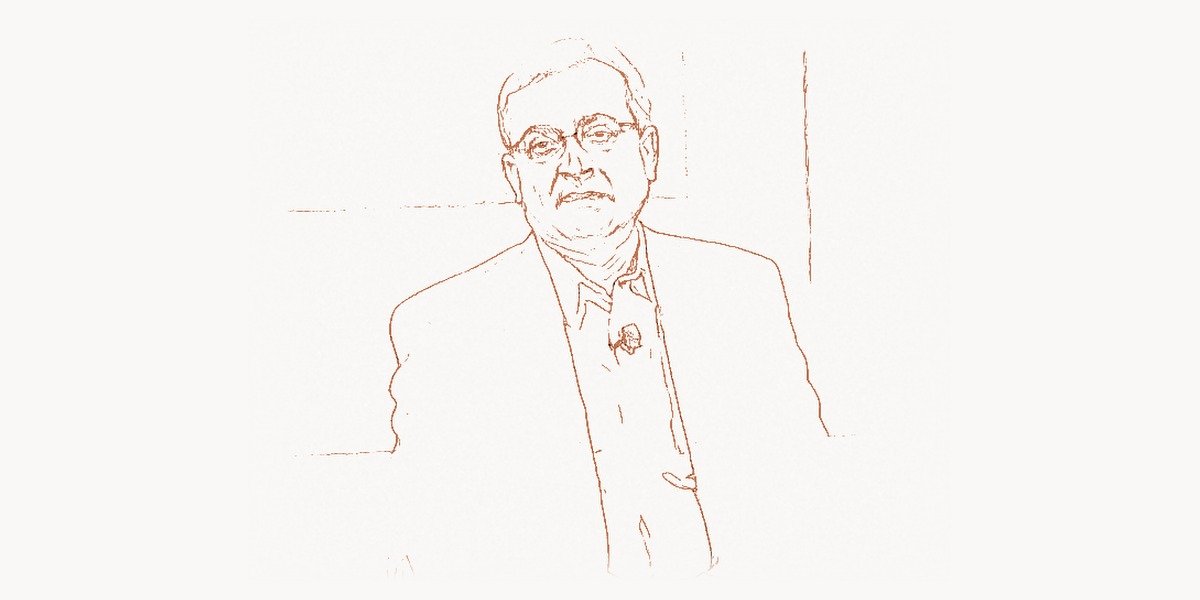
Few inventions in the history of computing have been plugged in, pulled out, flipped over, and plugged in again quite as many times as USB. Before this deceptively simple connector existed, the back of every PC looked like a spaghetti junction of incompatible ports — serial, parallel, PS/2, proprietary dongles — each with its own driver disk and its own special way of refusing to work. One engineer at Intel decided this was absurd. His name was Ajay Bhatt, and the standard he co-invented would go on to connect more than 10 billion devices worldwide.
Early Life and Education
Ajay Bhatt was born in 1960 in Vadodara (formerly Baroda), a city in the western Indian state of Gujarat known for its universities and its growing engineering culture. From an early age, Bhatt showed a natural curiosity for how electrical systems worked. Growing up in a middle-class Indian household in the 1960s and 1970s, access to cutting-edge technology was limited, but textbooks and resourcefulness were plentiful.
Bhatt pursued his undergraduate studies in electrical engineering at M.S. University of Baroda, one of Gujarat’s most respected institutions. The rigorous curriculum in circuit design, signal processing, and systems architecture gave him a strong theoretical foundation. After completing his degree, he moved to the City University of New York (CUNY) in the United States for his master’s degree, where he deepened his expertise in computer architecture and hardware design.
It was during his time at CUNY that Bhatt first encountered the messy reality of peripheral connectivity in personal computing. Academic labs were filled with machines that needed different cables, different ports, and different drivers for every single device. The experience planted a seed — one that would germinate years later at Intel.
Career and the Invention of USB
After completing his master’s degree, Bhatt joined Intel Corporation in the late 1980s. Intel at that time was primarily known as a microprocessor company, riding the wave of the 80386 and 80486 chips that powered the IBM PC revolution. Bhatt initially worked on chipset architecture and platform design, gaining deep knowledge of how processors communicated with the outside world.
By the early 1990s, he had risen to a senior engineering role, and his frustration with the state of peripheral connectivity had only intensified. Every device — printers, keyboards, mice, scanners, modems — required a different interface. Consumers were baffled. IT departments were overwhelmed. And manufacturers were spending enormous resources supporting a fragmented ecosystem. Bhatt saw an opportunity to unify everything under a single, universal standard, much like how pioneers such as Vint Cerf had unified networking under TCP/IP.
Technical Innovation: Designing the Universal Serial Bus
In 1994, Bhatt assembled a small team at Intel and began working on what would become the Universal Serial Bus specification. The project was ambitious: create a single connector and protocol that could handle keyboards, mice, printers, storage devices, audio equipment, and anything else that might need to talk to a computer.
The technical challenges were formidable. The interface had to support vastly different data rates — a keyboard sends a few bytes per second, while a scanner might need megabits. It had to support hot-plugging (connecting devices without shutting down) at a time when most interfaces required a reboot. It had to deliver power to small devices, eliminating the need for separate power adapters. And it had to be cheap enough to include on every motherboard and every peripheral.
The USB 1.0 specification, released in January 1996, addressed all of these requirements. It defined two speeds: Low Speed at 1.5 Mbps for simple input devices, and Full Speed at 12 Mbps for higher-bandwidth peripherals. The protocol used a host-controlled, polled architecture where the computer initiated all communication — a design choice that simplified device firmware and reduced costs.
Here is a simplified representation of how a USB host controller enumerates a newly connected device:
// Simplified USB device enumeration sequence
// When a device is plugged into a USB port:

void usb_enumerate_device(usb_port_t *port) {
    // Step 1: Detect connection via change in D+/D- line voltage
    if (port->status & USB_PORT_CONNECT_CHANGE) {
        usb_reset_port(port);  // Hold D+/D- low for 10ms

        // Step 2: Assign a unique address (1-127)
        uint8_t addr = usb_allocate_address();
        usb_control_transfer(
            DEFAULT_ADDR,        // Device starts at address 0
            SET_ADDRESS,         // Standard USB request
            addr,                // New unique address
            0, NULL, 0
        );

        // Step 3: Read the device descriptor
        usb_device_descriptor_t desc;
        usb_control_transfer(
            addr,
            GET_DESCRIPTOR,
            USB_DESC_DEVICE,
            0, &desc, sizeof(desc)
        );

        // Step 4: Load appropriate driver based on class/vendor
        usb_driver_t *drv = usb_find_driver(
            desc.idVendor,
            desc.idProduct,
            desc.bDeviceClass
        );

        if (drv) drv->probe(addr, &desc);
    }
}
This enumeration process — automatic, invisible to the user — was revolutionary. Compare it to the world of Federico Faggin’s early Intel era, when connecting a new peripheral might require setting DIP switches, configuring IRQ lines, and editing configuration files manually.
Bhatt did not work alone. The USB specification was developed in collaboration with engineers from Compaq, DEC, IBM, Microsoft, NEC, and Nortel. But Bhatt was the driving force at Intel, the company that had the most to gain from simplifying the PC platform. His role was not just technical — he had to convince Intel’s management that investing in a free, open standard (rather than a proprietary connector) was the right strategy.
Why USB Mattered: From Chaos to Plug-and-Play
To understand why USB was transformative, consider the landscape it replaced. In the early 1990s, a typical desktop PC had a 25-pin parallel port for the printer, a 9-pin serial port for the modem, a PS/2 port for the keyboard, another PS/2 port for the mouse, a game port for the joystick, and possibly a SCSI interface for external storage. Each had different electrical characteristics, different cable lengths, different driver models, and different limitations.
USB collapsed all of this into a single rectangular port. One connector. One driver model. One protocol. The impact was immediate and far-reaching:
- For consumers: No more hunting for the right cable or the right driver disk. Plug it in and it works.
- For manufacturers: Instead of designing separate interfaces for every platform, they could design one USB interface and reach every computer.
- For the industry: USB created a positive feedback loop — the more devices that supported USB, the more valuable USB became, which attracted more devices.
USB adoption was slow initially. The 1996 USB 1.0 spec existed, but few motherboards included ports and few peripherals supported it. The turning point came in 1998 when Apple released the original iMac with USB as its only peripheral interface — a bold move that forced the accessory market to embrace the standard. Intel, under Bhatt’s continued advocacy, ensured that every subsequent chipset included USB support. By 2000, USB had become the de facto standard for PC peripherals.
The evolution continued. USB 2.0 (2000) boosted speeds to 480 Mbps, making external hard drives practical. USB 3.0 (2008) reached 5 Gbps. Today’s USB4, built on Thunderbolt technology, delivers up to 80 Gbps. Through all of these iterations, backward compatibility remained a core principle — a USB keyboard from 1998 still works in a USB4 port today. This kind of long-term architectural thinking echoes the design philosophy of engineers like Robert Noyce, who understood that great standards outlast the products they were first designed for.
Other Contributions
While USB is Bhatt’s most widely known achievement, his career at Intel spanned far more than a single specification. Over three decades at the company, he contributed to a range of platform technologies that shaped how modern computers are built.
Bhatt played a significant role in the development of Intel’s AGP (Accelerated Graphics Port) specification, which provided a dedicated high-speed channel between the processor and the graphics card. Before AGP, graphics cards shared the PCI bus with all other peripherals, creating bottlenecks that limited 3D performance. AGP gave the GPU its own fast lane, enabling the explosion of 3D gaming and professional visualization in the late 1990s. This work on high-speed interconnects paralleled the broader industry push for faster I/O — a theme that Gordon Moore had predicted would be essential as transistor counts grew exponentially.
He also contributed to PCI Express (PCIe), the serial point-to-point interconnect that replaced the older parallel PCI bus. PCIe became the backbone of modern computer architecture, connecting GPUs, SSDs, network cards, and other high-performance components. The architectural shift from shared parallel buses to dedicated serial lanes was a fundamental rethinking of how computers move data internally.
Bhatt was elevated to the rank of Intel Fellow, one of the highest technical positions at the company, reserved for engineers whose contributions have had a transformative impact on Intel’s technology and business. Only a small handful of engineers hold this title at any given time. Throughout his career, Bhatt was awarded over 132 US and international patents, covering areas from bus architecture and power management to platform security.
He also invested time in mentoring younger engineers, both within Intel and in the broader Indian-American engineering community. His trajectory — from Vadodara to Intel Fellow — became an inspiration for many aspiring engineers who saw in his story the proof that fundamental technical contributions could come from anywhere.
Philosophy and Design Principles
Bhatt’s approach to engineering was shaped by a few core beliefs that recur throughout his career. These principles are not just abstract ideas — they are encoded in the DNA of USB and the other standards he helped create. Modern teams building hardware or software products can learn from this mindset, whether they are using project management tools like Taskee to coordinate complex engineering efforts or sketching architecture on a whiteboard.
Key Principles
- Universality over optimization: A good-enough standard that works everywhere beats a perfect solution that only works in one context. USB was never the fastest interface — but it was the most versatile.
- User simplicity as a non-negotiable: Every technical decision was filtered through the question: “Can a non-technical person use this without reading a manual?” Hot-plugging, automatic driver loading, and bus-powered devices all flowed from this principle.
- Backward compatibility is sacred: Breaking backward compatibility might let you move faster in the short term, but it destroys the trust ecosystem that makes a standard valuable. Every USB revision has maintained compatibility with previous versions.
- Open standards create bigger markets: Bhatt fought to make USB an open, royalty-free specification rather than a proprietary Intel technology. This decision reduced Intel’s direct revenue from the standard but massively grew the PC ecosystem — which sold more Intel chips.
- Collaboration across competitors: USB required Intel, Compaq, IBM, Microsoft, and others to agree on a single standard. Bhatt understood that technical excellence means nothing without industry consensus.
- Design for the future, not just today: The USB specification was architected to support speed tiers that far exceeded current needs. This forward-thinking approach meant that USB could evolve from 1.5 Mbps to 80 Gbps without fundamental redesign.
These principles map well onto what agencies like Toimi practice in digital product development: start with the user, design for extensibility, and prioritize standards that enable collaboration.
Legacy and Impact
Ajay Bhatt’s legacy is measured not in lines of code or academic citations, but in the sheer ubiquity of the technology he helped create. USB is one of the most successful interface standards in the history of computing. As of the mid-2020s, the USB Implementers Forum estimates that over 10 billion USB devices ship annually. The connector appears on everything from laptops and phones to cars, medical equipment, and industrial machinery.
The ripple effects of USB extend far beyond simple peripheral connectivity. USB power delivery enabled a new class of bus-powered devices — flash drives, webcams, LED lights, phone chargers — that would not exist without the standard’s ability to deliver both data and power through a single cable. The USB charging ecosystem alone has transformed consumer electronics, culminating in the EU’s mandate for USB-C as a common charging port across all portable devices.
USB also democratized hardware development. Before USB, creating a computer peripheral required deep expertise in multiple interface standards and platform-specific driver models. With USB’s standardized device classes and open specification, a small team could design a device that worked on any computer. This lowered the barrier to entry for hardware startups and hobbyists alike.
The cultural impact is captured in a well-known anecdote: in 2013, Intel ran an advertising campaign featuring a Bhatt lookalike as a “rock star” engineer, complete with adoring fans seeking autographs. The campaign highlighted something genuine — that in a world obsessed with software billionaires, the quiet hardware engineers who build the infrastructure deserve recognition too. Bhatt’s work sits alongside that of other hardware visionaries like Jack Kilby, who invented the integrated circuit, and Sophie Wilson, who designed the ARM instruction set.
Today, Bhatt’s influence continues through the ongoing evolution of USB. The USB-C connector, USB Power Delivery specification, and USB4 standard — all built on the architectural foundations he established — ensure that the USB ecosystem will remain central to computing for decades to come. In a field where most technologies become obsolete within a few years, a standard that has thrived and evolved for three decades is a remarkable achievement.
The following Python script illustrates how USB device information can be queried programmatically on a Linux system, demonstrating the rich descriptor hierarchy that Bhatt’s original specification defined:
import usb.core
import usb.util

def list_usb_devices():
    """Enumerate all connected USB devices and print their details.
    Uses the descriptor hierarchy defined in the USB specification:
    Device -> Configuration -> Interface -> Endpoint
    """
    devices = usb.core.find(find_all=True)

    for dev in devices:
        print(f"Device: {dev.idVendor:04x}:{dev.idProduct:04x}")
        print(f"  Manufacturer: {usb.util.get_string(dev, dev.iManufacturer)}")
        print(f"  Product:      {usb.util.get_string(dev, dev.iProduct)}")
        print(f"  USB Version:  {dev.bcdUSB >> 8}.{(dev.bcdUSB >> 4) & 0xF}")
        print(f"  Device Class: {dev.bDeviceClass}")
        print(f"  Max Packet:   {dev.bMaxPacketSize0} bytes")

        for cfg in dev:
            print(f"  Configuration {cfg.bConfigurationValue}:")
            print(f"    Max Power: {cfg.bMaxPower * 2} mA")

            for intf in cfg:
                print(f"    Interface {intf.bInterfaceNumber},"
                      f" Alt {intf.bAlternateSetting}:")
                print(f"      Class: {intf.bInterfaceClass}")

                for ep in intf:
                    direction = "IN" if usb.util.endpoint_direction(
                        ep.bEndpointAddress) == usb.util.ENDPOINT_IN else "OUT"
                    print(f"      Endpoint {ep.bEndpointAddress:#04x}"
                          f" ({direction}): {ep.wMaxPacketSize} bytes")
        print()

if __name__ == "__main__":
    list_usb_devices()
Key Facts
- Full name: Ajay V. Bhatt
- Born: 1960, Vadodara, Gujarat, India
- Education: B.E. in Electrical Engineering from M.S. University of Baroda; M.S. from City University of New York
- Known for: Co-inventing the Universal Serial Bus (USB)
- Title at Intel: Intel Fellow (one of the company’s highest technical honors)
- Patents: Over 132 US and international patents
- Other contributions: AGP (Accelerated Graphics Port), PCI Express architecture, platform I/O technologies
- USB milestones: USB 1.0 (1996, 12 Mbps), USB 2.0 (2000, 480 Mbps), USB 3.0 (2008, 5 Gbps), USB4 (2019, 40 Gbps)
- Awards: European Inventor Award (2013, Popular Prize), named in multiple “most influential engineers” lists
- Impact: Over 10 billion USB devices ship annually worldwide
Frequently Asked Questions
Did Ajay Bhatt invent USB by himself?
No. USB was a collaborative effort involving engineers from Intel, Compaq, DEC, IBM, Microsoft, NEC, and Nortel. Bhatt was the lead architect and primary advocate at Intel, which spearheaded the initiative. His role was both technical — defining the core architecture and protocol — and political, as he had to convince multiple competing companies to adopt a single open standard. The collaborative nature of the project mirrors how other foundational technologies emerged: Tim Berners-Lee created the World Wide Web at CERN but needed widespread industry adoption to make it real, and Andy Grove’s Intel provided the platform that made USB ubiquitous.
Why was USB so slow to be adopted after its 1996 release?
USB 1.0 launched into a market where PCs were already equipped with established ports (serial, parallel, PS/2) and consumers had no reason to switch. Peripheral manufacturers were reluctant to invest in USB support when the installed base of USB-capable PCs was small — a classic chicken-and-egg problem. The breakthrough came in 1998 when Apple shipped the iMac G3 with USB as its only peripheral interface, forcing the accessory market to produce USB devices. Intel simultaneously ensured that its chipsets included USB controllers, building the installed base on the PC side. By 2000, the network effects had kicked in and USB became self-sustaining.
How does USB compare to other connectivity standards like Thunderbolt or FireWire?
FireWire (IEEE 1394) was technically superior to USB 1.0 in raw speed and supported peer-to-peer communication (devices could talk to each other without a host), making it ideal for video cameras and audio equipment. However, FireWire required more expensive controllers and charged licensing fees, limiting adoption. Thunderbolt, developed by Intel and Apple, offers dramatically higher speeds (up to 80 Gbps in Thunderbolt 5) and supports daisy-chaining and display output. However, USB has consistently won on cost, universality, and ecosystem size. Notably, USB4 actually incorporates the Thunderbolt 3 protocol, converging the two standards. Bhatt’s original design philosophy — prioritize universality and low cost over raw performance — proved to be the winning long-term strategy.
What is Ajay Bhatt doing now?
After more than three decades at Intel, Bhatt continued to work on platform I/O technologies and served as a senior technical leader. He has also been active in mentoring younger engineers and speaking about innovation and the importance of open standards in technology development. His work on USB’s foundational architecture continues to influence the standard’s evolution through USB-IF (USB Implementers Forum), ensuring that USB4, USB-C, and USB Power Delivery maintain the principles of universality, backward compatibility, and user simplicity that defined the original specification.