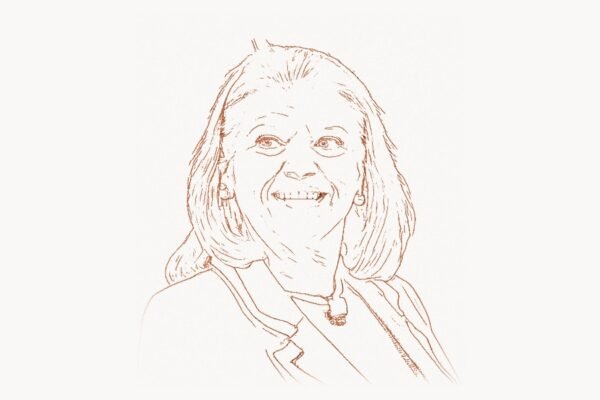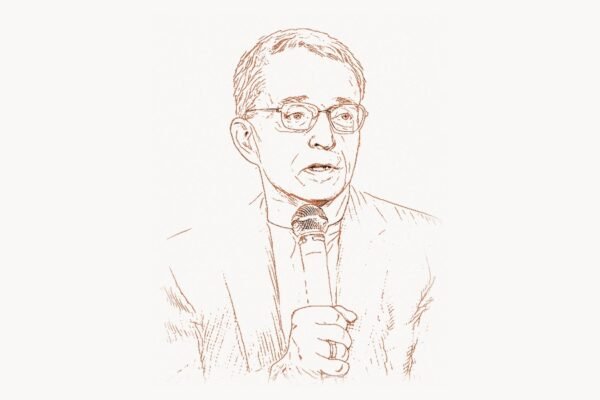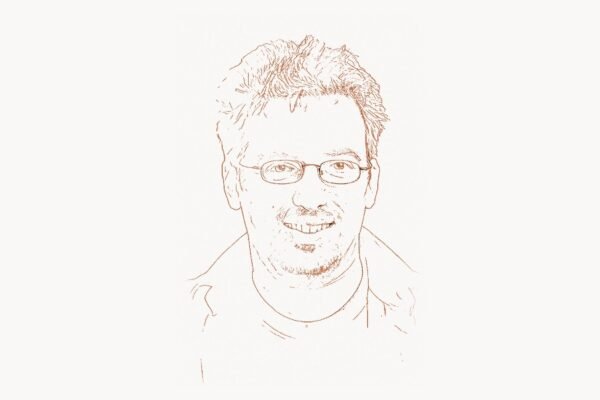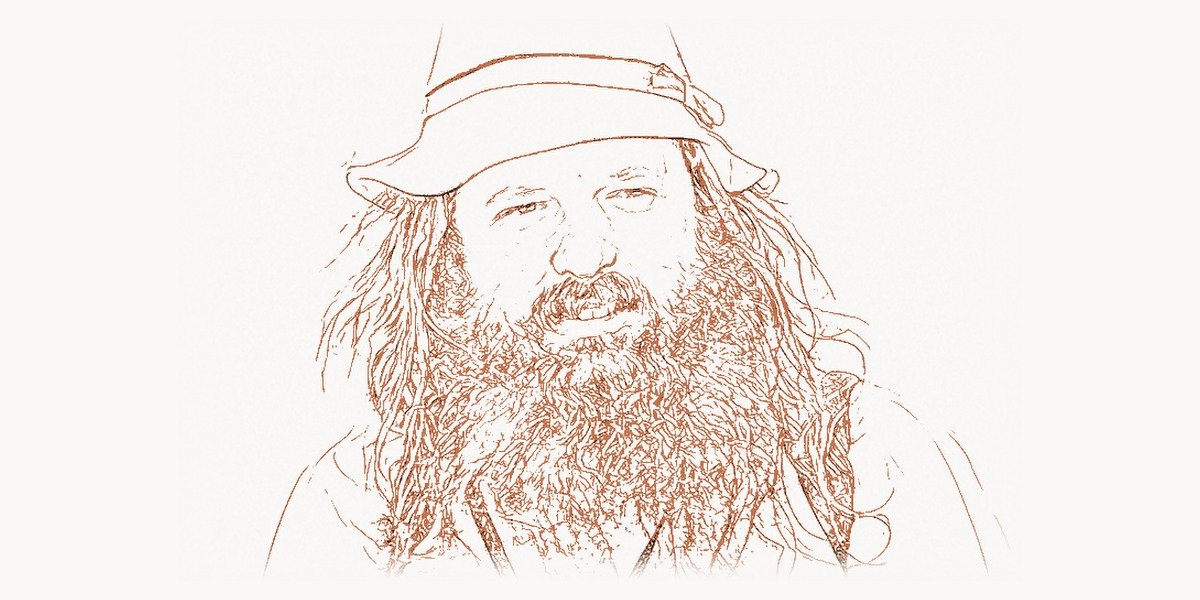
If the history of the Linux kernel were a military campaign, Linus Torvalds would be the general who conceived the strategy, and Alan Cox would be the field commander who held the front lines during the most brutal years of the war. Between 1991 and 2013, Cox was arguably the second most important developer in the entire Linux ecosystem — the person who maintained an alternative kernel branch when the official one was unstable, who rewrote the networking stack that allowed Linux to function on the early internet, who overhauled the TTY subsystem that had been accumulating decades of technical debt, and who brought multiprocessor support to a kernel originally designed for a single CPU. While Linus Torvalds provided the vision and the brand, Alan Cox provided an enormous volume of the engineering that turned Linux from a student project into an operating system capable of running the world’s infrastructure. He did this with a combination of extraordinary technical depth, a willingness to take on the ugliest problems in the codebase, and a personality as blunt and uncompromising as the code he wrote.
Early Life and Education
Alan Cox was born in 1968 in Solihull, a town in the West Midlands of England. Of Welsh descent, he would later settle in Wales — a detail that matters to him personally and that reflects a connection to Welsh identity and culture that he has maintained throughout his life. Growing up in the late 1970s and 1980s, Cox was part of the generation that encountered personal computing during its formative years, when machines like the BBC Micro and the ZX Spectrum were transforming British households and schools into laboratories for a new kind of literacy.
Cox studied at the University College of Swansea (now Swansea University) in Wales, where he earned his degree in computer science. Swansea was not Cambridge or Oxford, and it was certainly not MIT or Stanford. But what mattered for Cox’s career was not the prestige of the institution — it was the timing. He was completing his education just as the open-source movement was beginning to coalesce, just as the internet was becoming accessible to university students, and just as a Finnish undergraduate named Linus Torvalds was posting a now-famous message to the comp.os.minix newsgroup announcing a free operating system kernel. Cox encountered Linux early, recognized its potential, and began contributing almost immediately. By the early 1990s, he was already one of the most active developers in the nascent Linux community.
The intellectual lineage here is worth tracing. The MINIX operating system created by Andrew Tanenbaum for teaching purposes was the direct catalyst for Torvalds’ work on Linux, and the Unix tradition established by Dennis Ritchie and Ken Thompson at Bell Labs provided the philosophical and architectural foundation for both. Cox entered this lineage at a critical inflection point — when the ideas were proven but the implementation was still raw and incomplete, and when the people willing to do the hard work of making a free Unix actually function on real hardware were worth their weight in gold.
The Linux Networking Stack
Building the Foundation for a Connected Kernel
Alan Cox’s first major contribution to Linux — and the one that initially established his reputation — was his work on the kernel’s networking stack. In the early 1990s, Linux’s networking capabilities were rudimentary at best. The original networking code was functional enough for basic communication, but it was slow, buggy, and incomplete. It did not handle the full range of TCP/IP edge cases that real-world internet communication demanded, and it could not compete with the networking performance of commercial Unix systems like SunOS or BSD variants that had years of battle-tested TCP/IP implementations.
Cox essentially rewrote the Linux networking subsystem, implementing proper TCP/IP support that could handle real traffic under real conditions. This was not a matter of writing clean code in a vacuum — it required understanding the TCP/IP protocol suite at a deep level, dealing with the messy realities of network hardware that barely worked, and doing it all within the constraints of a kernel that was itself still immature and changing rapidly. The networking stack had to handle packet fragmentation, congestion control, out-of-order delivery, connection timeouts, and dozens of other edge cases that could cause data corruption or system crashes if handled incorrectly.
/*
 * Simplified illustration of the TCP state machine logic
 * that Cox helped implement in the early Linux kernel.
 * The real implementation handled dozens of edge cases
 * around connection setup, teardown, and error recovery.
 */

#include <linux/tcp.h>
#include <net/sock.h>

/*
 * TCP connection state transitions — the kernel must
 * correctly handle every possible sequence of events:
 * SYN, SYN-ACK, ACK, FIN, RST, timeouts, retransmits.
 *
 * A single bug here could cause connections to hang,
 * data loss, or kernel panics under heavy network load.
 */
static int tcp_rcv_state_process(struct sock *sk,
                                 struct sk_buff *skb)
{
    struct tcp_sock *tp = tcp_sk(sk);
    struct tcphdr *th = tcp_hdr(skb);

    switch (sk->sk_state) {
    case TCP_SYN_SENT:
        /* Waiting for SYN-ACK from remote host.
         * Must validate sequence numbers to prevent
         * spoofing attacks — a security concern that
         * Cox took seriously from the early days. */
        if (th->ack && th->syn) {
            tcp_set_state(sk, TCP_ESTABLISHED);
            tp->snd_una = ntohl(th->ack_seq);
            tcp_send_ack(sk);
            return 0;
        }
        break;

    case TCP_ESTABLISHED:
        /* Connection active — process incoming data.
         * Handle window scaling, selective ACKs,
         * and congestion control (RFC 2581). */
        if (th->fin) {
            tcp_set_state(sk, TCP_CLOSE_WAIT);
            tcp_send_ack(sk);
            return 0;
        }
        tcp_data_queue(sk, skb);
        break;

    case TCP_FIN_WAIT1:
        /* We sent FIN, waiting for ACK.
         * Must handle simultaneous close correctly —
         * both sides sending FIN at the same time. */
        if (th->ack)
            tcp_set_state(sk, TCP_FIN_WAIT2);
        if (th->fin)
            tcp_set_state(sk, TCP_CLOSING);
        break;
    }
    return 0;
}
The significance of this work cannot be overstated. Without a reliable, performant networking stack, Linux could never have become a server operating system. The web server revolution of the mid-to-late 1990s — when Apache running on Linux began displacing commercial Unix and Windows NT systems in data centers — depended directly on the networking code that Cox wrote and maintained. Every HTTP request, every email, every DNS lookup on a Linux server was flowing through infrastructure that Cox had built or substantially improved. His networking work transformed Linux from a curiosity that hobbyists ran on their home machines into a platform that could serve real traffic to real users at scale.
The -ac Kernel Branch
An Unofficial Lifeline for the Linux Community
Perhaps Alan Cox’s most distinctive contribution to the Linux ecosystem was his maintenance of the -ac kernel branch — an unofficial, parallel kernel tree that for years served as the de facto stable release of Linux. The naming convention was simple: if the official kernel release was 2.2.16, Cox’s patched version would be 2.2.16-ac1, 2.2.16-ac2, and so on. But the simplicity of the naming belied the importance of the work.
The -ac branch existed because of a structural problem in Linux kernel development during the late 1990s and early 2000s. The official kernel maintained by Torvalds followed a development model where even-numbered minor versions (2.0, 2.2, 2.4) were “stable” and odd-numbered ones (2.1, 2.3, 2.5) were “development.” In practice, however, the stable releases still contained bugs, and critical fixes sometimes took a long time to make it into the official tree. Torvalds, by his own admission, was more interested in moving forward with new features than in meticulous backporting of fixes to older releases.
Cox filled this gap. His -ac branch collected bug fixes, driver updates, and stability improvements that had not yet been merged into the official kernel or that Torvalds had deprioritized. Linux distributions like Red Hat, which needed a kernel stable enough to ship to enterprise customers, frequently based their kernels on Cox’s -ac branch rather than on the official Torvalds release. This made Cox, in practical terms, one of the most important gatekeepers in the Linux ecosystem — millions of machines were running kernels that had passed through his hands.
The -ac branch was particularly critical during the Linux 2.4 era. The 2.4 kernel had significant issues with the virtual memory subsystem, IDE driver layer, and various other components. Cox’s -ac patches often included fixes for these problems weeks or months before they appeared in the official tree. System administrators who cared about stability learned to track the -ac branch as their primary kernel source. This was a remarkable situation — an unofficial, one-man kernel branch being preferred over the official release maintained by the creator of Linux himself.
The work that Cox did with the -ac branch would later be formalized by Greg Kroah-Hartman when he established the official stable kernel branch process in 2005. In many ways, Kroah-Hartman’s stable branch was the institutionalization of what Cox had been doing informally for years — maintaining a reliable, patched version of the kernel for people who needed things to actually work in production. Cox had proven the concept; Kroah-Hartman built the process and infrastructure to sustain it at scale.
The TTY Subsystem Rewrite
Taming the Ugliest Code in the Kernel
If the networking stack was Cox’s most visible contribution, the TTY layer rewrite was arguably his most courageous. The TTY (teletypewriter) subsystem is one of the oldest pieces of code in any Unix-like operating system — its lineage traces back to the days when computers communicated with physical terminals over serial lines. By the time Cox turned his attention to it, the Linux TTY layer had accumulated decades of assumptions, workarounds, and ad-hoc fixes layered on top of a design that predated the internet, multiprocessor systems, and USB serial devices.
The TTY subsystem is responsible for managing terminal devices — everything from the virtual consoles you see when you press Ctrl+Alt+F1 to serial port communication to the pseudo-terminals that SSH sessions and terminal emulators use. It handles line discipline processing (converting raw serial data into lines of text), flow control, signal generation (Ctrl+C to send SIGINT), and the complex interaction between foreground and background process groups. It is code that virtually every Linux user interacts with constantly — every time you type a command in a terminal, the TTY layer is involved — but that almost nobody thinks about.
The problem was that the existing TTY code was, to put it bluntly, a mess. It was full of race conditions, locking bugs, and assumptions about single-processor systems that were no longer valid. The code path from a keystroke to the application reading it involved multiple layers of buffering, processing, and signaling, any of which could go wrong under concurrent access. Security vulnerabilities in the TTY layer were a recurring problem because the code was so complex and poorly structured that it was almost impossible to reason about its behavior in edge cases.
/*
 * Simplified view of the TTY layer architecture that
 * Cox restructured. The real code involved thousands
 * of lines managing locking, buffering, and signals.
 */

#include <linux/tty.h>
#include <linux/tty_ldisc.h>

/*
 * The TTY layer sits between hardware drivers and
 * userspace applications. Data flows through
 * multiple stages, each requiring careful locking:
 *
 *  Hardware → Driver → TTY Core → Line Discipline → User
 *
 * Cox's rewrite focused on making this pipeline
 * safe under concurrent access from multiple CPUs.
 */

struct tty_struct {
    int                     index;
    struct tty_driver       *driver;
    struct tty_ldisc        *ldisc;     /* line discipline */
    struct tty_port         *port;
    struct mutex            ldisc_mutex; /* Cox added proper
                                          * locking where the
                                          * old code had none */

    /* The write buffer — a critical shared resource.
     * Before Cox's rewrite, concurrent writes from
     * multiple processes could corrupt this buffer. */
    struct tty_bufhead      buf;

    /* Session and process group tracking for job control.
     * Ctrl+C, Ctrl+Z, and background process handling
     * all depend on these being consistent. */
    struct pid              *session;
    struct pid              *pgrp;

    /* Flow control state — must be atomic to prevent
     * deadlocks between input and output paths. */
    unsigned long           flags;
    spinlock_t              flow_lock;
};

/*
 * Line discipline receive buffer — Cox restructured
 * this to use a flip buffer design that separates
 * the producer (hardware interrupt) from the consumer
 * (userspace read), eliminating a class of race
 * conditions that plagued the old implementation.
 */
static void tty_ldisc_receive_buf(struct tty_struct *tty,
                                   const char *cp,
                                   int count)
{
    struct tty_ldisc *ld;

    /* Safe ldisc reference — Cox's locking model
     * ensures the line discipline cannot be changed
     * while data is being processed. */
    ld = tty_ldisc_ref(tty);
    if (ld) {
        if (ld->ops->receive_buf)
            ld->ops->receive_buf(tty, cp, count);
        tty_ldisc_deref(ld);
    }
}
Cox spent years rewriting the TTY layer, a project that involved restructuring the locking model, cleaning up the line discipline interface, and fixing countless bugs that had lurked in the code for years. This was the kind of work that few developers wanted to touch — the code was old, poorly documented, and deeply entangled with other parts of the kernel. Touching it risked breaking every terminal on every Linux machine in the world. Cox did it anyway, methodically, piece by piece, because somebody had to and because he had the kernel-wide knowledge and the stubbornness to see it through.
The philosophy behind this kind of work aligns with principles that Edsger Dijkstra articulated decades earlier — that the structure and clarity of code matters as much as its functionality, and that technical debt left unaddressed becomes an ever-growing threat to system reliability. Cox’s TTY rewrite was an act of software engineering discipline applied to one of the most neglected corners of the kernel.
Multiprocessor Support and Security
Among Cox’s many other contributions, two deserve particular attention: his work on multiprocessor (SMP) support and his contributions to Linux security infrastructure.
In the early days, Linux was a single-processor operating system. The kernel used a Big Kernel Lock (BKL) — a single global lock that prevented more than one processor from executing kernel code at the same time. This was a simple solution to the concurrency problem, but it meant that on multiprocessor systems, the kernel itself became a bottleneck. Only one CPU could be in kernel mode at any time, severely limiting scalability.
Cox was instrumental in the effort to make Linux truly SMP-capable. He worked on replacing the BKL with fine-grained locking throughout the kernel — a painstaking process that required auditing thousands of code paths to determine what data structures they accessed and what locks they needed. This work was essential for Linux’s eventual dominance in the server market, where multiprocessor and multi-core systems were the norm. Without proper SMP support, Linux could never have scaled to the 64-processor, 128-processor, and eventually 1000+-processor systems it runs on today.
On the security front, Cox was an early advocate for taking security seriously in the Linux kernel. He contributed to the Linux Security Modules (LSM) framework, which provides a general mechanism for access control frameworks to hook into the kernel. LSM is the foundation on which SELinux, AppArmor, and other mandatory access control systems are built. Cox understood that as Linux moved from hobbyist desktops to production servers and embedded devices, the security model needed to evolve from the traditional Unix user/group permissions to something far more granular and flexible.
Cox also contributed to the Direct Rendering Manager (DRM) subsystem, which manages access to GPU hardware. His work on DRM was part of a broader effort to bring modern graphics capabilities to Linux — work that laid groundwork for the desktop Linux experience and for Linux’s later dominance in GPU computing and machine learning workloads.
The IDE Subsystem and Driver Work
Another area where Cox left a significant mark was the IDE (Integrated Drive Electronics) driver subsystem. IDE was the dominant interface for hard drives and optical drives during the era when Cox was most active in kernel development. The Linux IDE subsystem was notoriously difficult code — it had to handle a wide variety of hardware from different manufacturers, each with their own quirks, bugs, and undocumented behaviors. Data corruption bugs in the IDE layer were among the most feared kernel issues because they could silently destroy filesystem data.
Cox maintained the IDE subsystem for years, fixing hardware-specific bugs, improving error handling, and working to make the code more robust against the kind of edge cases that real-world hardware produced. This was thankless work — nobody notices when their hard drive works correctly, but everyone notices when their data disappears. Cox’s careful stewardship of the IDE code protected millions of users from data loss during a period when Linux was establishing itself as a reliable server platform.
Managing these kinds of low-level subsystem dependencies across hardware platforms is a challenge that resonates beyond kernel development. Modern engineering teams coordinating complex technology projects — whether using project management platforms like Toimi or tracking development workflows with Taskee — face analogous problems of maintaining reliability across diverse environments while managing the technical debt that accumulates in long-lived codebases.
Personality and Working Style
Alan Cox was known within the Linux community for a communication style that was, to put it gently, direct. Like Torvalds, Cox did not suffer fools gladly and was perfectly willing to tell a patch submitter exactly why their code was wrong and why they should feel bad about it. His code reviews were legendary for their thoroughness — “Alan Cox’s code review” became an informal benchmark for rigor in the kernel community. If your code survived a Cox review, it was probably correct.
But Cox’s bluntness served a purpose. In a project where a single bug could crash millions of machines, there was no room for diplomatic ambiguity about code quality. Cox’s directness was a quality control mechanism — developers learned quickly what standards were expected, and the code was better for it. This approach was characteristic of the early kernel community culture, where technical merit was the only currency that mattered and social niceties were considered secondary to getting the code right.
Cox worked at Red Hat for many years, where he was one of their most senior kernel developers. Red Hat’s enterprise Linux distribution relied heavily on the stability work that Cox did, and his presence gave Red Hat significant credibility in the kernel community. He later moved to Intel, where he worked on various Linux-related projects. Around 2013, Cox semi-retired from active kernel development — a decision he announced with characteristically little fanfare. He had been contributing to the kernel for over two decades by that point, and the subsystems he had built or maintained were now in the hands of other capable developers.
Cox also contributed to the GNOME desktop project, demonstrating a range of interests that extended beyond the kernel. While he was primarily known as a kernel hacker, his GNOME work showed an awareness that a complete operating system needed a usable desktop, not just a reliable kernel. This breadth of contribution was unusual among kernel developers, who tended to specialize deeply in one area.
Philosophy and Engineering Principles
Key Principles
Somebody has to do the ugly work. Cox’s career was defined by a willingness to take on the problems that other developers avoided. The TTY subsystem, the IDE drivers, the networking stack in its early, broken state — these were not glamorous projects. They were the software equivalent of infrastructure maintenance: invisible when it works, catastrophic when it fails. Cox understood that the long-term viability of Linux depended on people willing to descend into the ugliest code in the kernel and make it work correctly.
Correctness over elegance. Cox’s code was not always the most beautiful, but it was reliable. He prioritized getting the edge cases right, handling errors properly, and making sure the code worked on real hardware under real conditions. In kernel development, where a theoretical race condition can become a data-corrupting catastrophe on a busy server, this pragmatic focus on correctness was more valuable than architectural purity. This echoes the systems programming tradition established by Ritchie and Thompson, where the goal was always to build things that worked in practice, not just in theory.
Review everything. Cox’s reputation for thorough code review reflected a deep conviction that review was not a bureaucratic overhead but a critical engineering practice. Every patch that went through Cox’s hands received genuine technical scrutiny — not just a cursory glance at the diff, but an examination of the logic, the edge cases, the interaction with other subsystems, and the implications for stability and security. In the tradition of Bjarne Stroustrup’s emphasis on discipline in systems programming and Brian Kernighan’s advocacy for clarity and rigor in code, Cox demonstrated that careful human review remains irreplaceable even in an age of automated testing.
Security is not optional. From his early work on TCP sequence number randomization to prevent spoofing attacks to his contributions to the LSM framework, Cox treated security as a fundamental requirement of kernel development, not an afterthought. At a time when many developers viewed security as someone else’s problem, Cox was writing code that anticipated hostile inputs and defended against them. This security-first mindset was ahead of its time and influenced the kernel community’s gradual shift toward treating security as a core engineering concern rather than a specialty interest.
Legacy and Impact
Alan Cox’s impact on Linux — and by extension, on the computing world — is difficult to overstate precisely because so much of it is invisible. The networking stack he built carries internet traffic on millions of servers. The SMP work he contributed to enables Linux to run on everything from dual-core laptops to thousand-node supercomputers. The TTY code he rewrote is executing right now on every Linux machine where someone has a terminal open. The -ac kernel branch he maintained for years established the principle that stable, patched kernel releases were essential — a principle that is now formalized in Greg Kroah-Hartman’s stable and LTS kernel branches.
Cox’s career also represents an important lesson about how critical open-source infrastructure is built. It is not built only by the people who start projects and get credit for them. It is built in equal measure by the people who show up, day after day, to fix bugs, review patches, maintain ugly subsystems, and do the work that keeps everything from falling apart. Cox was the second most important person in the Linux kernel project for more than a decade — not because he had a title or a foundation named after him, but because the code he wrote and maintained was holding the entire project together.
His semi-retirement from kernel development around 2013 marked the end of an era. By that point, the kernel community had grown large enough and its processes had matured enough that no single individual’s departure could threaten the project. But the subsystems Cox built and the engineering culture he helped establish continue to shape Linux development today. Every developer who writes a TTY driver, every engineer who works on networking code, every security researcher who builds on the LSM framework is building on foundations that Alan Cox laid.
Key Facts
- Full name: Alan Cox
- Born: 1968, Solihull, England
- Heritage: Welsh descent, resides in Wales
- Education: University College of Swansea (now Swansea University)
- Known for: Linux networking stack, -ac kernel branch, TTY subsystem rewrite, SMP support, IDE drivers, LSM security framework, DRM contributions
- Employers: Red Hat (many years), Intel
- Kernel role: Second most important Linux developer after Torvalds during the 1990s and 2000s
- Branch maintained: Linux 2.2/2.4 -ac patch series (unofficial stable branch)
- Other contributions: GNOME desktop project
- Status: Semi-retired from kernel development since approximately 2013
Frequently Asked Questions
Who is Alan Cox and why is he important to Linux?
Alan Cox is a British software engineer who was one of the most important contributors to the Linux kernel from the early 1990s through approximately 2013. He was widely considered the second most important Linux kernel developer after Linus Torvalds during the operating system’s formative years. Cox rewrote the Linux networking stack to support proper TCP/IP communication, maintained the influential -ac kernel branch that served as an unofficial stable release for years, performed a major rewrite of the TTY subsystem, contributed to multiprocessor support, maintained the IDE driver subsystem, and helped develop the Linux Security Modules framework. His work was foundational to Linux’s transformation from a hobbyist project into a production-grade operating system running on servers, embedded devices, and supercomputers worldwide.
What was the -ac kernel branch?
The -ac kernel branch was an unofficial, parallel version of the Linux kernel maintained by Alan Cox from the late 1990s through the early 2000s. Named after Cox’s initials (e.g., kernel version 2.4.20-ac1), it collected bug fixes, driver updates, and stability improvements that had not yet been merged into the official kernel maintained by Linus Torvalds. Many Linux distributions, including Red Hat, based their production kernels on Cox’s -ac branch rather than the official release because it was more stable and better tested for real-world use. The -ac branch concept was later formalized when Greg Kroah-Hartman established the official stable kernel branch process in 2005.
What did Alan Cox contribute to Linux networking?
In the early 1990s, Cox essentially rewrote the Linux networking subsystem, implementing robust TCP/IP support that could handle real internet traffic. The original Linux networking code was rudimentary and could not compete with commercial Unix networking stacks. Cox’s work covered the full TCP/IP state machine, congestion control, packet handling, and error recovery — the infrastructure needed for Linux to function as a server operating system. This networking code was critical to Linux’s adoption in the web server market during the mid-to-late 1990s, when Linux-based web servers began replacing commercial Unix and Windows systems in data centers.
Why did Alan Cox rewrite the TTY subsystem?
The TTY (teletypewriter) subsystem in Linux had accumulated decades of technical debt, with code tracing back to design assumptions from the era of physical serial terminals. By the time Cox undertook the rewrite, the TTY layer was riddled with race conditions, locking bugs, and assumptions about single-processor systems that were no longer valid. The code was a recurring source of security vulnerabilities because its complexity made it nearly impossible to audit effectively. Cox spent years methodically restructuring the locking model, cleaning up the line discipline interface, and fixing deeply embedded bugs — work that improved the stability and security of every Linux terminal interaction.