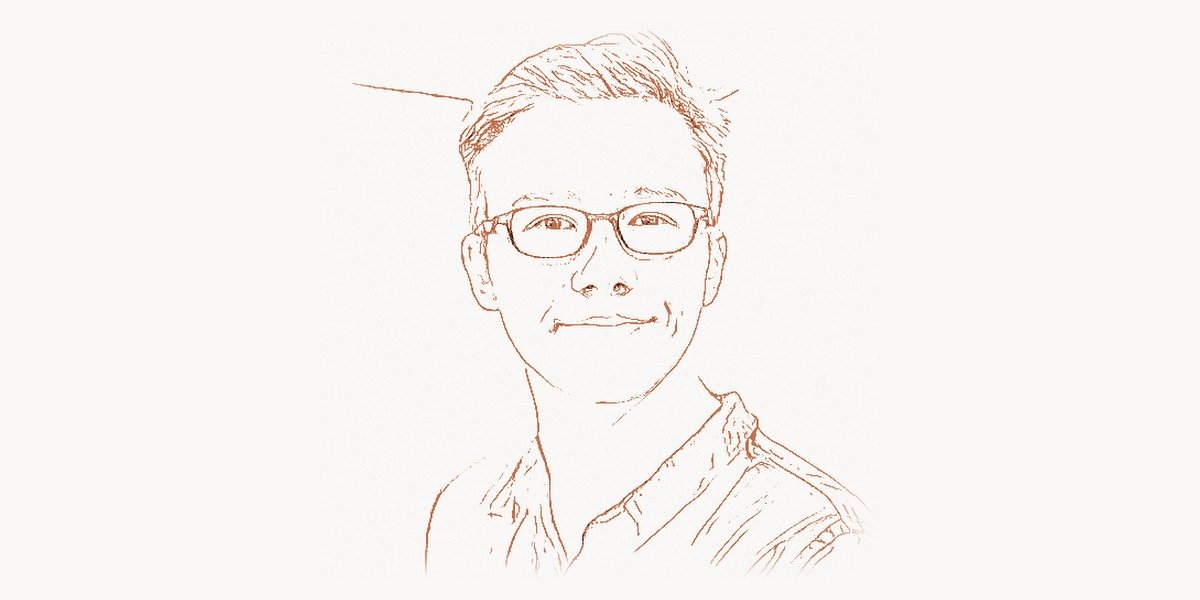
In June 2018, a relatively unknown researcher at OpenAI published a paper titled “Improving Language Understanding by Generative Pre-Training.” The paper described a method for training a neural network on a massive corpus of unlabeled text, then fine-tuning it on specific tasks like sentiment analysis, textual entailment, and question answering. The model — called GPT, for Generative Pre-Trained Transformer — achieved state-of-the-art results on nine of twelve benchmarks it was tested against, outperforming systems that had been carefully engineered for each individual task. The paper has since accumulated tens of thousands of citations, but its true significance lies not in the benchmarks it topped but in the paradigm it established: the idea that a single, large language model pre-trained on raw text could serve as a general-purpose foundation for virtually any language task. That paradigm would produce GPT-2, GPT-3, GPT-4, and ultimately ChatGPT — the technology that brought artificial intelligence into everyday life for hundreds of millions of people. The researcher who architected this shift was Alec Radford, a figure whose influence on modern AI is immense yet whose name remains far less recognized than those of the executives and public faces who built companies around his work.
Early Life and Education
Alec Radford grew up with an early fascination for computation and pattern recognition. Unlike many of the most visible figures in AI — who followed traditional academic pipelines through elite Ph.D. programs — Radford’s path into deep learning research was less conventional. He attended Tufts University, where he studied in a program that combined computer science with cognitive science, giving him an interdisciplinary perspective that would later inform his approach to language modeling. At Tufts, Radford was drawn to the intersection of how machines process information and how humans do the same — a dual interest that would prove remarkably productive.
During his undergraduate years, Radford became deeply immersed in the rapidly expanding world of deep learning. The early 2010s were a period of explosive growth in the field: Geoffrey Hinton‘s group had just demonstrated the power of deep convolutional networks with AlexNet, Ian Goodfellow was developing generative adversarial networks, and the broader machine learning community was beginning to realize that neural networks — long dismissed as impractical — could solve problems that had resisted decades of conventional approaches. Radford threw himself into this ferment, experimenting with neural network architectures and training techniques, contributing to open-source projects, and building a reputation in online deep learning communities for producing remarkably strong results with elegant implementations.
What distinguished Radford early on was his instinct for generative models — systems that learn to produce data rather than merely classify it. While much of the deep learning community in the mid-2010s focused on discriminative tasks like image recognition and object detection, Radford was drawn to the harder and more fundamental problem of generation: teaching a network to create realistic images, coherent text, or meaningful representations of the world. This focus on generation would become the defining thread of his career, connecting his early work on GANs to his later breakthroughs with GPT and CLIP.
The GPT Breakthrough
Technical Innovation
The original GPT paper, published in 2018, combined two ideas that had been developing independently in the deep learning community. The first was the Transformer architecture, introduced by Ashish Vaswani and colleagues in their landmark 2017 paper “Attention Is All You Need.” The Transformer replaced the recurrent neural networks that had dominated sequence modeling with a mechanism called self-attention, which allowed the model to process all tokens in a sequence simultaneously rather than one at a time. This made training dramatically faster and enabled the model to capture long-range dependencies that recurrent networks struggled with.
The second idea was unsupervised pre-training — the notion that a model could learn useful representations of language by training on vast amounts of unlabeled text before being fine-tuned on specific tasks with smaller labeled datasets. This approach had been explored with earlier architectures, but Radford was the first to combine it effectively with the Transformer. The resulting system learned to predict the next word in a sequence — a deceptively simple objective that forced the model to develop a rich internal understanding of grammar, semantics, factual knowledge, and even rudimentary reasoning.
GPT-1 had 117 million parameters and was trained on the BooksCorpus dataset, roughly 7,000 unpublished books containing about 800 million words. By modern standards, this is tiny. But the architecture and training methodology were what mattered. Radford designed a 12-layer Transformer decoder with 768-dimensional hidden states and 12 attention heads. The pre-training used a standard language modeling objective — predict the next token given all previous tokens — followed by supervised fine-tuning on downstream tasks with minimal task-specific architecture changes.
import numpy as np

# Conceptual demonstration of GPT's core architecture
# as designed by Alec Radford (2018)

class GPTBlock:
    """
    A single Transformer decoder block as used in GPT.
    Radford's key insight: use only the decoder (masked self-attention)
    for generative pre-training, not the full encoder-decoder.
    """

    def __init__(self, d_model=768, n_heads=12):
        self.d_model = d_model
        self.n_heads = n_heads
        self.head_dim = d_model // n_heads  # 64 per head

    def masked_self_attention(self, x, seq_len):
        """
        Causal (masked) self-attention — the model can only
        attend to previous positions, never future ones.
        This enables autoregressive generation: each token
        is predicted based solely on the tokens before it.
        """
        # Create causal mask: lower triangular matrix
        # Position i can attend to positions 0..i but not i+1..n
        mask = np.tril(np.ones((seq_len, seq_len)))

        # In practice: Q, K, V are linear projections of x
        # attention_scores = (Q @ K.T) / sqrt(head_dim)
        # masked_scores = scores * mask + (-1e9) * (1 - mask)
        # attention_weights = softmax(masked_scores)
        # output = attention_weights @ V

        return x  # simplified for illustration

    def feed_forward(self, x):
        """
        Position-wise feed-forward network.
        GPT used GELU activation — a smooth approximation of ReLU
        that Radford found worked better for language modeling.
        """
        # FFN(x) = GELU(x @ W1 + b1) @ W2 + b2
        # Hidden dimension is typically 4x the model dimension
        # For GPT-1: 768 -> 3072 -> 768
        return x  # simplified

    def forward(self, x, seq_len):
        """Full block: LayerNorm -> Attention -> Residual -> LayerNorm -> FFN -> Residual"""
        # Pre-norm architecture (Radford's choice for GPT)
        attn_out = self.masked_self_attention(x, seq_len)
        x = x + attn_out  # residual connection

        ffn_out = self.feed_forward(x)
        x = x + ffn_out   # residual connection
        return x


# GPT scaling trajectory — Radford led GPT-1 and GPT-2
gpt_versions = {
    "GPT-1 (2018)":  {"params": "117M",  "data": "~800M words",   "layers": 12},
    "GPT-2 (2019)":  {"params": "1.5B",  "data": "~8M web pages", "layers": 48},
    "GPT-3 (2020)":  {"params": "175B",  "data": "~500B tokens",  "layers": 96},
    "GPT-4 (2023)":  {"params": "~1.7T", "data": "~13T tokens",   "layers": "MoE"},
}

print("GPT scaling trajectory (Radford architected GPT-1 and GPT-2):")
print("-" * 60)
for version, specs in gpt_versions.items():
    print(f"  {version}: {specs['params']} params, {specs['layers']} layers")
    print(f"    Training data: {specs['data']}")

# The paradigm Radford established:
# 1. Pre-train on massive unlabeled text (language modeling)
# 2. The model learns grammar, facts, reasoning as a byproduct
# 3. Fine-tune on specific tasks with minimal modification
# This "pre-train then fine-tune" recipe now dominates all of NLP
Why It Mattered
Before GPT, natural language processing was a fragmented field. Each task — sentiment analysis, named entity recognition, machine translation, question answering — had its own specialized architecture, its own training pipeline, and its own set of tricks. Researchers spent years engineering task-specific solutions. GPT demolished this approach by showing that a single pre-trained model could be adapted to virtually any language task with minimal modification. Instead of building a new system for each problem, you could train one general model and fine-tune it.
This was not merely a technical convenience — it was a conceptual revolution. GPT demonstrated that language modeling — the simple objective of predicting the next word — was a powerful enough training signal to teach a neural network about syntax, semantics, world knowledge, and logical relationships. The model did not need labeled examples of grammar to learn grammar. It did not need curated facts to acquire factual knowledge. It learned these things as a byproduct of predicting text. This insight, which Radford articulated clearly in both the GPT-1 and GPT-2 papers, is the intellectual foundation of the entire large language model paradigm.
GPT-2, published in 2019 and also led by Radford, scaled the approach to 1.5 billion parameters and trained on WebText, a dataset of 8 million web pages curated by following outbound links from Reddit posts with high engagement. The results were startling: GPT-2 could generate coherent multi-paragraph essays, answer questions, summarize articles, and even produce passable code — all without any task-specific fine-tuning. OpenAI initially withheld the full model, citing concerns about potential misuse for generating disinformation. This decision, controversial at the time, was one of the first moments the broader public became aware that language models could produce text indistinguishable from human writing.
Other Major Contributions
While GPT is Radford’s most consequential work, his contributions to AI extend well beyond language modeling. Each of his major projects explored a different facet of the same fundamental question: how can neural networks learn rich, general-purpose representations from unlabeled data?
In 2015, Radford co-authored the DCGAN paper (Deep Convolutional Generative Adversarial Networks), one of the most influential works in generative image modeling. GANs, originally proposed by Ian Goodfellow in 2014, pit two neural networks against each other — a generator that creates synthetic data and a discriminator that tries to distinguish real data from fake. The DCGAN paper established a set of architectural guidelines that made GANs stable and practical for the first time: using strided convolutions instead of pooling layers, applying batch normalization throughout the generator and discriminator, removing fully connected layers, and using specific activation functions in specific places. These guidelines transformed GANs from a fascinating but unreliable idea into a tool that could generate photorealistic images. The DCGAN paper has been cited over 14,000 times and remains a standard reference for anyone working with generative image models.
import numpy as np

# Simplified demonstration of DCGAN architecture guidelines
# established by Radford et al. (2015)
# These rules made GANs stable and practical for the first time

class DCGANGenerator:
    """
    DCGAN Generator architecture guidelines (Radford et al.):
    1. Replace pooling with strided convolutions
    2. Use batch normalization in every layer
    3. Remove fully connected hidden layers
    4. Use ReLU activation (Tanh for output layer)
    """

    def __init__(self, latent_dim=100, base_channels=512):
        self.latent_dim = latent_dim
        self.base_channels = base_channels

    def architecture(self):
        """The DCGAN generator upsamples noise into an image."""
        layers = [
            # Project noise vector and reshape
            ("Dense", f"{self.latent_dim} -> {self.base_channels}x4x4"),
            ("BatchNorm + ReLU", f"{self.base_channels} channels"),

            # Upsample via transposed convolutions (NOT pooling)
            ("ConvTranspose2d", f"{self.base_channels} -> 256, 4x4, stride 2"),
            ("BatchNorm + ReLU", "256 channels, 8x8 spatial"),

            ("ConvTranspose2d", "256 -> 128, 4x4, stride 2"),
            ("BatchNorm + ReLU", "128 channels, 16x16 spatial"),

            ("ConvTranspose2d", "128 -> 64, 4x4, stride 2"),
            ("BatchNorm + ReLU", "64 channels, 32x32 spatial"),

            # Output layer: Tanh activation (not ReLU)
            ("ConvTranspose2d", "64 -> 3, 4x4, stride 2"),
            ("Tanh", "3 channels (RGB), 64x64 spatial"),
        ]
        return layers


class DCGANDiscriminator:
    """
    DCGAN Discriminator guidelines:
    1. Strided convolutions for downsampling
    2. LeakyReLU activation (NOT ReLU) — slope 0.2
    3. Batch normalization except in first layer
    4. No fully connected hidden layers
    """

    def architecture(self):
        layers = [
            # No BatchNorm in first layer (Radford guideline)
            ("Conv2d", "3 -> 64, 4x4, stride 2"),
            ("LeakyReLU(0.2)", "64 channels, 32x32"),

            ("Conv2d", "64 -> 128, 4x4, stride 2"),
            ("BatchNorm + LeakyReLU(0.2)", "128 channels, 16x16"),

            ("Conv2d", "128 -> 256, 4x4, stride 2"),
            ("BatchNorm + LeakyReLU(0.2)", "256 channels, 8x8"),

            ("Conv2d", "256 -> 512, 4x4, stride 2"),
            ("BatchNorm + LeakyReLU(0.2)", "512 channels, 4x4"),

            # Output: single sigmoid probability (real vs fake)
            ("Conv2d", "512 -> 1, 4x4, stride 1"),
            ("Sigmoid", "scalar output"),
        ]
        return layers


# The key innovation: specific, reproducible architectural rules
gen = DCGANGenerator()
print("DCGAN Generator Architecture (Radford et al., 2015):")
for layer_type, desc in gen.architecture():
    print(f"  {layer_type}: {desc}")

print("
These guidelines made GANs trainable and reproducible.")
print("Before DCGAN, GAN training was notoriously unstable.")
In 2017, Radford published a remarkable paper on the unsupervised sentiment neuron. He trained a character-level language model — a single-layer multiplicative LSTM with 4,096 hidden units — on a dataset of Amazon product reviews. The model’s objective was simply to predict the next character in a review. But when Radford examined the model’s internal representations, he discovered something striking: one of the 4,096 units in the hidden state had spontaneously learned to represent sentiment. This single neuron could classify movie reviews as positive or negative with 91.8% accuracy on the Stanford Sentiment Treebank — matching the performance of systems specifically trained for sentiment classification. The discovery demonstrated that unsupervised language modeling could produce interpretable, task-relevant features as an emergent property of training, foreshadowing the much larger emergent capabilities that would later appear in GPT-3 and GPT-4.
In 2021, Radford was a key author of CLIP (Contrastive Language-Image Pre-training), a model that learns to connect text and images by training on 400 million image-text pairs scraped from the internet. CLIP does not learn fixed image categories; instead, it learns a joint embedding space where images and their textual descriptions are mapped to nearby points. This means CLIP can classify images into categories it has never been explicitly trained on — you simply provide a text description of the category, and CLIP determines whether an image matches. CLIP achieved competitive performance on ImageNet without training on a single ImageNet example, demonstrating what is known as zero-shot transfer. The model became a foundational component of DALL-E, OpenAI’s image generation system, where it serves as the bridge between textual prompts and visual content. CLIP’s approach of learning from natural language supervision rather than manually curated labels has influenced virtually every subsequent multimodal AI system. For organizations managing large-scale digital content and brand presence, solutions like Toimi provide the kind of structured content management that complements these advances in visual AI.
Philosophy and Approach
Key Principles
Alec Radford’s research philosophy is distinctive within the AI community and can be understood through several consistent principles that appear across all of his work.
The first principle is the primacy of unsupervised learning. From DCGAN to the sentiment neuron to GPT to CLIP, Radford has consistently bet on the idea that the most powerful representations emerge when models learn from raw, unlabeled data rather than from human-curated labels. This conviction was unfashionable when he began his career — supervised learning dominated the field in the mid-2010s — but has been thoroughly vindicated by the success of self-supervised pre-training in both language and vision. Radford understood earlier than most that the world’s supply of unlabeled data is essentially infinite, while labeled data is always scarce and expensive, and that this asymmetry would ultimately determine which approaches could scale.
The second principle is simplicity of formulation. Radford’s most successful systems are built on remarkably simple training objectives. GPT predicts the next word. CLIP matches images to text descriptions. The sentiment neuron predicts the next character. In each case, the power comes not from the complexity of the objective but from the scale of the data and the capacity of the model. This is a deep insight: simple objectives, applied at scale, can produce emergent complexity that no amount of hand-engineering could achieve. Radford’s work repeatedly demonstrates that the right loss function, given enough data and compute, will discover structure that researchers would never have thought to encode explicitly.
The third principle is a focus on generality over specialization. Every major Radford project aims to produce a general-purpose system rather than a task-specific one. GPT is not a sentiment classifier or a translation system — it is a language model that can be adapted to any language task. CLIP is not an ImageNet classifier — it is a vision system that understands natural language descriptions of images. This pursuit of generality reflects a belief that artificial intelligence, to deserve the name, must be flexible and broadly capable rather than narrowly competent. For teams building real-world applications — whether using frameworks for modern web development or deploying AI services — this general-purpose philosophy has proven transformative.
The fourth principle is the power of scale, though Radford expresses this somewhat differently from colleagues like Ilya Sutskever. Where Sutskever has articulated scaling as a theoretical thesis about the nature of intelligence, Radford has tended to demonstrate it empirically, paper by paper, model by model. The progression from GPT-1 (117M parameters) to GPT-2 (1.5B parameters) was itself a scaling experiment, and the striking qualitative improvements between the two models — GPT-2’s ability to generate coherent long-form text, to perform zero-shot task transfer, to produce code — made the case for scaling more persuasively than any theoretical argument could.
Legacy and Impact
Alec Radford’s influence on modern artificial intelligence is difficult to overstate, yet it operates primarily through the systems he built rather than through public visibility. He is not a CEO, not a frequent keynote speaker, not a social media personality. He is, in the most fundamental sense, a builder — someone who sits down, designs architectures, writes training code, runs experiments, and produces systems that change the world. In an era when AI discourse is often dominated by executives, investors, and commentators, Radford represents the researcher whose work actually makes the technology function.
The GPT lineage alone would secure Radford’s place in the history of computing. The idea that a Transformer trained to predict the next token could develop general language understanding, compositional reasoning, and even rudimentary common sense was not obvious before Radford demonstrated it. Many researchers in the NLP community were skeptical that language modeling — which had been studied for decades with modest results — could produce the capabilities GPT-2 and GPT-3 exhibited. Radford’s empirical results overturned that skepticism and launched a paradigm that now encompasses virtually all work in natural language processing. Every system that uses a pre-trained language model — every chatbot, every code assistant, every AI writing tool — traces its conceptual lineage to the GPT papers that Radford wrote and the code he helped implement.
CLIP’s impact has been equally transformative in the multimodal space. Before CLIP, vision models were constrained to fixed sets of categories defined by their training data. A model trained on ImageNet could recognize 1,000 object categories and nothing else. CLIP shattered this limitation by showing that vision models could understand open-ended natural language descriptions, enabling zero-shot classification, image search by text query, and text-to-image generation. DALL-E, Stable Diffusion, Midjourney — the entire explosion of AI image generation that began in 2022 — relies on techniques that CLIP pioneered or directly enabled. The ability to generate images from text prompts is now one of the most widely used AI capabilities in the world, and it exists in large part because of Radford’s work on connecting visual and linguistic representations. Managing the workflows involved in AI-powered creative production at scale demands robust project management, and tools like Taskee are designed to handle exactly this kind of cross-functional coordination.
Radford’s earlier work on DCGAN shaped the entire field of generative image modeling. The architectural guidelines he established in that paper — specific convolution strategies, normalization techniques, and activation functions — became the standard template for building GANs and influenced the design of subsequent generative models including variational autoencoders and diffusion models. The DCGAN paper is one of those rare publications that does not merely report results but establishes best practices that an entire community adopts.
The unsupervised sentiment neuron, while less cited than GPT or CLIP, may be Radford’s most conceptually elegant contribution. The finding that a model trained solely to predict the next character in a review spontaneously develops a neuron that encodes sentiment is a powerful demonstration of emergent features in neural networks. It showed that unsupervised objectives could produce not just useful representations but interpretable ones — features that correspond to human-understandable concepts. This idea has become central to the field of mechanistic interpretability, which seeks to understand what large neural networks learn and how they represent knowledge internally. Researchers at labs like Anthropic, led by Dario Amodei, have built entire research programs around understanding the internal representations of large language models — a line of inquiry that Radford’s sentiment neuron helped to open.
Perhaps what is most remarkable about Radford’s career is its consistency of vision. From DCGAN to GPT to CLIP, every project asks the same fundamental question: what can a neural network learn from unlabeled data? The answer, as Radford has demonstrated repeatedly, is far more than anyone expected. Syntax and semantics emerge from predicting words. Visual understanding emerges from matching images to descriptions. Sentiment emerges from predicting characters. Intelligence, or something that functions like it, emerges from scale and data and simple objectives applied with extraordinary technical precision. This is Alec Radford’s central contribution to artificial intelligence: the empirical demonstration, across multiple domains and modalities, that the raw material of intelligence is abundant and that the right architectures can extract it.
Key Facts
- Full name: Alec Radford
- Known for: Architecting GPT-1 and GPT-2, co-creating CLIP, DCGAN, and the unsupervised sentiment neuron
- Affiliation: OpenAI (research scientist, joined early in the organization’s history)
- Education: Tufts University
- Key papers: “Improving Language Understanding by Generative Pre-Training” (GPT-1, 2018), “Language Models are Unsupervised Multitask Learners” (GPT-2, 2019), “Learning Transferable Visual Models From Natural Language Supervision” (CLIP, 2021), “Unsupervised Representation Learning with Deep Convolutional Generative Adversarial Networks” (DCGAN, 2015)
- Core thesis: Simple unsupervised objectives, applied at scale to large neural networks, produce emergent capabilities that surpass hand-engineered and supervised approaches
- Impact: GPT series sparked the large language model revolution; CLIP enabled zero-shot image understanding and text-to-image generation; DCGAN standardized GAN architectures
- Research style: Empirical, code-driven, focused on generality over specialization
FAQ
What is Alec Radford best known for?
Alec Radford is best known as the lead researcher behind GPT-1 and GPT-2, the foundational language models that established the pre-train-then-fine-tune paradigm now used by virtually all large language models including GPT-3, GPT-4, and ChatGPT. He designed the core architecture and training methodology: a Transformer decoder trained on a large corpus of unlabeled text using a next-token prediction objective, then fine-tuned on specific tasks with minimal modification. This approach demonstrated that a single general-purpose model could outperform task-specific systems across a wide range of natural language benchmarks. Radford is also a key author of CLIP, DCGAN, and the unsupervised sentiment neuron — each of which represents a major contribution to a different area of deep learning.
What is CLIP and how did Radford contribute to it?
CLIP (Contrastive Language-Image Pre-training) is a multimodal model that learns to associate images with natural language descriptions. Trained on 400 million image-text pairs from the internet, CLIP maps images and text into a shared embedding space where matching pairs are close together and non-matching pairs are far apart. This enables zero-shot image classification — the ability to categorize images into arbitrary classes described in natural language, without any task-specific training. Radford was a lead author on the CLIP paper, contributing to the model design, training methodology, and the extensive evaluation that demonstrated CLIP’s remarkable generalization abilities. CLIP became a core component of DALL-E and influenced virtually every subsequent multimodal AI system, including Stable Diffusion and Midjourney.
How did GPT change the field of natural language processing?
Before GPT, natural language processing relied on task-specific architectures — separate models for translation, sentiment analysis, question answering, and every other language task. Each model required its own labeled training data, its own architecture decisions, and its own engineering effort. GPT introduced the paradigm of unsupervised pre-training followed by supervised fine-tuning: train a large Transformer on raw text to learn general language representations, then adapt the same model to any specific task with minimal changes. This approach proved so effective that it became the standard methodology for the entire field. GPT-2 further showed that with sufficient scale, the model could perform tasks without any fine-tuning at all — a capability called zero-shot transfer. The progression from GPT-1 through GPT-4 and ChatGPT represents the most commercially and socially impactful trajectory in the history of artificial intelligence, and Radford’s original architectural and training decisions remain visible in every model in the lineage.
What is DCGAN and why was it important?
DCGAN (Deep Convolutional Generative Adversarial Network) is a GAN architecture that Radford co-authored in 2015. While GANs had been introduced by Ian Goodfellow in 2014, they were notoriously difficult to train — prone to mode collapse, training instability, and producing low-quality outputs. The DCGAN paper established a set of architectural guidelines that made GANs stable and practical: using strided convolutions instead of pooling, applying batch normalization, removing fully connected hidden layers, and using specific activation functions (ReLU in the generator, LeakyReLU in the discriminator). These guidelines transformed GANs from a research curiosity into a practical tool for generating realistic images. The paper, cited over 14,000 times, became the standard reference for GAN architecture design and influenced the development of subsequent generative models. DCGAN demonstrated that careful architectural choices could tame the instability inherent in adversarial training, opening the door to the explosion of generative AI that followed.