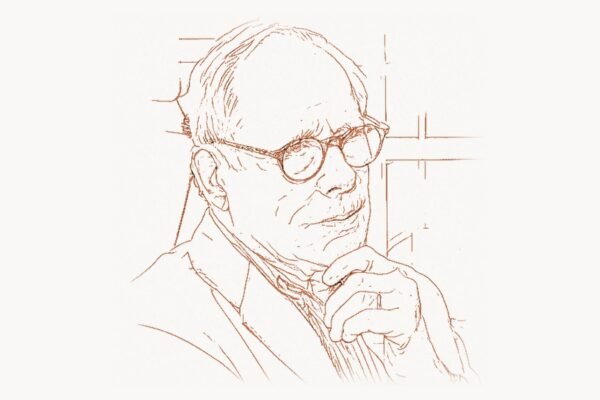
In the annals of computer science, few breakthroughs have saved as many lives, prevented as many catastrophic failures, or quietly protected as much critical infrastructure as model checking. Every time you board a modern aircraft, rely on a medical device, or trust a microprocessor to execute instructions correctly, you are placing your faith in a verification technique co-invented by E. Allen Emerson. Together with Edmund M. Clarke at Harvard in the early 1980s, Emerson developed an automated method for verifying that finite-state systems satisfy specifications written in temporal logic — a contribution so profound that it earned both men, along with Joseph Sifakis, the 2007 ACM Turing Award. Yet unlike many laureates whose names echo through conference halls, Emerson has remained a relatively understated figure, content to let the mathematics speak for itself. His story is one of intellectual courage: daring to believe that machines could check their own correctness, at a time when most researchers considered the idea computationally hopeless.
Early Life and Academic Foundations
Ernest Allen Emerson was born on June 2, 1954, in Dallas, Texas. Growing up in the American South during a period of rapid technological change, Emerson showed an early affinity for mathematics and logical reasoning. He pursued his undergraduate studies at the University of Texas at Austin, where the confluence of rigorous mathematics and nascent computer science departments provided fertile ground for a curious mind.
Emerson’s intellectual trajectory took a decisive turn when he entered the doctoral program at Harvard University in the late 1970s. There, under the supervision of Edmund M. Clarke, he encountered the fundamental question that would define his career: how can we guarantee that a concurrent system behaves correctly? At the time, concurrent and distributed systems were becoming increasingly important — from operating systems managing multiple processes to communication protocols governing early networks. But proving their correctness was agonizingly difficult. Manual proofs were error-prone, tedious, and scaled poorly. The stage was set for a revolution.
The Birth of Model Checking
The core insight behind model checking is elegant in its simplicity, even if its implementation required deep technical innovation. A system is modeled as a finite-state transition system (a Kripke structure), and the desired behavior is expressed as a formula in temporal logic. The model checker then exhaustively explores every reachable state of the system to determine whether the specification holds. If it does not, the tool produces a counterexample — a concrete execution trace demonstrating the violation.
Emerson and Clarke presented their seminal work on model checking in 1981, introducing the use of Computation Tree Logic (CTL) as the specification language. CTL allows engineers to express properties about all possible futures of a computation — statements such as “on every possible execution path, the system will eventually reach a safe state” or “there exists a path where the resource is never starved.” This branching-time perspective, where the future fans out like a tree of possibilities, distinguished their approach from linear-time frameworks and gave system designers extraordinary expressive power.
The work was initially met with skepticism. The state explosion problem — the fact that the number of states in a concurrent system grows exponentially with the number of components — seemed to render exhaustive exploration impractical for real-world systems. But Emerson and his collaborators refused to accept this limitation as permanent. Over the following decade, they developed a series of techniques to tame the explosion, including symbolic model checking using Binary Decision Diagrams (BDDs), partial order reduction, and abstraction methods that transformed model checking from a theoretical curiosity into an industrial powerhouse.
Understanding CTL: The Logic of Possibility and Necessity
To appreciate Emerson’s contribution, it helps to understand the temporal logic he helped popularize. In CTL, two types of quantifiers operate over computation paths. Path quantifiers — A (for all paths) and E (there exists a path) — are paired with temporal operators — X (next state), F (eventually/future), G (globally/always), and U (until). This yields powerful combinators like AG (on all paths, always), EF (on some path, eventually), AF (on all paths, eventually), and EG (on some path, always).
Consider a simple mutual exclusion protocol for two processes. We want to verify two critical properties: safety (both processes never enter the critical section simultaneously) and liveness (every process that requests access eventually gets it). In CTL, these become:
// Safety: It is always true on all paths that both processes
// are not simultaneously in their critical sections.
AG ¬(crit1 ∧ crit2)

// Liveness: On all paths, whenever process 1 requests access,
// it will eventually enter its critical section.
AG (req1 → AF crit1)

// No starvation: On all paths, it is always the case that
// process 2's request is eventually satisfied.
AG (req2 → AF crit2)

// Deadlock freedom: On all paths, it is always the case
// that some process can make progress.
AG (EX true)

// Bounded waiting: There exists no path where a process
// is permanently locked out while the other proceeds.
¬EG (req1 ∧ ¬crit1 ∧ AG (req1 → ¬crit1))
These formulas are not mere academic exercises. They are the exact kind of specifications that hardware engineers at Intel, AMD, and IBM use to verify processor designs before they are fabricated in silicon. A single undetected bug in a chip design can cost hundreds of millions of dollars — as the infamous Pentium FDIV bug of 1994 demonstrated. Model checking, as conceived by Emerson and Clarke, provides the mathematical guarantee that such errors are caught before they reach production.
Kripke Structures: The Mathematical Backbone
At the heart of model checking lies the Kripke structure, named after philosopher and logician Saul Kripke. A Kripke structure is a tuple M = (S, S₀, R, L) where S is a finite set of states, S₀ ⊆ S is the set of initial states, R ⊆ S × S is a transition relation, and L: S → 2^AP is a labeling function that maps each state to the set of atomic propositions true in that state.
This mathematical framework provides the precise semantics against which CTL formulas are evaluated. The model checking algorithm traverses the Kripke structure, systematically evaluating each sub-formula at each state. The genius of Emerson and Clarke’s approach was recognizing that this traversal could be performed efficiently using fixed-point computations — iteratively computing the set of states satisfying a formula until the computation stabilizes.
Here is a simplified illustration of a CTL model checking algorithm for the EF operator, which checks whether a property can eventually be reached on some path:
/**
 * CTL Model Checking: EF (Exists Finally) operator
 * Computes the set of states from which property φ
 * can eventually be reached along some execution path.
 *
 * Uses a least fixed-point computation:
 *   EF φ = φ ∨ EX(EF φ)
 *
 * @param kripke  - Kripke structure {states, transitions, labels}
 * @param phi     - Set of states where φ holds
 * @returns       - Set of states satisfying EF φ
 */
function checkEF(kripke, phi) {
  // Initialize with states that already satisfy φ
  let satisfyingStates = new Set(phi);
  let changed = true;

  // Fixed-point iteration: expand backwards
  // through predecessor states
  while (changed) {
    changed = false;
    for (const state of kripke.states) {
      if (satisfyingStates.has(state)) continue;

      // Check if any successor already satisfies EF φ
      // (this implements the EX component)
      const successors = kripke.transitions.get(state);
      for (const succ of successors) {
        if (satisfyingStates.has(succ)) {
          satisfyingStates.add(state);
          changed = true;
          break;
        }
      }
    }
  }

  return satisfyingStates;
}

// Example: simple Kripke structure for a traffic light
const trafficLight = {
  states: ['red', 'green', 'yellow'],
  transitions: new Map([
    ['red', ['green']],
    ['green', ['yellow']],
    ['yellow', ['red']]
  ]),
  labels: new Map([
    ['red', new Set(['stopped'])],
    ['green', new Set(['moving'])],
    ['yellow', new Set(['caution'])]
  ])
};

// Check EF(moving): from which states can we
// eventually reach a "moving" state?
const movingStates = new Set(['green']);
const result = checkEF(trafficLight, movingStates);
// Result: {'green', 'yellow', 'red'} — all states,
// since the light always cycles back to green
This backward reachability computation is the essence of CTL model checking. By iteratively expanding the set of states from which a property is reachable, the algorithm determines in polynomial time (relative to the size of the state space) whether the specification holds. The elegance of this fixed-point characterization — where each CTL operator corresponds to either a least or greatest fixed point of a monotone function on sets of states — was one of Emerson’s most significant theoretical contributions.
The State Explosion Problem and Symbolic Methods
The Achilles’ heel of explicit-state model checking is the state explosion problem. A system with n Boolean variables has 2n possible states. A protocol with 10 concurrent processes, each with 100 local states, yields 10010 = 1020 global states — far beyond the capacity of any computer to enumerate explicitly. This challenge threatened to confine model checking to toy examples.
Emerson contributed to multiple approaches for combating state explosion. One of the most transformative was symbolic model checking, which represents sets of states not as explicit enumerations but as Boolean functions encoded using Binary Decision Diagrams (BDDs). A BDD can represent an exponentially large set of states in compact form, and set operations — union, intersection, complement — correspond to efficient BDD operations. This allowed model checkers to handle systems with hundreds of billions of states, a feat unimaginable with explicit enumeration.
Emerson also contributed to symmetry reduction, exploiting the observation that many concurrent systems consist of identical or near-identical components. If a system has n identical processes, its state space has an n!-fold symmetry that can be factored out, dramatically reducing the number of states that need to be explored. This technique proved especially valuable in verifying cache coherence protocols and communication networks.
From Theory to Industrial Impact
The transition of model checking from academic research to industrial practice is one of the great success stories of formal methods. By the mid-1990s, companies like Intel, IBM, Microsoft, and Cadence Design Systems had integrated model checking tools into their hardware and software verification workflows. The impact was enormous.
At Intel, model checking became a critical part of the processor verification pipeline after the Pentium FDIV bug. Hardware verification teams routinely use CTL and related temporal logics to specify and verify properties of cache coherence protocols, bus arbitration schemes, and arithmetic units. At Microsoft, the SLAM project applied model checking to device drivers — a notoriously bug-prone component of operating systems — and the resulting Static Driver Verifier tool became part of the Windows Driver Development Kit.
In the aerospace and automotive industries, model checking is now mandated by safety standards. The DO-178C standard for airborne systems and the ISO 26262 standard for automotive functional safety both recognize formal verification as a valid technique for demonstrating software correctness. When you fly on a modern Boeing or Airbus aircraft, the flight control software has been subjected to formal verification techniques that trace their intellectual lineage directly to Emerson and Clarke’s work. For teams building complex software systems today, project management methodologies must account for verification as a first-class concern, not an afterthought.
The Turing Award and Beyond
In 2007, the ACM awarded the Turing Award — computing’s highest honor — to Edmund M. Clarke, E. Allen Emerson, and Joseph Sifakis “for their role in developing model checking into a highly effective verification technology that is widely adopted in the hardware and software industries.” Sifakis, working independently in France, had developed a complementary approach to model checking, and the award recognized that these parallel streams of research had converged into a unified and transformative technology.
The Turing Award placed Emerson in the company of computing’s greatest minds: Alan Turing himself (the award’s namesake), Edsger Dijkstra, Tony Hoare, Donald Knuth, and Leslie Lamport — many of whom had contributed foundational ideas to program verification and formal methods. Indeed, Emerson’s work can be seen as a natural evolution of the verification tradition that Dijkstra and Hoare pioneered with program correctness proofs, but one that replaced manual reasoning with automated exploration.
Academic Legacy at UT Austin
After completing his PhD at Harvard in 1981, Emerson returned to the University of Texas at Austin, where he spent his entire academic career. He rose through the ranks to become a full professor and holder of the Regents Chair in Computer Science. His research group at UT Austin became a leading center for temporal logic and verification research, producing generations of PhD students who went on to influential positions in academia and industry.
Emerson’s teaching and mentorship extended well beyond his immediate research area. He was known for his ability to make abstract mathematical concepts accessible and intuitive, a skill that proved invaluable in training the engineers and researchers who would apply model checking in practice. His courses on formal methods and logic in computer science attracted students from across the university, and his influence on the UT Austin computer science department was profound and lasting.
In building robust verification pipelines, modern teams increasingly rely on structured task management platforms to coordinate the complex interplay between specification writing, model construction, and automated verification runs — a workflow discipline that Emerson’s academic group practiced decades before such tools became mainstream.
Temporal Logic: A Broader Perspective
Emerson’s contributions to temporal logic extend beyond CTL. He was instrumental in studying the relationships between different temporal logics and their expressive power. The landscape of temporal logics used in verification includes:
- LTL (Linear Temporal Logic) — proposed by Amir Pnueli in 1977, which reasons about properties of individual execution paths. LTL uses temporal operators (X, F, G, U) without path quantifiers, making it a linear-time logic.
- CTL (Computation Tree Logic) — developed by Emerson and Clarke, which reasons about the branching structure of computation trees. CTL pairs path quantifiers with temporal operators, enabling properties that distinguish between universal and existential path behavior.
- CTL* (Full Computation Tree Logic) — a strictly more expressive logic that subsumes both LTL and CTL, allowing arbitrary nesting of path quantifiers and temporal operators. Emerson and Joseph Halpern introduced CTL* in 1986, providing a unifying framework for temporal specification.
- μ-calculus (modal mu-calculus) — the most expressive temporal logic commonly used in verification, based on fixed-point operators. Emerson and Charanjit Jutla showed that the model checking problem for the μ-calculus is in NP ∩ co-NP, a landmark complexity-theoretic result.
Emerson’s work on the expressive completeness of these logics — determining exactly which properties each logic can express — provided the theoretical foundation for choosing the right specification language for a given verification task. His results showed that CTL and LTL are incomparable in expressive power (each can express properties the other cannot), while CTL* subsumes both. These results, deeply connected to the work of Dana Scott and Michael Rabin on automata theory, helped shape the entire field of automated verification.
Influence on Modern Software Engineering
The principles that Emerson championed have permeated modern software engineering far beyond the domain of formal verification specialists. Contemporary practices like property-based testing, runtime verification, and design-by-contract all echo the fundamental insight that systems should be specified formally and checked automatically.
Tools like TLA+ (created by Leslie Lamport), Alloy, SPIN, and NuSMV carry forward the model checking tradition. Amazon Web Services famously uses TLA+ to verify the correctness of core distributed protocols in services like S3 and DynamoDB. The fact that the world’s largest cloud provider relies on formal specification and verification for its most critical systems is a testament to the enduring relevance of Emerson’s vision.
In the realm of programming language design, ideas from temporal logic and model checking have influenced type systems, static analysis tools, and compiler verification. The Rust programming language, with its ownership and borrowing system that statically prevents data races, embodies a model-checking-like philosophy: encoding safety invariants into the type system so that violations are caught at compile time rather than at runtime.
Personal Character and Scientific Philosophy
Those who knew Emerson describe him as a quiet, deeply thoughtful individual whose modesty belied the magnitude of his contributions. Unlike some computer scientists who actively cultivated public personas, Emerson preferred to let his papers and theorems represent him. He was known for his meticulous attention to mathematical precision and his insistence on rigorous proofs, qualities that made his theoretical contributions exceptionally reliable and enduring.
Emerson’s scientific philosophy was characterized by a belief in the unity of theory and practice. He was never content with results that were merely theoretically elegant; he wanted his work to solve real problems. This pragmatic streak, combined with deep mathematical sophistication, is what made model checking not just an intellectual achievement but a practical technology that has saved lives and prevented billions of dollars in losses.
E. Allen Emerson passed away on September 5, 2024, at the age of 70, leaving behind a legacy that continues to shape how humanity builds and trusts its most critical systems. His work demonstrated that mathematical rigor and practical impact are not opposing forces but complementary aspects of great computer science.
Frequently Asked Questions
What is model checking, and why is it important?
Model checking is an automated technique for verifying that a system (represented as a finite-state model) satisfies a specification (expressed in temporal logic). Unlike testing, which can only check a finite number of scenarios, model checking exhaustively explores every reachable state of the system. If the specification is violated, the model checker produces a counterexample — a concrete trace demonstrating the bug. This makes model checking critically important for safety-critical systems in aviation, medical devices, automotive electronics, and hardware design, where undetected bugs can have catastrophic consequences.
What is CTL, and how does it differ from LTL?
CTL (Computation Tree Logic), developed by Emerson and Clarke, is a branching-time temporal logic that reasons about all possible future computation paths from a given state. It pairs path quantifiers (A for “all paths” and E for “exists a path”) with temporal operators (X, F, G, U). LTL (Linear Temporal Logic), proposed by Amir Pnueli, is a linear-time logic that reasons about properties of individual execution paths without branching. CTL can express certain branching properties (like “there exists a path where X holds forever”) that LTL cannot, while LTL can express certain fairness properties that CTL cannot. The logics are incomparable in expressive power, and CTL* subsumes both.
What is the state explosion problem in model checking?
The state explosion problem refers to the exponential growth of the state space as the number of system components increases. A system with n concurrent processes, each having k local states, can have up to kn global states. This makes explicit enumeration infeasible for large systems. Researchers have developed numerous techniques to combat this problem, including symbolic model checking with BDDs, partial order reduction, symmetry reduction, abstraction refinement (CEGAR), and bounded model checking with SAT solvers. These advances have made it possible to verify systems with billions of states.
What was E. Allen Emerson’s most significant contribution to computer science?
Emerson’s most significant contribution was the co-invention of model checking with Edmund M. Clarke in 1981. Their approach combined Kripke structures (finite-state models) with CTL (Computation Tree Logic) specifications and an efficient algorithmic procedure for automatically verifying whether the model satisfies the specification. This work, which earned the 2007 Turing Award, transformed software and hardware verification from a manual, error-prone process into an automated, mathematically rigorous discipline. Beyond model checking itself, Emerson made foundational contributions to the theory of temporal logics, fixed-point characterizations of temporal operators, and the complexity of verification problems.
How is model checking used in industry today?
Model checking is used extensively across multiple industries. In semiconductor design, companies like Intel, AMD, and ARM use model checking to verify processor logic, cache coherence protocols, and bus interfaces before fabrication. In aerospace, formal verification is part of the DO-178C certification standard for flight-critical software. In automotive engineering, ISO 26262 recognizes model checking for safety-critical systems. Major tech companies like Amazon (TLA+ for distributed systems), Microsoft (SLAM for driver verification), and Facebook (Infer for static analysis) employ model checking and related formal methods. The technique is also used in verifying communication protocols, smart contracts on blockchain platforms, and medical device software.