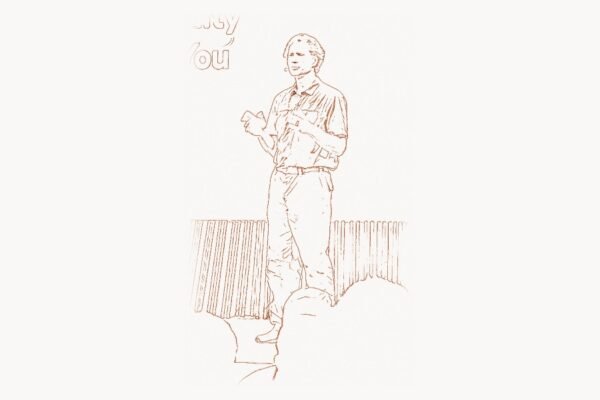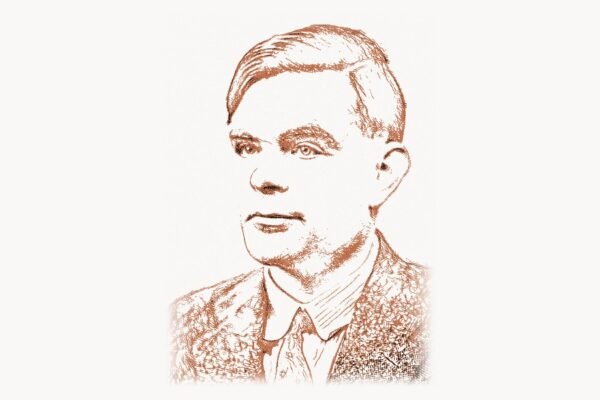
In 1956, a program called Logic Theorist proved a mathematical theorem from Bertrand Russell and Alfred North Whitehead’s Principia Mathematica — and did it more elegantly than the human authors had. The machine found a shorter, more efficient proof of Theorem 2.85. Behind that program stood Allen Newell, a man who would spend the next four decades building the intellectual foundations of both artificial intelligence and cognitive science. At a time when computers were little more than expensive calculators, Newell dared to ask whether machines could think — and then built the software to test that hypothesis.
Early Life and Education
Allen Newell was born on March 19, 1927, in San Francisco, California. His father, Robert Newell, was a professor of radiology at Stanford Medical School, and his mother, Jeanette LeValley Newell, was active in civic affairs. Growing up in an academically oriented household, Newell developed an early fascination with science and mathematics that would shape his entire career.
Newell attended the Lowell High School in San Francisco, where he demonstrated aptitude in both sciences and the arts. After graduating, he enrolled at Stanford University in 1945, initially studying physics. His undergraduate years coincided with the immediate postwar expansion of American research universities, a period when new disciplines were forming at the boundaries of established fields. Newell earned his bachelor’s degree in physics from Stanford in 1949.
Following graduation, Newell spent a year at Princeton University studying mathematics before joining the RAND Corporation in Santa Monica, California, in 1950. At RAND, he was initially assigned to work on logistics and organizational research, studying how Air Force personnel handled radar information in early warning systems. It was this work — observing humans processing complex information under time pressure — that would redirect the course of his entire career. Rather than continuing in pure physics or mathematics, Newell became captivated by the question of how intelligent behavior arises, whether in humans or in machines.
In 1957, Newell enrolled as a doctoral student at Carnegie Institute of Technology (later Carnegie Mellon University) under the supervision of Herbert A. Simon, with whom he had already been collaborating at RAND for several years. He completed his PhD in industrial administration in 1957, with a dissertation that drew directly on his work developing computer programs capable of problem-solving behavior.
Career and the Birth of Artificial Intelligence
Allen Newell’s career was defined by a single, audacious question: can we build computer programs that exhibit general intelligent behavior? His pursuit of this question, primarily alongside Herbert Simon, produced some of the most consequential work in the history of computing.
Technical Innovation
The Logic Theorist, completed in late 1955 and demonstrated publicly at the Dartmouth Conference in 1956, was the first program designed to mimic human problem-solving. It operated on symbolic expressions, applying heuristic rules to search through a space of possible proofs in propositional logic. Unlike brute-force approaches that enumerate every possibility, the Logic Theorist used strategies inspired by how mathematicians actually think — working backward from the goal, applying previously proven theorems as building blocks, and pruning unpromising search paths early.
The architecture of the Logic Theorist introduced ideas that would become fundamental to AI. Consider how the program represented logical expressions as tree structures that could be manipulated symbolically:
;; Representation of a logical implication in Logic Theorist style
;; (IMPLIES P Q) means "P implies Q"
;; The program would search for proof paths by applying inference rules

(defun prove-theorem (goal axioms proven-theorems)
  "Attempt to prove GOAL using available axioms and proven theorems.
   Uses backward chaining: start from what we want to prove
   and work toward known truths."
  (cond
    ;; Base case: goal is already an axiom or proven theorem
    ((member goal axioms) T)
    ((member goal proven-theorems) T)
    ;; Try substitution: find a known theorem that matches
    ;; the structure of the goal with variable substitution
    ((try-substitution goal axioms))
    ;; Try detachment (modus ponens): if we can prove (IMPLIES A GOAL)
    ;; and we can prove A, then GOAL follows
    ((try-detachment goal axioms proven-theorems))
    ;; Try chaining: link intermediate results
    ((try-chaining goal axioms proven-theorems))
    ;; No proof found within search limits
    (T NIL)))
Newell and Simon went further in 1957 with the General Problem Solver (GPS), a program that attempted to be a universal problem-solving engine. GPS introduced the concept of means-ends analysis — comparing the current state to the goal state, identifying the most important difference, and selecting an operator to reduce that difference. This recursive decomposition of complex problems into manageable subgoals was a breakthrough in both AI methodology and psychological theory.
The key innovation of GPS was its separation of problem-solving strategy from domain-specific knowledge. The same means-ends analysis engine could tackle logic proofs, algebraic simplification, or planning tasks, provided the appropriate operators and state representations were supplied. This idea of a general-purpose reasoning architecture would echo through decades of AI research and directly influenced modern project management and task decomposition approaches used in software development today.
Why It Mattered
Before Newell and Simon, the very idea that a computer program could perform tasks requiring intelligence was controversial at best and dismissed as fantasy at worst. The Logic Theorist and GPS did not merely demonstrate isolated tricks. They provided an existence proof: yes, machines can manipulate symbols in ways that constitute reasoning.
This had profound consequences. First, it established the symbolic or “Good Old-Fashioned AI” (GOFAI) paradigm that dominated the field for thirty years. Second, it created a bridge between computer science and psychology — if a program could solve problems the same way humans do, then programs could serve as theories of human cognition. Third, the heuristic search techniques pioneered by Newell and Simon became foundational tools, later refined by researchers like Edsger Dijkstra in graph algorithms and applied across optimization, planning, and game-playing systems.
The Dartmouth Conference of 1956, where the Logic Theorist was presented, is widely regarded as the founding event of artificial intelligence as a field. Newell and Simon’s work was the most concrete, demonstrable achievement shown at that gathering, lending credibility to the entire enterprise.
Other Major Contributions
While the Logic Theorist and GPS would have secured Newell’s place in computing history, his contributions extended far beyond those early programs.
Soar: The Unified Theory of Cognition. Beginning in the early 1980s, Newell led the development of Soar, a cognitive architecture intended to model the full range of human cognitive capabilities within a single system. Soar combined production rules, chunking (an automatic learning mechanism), and hierarchical goal management. Unlike narrow AI systems designed for specific tasks, Soar aspired to general intelligence through a unified set of mechanisms. The architecture demonstrated how learning, planning, and problem-solving could emerge from a relatively small number of computational principles — an approach that resonates with today’s efforts in integrated AI-driven development workflows.
Human-Computer Interaction. Newell made substantial contributions to HCI, particularly through his work with Stuart Card and Thomas Moran on the GOMS (Goals, Operators, Methods, Selection rules) model. Published in their 1983 book The Psychology of Human-Computer Interaction, GOMS provided a rigorous framework for predicting how long it would take users to perform tasks in software interfaces. This work demonstrated how cognitive science could yield practical engineering methods for interface design:
# Simplified GOMS-style analysis: Keystroke-Level Model (KLM)
# Estimates task completion time by summing operator durations

# Standard KLM operator durations (seconds)
OPERATORS = {
    "K": 0.28,    # Keystroke (average skilled typist)
    "P": 1.10,    # Point to target with mouse
    "B": 0.10,    # Press mouse button
    "H": 0.40,    # Home hand from keyboard to mouse (or vice versa)
    "M": 1.35,    # Mental preparation (deciding what to do next)
    "R": None,    # System response time (variable)
}

def estimate_task_time(operator_sequence, response_times=None):
    """
    Estimate total time for a task given a sequence of KLM operators.
    Example: "M P B M K K K K K" = think, point, click, think, type 5 chars
    """
    total = 0.0
    r_index = 0
    for op in operator_sequence.split():
        if op == "R" and response_times:
            total += response_times[r_index]
            r_index += 1
        else:
            total += OPERATORS.get(op, 0)
    return round(total, 2)

# Example: Copy-paste text from one field to another
# Mental prep -> Point to source -> Click -> Select all (Ctrl+A) ->
# Copy (Ctrl+C) -> Point to destination -> Click -> Paste (Ctrl+V)
task = "M P B M K K M H P B M K K"
print(f"Estimated time: {estimate_task_time(task)} seconds")
# Output: Estimated time: 8.66 seconds
IPL (Information Processing Language). Newell, along with Cliff Shaw and Simon, developed IPL in the mid-1950s, one of the earliest list-processing languages. IPL introduced concepts such as linked lists, associative memory, and recursive subroutines that would later be refined in languages like LISP. Although IPL itself is rarely remembered today, its ideas permeated the programming languages that followed and influenced pioneers like Brian Kernighan and other language designers who built on these foundational abstractions.
Production Systems. Newell formalized the production system model of computation — a framework where behavior is driven by condition-action rules (if X is true, then do Y). This model became the backbone of expert systems in the 1970s and 1980s and remains central to cognitive architectures. The production system framework provided a way to express knowledge that was both computationally tractable and psychologically plausible.
Philosophy and Approach
Allen Newell was not merely a programmer or an engineer. He was a theorist who believed deeply in the power of unified, comprehensive explanations. His 1990 book Unified Theories of Cognition laid out his intellectual manifesto: the time had come to stop building isolated micro-theories of individual cognitive phenomena and instead construct single systems that could account for the full breadth of human cognition.
Key Principles
- Physical Symbol System Hypothesis: Newell and Simon proposed that a physical symbol system — a system capable of manipulating symbolic expressions — possesses the necessary and sufficient means for general intelligent action. This bold claim defined the research program of classical AI and remains debated to this day, particularly in light of the success of connectionist approaches like those advanced by Frank Rosenblatt and later deep learning researchers such as Ilya Sutskever.
- Heuristic Search as the Core of Intelligence: Rather than exhaustive search or pure deduction, intelligent behavior relies on heuristic methods — rules of thumb that guide search through vast problem spaces. This insight applied equally to human cognition and machine intelligence.
- Unified Theories over Micro-Theories: Newell argued passionately that cognitive science suffered from a proliferation of narrow, incompatible models. He championed the development of integrated cognitive architectures like Soar that could simultaneously explain perception, memory, learning, problem-solving, and language within a single framework.
- Programs as Theories: A computer program that performs a cognitive task is itself a scientific theory of how that task is performed. This methodological stance — that running code constitutes a formal, testable hypothesis about cognition — was revolutionary and gave computational modeling its scientific legitimacy.
- The Power of Constraints: Newell believed that real scientific progress came from embracing constraints rather than avoiding them. By requiring that a cognitive architecture explain multiple phenomena simultaneously, researchers are forced toward deeper, more accurate theories.
- Interdisciplinary Integration: Newell consistently worked across disciplinary boundaries — combining computer science, psychology, linguistics, and philosophy. He viewed artificial intelligence not as a subfield of computer science but as a fundamentally interdisciplinary endeavor.
Legacy and Impact
Allen Newell died on July 19, 1992, at the age of 65, from cancer. In his relatively short life, he transformed multiple fields and left an intellectual legacy that continues to shape research today.
Newell received the ACM Turing Award in 1975, jointly with Herbert Simon, for their contributions to artificial intelligence, the psychology of human cognition, and list processing. The award citation recognized their work as having established the foundations of both AI and cognitive science as scientific disciplines.
Carnegie Mellon University named the Allen Newell Award for Research Excellence in his honor. The ACM/AAAI Allen Newell Award, established in 1993, is given annually for career contributions that bridge computer science and other disciplines — a fitting tribute to a man whose work defied narrow categorization.
The Soar cognitive architecture continues to be actively developed and used in research more than thirty years after its inception. It has been applied to modeling human cognition, building intelligent tutoring systems, controlling autonomous agents, and simulating military operations. The production system paradigm Newell championed lives on in modern rule engines, business process management systems, and AI planning frameworks.
Newell’s influence on human-computer interaction through GOMS and related models created a quantitative engineering discipline where previously there had been only intuition. Contemporary UX research, including modern approaches to web performance optimization, still builds on the principles Newell helped establish.
Perhaps most importantly, Newell demonstrated that it was possible — and essential — to study the mind scientifically using computational tools. The entire field of computational cognitive science, now a thriving area connecting neuroscience, psychology, and AI, traces its origins directly to the research program Newell and Simon launched in the 1950s. His insistence on unified theories continues to inspire researchers working on artificial general intelligence, including those approaching AI safety from theoretical foundations like Stuart Russell.
Key Facts
- Full name: Allen Newell
- Born: March 19, 1927, San Francisco, California
- Died: July 19, 1992, Pittsburgh, Pennsylvania (age 65)
- Education: BS in Physics, Stanford University (1949); PhD, Carnegie Institute of Technology (1957)
- Known for: Logic Theorist, General Problem Solver (GPS), Soar cognitive architecture, Information Processing Language (IPL), Physical Symbol System Hypothesis, GOMS model
- Awards: ACM Turing Award (1975, with Herbert Simon), National Medal of Science (1992), ACM Distinguished Service Award
- Institutions: RAND Corporation, Carnegie Mellon University
- Key collaborators: Herbert A. Simon, J. Clifford Shaw, Stuart Card, Thomas Moran
- Major publications: Human Problem Solving (1972, with Simon), Unified Theories of Cognition (1990)
- Legacy: ACM/AAAI Allen Newell Award established in his honor (1993)
FAQ
What was Allen Newell’s most important contribution to computer science?
Newell’s most important contribution was the co-creation of the Logic Theorist (1955-1956) with Herbert Simon and Cliff Shaw. This was the first program to perform automated reasoning by proving mathematical theorems using heuristic search rather than brute force. Together with the General Problem Solver, it established the foundational paradigm of symbolic AI and demonstrated that machines could perform tasks previously thought to require human intelligence. The Physical Symbol System Hypothesis that emerged from this work defined the research agenda for artificial intelligence for decades.
How did Allen Newell influence cognitive science?
Newell was instrumental in establishing the information processing model of human cognition — the idea that the human mind can be understood as a system that manipulates symbolic representations according to rules. His programs were not just engineering artifacts but scientific theories about how humans think. The Soar cognitive architecture, his most mature statement on this approach, attempted to model the entire range of human cognitive capabilities within a single unified system. His 1990 book Unified Theories of Cognition called for the field to move beyond isolated experiments and build comprehensive computational models of the mind.
What is the Soar cognitive architecture and is it still used today?
Soar is a cognitive architecture — a computational framework designed to model general intelligent behavior. Developed by Newell and his students (principally John Laird and Paul Rosenbloom) beginning in 1983, Soar combines production rules for knowledge representation, goal hierarchies for task management, and chunking for automatic learning. Yes, Soar is still actively developed and maintained by the Soar Technology group and researchers at the University of Michigan. It has been used in military simulations, intelligent tutoring systems, autonomous robotics, and as a research platform for understanding human cognition.
What is the difference between Newell’s symbolic AI approach and modern deep learning?
Newell’s approach, often called symbolic AI or GOFAI (Good Old-Fashioned AI), represents knowledge as discrete symbols manipulated by explicit rules. Programs reason by searching through structured problem spaces using heuristic strategies. Modern deep learning, by contrast, learns distributed numerical representations (neural network weights) from large datasets, without explicit symbolic rules. Newell’s approach excels at tasks requiring structured reasoning, explanation, and planning, while deep learning excels at perception, pattern recognition, and learning from raw data. Many contemporary AI researchers argue that a synthesis of both approaches — sometimes called neurosymbolic AI — may be necessary to achieve the kind of general intelligence Newell envisioned.