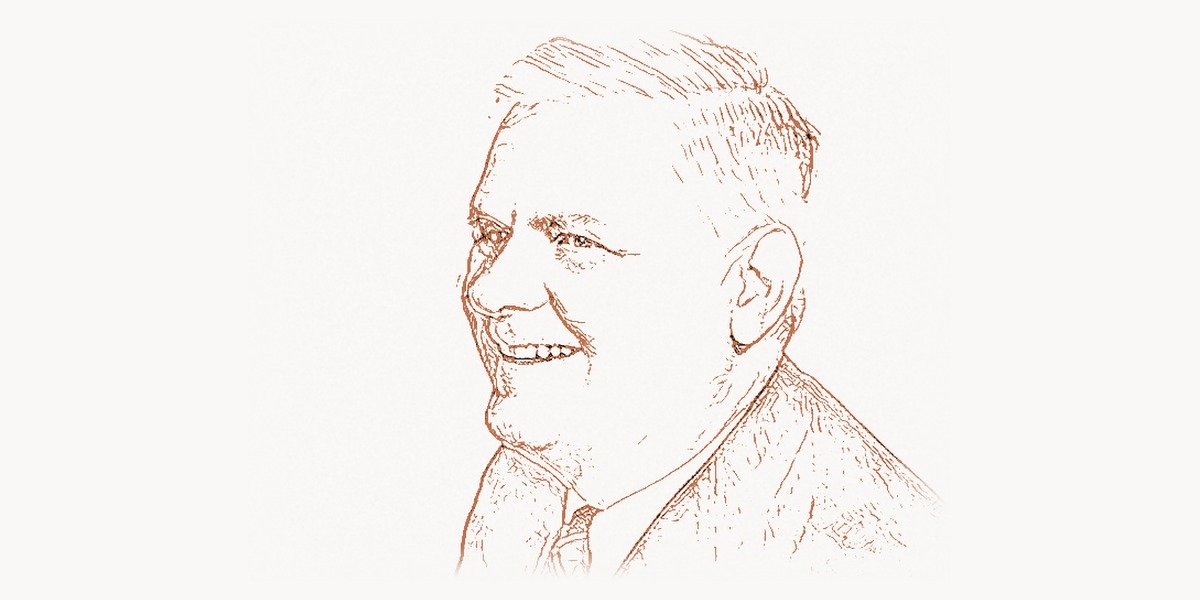
Long before silicon chips and glowing monitors became synonymous with computing, a quiet mathematician at Princeton University was scribbling symbols on a chalkboard that would ultimately define what it means to compute. Alonzo Church never built a machine. He never soldered a circuit or punched a card. Yet his invention — the lambda calculus — became the theoretical backbone of every programming language, every compiler, and every function call that has ever executed on any computer in history. In a discipline obsessed with hardware breakthroughs and entrepreneurial legends, Church’s story is a reminder that the most transformative ideas in technology sometimes begin as pure abstractions, born from nothing more than logic, pencil, and paper.
Early Life and the Path to Mathematics
Alonzo Church was born on June 14, 1903, in Washington, D.C. His father, Samuel Robbins Church, was a judge, and his mother, Mildred Hannah Letterman Parker, came from a family with deep roots in American academia. From an early age, Church displayed an extraordinary aptitude for abstract reasoning. He was not the kind of child who tinkered with mechanical contraptions; instead, he was drawn to the internal world of patterns, proofs, and logical structures.
Church enrolled at Princeton University as an undergraduate in 1920, graduating in just three years with a degree in mathematics. He continued at Princeton for his doctoral studies, completing his PhD in 1927 under the supervision of Oswald Veblen, a prominent figure in geometry and topology. His dissertation explored alternatives to the axiom of choice and the foundations of mathematical logic — topics that would steer the course of his entire career.
After brief postdoctoral stints at Harvard and the University of Göttingen (where he encountered the European school of mathematical logic, including the ideas of Donald Knuth and other formalists), Church returned to Princeton in 1929 as a faculty member. He would remain there for nearly four decades, quietly cultivating what would become one of the most influential research programs in the history of mathematics and computer science.
The Entscheidungsproblem and the Birth of Lambda Calculus
The intellectual landscape of the 1920s and 1930s was dominated by a grand challenge known as the Entscheidungsproblem — the “decision problem.” Posed by David Hilbert, it asked a deceptively simple question: is there a general mechanical procedure that can determine whether any given mathematical statement is true or false? Hilbert believed the answer was yes, and that mathematics could be placed on a perfectly solid, decidable foundation.
Church saw this problem as an invitation. To answer it, he needed a precise definition of what “mechanical procedure” actually meant. In the early 1930s, he developed the lambda calculus — a formal system for expressing computation based on function abstraction and application. The lambda calculus used only three constructs: variables, function definitions (using the Greek letter lambda, λ), and function application. Despite this radical simplicity, it could express any computable function.
In 1936, Church published his landmark paper proving that the Entscheidungsproblem was unsolvable. No universal algorithm could decide the truth of every mathematical statement. This result, known as Church’s theorem, appeared just weeks before Alan Turing published his own, independent proof using his now-famous Turing machines. The two approaches — Church’s lambda calculus and Turing’s abstract machines — were soon shown to be equivalent in computational power, a fact that became central to the Church-Turing thesis.
What Lambda Calculus Actually Looks Like
Lambda calculus is deceptively minimal. Every expression is one of three things: a variable (like x), an abstraction (a function definition like λx.x), or an application (applying a function to an argument like (λx.x) y). The entire system operates through a single rule called beta reduction: when a function is applied to an argument, you substitute the argument for the bound variable in the function body.
-- Identity function: takes any input and returns it unchanged
identity = λx.x

-- Applying the identity function to a value:
(λx.x) 42
→ 42    (by beta reduction: substitute 42 for x)

-- A function that takes two arguments and returns the first:
first = λx.λy.x

-- Applying it:
(λx.λy.x) a b
→ (λy.a) b
→ a

-- A function that applies a function to an argument twice:
double_apply = λf.λx.f (f x)

-- If we apply "double_apply" to a successor function and 0:
(λf.λx.f (f x)) succ 0
→ succ (succ 0)
→ 2
This tiny system — no numbers, no data types, no loops, no conditionals built in — can represent absolutely anything computable. That is the stunning insight Church delivered to the world.
Church Encoding: Numbers, Booleans, and Data From Nothing
One of the most elegant demonstrations of lambda calculus’s power is Church encoding — a technique for representing data using nothing but functions. Church showed that numbers, booleans, pairs, lists, and even conditional logic could all be constructed from pure lambda abstractions.
Church Numerals
In Church encoding, a natural number n is represented as a function that applies another function f to an argument x exactly n times. Zero applies f zero times (returning x unchanged), one applies it once, two applies it twice, and so on.
-- Church numerals: numbers as functions
0 = λf.λx.x                     -- apply f zero times
1 = λf.λx.f x                   -- apply f once
2 = λf.λx.f (f x)               -- apply f twice
3 = λf.λx.f (f (f x))           -- apply f three times

-- Successor function: given a Church numeral n, return n+1
SUCC = λn.λf.λx.f (n f x)

-- Example: SUCC applied to 2
SUCC 2
= (λn.λf.λx.f (n f x)) (λf.λx.f (f x))
→ λf.λx.f ((λf.λx.f (f x)) f x)
→ λf.λx.f (f (f x))
= 3  ✓

-- Addition: apply successor n times to m
ADD = λm.λn.λf.λx.m f (n f x)

-- Multiplication: compose f m*n times
MUL = λm.λn.λf.m (n f)

-- Church booleans
TRUE  = λx.λy.x     -- select the first argument
FALSE = λx.λy.y     -- select the second argument

-- IF-THEN-ELSE is just function application:
IF = λp.λa.λb.p a b

-- AND, OR, NOT built from booleans
AND = λp.λq.p q FALSE
OR  = λp.λq.p TRUE q
NOT = λp.p FALSE TRUE

-- Pairs (tuples)
PAIR   = λx.λy.λf.f x y
FIRST  = λp.p TRUE
SECOND = λp.p FALSE
The elegance here is not merely aesthetic. Church encoding proved that computation does not require built-in data types. Everything can be constructed from the act of function application itself. This insight directly influenced the design of functional programming languages decades later, and it remains a foundational concept taught in computer science programs worldwide. If you are managing a development team that works with functional paradigms, modern project management tools like Taskee can help organize sprints around these complex architectural decisions.
Church and Turing: Two Paths to the Same Truth
The relationship between Alonzo Church and Alan Turing is one of the most significant intellectual partnerships in the history of science — even though it was largely indirect. In 1936, both men independently proved that the Entscheidungsproblem had no solution, but they did so using entirely different formalisms.
Church’s proof used lambda calculus. Turing’s proof used his hypothetical computing machines (now called Turing machines). When Turing arrived at Princeton as a graduate student in 1936, Church became his doctoral advisor. Turing completed his PhD under Church’s supervision in 1938, with a dissertation on ordinal logics and their relationship to computational processes.
The equivalence of their two systems — demonstrated by Turing himself — gave rise to the Church-Turing thesis, one of the most important claims in all of computer science. The thesis states that any function that can be computed by any reasonable model of computation can be computed by both lambda calculus and a Turing machine. In other words, these systems capture the fundamental limits of what can be calculated. No future computer, no matter how powerful, can transcend these boundaries.
This was not just an academic curiosity. The Church-Turing thesis established the theoretical ceiling for all of computing. Every algorithm ever written, every application ever deployed, every AI model ever trained operates within the boundaries that Church and Turing defined. For teams building modern software products, understanding these foundational limits can inform architectural decisions — something that a well-structured digital strategy platform like Toimi can help translate into actionable development roadmaps.
Influence on Programming Languages
While Turing machines became the dominant model for understanding hardware and sequential computation, Church’s lambda calculus became the foundation for programming language theory. The connection was not immediately obvious in the early days of computing, when languages like FORTRAN and COBOL dominated. But in 1958, John McCarthy created LISP — a programming language directly inspired by lambda calculus.
LISP treated functions as first-class objects, allowed anonymous functions (lambdas), and supported recursive computation in a way that mirrored Church’s formalism almost exactly. McCarthy explicitly acknowledged Church’s influence, and LISP became the language of choice for artificial intelligence research for decades.
From LISP, the influence spread outward. The ML family of languages (Standard ML, OCaml, F#) formalized type systems grounded in lambda calculus. Haskell, named after the logician Haskell Curry who extended Church’s work on combinatory logic, pushed the idea of pure functional programming to its logical conclusion. Even mainstream languages eventually adopted Church’s ideas: JavaScript’s anonymous functions, Python’s lambda expressions, Java 8’s lambda syntax, C++ lambdas, and Rust’s closures all trace their conceptual lineage directly back to Church’s 1930s formalism.
Today, it is virtually impossible to find a modern programming language that does not incorporate some form of lambda abstraction. Church’s notation — the humble λ — has become the universal symbol for anonymous functions across the entire software industry.
Contributions to Mathematical Logic
Church’s contributions extended well beyond lambda calculus. He made foundational advances in several areas of mathematical logic that shaped the field for the rest of the twentieth century.
The Simple Theory of Types
In 1940, Church published “A Formulation of the Simple Theory of Types,” which provided a rigorous type-theoretic framework built on lambda calculus. This system assigned types to lambda expressions, preventing certain kinds of paradoxes and inconsistencies. Church’s simple type theory became a precursor to modern type theory, which underpins the type systems of languages like Haskell, Scala, and TypeScript. The Curry-Howard correspondence — which reveals a deep isomorphism between proofs and programs — draws directly from Church’s typed lambda calculus.
Church’s Thesis on Effective Computability
Beyond the Entscheidungsproblem, Church formalized the notion of effective calculability. He proposed that the informal concept of an algorithm corresponds precisely to the formal concept of a lambda-definable function. This proposal, now known as Church’s thesis (distinct from the Church-Turing thesis, though related), was a philosophical claim as much as a mathematical one. It asserted that our intuitive understanding of computation — following a step-by-step procedure to produce a result — is fully captured by the formal apparatus of lambda calculus.
Foundational Work in Proof Theory
Church also contributed to proof theory, the study of the structure of mathematical proofs themselves. His work on the lambda calculus provided tools for analyzing how proofs could be simplified, transformed, and normalized — concepts that later became central to automated theorem proving and formal verification. Modern tools that check the correctness of software and hardware, from aerospace systems to cryptographic protocols, rely on techniques that trace back to Church’s foundational insights, much as Edsger Dijkstra’s work on structured programming provided discipline to the coding process itself.
The Journal of Symbolic Logic
In 1936, the same year he proved the undecidability of the Entscheidungsproblem, Church co-founded the Journal of Symbolic Logic with C. H. Langford. He served as editor for the journal’s reviews section for an astonishing 44 years, from 1936 to 1979. Under his stewardship, the journal became the premier publication in mathematical logic, maintaining rigorous standards that elevated the entire discipline.
Church’s editorial work was characterized by meticulous attention to detail and an encyclopedic knowledge of the field. He personally reviewed and classified thousands of papers, creating a comprehensive bibliography of symbolic logic that remains a valuable historical resource. His dedication to scholarly rigor helped establish mathematical logic as a legitimate and respected branch of mathematics during a period when many traditional mathematicians viewed it with skepticism.
Students Who Changed the World
Perhaps one of Church’s most enduring legacies is the extraordinary list of doctoral students he mentored at Princeton. His PhD students include some of the most influential figures in computer science and mathematical logic:
- Alan Turing (PhD 1938) — pioneer of theoretical computer science, creator of the Turing machine, and wartime codebreaker whose work at Bletchley Park helped turn the tide of World War II.
- Stephen Kleene — a founder of recursion theory who developed the Kleene star notation used in regular expressions, and who helped formalize the mathematical underpinnings of computation alongside Church.
- J. Barkley Rosser — known for the Church-Rosser theorem, which establishes that the order of reduction in lambda calculus does not affect the final result (confluence), a property essential to the correctness of functional programming languages.
- Dana Scott — who developed domain theory, providing the first rigorous mathematical semantics for programming languages and solving a problem that had vexed researchers for decades.
- Michael Rabin — co-inventor of the nondeterministic finite automaton and contributor to computational complexity theory, later a Turing Award laureate.
- Hartley Rogers Jr. — who made fundamental contributions to the theory of computable functions and wrote one of the definitive textbooks on recursive function theory.
This lineage is remarkable. Through his students, Church’s intellectual DNA permeated virtually every branch of theoretical computer science. The ripple effects of his mentorship at Princeton continue to shape the field today, just as Claude Shannon’s work on information theory created entirely new domains of research.
Later Career and Legacy
Church remained at Princeton until 1967, when he moved to UCLA to join their mathematics and philosophy departments. He continued working actively until well into his eighties, a testament to his deep intellectual engagement with the foundations of logic and computation. He passed away on August 11, 1995, at the age of 92, in Hudson, Ohio.
Despite his monumental contributions, Church never achieved the same level of public recognition as his student Turing. There are several reasons for this. Church was intensely private and deeply introverted. He avoided publicity and rarely gave public lectures outside of academic settings. His work was abstract and mathematical, lacking the dramatic narrative of wartime codebreaking that made Turing a household name. And lambda calculus, for all its power, does not lend itself to compelling visual metaphors the way a Turing machine does.
But within the computer science community, Church’s stature is immense. The annual Alonzo Church Award for Outstanding Contributions to Logic and Computation, established in 2015, recognizes the best work in logic and computation. The lambda symbol has become an icon for functional programming communities worldwide. And every time a developer writes an anonymous function in JavaScript, Python, Java, or any other language, they are working in the conceptual framework that Alonzo Church invented nearly a century ago.
The Enduring Relevance of Lambda Calculus
Lambda calculus is not merely a historical curiosity. It remains an active area of research and a practical foundation for modern computing. Several contemporary developments illustrate its ongoing relevance:
- Functional programming renaissance: Languages like Haskell, Elixir, Clojure, and Scala have brought Church’s ideas into mainstream software development. Major tech companies use functional programming for distributed systems, data processing, and financial applications.
- Type theory and proof assistants: Tools like Coq, Agda, and Lean — used to formally verify mathematical proofs and software correctness — are built on extensions of Church’s typed lambda calculus.
- Compiler design: The intermediate representations used by modern compilers often rely on lambda-calculus-based transformations, including continuation-passing style (CPS) and A-normal form, techniques pioneered by researchers working in Church’s tradition.
- Category theory and programming: The connections between lambda calculus, category theory, and type theory (explored through the lens of the Curry-Howard-Lambek correspondence) have opened new approaches to software architecture and API design.
- Quantum computing: Researchers have extended lambda calculus to model quantum computation, creating quantum lambda calculi that may one day serve as the theoretical foundation for quantum programming languages.
For software engineers and technical leaders, understanding lambda calculus provides a deeper appreciation of why programming languages work the way they do. It explains why closures behave the way they do, why higher-order functions are powerful, and why immutability leads to more predictable software — principles that Grace Hopper would have appreciated as she championed making computers accessible through better language design.
Church’s Place in the Pantheon
When historians of computing compile their lists of the most important figures in the field, Alonzo Church belongs in the innermost circle alongside Turing, von Neumann, and Shannon. His contribution was unique: he gave computation its mathematical vocabulary. Before Church, the notion of a “computable function” was vague and intuitive. After Church, it was precise, formal, and provably equivalent across multiple independent formulations.
The lambda calculus is not just a historical artifact — it is a living, breathing formalism that continues to shape how we think about and build software. Every anonymous function, every closure, every functional pipeline owes its existence to the quiet genius of a Princeton mathematician who, in the 1930s, dared to ask what it truly means to compute.
Frequently Asked Questions
What is lambda calculus, and why is it important in computer science?
Lambda calculus is a formal system invented by Alonzo Church in the 1930s for expressing computation through function abstraction and application. It uses only three constructs — variables, function definitions (using the λ symbol), and function application — yet can represent any computable function. It is important because it provides the theoretical foundation for functional programming, type theory, compiler design, and our understanding of what is computable. Every modern programming language incorporates concepts that originate directly from Church’s lambda calculus.
What is the difference between the Church-Turing thesis and Church’s theorem?
Church’s theorem (1936) is a proven mathematical result stating that the Entscheidungsproblem — the decision problem asking whether a universal algorithm can determine the truth of any mathematical statement — is unsolvable. The Church-Turing thesis, by contrast, is an unprovable hypothesis asserting that any function computable by an informal algorithm can be computed by a Turing machine (or equivalently, expressed in lambda calculus). Church’s theorem is a hard proof; the Church-Turing thesis is a foundational claim about the nature of computation that has withstood decades of scrutiny but cannot be formally demonstrated.
How does Church encoding work?
Church encoding is a technique for representing data — numbers, booleans, pairs, lists, and more — using only lambda functions. For example, the number 3 is represented as a function that applies another function three times: λf.λx.f(f(f x)). Booleans are represented as selector functions: TRUE selects the first of two arguments, FALSE selects the second. These encodings demonstrate that computation does not require built-in data types; everything can be constructed from function abstraction and application alone.
What programming languages were directly influenced by lambda calculus?
LISP (1958), created by John McCarthy, was the first programming language directly inspired by lambda calculus. It treated functions as first-class values and supported anonymous functions. Subsequently, the ML family (Standard ML, OCaml, F#), Haskell, Scheme, Erlang, Clojure, and Scala were built on functional programming principles rooted in lambda calculus. Even imperative and multi-paradigm languages adopted lambda features: JavaScript closures, Python’s lambda keyword, Java 8 lambdas, C++ lambda expressions, and Rust closures all descend from Church’s formalism.
Why is Alonzo Church less famous than Alan Turing?
Several factors explain this disparity. Turing’s wartime codebreaking work at Bletchley Park provided a dramatic narrative that captured public imagination, especially after it was declassified. Turing’s persecution and tragic death added a deeply human dimension to his story. Church, by contrast, led a quiet academic life at Princeton and UCLA, avoided publicity, and worked in abstract mathematics that does not translate easily into popular media. Additionally, Turing machines — with their concrete metaphor of a tape and a reading head — are more intuitive to explain than the symbolic formalism of lambda calculus. Within the academic community, however, Church is recognized as Turing’s peer and co-architect of the foundations of computability theory.