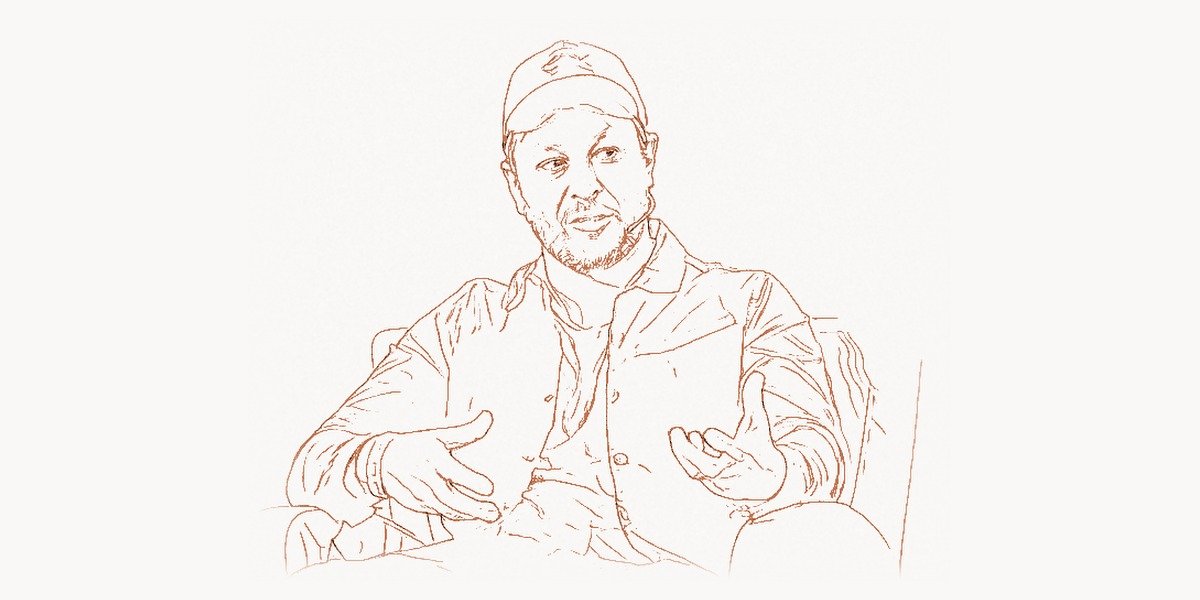
In November 2017, a former Qualcomm engineer named Anatoly Yakovenko published a whitepaper that proposed something the blockchain community considered impossible: a decentralized network capable of processing hundreds of thousands of transactions per second without sacrificing security or decentralization. The core idea was deceptively simple — use cryptographic timestamps to create a verifiable ordering of events before consensus, rather than making validators agree on order during consensus. He called this mechanism Proof of History, and it became the foundation of Solana, now one of the fastest and most widely used blockchains in the world. While Ethereum processes roughly 15 transactions per second and Bitcoin manages about 7, Solana routinely handles thousands — with a theoretical throughput ceiling that continues to rise with hardware improvements. Yakovenko did not set out to build a cryptocurrency. He set out to solve a systems engineering problem: how do you synchronize thousands of distributed computers without making them wait for each other? The answer he found reshaped an entire industry.
Early Life and Path to Technology
Anatoly Yakovenko was born in 1982 in what was then the Soviet Union. His family emigrated to the United States when he was a child, settling in Illinois. He developed an early interest in computers and mathematics, and went on to study computer science at the University of Illinois at Urbana-Champaign — the same institution that produced Marc Andreessen (Netscape), Max Levchin (PayPal), and the LLVM compiler project. He graduated in 2003 with a degree in computer science.
After college, Yakovenko joined Qualcomm, the semiconductor giant that designs the processors powering most of the world’s Android smartphones. He spent nearly thirteen years there (2003–2016), working on embedded systems and operating systems — the deeply technical layer of software that manages hardware resources, schedules processes, and ensures that thousands of operations happen in the right order at the right time. His work focused on BREW (Binary Runtime Environment for Wireless), Qualcomm’s mobile application platform, and later on the company’s next-generation operating systems. He also spent time at Mesosphere (now D2iQ), working on distributed systems infrastructure, and at Dropbox, where he worked on compression algorithms.
This background — low-level systems programming, real-time operating systems, distributed computing — would prove essential. Most blockchain founders came from cryptography, finance, or web development. Yakovenko came from the world where nanoseconds matter and hardware efficiency is everything. He thought about blockchains the way an operating systems engineer thinks about process scheduling: the bottleneck is not computation but coordination.
The Breakthrough: Proof of History
The Problem with Blockchain Consensus
To understand what Yakovenko invented, you need to understand the fundamental bottleneck of existing blockchains. In a decentralized network, thousands of validator nodes must agree on the order of transactions. Bitcoin uses Proof of Work — miners compete to solve a cryptographic puzzle, and the winner gets to propose the next block. This is inherently slow because the puzzle-solving is deliberately expensive, and nodes must wait for each puzzle to be solved before processing the next batch of transactions. Ethereum moved to Proof of Stake, where validators take turns proposing blocks, but it still relies on multi-round message-passing between validators to reach consensus on transaction ordering.
The core issue is time. In a distributed system, there is no global clock. Each node has its own local clock, and clocks drift. Traditional blockchains solve this by using the consensus mechanism itself as a clock — each block represents a tick. But this means the network can only move as fast as the consensus protocol allows, which requires multiple rounds of communication between validators. As any framework designer knows, architectural bottlenecks at the consensus layer cascade through the entire system.
The Technical Innovation: Proof of History
Yakovenko’s insight was that you could create a cryptographic clock — a verifiable passage of time — that runs independently of consensus. Proof of History (PoH) is a sequential chain of SHA-256 hash computations where each hash includes the output of the previous hash. Because SHA-256 cannot be parallelized (you must know the previous output to compute the next), the sequence proves that real time has passed between each hash. It is, in effect, a verifiable delay function running continuously.
The mechanism works like this: a designated leader node runs a continuous SHA-256 hash chain. When a transaction arrives, it is inserted into the hash chain at that point, creating a cryptographic timestamp that proves the transaction existed at that moment in the sequence. Other validators can verify this sequence in parallel — verification is much faster than generation because each segment of the chain can be checked independently on a separate CPU core.
/// Simplified Proof of History concept
/// Each entry chains a SHA-256 hash sequentially,
/// embedding transaction data as it arrives.

use sha2::{Sha256, Digest};

struct PoHEntry {
    hash: [u8; 32],       // Current SHA-256 hash
    num_hashes: u64,      // Number of hashes since last entry
    transactions: Vec,  // Transactions timestamped at this point
}

fn generate_poh_chain(
    initial_hash: [u8; 32],
    incoming_txs: &mut Vec,
) -> Vec {
    let mut current_hash = initial_hash;
    let mut entries = Vec::new();
    let mut hashes_since_last = 0u64;

    loop {
        // Continuously hash: each output becomes the next input
        // This sequential chain cannot be parallelized
        let mut hasher = Sha256::new();
        hasher.update(¤t_hash);

        // When transactions arrive, mix them into the hash
        if !incoming_txs.is_empty() {
            let txs: Vec = incoming_txs.drain(..).collect();
            for tx in &txs {
                hasher.update(&tx.signature);
            }
            current_hash = hasher.finalize().into();
            entries.push(PoHEntry {
                hash: current_hash,
                num_hashes: hashes_since_last,
                transactions: txs,
            });
            hashes_since_last = 0;
        } else {
            current_hash = hasher.finalize().into();
            hashes_since_last += 1;
        }
    }
}
This is a profound architectural shift. Instead of validators debating what happened and in what order, they simply verify the PoH sequence — which can be done in a fraction of the time it takes to generate it. Consensus (Solana uses a variant of Practical Byzantine Fault Tolerance called Tower BFT) still happens, but it happens on top of a pre-ordered set of transactions, eliminating the most time-consuming part of traditional consensus: agreeing on order.
Why It Mattered
Proof of History effectively decoupled time from consensus. In traditional blockchains, the consensus mechanism serves double duty — it establishes both the validity and the ordering of transactions. By separating ordering (handled by PoH) from validation (handled by Tower BFT), Solana could pipeline its processing: while one batch of transactions is being validated, the next batch is already being ordered. This pipelining, borrowed from CPU architecture concepts that Yakovenko internalized during his years at Qualcomm, is what gives Solana its speed advantage. The network processes transactions the way a modern processor executes instructions — not one at a time, but in overlapping stages.
Building Solana: From Whitepaper to Mainnet
After publishing the Proof of History whitepaper in November 2017, Yakovenko recruited two former Qualcomm colleagues: Greg Fitzgerald, who became the lead engineer, and Stephen Akridge, who contributed critical work on GPU-based transaction verification. The three founded Solana Labs in early 2018 in San Francisco. The project was originally called “Loom” before being renamed Solana, after Solana Beach, California, where Yakovenko, Fitzgerald, and Akridge had lived and surfed during their Qualcomm years.
Fitzgerald wrote the first prototype of the Solana validator in Rust — a deliberate choice that reflected the team’s systems programming background. Rust offered memory safety without garbage collection, zero-cost abstractions, and the kind of low-level control needed for high-performance networking. The Solana codebase became one of the largest Rust projects in production, alongside Firefox and the Rust compiler itself. For developers interested in modern systems languages, the developer tools surrounding Rust have matured significantly in recent years.
Solana’s architecture goes beyond Proof of History. It incorporates eight key innovations that work together as an integrated system:
- Tower BFT — A PoH-optimized version of Practical Byzantine Fault Tolerance that uses the PoH clock to reduce communication overhead between validators.
- Turbine — A block propagation protocol inspired by BitTorrent that breaks data into smaller packets and distributes them through a tree of validators, reducing bandwidth requirements.
- Gulf Stream — Transaction forwarding without mempools. Clients send transactions directly to the expected leader, reducing confirmation times.
- Sealevel — A parallel smart contract runtime that can execute thousands of contracts simultaneously by analyzing which transactions touch independent state, borrowing concepts from database transaction isolation levels.
- Pipelining — Transaction processing is split into stages (fetching, signature verification, banking, writing) that execute concurrently on different hardware.
- Cloudbreak — A horizontally-scaled accounts database optimized for concurrent reads and writes across SSDs.
- Archivers — A distributed ledger storage system that offloads historical data from validators.
- GPU-based signature verification — Stephen Akridge’s contribution, using the massively parallel architecture of GPUs to verify thousands of transaction signatures simultaneously.
The Solana mainnet beta launched in March 2020, and the network quickly demonstrated throughput numbers that no other blockchain had achieved. By 2021, Solana was processing over 2,000 transactions per second in production, with peak throughput exceeding 65,000 TPS during stress tests. Transaction fees averaged a fraction of a cent — several orders of magnitude cheaper than Ethereum’s gas fees, which during peak demand in 2021 regularly exceeded $50 per transaction. This combination of speed and low cost attracted a wave of developers building decentralized applications, particularly in DeFi (decentralized finance) and NFTs (non-fungible tokens).
Solana Program Architecture
Solana programs (the equivalent of smart contracts on Ethereum) are compiled to BPF (Berkeley Packet Filter) bytecode and executed by the Sealevel runtime. The programming model differs fundamentally from Ethereum’s: accounts and programs are separate. Programs are stateless — they do not store data themselves but instead read from and write to accounts that are passed in as arguments. This separation enables Sealevel’s parallel execution, since the runtime can determine from the account inputs alone which transactions are independent and can run simultaneously.
use solana_program::{
    account_info::{next_account_info, AccountInfo},
    entrypoint,
    entrypoint::ProgramResult,
    msg,
    program_error::ProgramError,
    pubkey::Pubkey,
};

// Every Solana program has a single entrypoint
entrypoint!(process_instruction);

fn process_instruction(
    program_id: &Pubkey,
    accounts: &[AccountInfo],   // Accounts are passed in, not stored
    instruction_data: &[u8],    // Serialized instruction
) -> ProgramResult {
    let accounts_iter = &mut accounts.iter();

    // Programs explicitly declare which accounts they read/write
    let payer = next_account_info(accounts_iter)?;
    let recipient = next_account_info(accounts_iter)?;

    // Verify the payer signed this transaction
    if !payer.is_signer {
        return Err(ProgramError::MissingRequiredSignature);
    }

    // Parse the transfer amount from instruction data
    let amount = instruction_data
        .get(..8)
        .and_then(|bytes| bytes.try_into().ok())
        .map(u64::from_le_bytes)
        .ok_or(ProgramError::InvalidInstructionData)?;

    // Transfer SOL from payer to recipient
    **payer.try_borrow_mut_lamports()? -= amount;
    **recipient.try_borrow_mut_lamports()? += amount;

    msg!("Transferred {} lamports from {} to {}",
         amount, payer.key, recipient.key);

    Ok(())
}
This architecture means that Solana can identify non-overlapping transactions at the runtime level and execute them in parallel across multiple CPU cores — an approach directly inspired by the instruction-level parallelism techniques used in modern CPU pipelines. It is a fundamentally different design philosophy from Ethereum’s sequential execution model, where each transaction must wait for the previous one to complete.
Challenges and Resilience
Solana’s path has not been smooth. The network experienced several notable outages, the most significant being a 17-hour outage in September 2021 caused by a flood of bot transactions that overwhelmed the network’s transaction processing pipeline. Additional outages occurred in 2022, drawing sharp criticism from the broader cryptocurrency community. Critics pointed to these incidents as evidence that Solana had sacrificed reliability for speed — that its performance came at the cost of stability. The project management challenges of maintaining a high-performance distributed system with thousands of independent validators are formidable.
Yakovenko and the Solana team responded with a series of engineering improvements. QUIC-based networking (replacing UDP) was implemented to provide better congestion control and prevent transaction floods. Stake-weighted Quality of Service (QoS) was introduced to prioritize transactions from staked validators over bot traffic. Local fee markets were implemented so that congestion in one program (say, a popular NFT mint) would not increase fees for unrelated transactions across the entire network. The Firedancer validator client, built from scratch in C by Jump Crypto, was developed as a fully independent implementation of the Solana protocol — providing redundancy and diversity in the validator software, similar to how Ethereum benefits from having multiple client implementations (Geth, Nethermind, Besu). By 2024, network stability had improved dramatically, with uptime exceeding 99.9%.
The collapse of FTX in November 2022 hit Solana particularly hard. Sam Bankman-Fried’s exchange had been a major supporter and investor in the Solana ecosystem, and the SOL token’s price dropped over 90% from its all-time high. Many observers wrote Solana’s obituary. But the technology continued to develop, the developer community remained active, and by 2024, Solana experienced a significant resurgence — driven by genuine technical improvements and growing adoption in areas like decentralized physical infrastructure (DePIN), mobile crypto (Solana’s Saga phone), and payments. Tools like Taskee can help development teams coordinate the kind of complex, multi-workstream engineering efforts that large blockchain projects demand.
The Solana Ecosystem in 2026
By 2026, Solana has established itself as the primary high-performance Layer 1 blockchain alongside Ethereum. The ecosystem includes hundreds of DeFi protocols, NFT marketplaces, gaming platforms, and infrastructure projects. Jupiter, a decentralized exchange aggregator built on Solana, regularly processes billions of dollars in trading volume. Marinade Finance, Jito, and other liquid staking protocols manage significant portions of staked SOL. The Magic Eden NFT marketplace began on Solana before expanding to other chains, validating Solana’s strength as a platform for high-frequency applications.
The Firedancer validator client reached production readiness, making Solana the first major blockchain besides Ethereum to have two fully independent validator implementations written in different languages by different teams. This is a significant milestone for network resilience — a bug in one implementation is unlikely to exist in the other. The engineering complexity of building a second complete implementation of the Solana protocol from scratch is a testament to both the protocol’s maturity and the ecosystem’s investment in reliability.
Solana Mobile — the division responsible for the Saga phone and the Solana Mobile Stack (SMS) — demonstrated that blockchain technology could be integrated directly into mobile hardware. The dApp Store provided an alternative to Apple’s App Store and Google Play for distributing decentralized applications, avoiding the 30% commission and content restrictions of traditional app stores. For teams building across web development and mobile platforms simultaneously, Solana’s unified runtime model simplifies what would otherwise be a complex multi-chain architecture.
Solana’s token extensions standard expanded the capabilities of the SPL token program, adding features like confidential transfers (using zero-knowledge proofs for privacy), transfer hooks (programmable logic that executes on every token transfer), and permanent delegates — features that make Solana tokens more suitable for regulated financial instruments and enterprise use cases. Projects using platforms like Toimi for managing cross-functional development teams have found that blockchain’s composability creates unique coordination challenges as different protocol teams must collaborate on shared standards.
Philosophy and Engineering Approach
Key Principles
Yakovenko’s approach to blockchain design is fundamentally hardware-centric. While most blockchain projects optimize for abstract notions of decentralization or theoretical security models, Yakovenko consistently asks: what does the hardware actually allow us to do? His design philosophy treats network bandwidth, CPU cycles, and SSD throughput as the real constraints, and builds protocols that use these resources as efficiently as modern hardware permits. This is why Solana’s performance improves as hardware improves — the protocol is designed to scale with Moore’s Law and Nielsen’s Law (bandwidth doubles approximately every 21 months) rather than being limited by protocol-level constraints.
He has described his approach as building a “world computer” — a single global state machine that is fast enough and cheap enough to run applications that were previously impossible on blockchain. While Ethereum’s roadmap embraces a rollup-centric architecture (moving execution to Layer 2 chains and using Ethereum as a settlement layer), Yakovenko bets that a sufficiently optimized Layer 1 can handle most use cases without the complexity of bridging between chains. This debate — monolithic versus modular blockchain architecture — remains one of the central technical disagreements in the industry.
His systems engineering background shows in every design decision. Turbine uses techniques from BitTorrent. Gulf Stream eliminates mempools. Sealevel borrows from database concurrency control. Pipelining comes directly from CPU architecture. The Solana runtime is, in many ways, a distributed operating system — which is exactly how Yakovenko, with his thirteen years of OS engineering at Qualcomm, thinks about the problem. Reading through the Solana architecture is like reading a survey of techniques from operating systems, networking, and database research — applied to a new domain. Many of these design patterns are documented in the software reviews and technical analyses produced by the blockchain research community.
Legacy and Modern Relevance
Anatoly Yakovenko’s contribution to the blockchain space is, at its core, an engineering contribution. He did not invent a new consensus algorithm or a novel cryptographic primitive. Instead, he applied decades of systems engineering knowledge to a domain that had been dominated by cryptographers and financial engineers. Proof of History is not a consensus mechanism — it is a clock. And by solving the problem of time in distributed systems, Yakovenko removed the primary bottleneck that had limited blockchain throughput since Bitcoin’s inception.
Solana demonstrated that blockchain performance is not limited by fundamental computer science constraints but by engineering choices. The network proved that a decentralized system could operate at speeds comparable to centralized databases — transaction confirmation in under 400 milliseconds, throughput of thousands of transactions per second, fees measured in fractions of a cent. This performance forced the entire industry to reconsider its assumptions about the tradeoffs between speed, cost, and decentralization.
The broader impact extends beyond Solana itself. Solana’s success pressured Ethereum and other chains to accelerate their own performance improvements. The concept of parallel transaction execution, pioneered by Sealevel, has been adopted by projects like Aptos (using Block-STM) and Sui (using a move-based object model). The idea that blockchain infrastructure should be designed around hardware capabilities rather than abstract protocol constraints has become increasingly influential in the tech pioneers space and across the industry.
Whether Solana ultimately becomes the dominant blockchain platform or serves as one node in a multi-chain future, Yakovenko’s core insight — that the problem of blockchain scalability is fundamentally a systems engineering problem, not a cryptographic one — has permanently changed how the industry thinks about performance. He brought the discipline of embedded systems and operating systems engineering to a field that desperately needed it, and the results speak for themselves in every transaction that settles on Solana in under half a second.
Key Facts
- Born: 1982, Soviet Union (emigrated to the United States)
- Education: B.S. in Computer Science, University of Illinois at Urbana-Champaign (2003)
- Known for: Inventing Proof of History and founding Solana
- Career: Qualcomm (2003–2016), Mesosphere, Dropbox, Solana Labs (2018–present)
- Key innovation: Proof of History — a cryptographic clock for ordering transactions before consensus
- Current role: Co-Founder and CEO, Solana Labs
- Programming language of choice: Rust
Frequently Asked Questions
Who is Anatoly Yakovenko?
Anatoly Yakovenko is a software engineer and entrepreneur who invented Proof of History and co-founded Solana, one of the fastest and most widely used blockchain platforms in the world. Before entering the blockchain space, he spent nearly thirteen years at Qualcomm working on embedded operating systems and distributed systems. He founded Solana Labs in 2018, and the Solana network launched in 2020.
What is Proof of History?
Proof of History (PoH) is a cryptographic technique that creates a verifiable record of time passing, using a sequential chain of SHA-256 hash computations. Each hash depends on the output of the previous hash, which means the chain cannot be parallelized — it proves that real time has elapsed between each computation. Transactions are inserted into this chain as they arrive, giving them a cryptographic timestamp. This allows Solana to establish the order of transactions before consensus, dramatically reducing the time validators need to agree on the state of the network.
How fast is Solana compared to Ethereum and Bitcoin?
Solana processes thousands of transactions per second in production, with theoretical throughput that scales with hardware improvements. Bitcoin processes roughly 7 transactions per second, and Ethereum processes about 15 on its base layer (though Layer 2 rollups extend this significantly). Solana’s transaction fees are typically a fraction of a cent, compared to Ethereum’s gas fees which can range from a few cents to hundreds of dollars during peak congestion. Solana’s block time is approximately 400 milliseconds, compared to Bitcoin’s 10 minutes and Ethereum’s 12 seconds.
What programming language is Solana built in?
The Solana validator client is written in Rust, chosen for its combination of memory safety, zero-cost abstractions, and low-level performance. Smart contracts (called “programs” on Solana) can be written in Rust or C. The Anchor framework, built by Armani Ferrante, provides a higher-level development experience similar to what Hardhat and Truffle offer for Ethereum. A second validator client, Firedancer, was built from scratch in C by Jump Crypto for additional performance and network resilience.
What challenges has Solana faced?
Solana experienced several network outages, most notably a 17-hour outage in September 2021 and additional incidents in 2022 caused by transaction flooding and software bugs. The collapse of FTX in November 2022 also severely impacted Solana’s token price and ecosystem confidence, as FTX had been a major supporter. However, the engineering team addressed these issues through protocol upgrades including QUIC-based networking, stake-weighted QoS, local fee markets, and the development of the independent Firedancer validator client. By 2024, network stability had improved significantly and the ecosystem experienced a strong resurgence.