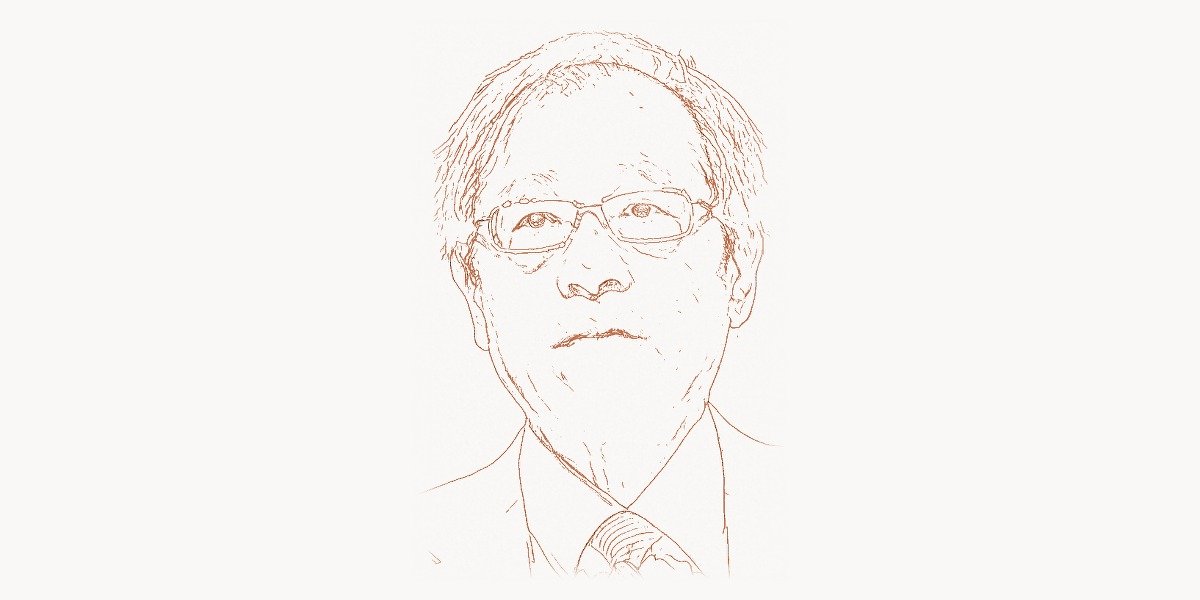
In the landscape of theoretical computer science, few figures have bridged as many foundational domains as Andrew Chi-Chih Yao. From establishing the minimax principle that unified randomized algorithms with game theory, to pioneering the theory of quantum circuits that gave researchers a formal language for quantum computation, Yao has shaped the mathematical bedrock on which modern computing stands. His 2000 Turing Award — the first ever awarded to a scholar of Chinese descent — recognized not a single breakthrough but a career of relentless intellectual expansion. At a time when quantum computing has moved from blackboard speculation to billion-dollar engineering races, the frameworks Yao created decades ago remain the lenses through which theorists and practitioners alike understand what quantum machines can and cannot do.
Early Life and the Path to Theoretical Computer Science
Born in Shanghai in 1946, Andrew Yao grew up in Taiwan, where he developed an early fascination with mathematics. He earned his undergraduate degree in physics from National Taiwan University, a foundation that would later prove crucial when he turned his attention to quantum phenomena. Yao then moved to the United States, completing a Ph.D. in physics at Harvard University in 1972 before making a pivotal decision: he pursued a second doctorate, this time in computer science at the University of Illinois at Urbana-Champaign, which he completed in 1975.
This dual training — first in the physical laws governing matter and energy, then in the abstract theory of computation — gave Yao a unique vantage point. While most theorists of his generation approached computational problems from a purely mathematical angle, Yao could see the connections between physical processes and computational models. This perspective would eventually lead him to some of his most celebrated contributions in quantum computing theory.
After completing his second Ph.D., Yao joined the faculty at the Massachusetts Institute of Technology before moving to Stanford University, where he spent much of his career. He later held positions at Princeton University and, in 2004, made the consequential decision to return to China, joining Tsinghua University in Beijing. There he founded the Institute for Interdisciplinary Information Sciences (IIIS), which has since become one of the world’s premier centers for theoretical computer science research.
Yao’s Minimax Principle: Unifying Randomness and Adversaries
One of Yao’s earliest and most enduring contributions is the minimax principle for randomized algorithms, introduced in 1977. The insight is deceptively elegant: to prove a lower bound on how well any randomized algorithm can solve a problem, you only need to find a single hard distribution over inputs. Conversely, the best randomized algorithm against a worst-case adversary corresponds to the best deterministic algorithm against the hardest input distribution.
This principle drew directly from von Neumann’s minimax theorem in game theory, recasting algorithmic analysis as a two-player game between the algorithm designer and an adversary who chooses inputs. The result transformed the field because it gave researchers a concrete, often simpler, way to reason about randomized complexity. Instead of wrestling with all possible coin-flip strategies, you could fix a probability distribution over inputs and analyze deterministic algorithms — a far more tractable task.
To illustrate the core idea, consider a simplified scenario. Suppose you want to prove that no randomized algorithm can sort certain inputs cheaply. By Yao’s principle, it suffices to exhibit a probability distribution over inputs such that every deterministic sorting algorithm performs poorly in expectation:
"""
Illustration of Yao's Minimax Principle for lower bounds.

The principle states:
  max_distribution min_deterministic E[cost(det, dist)]
  <=
  min_randomized max_input E[cost(rand, input)]

In practice: to prove a lower bound on randomized algorithms,
find a hard INPUT DISTRIBUTION against deterministic algorithms.
"""

import random
from itertools import permutations

def comparison_cost(algorithm, input_sequence):
    """Simulate a comparison-based algorithm and count comparisons."""
    comparisons = 0
    arr = list(input_sequence)
    n = len(arr)
    # Simple bubble sort as a stand-in deterministic algorithm
    for i in range(n):
        for j in range(0, n - i - 1):
            comparisons += 1
            if arr[j] > arr[j + 1]:
                arr[j], arr[j + 1] = arr[j + 1], arr[j]
    return comparisons

def yaos_minimax_lower_bound(n, num_samples=1000):
    """
    Demonstrate Yao's principle: choose a distribution over inputs
    (here: uniformly random permutations) and compute expected cost
    of any deterministic algorithm. This gives a LOWER BOUND on
    the expected cost of the best randomized algorithm against
    worst-case input.
    """
    total_cost = 0
    for _ in range(num_samples):
        perm = list(range(n))
        random.shuffle(perm)
        total_cost += comparison_cost(None, perm)

    expected_cost = total_cost / num_samples
    theoretical_lower = n * (n - 1) / 2  # bubble sort comparisons

    print(f"n = {n}")
    print(f"Expected comparisons (uniform distribution): {expected_cost:.1f}")
    print(f"Yao's principle: ANY randomized algorithm needs")
    print(f"  >= {expected_cost:.1f} comparisons on SOME input")
    return expected_cost

# For a small example
yaos_minimax_lower_bound(8)
The minimax principle has become a standard tool in the theorist’s toolkit, appearing in textbooks and courses worldwide. Its influence extends far beyond sorting — researchers apply it to communication complexity, online algorithms, streaming algorithms, and approximation problems. Whenever someone needs to prove that randomization cannot help much, Yao’s principle is typically the first technique they reach for.
Communication Complexity: Measuring the Cost of Conversation
In 1979, Yao introduced the model of communication complexity, a framework that has become one of the most productive areas in theoretical computer science. The setup is simple but powerful: two parties, Alice and Bob, each hold part of an input, and they need to compute some joint function by exchanging messages. The question is: how many bits must they communicate?
This model captures a fundamental aspect of distributed computation. Whether you are designing network protocols, database query systems, VLSI circuits, or streaming algorithms, the cost of moving information between components is often the dominant bottleneck. Yao’s communication complexity framework provided the first rigorous way to study this cost.
Yao proved early results establishing tight bounds for specific functions, including the equality function (determining whether Alice and Bob hold the same string) and the greater-than function. He showed that deterministic protocols for equality require linear communication, while randomized protocols can solve it with logarithmic communication — a dramatic separation that highlighted the power of randomness in distributed settings.
The field Yao created has grown enormously. Communication complexity lower bounds have been used to prove lower bounds in circuit complexity, streaming algorithms, data structures, and even proof complexity. Researchers like Edsger Dijkstra, who championed structured reasoning about computation, would likely have appreciated the elegance of reducing complex system questions to simple two-party communication games.
Quantum Computing Theory and Yao’s Quantum Circuit Model
Perhaps Yao’s most far-reaching contribution came in 1993, when he formalized the quantum circuit model of computation. While physicists like Richard Feynman had speculated about quantum computers in the early 1980s, and David Deutsch had proposed the quantum Turing machine, there was no clean computational model analogous to the Boolean circuits that classical complexity theorists relied on. Yao filled this gap.
Yao’s quantum circuit model represents computation as a sequence of quantum gates — unitary operations on a small number of qubits — applied to an initial quantum state. He proved a fundamental equivalence: the quantum circuit model and the quantum Turing machine can simulate each other with at most polynomial overhead. This result, analogous to the Church-Turing thesis for classical computation, established that the quantum circuit model captures the full power of quantum computation.
This was transformative for the field. The quantum circuit model is far more intuitive and practical than the quantum Turing machine. It gave researchers a concrete visual and mathematical framework for designing quantum algorithms, analyzing their complexity, and reasoning about quantum error correction. When Alan Turing formalized classical computation in the 1930s, he gave the field a universal model that unified diverse computational ideas. Yao did something remarkably similar for quantum computation.
"""
Simplified quantum circuit simulation demonstrating
the structure of Yao's quantum circuit model.

In this model, computation proceeds by applying
a sequence of unitary gates to qubits, then measuring.
"""

import numpy as np

# Single-qubit gates as 2x2 unitary matrices
HADAMARD = np.array([[1, 1], [1, -1]]) / np.sqrt(2)
PAULI_X = np.array([[0, 1], [1, 0]])  # NOT gate
PAULI_Z = np.array([[1, 0], [0, -1]]) # Phase flip

def tensor_product(a, b):
    """Kronecker product for combining qubit spaces."""
    return np.kron(a, b)

def apply_single_gate(state, gate, qubit_index, num_qubits):
    """
    Apply a single-qubit gate to a specific qubit in a
    multi-qubit state vector. This is the fundamental
    operation in Yao's quantum circuit model.
    """
    n = num_qubits
    # Build the full operator via tensor products
    # I ⊗ ... ⊗ Gate ⊗ ... ⊗ I
    operator = np.eye(1)
    for i in range(n):
        if i == qubit_index:
            operator = tensor_product(operator, gate)
        else:
            operator = tensor_product(operator, np.eye(2))
    return operator @ state

def cnot_gate(state, control, target, num_qubits):
    """
    Controlled-NOT: a two-qubit gate essential for
    entanglement. Flips the target qubit if and only
    if the control qubit is |1>.
    """
    n = num_qubits
    dim = 2 ** n
    new_state = np.zeros(dim, dtype=complex)
    for i in range(dim):
        bits = format(i, f'0{n}b')
        if bits[control] == '1':
            # Flip target bit
            new_bits = list(bits)
            new_bits[target] = '0' if bits[target] == '1' else '1'
            j = int(''.join(new_bits), 2)
            new_state[j] += state[i]
        else:
            new_state[i] += state[i]
    return new_state

def measure(state, num_qubits):
    """Measure all qubits, collapsing to a basis state."""
    probabilities = np.abs(state) ** 2
    outcome = np.random.choice(len(state), p=probabilities)
    return format(outcome, f'0{num_qubits}b')

def bell_circuit():
    """
    Create a Bell state |Φ+> = (|00> + |11>) / sqrt(2).

    This two-gate circuit demonstrates the quantum circuit
    model's key features:
      1. Hadamard creates superposition
      2. CNOT creates entanglement
      3. Measurement collapses to correlated outcomes
    """
    num_qubits = 2
    # Initial state |00>
    state = np.array([1, 0, 0, 0], dtype=complex)

    # Gate 1: Hadamard on qubit 0
    state = apply_single_gate(state, HADAMARD, 0, num_qubits)

    # Gate 2: CNOT with control=0, target=1
    state = cnot_gate(state, 0, 1, num_qubits)

    print("Bell state amplitudes:")
    for i, amp in enumerate(state):
        if abs(amp) > 1e-10:
            bits = format(i, f'0{num_qubits}b')
            print(f"  |{bits}> : {amp:.4f}")

    # Measure multiple times to show correlations
    print("\nMeasurement outcomes (always correlated):")
    for trial in range(8):
        result = measure(state, num_qubits)
        print(f"  Trial {trial + 1}: {result}")

bell_circuit()
The quantum circuit model also enabled researchers to study quantum complexity classes with precision. BQP (Bounded-Error Quantum Polynomial Time), the quantum analog of BPP, is naturally defined in terms of quantum circuits. Without Yao’s formalization, the entire edifice of quantum complexity theory — including the celebrated results of Stephen Cook and others on computational hardness — would lack its quantum counterpart.
Yao’s Garbled Circuits and Secure Computation
In the domain of cryptography, Yao made another landmark contribution: garbled circuits, introduced in the mid-1980s. This technique allows two parties to jointly compute a function over their private inputs without revealing those inputs to each other. The idea is to encrypt (or “garble”) a Boolean circuit so that one party can evaluate it without learning intermediate values, while the other party provides encrypted inputs without learning the circuit’s internal wiring.
Garbled circuits laid the foundation for secure multi-party computation (MPC), a field that has become increasingly important in the era of privacy-preserving machine learning, secure auctions, and confidential data analysis. The protocol Yao designed was the first general solution to what is now called the “millionaires’ problem”: two millionaires want to know who is richer without revealing their actual wealth.
This work connects deeply to the contributions of cryptographers like Whitfield Diffie and Ron Rivest, who established the foundations of public-key cryptography. While Diffie and Rivest focused on securing communication channels, Yao tackled a subtler problem: how to compute with secrets. The garbled circuits technique remains the most practical approach for many two-party computation tasks and has seen significant engineering optimizations in recent years, powering real-world privacy-preserving applications.
The Turing Award and Global Recognition
In 2000, the Association for Computing Machinery awarded Yao the A.M. Turing Award for his fundamental contributions to the theory of computation, including the complexity-based theory of pseudorandom number generation, cryptography, and communication complexity. The citation noted that Yao’s work had introduced new concepts that have transformed the landscape of theoretical computer science.
Yao joined a distinguished lineage of Turing laureates, including Donald Knuth, who had shaped the algorithmic foundations of the field, and later Pat Hanrahan, recognized for contributions to computer graphics. What set Yao apart was the extraordinary breadth of his contributions — spanning randomized algorithms, communication complexity, cryptography, and quantum computing.
The award also carried symbolic significance. As the first person of Chinese descent to receive the Turing Award, Yao became a powerful role model for computer scientists across Asia. His subsequent decision to move to Tsinghua University amplified this impact, demonstrating his commitment to building world-class research capacity in China.
Building Tsinghua’s IIIS: A New Center of Gravity
When Yao joined Tsinghua University in 2004, he did not come simply to teach. He founded the Institute for Interdisciplinary Information Sciences with an ambitious vision: to create a research center that could compete with the best in the world. He designed a special undergraduate program known as the “Yao Class,” which selects the most talented students in China and provides them with a rigorous, research-oriented education in theoretical computer science.
The results have been remarkable. IIIS alumni have gone on to faculty positions at top universities worldwide and have founded influential technology companies. The institute has attracted world-class researchers and has produced a steady stream of publications in the most prestigious venues. In project management terms, what Yao achieved was a masterclass in building high-performance teams from scratch — the kind of organizational challenge that modern tools like Taskee help teams navigate through structured workflows and transparent progress tracking.
Yao’s approach to education reflects his belief that theoretical depth and practical impact are not opposing forces. He has consistently advocated for training students in foundational mathematics and theory while exposing them to cutting-edge applications in quantum computing, artificial intelligence, and cryptography.
Pseudorandom Number Generation and Complexity Theory
Another major thread in Yao’s work is the complexity-theoretic approach to pseudorandomness. In 1982, Yao proposed a definition of pseudorandom generators based on computational indistinguishability: a generator is pseudorandom if no efficient algorithm can distinguish its output from truly random bits. This definition was a breakthrough because it tied randomness to computational hardness rather than to statistical properties.
Yao proved that if one-way functions exist — functions that are easy to compute but hard to invert — then pseudorandom generators exist. This result connected two of the most fundamental concepts in cryptography and complexity theory, establishing that the existence of any form of computational hardness implies the existence of high-quality pseudorandomness.
This work had profound implications. It meant that the security of cryptographic systems could be grounded in precise complexity-theoretic assumptions rather than heuristic arguments. It also provided a theoretical foundation for derandomization — the program of showing that randomized algorithms can be replaced by deterministic ones without significant loss of efficiency. Researchers working on computational complexity, including those who built on Manuel Blum’s foundational work, have continued to develop these connections.
Quantum Communication Complexity and Entanglement
Yao extended his communication complexity framework to the quantum setting, asking a natural question: if Alice and Bob can exchange qubits instead of classical bits, can they communicate more efficiently? This led to the field of quantum communication complexity, which has produced surprising results.
In some cases, quantum communication provides exponential savings over classical communication. In others, the advantage is more modest or nonexistent. Yao and his collaborators established fundamental results characterizing when quantum communication helps and when it does not. These results have deep connections to quantum entanglement, Bell inequalities, and the foundations of quantum mechanics itself.
The study of quantum communication complexity has practical implications for quantum networks and distributed quantum computing. As organizations invest in quantum communication infrastructure, the theoretical bounds established by Yao and his school provide essential guidance on what is achievable. Building and managing such complex quantum research programs demands sophisticated coordination — the kind of systematic project oversight that platforms like Toimi provide for technology teams handling multi-disciplinary initiatives.
Influence on Modern Quantum Computing
The quantum computing landscape of the 2020s bears Yao’s fingerprints everywhere. The quantum circuit model he formalized is the standard framework used by companies building quantum hardware — from superconducting qubit architectures to trapped-ion systems. When engineers at quantum computing companies design algorithms for their machines, they think in terms of quantum circuits: sequences of gates applied to qubits, exactly as Yao described.
Yao’s work on quantum complexity theory also informs the ongoing debate about quantum advantage. The question of whether quantum computers can solve certain problems exponentially faster than classical computers is ultimately a question about the relationship between complexity classes like BQP and NP — a question that Yao’s frameworks made precise and tractable. Researchers studying post-quantum cryptography, such as Tanja Lange, rely on understanding the computational power of quantum circuits to design cryptographic systems that remain secure against quantum attacks.
Furthermore, Yao’s garbled circuits have found new life in the quantum era. Researchers are exploring quantum versions of secure computation, and Yao’s classical constructions serve as both inspiration and baseline. The interplay between classical and quantum cryptography that Yao’s work enables continues to generate new research directions.
Awards, Honors, and Legacy
Beyond the Turing Award, Yao has received numerous honors recognizing the breadth of his contributions. He is a member of the U.S. National Academy of Sciences, the American Academy of Arts and Sciences, and the Chinese Academy of Sciences. He has been awarded the George Polya Prize, the Donald E. Knuth Prize for contributions to the foundations of computer science, and the Kyoto Prize in Advanced Technology.
His legacy extends beyond theorems and awards. Through his students and the programs he has built, Yao has shaped the research directions and careers of hundreds of computer scientists. Many of the leading researchers in quantum computing, cryptography, and complexity theory trace their intellectual lineage to Yao’s mentorship. His insistence on mathematical rigor combined with broad vision has set a standard for the field.
Yao’s career demonstrates that the deepest practical impacts often come from the most abstract theoretical work. The minimax principle, communication complexity, garbled circuits, and the quantum circuit model were all born from pure mathematical inquiry. Yet each has become an essential tool in building the technologies of the 21st century — from secure computation to quantum hardware. As Leslie Lamport showed with his foundational work on distributed systems, theoretical elegance and real-world impact are not competing goals but natural allies.
Frequently Asked Questions
What did Andrew Yao win the Turing Award for?
Andrew Yao received the 2000 A.M. Turing Award for his fundamental contributions to the theory of computation, including pioneering work in communication complexity, pseudorandom number generation, the complexity-theoretic foundations of cryptography, and quantum computing theory. The ACM recognized that his work introduced entirely new concepts and techniques that transformed multiple subfields of theoretical computer science.
What is Yao’s minimax principle and why does it matter?
Yao’s minimax principle, introduced in 1977, provides a powerful method for proving lower bounds on randomized algorithms. It states that the expected cost of the best randomized algorithm against the worst-case input equals the expected cost of the best deterministic algorithm against the worst-case input distribution. This transforms difficult questions about randomized computation into simpler questions about deterministic computation, making it one of the most widely used tools in computational complexity theory.
How did Andrew Yao contribute to quantum computing?
Yao’s most significant contribution to quantum computing was formalizing the quantum circuit model in 1993. He proved that quantum circuits and quantum Turing machines are polynomially equivalent, establishing the quantum circuit model as the standard framework for designing and analyzing quantum algorithms. This model is now used universally in both theoretical research and practical quantum hardware development. He also founded the field of quantum communication complexity.
What are Yao’s garbled circuits used for?
Garbled circuits are a cryptographic technique that enables secure two-party computation — allowing two parties to jointly compute a function over their private inputs without revealing those inputs to each other. Originally introduced to solve the “millionaires’ problem,” garbled circuits are now used in privacy-preserving machine learning, secure auctions, confidential data analysis, and various other applications where sensitive data must be processed without exposure.
What is the Yao Class at Tsinghua University?
The Yao Class is a prestigious undergraduate program at Tsinghua University’s Institute for Interdisciplinary Information Sciences (IIIS), founded by Andrew Yao in 2005. It selects China’s most talented students and provides them with an intensive, research-oriented curriculum in theoretical computer science, quantum information, and related fields. Alumni of the Yao Class have gone on to distinguished academic and industry careers worldwide, making it one of the most competitive and respected undergraduate programs in computer science globally.