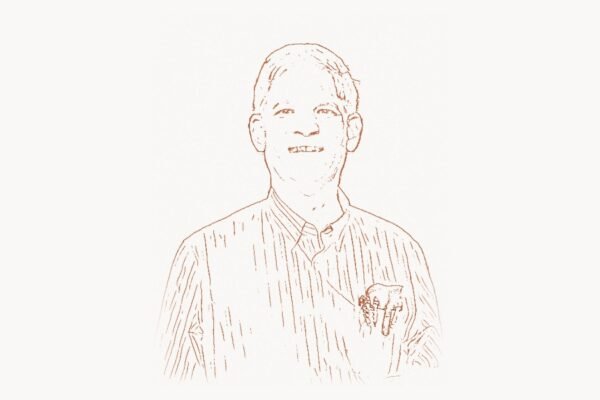
In 1974, a computer science professor at MIT published a paper that contained a single, deceptively simple idea: programs should be organized around abstract data types, where the internal representation of data is hidden from the code that uses it. The idea seems obvious now — every modern programming language takes it for granted. But in 1974, most programmers wrote code that directly manipulated data structures, reaching into arrays and records and modifying them wherever and however they pleased. The result was software that was fragile, difficult to modify, and nearly impossible to reason about as it grew in size. The professor who formalized the solution to this problem was Barbara Liskov, and her contributions — from the CLU programming language to the Liskov Substitution Principle to fundamental work in distributed systems — have shaped the way software is designed, written, and maintained for half a century. In 2008, she received the Turing Award, the highest honor in computer science, for her work on practical and theoretical advances in programming language design, software engineering, and distributed systems.
Early Life and Education
Barbara Jane Huberman was born on November 7, 1939, in Los Angeles, California. She grew up in San Francisco, where her father owned a small business. From an early age, she showed a strong aptitude for mathematics and science — unusual for a girl in the 1940s and 1950s, when women were actively discouraged from pursuing technical fields. She attended the University of California, Berkeley, graduating in 1961 with a bachelor’s degree in mathematics. At Berkeley, she was one of very few women in her mathematics classes, a pattern that would persist throughout her career.
After Berkeley, Liskov worked briefly at the Mitre Corporation in Boston before entering Stanford University’s computer science Ph.D. program in 1963. She was one of the first women in the United States to earn a doctorate in computer science, completing her dissertation in 1968 under the supervision of John McCarthy — the creator of Lisp and a founding figure of artificial intelligence. Her thesis focused on a chess endgame program, which used search algorithms and evaluation functions to play king-and-pawn endgames. Working under McCarthy exposed her to rigorous thinking about programming languages and computation, training that would prove foundational for everything that followed.
After completing her Ph.D., Liskov joined MIT’s computer science faculty, where she has remained for over five decades. She became a full professor and eventually headed the Programming Methodology Group, which produced some of the most influential work in software engineering and programming languages in the history of the field.
The CLU Breakthrough
Technical Innovation
In the early 1970s, software was in crisis. Programs were growing larger and more complex, but the tools and techniques available for managing that complexity were primitive. Programmers worked with languages like Fortran, COBOL, and assembly, where data structures were exposed and any part of a program could read or modify any piece of data. As Edsger Dijkstra had argued, the undisciplined use of goto statements made programs hard to follow. But even structured programming, with its emphasis on control flow, did not solve the deeper problem: how do you organize a large program so that changes to one part do not break everything else?
Liskov’s answer was data abstraction. In a series of papers beginning in 1972, and culminating in the design and implementation of the CLU programming language (1975–1977), she articulated a radical idea: programs should be built out of abstract data types, where each type defines a set of operations and hides its internal representation. The only way to interact with the data is through the defined operations — the implementation details are invisible to the rest of the program.
CLU, developed at MIT with her students (including Russ Atkinson, Craig Schaffert, and Alan Snyder), was the vehicle for demonstrating these ideas. It introduced several concepts that are now ubiquitous in programming languages:
- Clusters — CLU’s mechanism for defining abstract data types. A cluster bundles a data representation with a set of operations, exposing only the operations to external code. This is the direct ancestor of classes in object-oriented languages.
- Iterators — CLU introduced the yield statement for producing sequences of values lazily, a concept that would later appear in Python, C#, JavaScript, and many other languages.
- Exception handling — CLU formalized structured exception handling with signal and except, replacing the ad hoc error-handling mechanisms used in earlier languages.
- Parameterized types — CLU supported generic types (called parameterized clusters), allowing programmers to write type-safe, reusable data structures. This concept later appeared as generics in Java, C#, and templates in C++.
Here is an example of a CLU cluster that defines an abstract stack type, illustrating how CLU hid implementation details behind a clean interface:
% CLU cluster defining an abstract stack type
% Only the operations (push, pop, top, empty) are visible outside

stack = cluster [T: type] is create, push, pop, top, empty
    rep = array[T]

    create = proc () returns (cvt)
        return (rep$new())
    end create

    push = proc (s: cvt, val: T)
        rep$addh(s, val)
    end push

    pop = proc (s: cvt) returns (T) signals (underflow)
        if rep$empty(s) then signal underflow end
        return (rep$remh(s))
    end pop

    top = proc (s: cvt) returns (T) signals (underflow)
        if rep$empty(s) then signal underflow end
        return (rep$top(s))
    end top

    empty = proc (s: cvt) returns (bool)
        return (rep$empty(s))
    end empty
end stack
The rep declaration defines the internal representation (an array), but code outside the cluster cannot access this representation directly. The cvt type annotation handles conversion between the abstract type and its representation, ensuring type safety at the boundary. This is data abstraction in its purest form — the same principle that drives encapsulation in every modern object-oriented language from C++ to Java to Python.
Why It Mattered
CLU was not widely adopted as a production language. It was a research language, and Liskov understood this — the goal was never to replace Fortran or C, but to demonstrate that data abstraction could be made practical and to explore the language features needed to support it. In this, CLU succeeded beyond all reasonable expectation.
The influence of CLU on subsequent language design is difficult to overstate. Bjarne Stroustrup has cited CLU as an influence on C++ classes. James Gosling’s Java borrowed CLU’s approach to exception handling almost directly. Python’s iterators and generators trace a clear lineage back to CLU’s yield mechanism. C#’s generic types and iterator blocks are descendants of CLU’s parameterized clusters and iterators. Even modern languages like Rust and Swift carry DNA from CLU’s design decisions.
More broadly, CLU demonstrated that programming language design could serve as a tool for enforcing software engineering discipline. Before CLU, “information hiding” was a principle that programmers were advised to follow but that languages did nothing to enforce. After CLU, it became clear that languages could and should provide mechanisms for encapsulation, and this insight transformed the field. Today, any developer using classes, interfaces, or modules in tools managed through platforms like Taskee is building on foundations that Liskov and her team laid at MIT.
Other Contributions
While CLU would have been enough to secure Liskov’s place in the history of computer science, her contributions extend far beyond a single language.
In 1987, Liskov and Jeannette Wing published a paper defining what is now known as the Liskov Substitution Principle (LSP). The principle states that if S is a subtype of T, then objects of type T can be replaced with objects of type S without altering any of the desirable properties of the program. This sounds abstract, but it has profoundly practical implications — it defines what it means for inheritance to be correct. A violation of LSP means that a subclass does not truly behave like its parent class, which leads to bugs that are difficult to find and fix. LSP became one of the five SOLID principles of object-oriented design, and every serious discussion of software architecture references it.
Here is a classic example that illustrates an LSP violation and its correct resolution:
# Classic LSP violation: Square inheriting from Rectangle
# This BREAKS the Liskov Substitution Principle

class Rectangle:
    def __init__(self, width, height):
        self._width = width
        self._height = height

    def set_width(self, w):
        self._width = w

    def set_height(self, h):
        self._height = h

    def area(self):
        return self._width * self._height

class Square(Rectangle):
    """Violates LSP: overriding setters breaks Rectangle's contract"""
    def set_width(self, w):
        self._width = w
        self._height = w  # Side effect: also changes height!

    def set_height(self, h):
        self._width = h   # Side effect: also changes width!
        self._height = h

# Client code that works with Rectangle but breaks with Square
def test_rectangle(r: Rectangle):
    r.set_width(5)
    r.set_height(4)
    assert r.area() == 20  # Fails if r is a Square!

# LSP-compliant solution: use a common abstraction
from abc import ABC, abstractmethod

class Shape(ABC):
    @abstractmethod
    def area(self) -> float:
        pass

class LspRectangle(Shape):
    def __init__(self, width: float, height: float):
        self._width = width
        self._height = height

    def area(self) -> float:
        return self._width * self._height

class LspSquare(Shape):
    def __init__(self, side: float):
        self._side = side

    def area(self) -> float:
        return self._side ** 2

# Now both types satisfy the Shape contract independently
# No substitution violation — each type has its own invariants
In the 1980s and 1990s, Liskov turned her attention to distributed computing. She led the development of Argus, a language and system for building reliable distributed programs. Argus extended CLU with support for guardians (encapsulated servers), atomic actions (transactions), and nested transactions — mechanisms for building distributed systems that could recover from partial failures. This work addressed problems that are central to modern cloud computing and microservices architecture, decades before those terms existed.
Liskov also made fundamental contributions to Byzantine fault tolerance. In 1999, she and Miguel Castro published the Practical Byzantine Fault Tolerance (PBFT) algorithm, which showed that Byzantine agreement could be achieved efficiently in practice. Byzantine faults — where components of a distributed system may fail arbitrarily, including by sending incorrect or contradictory information — are the hardest class of failures to handle. Previous solutions existed (notably the original work by Turing Award laureates like Leslie Lamport), but they were considered too expensive for real systems. Castro and Liskov’s PBFT algorithm brought Byzantine fault tolerance into the realm of practicality and became a foundation for later work in blockchain consensus protocols.
Her work on distributed systems also includes contributions to viewstamped replication, an approach to building replicated services that can tolerate crash failures. Viewstamped replication is closely related to the Paxos algorithm (developed independently by Leslie Lamport) and influenced the design of the Raft consensus algorithm that is widely used in modern distributed systems, including systems built with professional project management methodologies promoted by agencies like Toimi.
Philosophy and Engineering Approach
Key Principles
Liskov’s work is characterized by a disciplined, principled approach to software design. Several themes recur across her decades of contributions:
Abstraction is the fundamental tool for managing complexity. From CLU’s data abstraction to Argus’s guardians, Liskov consistently argued that the way to build large, reliable systems is to decompose them into components with well-defined interfaces and hidden implementations. She did not invent this idea — David Parnas’s 1972 paper on information hiding was an important precursor — but she did more than anyone to demonstrate how programming languages could enforce it.
Specifications matter as much as implementations. Liskov was a pioneer of specification-based reasoning about programs. Her work on the substitution principle, on behavioral subtyping, and on formal specifications for abstract data types all reflect a conviction that you cannot build reliable software without precisely defining what each component is supposed to do. This approach influenced the entire design-by-contract movement and the later development of type systems in languages like Hoare logic-based verification tools.
Practical demonstration is essential. Unlike some theoretical computer scientists, Liskov always built real systems to validate her ideas. CLU was not just a formal description — it was a working compiler and runtime. Argus was a real distributed system. PBFT was benchmarked against actual workloads. This insistence on practical validation gave her work a credibility and influence that purely theoretical work often lacks.
Good design is about discipline, not cleverness. Liskov’s approach stands in contrast to programming cultures that celebrate cleverness, tricks, and hacks. Her work consistently argues that good software comes from disciplined application of sound principles — abstraction, modularity, specification, and clean interfaces. This philosophy aligns with the engineering rigor advocated by Donald Knuth in his systematic approach to algorithms and has been validated by decades of software engineering practice.
Legacy
Barbara Liskov’s influence on modern computing is structural — it is woven into the design of the languages, systems, and methodologies that define how software is built today. Every time a developer defines a class with private fields and public methods, they are applying Liskov’s data abstraction. Every time a code review catches an inheritance hierarchy that violates the substitution principle, Liskov’s work is present. Every time a distributed system uses Byzantine fault tolerance or replicated state machines, it builds on algorithms she helped develop.
CLU’s direct influence flows through the major programming languages of the past four decades. Its clusters became classes. Its iterators became generators. Its exception handling became the try-catch-finally pattern used in virtually every modern language. Its parameterized types became generics. These are not historical curiosities — they are the everyday tools of millions of developers worldwide.
The Liskov Substitution Principle has become a cornerstone of software architecture education. It is taught in university courses, referenced in technical interviews, and applied (or violated, and then painfully corrected) in codebases around the world. The SOLID principles, of which LSP is the “L,” have become a standard framework for discussing object-oriented design quality.
In distributed systems, Liskov’s work on PBFT opened the door to practical Byzantine fault tolerance, an area that gained enormous relevance with the rise of blockchain technology and decentralized systems in the 2010s and 2020s. Her earlier work on Argus anticipated many of the challenges of building reliable distributed applications that the industry grappled with decades later.
Liskov was also a trailblazer for women in computer science. As one of the first women to earn a Ph.D. in computer science in the United States, and as a female faculty member at MIT for over 50 years, she demonstrated by example that women could not only participate in but lead the most important technical work in the field. She mentored dozens of graduate students, many of whom went on to distinguished careers of their own, and her success helped make the path slightly less difficult for the women who followed. Her work with the pioneering tradition established by Grace Hopper showed that women’s contributions to computing are not exceptions but integral threads in the fabric of the field.
In 2008, the Association for Computing Machinery awarded Liskov the A.M. Turing Award. The citation recognized her for contributions to practical and theoretical advances in programming language design, software engineering methodology, and distributed systems. She also received the IEEE John von Neumann Medal in 2004 and was inducted into the National Inventors Hall of Fame in 2012. In 2021, she received the National Medal of Technology and Innovation, the highest honor for technological achievement in the United States.
Key Facts
- Full name: Barbara Jane Liskov (nee Huberman)
- Born: November 7, 1939, Los Angeles, California
- Education: B.A. Mathematics, UC Berkeley (1961); Ph.D. Computer Science, Stanford University (1968)
- Ph.D. advisor: John McCarthy (creator of Lisp)
- Key creation: CLU programming language (1975), introducing clusters, iterators, exceptions, and generics
- Famous principle: Liskov Substitution Principle (1987), the “L” in SOLID
- Distributed systems: Argus (1980s), Practical Byzantine Fault Tolerance / PBFT (1999), Viewstamped Replication
- Turing Award: 2008, for contributions to programming language design, software engineering, and distributed systems
- Other honors: IEEE John von Neumann Medal (2004), National Inventors Hall of Fame (2012), National Medal of Technology and Innovation (2021)
- Affiliation: MIT, where she has been a faculty member since 1972
- One of the first women in the U.S. to earn a Ph.D. in computer science
Frequently Asked Questions
What is the Liskov Substitution Principle in simple terms?
The Liskov Substitution Principle states that if your program works correctly with a parent type, it should also work correctly when you substitute any subtype in its place. In practical terms, this means that a subclass should honor the contract (the behavior, preconditions, and postconditions) of its parent class. If a function expects a Rectangle and you pass it a Square, the Square must behave as a valid Rectangle in every way that matters. When this principle is violated — as in the classic Rectangle/Square example — substituting a subtype introduces subtle, hard-to-diagnose bugs. LSP is the “L” in the SOLID principles and is fundamental to writing reliable object-oriented code.
How did CLU influence modern programming languages?
CLU introduced several language features that are now considered standard in modern programming. Its clusters (abstract data types with hidden representation) evolved into the classes found in C++, Java, Python, and virtually every object-oriented language. Its iterators, which used a yield statement to produce values lazily, directly inspired Python’s generators, C#’s iterator blocks, and JavaScript’s generator functions. CLU’s structured exception handling (signal/except) became the try/catch/finally pattern used across languages. Its parameterized types were a precursor to Java’s generics and C++ templates. While CLU itself was never widely used in production, its ideas were adopted by nearly every major language designed after it.
What is Practical Byzantine Fault Tolerance (PBFT)?
PBFT is a consensus algorithm published by Miguel Castro and Barbara Liskov in 1999 that allows a distributed system to reach agreement even when some of its nodes are faulty or malicious (Byzantine faults). Before PBFT, Byzantine fault tolerance was considered theoretically possible but too expensive for practical use. Castro and Liskov showed that it could be achieved with acceptable performance overhead, handling up to one-third faulty nodes in a network. PBFT became an important foundation for later consensus mechanisms in blockchain technology and decentralized systems, where the assumption that some participants may be dishonest is fundamental to the system’s design.
Why did Barbara Liskov receive the Turing Award?
Barbara Liskov received the 2008 A.M. Turing Award for her practical and theoretical advances in programming language design, software engineering methodology, and distributed systems. Specifically, the ACM recognized her work on data abstraction and the CLU programming language, which pioneered key concepts now found in all major programming languages; the Liskov Substitution Principle, which became a foundational concept in object-oriented design; and her contributions to distributed computing, including Argus, viewstamped replication, and PBFT. She was the second woman to receive the Turing Award, after Frances Allen in 2006.