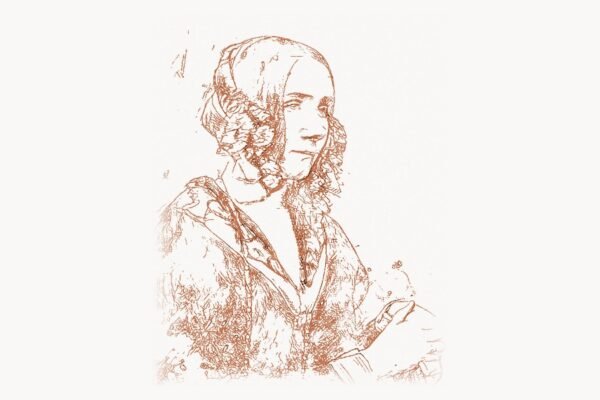
Before the web had visual design, it had Bert Bos. In the mid-1990s, when the World Wide Web was little more than a collection of gray pages with blue hyperlinks and crudely formatted text, a Dutch computer scientist quietly helped build the specification that would give the web its entire visual vocabulary. Working alongside Håkon Wium Lie, Bos co-authored Cascading Style Sheets — CSS — the language that determines how every web page on earth looks, from the font in a blog post to the layout of a banking application to the animations on a streaming platform. While Lie is often credited with the original cascade proposal, it was Bos who brought the formal rigor, the selector architecture, and the property model that turned an ambitious idea into a working specification. His contributions extended far beyond CSS1: Bos became one of the longest-serving members of the W3C CSS Working Group, helped shape CSS2 and the modular CSS3 architecture, built an early standards-compliant browser called Argo, and spent decades championing the principle that the web should be built on open, precisely defined standards rather than proprietary hacks. Every time a developer writes a CSS rule — every display: flex, every color: #c2724e, every @media query — they are working within a system that Bert Bos helped design from the ground up.
Early Life and Education
Bert Bos was born on November 10, 1963, in The Hague, Netherlands. Growing up in one of Europe’s most internationally oriented cities — The Hague hosts the International Court of Justice, numerous diplomatic institutions, and a strong tradition of multilingual communication — Bos developed early instincts for systems that needed to work across boundaries, cultures, and languages. These instincts would later prove essential in designing a style sheet language for a global medium.
Bos studied mathematics and computer science at the University of Groningen in the northern Netherlands. His academic training gave him a deep appreciation for formal systems, logical specification, and mathematical precision — qualities that would distinguish his contributions to web standards from the more pragmatic, engineering-driven approaches common in the early web community. At Groningen, Bos became interested in electronic document formatting, hypertext systems, and the challenge of separating a document’s logical structure from its visual presentation. This was not a new problem — the SGML (Standard Generalized Markup Language) community had been wrestling with it since the 1960s — but the emergence of the World Wide Web in the early 1990s gave it unprecedented urgency and scale.
During his time at Groningen, Bos developed the Argo web browser, an experimental browser that served as both a research platform and a proving ground for his ideas about document styling. Argo was not a commercial competitor to Mosaic or Netscape Navigator — it was a research tool, built to explore what a standards-compliant, style-aware browser could look like. As part of his work on Argo, Bos created his own style sheet proposal, which he called the Stream-based Style Sheet Proposal (SSP). This proposal addressed many of the same problems that Håkon Wium Lie’s cascading style sheets proposal tackled — how to separate presentation from structure, how to select elements for styling, how to specify visual properties — but approached them with a different syntax and a more formal property model. The existence of two complementary proposals, each with distinct strengths, would prove to be one of the most productive coincidences in the history of web development.
The CSS Breakthrough
Technical Innovation
The story of CSS is often told as the story of a single proposal, but in reality it was a convergence. In 1994, Håkon Wium Lie, working at CERN alongside Tim Berners-Lee, published his proposal for Cascading HTML Style Sheets. The proposal introduced the revolutionary concept of the cascade — a priority system that balanced the style preferences of page authors, readers, and browsers. But Lie’s initial proposal was intentionally informal, sketching broad concepts rather than specifying exact syntax and parsing rules. Around the same time, Bert Bos was developing his SSP proposal at Groningen, which had a more rigorous approach to property definitions, selector grammar, and the separation of element targeting from style assignment.
When the two discovered each other’s work through the early web standards community — specifically through the www-style mailing list where proposals for HTML styling were debated — they recognized that their approaches were complementary rather than competing. Lie had the cascade mechanism and the philosophical vision of a negotiated styling system. Bos had the formal property model, the precise selector syntax, and practical experience from implementing a style-aware browser. In 1995, they merged their efforts, and the combined specification became the CSS that was submitted to the W3C for standardization.
Bos’s specific contributions to the CSS specification were substantial and foundational. He formalized the selector syntax — the mechanism by which CSS rules target HTML elements. The distinction between type selectors (h1), class selectors (.highlight), ID selectors (#header), and contextual selectors (article p) owes much to Bos’s formal thinking about how to address elements within a document tree. He also brought rigor to the property-value model, ensuring that each CSS property had a precisely defined syntax, a specified initial value, inheritance behavior, and applicability rules. This formalism meant that different browser implementations could produce identical renderings from the same CSS input — a property called interoperability that is essential for any open standard.
/* The selector architecture that Bert Bos helped formalize —
   from CSS1's simple selectors to the powerful system used today */

/* Type selector — targets all elements of a given type */
p {
  margin-bottom: 1em;
  line-height: 1.6;
}

/* Class selector — Bos's formal model made these precise
   and composable, enabling modern component systems */
.card {
  border: 1px solid #e7e5e4;
  border-radius: 8px;
  padding: 1.5rem;
  background-color: #f9f8f6;
}

/* Contextual (descendant) selector — targeting elements
   by their position in the document tree */
article blockquote p {
  font-style: italic;
  color: #57534e;
  border-left: 3px solid #c2724e;
  padding-left: 1rem;
}

/* Attribute selectors — CSS2, co-edited by Bos.
   Enabled styling based on HTML attributes, not just tags */
a[href^="https://"] {
  padding-right: 1em;
  background: url('external-link.svg') right center no-repeat;
}

/* Pseudo-classes and pseudo-elements — part of the original
   CSS architecture Bos helped define */
p::first-line {
  font-variant: small-caps;
  font-weight: 600;
}

li:nth-child(odd) {
  background-color: rgba(194, 114, 78, 0.05);
}
The CSS Level 1 specification was published as a W3C Recommendation on December 17, 1996, with both Lie and Bos listed as authors. It defined 53 properties and established the core architecture — selectors, declarations, the cascade, inheritance, and the box model — that every subsequent version of CSS has built upon. The specification was deliberately constrained: it covered fonts, colors, text formatting, margins, padding, and backgrounds, but deliberately excluded complex layout mechanisms. This restraint reflected a pragmatic strategy: ship a specification that browsers could actually implement correctly, then extend it incrementally. It was a philosophy that both Lie and Bos shared, and it proved critical to CSS’s survival in an era when competing proposals failed because they demanded too much from browser vendors all at once.
Why It Mattered
The significance of CSS — and of Bos’s contributions to it — cannot be measured in lines of specification text alone. Before CSS, the web was heading toward a crisis of maintainability and accessibility. Web designers were forced to embed visual formatting directly into HTML using tags like <font>, <center>, and invisible layout tables — techniques that made pages impossible to redesign without rewriting every document, impossible to adapt for different devices, and impossible to make accessible to screen readers or other assistive technologies.
CSS solved this by establishing a clean separation between structure and presentation. Write your content in semantic HTML. Write your visual design in CSS. The browser merges them at render time. Change the stylesheet, and every page that references it updates instantly. This architecture — which seems obvious in retrospect — was hotly contested in the mid-1990s. Some browser vendors argued that presentational HTML was “good enough.” Some proposed proprietary alternatives that would lock developers into specific browsers. The CSS specification, with its open process, formal definitions, and consensus-based development, represented a bet on the open web over vendor control.
Bos’s formalism was critical to this outcome. A loosely specified style language could have been interpreted differently by every browser vendor, reproducing the compatibility chaos that CSS was meant to prevent. By insisting on precise property definitions, unambiguous selector grammar, and formally specified cascade and inheritance rules, Bos helped create a specification that could be independently implemented with consistent results. This formalism directly influenced the testing culture that later developed around CSS — the CSS Test Suite, browser conformance testing, and the emphasis on interoperability that drives modern browser development. When Brendan Eich and others later pushed for rigorous specification of JavaScript behavior, the model established by CSS’s formal approach to specification served as a precedent within the W3C and the broader standards community.
Other Major Contributions
Bert Bos’s impact on the web extends well beyond the initial CSS1 specification. After joining the World Wide Web Consortium (W3C) in 1995, he became one of the most prolific and influential figures in web standards development, contributing to specifications that shaped the web for decades.
CSS2 and CSS 2.1. Bos was a co-editor (with Lie, Chris Lilley, and Ian Jacobs) of the CSS Level 2 specification, published as a W3C Recommendation in 1998. CSS2 dramatically expanded the language’s capabilities, adding positioning (position: absolute, relative, fixed), z-index stacking, table layout, media types for targeting different output devices, aural style sheets for speech synthesis, and a greatly expanded selector system including attribute selectors and the universal selector. CSS 2.1, which Bos co-edited and which became a Recommendation in 2011 after years of painstaking revision, cleaned up CSS2’s ambiguities and became the baseline specification against which all major browsers tested their implementations. The CSS 2.1 specification is one of the most thoroughly tested standards in the history of the W3C, with a test suite containing over 9,000 individual tests — a testament to the culture of rigor that Bos championed.
The modular CSS3 architecture. Bos was instrumental in the strategic decision to break CSS3 into independent modules rather than publishing it as a single monolithic specification. This decision, made in the early 2000s, recognized that different parts of CSS evolve at different speeds. Color properties might stabilize quickly while layout modules require years of experimentation. The modular approach allowed working groups to advance stable modules (Selectors Level 3, Color Level 3, Media Queries) to Recommendation status while more complex modules (Grid Layout, Flexbox, Custom Properties) continued development. This architecture is why we speak of “CSS Selectors Level 4” or “CSS Grid Level 2” rather than “CSS4” — the language evolves incrementally, module by module, exactly as Bos and his colleagues designed it to.
The Argo browser. Before CSS existed as a specification, Bos built Argo as a research browser at the University of Groningen. Argo was notable for its style sheet support — Bos’s SSP proposal was implemented in Argo before being merged into CSS. The browser served as a proof of concept that style sheets could work in practice, not just in theory. While Argo never achieved widespread adoption, the practical experience Bos gained from building a rendering engine that processed style rules informed his contributions to the CSS specification. He understood, from hands-on implementation, where specifications were ambiguous, where browser developers would struggle, and where formal precision was most needed. This implementation experience gave Bos’s specification work a grounding in engineering reality that pure theorists often lack.
W3C standards stewardship. Bos spent over two decades at the W3C, working from the consortium’s site in Sophia Antipolis, France. His role extended beyond CSS: he contributed to discussions about HTML evolution, internationalization (ensuring that CSS properties worked correctly with right-to-left scripts, vertical text, and non-Latin writing systems), and the general methodology of web standards development. He was a strong voice for specification quality — arguing that rushed, ambiguous specifications create more problems than they solve, and that the web community is better served by fewer, more precise standards than by a proliferation of loosely defined features. This philosophy sometimes put him at odds with the fast-moving “ship first, standardize later” culture of Silicon Valley, but it produced specifications that stood the test of time. Modern web development agencies rely on the stability and cross-browser consistency that Bos’s rigorous approach to standardization made possible.
Philosophy and Approach
Key Principles
Bert Bos’s approach to web standards and technology design is characterized by several deeply held principles that run consistently through his work over three decades.
Formal precision above informal convenience. Bos has consistently argued that specifications must be precise enough to enable independent, interoperable implementations. This is not pedantry — it is a practical necessity for an open standard. If a CSS property’s behavior is ambiguously defined, two browser vendors will implement it differently, and web developers will be forced to write browser-specific hacks to compensate. The entire purpose of a standard is defeated. Bos’s insistence on formal definitions — precisely specified value syntax, clear inheritance rules, defined behavior in edge cases — is what makes CSS a reliable engineering tool rather than a collection of suggestions. His approach directly shaped the CSS Values and Units specification, which defines the formal grammar that CSS parsers use to validate property values.
Simplicity as a design goal. Despite his formal training, Bos has been a strong advocate for keeping CSS simple enough that non-programmers can use it effectively. He has written extensively about the importance of CSS as a language for designers, not just engineers. CSS’s declarative syntax — where you describe the desired result rather than the steps to compute it — was a deliberate choice to keep the language accessible. Bos has argued against proposals that would make CSS more “powerful” at the cost of making it more complex, noting that the web’s success depends on low barriers to entry. Every web designer who learned CSS by reading a tutorial and experimenting in a browser benefited from this commitment to simplicity.
The web as an international, multilingual medium. Working from the W3C’s European site and coming from a small, multilingual country, Bos was acutely aware that the web had to work across languages, scripts, and cultural conventions. He championed internationalization in CSS — ensuring that text direction (direction: rtl), writing modes (writing-mode: vertical-rl), line-breaking rules, and text-decoration behaviors were correctly specified for Arabic, Hebrew, Chinese, Japanese, Korean, and other non-Latin scripts. This work, while invisible to English-speaking developers, is essential for billions of web users worldwide and reflects Bos’s understanding that a truly global medium must account for the full diversity of human writing systems.
Standards over implementations. Bos has consistently prioritized getting the specification right over rushing features into browsers. He understood that a browser feature can be changed or removed in the next version, but a published W3C Recommendation creates expectations of permanent support. This philosophy — write the standard carefully, test it thoroughly, then implement it correctly — produces slower initial adoption but far greater long-term stability. Teams that use project management tools like Taskee to plan complex front-end development sprints depend on this stability: when a developer uses a CSS property that has reached Recommendation status, they can trust that it will work consistently across browsers today and continue working years from now.
Legacy and Impact
Bert Bos’s legacy is embedded in the infrastructure of the modern web so deeply that it has become invisible — which is, paradoxically, the highest compliment a standards architect can receive. When CSS works correctly, nobody notices. Nobody thinks about the formal grammar that validates their property values, the inheritance rules that propagate styles down the document tree, or the specificity calculations that resolve selector conflicts. They just write CSS, and it works. That reliability is Bos’s legacy.
The numbers speak for themselves. CSS is used on approximately 97% of all websites. Every major browser engine — Blink (Chrome, Edge, Opera, Brave), Gecko (Firefox), and WebKit (Safari) — implements the specifications that Bos co-authored and co-edited. The responsive design revolution, which allowed websites to adapt from phone screens to desktop monitors, was built on CSS Media Queries that descended directly from the media type system Bos helped introduce in CSS2. The component-based design systems used by companies like Google, Apple, and GitHub are expressed in CSS. The accessibility features that make the web usable for people with disabilities — high-contrast modes, user stylesheets, reduced-motion preferences — work through the cascade mechanism that Bos helped formalize.
Bos’s influence extends to the methodology of web standards development itself. His insistence on testable specifications, formal grammar definitions, and thorough editorial review set expectations for quality that other W3C working groups adopted. The comprehensive test suites that now accompany major web specifications trace their lineage to the CSS testing culture that Bos helped establish. When modern specifications like ECMAScript or Web Components undergo rigorous testing against multiple implementations, they are following a process that CSS pioneered under Bos’s editorial leadership.
The philosophical impact runs deeper still. Bos demonstrated that the best technology standards emerge from collaboration between theoretical rigor and practical experience. His partnership with Lie — the pragmatic advocate meeting the formal specifier — produced a specification that was both implementable and precise. This collaborative model, where different perspectives strengthen rather than fragment the outcome, has become a template for successful standards work across the web platform. Modern CSS features like CSS Grid, Flexbox, Container Queries, and Cascade Layers all passed through the working group processes and specification discipline that Bos helped establish, building incrementally on the architectural foundation he co-designed in the 1990s.
Perhaps the most lasting element of Bos’s contribution is the principle that the web’s visual layer should be defined by an open, declarative, human-readable language maintained through consensus-based governance. In a world where proprietary design tools, closed ecosystems, and vendor-locked platforms compete for developer attention, CSS remains stubbornly open: anyone can read the specification, anyone can implement a CSS engine, and anyone can write CSS without paying a license fee, signing a terms of service, or asking permission. That openness — defended by decades of careful standards work by people like Bert Bos — is what makes the web the web.
Key Facts
- Born: November 10, 1963, The Hague, Netherlands
- Known for: Co-creating CSS (Cascading Style Sheets) with Håkon Wium Lie (1994-1996)
- Education: Mathematics and computer science at the University of Groningen, Netherlands
- Key roles: W3C staff member (Sophia Antipolis, France); CSS Working Group member; co-editor of CSS1, CSS2, and CSS 2.1 specifications
- Major contributions: CSS selector formalism, property-value model, CSS2/2.1 co-editor, modular CSS3 architecture, Argo browser, internationalization in CSS
- Collaborators: Håkon Wium Lie (CSS co-author), Tim Berners-Lee (W3C), Chris Lilley (W3C), Ian Jacobs (CSS2 co-editor)
- CSS1 published: December 17, 1996 (W3C Recommendation)
- CSS adoption: Used on approximately 97% of all websites worldwide
- Philosophy: Formal specification precision, simplicity for non-programmers, internationalization, open standards over proprietary control
Frequently Asked Questions
What was Bert Bos’s specific contribution to CSS?
Bert Bos co-authored the CSS specification with Håkon Wium Lie, bringing complementary strengths to the collaboration. While Lie contributed the cascade mechanism — the priority system that resolves conflicts between author, user, and browser styles — Bos brought formal rigor to the selector syntax, the property-value model, and the overall specification grammar. He had independently developed a style sheet proposal called SSP (Stream-based Style Sheet Proposal) for his Argo browser at the University of Groningen, and this proposal’s strengths in element selection and property formalism were merged into the CSS specification. After CSS1, Bos continued as co-editor of CSS2 and CSS 2.1, spending years ensuring that the specifications were precise enough for interoperable browser implementations. His work on formal definitions, value syntax, and specification methodology shaped how CSS is written, parsed, and tested across all major browsers.
What was the Argo browser and why was it important?
Argo was a web browser developed by Bert Bos at the University of Groningen in the Netherlands during the early-to-mid 1990s. It was a research browser — not designed for mass adoption, but for exploring how web documents could be styled using a formal style sheet language. Bos implemented his Stream-based Style Sheet Proposal (SSP) in Argo, demonstrating that style sheets were not just a theoretical concept but a practical technology that could be built into a working browser. The implementation experience Bos gained from Argo was invaluable when he later collaborated with Håkon Wium Lie on CSS: he understood from first-hand engineering which specification choices would be easy or difficult for browser developers to implement, where ambiguities would cause rendering differences, and how a style sheet engine actually processes rules in real time. Argo thus served as a prototype that informed the design of CSS itself.
How did Bos influence the evolution from CSS1 to modern CSS?
Bos was directly involved in CSS’s evolution at every major stage. He co-edited CSS2 (1998), which added positioning, z-index, table layout, media types, and attribute selectors. He co-edited CSS 2.1 (2011), a painstaking revision that resolved CSS2’s ambiguities and became the de facto baseline for browser conformance testing, with a test suite of over 9,000 tests. He was instrumental in the decision to restructure CSS3 as a collection of independent modules rather than a single specification — a strategic choice that allowed different CSS features to advance at different speeds and that is why we have CSS Grid Level 2, Selectors Level 4, and Color Level 5 rather than a monolithic “CSS4.” His emphasis on testable, formally specified standards influenced the rigor with which modern CSS modules are developed and tested. The stability that developers rely on when using CSS transitions, animations, grid layouts, and custom properties exists because of the specification discipline that Bos championed throughout his career.
Why is Bert Bos less well-known than other web pioneers?
Bos’s relative obscurity compared to figures like Tim Berners-Lee or Brendan Eich reflects a broader pattern in technology: specification editors and standards architects receive less public recognition than product creators and company founders. Bos spent his career at the W3C writing precise, careful specifications — work that is essential but not glamorous. He did not lead a high-profile company, launch a consumer product, or build a personal brand through conference speaking or social media. His contributions are embedded in infrastructure that billions of people use daily without knowing his name. This is not unusual in standards work: the engineers who defined TCP/IP, Unicode, or JPEG are similarly invisible to the public despite shaping the foundations of modern digital life. Bos’s legacy lives in the reliability, consistency, and openness of CSS itself — qualities that matter more than fame in the long arc of technology history.