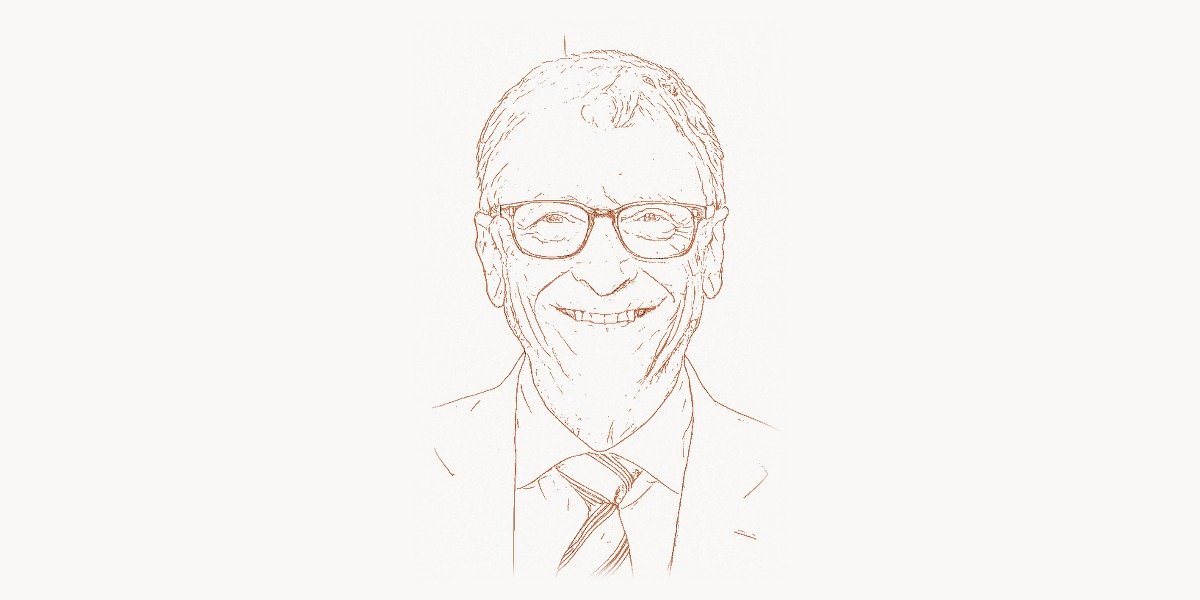
In 1975, a 19-year-old Harvard dropout looked at the Altair 8800 microcomputer and saw what almost no one else could: a future where every desk in every home would have a personal computer. That teenager was Bill Gates, and his audacious vision would not only create the world’s most valuable software company but fundamentally reshape how billions of people work, communicate, and interact with technology. From writing a BASIC interpreter in a Harvard dorm room to building the Windows operating system that powered over 90% of the world’s PCs, Gates’ story is one of relentless ambition, technical brilliance, and an unmatched ability to see where the industry was heading before anyone else.
Early Life and Education
William Henry Gates III was born on October 28, 1955, in Seattle, Washington, into an upper-middle-class family. His father, William H. Gates Sr., was a prominent attorney, and his mother, Mary Maxwell Gates, served on several corporate boards, including those of First Interstate BancSystem and the United Way. The environment fostered both intellectual curiosity and competitive drive — traits that would define Gates’ career.
Gates’ first encounter with computers came in 1968 at Lakeside School, an exclusive private preparatory school in Seattle. The school’s Mothers’ Club had purchased a Teletype Model 33 ASR terminal and a block of computer time on a General Electric mainframe. For the 13-year-old Gates, it was a revelation. He immediately became obsessed with the machine, spending hours writing programs in BASIC and exploring the system’s capabilities.
At Lakeside, Gates met Paul Allen, a student two years his senior who shared his fascination with computers. The two formed a partnership that would change the world. Together, they exploited bugs in the Computer Center Corporation’s PDP-10 system — first getting banned for crashing the system, then being hired to find vulnerabilities in exchange for free computer time. This early experience in systems programming gave Gates an unusually deep understanding of how software interacts with hardware.
By age 15, Gates and Allen had started their first business venture, Traf-O-Data, which used an Intel 8008 processor to analyze traffic data from road counters. Though the company was modestly successful, the real value was in the experience of building a product from scratch. Gates enrolled at Harvard University in 1973, ostensibly to study law, but spent most of his time in the computer lab. When the January 1975 issue of Popular Electronics featured the Altair 8800 on its cover, Gates knew his moment had arrived. He dropped out of Harvard to co-found Microsoft with Allen, a decision that would prove to be one of the most consequential in technology history.
The Microsoft Breakthrough
Technical Innovation
The first product Gates and Allen created for Microsoft was Altair BASIC — an interpreter for the BASIC programming language that ran on the MITS Altair 8800. What made this achievement remarkable was its constraints: the Altair had just 4 kilobytes of memory, and Gates and Allen wrote the interpreter on a PDP-10 mainframe using an emulator they built for the Intel 8080 processor, never touching an actual Altair until the day of the demonstration. The interpreter had to fit in approximately 4KB while still providing floating-point arithmetic, string handling, and a usable programming environment.
The technical approach Gates used reveals his programming philosophy — every byte mattered. The Altair BASIC interpreter used numerous optimization tricks that were ahead of their time. Here’s a simplified example of how early Microsoft BASIC handled memory-efficient tokenization, a technique that compressed keywords into single-byte tokens to save precious RAM:
10 REM Microsoft Altair BASIC tokenization concept
20 REM Keywords stored as single-byte tokens (128+)
30 REM PRINT = token 0x9E, GOTO = token 0x89
40 REM Input: "PRINT X + 1"
50 REM Stored as: [0x9E][X][ ][+][ ][1]
60 REM Saving 4 bytes per PRINT statement
70 REM In 4KB, every byte was critical
80 PRINT "Hello, Altair!"
90 LET X = 42
100 IF X > 40 THEN PRINT "Microsoft BASIC works!"
110 GOTO 80
But it was the strategic decisions that followed which truly set Microsoft apart. When IBM approached Microsoft in 1980 to provide an operating system for its upcoming personal computer, Gates made a move that would define the industry for decades. Microsoft purchased QDOS (Quick and Dirty Operating System) from Seattle Computer Products for $50,000, adapted it into MS-DOS, and — crucially — licensed it to IBM on a non-exclusive basis. This meant Microsoft retained the right to sell MS-DOS to other manufacturers, a decision that would make it the standard operating system for the entire PC clone industry.
The development of Windows represented Microsoft’s next pivotal innovation. Inspired by the graphical user interface work at Xerox PARC — the same research that influenced Steve Wozniak and Steve Jobs at Apple — Gates recognized that the future of computing was visual, not text-based. Windows 1.0 launched in 1985 to lukewarm reception, but Gates persisted. Windows 3.0 in 1990 became a massive hit, and Windows 95 transformed the PC into a consumer product, selling 7 million copies in its first five weeks.
Why It Mattered
Gates’ fundamental insight was that software, not hardware, would be the true engine of the personal computing revolution. While competitors like IBM focused on building machines, Gates understood that a standard software platform would create a network effect that would make the PC ecosystem unstoppable. By licensing MS-DOS to any hardware manufacturer, he ensured that software developers would write for a single platform, which in turn attracted more users, which attracted more developers — a virtuous cycle that Marc Andreessen would later call the key to platform dominance.
This approach democratized computing in a way that proprietary systems never could. Because any manufacturer could build a PC compatible with MS-DOS and later Windows, competition drove hardware prices down dramatically. A computer that cost $5,000 in 1981 became affordable to middle-class families by the mid-1990s. Modern web development agencies like Toimi owe their existence to the mass-market computing ecosystem that Gates helped create — without ubiquitous PCs, there would be no mass market for websites and web applications.
The Windows platform also created the foundation for the modern software industry. Microsoft’s developer tools, particularly Visual Basic and later Visual Studio, lowered the barrier to software development and enabled millions of programmers to build applications. The concept of an application ecosystem — where third-party developers create value on top of a platform — can be traced directly to Gates’ vision of Windows as a universal computing platform.
Other Contributions
Beyond Windows and MS-DOS, Gates drove Microsoft’s expansion into virtually every area of software. Microsoft Office, launched in 1989, became the standard productivity suite for businesses worldwide. Word, Excel, and PowerPoint — each originally developed separately — were bundled together and optimized to work seamlessly, creating a product that remains dominant more than three decades later. The design philosophy behind Office — making powerful tools accessible through consistent, learnable interfaces — influenced an entire generation of software development, including modern project management platforms like Taskee that emphasize intuitive user experiences.
Gates also recognized the importance of the internet earlier than he is often credited. His 1995 memo “The Internet Tidal Wave” redirected Microsoft’s entire strategy toward web technologies, leading to the development of Internet Explorer, ASP (Active Server Pages), and eventually the .NET framework. While the browser wars with Netscape are often viewed critically, Gates’ willingness to pivot a company of Microsoft’s size toward the internet demonstrated his strategic agility.
Microsoft’s developer tools ecosystem deserves special mention. Visual Basic, released in 1991, was revolutionary in making Windows programming accessible to non-expert programmers through its drag-and-drop interface design and event-driven programming model. This approach of abstracting complexity — letting developers focus on what they want to build rather than how the underlying system works — echoed the philosophy of pioneers like Guido van Rossum with Python, who also prioritized developer productivity and readability.
Here is an example of early Visual Basic code that demonstrates the event-driven programming paradigm Gates helped popularize:
Private Sub cmdCalculate_Click()
    ' Event-driven paradigm that Gates' team pioneered
    ' for mainstream Windows development

    Dim principal As Double
    Dim rate As Double
    Dim years As Integer

    principal = Val(txtPrincipal.Text)
    rate = Val(txtRate.Text) / 100
    years = Val(txtYears.Text)

    ' Compound interest calculation
    Dim result As Double
    result = principal * (1 + rate) ^ years

    lblResult.Caption = "Future Value: $" & Format(result, "#,##0.00")

    ' Log to list box — early UI pattern
    lstHistory.AddItem "Calculated: $" & Format(principal, "#,##0") & _
        " at " & Format(rate * 100, "0.0") & "% for " & years & " years"
End Sub

Private Sub Form_Load()
    ' Initialize form — GUI-driven application model
    Me.Caption = "Financial Calculator v1.0"
    txtPrincipal.Text = "1000"
    txtRate.Text = "5.0"
    txtYears.Text = "10"
End Sub
Under Gates’ leadership, Microsoft also invested heavily in research. Microsoft Research, founded in 1991, became one of the world’s premier computer science research labs, making significant contributions to areas including machine learning, natural language processing, and computer vision — fields that would later become central to the AI revolution driven by researchers like Geoffrey Hinton.
Gates’ Philosophy and Approach to Technology
Key Principles
Software is the platform, not hardware. Gates consistently argued that the value in computing would accrue to software platforms, not hardware manufacturers. This belief led to Microsoft’s licensing model — rather than building PCs, Microsoft sold the operating system that ran on everyone else’s PCs. The strategy proved extraordinarily successful: while dozens of hardware manufacturers rose and fell, Microsoft’s software platform remained the constant. This insight parallels the approach of Linus Torvalds, who also recognized that a universal software platform (Linux) could become the foundation for an entire industry, though Torvalds chose an open-source model rather than Gates’ proprietary approach.
Developer ecosystems drive adoption. Gates understood that the value of a platform is determined by the applications available on it. Microsoft invested heavily in developer tools, documentation, and support programs to ensure that Windows had more software available than any competing platform. The annual Microsoft Professional Developers Conference became the industry’s most important gathering, and initiatives like MSDN (Microsoft Developer Network) provided developers with comprehensive resources. This developer-first approach anticipated the platform strategies that would later define companies like Google and Apple.
Iterate relentlessly. Windows 1.0 was widely panned, and MS-DOS was initially a rough adaptation of another product. But Gates never abandoned a product line after a single failure. He invested in improvement after improvement until the product achieved dominance. Windows went through six major versions before Windows 95 became a cultural phenomenon. This persistence through failure is a hallmark of successful technologists, from Brendan Eich’s rapid iteration on JavaScript to the continual evolution of modern web frameworks.
Think in decades, not quarters. Gates famously said that people overestimate what they can achieve in one year and underestimate what they can achieve in ten. Microsoft’s long-term bets — on graphical interfaces, internet integration, cloud computing, and AI — often took years to pay off but ultimately positioned the company at the forefront of each new computing wave. Satya Nadella’s current success with Azure and AI can be traced to investments Gates initiated decades earlier.
Accessible technology changes the world. From BASIC on the Altair to Visual Basic to Windows itself, Gates consistently worked to lower the barriers to using and programming computers. His belief that technology should be accessible to everyone — not just experts — drove design decisions across Microsoft’s product line and later informed his philanthropic work through the Bill & Melinda Gates Foundation, where he applies the same principle to global health and education.
Legacy and Impact
Bill Gates’ impact on the technology industry is almost impossible to overstate. Microsoft Windows became the operating system for over 1.4 billion PCs worldwide, creating a universal computing platform that standardized how people interact with technology. The company he built grew from two employees in Albuquerque, New Mexico, to a global enterprise with over 220,000 employees and a market capitalization exceeding $3 trillion.
But Gates’ legacy extends well beyond Microsoft. His transition from technology executive to philanthropist has been equally ambitious. The Bill & Melinda Gates Foundation, with an endowment exceeding $70 billion, is the largest private charitable foundation in the world. It has invested billions in global health initiatives, helping to reduce child mortality, combat malaria, and fund vaccine development. The foundation’s approach to philanthropy — applying data-driven, technology-inspired thinking to global problems — reflects the same systematic methodology Gates used to build Microsoft.
In the computing world, Gates’ most enduring contribution may be the concept of the software platform as a business. Before Microsoft, software was often seen as an afterthought — a free add-on to hardware purchases. Gates established that software could be the primary value driver in technology, a principle that now underlies the entire digital economy. Every SaaS company, every app store, every cloud platform owes something to the business model Gates pioneered.
Gates’ influence on computing is comparable to that of Alan Turing on theoretical computer science — both fundamentally changed what was possible. Where Turing provided the theoretical foundation for computation itself, Gates built the practical infrastructure that put computing power in the hands of billions. The modern web, cloud computing, mobile apps, and AI — all of these rest on the foundation of mass-market personal computing that Gates did more than anyone to create.
His approach to technology — pragmatic, developer-focused, relentlessly commercial — has been both praised and criticized. The antitrust battles of the late 1990s revealed the darker side of Microsoft’s competitive strategy. But even Gates’ critics acknowledge that his vision of a computer on every desk fundamentally transformed human civilization. As we enter the era of artificial intelligence and quantum computing, the platform-first, software-driven approach that Gates championed remains the dominant paradigm in technology.
Key Facts
- Full name: William Henry Gates III
- Born: October 28, 1955, in Seattle, Washington
- Education: Attended Harvard University (1973–1975), dropped out to co-found Microsoft
- Co-founded Microsoft: April 4, 1975, with Paul Allen
- Key products: Altair BASIC, MS-DOS, Windows, Microsoft Office, Internet Explorer, Visual Basic, .NET
- CEO of Microsoft: 1975–2000; Chairman until 2014; Board member until 2020
- World’s richest person: Held the title for a combined 18 years between 1995 and 2017
- Net worth peak: Over $130 billion
- Philanthropic giving: Over $59 billion donated to the Gates Foundation
- Awards: Presidential Medal of Freedom (2016), Knight Commander of the Order of the British Empire (KBE), National Medal of Technology and Innovation
- Books authored: The Road Ahead (1995), Business @ the Speed of Thought (1999), How to Avoid a Climate Disaster (2021), How to Prevent the Next Pandemic (2022)
- Bill & Melinda Gates Foundation: Established in 2000, endowment exceeding $70 billion, the world’s largest private charitable foundation
Frequently Asked Questions
What programming languages did Bill Gates know and use?
Bill Gates was proficient in several programming languages throughout his career. He started with BASIC on the Teletype terminals at Lakeside School and went on to write Microsoft’s first product, Altair BASIC, in a combination of Intel 8080 assembly language and BASIC itself. He was also skilled in FORTRAN, COBOL, and various assembly languages for different processors. Gates personally reviewed code at Microsoft well into the 1990s and was known for his deep technical understanding of systems programming. In a 2019 interview, he mentioned that he could still write code but acknowledged that modern developers use tools and languages far more advanced than what was available in his era. His early assembly language work gave him an intuition for software performance and optimization that influenced Microsoft’s products for decades.
How did Microsoft’s deal with IBM for MS-DOS actually work?
The IBM deal is one of the most pivotal moments in computing history. In 1980, IBM approached Microsoft initially to provide a BASIC interpreter for its upcoming Personal Computer. Gates referred IBM to Digital Research for the operating system (CP/M), but when those negotiations stalled, IBM returned to Microsoft. Gates then purchased QDOS (Quick and Dirty Operating System) from Seattle Computer Products programmer Tim Paterson for $50,000, adapted it as MS-DOS, and licensed it to IBM. The critical detail was the licensing structure: Microsoft retained the right to sell MS-DOS to other manufacturers. IBM, accustomed to controlling proprietary systems, did not foresee the PC clone industry. When companies like Compaq began building IBM-compatible PCs, they all needed MS-DOS, making Microsoft the essential software provider for the entire industry. This single deal generated billions in revenue and established Microsoft’s dominance for the next two decades.
What is Bill Gates’ role in the fight against climate change?
Since transitioning away from day-to-day involvement at Microsoft, Gates has become one of the world’s most prominent advocates for addressing climate change through technological innovation. His 2021 book, How to Avoid a Climate Disaster, outlined a framework for eliminating greenhouse gas emissions across major sectors including electricity, manufacturing, transportation, agriculture, and buildings. Through Breakthrough Energy, a network of investment vehicles, funds, and philanthropic programs he founded in 2015, Gates has invested over $2 billion in clean energy startups and technologies. Breakthrough Energy Ventures has funded companies working on next-generation nuclear power, long-duration energy storage, direct air capture of CO2, sustainable aviation fuel, and green hydrogen. Gates argues that innovation — not just deployment of existing technologies — is essential to reaching net-zero emissions, and that governments, private industry, and philanthropists must work together to accelerate the transition.
Why did Bill Gates leave day-to-day operations at Microsoft?
Gates’ departure from Microsoft’s daily operations was a gradual process rather than a single event. He stepped down as CEO in January 2000, handing the role to Steve Ballmer, though he remained chairman and took the newly created role of Chief Software Architect. In 2006, he announced he would transition out of his daily role to focus on the Bill & Melinda Gates Foundation, completing the shift in 2008. He remained on Microsoft’s board of directors until March 2020. Gates has said that his decision was driven by a growing conviction that his wealth and organizational skills could have a greater impact on global problems — particularly in health and education — than on any single technology initiative. The success of the Gates Foundation’s early work in fighting diseases like polio and malaria reinforced this belief. However, Gates has maintained a close advisory relationship with Microsoft, particularly around AI strategy and research initiatives.