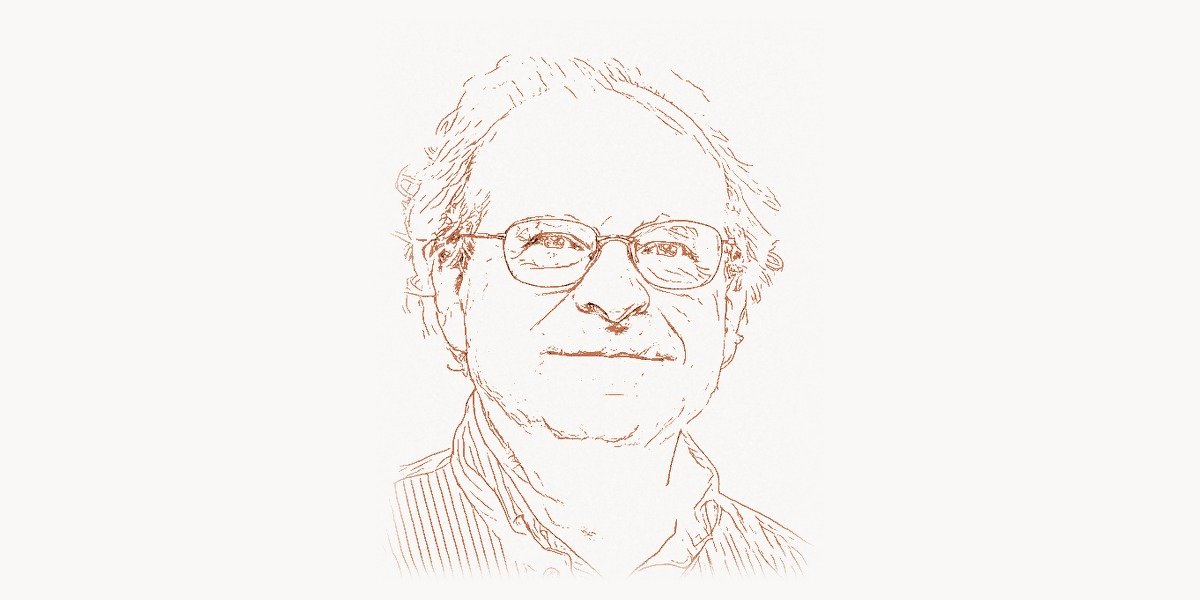
When Dan Bricklin sketched the idea for an electronic spreadsheet on the back of an envelope in 1978, most people would have filed it under “interesting but impossible.” The minicomputers and mainframes of the day were jealously guarded by IT departments, and personal computers were little more than hobbyist toys with blinking LEDs. But Bob Frankston — a programmer with deep roots in MIT’s computing culture and an obsessive attention to implementation details — saw something different. He saw the path from concept to running code. Over a frantic autumn and winter, working nights and weekends on a rented Apple II, Frankston wrote every byte of VisiCalc: the first spreadsheet program, the application that turned the personal computer from a curiosity into a business necessity, and arguably the single piece of software most responsible for launching the PC revolution.
Early Life and Education
Robert “Bob” Frankston was born on June 14, 1949, in Brooklyn, New York. From an early age, he displayed an aptitude for mathematics and systematic thinking. His family later moved to the suburbs, where Frankston attended public schools in Arlington, Massachusetts. By his teenage years, he was already gravitating toward computers — a remarkable fact given how rare access to computing was in the early 1960s.
Frankston enrolled at the Massachusetts Institute of Technology (MIT), one of the few institutions in the world where an undergraduate could get serious hands-on experience with computers. He studied mathematics and computer science, immersing himself in MIT’s vibrant hacker culture. This was the era of the PDP-1 and PDP-10, when MIT’s AI Lab and Project MAC were producing ideas that would shape the future of computing for decades. Frankston absorbed it all — information theory from the legacy of Claude Shannon, time-sharing concepts, and a deep appreciation for making technology accessible to non-specialists.
He completed his undergraduate degree and went on to earn a Master of Science from MIT as well. During his time there, he worked on Multics — the pioneering time-sharing operating system that would later inspire Unix — and contributed to various projects that reinforced his belief that computers should serve ordinary people, not just programmers and scientists. It was at MIT that Frankston first crossed paths with Dan Bricklin, a fellow student who shared his passion for interactive computing. Their friendship would prove to be one of the most consequential partnerships in the history of software.
Career and the Creation of VisiCalc
Technical Innovation: Building the First Spreadsheet
After graduating from MIT, Frankston worked at various technology companies, including Interactive Data Corporation, where he gained experience in financial computing — experience that would prove critical later. Meanwhile, Dan Bricklin had gone to Harvard Business School and was struggling with the tedium of recalculating financial models by hand. Bricklin conceived of an “electronic blackboard” — a visible calculator where changing one number would automatically ripple through every dependent formula.
Bricklin created the initial prototype and design, but it was Frankston who took on the monumental task of turning the concept into a real, shippable product. The constraints were staggering. The Apple II had only 32 kilobytes of RAM (later 48KB on enhanced models). There was no hard drive — programs ran from 5.25-inch floppy disks. The processor, a MOS 6502 designed by Chuck Peddle, ran at approximately 1 MHz. Writing a program that could manage a dynamic grid of interlinked cells, recalculate in near-real-time, and still fit in memory required extraordinary ingenuity.
Frankston wrote VisiCalc entirely in 6502 assembly language. Every byte mattered. He developed clever memory management techniques to handle the sparse matrix of a spreadsheet, storing only cells that contained data rather than allocating memory for the entire grid. He invented an efficient recalculation engine that could propagate changes through chains of dependent formulas without grinding the little 8-bit processor to a halt.
Here is a simplified example of how a spreadsheet recalculation dependency graph might be modeled in modern Python — the kind of logic Frankston had to implement in raw assembly:
class Cell:
    def __init__(self, name, formula=None, value=0):
        self.name = name
        self.formula = formula  # e.g., lambda cells: cells['A1'].value + cells['A2'].value
        self.value = value
        self.dependents = []    # cells that depend on this one

def recalculate(cells, changed_cell):
    """Propagate recalculation through dependency graph (topological order)."""
    queue = [changed_cell]
    visited = set()
    while queue:
        cell = queue.pop(0)
        if cell.name in visited:
            continue
        visited.add(cell.name)
        if cell.formula:
            cell.value = cell.formula(cells)
        for dep in cell.dependents:
            queue.append(dep)

# Example: A3 = A1 + A2
cells = {
    'A1': Cell('A1', value=100),
    'A2': Cell('A2', value=250),
    'A3': Cell('A3', formula=lambda c: c['A1'].value + c['A2'].value)
}
cells['A1'].dependents.append(cells['A3'])
cells['A2'].dependents.append(cells['A3'])

recalculate(cells, cells['A1'])
print(f"A3 = {cells['A3'].value}")  # Output: A3 = 350
Now consider that Frankston had to achieve something functionally equivalent using nothing but 6502 assembly on hardware with roughly one fifty-thousandth the processing power of a modern smartphone. His implementation was a masterclass in systems programming under extreme constraints.
The development process was intense. Frankston worked primarily from his apartment in Arlington, renting an Apple II and writing code late into the night. He and Bricklin co-founded Software Arts, Inc. in 1979 to publish the program. Frankston handled all of the engineering; Bricklin focused on design decisions, documentation, and business development with their publisher, Personal Software (later VisiCorp).
Why VisiCalc Mattered
VisiCalc shipped in October 1979 at a price of $100. Within weeks, something remarkable happened: people started buying Apple II computers specifically to run VisiCalc. This was unprecedented. Before VisiCalc, personal computers had no “killer app” — no single reason compelling enough to justify the expense for a business professional. Accountants, financial analysts, small business owners, and corporate planners suddenly had a reason to put a computer on their desks.
The impact was immediate and enormous. Apple II sales surged. In 1979, Apple’s revenue was approximately $47 million; by 1980, it had more than tripled. Industry analysts directly attributed much of this growth to VisiCalc. As Bill Gates himself acknowledged, the spreadsheet concept proved that personal computers were not toys — they were tools. VisiCalc sold over 700,000 copies across its lifetime and generated more than $100 million in revenue.
More importantly, VisiCalc created an entirely new category of software. It established paradigms that persist to this day: the grid of rows and columns, cell references like A1 and B3, formulas that update automatically, the concept of “what-if” analysis. Every spreadsheet program that followed — Lotus 1-2-3, Microsoft Excel, Google Sheets — is a direct descendant of the architecture that Frankston built. The conceptual framework that Bricklin designed and Frankston implemented has proven remarkably durable, surviving largely intact for over four decades.
VisiCalc also helped establish the idea that software could be a product in its own right — not just something bundled with hardware. This concept was crucial to the emergence of the independent software industry. Companies like Microsoft, Lotus Development, and eventually thousands of software publishers owe a conceptual debt to the commercial model that VisiCalc pioneered.
Other Contributions and Later Career
After VisiCalc, Frankston continued to push the boundaries of what technology could do for ordinary people. Following a legal dispute with VisiCorp over rights to VisiCalc (the program was eventually superseded by Lotus 1-2-3 on the IBM PC), Software Arts was acquired by Lotus Development Corporation in 1985. Frankston briefly worked at Lotus before moving on.
He joined Microsoft in the early 1990s, where he worked on consumer-facing internet technologies. At Microsoft, he was involved in efforts to bring networking and internet connectivity to home users — work that aligned with his longstanding belief that connectivity should be universal and affordable. He contributed to early home networking initiatives and helped shape Microsoft’s approach to consumer internet software.
Frankston also became a prominent voice in the debate over telecommunications policy. He argued passionately that internet access should be treated as infrastructure — like roads and electricity — rather than as a premium service controlled by telecommunications carriers. He championed the idea of “Ambient Connectivity,” the notion that internet access should be so ubiquitous and inexpensive that it becomes invisible, woven into the fabric of daily life just as Vint Cerf’s TCP/IP protocols made the physical network itself invisible to users.
His work on home networking was also notable. Frankston was an early advocate for the idea that every device in a home should be networked, a vision that anticipated the Internet of Things by more than a decade. He pushed for simple, standards-based approaches rather than proprietary systems, echoing the philosophy that had driven Bob Metcalfe’s development of Ethernet — that connectivity should be open and interoperable.
The following shell script illustrates the kind of connectivity testing Frankston might have advocated for in home networking setups — simple, transparent, no proprietary dependencies:
#!/bin/bash
# Simple home network connectivity audit
# Tests local devices and external connectivity

echo "=== Home Network Connectivity Report ==="
echo "Date: $(date)"
echo ""

# Check gateway
GATEWAY=$(ip route | grep default | awk '{print $3}')
echo "Default Gateway: $GATEWAY"
ping -c 2 -W 2 "$GATEWAY" > /dev/null 2>&1 \
    && echo "  Status: REACHABLE" \
    || echo "  Status: UNREACHABLE"

# Check DNS resolution
echo ""
echo "DNS Resolution Test:"
for domain in example.com wikipedia.org archive.org; do
    result=$(dig +short "$domain" 2>/dev/null | head -1)
    if [ -n "$result" ]; then
        echo "  $domain -> $result [OK]"
    else
        echo "  $domain -> FAILED"
    fi
done

# Check external connectivity
echo ""
echo "External Connectivity:"
curl -s -o /dev/null -w "  HTTP Status: %{http_code} | Time: %{time_total}s\n" \
    https://www.example.com

echo ""
echo "=== Report Complete ==="
In recent years, Frankston has continued writing and speaking about technology policy, the future of connectivity, and the importance of keeping the internet open and accessible. He has received numerous honors, including induction into the Computer History Museum’s Hall of Fellows and the National Inventors Hall of Fame.
Philosophy and Vision
What sets Bob Frankston apart from many technologists is the depth and consistency of his philosophy. Across decades — from VisiCalc to home networking to telecommunications policy — a coherent worldview emerges. Frankston believes that technology should empower individuals by removing unnecessary intermediaries and gatekeepers.
His philosophy shares much with the tradition of Douglas Engelbart, who saw computing as a means to augment human intellect. But where Engelbart focused on collaboration and group intelligence, Frankston has consistently emphasized individual empowerment and the elimination of artificial scarcity in connectivity and computing resources.
Frankston has also been a vocal critic of the telecommunications industry’s approach to internet access. He argues that treating connectivity as a “service” rather than “infrastructure” creates perverse incentives — carriers profit from scarcity rather than abundance, and innovation is throttled by gatekeepers who control the pipes. This perspective has made him an influential voice in net neutrality debates and telecommunications reform discussions.
For teams building modern infrastructure tools, Frankston’s principles resonate strongly. Platforms like Toimi embody this philosophy by providing businesses with direct, transparent access to digital project management without unnecessary intermediary complexity.
Key Principles
- Simplicity as power: VisiCalc succeeded because it gave people a conceptual model they already understood — the paper ledger — and supercharged it with computation. The best technology maps to existing mental models.
- Connectivity as infrastructure: Internet access should be treated like roads and electricity — funded as infrastructure, available to all, and not controlled by gatekeepers seeking artificial scarcity.
- Ambient availability: Technology achieves its greatest impact when it becomes invisible — when people stop thinking about it and just use it, the way we use light switches without considering power grids.
- Empower the individual: Software should give individuals capabilities that previously required institutions or intermediaries. VisiCalc gave every business owner the power of a financial analyst.
- Interoperability over propriety: Open standards create ecosystems; proprietary lock-in creates dependencies. The internet thrived because of open protocols, and future connectivity must follow the same model.
- Solve real problems first: Frankston has consistently argued that technology should start with a genuine human problem rather than searching for applications for a cool new technology.
Legacy and Influence
Bob Frankston’s legacy extends far beyond the lines of 6502 assembly code he wrote in his Arlington apartment. VisiCalc did not just launch a product category — it helped launch an industry. The personal computer revolution, the independent software industry, and the concept of the “killer app” all trace back to those few kilobytes of code.
The spreadsheet paradigm that Frankston implemented has become one of the most widely used computational tools in human history. Today, an estimated 750 million to one billion people use spreadsheet software regularly. Financial modeling, scientific data analysis, project tracking, and countless other tasks rely on the grid-formula-recalculation architecture that Frankston first brought to life. Modern task management platforms like Taskee continue this tradition of making structured data manipulation accessible to non-programmers.
His influence on the personal computing industry is difficult to overstate. As Alan Kay and others in the personal computing movement envisioned machines for everyone, it was VisiCalc that provided the commercial proof point. Before VisiCalc, the personal computer industry was driven primarily by hobbyist enthusiasm. After VisiCalc, it was driven by business demand — a far more sustainable engine of growth.
Frankston’s later work on connectivity policy continues to influence debates about the future of the internet. His concept of Ambient Connectivity anticipated current discussions about universal broadband access, municipal fiber networks, and the democratization of internet infrastructure. His writings on the subject remain widely cited by policy advocates and technologists alike.
The partnership between Bricklin and Frankston also provides an enduring model for technology collaboration. Bricklin, the visionary designer who saw the possibility; Frankston, the master implementer who made it real. This division of conceptual innovation and engineering execution has been replicated in countless successful technology partnerships, from Tim Berners-Lee’s web specifications and their subsequent implementations to modern open-source collaborations where architects and engineers work in tandem.
Key Facts
- Full name: Robert M. Frankston
- Born: June 14, 1949, Brooklyn, New York
- Education: B.S. and M.S. from the Massachusetts Institute of Technology (MIT)
- Known for: Co-creating VisiCalc with Dan Bricklin — the first electronic spreadsheet
- Company founded: Software Arts, Inc. (1979, with Dan Bricklin)
- Later employers: Lotus Development Corporation, Microsoft
- Key advocacy: Ambient Connectivity — universal, infrastructure-based internet access
- VisiCalc platform: Apple II (later ported to Atari 800, Commodore PET, IBM PC, and others)
- VisiCalc language: Written entirely in 6502 assembly language
- VisiCalc sales: Over 700,000 copies sold, more than $100 million in revenue
- Awards: Computer History Museum Fellow, National Inventors Hall of Fame inductee, IEEE Computer Pioneer Award
- Ongoing work: Writing and advocacy on telecommunications policy, connectivity infrastructure, and internet openness
Frequently Asked Questions
What was Bob Frankston’s role in creating VisiCalc?
Bob Frankston was the sole programmer and engineer behind VisiCalc. While Dan Bricklin conceived the idea and created an initial prototype, Frankston designed and implemented the entire production software — writing every line of 6502 assembly code, developing the memory management system, building the recalculation engine, and optimizing the program to run within the Apple II’s severe hardware constraints. Without Frankston’s engineering, VisiCalc would have remained a concept rather than a product.
Why is VisiCalc considered the first “killer app”?
VisiCalc is considered the first killer app because it was the first software application that drove hardware sales. Before VisiCalc, people bought computers and then looked for things to do with them. After VisiCalc’s release in 1979, businesses bought Apple II computers specifically to run VisiCalc. This reversed the traditional relationship between hardware and software, proving that a single compelling application could create demand for an entire computing platform — a pattern later repeated with Lotus 1-2-3 on the IBM PC and numerous other software-hardware combinations.
How did VisiCalc influence modern spreadsheet programs like Excel?
VisiCalc established virtually all of the foundational concepts that modern spreadsheets still use: the row-and-column grid layout, alphanumeric cell references (A1, B2, etc.), formulas that reference other cells, automatic recalculation when values change, and the ability to perform “what-if” analysis by modifying inputs and watching results update. Lotus 1-2-3, which succeeded VisiCalc on the IBM PC, added features like macros and charting but kept VisiCalc’s core paradigm. Microsoft Excel, which eventually dominated the market, similarly built upon VisiCalc’s fundamental architecture. The conceptual DNA of Frankston’s original implementation runs through every spreadsheet program used today.
What is Bob Frankston’s “Ambient Connectivity” concept?
Ambient Connectivity is Frankston’s vision for the future of internet access. He argues that connectivity should be treated as basic infrastructure — like roads, water, and electricity — rather than as a premium service sold by telecommunications carriers. In Frankston’s model, internet access would be so ubiquitous, affordable, and reliable that it would become invisible, simply available everywhere without requiring users to think about providers, plans, or bandwidth caps. He contends that the current carrier-based model creates artificial scarcity and stifles innovation, and that a shift to infrastructure-based connectivity would unlock enormous economic and social value.