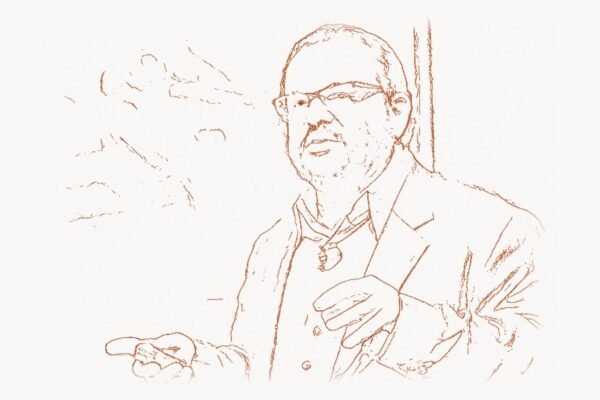
In December 2017, the price of XRP — a digital asset designed for cross-border payments — surged past $3.00, momentarily making Chris Larsen the wealthiest person in the United States. According to Forbes, his estimated net worth briefly eclipsed that of Mark Zuckerberg, Larry Ellison, and the Google co-founders. For a few extraordinary days, the co-founder of a company most Americans had never heard of was technically richer than the titans of Silicon Valley. Then the price corrected, and the headlines faded. But the underlying achievement did not. By the time that crypto winter descended, Ripple — the company Larsen had co-founded in 2012 — had already signed partnerships with over 100 financial institutions in more than 40 countries, including Santander, American Express, Standard Chartered, and SBI Holdings. Larsen had not built a speculative token. He had built a bridge between the cryptocurrency revolution and the traditional financial system — and that bridge is still standing.
Early Life and the Road to Silicon Valley
Christopher Larsen was born on September 2, 1960, in San Francisco, California. He grew up in the Bay Area during a period when Silicon Valley was transitioning from its semiconductor roots into the personal computing era. Larsen attended San Francisco State University, where he earned a Bachelor of Science degree in accounting and international business. He later completed an MBA at Stanford Graduate School of Business — a credential that would connect him to the dense network of entrepreneurs, venture capitalists, and technologists that Stanford continuously produces.
His early career was not in technology. Larsen spent the mid-1980s working in commercial real estate and mortgage lending, gaining firsthand knowledge of how financial institutions operated, where their inefficiencies lay, and how technology could address them. This experience in traditional finance — unusual among crypto founders, most of whom came from computer science or cryptography backgrounds — would prove to be Larsen’s decisive advantage. He understood banking not as an outsider looking to disrupt it, but as someone who had worked within its structures and grasped both its capabilities and its limitations.
In the early 1990s, as the World Wide Web began to emerge, Larsen recognized that the internet would fundamentally transform financial services. He was among the first entrepreneurs to see that online lending could reduce costs, expand access, and disintermediate traditional gatekeepers. This insight led to his first major venture.
E-Loan: Pioneering Online Lending
In 1996, Larsen co-founded E-Loan, one of the earliest online mortgage lending companies. At a time when obtaining a mortgage required visiting a bank branch, filling out paper forms, and waiting weeks for approval, E-Loan offered something revolutionary: the ability to compare mortgage rates from multiple lenders online, apply digitally, and receive offers transparently. The platform gave consumers access to information that had previously been controlled by loan officers and brokers.
E-Loan was also a pioneer in financial transparency. The company published wholesale mortgage rates — the actual rates at which lenders offered loans to brokers — so that consumers could see the markup they were being charged. This was radical in the late 1990s. The mortgage industry relied on information asymmetry as a profit mechanism, and E-Loan’s transparency directly threatened that model. The company faced intense opposition from established lenders and brokers, but its consumer-first approach resonated with borrowers.
E-Loan went public in 1999 during the dot-com boom and was eventually acquired by Banco Popular in 2005 for approximately $300 million. The company demonstrated two principles that would recur throughout Larsen’s career: first, that financial services could be dramatically improved by technology-driven transparency; and second, that incumbents would resist change fiercely but ultimately adapt. The successful exit also established Larsen’s credibility as a tech pioneer who could build, scale, and deliver financial technology companies.
Prosper Marketplace: Inventing Peer-to-Peer Lending
In 2005, Larsen co-founded Prosper Marketplace, the first peer-to-peer (P2P) lending platform in the United States. Prosper allowed individuals to lend money directly to other individuals, bypassing banks entirely. Borrowers posted loan listings on the platform, specifying how much they needed and what they would use it for. Lenders — ordinary people with capital to invest — could fund those loans and earn interest. Prosper handled the underwriting, servicing, and collections.
The concept was genuinely novel. Before Prosper, lending was the exclusive domain of licensed financial institutions. Prosper democratized the process, creating a two-sided marketplace that connected borrowers and lenders directly. The platform used auction-style pricing, where lenders competed to fund loans by offering lower interest rates, which drove down costs for borrowers. This marketplace approach to lending drew on principles from project management and platform economics that would later become standard in fintech.
Prosper also became a test case for fintech regulation. In 2008, the SEC required Prosper to register its loan notes as securities, temporarily shutting down the platform and forcing a fundamental restructuring. Larsen navigated this regulatory crisis, working with regulators to create a compliance framework that allowed P2P lending to continue within securities law. This experience — building a product that operated in a regulatory gray zone, then working constructively with regulators to establish clear rules — directly prepared Larsen for the even more complex regulatory challenges he would face at Ripple.
By the time Larsen stepped down as CEO of Prosper in 2012, the company had facilitated over $1 billion in loans and had established P2P lending as a legitimate financial category. The entire P2P lending industry that followed — LendingClub, Funding Circle, Zopa — owed a structural debt to Prosper’s pioneering work.
The Founding of Ripple and the XRP Vision
How Ripple Began
In 2011, Jed McCaleb — a programmer who had previously created the file-sharing network eDonkey and the Mt. Gox Bitcoin exchange — began developing a new digital payment system. Unlike Bitcoin, which used proof-of-work mining to validate transactions, McCaleb envisioned a consensus-based system that could settle transactions in seconds rather than minutes. He called the project OpenCoin. In 2012, McCaleb recruited Chris Larsen to serve as co-founder and CEO. Larsen brought exactly what McCaleb’s technical vision needed: deep knowledge of financial regulation, executive leadership experience, relationships with institutional investors, and the credibility to negotiate with banks.
The company was renamed Ripple Labs (later simply Ripple) in 2013. Its mission was audacious: to do for money what the internet did for information — enable it to move instantly, globally, and at near-zero cost. While Bitcoin’s creator, Satoshi Nakamoto, had designed a system to replace banks, Larsen took the opposite approach. He wanted to work with banks, upgrading their infrastructure rather than eliminating them. This was a deeply controversial position in the cryptocurrency community, where anti-establishment ideology was (and remains) dominant. But Larsen argued that the fastest path to global adoption was to partner with the institutions that already controlled the financial system.
The XRP Ledger: Technical Architecture
The XRP Ledger (XRPL), which went live in 2012, is an open-source, decentralized blockchain designed specifically for payments. Unlike Bitcoin’s proof-of-work consensus, XRPL uses a protocol called the Ripple Protocol Consensus Algorithm (RPCA), in which a network of independent validators agree on the order and validity of transactions. A transaction on the XRP Ledger settles in 3-5 seconds and costs a fraction of a cent — compared to Bitcoin’s 10-minute block times and variable fees that can reach tens of dollars during peak periods.
XRP, the native digital asset of the XRPL, serves as a bridge currency for cross-border payments. When a bank in Japan wants to send yen to a bank in Mexico that needs pesos, the traditional process involves multiple intermediary banks (correspondent banking), each taking a cut and adding delay. With XRP as a bridge, the sending bank converts yen to XRP, the XRP moves across the ledger in seconds, and the receiving bank converts XRP to pesos. The entire process takes under 10 seconds and costs a fraction of what traditional correspondent banking charges.
// Example: XRP Ledger transaction submission using ripple-lib (xrpl.js)
// Demonstrating a cross-border payment with XRP as bridge currency

const xrpl = require('xrpl');

async function sendCrossBorderPayment() {
  // Connect to the XRP Ledger mainnet
  const client = new xrpl.Client('wss://xrplcluster.com');
  await client.connect();

  // Prepare a payment transaction
  // This represents a bank converting local currency → XRP → destination currency
  const payment = {
    TransactionType: 'Payment',
    Account: 'rSenderBankXRPAddress...',      // Sending institution's XRP wallet
    Destination: 'rReceiverBankXRPAddress...', // Receiving institution's XRP wallet
    Amount: xrpl.xrpToDrops('10000'),          // 10,000 XRP (1 XRP = 1,000,000 drops)

    // Optional: Destination Tag identifies the specific beneficiary
    // at the receiving institution (similar to a memo/reference number)
    DestinationTag: 2847591,

    // Memos can carry additional payment information
    Memos: [{
      Memo: {
        MemoType: xrpl.convertStringToHex('payment/reference'),
        MemoData: xrpl.convertStringToHex('INV-2025-00482-JP-MX')
      }
    }]
  };

  // Auto-fill fields: Fee, Sequence, LastLedgerSequence
  const prepared = await client.autofill(payment);

  // Sign with the sending institution's private key
  const wallet = xrpl.Wallet.fromSeed('s████████████████████████████');
  const signed = wallet.sign(prepared);

  // Submit to the XRP Ledger — settles in 3-5 seconds
  const result = await client.submitAndWait(signed.tx_blob);

  console.log('Transaction result:', result.result.meta.TransactionResult);
  // Expected output: "tesSUCCESS"
  // Settlement time: ~3-5 seconds
  // Transaction cost: ~0.00001 XRP (~$0.00001)
  // Compare: traditional SWIFT transfer takes 2-5 business days, costs $25-50

  await client.disconnect();
}

sendCrossBorderPayment().catch(console.error);
The XRPL also supports advanced features beyond simple payments. It includes a built-in decentralized exchange (DEX) where any asset issued on the ledger can be traded directly. It supports escrow — funds locked until specific conditions are met — which enables complex payment arrangements. And it supports payment channels, which allow two parties to conduct unlimited off-ledger transactions with only two on-ledger transactions (opening and closing the channel), enabling throughput that would be impossible on the main ledger. These capabilities make the XRPL not just a payment rail but a complete financial framework for building diverse applications.
RippleNet and Institutional Adoption
Under Larsen’s leadership as CEO (2012–2016) and later as Executive Chairman, Ripple built RippleNet — a network of financial institutions that use Ripple’s technology for cross-border payments. RippleNet consists of several products. xCurrent (now RippleNet) allows banks to settle cross-border payments with end-to-end tracking, using an interledger protocol that enables payment messaging and settlement across different ledgers. On-Demand Liquidity (ODL), formerly called xRapid, uses XRP as a real-time bridge currency to eliminate the need for pre-funded accounts in destination countries — a major source of cost and capital inefficiency in traditional correspondent banking.
The business case was compelling. The Society for Worldwide Interbank Financial Telecommunication (SWIFT), which has dominated cross-border payment messaging since 1973, processes approximately 45 million messages per day. But SWIFT is a messaging system, not a settlement system. When a SWIFT message is sent, the actual movement of money still happens through a chain of correspondent banks, each holding pre-funded accounts (called nostro/vostro accounts) in different currencies. McKinsey estimated that banks collectively hold $27 trillion in these accounts — capital that is locked up simply to facilitate cross-border payments. Ripple’s technology promised to free that capital by replacing pre-funded accounts with real-time XRP settlement.
By 2020, RippleNet had signed over 300 financial institutions across more than 40 countries. Notable partners included Santander (which launched a consumer-facing international payment app called One Pay FX powered by Ripple technology), SBI Holdings (Japan’s largest online brokerage, which created SBI Ripple Asia to drive adoption across the Asia-Pacific region), Standard Chartered, American Express, MoneyGram (which signed a partnership to use ODL for remittances), and numerous central banks exploring digital currency initiatives. This level of institutional adoption was unprecedented in the cryptocurrency industry, where most projects had struggled to move beyond retail speculation.
# RippleNet On-Demand Liquidity (ODL) payment flow
# Simplified representation of a cross-border remittance: USD → XRP → PHP

# Step 1: Originating institution (US) converts USD to XRP
#         via a local crypto exchange or liquidity provider
originating_payment = {
    "sender": "US_Bank_Corp",
    "source_currency": "USD",
    "amount": 50000.00,
    "xrp_exchange": "US_Liquidity_Provider",
    "xrp_purchase_price": 0.50,            # Price per XRP at time of conversion
    "xrp_acquired": 100000,                # 50,000 USD / 0.50 = 100,000 XRP
    "timestamp": "2025-06-15T14:30:00Z"
}

# Step 2: XRP moves across the XRP Ledger in ~3-5 seconds
# No correspondent banks. No pre-funded nostro accounts.
# No 2-5 day settlement delay.
xrpl_transfer = {
    "from": "rUS_Bank_XRP_Wallet...",
    "to": "rPH_Bank_XRP_Wallet...",
    "amount_xrp": 100000,
    "ledger_fee_xrp": 0.00001,
    "settlement_time_seconds": 3.7,
    "transaction_hash": "A4B2C8D9E1F0..."
}

# Step 3: Destination institution (Philippines) converts XRP to PHP
#         via a local crypto exchange or liquidity provider
destination_payout = {
    "receiver": "PH_Rural_Bank",
    "destination_currency": "PHP",
    "xrp_sale_price": 28.50,               # PHP per XRP at time of conversion
    "php_received": 2850000.00,             # 100,000 XRP * 28.50 = 2,850,000 PHP
    "beneficiary": "Maria Santos",
    "payout_method": "bank_deposit",
    "timestamp": "2025-06-15T14:30:04Z"     # 4 seconds after initiation
}

# Total time: ~4 seconds
# Total cost: ~$0.01 (XRP ledger fee) + exchange spreads
# Traditional remittance: 2-5 days, $25-50 in fees
# Capital freed: No pre-funded PHP nostro account needed
The SEC Lawsuit and Regulatory Battle
On December 22, 2020, the U.S. Securities and Exchange Commission filed a lawsuit against Ripple Labs, Chris Larsen, and CEO Brad Garlinghouse, alleging that the sale of XRP constituted an unregistered securities offering worth over $1.3 billion. The lawsuit was a seismic event in the cryptocurrency industry. If XRP was a security, then every exchange that listed it, every institution that held it, and every application built on the XRPL faced potential legal liability.
Larsen’s defense rested on several arguments: that XRP was a functioning currency used for real payments, that it existed independently of Ripple (the XRP Ledger would continue operating even if Ripple disappeared), that Larsen and Garlinghouse had received legal advice that XRP was not a security, and that the SEC had failed to provide fair notice that it considered XRP a security. In July 2023, Judge Analisa Torres of the Southern District of New York ruled that XRP sold on exchanges to retail investors was not a security — a landmark decision that sent the price of XRP surging and was widely interpreted as a major victory for the broader crypto industry.
The case continued through 2024 with additional proceedings regarding institutional sales, but the core ruling — that programmatic sales of XRP on exchanges did not constitute securities transactions — established a crucial precedent. Larsen’s strategy throughout was characteristically pragmatic. Rather than adopting the combative, anti-regulatory posture common among crypto founders, he engaged with the legal process methodically and invested heavily in legal defense while continuing to build the business. This approach reflected the same philosophy that had guided his entire career: work within existing systems to transform them, rather than trying to destroy them from outside. Tools like Taskee help modern fintech teams manage the kind of regulatory compliance workflows that Ripple had to build from scratch during this period.
Philosophy and Leadership Approach
The Bridge-Builder’s Mindset
Larsen’s career follows a remarkably consistent intellectual thread: using technology to reduce friction in financial systems while working constructively with regulators and incumbents. At E-Loan, he used the internet to make mortgage rates transparent. At Prosper, he used marketplace technology to connect borrowers and lenders directly. At Ripple, he used blockchain technology to make cross-border payments faster, cheaper, and more accessible.
In each case, the pattern was the same. Identify a massive inefficiency in the financial system. Build technology that addresses it. Navigate the regulatory landscape carefully. Partner with institutions rather than attacking them. Scale through institutional adoption rather than purely retail growth. This approach stands in stark contrast to the dominant ethos in cryptocurrency, which tends toward ideological purity, decentralization maximalism, and a confrontational stance toward traditional finance.
Larsen has been a vocal advocate for regulatory clarity in the cryptocurrency industry — not because he wants regulation, but because he believes ambiguity is worse than rules. Clear regulations, even strict ones, allow companies to build with confidence. Ambiguity creates legal risk that deters institutional adoption and drives innovation to other jurisdictions. This position has made him a frequent voice in Washington, D.C., where he has testified before Congress and engaged with regulators from multiple agencies.
Environmental Advocacy
Larsen has also been unusually outspoken about the environmental impact of cryptocurrency mining, particularly Bitcoin’s proof-of-work consensus mechanism. In 2021, he funded a campaign urging Bitcoin to transition from proof-of-work to a less energy-intensive consensus mechanism, arguing that proof-of-work’s massive electricity consumption was an existential threat to the industry’s credibility and long-term viability. The campaign was controversial — many Bitcoin supporters viewed it as an attack on Bitcoin’s security model — but it reflected Larsen’s characteristic willingness to stake out positions that prioritize long-term sustainability over short-term popularity.
The XRP Ledger itself uses negligible energy compared to proof-of-work blockchains. Each XRP transaction consumes an estimated 0.0079 kWh of energy — compared to Bitcoin’s estimated 707 kWh per transaction. This environmental advantage has become a significant selling point for Ripple’s institutional clients, many of whom face pressure from shareholders and regulators to reduce their environmental footprint. Organizations seeking to evaluate digital payment technologies across various dimensions can leverage structured technology reviews and comparison frameworks to assess these trade-offs systematically.
Philanthropy and Impact
Larsen and his wife, Lyna Lam, have been significant philanthropists, particularly in housing and education. In 2019, they donated $25 million to San Francisco State University — Larsen’s alma mater — the largest gift in the university’s history. The donation funded scholarships, faculty positions, and infrastructure improvements. In 2018, they donated $2 million to establish a blockchain research initiative at the university, reflecting Larsen’s belief that academic research is essential for the long-term development of distributed ledger technology.
They have also been active supporters of affordable housing initiatives in the San Francisco Bay Area, donating to organizations that build and maintain housing for low-income residents. Larsen has spoken publicly about the housing crisis in the Bay Area, connecting it to the same themes of financial access and systemic inefficiency that drive his technology work. Digital solutions for affordable housing coordination, from project management platforms to resource-allocation tools, are among the technology categories where Larsen’s philanthropic interests and his professional expertise converge.
Ripple itself established the Ripple Impact initiative, which has deployed XRP and blockchain technology for social impact applications, including financial inclusion in underbanked regions. The company has partnered with organizations in Southeast Asia, Africa, and Latin America to provide low-cost remittance corridors that serve migrant workers sending money home to their families — a use case where the traditional banking system’s high fees impose a disproportionate burden on the world’s most vulnerable populations.
Legacy and Modern Relevance
Chris Larsen’s career trajectory — from mortgage lending to peer-to-peer finance to blockchain-based cross-border payments — traces the entire arc of fintech’s evolution over the past three decades. Each of his ventures addressed a different layer of the same fundamental problem: the financial system is too slow, too expensive, too opaque, and too exclusionary. And each venture used the most powerful technology available at the time to chip away at that problem.
Ripple’s institutional adoption strategy has proven more durable than many observers expected. While numerous cryptocurrency projects that launched during the 2017-2018 boom have faded into irrelevance, Ripple continues to expand RippleNet, add institutional partners, and develop new products including custody solutions, central bank digital currency (CBDC) consulting, and liquidity management tools. The company’s survival through the SEC lawsuit — and the favorable court ruling — has strengthened its position in the market.
The XRP Ledger itself has evolved beyond its original payment-focused design. Developers have built non-fungible token (NFT) capabilities on the XRPL, launched decentralized finance (DeFi) applications, and created stablecoin platforms. The ledger’s low transaction costs, fast settlement, and energy efficiency make it attractive for applications that require high throughput and low fees. The developer tools ecosystem around the XRPL has grown substantially, with libraries, SDKs, and documentation that make it accessible to developers who may not have blockchain-specific expertise. For teams building on emerging protocols, platforms like Toimi offer strategic consulting that helps connect technical implementation with business objectives.
Larsen’s influence extends beyond Ripple. His career demonstrated that fintech entrepreneurship could be both disruptive and collaborative — that it was possible to build genuinely innovative technology while maintaining constructive relationships with regulators and incumbents. This model has been adopted by a generation of fintech founders who learned from both the dot-com era and the crypto boom that sustainable innovation requires institutional trust, not just technological brilliance. His legacy echoes the approach of other pragmatic innovators like Vitalik Buterin, who similarly recognized that blockchain technology must evolve to meet real-world demands.
At 65, Larsen remains active as Ripple’s Executive Chairman and continues to shape the company’s strategy. The cross-border payment problem he set out to solve in 2012 is far from fully addressed — the vast majority of international payments still move through correspondent banking at significant cost and delay — but the infrastructure Ripple has built, and the regulatory clarity the company has fought for, have moved the entire industry closer to the vision of money moving as freely and cheaply as information. That vision, pursued with tenacity across three decades and three companies, is Chris Larsen’s defining contribution to the digital technology landscape.
Key Facts
- Born: September 2, 1960, San Francisco, California, USA
- Education: BS in Accounting and International Business, San Francisco State University; MBA, Stanford Graduate School of Business
- Known for: Co-founding Ripple, creating XRP, pioneering online lending (E-Loan), and inventing peer-to-peer lending (Prosper Marketplace)
- Key ventures: E-Loan (1996), Prosper Marketplace (2005), Ripple / OpenCoin (2012)
- Notable achievements: Built RippleNet (300+ financial institutions, 40+ countries), survived landmark SEC lawsuit, briefly became wealthiest person in the US (December 2017)
- Current role: Executive Chairman, Ripple Labs
- Philanthropy: $25 million gift to San Francisco State University (largest in school history), affordable housing advocacy, blockchain research funding
Frequently Asked Questions
Who is Chris Larsen?
Chris Larsen is an American technology entrepreneur and business executive, best known as the co-founder and Executive Chairman of Ripple Labs, the company behind the XRP digital asset and the RippleNet cross-border payment network. Before Ripple, he co-founded E-Loan (one of the first online mortgage platforms) in 1996 and Prosper Marketplace (the first peer-to-peer lending platform in the US) in 2005. His career has focused on using technology to reduce costs and increase transparency in the financial system.
What is the relationship between Chris Larsen, Ripple, and XRP?
Chris Larsen co-founded Ripple (originally called OpenCoin) in 2012 with programmer Jed McCaleb. Ripple is a technology company that builds payment solutions for financial institutions. XRP is the native digital asset of the XRP Ledger, an open-source blockchain that Ripple helped create. While Ripple is the largest holder and developer associated with XRP, the XRP Ledger is decentralized and operates independently — it would continue functioning even if Ripple ceased to exist. Larsen served as CEO from 2012 to 2016 and has served as Executive Chairman since then.
What happened with the SEC lawsuit against Ripple?
In December 2020, the SEC sued Ripple, Chris Larsen, and CEO Brad Garlinghouse, alleging that XRP sales constituted unregistered securities offerings. In July 2023, Judge Analisa Torres ruled that XRP sold programmatically on exchanges to retail investors was not a security, while institutional sales could constitute securities transactions under certain circumstances. This ruling was widely seen as a major victory for Ripple and the broader cryptocurrency industry, as it established that a digital asset can be sold in some contexts without being classified as a security.
How does Ripple differ from Bitcoin?
While both are blockchain-based systems, they have fundamentally different purposes and architectures. Bitcoin was designed as a decentralized digital currency to replace traditional money, using energy-intensive proof-of-work mining with 10-minute block times. Ripple’s XRP Ledger was designed specifically for fast, low-cost cross-border payments, using a consensus protocol that settles transactions in 3-5 seconds and consumes negligible energy. Bitcoin aims to operate outside the traditional financial system; Ripple aims to upgrade it from within by partnering with banks and financial institutions.
What is Chris Larsen’s net worth?
Chris Larsen’s net worth fluctuates significantly with the price of XRP, as he holds a substantial amount of the digital asset. In January 2018, Forbes estimated his net worth at approximately $59 billion at XRP’s peak price, briefly making him one of the wealthiest people in the world. As of 2025, estimates place his net worth in the range of $2-5 billion, though exact figures depend heavily on XRP’s market price and the liquidity of his holdings. He remains one of the wealthiest individuals in the cryptocurrency industry.