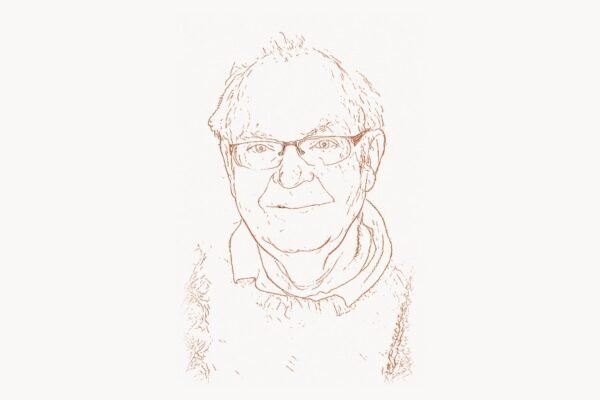
What happens when one of the sharpest minds in theoretical computer science decides that algorithms alone cannot capture the full story of computation — and picks up a novelist’s pen instead? Christos Harilaos Papadimitriou has spent over five decades wrestling with the deepest questions at the intersection of mathematics, economics, and computer science. He helped define entirely new complexity classes, proved that finding Nash equilibria is computationally hard, and then — in a move that stunned his colleagues — published “Turing (A Novel About Computation),” a genre-defying work of fiction that weaves together Alan Turing’s legacy, the history of ideas, and the philosophy of mind. His career is a testament to the idea that the boundaries of what computers can and cannot do are not merely technical puzzles but profoundly human ones.
Early Life and the Road from Athens to Princeton
Christos Papadimitriou was born on August 16, 1949, in Athens, Greece. He grew up during a tumultuous period in Greek history, yet found refuge and fascination in mathematics from an early age. He studied electrical engineering at the National Technical University of Athens, graduating in 1972, before leaving Greece to pursue graduate studies in the United States. He earned his PhD from Princeton University in 1976 under the supervision of Kenneth Steiglitz, writing a dissertation on the computational aspects of optimization — a topic that would remain a lifelong preoccupation.
Princeton in the mid-1970s was a hotbed of theoretical computer science. The field was still young, with the fundamental questions about P versus NP having been formally articulated only a few years earlier by Stephen Cook and Richard Karp. Papadimitriou arrived at exactly the right moment: the intellectual infrastructure for studying computational complexity was being laid down, and brilliant young researchers were needed to explore the vast uncharted territory that Cook and Karp had opened up.
Computational Complexity: Mapping the Landscape of Hard Problems
After positions at Harvard and MIT, Papadimitriou joined the faculty at UC San Diego and later UC Berkeley, where he would spend the most productive decades of his career. His work on computational complexity theory has been nothing short of transformative. While many researchers focused on the binary question of whether problems are in P or NP-complete, Papadimitriou was drawn to the rich structure that lies between and beyond these categories.
His most celebrated contribution in this domain is the definition of the complexity class PPAD (Polynomial Parity Arguments on Directed graphs), introduced in his landmark 1994 paper. PPAD captures a class of problems that are guaranteed to have solutions — by topological or combinatorial arguments — yet for which finding those solutions appears to be computationally intractable. The canonical example is computing a Nash equilibrium in a game, which John Nash proved must always exist but which no one knew how to find efficiently.
Understanding PPAD: The Complexity of Guaranteed Solutions
To appreciate the elegance of PPAD, consider the following intuition. Imagine a directed graph where every node has in-degree and out-degree at most one. If you know a source node (a node with out-degree one but in-degree zero), then there must exist another “unbalanced” node somewhere in The Graph — either another source or a sink. This follows from a simple parity argument. The class PPAD consists of all search problems that can be reduced to this graph-traversal problem.
The following pseudocode illustrates the core algorithmic idea behind path-following in a PPAD instance, which is the basis for algorithms like the Lemke-Howson method for finding Nash equilibria:
def ppad_path_following(successor, predecessor, known_source):
    """
    Follow a directed path in a PPAD graph starting from a known source.

    In a PPAD instance, nodes have at most one predecessor and one successor.
    Given a known source (no predecessor), follow the path until reaching
    either a sink (no successor) or another source — both are valid solutions.

    This is the conceptual backbone of Lemke-Howson for Nash equilibria.

    Args:
        successor: function mapping node -> next node (or None if sink)
        predecessor: function mapping node -> prev node (or None if source)
        known_source: a starting node guaranteed to have no predecessor

    Returns:
        A different "unbalanced" node (source or sink) — the solution
    """
    current = known_source
    visited = {current}

    while True:
        next_node = successor(current)

        if next_node is None:
            # We reached a sink — this is a valid PPAD solution
            return current

        if next_node in visited:
            # Cycle detection (should not happen in valid PPAD instance)
            raise ValueError("Invalid PPAD instance: cycle detected")

        visited.add(next_node)
        current = next_node

        # Check if this new node is a source (another unbalanced node)
        if predecessor(current) is None and current != known_source:
            return current

    # In an exponentially large graph, this path can be exponentially long
    # — which is precisely why PPAD problems are believed to be hard
The critical insight is that while the parity argument guarantees a solution exists, the path from the known source to another unbalanced node can be exponentially long. This is why PPAD problems are believed to lie outside polynomial time — you know the answer is out there, but finding it may require traversing an astronomically large graph.
The Nash Equilibrium Is Hard: PPAD-Completeness
Papadimitriou’s definition of PPAD was visionary, but its full significance became clear in 2006 when Constantinos Daskalakis, Paul Goldberg, and Papadimitriou himself proved that computing a Nash equilibrium in a game with three or more players is PPAD-complete. Shortly afterward, Chen and Deng extended this result to two-player games. This was a watershed moment for both computer science and economics.
The result means that unless PPAD equals FP (the class of polynomial-time search problems), there is no efficient algorithm for finding Nash equilibria — despite the fact that they always exist. This has profound implications for the foundations of game theory and economics. If markets and rational agents are supposed to converge on equilibria, but computing those equilibria is intractable, what does “equilibrium” really mean in practice? This question sits at the heart of algorithmic game theory, a field that Papadimitriou helped create.
The connection between computational hardness and economic theory exemplifies the kind of cross-disciplinary thinking that modern technology companies must grapple with. When building platforms that involve strategic interactions among users — from auction systems to recommendation engines — understanding these theoretical boundaries is not an academic luxury but a practical necessity. Teams at firms like Toimi that work on complex web systems and digital strategy understand that the algorithms underlying user interactions carry deep theoretical constraints.
The Traveling Salesman and Approximation Algorithms
Before his work on PPAD, Papadimitriou made fundamental contributions to the study of the Traveling Salesman Problem (TSP) and combinatorial optimization more broadly. His early work with Kenneth Steiglitz on the computational complexity of the TSP helped establish the problem as a central benchmark for understanding algorithmic hardness. He showed that even restricted variants of the TSP remain NP-hard, closing off hopes that geometric or structural constraints might make the problem easy.
Papadimitriou also contributed to our understanding of approximation algorithms — the idea that even if you cannot solve a problem exactly in polynomial time, you might be able to find solutions that are provably close to optimal. His work on the Euclidean TSP and on local search algorithms helped establish the theoretical foundations for practical optimization.
TSP Approximation: The 2-OPT Local Search
One of the classic approaches to approximating TSP solutions is the 2-OPT local search heuristic, which Papadimitriou studied in the context of local search complexity. The idea is simple but powerful: repeatedly improve a tour by removing two edges and reconnecting the tour in a better way. Papadimitriou’s work showed that analyzing the convergence and quality of such local search methods is itself a deep complexity-theoretic question, leading to the definition of the class PLS (Polynomial Local Search).
import math
import random

def two_opt_tsp(cities):
    """
    2-OPT local search for the Traveling Salesman Problem.

    Papadimitriou studied the complexity of local search heuristics
    like 2-OPT, showing that the number of improving steps can be
    exponential — leading to the complexity class PLS.

    Args:
        cities: list of (x, y) coordinate tuples

    Returns:
        (tour, distance): best tour found and its total distance
    """
    n = len(cities)

    def dist(a, b):
        return math.sqrt((cities[a][0] - cities[b][0])**2 +
                         (cities[a][1] - cities[b][1])**2)

    def tour_distance(tour):
        return sum(dist(tour[i], tour[(i + 1) % n]) for i in range(n))

    # Start with a random tour
    tour = list(range(n))
    random.shuffle(tour)
    best_dist = tour_distance(tour)

    improved = True
    while improved:
        improved = False
        for i in range(n - 1):
            for j in range(i + 2, n):
                if j == n - 1 and i == 0:
                    continue  # Skip: would reverse entire tour

                # Current edges: (tour[i], tour[i+1]) and (tour[j], tour[j+1 mod n])
                # New edges after 2-opt swap: (tour[i], tour[j]) and (tour[i+1], tour[j+1 mod n])
                old_cost = (dist(tour[i], tour[i + 1]) +
                            dist(tour[j], tour[(j + 1) % n]))
                new_cost = (dist(tour[i], tour[j]) +
                            dist(tour[i + 1], tour[(j + 1) % n]))

                if new_cost < old_cost - 1e-10:
                    # Reverse the segment between i+1 and j
                    tour[i + 1:j + 1] = reversed(tour[i + 1:j + 1])
                    best_dist -= (old_cost - new_cost)
                    improved = True

    return tour, best_dist

# Example: 10 random cities in a unit square
# Papadimitriou proved that 2-OPT can require exponentially many
# improvement steps in the worst case, placing the problem of
# finding a local optimum in the complexity class PLS.
cities = [(random.random(), random.random()) for _ in range(10)]
tour, distance = two_opt_tsp(cities)
print(f"Tour order: {tour}")
print(f"Tour distance: {distance:.4f}")
The PLS class that Papadimitriou defined captures exactly this phenomenon: problems where a locally optimal solution is guaranteed to exist (because any sequence of improvements must eventually terminate), but finding one may require an exponential number of steps. PLS sits alongside PPAD in a rich hierarchy of complexity classes that Papadimitriou mapped out, each capturing a different flavor of computational difficulty.
Algorithmic Game Theory: Where Computer Science Meets Economics
Papadimitriou is widely regarded as one of the founding figures of algorithmic game theory. This field applies the tools and perspectives of theoretical computer science to questions in economics, mechanism design, and social choice theory. His insight was that the computational perspective is not merely a practical concern — it fundamentally changes our understanding of economic concepts.
Consider the concept of market equilibrium. Economists since Léon Walras have studied conditions under which markets clear — where supply meets demand for every good. But Papadimitriou and his collaborators showed that computing such equilibria can be PPAD-hard, raising deep questions about whether markets can realistically converge to equilibrium states. This work has influenced how economists think about bounded rationality and the limits of the "invisible hand."
His contributions extend to the internet and networks. In a famous series of papers, Papadimitriou and collaborators studied the "price of anarchy" — the loss in system efficiency when self-interested agents make decisions without coordination, compared to a centrally planned optimum. This concept has become essential for understanding everything from network routing to traffic congestion, and is directly relevant to the design of modern distributed systems and platforms.
For organizations building complex digital products — where user behavior, incentive structures, and algorithmic design intersect — the insights from algorithmic game theory are invaluable. Whether designing auction mechanisms or optimizing task allocation in project management tools like Taskee, the computational perspective that Papadimitriou championed reminds us that theoretical elegance and practical feasibility must walk hand in hand.
Textbooks That Shaped a Generation
Papadimitriou's influence extends far beyond his research papers. He is the author or co-author of several textbooks that have become standard references in computer science education. His book "Computational Complexity," published in 1994, remains one of the most comprehensive and readable introductions to the field. It covers everything from Turing machines and basic complexity classes to advanced topics like interactive proofs, probabilistic computation, and circuit complexity.
His earlier textbook "Combinatorial Optimization: Algorithms and Complexity," co-authored with Kenneth Steiglitz, introduced generations of students to the interplay between optimization, algorithms, and complexity theory. And "Elements of the Theory of Computation," co-authored with Harry Lewis, became a widely used textbook for courses on automata theory and formal languages.
What distinguishes Papadimitriou's writing is his ability to convey deep mathematical ideas with clarity, wit, and a sense of narrative. He treats complexity theory not as a collection of dry technical results but as a grand intellectual adventure — a quest to understand the fundamental limits of computation. This narrative sensibility would later find its fullest expression in an unexpected form.
"Turing (A Novel About Computation)": When Theory Becomes Fiction
In 2003, Papadimitriou published "Turing (A Novel About Computation)," a work that defies easy categorization. Part novel, part philosophical dialogue, part history of ideas, the book tells the story of Ethel, a woman searching for her lost lover Alexandros, guided by an AI entity named Turing. Through their conversations, the book explores the history of computation from Alan Turing's foundational work to modern complexity theory, touching on topics ranging from the nature of consciousness to the beauty of mathematical proof.
The novel is remarkable not only for its ambition but for its execution. Papadimitriou manages to explain concepts like Gödel's incompleteness theorems, the halting problem, and NP-completeness through dialogue and narrative rather than formal exposition. The book has been praised by computer scientists and literary critics alike for making abstract ideas accessible without dumbing them down.
Writing a novel about computation was not a departure from Papadimitriou's scientific work but an extension of it. He has always been interested in the humanistic dimensions of theoretical computer science — the way that abstract ideas about computation connect to questions about intelligence, creativity, and what it means to be human. The novel gave him a medium to explore these connections in a way that technical papers never could.
The Internet, Evolution, and the Brain
In recent years, Papadimitriou has turned his attention to some of the most ambitious questions in science: how the brain computes, how evolution can be understood through the lens of computation, and how the internet functions as a complex adaptive system.
His work on the "computational lens" — the idea that computation provides a unifying framework for understanding natural and social phenomena — has been influential in shaping the direction of theoretical computer science. He has argued that the brain is best understood not as a digital computer but as a computational system operating under severe constraints (noise, limited bandwidth, distributed processing), and that understanding these constraints requires new complexity-theoretic tools.
Papadimitriou's interest in evolution connects to his earlier work on game theory and optimization. He has explored how evolutionary dynamics can be modeled as computational processes, and how the "hardness" of certain evolutionary tasks might explain features of biological complexity. This work sits at the frontier of computational biology, connecting to the rich tradition of algorithmic thinking pioneered by researchers like Donald Knuth and Edsger Dijkstra.
Awards, Recognition, and Legacy
Papadimitriou's contributions have been recognized with numerous awards. He received the Knuth Prize in 2002 for his sustained contributions to theoretical computer science. In 2012, he was awarded the Gödel Prize (shared with Daskalakis and Goldberg) for the proof that computing Nash equilibria is PPAD-complete. He is a member of the National Academy of Sciences, the American Academy of Arts and Sciences, and the National Academy of Engineering — a rare triple membership that reflects the breadth of his impact.
He has also received the IEEE John von Neumann Medal, recognizing outstanding achievements in computer science and technology. This award is particularly fitting given von Neumann's own foundational contributions to game theory — the very field that Papadimitriou helped transform through the computational lens.
After decades at UC Berkeley, Papadimitriou moved to Columbia University in 2017, where he continues to teach and research. His influence on the field is immeasurable: he has supervised dozens of PhD students who have gone on to become leading researchers in their own right, and his ideas have shaped how an entire generation thinks about the relationship between computation, economics, and the natural world.
Influence on Modern Computer Science and Technology
The practical implications of Papadimitriou's work extend far beyond academia. His complexity-theoretic framework for understanding Nash equilibria has influenced the design of real-world systems — from spectrum auctions used by governments to allocate radio frequencies, to the matching algorithms used in kidney exchange programs, to the ad auction mechanisms that power search engines.
His work on the price of anarchy has become a standard tool for analyzing distributed systems, where no central authority coordinates the behavior of individual agents. This is directly relevant to the design of peer-to-peer networks, blockchain protocols, and content delivery systems. The insight that selfish behavior leads to bounded inefficiency — and that this bound can be quantified — has been transformative for network design.
The complexity classes he defined — PPAD, PLS, and others — provide a precise language for discussing the boundaries of what algorithms can achieve. When engineers at technology companies encounter optimization problems that resist efficient solution, the framework Papadimitriou built helps them understand whether they are facing a fundamental barrier or merely a technical challenge. This distinction — between problems that are hard because we haven't been clever enough and problems that are hard because they are inherently so — is one of the most important contributions of theoretical computer science to practical engineering.
In the tradition of pioneers like Claude Shannon, who built the mathematical foundations of information theory that underpin all digital communication, and Manuel Blum, whose work on computational complexity led to practical innovations like CAPTCHA, Papadimitriou demonstrates that the most abstract theoretical work often has the most far-reaching practical consequences.
A Bridge Between Worlds
What makes Christos Papadimitriou unique among theoretical computer scientists is his relentless commitment to connecting disparate worlds. He bridges mathematics and computer science, theory and practice, science and the humanities. His career demonstrates that the deepest insights often come from refusing to stay within disciplinary boundaries.
His novel "Turing" is perhaps the most vivid symbol of this bridging impulse. In writing it, Papadimitriou did not abandon his identity as a scientist — he extended it. He showed that the story of computation is, at its core, a human story: a story about our attempts to understand the limits of our own minds, to build machines that can think, and to grapple with the profound implications of living in a world where information and computation are the fundamental currencies.
As artificial intelligence continues to reshape every aspect of technology and society, the questions that Papadimitriou has spent his career exploring become ever more urgent. What can be computed efficiently? What are the limits of algorithmic reasoning? How do strategic interactions among computational agents shape outcomes? And perhaps most fundamentally: what does computation tell us about what it means to be human? These are the questions that will define the next century of computer science, and Christos Papadimitriou has given us many of the tools we need to begin answering them.
Frequently Asked Questions
What is the PPAD complexity class that Papadimitriou defined?
PPAD (Polynomial Parity Arguments on Directed graphs) is a complexity class defined by Christos Papadimitriou in 1994. It captures search problems where a solution is guaranteed to exist by a parity argument on directed graphs — for instance, if you know one end of a path in a graph with bounded degree, another end must exist somewhere. The class includes the problem of computing Nash equilibria and Brouwer fixed points. PPAD problems are widely believed to be computationally intractable (not solvable in polynomial time), even though solutions always exist.
Why is the PPAD-completeness of Nash equilibrium important?
The proof that computing a Nash equilibrium is PPAD-complete (by Daskalakis, Goldberg, and Papadimitriou in 2006, extended by Chen and Deng) fundamentally changed our understanding of game theory. It shows that despite John Nash's 1950 proof that equilibria always exist, there is likely no efficient algorithm to find them. This raises deep questions about whether real-world markets and strategic interactions can actually converge to equilibrium states, challenging a core assumption in economics and influencing the design of algorithmic systems in auctions, markets, and multi-agent platforms.
What is Papadimitriou's novel "Turing" about?
"Turing (A Novel About Computation)," published in 2003, is a genre-blending work of fiction that combines a love story with the history and philosophy of computation. The protagonist, Ethel, is guided by an AI entity named Turing as she searches for her lost lover. Through their dialogues, the book covers topics from Alan Turing's foundational work and Gödel's incompleteness theorems to modern complexity theory and the nature of consciousness. It is notable for making deep theoretical concepts accessible through narrative rather than formal mathematical exposition.
What is the "price of anarchy" and how does it relate to Papadimitriou's work?
The price of anarchy is a concept in algorithmic game theory that measures the loss in system efficiency caused by selfish, uncoordinated behavior compared to a centrally optimized solution. Papadimitriou and his collaborators, particularly Elias Koutsoupias, introduced and studied this concept in the context of network routing and resource allocation. The price of anarchy has become a fundamental tool for analyzing distributed systems, traffic networks, internet protocols, and any system where independent agents make self-interested decisions without central coordination.
How has Papadimitriou's work influenced practical technology and engineering?
Papadimitriou's theoretical contributions have had wide-ranging practical impact. His complexity framework helps engineers understand which optimization problems have fundamental barriers versus solvable challenges. His work on algorithmic game theory influences the design of auction systems (including ad auctions and spectrum auctions), matching markets (such as kidney exchange programs), and distributed network protocols. The complexity classes he defined — PPAD, PLS, and others — provide the formal language that researchers and engineers use to classify and approach computational problems in areas ranging from artificial intelligence to blockchain consensus mechanisms and logistics optimization.