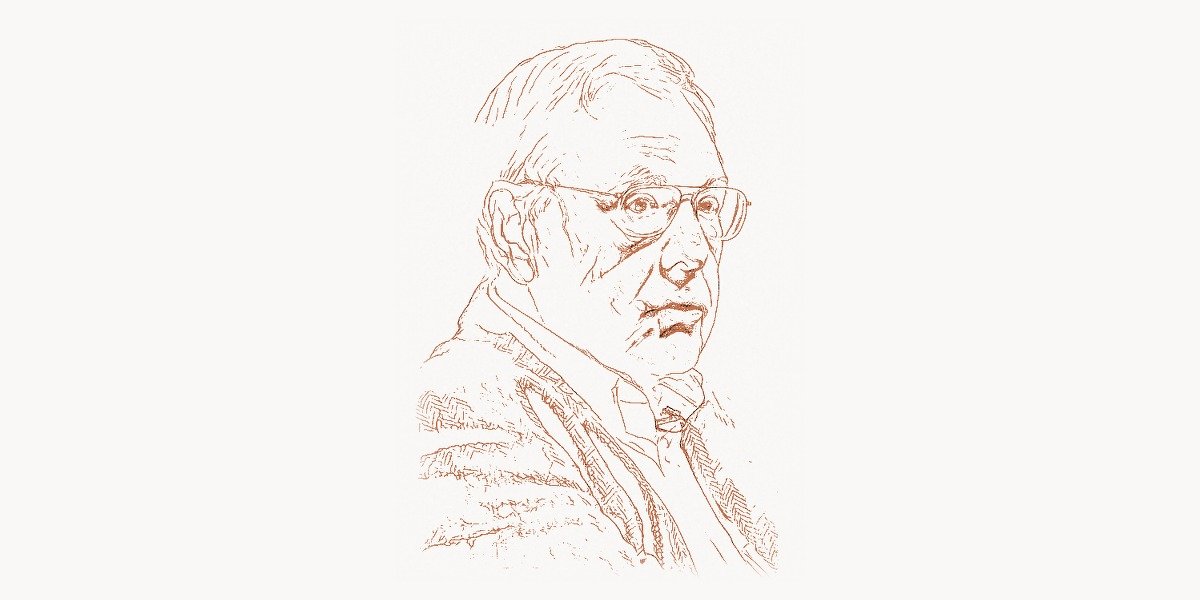
In the early 1970s, when most computers still filled entire rooms and demanded specialized operators, one engineer quietly assembled a machine that would redefine what personal computing could be. Chuck Thacker, working inside the legendary Xerox Palo Alto Research Center, co-designed the Alto — a computer with a graphical user interface, a mouse, and Ethernet networking — nearly a decade before commercial personal computers reached the mainstream. His work didn’t just anticipate the future; it built the prototype from which the future was copied.
Early Life and Education
Charles Patrick Thacker was born on February 26, 1943, in Pasadena, California. Growing up in a region already steeped in engineering and aerospace culture, Thacker developed an early curiosity for how machines worked. He attended the University of California, Berkeley, where he studied physics — a discipline that would shape his analytical approach to computer architecture for decades to come.
At Berkeley during the 1960s, Thacker encountered Project Genie, a pioneering effort to build time-sharing computer systems. The project, funded by DARPA, aimed to make computing resources more accessible by allowing multiple users to share a single machine simultaneously. Thacker joined the effort and found himself collaborating with Butler Lampson and others who would become central figures in computing history. Project Genie produced the SDS 940, one of the first commercially successful time-sharing systems, and it gave Thacker hands-on experience with the deep challenges of building interactive computer systems.
This formative experience at Berkeley set the trajectory for Thacker’s entire career. He learned that computers could be designed not just for batch processing and scientific calculation, but for direct human interaction — a principle that would guide every major project he undertook afterward. The collaborative spirit of Project Genie also shaped Thacker’s working style: he thrived in small, talented teams with ambitious goals and minimal bureaucracy — an environment he would later find replicated at Xerox PARC.
Career and the Xerox Alto
After Berkeley, Thacker followed his Project Genie colleagues to Xerox PARC, the newly established research laboratory in Palo Alto that would become the most influential technology lab of the twentieth century. Xerox had created PARC in 1970 with an ambitious mandate: invent the future of computing. Thacker arrived in the earliest days, joining a team of extraordinary researchers including Butler Lampson, Alan Kay, Robert Metcalfe, and others who shared a radical vision.
The prevailing paradigm at the time was centralized computing — large mainframes serving many terminals. But the PARC team believed in a different model: personal, distributed computing where each individual had their own powerful machine connected to a network. Thacker was tasked with turning that vision into hardware.
Technical Innovation: Building the Alto
The Xerox Alto, completed in 1973, was a technical marvel. As the lead hardware designer, Thacker faced constraints that would seem absurd today: memory was expensive, processors were slow, and the notion of rendering graphics on a personal screen in real time was considered impractical by most of the industry.
Thacker’s key architectural decision was to use a microcoded design with task-based multitasking built directly into the hardware. Rather than relying on a single sequential processor, the Alto’s microcode could rapidly switch between tasks — handling display refresh, disk I/O, network communication, and user input in interleaved fashion. This approach gave the machine the illusion of parallelism without the cost of multiple processors.
The Alto featured a bit-mapped display — each pixel on the screen corresponded to a bit in memory, allowing arbitrary graphics and text to be rendered with precision. This was fundamentally different from the character-based terminals that dominated computing at the time. Combined with a three-button mouse (inspired by Douglas Engelbart’s earlier work), the Alto created an entirely new mode of human-computer interaction.
Xerox Alto Architecture (1973) — Simplified Overview:

CPU: Custom bit-slice ALU, microcoded
Word Size: 16-bit
Memory: 128 KB (expandable to 512 KB)
Display: 606 x 808 pixels, bit-mapped, portrait orientation
Storage: 2.5 MB removable disk cartridge (Diablo drive)
Network: 2.94 Mbps Ethernet (designed by Metcalfe)
Input: Three-button mouse, full keyboard
Microcode Tasks: 16 hardware task slots
  - Display refresh (highest priority)
  - Disk sector task
  - Ethernet input/output
  - Cursor tracking
  - Emulator (lowest priority — runs user programs)

Boot sequence: Microcode loads from PROM → disk bootstrap → OS
Thacker also worked closely with Robert Metcalfe on integrating Ethernet into the Alto. This wasn’t an afterthought — networking was fundamental to the PARC vision. The Alto was designed from the start to communicate with other Altos, shared printers (the laser printer was also invented at PARC), and file servers. This made the Alto arguably the first networked personal computer.
Around 1,500 Altos were eventually built and deployed within Xerox and at select universities. They were never sold commercially — a decision many have called one of the great missed opportunities in technology history. But the ideas they embodied — GUIs, mice, Ethernet, WYSIWYG editing, object-oriented programming — became the foundation for everything that followed.
Why It Mattered
The significance of the Alto cannot be overstated. When Steve Jobs visited PARC in 1979 and saw the Alto and its successors in action, he famously returned to Apple and directed the development of the Lisa and Macintosh computers. Microsoft Windows, in turn, drew heavily from the same paradigm. Every graphical operating system used today — from macOS to Windows to Linux desktop environments — traces its conceptual lineage directly to the machine Thacker built.
But the impact went beyond GUIs. The Alto demonstrated that personal computing was viable and desirable. Before the Alto, the idea that every knowledge worker should have their own computer was considered extravagant. After the Alto, it became inevitable. Thacker’s hardware design proved that the technology was ready — what was missing was only the commercial will.
The networking dimension was equally revolutionary. The Alto’s Ethernet connectivity anticipated the networked world by decades. While most people wouldn’t experience connected computing until the internet boom of the 1990s, Thacker and his colleagues at PARC were sending emails, sharing files, and printing over networks in the mid-1970s. This architectural decision shaped how future internet pioneers thought about connected computing.
Other Contributions
Thacker’s career extended far beyond the Alto. After leaving Xerox PARC, he joined Digital Equipment Corporation (DEC), where he worked on the Firefly multiprocessor workstation — one of the earliest symmetric multiprocessing systems. The Firefly explored how multiple processors could cooperate effectively within a single machine, contributing foundational ideas to the multicore architectures that dominate computing today.
At DEC’s Systems Research Center (SRC), Thacker continued pushing hardware boundaries. He contributed to the design of the AN1 and AN2 network switches that explored high-speed networking concepts, work that informed the development of modern network infrastructure.
In 1997, Thacker moved to Microsoft Research, where he spent the final major chapter of his career. There, he led the hardware design for several ambitious projects. One notable effort was the Tablet PC — Thacker designed the initial prototype hardware that Microsoft used to develop its pen-based computing platform. While early tablets struggled commercially, the concepts Thacker explored eventually found massive success in devices like the iPad and modern Surface tablets.
He also worked on the BEE (Berkeley Emulation Engine) project, which used FPGAs to emulate complex processor architectures. This approach of using reconfigurable hardware for rapid prototyping became increasingly important as chip design costs soared. The methodology aligned with how modern teams often approach hardware validation:
# Simplified simulation: task scheduling inspired by Alto microcode
# Demonstrates priority-based hardware task switching

class MicrocodeScheduler:
    def __init__(self):
        self.tasks = []  # (priority, name, handler)

    def register_task(self, priority, name, handler):
        self.tasks.append((priority, name, handler))
        self.tasks.sort(key=lambda t: t[0])  # Lower = higher priority

    def run_cycle(self):
        for priority, name, handler in self.tasks:
            if handler.is_ready():
                handler.execute()
                return name  # Only one task per cycle
        return "idle"

# Alto-style task registration
scheduler = MicrocodeScheduler()
scheduler.register_task(0, "display_refresh", display_handler)
scheduler.register_task(1, "disk_sector", disk_handler)
scheduler.register_task(2, "ethernet_io", network_handler)
scheduler.register_task(3, "cursor_update", mouse_handler)
scheduler.register_task(15, "emulator", cpu_handler)

# The emulator (user programs) only runs when
# all higher-priority hardware tasks are idle
At Microsoft Research, Thacker also contributed to the development of the Barrelfish operating system, an experimental multikernel OS designed to run efficiently on heterogeneous multicore hardware. Barrelfish treated the machine as a distributed system of cores, each running its own kernel instance — an approach that reflected Thacker’s lifelong interest in distributed and parallel computing architectures.
Throughout his time at Microsoft Research, Thacker mentored younger researchers and engineers, contributing to a culture of rigorous hardware-software co-design that influenced products across the company. His willingness to take on difficult hardware problems — building physical prototypes when others might have stopped at simulation — earned him deep respect within the research community.
Philosophy and Design Principles
Thacker was not a public philosopher of technology in the way that some of his PARC colleagues were, but his design decisions reveal a coherent and deeply practical worldview. His approach to engineering emphasized clarity, economy, and an unwavering focus on what the user — whether a programmer or an end user — actually needed.
Key Principles
- Simplicity through hardware-software co-design. Thacker believed that the best systems emerged when hardware and software were designed together, each compensating for the other’s limitations. The Alto’s microcoded task switching is a prime example — it achieved complex behavior through elegant hardware rather than software overhead. This philosophy echoes the structured approach to system design championed by Edsger Dijkstra.
- Build to learn, not to ship. The Alto was never intended as a commercial product. Thacker understood that research prototypes serve a different purpose than products — they explore possibility spaces. This willingness to build expensive, impractical machines for the sake of understanding is what allowed PARC to leap so far ahead of the industry.
- Networking is not optional. From the beginning, Thacker insisted that computers should be connected. He saw the isolated computer as an incomplete device. This conviction, shared with Metcalfe and others at PARC, drove the integration of Ethernet into the Alto at a time when most computer designers treated networking as an exotic add-on.
- Respect the user’s time and attention. The bit-mapped display, the mouse, the graphical interface — all of these were oriented toward making the computer responsive to human cognition rather than forcing humans to adapt to machine limitations. Modern UX/UI design practices descend directly from this principle.
- Prototype relentlessly. Thacker built things. He didn’t just theorize or write papers — he soldered, debugged, and tested. His career is a testament to the idea that understanding comes through making. This hands-on approach parallels the philosophy of Ward Cunningham, who similarly believed in learning through iterative creation.
- Good abstractions outlast fast hardware. The Alto’s architectural decisions — microcoded multitasking, memory-mapped displays, packet-based networking — proved more durable than any specific chip speed or memory capacity. Thacker designed for concepts, not components, following the same principle that guided Barbara Liskov’s work on data abstraction.
Legacy
Chuck Thacker received the ACM A.M. Turing Award in 2009 — often called the Nobel Prize of computing — for his pioneering design and realization of the first modern personal computer, the Xerox Alto, and his contributions to Ethernet and tablet computing. The citation recognized not just a single achievement but a career of foundational contributions to how humans interact with machines.
Thacker passed away on June 12, 2017, in Palo Alto, California, at the age of 74. His death marked the loss of one of the last living architects of the personal computing revolution, but his influence remains embedded in every device with a screen, a pointer, and a network connection.
The lineage from the Alto to today’s computing environment is direct and unbroken. When you move a mouse cursor across a screen, click an icon, drag a window, or send a file over a network, you are using interaction patterns that Thacker helped invent. The personal computer as we know it — not just as a concept but as a functioning machine — exists because Chuck Thacker figured out how to build one.
His work at PARC also catalyzed an entire industry. The engineers and researchers who worked alongside him went on to found or shape companies like 3Com, Adobe, and numerous others. The ideas incubated on Thacker’s hardware became the commercial products that built Silicon Valley. The legacy extends to today’s collaborative tools and project management platforms that assume networked, graphical, personal computing as a baseline.
The Turing Award in 2009 placed Thacker in the company of computing’s most celebrated figures — alongside Dijkstra, Knuth, Lamport, and his longtime collaborator Butler Lampson, who had received the same honor in 1992. For many in the hardware community, the recognition was long overdue. Thacker’s contributions had been foundational but often less visible than those of software innovators, reflecting a broader pattern in which the people who design the physical machines receive less public attention than those who program them.
Among hardware designers, Thacker is remembered for an unusual combination of breadth and depth. He could design an entire computer system from the ground up — processor architecture, memory system, I/O, networking — and each subsystem would be elegant on its own terms. This holistic capability is rare and was essential to the Alto’s success. Much like how Gordon Moore understood the trajectory of hardware scaling, Thacker understood how to push the boundaries of what hardware could deliver to the individual user.
Key Facts
- Full name: Charles Patrick Thacker
- Born: February 26, 1943, Pasadena, California
- Died: June 12, 2017, Palo Alto, California
- Education: B.S. in Physics, University of California, Berkeley
- Known for: Co-designing the Xerox Alto, contributing to Ethernet, pioneering tablet PC hardware
- Major employers: UC Berkeley (Project Genie), Xerox PARC, DEC Systems Research Center, Microsoft Research
- Awards: ACM A.M. Turing Award (2009), IEEE John von Neumann Medal (2007), National Academy of Engineering member, Charles Stark Draper Prize (2004, shared)
- Key collaborators: Butler Lampson, Alan Kay, Robert Metcalfe, Bob Taylor
- Xerox Altos built: Approximately 1,500 units (never sold commercially)
- Alto completion year: 1973
FAQ
What exactly did Chuck Thacker design in the Xerox Alto?
Thacker was the lead hardware designer for the Alto. He created the processor architecture, including the innovative microcoded task-switching system that allowed the machine to handle display rendering, disk operations, networking, and user input concurrently. He also designed the memory system and worked on integrating Ethernet connectivity. While the Alto was a team effort involving many PARC researchers, Thacker was responsible for the core hardware that made the machine function.
Why did Xerox never sell the Alto commercially?
Xerox management viewed the company primarily as a copier manufacturer and struggled to see how personal computers fit their business model. The Alto was expensive to produce, and executives were concerned about cannibalizing their existing product lines. When Xerox did eventually release a commercial product based on PARC’s work — the Xerox Star in 1981 — it was priced at over $16,000 per unit, putting it out of reach for most buyers. By then, Apple and others were already bringing more affordable personal computers to market using ideas inspired by the Alto.
How did the Turing Award committee describe Thacker’s contribution?
The ACM recognized Thacker in 2009 for the pioneering design and realization of the Alto, citing it as the first modern personal computer. The award acknowledged not just the machine itself but its role in establishing key computing paradigms — graphical interfaces, Ethernet networking, and personal computing — that transformed the entire industry. The committee also noted his later contributions to multiprocessor workstations and tablet PC hardware.
What is the connection between the Xerox Alto and modern computers?
The connection is both direct and profound. Steve Jobs saw the Alto’s interface during a famous 1979 visit to PARC and used it as inspiration for Apple’s Lisa and Macintosh. Microsoft Windows followed a similar graphical paradigm. The Alto’s Ethernet networking presaged the connected computing model that now defines how we work and communicate. Virtually every design convention in modern desktop computing — windows, icons, menus, pointing devices — can be traced to the Alto and the software ecosystem that ran on Thacker’s hardware.