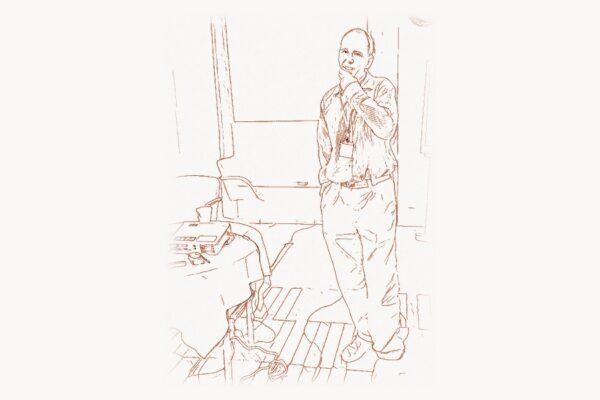
Every time a Java application runs at near-native speed — whether it is powering a massive financial trading platform, serving millions of web requests through an application server, or crunching terabytes of machine learning data — there is an invisible layer of engineering genius at work. At the heart of that layer sits the HotSpot Server Compiler, also known as C2, and the mind behind it belongs to Cliff Click. His work on just-in-time compilation, graph-based intermediate representations, and lock-free data structures transformed the Java Virtual Machine from a sluggish interpreted runtime into one of the fastest execution platforms on the planet. In a field where microseconds matter and throughput determines whether businesses succeed or fail, Click’s contributions have quietly shaped the modern software landscape for over two decades.
Early Life and Education
Cliff Click grew up during an era when computers were transitioning from room-sized mainframes to machines that could sit on a desk. His fascination with how software could be made to run faster led him to pursue computer science at the highest academic level. He earned his Ph.D. from Rice University in Houston, Texas, where he studied compiler optimization under the guidance of leading researchers in the field. Rice University had a strong tradition in compiler research — the same department that would produce generations of engineers working on language runtimes, code generation, and program analysis.
Click’s doctoral work focused on combining global value numbering and global code motion into a single optimization pass — a technique that would later become foundational to his approach at Sun Microsystems. His dissertation demonstrated that certain traditionally separate compiler optimizations could be unified, reducing compile time while improving the quality of generated code. This insight — that the compiler itself needed to be fast, not just the code it produced — became a recurring theme throughout his career. For those interested in how other compiler researchers shaped the field, the story of Chris Lattner and the LLVM project provides a compelling parallel trajectory.
Career and Technical Contributions
Technical Innovation: The HotSpot Server Compiler (C2)
In the mid-1990s, Java was revolutionary in concept but frustrating in practice. James Gosling’s creation promised “write once, run anywhere,” but early JVM implementations relied on interpretation or simple compilation techniques that made Java applications noticeably slower than their C or C++ counterparts. Sun Microsystems knew that Java’s future depended on closing this performance gap, and they assembled a team of compiler experts to build what would become HotSpot.
Click joined Sun Microsystems and became the principal architect of the HotSpot Server Compiler, internally designated C2 (to distinguish it from C1, the Client Compiler optimized for faster startup). Where the Client Compiler prioritized quick compilation at the expense of aggressive optimization, the Server Compiler took the opposite approach: it invested more time in analysis and transformation to produce highly optimized machine code for long-running server applications.
The architectural centerpiece of C2 was Click’s “sea of nodes” intermediate representation (IR). Traditional compilers at the time used control-flow graphs with basic blocks — sequences of instructions where control entered at the top and exited at the bottom. Click’s innovation was to break free from this rigid structure. In the sea-of-nodes IR, both data dependencies and control dependencies were represented as edges in a single unified graph, and instructions floated freely rather than being pinned to specific basic blocks.
Here is a simplified conceptual representation of how the sea-of-nodes IR differs from a traditional basic-block approach:
// Traditional Basic Block IR
// Instructions are locked to specific blocks

Block B0:
  v1 = LoadParam(0)        // load parameter x
  v2 = Const(10)
  v3 = Compare(v1, v2)     // compare x > 10
  If v3 goto B1 else B2

Block B1:
  v4 = Mul(v1, v2)         // x * 10
  Goto B3

Block B2:
  v5 = Add(v1, v2)         // x + 10
  Goto B3

Block B3:
  v6 = Phi(v4, v5)         // merge results
  Return v6

// Sea-of-Nodes IR (Click's approach)
// Nodes float freely, connected by data and control edges
//
//   LoadParam(0)──────┬──────────┐
//        │            │          │
//      Const(10)      │          │
//        │    │       │          │
//    Compare(>,v1,v2) │          │
//        │            │          │
//       If            │          │
//      /   \          │          │
//   Mul(v1,v2)    Add(v1,v2)
//      \          /
//       Phi(merge)
//          │
//        Return
//
// Key difference: Mul and Add are not assigned to blocks.
// The compiler is free to schedule them wherever is optimal,
// guided only by their data dependencies.
This representation gave the optimizer extraordinary freedom. Constant folding, dead code elimination, loop-invariant code motion, and common subexpression elimination could all be performed more naturally because the compiler was not fighting against an artificial ordering of instructions. The sea-of-nodes approach also simplified the implementation of speculative optimizations — crucial for a JIT compiler that needed to make aggressive assumptions about runtime behavior and then deoptimize gracefully when those assumptions proved wrong.
Why It Mattered
The impact of the C2 compiler on the Java ecosystem cannot be overstated. Before HotSpot’s Server Compiler, Java was widely mocked as slow. Benchmarks from the late 1990s showed Java programs running 10 to 50 times slower than equivalent C code. After C2 matured, Java began matching or even beating C and C++ on certain workloads, particularly long-running server applications where the JIT compiler had time to identify and optimize hot code paths.
This performance transformation enabled Java’s dominance in enterprise computing. Application servers like IBM WebSphere, BEA WebLogic, and Apache Tomcat could handle thousands of concurrent connections. Financial institutions adopted Java for low-latency trading systems. The entire Hadoop ecosystem — the foundation of big data processing — ran on the JVM with C2 doing the heavy lifting underneath. Without Click’s work, the Java platform might have remained a niche technology for applets and academic curiosity rather than becoming the backbone of enterprise infrastructure worldwide.
Click’s ideas influenced compiler design far beyond Java. Robert Griesemer, who worked alongside Click on the HotSpot VM before co-creating the Go programming language, carried insights from that collaboration into new domains. The sea-of-nodes concept was later adopted and adapted by the Graal compiler (the next-generation JIT for the JVM) and influenced the TurboFan compiler in V8, the JavaScript engine powering Chrome and Node.js. Modern teams use tools like Taskee to coordinate complex compiler engineering projects, but in the HotSpot era, the team was remarkably small — a handful of engineers building something that would run on billions of devices.
Other Notable Contributions
After leaving Sun Microsystems, Click joined Azul Systems, a company that built specialized hardware and software for running Java workloads at massive scale. At Azul, he continued pushing the boundaries of JVM performance, working on the Zing JVM (now known as Azul Platform Prime). One of his most notable contributions there was his work on lock-free data structures and concurrent algorithms. His non-blocking hash table implementation became a widely studied example of how to build high-performance concurrent data structures without traditional locking.
Click’s lock-free hash map was particularly innovative because it achieved true linearizability while supporting concurrent resizing — a notoriously difficult problem. Here is a simplified sketch of the core CAS (Compare-And-Swap) pattern that underpins his approach:
// Simplified concept from Cliff Click's NonBlockingHashMap
// Full implementation: github.com/boundary/high-scale-lib

public class NonBlockingHashMap<K, V> {
    // Sentinel values for state management
    static final Object TOMBSTONE = new Object();
    static final Object NO_MATCH_OLD = new Object();

    volatile Object[] _kvs; // Key-value store array

    // Core CAS-based put operation (simplified)
    public V put(K key, V val) {
        Object[] kvs = _kvs;
        int idx = hash(key) & (len(kvs) - 1);

        while (true) {
            Object curKey = kvs[idx * 2];
            Object curVal = kvs[idx * 2 + 1];

            // Slot is empty — try to claim it
            if (curKey == null) {
                if (CAS(kvs, idx * 2, null, key)) {
                    // Key installed, now set the value
                    if (CAS(kvs, idx * 2 + 1, null, val)) {
                        return null; // success, no old value
                    }
                }
                continue; // CAS failed, retry
            }

            // Key matches — try to update value
            if (keyEq(curKey, key)) {
                if (CAS(kvs, idx * 2 + 1, curVal, val)) {
                    return (V) curVal; // return old value
                }
                continue; // CAS failed, retry
            }

            // Collision — linear probe to next slot
            idx = (idx + 1) & (len(kvs) - 1);
        }
    }
}
This lock-free approach allowed Azul’s JVM to handle workloads with hundreds of concurrent threads without the contention bottlenecks that plagued traditional synchronized hash maps. The design was eventually open-sourced as part of the high-scale-lib library and has been studied in concurrent programming courses and research papers worldwide.
At Azul, Click also worked on pauseless garbage collection. The Azul C4 (Continuously Concurrent Compacting Collector) garbage collector could manage heaps of hundreds of gigabytes without the stop-the-world pauses that plagued other JVM implementations. This was critical for applications in finance, telecommunications, and real-time analytics where even a 50-millisecond pause could mean dropped transactions or violated service-level agreements. The approach to efficient scheduling in systems like these parallels challenges in modern web development agencies where milliseconds of page load time directly impact business outcomes.
Later in his career, Click moved to H2O.ai, where he applied his deep knowledge of JVM internals and performance optimization to machine learning infrastructure. At H2O.ai, he worked on making distributed machine learning algorithms run efficiently on clusters of JVM-based nodes, bringing his decades of performance engineering expertise to the emerging field of data science platforms. His understanding of memory layouts, cache behavior, and instruction-level parallelism proved invaluable in optimizing the numerical computations at the heart of machine learning.
Philosophy and Key Principles
Cliff Click’s engineering philosophy centers on several core principles that have guided his work across multiple decades and organizations.
Measure before you optimize. Click is famous for his insistence on rigorous benchmarking and profiling before making any optimization decisions. In his conference talks, he has repeatedly warned against “optimizing by intuition” — the common trap where engineers assume they know where the bottleneck is without actually measuring. He advocates for statistical rigor in benchmark methodology, accounting for JIT warmup, garbage collection variability, and OS-level noise. This data-driven mentality echoes the approach championed by Donald Knuth, who famously warned that premature optimization is the root of all evil.
The compiler should be as smart as possible, but no smarter. Click believes in aggressive optimization, but he also understands the importance of deoptimization — the ability for the JVM to bail out of optimized code when runtime assumptions are violated. The HotSpot Server Compiler makes speculative bets: it assumes that a virtual method call always dispatches to the same target, or that a branch is always taken. When these bets pay off, the code runs at native speed. When they fail, the JVM must gracefully fall back to interpreted or less-optimized code. Designing this safety net was as important as the optimizations themselves.
Concurrency must be built into the foundations. From his work on lock-free data structures at Azul to his JVM engineering, Click has consistently argued that concurrent systems cannot be retrofitted — they must be designed for parallelism from the ground up. He views traditional locking as a crutch that creates artificial serialization points, and he advocates for algorithms that allow threads to make progress independently, using atomic operations and careful memory ordering rather than mutexes and monitors.
Simplicity in the IR, complexity in the transforms. The sea-of-nodes IR was deliberately simple in its representation — just nodes and edges. The power came from the transformations applied to this structure. Click believes that a clean, minimal intermediate representation makes it easier to write correct optimizations and harder to introduce subtle bugs. This philosophy of clean abstractions resonates with the work of Ingo Molnar on the Linux kernel scheduler, where elegant internal representations enable complex scheduling policies.
Legacy and Impact
Cliff Click’s contributions have had a cascading effect across the software industry. The HotSpot Server Compiler, which he architected in the late 1990s, remains the default production JIT compiler for OpenJDK and Oracle JDK — the runtime used by millions of developers and deployed on billions of devices. Every Android application that runs through ART (which inherited ideas from HotSpot), every Spark job processing petabytes of data, and every Spring Boot microservice handling web requests owes a performance debt to Click’s engineering.
The sea-of-nodes intermediate representation he pioneered has become one of the most influential ideas in compiler construction. The Graal compiler, developed by Oracle Labs as a potential successor to C2, adopted and extended the sea-of-nodes concept. Researchers at Google adapted similar ideas for TurboFan in V8, and the concept has influenced academic research in compiler design at universities worldwide.
Click’s lock-free hash map and his broader work on concurrent data structures helped establish patterns that are now standard in high-performance Java applications. Libraries like java.util.concurrent, while not directly authored by Click, were influenced by the same research community and share his emphasis on non-blocking algorithms and hardware-level atomic operations.
Beyond his code, Click has been a prolific speaker and educator. His talks at conferences like JavaOne, JVM Language Summit, and Strange Loop have educated thousands of engineers about JVM internals, garbage collection, and performance methodology. His blog posts on benchmarking methodology — particularly his warnings about the pitfalls of microbenchmarking on the JVM — have become essential reading for performance engineers. His approach to teaching complex systems echoes the legacy of educators like Andrew Kelley, who similarly combine deep technical expertise with a talent for clear explanation.
In the broader context of JVM history, Click stands alongside figures like James Gosling (who designed the language), Joshua Bloch (who shaped the standard library), and Robert Griesemer (who contributed to the original HotSpot VM before moving to Go). While Gosling gave Java its syntax and semantics, Click gave it its speed — arguably the single most important factor in Java’s transition from a promising experiment to the dominant platform for enterprise software development.
Key Facts
| Detail | Information |
|---|---|
| Full Name | Cliff Click |
| Education | Ph.D. in Computer Science, Rice University |
| Known For | HotSpot Server Compiler (C2), sea-of-nodes IR, lock-free data structures |
| Key Employers | Sun Microsystems, Azul Systems, H2O.ai |
| Major Innovation | Sea-of-nodes intermediate representation for JIT compilation |
| Notable Open Source | NonBlockingHashMap (high-scale-lib) |
| Doctoral Research | Combining global value numbering with global code motion |
| Impact Area | JVM performance, concurrent data structures, compiler design |
| Conference Speaking | JavaOne, JVM Language Summit, Strange Loop, QCon |
| Industry Impact | Enabled Java to achieve near-native performance for server workloads |
Frequently Asked Questions
What is the HotSpot Server Compiler and why is it called C2?
The HotSpot Server Compiler is the optimizing just-in-time (JIT) compiler built into the Java HotSpot Virtual Machine. It is called C2 to distinguish it from C1, the Client Compiler. While C1 compiles Java bytecode quickly with moderate optimizations (ideal for desktop applications that need fast startup), C2 takes more time to apply aggressive optimizations — including advanced inlining, loop unrolling, escape analysis, and speculative devirtualization. C2 is designed for long-running server applications where the upfront compilation cost is amortized over millions of method invocations. Cliff Click was the principal architect of C2 and designed its innovative sea-of-nodes intermediate representation.
How did Cliff Click’s sea-of-nodes IR change compiler design?
Traditional compilers organized instructions into basic blocks within a control-flow graph, which constrained where instructions could be placed. Click’s sea-of-nodes IR removed this constraint by representing both data and control dependencies as edges in a single graph, allowing instructions to “float” freely. This made optimizations like dead code elimination, constant propagation, and code motion more natural and effective. The approach was adopted by the Graal compiler for the JVM and influenced the TurboFan compiler in Google’s V8 JavaScript engine. It remains one of the most cited contributions in modern compiler research.
What is the NonBlockingHashMap and why does it matter?
The NonBlockingHashMap is a lock-free concurrent hash table implementation created by Cliff Click during his time at Azul Systems. Unlike Java’s standard ConcurrentHashMap (which uses lock striping), Click’s implementation uses compare-and-swap (CAS) operations to allow fully concurrent reads and writes without any locking. It also supports concurrent resizing — a particularly difficult problem in lock-free algorithm design. The implementation is important because it demonstrates that high-performance concurrent data structures can avoid locking entirely, eliminating contention bottlenecks in multi-threaded applications. It was open-sourced as part of the high-scale-lib library.
How does Click’s work relate to modern JVM technologies like GraalVM?
GraalVM, developed by Oracle Labs, is a next-generation virtual machine and compiler infrastructure that builds directly on ideas Click pioneered. The Graal compiler, which can serve as a replacement for C2, uses a sea-of-nodes IR inspired by Click’s original design. GraalVM extends these concepts to support polyglot programming (running multiple languages on a single runtime) and ahead-of-time compilation via native-image. Click’s foundational work on JIT compilation, speculative optimization, and deoptimization frameworks provided the intellectual and architectural basis on which GraalVM was built.