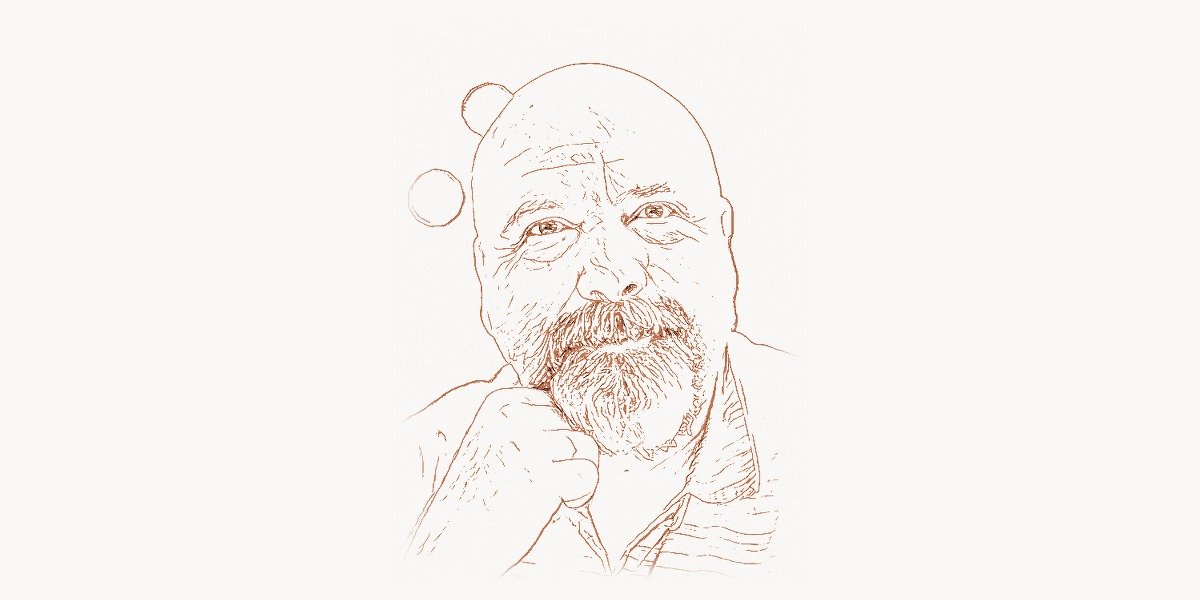
In 1985, a young computer scientist named Danny Hillis stood in front of a room full of skeptical engineers and proposed something that most of them considered impossible, or at least impractical. He wanted to build a computer with 65,536 processors — all working simultaneously on the same problem. At the time, the fastest computers in the world were single-processor vector machines designed by Seymour Cray, elegant monoliths that achieved their speed through raw clock rates and pipelined arithmetic units. The idea of coordinating tens of thousands of simple processors to outperform a single fast one seemed like trying to replace a race car with a swarm of bicycles. But Hillis built the machine. He called it the Connection Machine, and it worked. It could perform operations on all 65,536 data points simultaneously, solving certain problems — pattern recognition, fluid dynamics simulation, database search — faster than anything else in existence. The Connection Machine did not just demonstrate that massive parallelism was viable; it rewrote the assumptions about how computers should be designed, anticipated the architecture of modern GPUs and cloud computing by decades, and launched a company that became one of the most intellectually ambitious enterprises in the history of computing.
Early Life and Education
William Daniel Hillis was born on September 25, 1956, in Baltimore, Maryland. His father was an Air Force epidemiologist, and the family moved frequently during Hillis’s childhood — from Baltimore to Europe to Africa to India and eventually to Japan, where he attended high school. This itinerant upbringing gave him exposure to diverse cultures and ways of thinking, but more importantly, it instilled a deep intellectual curiosity and comfort with unconventional approaches. He later said that growing up in different countries taught him that there was always more than one way to solve a problem — a principle that would define his career.
Hillis arrived at the Massachusetts Institute of Technology in 1974 as an undergraduate, and it was at MIT that his trajectory crystallized. He studied mathematics and became fascinated by the relationship between computation and intelligence. MIT in the late 1970s was an extraordinary environment for someone with these interests: the Artificial Intelligence Laboratory, co-founded by Marvin Minsky and John McCarthy, was at the peak of its influence, exploring fundamental questions about how machines could think, learn, and reason. Hillis became a student and protégé of Minsky, who was not only one of the founders of artificial intelligence but a polymath with deep interests in mathematics, robotics, music, and philosophy.
It was under Minsky’s influence that Hillis began to think seriously about the architecture of intelligent machines. The dominant computing paradigm of the time was sequential: a single processor executing one instruction at a time, stepping through a program in the order prescribed by its algorithm. This approach, rooted in the theoretical model that Alan Turing had formalized in the 1930s and John von Neumann had implemented in hardware in the 1940s, had been remarkably successful. But Hillis noticed something that troubled him: the human brain did not work this way. The brain was a massively parallel system — billions of neurons firing simultaneously, with intelligence emerging from the interactions of simple processing elements. If nature had solved the problem of intelligence through parallelism, perhaps computers should do the same.
Hillis earned his Bachelor of Science in mathematics from MIT in 1978 and immediately began his doctoral work, also at MIT, under Minsky’s supervision. His PhD thesis, completed in 1988, would lay the theoretical and practical foundations for the Connection Machine — but by the time he defended it, the machine had already been built, sold, and deployed at research institutions around the world. Hillis was not the type to wait for academic formalities before building things.
The Connection Machine Breakthrough
Technical Innovation
The Connection Machine, officially designated the CM-1, was the physical embodiment of an idea that Hillis had been developing since his undergraduate years: that computation should be organized the way nature organizes intelligent systems — not as a single powerful processor working through problems sequentially, but as vast numbers of simple processors working in concert.
The CM-1, completed in 1985, contained 65,536 single-bit processors, each with 4,096 bits of local memory. The processors were simple by design — each could perform basic logical operations on a single bit at a time. The power of the machine lay not in the sophistication of individual processors but in their sheer number and in the communication network that connected them. Hillis designed a hypercube interconnection network that allowed any processor to communicate with any other processor in at most 16 routing steps (log₂ of 65,536), enabling the kind of global data exchange that parallel algorithms required.
This was a fundamentally different approach from the vector processing model that dominated supercomputing. Where Cray’s machines achieved parallelism by operating on vectors of data through pipelined functional units — one fast processor doing many things quickly — the Connection Machine achieved parallelism by having many processors each do a simple thing simultaneously. The distinction is between SIMD (Single Instruction, Multiple Data), which the Connection Machine exemplified, and pipelined vector processing. Both are parallel, but the granularity and philosophy differ radically.
# Conceptual illustration of Connection Machine-style SIMD parallelism
# vs. traditional sequential processing
#
# The Connection Machine assigned one processor to each data element.
# All 65,536 processors executed the SAME instruction simultaneously,
# each on its own local data. This is the SIMD paradigm.

import numpy as np

# --- Sequential approach (one processor, loop over data) ---
def sequential_threshold(data, threshold):
    """Process each element one at a time — N steps for N elements."""
    result = []
    for value in data:
        if value > threshold:
            result.append(1)
        else:
            result.append(0)
    return result

# --- SIMD approach (Connection Machine style) ---
# All 65,536 processors execute simultaneously:
#   "If your local value > threshold, set flag to 1, else 0"
#
# This completes in ONE step regardless of data size,
# because every processor acts on its element in parallel.

def simd_threshold(data, threshold):
    """All processors execute the same comparison simultaneously."""
    # NumPy vectorized operation models the SIMD paradigm:
    # a single instruction applied across all data in parallel
    return (data > threshold).astype(int)

# --- Demonstrating the difference ---
N = 65536  # Number of processors in the CM-1
data = np.random.rand(N)
threshold = 0.5

# Sequential: N comparison steps
seq_result = sequential_threshold(data, threshold)

# SIMD (Connection Machine): 1 parallel step across all processors
simd_result = simd_threshold(data, threshold)

# The Connection Machine also supported inter-processor communication
# through its hypercube network. For example, a global SUM operation:
#
# Step 1: Each processor adds its value to its hypercube neighbor
# Step 2: Paired results are added to the next neighbor
# ...
# Step 16: Final sum available (log2(65536) = 16 steps)
#
# This "parallel reduction" pattern is now standard in GPU programming
# (e.g., CUDA's __syncthreads() + shared memory reduction).
The CM-1 was followed by the CM-2 (1987), which increased each processor’s local memory and added floating-point accelerator chips — one Weitek floating-point unit shared among 32 processors — making the machine suitable for scientific computing in addition to the symbolic and AI workloads the CM-1 targeted. The CM-2 contained up to 65,536 processors and could achieve peak performance of several GFLOPS, placing it among the fastest computers in the world. It was the CM-2, with its distinctive black cube enclosure and blinking red LEDs designed by the industrial designer David Jesperson, that became the iconic image of the Connection Machine — one of the most visually recognizable computers ever built.
The CM-5 (1991) represented a significant architectural shift. Hillis and his team moved from the pure SIMD model to a MIMD (Multiple Instruction, Multiple Data) architecture based on SPARC processors, connected by a fat-tree network that Hillis co-developed with mathematician Charles Leiserson. The CM-5 could scale to 16,384 processors and was the first computer to achieve sustained teraflop-class performance on certain problems. It topped the inaugural TOP500 list of the world’s fastest supercomputers in 1993.
Why It Mattered
The Connection Machine mattered because it proved, concretely and commercially, that massive parallelism was a viable path to high-performance computing. Before Hillis, the idea of coordinating thousands of processors was widely dismissed as impractical — the communication overhead, the difficulty of writing parallel algorithms, the challenge of debugging were all considered insurmountable. Hillis demonstrated that these problems could be solved with the right interconnection network, the right programming model, and the right applications.
The applications that ran on Connection Machines were strikingly prescient. Researchers used them for computational fluid dynamics, molecular dynamics simulations, petroleum reservoir modeling, and — most prophetically — machine learning. The Connection Machine was one of the first platforms on which neural network training was performed at scale, decades before deep learning became a dominant force in technology. The idea of assigning individual processors to individual neurons or data points, and training a network through massively parallel weight updates, was natural on the Connection Machine architecture. Modern GPU-based deep learning, using frameworks that teams might coordinate through platforms like Taskee, follows almost exactly the same computational pattern.
The CM-2 was also used extensively by the DARPA research community, by petroleum companies for seismic processing, by financial firms for risk modeling, and by the United States government for intelligence analysis. It found applications in computational biology, protein folding, and genomic sequence matching — domains that would become enormously important in the decades that followed.
Perhaps most importantly, the Connection Machine influenced how an entire generation of computer scientists thought about parallelism. Before Hillis, parallelism was an exotic technique used in niche applications. After the Connection Machine, it became a mainstream architectural concept. The trajectory from the CM-1’s 65,536 processors in 1985 to a modern NVIDIA GPU’s thousands of cores to a cloud computing cluster’s millions of virtual processors is conceptually direct. The lesson Hillis taught — that many simple processors, properly connected, could outperform a few fast ones — is the foundational insight of modern computing architecture. It is the principle behind GPU computing, behind the MapReduce programming model that Jeff Dean pioneered at Google, and behind the distributed systems that power every major internet service today.
Other Major Contributions
Danny Hillis’s career extends well beyond the Connection Machine, spanning an unusually diverse range of fields and projects.
Thinking Machines Corporation (1983-1994). Hillis co-founded Thinking Machines Corporation to commercialize the Connection Machine, and the company became one of the most influential computing firms of the late 1980s and early 1990s. At its peak, Thinking Machines employed some of the brightest computer scientists in the world, including several future leaders of the technology industry. The company’s engineering culture — intense, interdisciplinary, and intellectually ambitious — influenced the working style of Silicon Valley and anticipated the culture of companies like Google. Though Thinking Machines ultimately went bankrupt in 1994, struggling to transition from government and research customers to commercial markets, its intellectual legacy was enormous. The algorithms, software tools, and parallel programming techniques developed at Thinking Machines seeded advances across dozens of fields.
Disney Imagineering (1996-2000). After Thinking Machines, Hillis joined Walt Disney Imagineering as a Disney Fellow and Vice President of Research and Development. At Disney, he worked on innovative theme park technologies, including advanced animatronics, virtual reality experiences, and interactive entertainment systems. His time at Disney reflected a recurring theme in his career: the application of deep technical knowledge to domains where most people would not expect to find it. He approached theme park rides with the same rigor he had brought to supercomputer design, treating each attraction as an engineering problem with novel constraints and possibilities.
Applied Minds (2000-present). Hillis co-founded Applied Minds, a technology research and development company that takes on a wide variety of projects for clients including government agencies, defense organizations, and major corporations. Applied Minds operates more like a research laboratory than a traditional company — it explores problems in computing, biotechnology, transportation, defense, and entertainment. The company has developed innovations in areas ranging from medical imaging to autonomous vehicles to large-scale data visualization. Projects from Applied Minds have led to multiple spin-off companies, including Metaweb Technologies (which developed Freebase, a structured knowledge graph later acquired by Google and used in Google Knowledge Graph) and Applied Invention.
The Long Now Foundation and the 10,000-Year Clock. One of Hillis’s most distinctive projects is the Clock of the Long Now — a mechanical clock designed to run for 10,000 years, currently under construction inside a mountain in West Texas. Hillis conceived the clock in the late 1990s as a meditation on long-term thinking. The Clock of the Long Now Foundation, which he co-founded with Stewart Brand, promotes responsibility for the deep future, encouraging civilization to think in terms of centuries and millennia rather than quarters and news cycles. The clock project may seem unrelated to computing, but it reflects the same systems-thinking mindset: Hillis approaches the challenge of building a mechanism that operates for 10,000 years with the same engineering precision he brought to designing hypercube interconnection networks.
Parallel algorithms and sorting networks. Beyond hardware, Hillis made significant contributions to the theory and practice of parallel algorithms. He developed efficient parallel algorithms for sorting, searching, and graph traversal that could exploit the Connection Machine’s architecture. His work on parallel sorting networks, particularly his collaboration with information theory and algorithm specialists, advanced the understanding of how to decompose computational problems for parallel execution. These algorithmic techniques remain relevant in the era of GPU computing and distributed systems, where the same fundamental challenge persists: how to divide a problem into pieces that can be solved simultaneously with minimal communication overhead.
Contributions to AI and knowledge representation. Hillis has maintained a lifelong interest in artificial intelligence, tracing back to his work with Marvin Minsky at MIT. His thinking about the relationship between computation and intelligence — particularly the idea that intelligence emerges from the interaction of many simple processes — has influenced contemporary approaches to machine learning and neural networks. The Connection Machine was explicitly designed with AI applications in mind, and the architectural principles it embodied — massive parallelism, data-local computation, configurable interconnection — are now standard features of AI accelerator hardware. Digital agencies that deploy AI-powered solutions today work with hardware whose conceptual foundations were laid in Hillis’s doctoral thesis.
Philosophy and Approach
Key Principles
Danny Hillis’s intellectual approach is characterized by several distinctive principles that set him apart from most computer scientists of his generation.
Nature as engineering blueprint. Hillis’s most fundamental conviction is that nature provides the best models for solving hard computational problems. The human brain, with its billions of neurons operating in parallel, demonstrated to him that intelligence did not require a fast central processor — it required massive parallelism with the right connectivity patterns. This biological inspiration was not metaphorical; it directly shaped the architecture of the Connection Machine. The hypercube interconnection network was designed to provide the kind of flexible, all-to-all communication that neural systems exhibit. While Seymour Cray looked at physics for inspiration — signal propagation speed, heat dissipation — Hillis looked at biology.
Simplicity of components, complexity of interactions. The individual processors in the Connection Machine were deliberately primitive — single-bit processing elements with minimal local memory. The power of the system came not from the sophistication of its parts but from the richness of their interactions through the communication network. This principle — that complex behavior emerges from the interaction of simple components — is a foundational idea in complexity science and has influenced fields far beyond computing, from ecology to economics to urban planning.
Cross-disciplinary thinking. Hillis has consistently refused to be confined to a single field. His career spans computer architecture, artificial intelligence, theoretical biology, mechanical engineering (the 10,000-Year Clock), entertainment technology (Disney), and defense research (Applied Minds). He believes that the most important innovations occur at the boundaries between disciplines, where ideas from one field illuminate problems in another. This cross-disciplinary orientation made the Connection Machine possible — it required insights from computer architecture, algorithm theory, electrical engineering, and neuroscience.
Long-term responsibility. The 10,000-Year Clock project reflects Hillis’s conviction that technologists have a responsibility to think about the long-term consequences of their work. In an industry obsessed with quarterly results and annual product cycles, Hillis has argued consistently for thinking in terms of decades, centuries, and millennia. He has written and spoken extensively about the need for civilization to develop institutional and technological mechanisms for long-term stewardship — a concern that becomes more urgent as the power of technology increases.
Building to understand. Hillis is fundamentally a builder. He has said repeatedly that he builds things in order to understand them — that the process of constructing a working system reveals truths about the underlying problem that theoretical analysis alone cannot. The Connection Machine was not just a product; it was an experiment in the nature of computation. The 10,000-Year Clock is not just a timepiece; it is an investigation into what it means to build for permanence. This commitment to understanding-through-building places Hillis in a long tradition of engineer-scientists, from Michael Faraday to Jensen Huang, who advance knowledge by making things work.
/*
 * Hypercube routing in the Connection Machine.
 *
 * Hillis's CM-1 connected 65,536 processors in a 16-dimensional
 * hypercube. In a hypercube of dimension d, each processor has
 * an address of d bits, and two processors are directly connected
 * if their addresses differ in exactly one bit.
 *
 * To route a message from processor SRC to processor DST:
 *   1. XOR the addresses to find which bits differ
 *   2. For each differing bit, forward along that dimension
 *   3. Maximum hops = d = log2(N) = 16 for 65,536 processors
 *
 * This elegant scheme gives O(log N) worst-case latency —
 * critical for scaling to tens of thousands of processors.
 */

#include <stdio.h>
#include <stdint.h>

#define DIMENSIONS   16       /* 2^16 = 65,536 processors */
#define NUM_PROCS    (1 << DIMENSIONS)

/* Compute the route from src to dst through the hypercube */
int hypercube_route(uint16_t src, uint16_t dst) {
    uint16_t diff = src ^ dst;  /* bits that differ = dimensions to traverse */
    int hops = 0;
    uint16_t current = src;

    printf("Routing: processor %u -> processor %u\n", src, dst);
    printf("  XOR (diff) = 0x%04X (%d bits differ)\n",
           diff, __builtin_popcount(diff));

    /* Traverse each differing dimension */
    for (int dim = 0; dim < DIMENSIONS; dim++) {
        if (diff & (1 << dim)) {
            current ^= (1 << dim);  /* flip bit = move along dimension */
            hops++;
            printf("  Hop %2d: dim %2d -> processor %u\n",
                   hops, dim, current);
        }
    }
    printf("  Arrived in %d hops (max possible: %d)\n\n", hops, DIMENSIONS);
    return hops;
}

int main(void) {
    printf("Connection Machine Hypercube Routing\n");
    printf("=====================================\n");
    printf("Processors: %d, Dimensions: %d\n\n", NUM_PROCS, DIMENSIONS);

    /* Adjacent processors: 1 hop */
    hypercube_route(0, 1);

    /* Opposite corners of the hypercube: 16 hops (worst case) */
    hypercube_route(0, 65535);

    /* Typical case: ~8 hops on average */
    hypercube_route(12345, 54321);

    return 0;
}
Legacy and Impact
Danny Hillis’s influence on computing is both direct and diffuse. The direct influence is architectural: the Connection Machine demonstrated that massively parallel processing was viable, and this demonstration changed the direction of supercomputing and, eventually, all of computing. The trajectory from the CM-1’s 65,536 one-bit processors to a modern data center’s millions of cores is not a coincidence; it is a logical progression from the ideas Hillis articulated and proved in the 1980s.
The architectural principles of the Connection Machine are now ubiquitous. SIMD processing — executing one instruction across many data elements simultaneously — is the operational mode of every modern GPU. The data-parallel programming model, where a single operation is applied to a large dataset in parallel, is the foundation of frameworks like CUDA, OpenCL, and the MapReduce paradigm. The hypercube and fat-tree network topologies that Hillis pioneered are the ancestors of the interconnection networks used in modern data centers and supercomputers. When a machine learning engineer writes a training loop that distributes gradient calculations across thousands of GPU cores, they are working within a conceptual framework that Hillis helped create.
The diffuse influence is cultural and intellectual. Thinking Machines Corporation was a crucible for talent that went on to shape the next generation of technology. Alumni of Thinking Machines founded or led significant efforts at companies including Google, Oracle, Sun Microsystems, and numerous startups. The company’s emphasis on hiring brilliant people from diverse backgrounds and giving them hard, open-ended problems to solve anticipated the culture of modern technology companies. The interdisciplinary approach that Thinking Machines embodied — combining computer science with physics, biology, linguistics, and mathematics — has become the norm in AI research laboratories today.
Hillis’s philosophical contributions are also significant. His argument that intelligence is an emergent property of massive parallelism — not a product of serial algorithmic sophistication — has been vindicated by the success of deep learning, which achieves remarkable capabilities through the parallel interaction of millions of simple artificial neurons. His conviction that building physical artifacts is essential to understanding computational principles has influenced the maker movement and the resurgence of hardware engineering in Silicon Valley. And his insistence on long-term thinking, embodied in the Clock of the Long Now, offers a necessary counterbalance to the technology industry’s relentless focus on the immediate.
The awards and recognitions Hillis has received — Fellow of the Association for Computing Machinery, Fellow of the American Academy of Arts and Sciences, member of the National Academy of Engineering — reflect the breadth and depth of his contributions. But perhaps the most telling measure of his impact is the degree to which his ideas have become invisible: the notion that computers should use massive parallelism, that intelligence emerges from the interaction of simple components, that interconnection networks are as important as processors — these ideas are so thoroughly absorbed into modern computing that their origin in Hillis’s work is often forgotten. That is the mark of a truly foundational contribution.
Today, as AI systems train on clusters of thousands of GPUs, as cloud platforms orchestrate millions of parallel processes, and as researchers explore neuromorphic computing architectures inspired by the brain, Danny Hillis’s vision of computing — massively parallel, biologically inspired, and designed for problems far harder than any single processor could tackle — is not a historical curiosity. It is the present reality of the field.
Key Facts
- Born: September 25, 1956, Baltimore, Maryland, USA
- Known for: Designing the Connection Machine (CM-1, CM-2, CM-5), pioneering massively parallel computing, co-founding Thinking Machines Corporation, conceiving the 10,000-Year Clock
- Education: B.S. Mathematics, Massachusetts Institute of Technology (1978); Ph.D. Computer Science, MIT (1988)
- Key machines: Connection Machine CM-1 (1985, 65,536 processors), CM-2 (1987, with floating-point accelerators), CM-5 (1991, MIMD architecture, topped first TOP500 list)
- Companies: Co-founder of Thinking Machines Corporation (1983), VP R&D at Walt Disney Imagineering (1996-2000), co-founder of Applied Minds (2000), co-founder of Applied Invention
- Key projects: Connection Machine parallel supercomputers, 10,000-Year Clock (Clock of the Long Now), Freebase knowledge graph (via Metaweb, acquired by Google)
- Awards: Fellow of the ACM, Fellow of the American Academy of Arts and Sciences, member of the National Academy of Engineering, Japan Prize (2022)
- Mentor: Marvin Minsky at MIT’s Artificial Intelligence Laboratory
Frequently Asked Questions
What was the Connection Machine and why was it significant?
The Connection Machine was a series of massively parallel supercomputers designed by Danny Hillis and built by Thinking Machines Corporation, beginning with the CM-1 in 1985. The CM-1 contained 65,536 simple processors, each with its own local memory, connected by a hypercube network that allowed any processor to communicate with any other in at most 16 steps. It operated on the SIMD (Single Instruction, Multiple Data) principle: all processors executed the same instruction simultaneously, each on its own data. The Connection Machine was significant because it proved that massive parallelism was a practical approach to high-performance computing, not just a theoretical curiosity. It influenced the design of modern GPUs, cloud computing architectures, and the data-parallel programming models used in machine learning and scientific computing today.
How did Danny Hillis’s work influence modern AI and GPU computing?
Hillis’s influence on modern AI and GPU computing is architectural and conceptual. The Connection Machine was explicitly designed for AI applications, including early neural network training, and its SIMD architecture — one instruction operating on thousands of data elements in parallel — is essentially the same operational model used by modern GPUs. The data-parallel programming paradigm that Hillis championed, where a single operation is applied across a large dataset simultaneously, is the foundation of GPU computing frameworks like CUDA and of machine learning training loops that distribute computations across thousands of cores. His insight that intelligence can emerge from the parallel interaction of many simple processing elements foreshadowed the success of deep neural networks, which achieve their capabilities through exactly this mechanism.
What is the 10,000-Year Clock and why did Hillis create it?
The 10,000-Year Clock, also known as the Clock of the Long Now, is a mechanical clock designed by Danny Hillis to keep time for 10,000 years. It is currently being constructed inside a mountain in West Texas, funded in part by Jeff Bezos. Hillis conceived the project in the late 1990s as a way to encourage long-term thinking in a culture increasingly dominated by short-term perspectives. The clock ticks once per year, its century hand advances once every hundred years, and a cuckoo emerges once per millennium. The engineering challenges — designing mechanisms that withstand millennia of wear, corrosion, and seismic activity — are formidable, and Hillis approaches them with the same rigor he brought to supercomputer design. The Clock of the Long Now Foundation, which Hillis co-founded with Stewart Brand, promotes the idea that civilization needs to develop the habit of thinking and planning on much longer timescales than current institutions support.
What happened to Thinking Machines Corporation?
Thinking Machines Corporation, co-founded by Danny Hillis in 1983, was one of the most celebrated computing companies of its era. At its peak in the late 1980s and early 1990s, it employed hundreds of engineers and scientists, its Connection Machine supercomputers were deployed at major research institutions and government agencies worldwide, and the CM-5 topped the first TOP500 supercomputer ranking in 1993. However, the company struggled to transition from its dependence on government and research customers to broader commercial markets. When U.S. defense spending declined after the end of the Cold War, Thinking Machines lost critical government contracts. The company filed for bankruptcy in 1994. Its hardware business was sold, but its software and data mining technology survived — the company’s data mining spinoff, Thinking Machines Analytics, was eventually acquired. Many Thinking Machines alumni went on to influential roles across the technology industry, and the company’s intellectual contributions to parallel computing, algorithm design, and programming languages remain foundational.