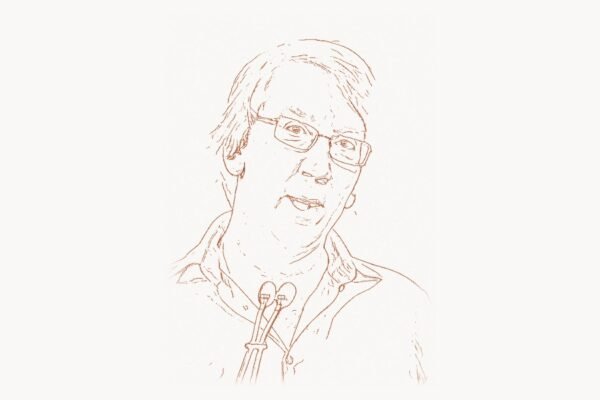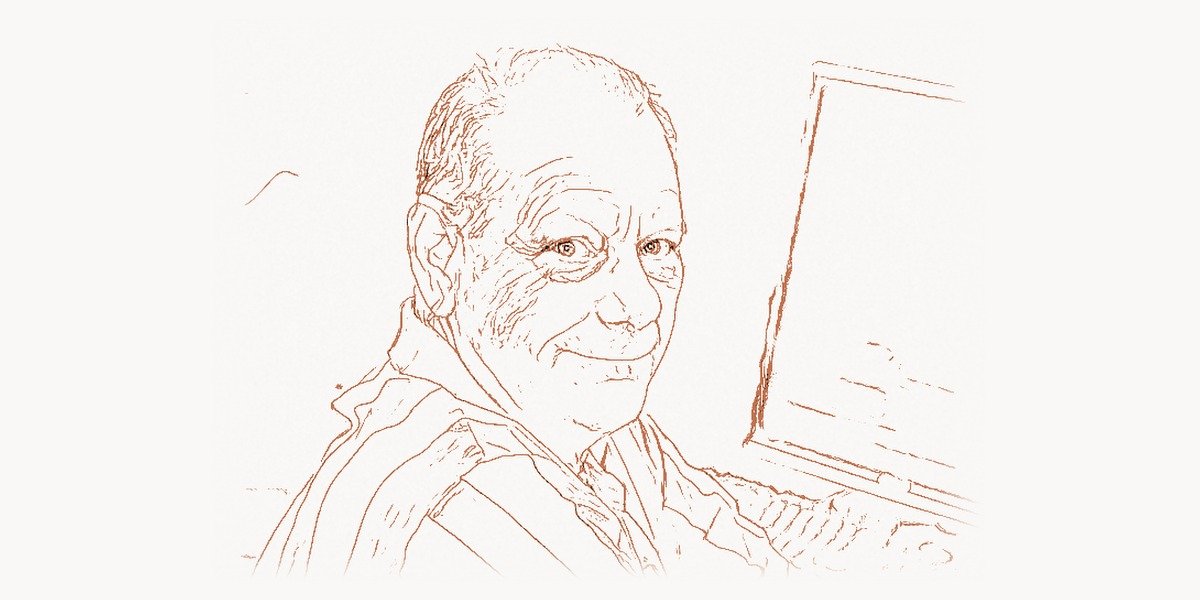
In the world of operating systems, few names carry as much weight as Dave Cutler. While most people have never heard of him, virtually everyone who has ever used a Windows computer — from Windows XP to Windows 11 — has relied on the architecture he designed. David Neil Cutler is the engineer who built Windows NT from the ground up, creating the kernel that would become the backbone of every modern Windows release, every Windows Server installation, and eventually the hypervisor powering Microsoft Azure. His career spans more than five decades of systems programming, from the minicomputers of the 1970s to the cloud infrastructure of the 2020s. If Linus Torvalds is the soul of the open-source operating system world, Dave Cutler is the quiet titan on the other side — the man who proved that disciplined engineering and uncompromising architecture could produce software that scales from a desktop to a planet-wide cloud.
Early Life and Path to Technology
David Neil Cutler was born on March 13, 1942, in Lansing, Michigan. He grew up in an era when computers filled entire rooms and programming meant feeding punched cards into mainframes. Cutler studied mathematics and physics at Olivet Nazarene College, where he developed the analytical mindset that would later define his approach to systems design. Unlike many of his contemporaries who came to computing through electrical engineering or pure mathematics, Cutler’s background gave him a unique perspective — he thought about systems in terms of fundamental structures and invariants, much like Edsger Dijkstra approached algorithms with mathematical rigor.
After college, Cutler joined DuPont, where he first encountered real computing hardware and began writing system-level software. But it was his move to Digital Equipment Corporation (DEC) in 1971 that launched his career as one of the most important systems architects in computing history. At DEC, Cutler found himself in an environment that valued engineering excellence above all else — a culture that shaped his entire philosophy of software development.
During his years at DEC, Cutler led the development of several operating systems that were revolutionary for their time. He designed RSX-11M, a real-time operating system for the PDP-11 minicomputer family. RSX-11M introduced concepts of resource management and process scheduling that were ahead of their time. But his masterwork at DEC was VAX/VMS — the Virtual Memory System for the VAX architecture. VMS was renowned for its reliability, its clustering capabilities, and its clean layered architecture. It became the gold standard for enterprise computing in the 1980s, running banks, hospitals, and telecommunications networks around the world. The design principles Cutler embedded in VMS — strict layering, hardware abstraction, robust security — would reappear years later in a much more famous operating system.
The Breakthrough: Creating Windows NT
By the late 1980s, Cutler had grown frustrated at DEC. His ambitious project to build a next-generation operating system called MICA was canceled due to corporate politics. Meanwhile, Microsoft was facing its own crisis: MS-DOS and Windows 3.x were consumer products built on shaky foundations, with no memory protection, no proper multitasking, and no security model worth mentioning. Bill Gates recognized that Microsoft needed a real operating system — something built from scratch with modern engineering principles. He personally recruited Dave Cutler in October 1988, reportedly flying to meet him and offering him the chance to build the operating system he had always wanted to build.
Cutler brought a small team of DEC engineers with him to Microsoft and set up shop in a separate building in Redmond, away from the existing Windows team. The project was called NT, standing for “New Technology.” From day one, Cutler insisted on a set of architectural principles that would guide every decision: portability across hardware platforms, reliability through strict kernel-mode and user-mode separation, compatibility with existing systems, and performance that could compete with Unix workstations. These principles echoed the work that Ken Thompson and Dennis Ritchie had done with Unix two decades earlier — build something clean, build something right, and let the architecture speak for itself.
The Technical Innovation
The Windows NT kernel was a masterpiece of systems engineering. At its heart was a hybrid kernel design — not a pure microkernel like those advocated by Andrew Tanenbaum in his MINIX work, but not a monolithic kernel like traditional Unix either. Cutler took the best ideas from both approaches. The NT kernel ran device drivers and file systems in kernel mode for performance, but used strict separation of concerns, well-defined interfaces, and a layered architecture that kept components isolated.
One of Cutler’s most brilliant innovations was the Hardware Abstraction Layer (HAL). The HAL was a thin software layer that sat between the kernel and the physical hardware, translating hardware-specific operations into a common interface. This meant that the same NT kernel could run on Intel x86, MIPS, DEC Alpha, and PowerPC processors with minimal changes — a portability achievement that was remarkable for its time.
/*
 * Simplified illustration of the NT Hardware Abstraction Layer concept.
 * The HAL provides a uniform interface for kernel operations
 * regardless of the underlying processor architecture.
 */

/* HAL interrupt interface — hardware-independent */
typedef struct _HAL_INTERRUPT {
    ULONG Vector;
    KIRQL Irql;
    KINTERRUPT_MODE Mode;
    BOOLEAN SharedVector;
} HAL_INTERRUPT, *PHAL_INTERRUPT;

/* Platform-independent interrupt dispatch */
BOOLEAN HalBeginSystemInterrupt(
    IN KIRQL Irql,
    IN ULONG Vector,
    OUT PKIRQL OldIrql
) {
    /*
     * On x86: programs the APIC, manages IDT
     * On Alpha: interfaces with PALcode
     * On MIPS: manipulates CP0 Status register
     * The caller never needs to know which platform.
     */
    *OldIrql = KeGetCurrentIrql();
    KfRaiseIrql(Irql);

    /* Acknowledge interrupt at platform level */
    HalpAcknowledgeInterrupt(Vector);

    return TRUE;
}

/*
 * The NT I/O model: IRPs (I/O Request Packets)
 * provide a uniform async I/O mechanism.
 */
NTSTATUS IoCallDriver(
    IN PDEVICE_OBJECT DeviceObject,
    IN OUT PIRP Irp
) {
    PIO_STACK_LOCATION irpSp;
    PDRIVER_OBJECT driverObject;

    /* Get next stack location for target driver */
    irpSp = IoGetNextIrpStackLocation(Irp);
    driverObject = DeviceObject->DriverObject;

    /* Dispatch through driver's function table */
    return driverObject->MajorFunction[irpSp->MajorFunction](
        DeviceObject, Irp
    );
}
The NT kernel also introduced the I/O Request Packet (IRP) model — an asynchronous, packet-based I/O architecture that was far ahead of the synchronous I/O models used by most operating systems at the time. Every I/O operation in NT was represented as an IRP that could be passed between driver layers, queued, canceled, and completed asynchronously. This design enabled NT to handle heavy I/O workloads efficiently and became the foundation for the scalability that later made Windows Server a viable enterprise platform.
Another key innovation was the NT Object Manager — a unified namespace that treated everything from files to registry keys to synchronization primitives as objects with security descriptors. This gave NT a consistent security model from the ground up. Every object could have an access control list (ACL), every operation could be audited, and every process ran with a security token that determined what it could access. Modern teams managing complex projects with tools like Taskee take fine-grained access control for granted, but in 1993, this level of security architecture in a desktop operating system was revolutionary.
Why It Mattered
Windows NT 3.1 shipped on July 27, 1993. It was not an immediate consumer hit — it required too much RAM and was too expensive for home users. But it fundamentally changed the trajectory of computing. For the first time, Microsoft had an operating system that could compete with Unix in the server room while still running Windows applications on the desktop. NT gave Microsoft credibility in enterprise computing, and that credibility would eventually translate into market dominance.
The architecture Cutler designed was so sound that it has survived largely intact for over thirty years. Windows 2000, Windows XP, Windows Vista, Windows 7, Windows 8, Windows 10, and Windows 11 are all built on the NT kernel. Every Windows Server release, from Server 2003 to Server 2022, runs on Cutler’s architecture. The NT kernel is arguably the most commercially successful piece of systems software ever written, running on billions of devices worldwide. Just as the C++ language created by Bjarne Stroustrup became the backbone of systems programming for decades, the NT kernel became the backbone of the world’s dominant desktop and server operating system.
From VMS to NT: The DEC Heritage
It is impossible to discuss Windows NT without acknowledging its deep roots in VMS. The similarities between VMS and NT were so striking that DEC eventually filed a lawsuit against Microsoft, which was settled out of court in 1994 with Microsoft paying DEC $150 million. The architectural parallels were everywhere: both systems used a layered architecture with strict separation between kernel mode and user mode. Both featured asynchronous I/O as a first-class concept. Both had sophisticated virtual memory managers. Both implemented clustering and symmetric multiprocessing from early in their development.
But NT was not simply VMS rewritten for a new platform. Cutler and his team took the lessons learned from VMS and applied them with the benefit of hindsight. NT’s Win32 API was designed for compatibility with a vast ecosystem of existing Windows applications — something VMS never had to worry about. NT’s driver model was more flexible and extensible than VMS’s. And NT was designed from the start to be portable across multiple processor architectures, while VMS was tied to the VAX (and later Alpha) hardware.
The relationship between VMS and NT illustrates an important principle in software engineering: great systems are rarely created in a vacuum. They build on previous work, refine proven concepts, and apply hard-won lessons. This is the same evolutionary process that led from Unix to Linux, from Smalltalk to modern object-oriented languages, and from ARPANET to the TCP/IP internet that Vint Cerf helped create.
Azure and the Cloud Era
Most engineers would consider building the NT kernel a career-defining achievement and retire on that legacy. Cutler did not. In the 2000s, as Microsoft began its massive push into cloud computing, Cutler turned his attention to virtualization — the technology that would underpin Azure, Microsoft’s cloud platform.
Cutler led the development of the Azure hypervisor, the thin software layer that allows thousands of virtual machines to run on Microsoft’s data center hardware. The hypervisor had to meet extreme requirements: near-zero overhead, ironclad security isolation between tenants, and the ability to manage millions of virtual machines across a global network of data centers. Cutler applied the same architectural discipline that had made NT successful — strict layering, minimal complexity in the most privileged code, and relentless focus on reliability.
/*
 * Conceptual model of hypervisor partition isolation,
 * reflecting the design philosophy Cutler brought to Azure.
 * Each VM (partition) has its own isolated address space
 * and resource allocation managed by the hypervisor.
 */

typedef struct _HV_PARTITION {
    HV_PARTITION_ID     PartitionId;
    HV_PARTITION_STATE  State;

    /* Memory isolation: each partition has its own page tables */
    PHV_ADDRESS_SPACE   GuestPhysicalAddressSpace;

    /* CPU allocation: virtual processors per partition */
    UINT32              VirtualProcessorCount;
    PHV_VIRTUAL_PROC    VirtualProcessors;

    /* Security boundary: hardware-enforced isolation */
    HV_ISOLATION_LEVEL  IsolationLevel;

    /* Resource limits: guaranteed and capped */
    HV_RESOURCE_QUOTA   CpuQuota;
    HV_RESOURCE_QUOTA   MemoryQuota;
    HV_RESOURCE_QUOTA   IoQuota;
} HV_PARTITION;

/* Hypercall interface: guest OS to hypervisor communication */
HV_STATUS HvSwitchVirtualAddressSpace(
    IN HV_PARTITION_ID  TargetPartition,
    IN HV_ADDRESS_SPACE_ID AddressSpace
) {
    /* Validate caller has permission for target partition */
    if (!HvpValidatePartitionAccess(
            HvpGetCurrentPartition(),
            TargetPartition)) {
        return HV_STATUS_ACCESS_DENIED;
    }

    /* Flush TLB, switch SLAT/EPT tables atomically */
    HvpFlushTranslationCache(TargetPartition);
    HvpLoadSecondLevelAddressTable(
        TargetPartition, AddressSpace
    );

    return HV_STATUS_SUCCESS;
}
The Azure hypervisor became one of the pillars of Microsoft’s cloud business, which now generates tens of billions of dollars in annual revenue. Cutler’s work on the hypervisor demonstrated that the same engineering principles — clean abstraction, strict isolation, careful resource management — that made a great desktop operating system kernel could also make a great cloud infrastructure platform. For organizations that use platforms like Toimi to manage their digital presence, the underlying cloud reliability they depend on traces back, in part, to Cutler’s architectural decisions.
Philosophy and Engineering Approach
Dave Cutler is known not just for what he built, but for how he built it. His engineering philosophy has influenced generations of systems programmers at Microsoft and beyond.
Key Principles
Architecture first, implementation second. Cutler insisted on getting the architecture right before writing production code. The NT kernel was designed on paper and in design documents before a single line of C was compiled. Every component had well-defined interfaces, every layer had clear responsibilities, and every interaction between subsystems was documented. This approach echoes the discipline of Margaret Hamilton’s Apollo software engineering, where getting the design right was not optional — it was a matter of mission success.
Portability through abstraction. By isolating platform-specific code in the HAL and keeping the rest of the kernel hardware-independent, Cutler made NT portable without sacrificing performance. The same principle was later applied in different ways by Rob Pike and Ken Thompson in the design of Go, where the runtime abstracts away platform differences behind a clean interface. The lesson is universal: good abstractions do not just make code cleaner — they make entire systems more adaptable.
No compromises on reliability. Cutler was famous for his intense focus on code quality. He reviewed code personally, rejected sloppy implementations, and demanded that every edge case be handled. The NT kernel was designed to recover gracefully from errors wherever possible, with structured exception handling built into the kernel itself. Cutler treated a kernel crash — the dreaded Blue Screen of Death — as a personal failure. This uncompromising attitude toward reliability was what made NT suitable for server workloads where downtime meant lost revenue.
Small, disciplined teams. The original NT team was deliberately kept small. Cutler believed that a small team of excellent engineers could outperform a large team of average ones. He handpicked his team, many of whom had worked with him at DEC, and gave them wide latitude to make technical decisions within the architectural framework he had defined. This model of small, empowered teams has been validated repeatedly in the software industry — from the original Unix team at Bell Labs to modern startups.
Understand the hardware. Despite building a hardware abstraction layer, Cutler was deeply knowledgeable about the processors NT targeted. He understood cache hierarchies, memory models, interrupt controllers, and I/O bus architectures. This hardware knowledge informed his software designs, allowing him to make architectural choices that performed well on real machines, not just in theory. It is the same principle that Brian Kernighan articulated in his writing on programming — understanding the machine beneath your code makes you a better programmer.
Legacy and Modern Relevance
Dave Cutler’s legacy is measured in billions of devices. The NT kernel runs on desktops, laptops, servers, tablets, gaming consoles (Xbox runs a variant of the NT kernel), and cloud infrastructure. It is the foundation of the Windows ecosystem that supports hundreds of millions of businesses and billions of users worldwide.
But Cutler’s influence extends beyond the specific code he wrote. His architectural principles — hardware abstraction, strict layering, asynchronous I/O, unified object models, mandatory security — have become standard practice in operating system design. The Linux kernel, while architecturally different (monolithic rather than hybrid), has adopted many of the same principles around driver isolation, security modules, and hardware abstraction that Cutler pioneered in NT.
Cutler was named a Microsoft Technical Fellow, the company’s highest technical honor, recognizing his extraordinary contributions to the company and to the field of operating systems. He continued working at Microsoft into his eighties, a testament to his passion for systems engineering and his belief that there is always more work to be done.
In the ongoing debates about operating system architecture — monolithic vs. microkernel, open source vs. proprietary, Unix philosophy vs. integrated design — Cutler’s NT stands as evidence that disciplined engineering can produce systems of extraordinary longevity and scale. While the academic world debated whether microkernels or monolithic kernels were theoretically superior (a debate famously illustrated by the Tanenbaum-Torvalds exchange), Cutler shipped a hybrid kernel that absorbed the best ideas from both camps and ran on more computers than either pure approach.
For today’s systems engineers, Cutler’s career offers a masterclass in what it means to build software that lasts. In an industry obsessed with rapid iteration and minimum viable products, the NT kernel is a reminder that investing deeply in architecture and engineering excellence can produce results that endure for decades. The same codebase, refined and extended, has survived the transition from single-core processors to many-core, from megabytes of RAM to terabytes, from local area networks to global cloud infrastructure. That kind of longevity does not happen by accident — it happens by design.
Key Facts
- Full name: David Neil Cutler
- Born: March 13, 1942, in Lansing, Michigan
- Education: Olivet Nazarene College (mathematics and physics)
- Career at DEC (1971–1988): Designed RSX-11M and VAX/VMS operating systems
- Recruited to Microsoft: October 1988, personally recruited by Bill Gates
- Windows NT: Chief architect; NT 3.1 released July 27, 1993
- NT stands for: “New Technology”
- Key NT innovations: Hardware Abstraction Layer (HAL), hybrid kernel, IRP-based async I/O, NT Object Manager, Win32 subsystem
- NT legacy: Foundation of Windows 2000, XP, Vista, 7, 8, 10, 11, and all Windows Server editions
- Azure: Led development of the Azure hypervisor for Microsoft’s cloud platform
- Title: Microsoft Technical Fellow — the company’s highest technical distinction
- Known for: Intense work ethic, architectural discipline, and uncompromising engineering standards
Frequently Asked Questions
What is the relationship between VMS and Windows NT?
Dave Cutler was the chief architect of both VAX/VMS at DEC and Windows NT at Microsoft. Both operating systems share fundamental architectural principles: layered design, strict kernel-mode and user-mode separation, asynchronous I/O, virtual memory management, and built-in security. However, NT was not a port or copy of VMS — it was a new system designed from scratch, applying lessons learned from VMS while adding new capabilities like hardware portability through the HAL, Win32 API compatibility, and support for multiple processor architectures. DEC did file a lawsuit over the similarities, which was settled in 1994 with Microsoft paying $150 million, but the legal outcome did not change the technical reality: NT was an original work that built on proven architectural principles.
Why did Microsoft choose a hybrid kernel for NT instead of a microkernel?
Cutler made a pragmatic architectural decision. Pure microkernels, where device drivers and file systems run in user-mode processes, offered theoretical advantages in modularity and reliability, but they incurred significant performance overhead due to the frequent context switches and inter-process communication required. Monolithic kernels like the one used in Linux offered better performance but could be harder to maintain and extend. Cutler’s hybrid approach ran performance-critical components like device drivers and the file system cache in kernel mode while maintaining the clean interfaces and layered architecture of a microkernel design. This gave NT the performance it needed to be competitive while preserving the modularity and maintainability that allowed it to evolve over three decades without a fundamental rewrite.
How does Dave Cutler’s work on the NT kernel connect to modern cloud computing?
The connection is both direct and architectural. Directly, Cutler personally led the development of the Azure hypervisor — the software that enables Microsoft’s cloud platform to run millions of virtual machines across its global data centers. Architecturally, the same principles that made NT successful — hardware abstraction, strict isolation between components, efficient resource management, and scalable asynchronous I/O — are the exact principles that a cloud hypervisor needs. The NT kernel’s ability to run on multiple processor architectures through the HAL foreshadowed the cloud era’s need for workload portability. The NT Object Manager’s security model, with access control lists on every resource, anticipated the multi-tenant security requirements of cloud platforms. In essence, Cutler spent his career solving the same fundamental problem at increasing scales: how to share hardware resources safely and efficiently among multiple competing workloads.