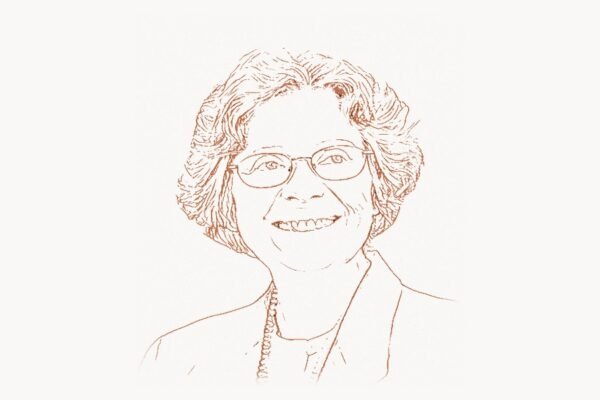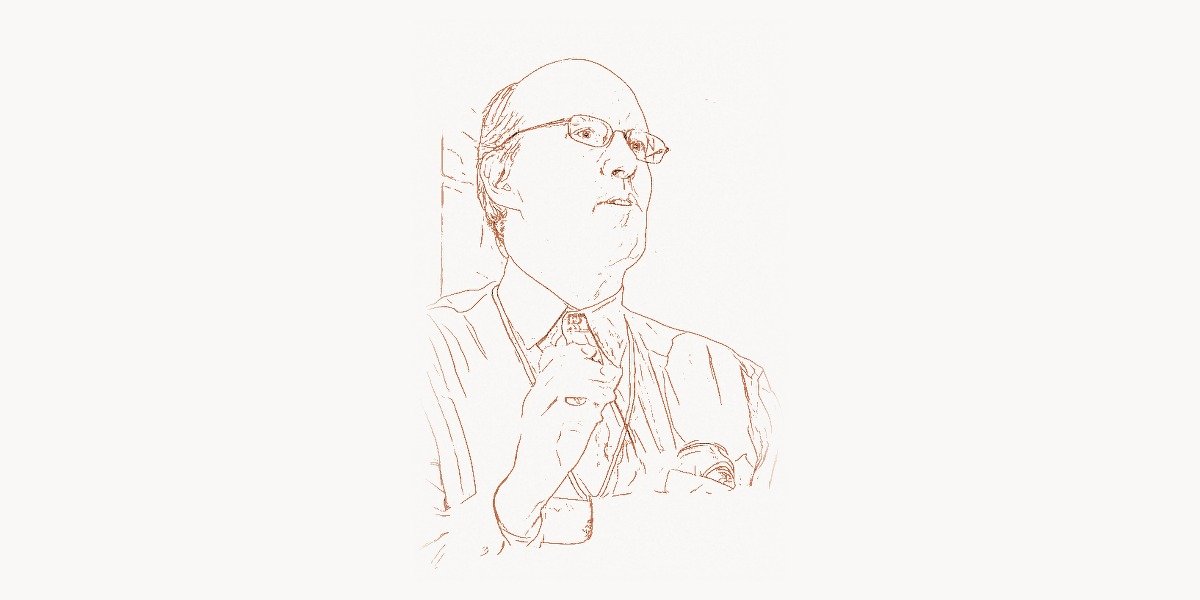
In the world of technology, few pieces of software have shaped the internet as profoundly as MySQL. Behind every WordPress blog, every Facebook query in its early days, every e-commerce transaction flowing through countless startups sat a database engine born not in a Silicon Valley garage but in the cold, pragmatic landscape of Scandinavia. David Axmark, who co-created MySQL alongside Michael “Monty” Widenius, was far more than a technical contributor. He was the business mind, the open-source evangelist, and the strategic thinker who ensured that MySQL would reach every corner of the globe. His conviction that powerful software should be free and accessible to all helped define the open-source movement and changed how the world builds applications.
Early Life and Education
David Axmark was born on April 8, 1962, in Sweden. Growing up during a period when personal computing was still a novelty, he developed an early fascination with programming and the emerging possibilities of digital technology. Sweden in the 1970s and 1980s was becoming a fertile ground for tech innovation, with a strong educational system that emphasized science and engineering. This environment nurtured Axmark’s curiosity and gave him the foundational skills he would later apply to building world-changing software.
Axmark studied at Uppsala University, one of Sweden’s oldest and most prestigious institutions. His time there exposed him to the theoretical underpinnings of computer science, from algorithms and data structures to the principles of operating systems. But it was the practical side of computing that truly captivated him. He was drawn to systems programming, to understanding how software interacts with hardware at the lowest levels, and to the emerging culture of sharing code among developers.
During his university years and immediately after, Axmark became deeply involved in the Swedish tech community. He crossed paths with Michael Widenius, a fellow programmer with a passion for database systems. Their complementary skills would prove to be the foundation of one of the most successful open-source projects in history. Where Widenius was the relentless coder, driven to optimize every query and squeeze performance from every byte, Axmark brought a broader perspective: how to build a business around free software, how to communicate its value, and how to create a community that would sustain it.
Career and the Creation of MySQL
Technical Innovation: Building the World’s Most Popular Open-Source Database
The story of MySQL began in 1994 when Axmark and Widenius, working together at the Swedish company TcX, began developing a database management system that could handle the growing demands of web-based applications. The existing options at the time were either prohibitively expensive commercial products like Oracle and IBM DB2, or academic projects that lacked the robustness needed for production use. Edgar F. Codd had laid the theoretical foundation for relational databases decades earlier, but translating that theory into a fast, reliable, and freely available product remained a significant challenge.
Axmark played a critical role in shaping MySQL’s architecture and, crucially, its licensing model. From the very beginning, he advocated for releasing MySQL under an open-source license. This was a radical position in the mid-1990s, when the prevailing business model for software was built around proprietary licenses and closed source code. The decision to use a dual-licensing approach, offering MySQL under both the GNU General Public License (GPL) and a commercial license, was a stroke of strategic brilliance that Axmark championed.
The technical design of MySQL prioritized speed and simplicity. While competitors focused on feature completeness, MySQL concentrated on doing the most common operations exceptionally well. A simple connection and query in MySQL demonstrated this philosophy:
-- Connecting and creating a database in early MySQL
CREATE DATABASE web_application;
USE web_application;

CREATE TABLE users (
    id INT AUTO_INCREMENT PRIMARY KEY,
    username VARCHAR(50) NOT NULL UNIQUE,
    email VARCHAR(100) NOT NULL,
    created_at TIMESTAMP DEFAULT CURRENT_TIMESTAMP
) ENGINE=MyISAM;

-- The speed of simple queries was MySQL's killer feature
SELECT username, email FROM users
WHERE created_at > '2000-01-01'
ORDER BY username LIMIT 100;
This focus on read-heavy workloads and simple queries made MySQL the perfect database for the emerging web. When the LAMP stack (Linux, Apache, MySQL, PHP) crystallized as the dominant web development platform in the late 1990s, MySQL was already positioned to capitalize on the explosion of web applications.
In 1995, Axmark and Widenius formally founded MySQL AB, the company behind the database. Axmark served as a co-founder and took on responsibilities that spanned business development, community relations, and strategic partnerships. He traveled extensively, speaking at conferences, meeting with developers, and building relationships with companies that were adopting MySQL. His ability to articulate the value of open-source software to business executives who were skeptical of “free” products was instrumental in MySQL’s adoption by major enterprises.
Why It Mattered: Democratizing Database Technology
Before MySQL, running a relational database was expensive. Oracle licenses could cost tens of thousands of dollars, putting robust data management out of reach for startups, small businesses, and developers in developing countries. MySQL changed this equation entirely. By making a production-quality database freely available, Axmark and his team unlocked a wave of innovation that would have been impossible otherwise.
The impact was staggering. By the early 2000s, MySQL was powering a significant portion of the web. Companies like Yahoo, Google (in its early infrastructure), and Wikipedia relied on MySQL. When Facebook launched in 2004, it chose MySQL as its primary database, a decision that would push the software to previously unimaginable scales. The web as we know it, with its abundance of dynamic, data-driven applications, was built on the foundation that MySQL provided.
Axmark’s advocacy for open-source licensing was particularly prescient. The dual-licensing model he helped design allowed MySQL AB to generate revenue from commercial licenses while keeping the community edition free. This model became a blueprint for countless open-source companies that followed, including those behind projects like Redis and SQLite. The philosophy was simple: let developers use the software for free, build a massive user base, and monetize through support, consulting, and commercial licensing for companies that needed it.
The decision was vindicated in 2008 when Sun Microsystems acquired MySQL AB for approximately one billion dollars. This was one of the largest acquisitions of an open-source company at the time, and it sent a clear signal to the industry that open-source software could be the foundation of a highly valuable business. Axmark and Widenius had proven that giving away software could be more profitable than selling it.
Other Contributions and Ventures
Beyond MySQL, David Axmark contributed to the broader open-source ecosystem in numerous ways. He was an active participant in discussions about software licensing, contributing to the refinement of how the GPL and other open-source licenses were applied in practice. His experience with MySQL’s dual-licensing model provided valuable real-world insights that influenced how other projects approached the complex intersection of free software principles and commercial sustainability.
Axmark was also a vocal advocate for open standards in database technology. He supported the development and adoption of SQL standards, believing that interoperability between database systems was essential for the health of the software ecosystem. This advocacy aligned him with figures like Michael Stonebraker, who was pushing forward PostgreSQL and relational database research from the academic side.
After the Sun Microsystems acquisition and the subsequent Oracle acquisition of Sun in 2010, Axmark, like Widenius, became concerned about the future of MySQL under Oracle’s stewardship. While Widenius went on to create MariaDB as a fork of MySQL, Axmark supported this effort and continued to advocate for the principles that had guided MySQL’s development from the beginning. He served on the board of the MariaDB Foundation and remained involved in ensuring that the community-driven development model would survive corporate ownership changes.
Axmark also mentored younger developers and entrepreneurs throughout his career. He believed strongly that the next generation of open-source leaders needed not just technical skills but also business acumen and an understanding of community dynamics. His talks at conferences often covered the practical challenges of building sustainable open-source businesses, a topic he understood from direct experience. A simple configuration approach he often discussed in talks about MySQL deployment best practices:
#!/bin/bash
# David Axmark often emphasized simple, reproducible deployments
# Minimal my.cnf for a web-facing MySQL server

cat > /etc/mysql/my.cnf << 'EOF'
[mysqld]
# Performance: keep it simple, tune what matters
innodb_buffer_pool_size = 1G
innodb_log_file_size    = 256M
max_connections         = 200
query_cache_type        = 1
query_cache_size        = 64M

# Security basics Axmark always advocated
bind-address            = 127.0.0.1
skip-symbolic-links
local-infile            = 0

# Logging for transparency
slow_query_log          = 1
slow_query_log_file     = /var/log/mysql/slow.log
long_query_time         = 2
EOF

echo "Restart MySQL to apply changes"
systemctl restart mysqld
His influence extended into the investment and advisory space as well. Axmark invested in and advised several Swedish tech startups, bringing his experience in building a global technology company from Scandinavian roots. He was particularly interested in companies that embraced open-source principles and those building tools for developers, including modern project management platforms like Taskee that share his vision of making powerful tools accessible to everyone.
Philosophy and Principles
David Axmark's philosophy was shaped by the intersection of Scandinavian pragmatism and open-source idealism. He was not a zealot who believed all software must be free, but rather a strategic thinker who recognized that openness could be a competitive advantage. His approach to technology and business was guided by several core principles that he articulated throughout his career.
Key Principles
- Software freedom creates economic value. Axmark believed that making software freely available did not destroy value but rather created it. By lowering the barrier to entry, open-source software expanded the total market and generated opportunities for services, support, and complementary products that far exceeded what proprietary licensing alone could achieve.
- Simplicity beats complexity. MySQL's early success came from doing a few things exceptionally well rather than trying to match every feature of established competitors. Axmark championed this philosophy of focused simplicity, arguing that software should solve real problems rather than chase specification completeness.
- Community is the product. More than just users, the MySQL community of developers, contributors, and advocates was central to the project's success. Axmark understood that building and nurturing this community was as important as writing code. A healthy community could sustain a project through leadership changes, corporate acquisitions, and technological shifts.
- Dual licensing is not a compromise; it is a strategy. Rather than viewing the tension between free software and commercial revenue as a problem, Axmark saw it as an opportunity. The dual-licensing model allowed MySQL to serve both the open-source community and enterprise customers, creating a virtuous cycle where each group benefited from the other's contributions.
- Global accessibility matters. Axmark was committed to ensuring that MySQL was available and usable worldwide. He pushed for internationalization, documentation in multiple languages, and community building in regions that were underserved by the traditional software industry.
- Transparency builds trust. Open-source development requires a level of transparency that proprietary software companies often avoid. Axmark believed that this transparency, in code, in decision-making, in business practices, was a strength that built lasting relationships with users and partners.
These principles closely parallel the ideals championed by Richard Stallman in the free software movement and Linus Torvalds in the Linux community, though Axmark was notably more pragmatic about finding the balance between idealism and commercial viability. His willingness to work within the market rather than against it is what made MySQL a business success as well as a technical one. Modern digital agencies building web products today continue to rely on the open-source database infrastructure he helped create.
Legacy and Impact
David Axmark's legacy is woven into the fabric of the modern internet. MySQL remains one of the most widely used database systems in the world, powering millions of websites, applications, and services. The LAMP stack that MySQL anchored became the default development platform for an entire generation of web developers, and its influence persists in modern architectures even as new database paradigms have emerged.
The open-source business model that Axmark helped pioneer has become the dominant approach for developer tools and infrastructure software. Companies like Red Hat, Elastic, HashiCorp, and countless others have followed the path that MySQL AB blazed, demonstrating that open-source software can be the foundation of billion-dollar businesses. The one-billion-dollar acquisition by Sun Microsystems was not just a financial milestone; it was a validation of the entire open-source business model.
Perhaps most importantly, Axmark's work helped democratize access to technology. Before MySQL, building a data-driven web application required significant financial investment in database software. After MySQL, any developer with a computer and an internet connection could build and deploy applications that rivaled those of well-funded enterprises. This democratization fueled the startup revolution of the 2000s and 2010s, enabling companies like Facebook, Twitter, and Airbnb to start with minimal infrastructure costs.
The MariaDB project, which Axmark supported after leaving MySQL, ensures that the community-driven, open-source spirit of the original project lives on even as Oracle controls the MySQL trademark. This continuity reflects one of Axmark's most important contributions: designing a project and a community that could survive beyond any single company's control.
Axmark's influence also extends to the philosophical foundations of the open-source movement. His demonstration that openness and profitability are not mutually exclusive helped shift the conversation in the software industry. Today, it is almost expected that developer tools and infrastructure software will be open-source, a dramatic change from the proprietary landscape of the 1990s that Axmark and his contemporaries helped transform. Figures like Larry Ellison, whose Oracle represented the proprietary model MySQL challenged, eventually had to adapt their own strategies in response to the open-source wave.
Key Facts About David Axmark
- Full name: David Axmark
- Born: April 8, 1962, Sweden
- Known for: Co-creating MySQL, the world's most popular open-source relational database management system
- Co-founders: Michael "Monty" Widenius and Allan Larsson
- Company: MySQL AB, co-founded in 1995
- Licensing innovation: Pioneered the dual-licensing model (GPL + commercial) for open-source databases
- Acquisition: MySQL AB acquired by Sun Microsystems in 2008 for approximately $1 billion
- Post-acquisition: Supported MariaDB as the community-driven continuation of MySQL
- Philosophy: Open-source pragmatist who balanced free software ideals with commercial sustainability
- Impact: MySQL powers millions of websites and applications, forming the M in the LAMP stack
- Education: Studied at Uppsala University, Sweden
Frequently Asked Questions
What was David Axmark's role in creating MySQL?
David Axmark was a co-creator and co-founder of MySQL AB, the company behind the MySQL database. While Michael "Monty" Widenius is often credited as the primary developer and coder behind MySQL's engine, Axmark played an equally vital role on the business and community side. He was instrumental in designing MySQL's dual-licensing strategy, which allowed the database to be freely available under the GPL while also generating revenue through commercial licenses. Axmark handled much of the business development, partnership building, and community evangelism that turned MySQL from a small Swedish project into a global phenomenon used by millions of developers.
How did MySQL change the software industry?
MySQL fundamentally altered the economics of software development by proving that a production-quality relational database could be freely available. Before MySQL, database software was one of the most expensive components of any technology stack, with licenses from vendors like Oracle and IBM costing tens of thousands of dollars. MySQL eliminated this barrier, enabling a wave of web-based innovation. The LAMP stack (Linux, Apache, MySQL, PHP/Perl/Python) became the dominant platform for web development, powering everything from personal blogs to major social networks. Additionally, MySQL's dual-licensing model became a template for open-source business strategies, influencing how companies approach the monetization of free software to this day.
What is the relationship between MySQL and MariaDB?
MariaDB is a fork of MySQL, created by MySQL's other co-founder, Michael "Monty" Widenius, after Oracle Corporation acquired Sun Microsystems (which had previously acquired MySQL AB) in 2010. Concerns about Oracle's stewardship of the open-source project led Widenius to create MariaDB as a community-developed, fully open-source alternative that maintains compatibility with MySQL. David Axmark supported this effort and served on the MariaDB Foundation board, helping to ensure that the original community-driven spirit of MySQL would be preserved. MariaDB has since been adopted by many Linux distributions as the default database and is used by organizations like Wikipedia and Google.
Why was MySQL's dual-licensing model so important?
The dual-licensing model that Axmark championed was revolutionary because it resolved the fundamental tension between the free software movement and commercial software development. Under this model, MySQL was available under the GPL for anyone who wanted to use it in open-source projects, ensuring maximum adoption and community contribution. Simultaneously, companies that wanted to embed MySQL in proprietary products without complying with the GPL's requirements could purchase a commercial license. This approach generated significant revenue for MySQL AB while keeping the software free for the vast majority of users. The model demonstrated that open-source companies could be financially successful without compromising their commitment to software freedom, paving the way for numerous other companies to follow the same strategy.