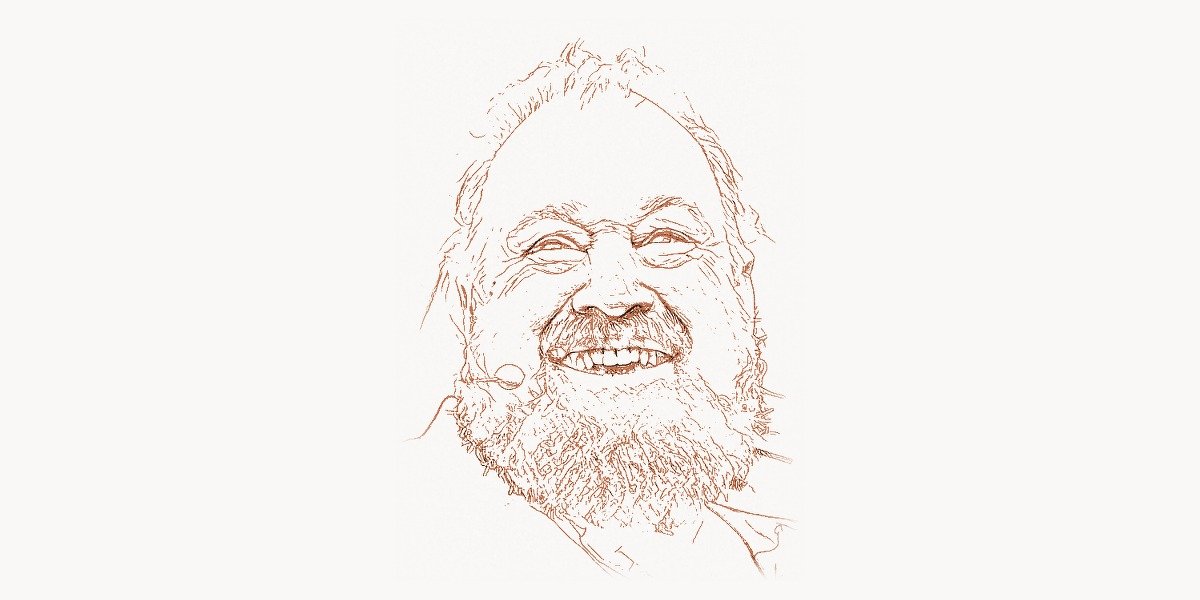
Long before Bitcoin made cryptocurrency a household word, long before blockchain became a buzzword in boardrooms and venture capital pitches, a soft-spoken American cryptographer named David Chaum posed a question that would reshape the trajectory of digital civilization: can money exist in purely electronic form while preserving the anonymity that physical cash provides? In 1983, he answered that question with a paper titled “Blind Signatures for Untraceable Payments,” introducing a cryptographic protocol that made anonymous digital transactions mathematically possible. A decade later, he turned theory into practice by founding DigiCash, a company that implemented the world’s first electronic cash system — eCash. The technology worked. Banks adopted it. Real transactions occurred. But DigiCash collapsed in 1998, a victim of timing, business missteps, and a world not yet ready for what Chaum had built. The ideas, however, survived. They became the intellectual foundation for every cryptocurrency, every privacy-preserving protocol, and every serious discussion about digital autonomy that followed. Chaum did not merely predict the future of money — he invented the mathematics that made it possible, and in doing so, he laid the groundwork for the entire field of financial cryptography.
Early Life and Academic Foundation
David Lee Chaum was born in 1955 in the United States. Details of his early life are sparse — Chaum has always been more interested in discussing ideas than personal biography — but his path to cryptography was shaped by an early fascination with the intersection of mathematics, computer science, and individual rights. He studied computer science at the University of California, Berkeley, one of the leading research institutions in the field during the 1970s, a period when public-key cryptography was being invented and the personal computer revolution was just beginning.
Chaum earned his Ph.D. from Berkeley in 1982 with a dissertation on computer systems that could be established, maintained, and trusted by mutually suspicious groups. This theme — how to build trustworthy systems in an environment where no single party can be trusted — became the unifying thread of his entire career. His doctoral work drew on emerging ideas in public-key cryptography, particularly the work of Whitfield Diffie, Martin Hellman, and the RSA team (Rivest, Shamir, and Adleman), but Chaum pushed these ideas in a direction that their inventors had not explored: toward privacy, anonymity, and individual control over personal data.
After completing his doctorate, Chaum moved to the Netherlands, where he founded the International Association for Cryptologic Research (IACR) in 1982 and established a research group at the Centrum Wiskunde & Informatica (CWI) in Amsterdam. The Netherlands became his base of operations for the next two decades, and it was there that his most influential work was produced. The move to Europe was significant: European privacy culture, shaped by historical experience with surveillance states, provided a more receptive environment for Chaum’s ideas about anonymous communication and untraceable payments than the more commercially oriented American tech scene of the 1980s.
The Breakthrough: Blind Signatures and Digital Cash
The Core Problem
Physical cash has a property that is remarkably difficult to replicate electronically: it is anonymous. When you hand someone a twenty-dollar bill, no central authority records who gave it, who received it, or what it was used for. The transaction is private by default. Electronic payments, by contrast, create permanent records. Credit card companies, banks, and payment processors know exactly what you bought, where you bought it, and when. Chaum recognized that this loss of transactional privacy was not a minor inconvenience but a fundamental threat to individual freedom. A society where every financial transaction is recorded is a society where behavior can be monitored, analyzed, and controlled at a granular level.
The technical challenge was formidable. Digital information can be perfectly copied, which means a naive digital currency would be vulnerable to “double-spending” — a person could spend the same digital coin twice. Traditional electronic payment systems solve this by maintaining a central ledger that tracks every transaction, but such a ledger inherently destroys anonymity. Chaum needed a system that could prevent double-spending without requiring a central authority to see who was spending what.
The Solution: Blind Signatures
Chaum’s solution, published in his landmark 1983 paper, was the blind signature — a cryptographic protocol that allows one party to sign a document without seeing its contents. The analogy Chaum used was a carbon-lined envelope: imagine writing a check, placing it inside an envelope lined with carbon paper, and having the bank sign the outside of the envelope. The bank’s signature transfers through the carbon paper onto the check, but the bank never sees the check itself. When you later remove the check from the envelope, it bears a valid bank signature — proving it is legitimate — but the bank has no way to connect the signed check to the person who presented the envelope.
In cryptographic terms, the protocol works using RSA-based mathematics. The user “blinds” a digital coin by multiplying it with a random blinding factor before sending it to the bank. The bank signs the blinded coin (deducting the appropriate amount from the user’s account), and the user then removes the blinding factor to obtain a valid bank signature on the original coin. When the coin is later spent, the bank can verify the signature but cannot determine which withdrawal produced it.
# Simplified blind signature protocol (Chaum, 1983)
# Demonstrates the core eCash concept

# RSA key setup (bank's keys)
# Bank has public key (e, n) and private key (d, n)
# e = public exponent, d = private exponent, n = modulus

def blind_signature_protocol():
    """
    Step 1: USER prepares a coin
    - m = unique serial number for the digital coin
    - r = random blinding factor, gcd(r, n) = 1
    - blinded_coin = m * r^e mod n

    The bank CANNOT see the original coin m
    """
    blinded_coin = (m * pow(r, e, n)) % n

    # Step 2: BANK signs the blinded coin
    # Bank verifies user has sufficient balance
    # Bank deducts amount from user's account
    # Bank signs without seeing the actual coin
    signed_blinded = pow(blinded_coin, d, n)
    # signed_blinded = (m * r^e)^d mod n
    #                = m^d * r^(e*d) mod n
    #                = m^d * r mod n  (since r^(ed) = r mod n)

    # Step 3: USER removes the blinding factor
    # Divides out r to obtain bank's signature on m
    signed_coin = (signed_blinded * mod_inverse(r, n)) % n
    # signed_coin = (m^d * r) * r^(-1) mod n
    #             = m^d mod n
    # This is a VALID RSA signature on m!

    # Step 4: USER spends the coin at a MERCHANT
    # User sends (m, signed_coin) to merchant
    # Merchant verifies: signed_coin^e mod n == m
    # If valid, merchant accepts payment

    # Step 5: MERCHANT deposits with BANK
    # Bank verifies signature and checks serial number
    # against database of spent coins (prevents double-spend)
    # Bank CANNOT link this coin to the original withdrawal

    is_valid = pow(signed_coin, e, n) == m  # True!
    # Bank sees m for the first time — no link to user

    return is_valid

# RESULT: The bank issued real money, the merchant got paid,
# but NO ONE can trace the payment back to the buyer.
# This is the mathematical foundation of digital cash.
This protocol achieved something that many considered impossible: a digital payment system where the bank could guarantee the validity of every coin (preventing counterfeiting and double-spending) without being able to trace any individual transaction back to the person who made it. The privacy was not a policy decision that could be reversed — it was a mathematical guarantee, enforced by the laws of number theory rather than the rules of any institution.
Why It Mattered
The blind signature protocol was not just a theoretical curiosity. It demonstrated that privacy and security were not fundamentally opposed — that it was possible to build financial systems that were simultaneously secure against fraud and private against surveillance. This insight challenged the prevailing assumption among governments and financial institutions that monitoring transactions was necessary for preventing crime. Chaum showed that cryptographic protocols could provide the same guarantees without sacrificing individual privacy.
The 1983 paper also introduced the concept of “offline” digital cash — protocols that allowed transactions to occur without real-time communication with the bank, while still preventing double-spending through clever cryptographic mechanisms that would reveal the identity of anyone who attempted to spend a coin twice. This balance — full anonymity for honest users, identity exposure for cheaters — became a model for subsequent work in web development and financial technology.
DigiCash: Theory Becomes Reality
In 1990, Chaum founded DigiCash BV in Amsterdam to commercialize his digital cash protocols. The company developed eCash, a fully functional electronic payment system that implemented Chaum’s blind signature technology. eCash allowed users to withdraw digital coins from their bank accounts, store them on their personal computers, and spend them at online merchants — all with cryptographic anonymity guarantees.
DigiCash attracted significant attention from the banking industry. In 1994, the Mark Twain Bank of St. Louis, Missouri became the first financial institution in the world to offer eCash accounts to its customers. Deutsche Bank, Credit Suisse, and several other major European and Australian banks also entered into licensing agreements. The technology worked flawlessly from a cryptographic standpoint. Real money was being withdrawn, spent, and deposited using Chaum’s protocols.
But DigiCash faced problems that cryptography alone could not solve. The internet in the mid-1990s was still in its infancy, and online commerce was a tiny fraction of the economy. Consumer adoption was slow — most people did not yet understand why they might want anonymous digital payments. Chaum, a brilliant cryptographer, proved to be a difficult business leader. According to multiple accounts from former employees and partners, he was reluctant to compromise on the purity of his cryptographic vision, rejected partnership offers from major technology companies (reportedly including Microsoft, which allegedly offered a deal to integrate eCash into Windows 95), and struggled with the practical demands of running a startup.
DigiCash filed for bankruptcy in 1998. The technology was sold off, and the company was dissolved. It was a commercial failure, but its intellectual legacy was profound. The ideas, protocols, and code that Chaum and his team developed at DigiCash directly influenced the tech pioneers who would later build the cryptocurrency ecosystem, including the anonymous creator of Bitcoin, Satoshi Nakamoto, who cited Chaum’s work in early communications about the Bitcoin protocol.
Beyond Digital Cash: Mix Networks and Anonymous Communication
Digital cash was Chaum’s most famous contribution, but it was not his only one. In 1981 — two years before the blind signature paper — Chaum published “Untraceable Electronic Mail, Return Addresses, and Digital Pseudonyms,” which introduced the concept of the mix network (mixnet). A mix network is a routing protocol that takes encrypted messages from multiple senders, shuffles (mixes) them, and forwards them in a random order, making it computationally infeasible to correlate inputs with outputs. Even if an adversary monitors all network traffic, they cannot determine who is communicating with whom.
Mix networks became the theoretical foundation for virtually all subsequent anonymous communication systems. The Tor network, which millions of people use daily for private internet browsing, is a direct descendant of Chaum’s mixnet concept (adapted through David Goldschlag, Michael Reed, and Paul Syverson’s onion routing protocol at the U.S. Naval Research Laboratory in the mid-1990s). Every privacy-focused messaging app, every anonymous remailer, every whistleblower protection system that has been built since 1981 draws, directly or indirectly, on Chaum’s original mixnet design.
/* Mix Network: Chaum's anonymous communication protocol (1981) */
/* Layered encryption ensures no single node knows both sender and receiver */

/*
 * SENDING A MESSAGE THROUGH A 3-NODE MIX NETWORK:
 *
 * Sender knows: Recipient address, Mix nodes M1, M2, M3
 * Each Mix node has a public key: PK1, PK2, PK3
 *
 * Sender constructs a layered ("onion") encrypted message:
 *
 *   Layer 3 (outermost): Encrypt with PK1
 *     Contains: Address of M2 + [Layer 2 ciphertext]
 *
 *   Layer 2: Encrypt with PK2
 *     Contains: Address of M3 + [Layer 1 ciphertext]
 *
 *   Layer 1 (innermost): Encrypt with PK3
 *     Contains: Recipient address + [actual message]
 *
 *   Final message sent to M1:
 *   E(PK1, M2_addr || E(PK2, M3_addr || E(PK3, Recipient || Message)))
 */

struct MixMessage {
    char next_hop[256];     /* Address of next node (or recipient) */
    char payload[];         /* Encrypted inner layer (or plaintext) */
};

/*
 * AT EACH MIX NODE:
 * 1. Collect batch of incoming messages (e.g., 100 messages)
 * 2. Decrypt outer layer with node's private key
 * 3. Extract next_hop address and inner payload
 * 4. SHUFFLE all messages randomly (this is the "mixing")
 * 5. Forward each to its next_hop in shuffled order
 *
 * CRITICAL: The batch collection + shuffle is what defeats
 * traffic analysis. An observer sees 100 messages enter and
 * 100 leave, but cannot correlate which input maps to which output.
 *
 * Node M1 knows: the sender, but NOT the recipient
 * Node M3 knows: the recipient, but NOT the sender
 * Node M2 knows: NEITHER the sender NOR the recipient
 *
 * No single point of compromise reveals the full communication path.
 * This is the mathematical basis of Tor and all modern anonymity networks.
 */
Chaum also made significant contributions to secure multi-party computation, a field of cryptography concerned with protocols that allow multiple parties to jointly compute a function over their inputs while keeping those inputs private. His 1988 paper on the “Dining Cryptographers Problem” (DC-net) introduced an information-theoretically secure protocol for anonymous broadcast — a system where a group of participants can send messages to each other with absolute anonymity, guaranteed not by computational hardness assumptions (like RSA) but by the fundamental laws of information theory. The DC-net protocol provides unconditional sender anonymity: even an adversary with unlimited computational power cannot determine who sent a message.
Philosophy and Engineering Approach
Privacy as a Design Principle
Chaum’s work was driven by a consistent philosophical conviction: that privacy is not a luxury or an afterthought but a fundamental requirement for a free society. In his 1985 paper “Security Without Identification: Transaction Systems to Make Big Brother Obsolete,” he laid out a comprehensive vision of a digital society where individuals could conduct transactions, prove credentials, and interact with institutions without revealing their identities. This was not anti-government paranoia — it was a carefully reasoned argument that concentrated databases of personal information create dangerous power asymmetries, regardless of who controls them.
His approach to system design reflected this philosophy. Where other cryptographers focused on securing communication channels or authenticating users, Chaum focused on minimizing the amount of information that any system collected in the first place. He pioneered the concept of “credential systems” — protocols that allow a person to prove they possess a certain attribute (age, citizenship, creditworthiness) without revealing their identity or any other information. This idea, now called zero-knowledge proof-based credentials, has become central to modern digital identity projects and is being actively developed by teams working on frameworks for decentralized identity.
Influence on Modern Cryptography and Blockchain
Chaum’s influence on the cryptocurrency movement is difficult to overstate. Bitcoin’s whitepaper, published by Satoshi Nakamoto in 2008, solved the double-spending problem using a decentralized blockchain rather than Chaum’s centralized bank model, but the problem itself — and the recognition that it was the central challenge of digital cash — came directly from Chaum’s work. The cypherpunk movement of the 1990s, which provided the ideological and technical community from which Bitcoin emerged, was deeply influenced by Chaum’s papers and by the DigiCash experiment. Key cypherpunks including Eric Hughes, Timothy May, and Hal Finney (who received the first Bitcoin transaction) all cited Chaum as a foundational influence.
Modern privacy-preserving cryptocurrencies like Zcash and Monero use advanced cryptographic techniques (zk-SNARKs and ring signatures, respectively) to achieve the kind of transactional privacy that Chaum first described in 1983. The tools and methods are more sophisticated, but the goal is identical to what Chaum articulated four decades ago: financial transactions that are verifiable without being traceable. Teams building these systems frequently use modern developer tools and project management methodologies that would have been unimaginable in the DigiCash era, but the cryptographic principles remain rooted in Chaum’s foundational work.
Later Work and Continued Innovation
Chaum did not stop working after DigiCash’s collapse. In the 2000s and 2010s, he continued to develop new cryptographic protocols and systems. He created Votegrity (2004) and later Scantegrity (2008), cryptographically verifiable voting systems that allow voters to confirm their vote was counted correctly without compromising ballot secrecy. Scantegrity was used in a binding municipal election in Takoma Park, Maryland in 2009 and 2011 — the first time an end-to-end verifiable voting system was used in a real government election in the United States.
In 2016, Chaum announced PrivaTegrity, a new anonymous communication network designed to be more efficient and scalable than existing systems. And in 2018, he launched the xx Network, a decentralized mixnet-based communication and payment platform that combines his decades of work on anonymous communication and digital cash. The xx Network uses a novel consensus mechanism and integrates quantum-resistant cryptography, reflecting Chaum’s long-standing concern with building systems that remain secure against future threats. The project demonstrates that at over 60 years old, Chaum continues to push the boundaries of what is technically possible in privacy-preserving systems. Platforms like Taskee and Toimi represent the kind of modern digital tools that operate in an ecosystem shaped by the privacy and security principles Chaum championed decades ago.
Legacy and Modern Relevance
David Chaum’s contributions to cryptography and computer science have earned him recognition as one of the most influential figures in the history of digital privacy. He is frequently called “the father of digital cash” and “the godfather of cryptocurrency.” In 2019, he received the RSA Conference Lifetime Achievement Award. His papers have been cited thousands of times, and his concepts — blind signatures, mix networks, zero-knowledge credentials, verifiable voting — have become standard components of the cryptographic toolkit.
The relevance of Chaum’s work has, if anything, increased over time. In an era of mass surveillance, data breaches, targeted advertising, and algorithmic profiling, the questions he asked in the 1980s have become urgent practical concerns. How do we preserve individual privacy in a digital world? How do we prevent the concentration of personal data from becoming a tool of control? How do we build systems that are trustworthy without requiring trust in any single entity? These are not abstract philosophical questions — they are engineering challenges that affect billions of people daily, from online banking to social media to software platforms of every kind.
Chaum’s career also offers a cautionary tale about the relationship between technical innovation and commercial success. DigiCash had the right technology at the wrong time, and Chaum’s unwillingness to compromise his cryptographic principles for business pragmatism may have cost him the chance to build a lasting company. But the ideas he developed have proven far more durable than any company. Every time someone uses Tor to browse the internet anonymously, every time a cryptocurrency transaction is shielded by zero-knowledge proofs, every time a researcher publishes a paper on privacy-preserving computation, they are building on the foundation that David Chaum laid. He did not become a billionaire. He did something more important: he gave the world the mathematical tools to preserve freedom in the digital age.
Key Facts
- Born: 1955, United States
- Known for: Inventing digital cash (eCash), blind signatures, mix networks, and pioneering financial cryptography
- Education: Ph.D. in Computer Science, University of California, Berkeley (1982)
- Key publications: “Blind Signatures for Untraceable Payments” (1983), “Untraceable Electronic Mail, Return Addresses, and Digital Pseudonyms” (1981), “Security Without Identification” (1985), “The Dining Cryptographers Problem” (1988)
- Key projects: DigiCash/eCash (1990–1998), IACR (founded 1982), Scantegrity voting system (2008), xx Network (2018)
- Recognition: RSA Conference Lifetime Achievement Award (2019), widely known as “the father of digital cash”
- Influenced: Bitcoin, Tor, Zcash, Monero, the cypherpunk movement, and the entire field of privacy-preserving cryptography
Frequently Asked Questions
Who is David Chaum?
David Chaum is an American cryptographer and computer scientist born in 1955, widely regarded as the inventor of digital cash and the father of online privacy. He earned his Ph.D. from UC Berkeley in 1982 and went on to develop several foundational technologies in cryptography, including blind signatures (which enable anonymous digital payments), mix networks (which enable anonymous communication), and cryptographically verifiable voting systems. He founded DigiCash in 1990, which created the first working electronic cash system, eCash, and later launched the xx Network for privacy-preserving decentralized communication.
What is eCash and how did it work?
eCash was the world’s first electronic cash system, developed by David Chaum’s company DigiCash in the early 1990s. It used a cryptographic technique called blind signatures to allow users to withdraw digital coins from their bank accounts and spend them anonymously online. The bank could verify that each coin was legitimate and had not been spent before, but could not trace any transaction back to the individual who made it. eCash was adopted by several real banks, including Mark Twain Bank in the United States and Deutsche Bank in Germany, but DigiCash went bankrupt in 1998 due to limited consumer adoption and business challenges.
How did David Chaum influence Bitcoin and cryptocurrency?
Chaum’s work laid the intellectual foundation for the entire cryptocurrency movement. His 1983 paper identified the double-spending problem as the central challenge of digital cash — the same problem that Bitcoin’s blockchain was designed to solve. The cypherpunk community that incubated Bitcoin was deeply influenced by Chaum’s ideas and by the DigiCash experiment. Key figures in Bitcoin’s creation, including Hal Finney (who received the first Bitcoin transaction), were directly influenced by Chaum’s work. While Bitcoin uses a decentralized approach rather than Chaum’s bank-based model, the fundamental goal of enabling peer-to-peer electronic payments originated with Chaum’s research.
What are mix networks and why do they matter?
Mix networks (mixnets) are anonymous communication protocols invented by David Chaum in 1981. A mix network routes encrypted messages through multiple intermediary nodes, each of which decrypts one layer of encryption, shuffles messages from many senders, and forwards them in random order. This makes it computationally infeasible for any observer — even one monitoring all network traffic — to determine who is communicating with whom. Mix networks are the theoretical foundation for the Tor anonymity network, anonymous remailers, and most modern privacy-preserving communication systems. They are essential for protecting journalists, whistleblowers, activists, and ordinary citizens in environments where communication is monitored.
What is David Chaum working on now?
Chaum continues to work on privacy-preserving technologies. His most significant recent project is the xx Network, launched in 2018, which is a decentralized platform for private communication and payments built on a mixnet architecture. The xx Network incorporates quantum-resistant cryptography designed to remain secure against future quantum computers. He has also continued work on cryptographic voting systems and digital identity protocols, maintaining his decades-long focus on building systems that preserve individual privacy and autonomy in the digital age.