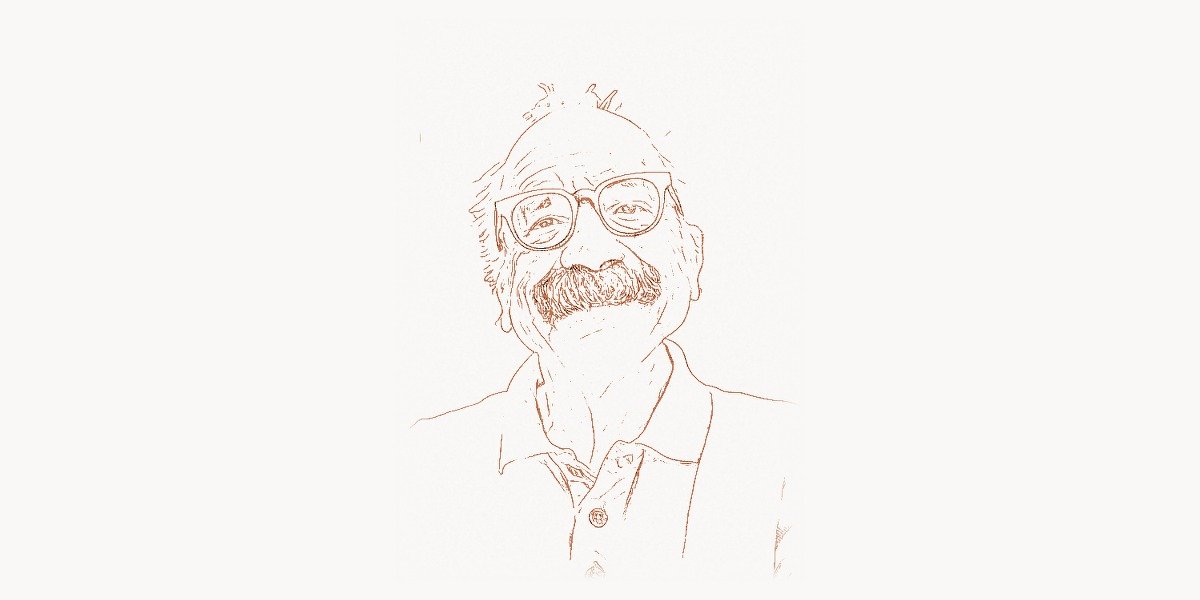
In the early 1980s, a young engineer from Ohio sat in a cramped Silicon Valley workshop, convinced that the future of technology depended not on faster processors or bigger memory chips, but on something far more fundamental — understanding people. David Kelley had no interest in building machines that impressed other engineers. He wanted to build things that made ordinary people smile, that felt intuitive in their hands, that solved problems nobody else had even noticed. That conviction would lead him to create IDEO, the most influential design firm in history, and later the Hasso Plattner Institute of Design at Stanford — better known as the d.school — where he codified a methodology that transformed how organizations worldwide approach innovation. Design thinking, as Kelley championed it, was never about aesthetics. It was about empathy, experimentation, and the radical belief that creativity is not a gift reserved for artists but a muscle anyone can train.
From Ohio Farm Country to Silicon Valley
David Kelley was born on January 12, 1951, in Barberton, Ohio, a small industrial city south of Akron. Growing up in a working-class family, Kelley showed an early aptitude for building things — dismantling household appliances, sketching mechanical contraptions, and spending hours in his father’s workshop. He earned his bachelor’s degree in electrical engineering from Carnegie Mellon University in 1973, then worked briefly at Boeing and the National Cash Register Company. But corporate engineering left him restless. The emphasis on specifications and technical constraints felt disconnected from the people who would actually use the products.
In 1975, Kelley enrolled in Stanford University’s Joint Program in Design, a graduate program that combined engineering with creative problem-solving. There, he studied under Robert McKim, a professor who championed visual thinking and human-centered approaches to engineering challenges. McKim’s philosophy — that designers should observe real people in real contexts before touching a drafting table — resonated deeply with Kelley. It became the intellectual foundation for everything he would build.
After completing his master’s degree, Kelley joined a small design consultancy run by fellow Stanford graduates. By 1978, he had founded his own firm, David Kelley Design, operating out of a modest office above a dress shop in downtown Palo Alto. His early clients included Apple Computer, where Kelley’s team contributed to the design of the first Apple mouse — a project that exemplified his philosophy of making complex technology accessible through thoughtful physical design.
Building IDEO: A New Kind of Design Firm
In 1991, David Kelley Design merged with two other firms — ID Two, founded by Bill Moggridge (designer of the first laptop computer), and Matrix Product Design — to form IDEO. The merger was strategic: Kelley wanted a firm large enough to tackle complex, multidisciplinary challenges but nimble enough to preserve the creative energy of a startup. The name IDEO, derived from the Greek root for “idea,” signaled the firm’s ambitions.
From the beginning, IDEO operated differently from traditional consultancies. There were no corner offices, no rigid hierarchies, no dress codes. The workspace resembled a perpetual science fair — prototypes dangling from ceilings, whiteboards covered in Post-it notes, bicycles and surfboards sharing space with 3D printers. Kelley believed that physical environment shaped creative output, and he designed IDEO’s offices to encourage collision, collaboration, and playful experimentation.
IDEO’s client roster quickly grew to include some of the most recognizable brands in the world. The firm redesigned the shopping cart for ABC’s Nightline in a famous 1999 episode that showcased their design process to millions of viewers. They created the first commercially available squeeze-tube toothpaste container for Procter & Gamble, designed medical devices that reduced patient anxiety, and reimagined classroom furniture to promote active learning. Each project, regardless of industry, followed the same human-centered methodology that Kelley had been developing since his Stanford days.
What made IDEO exceptional was not just the quality of its output but the rigor of its process. While competitors relied on market research reports and focus groups, IDEO designers spent hours shadowing surgeons in operating rooms, riding with truck drivers on cross-country routes, and watching children interact with toys. This ethnographic approach — borrowed from anthropology and adapted for commercial design — produced insights that traditional research methods consistently missed.
The Design Thinking Framework
David Kelley did not invent the term “design thinking” — it had appeared in academic literature since the 1960s. But he did more than anyone else to transform it from an abstract academic concept into a practical, teachable methodology. At its core, design thinking as Kelley defined it is a human-centered approach to innovation that draws from the designer’s toolkit to integrate the needs of people, the possibilities of technology, and the requirements of business success.
The framework is structured around five interconnected phases, each designed to build on the insights generated by the previous stage. The process is intentionally non-linear — teams are encouraged to loop back to earlier phases as new understanding emerges.
// Design Thinking Process — Five Core Phases
// Adapted from Stanford d.school methodology

const designThinkingProcess = {
  phases: [
    {
      name: "Empathize",
      goal: "Understand users through observation and engagement",
      methods: [
        "Contextual inquiry — observe users in their environment",
        "Deep interviews — ask 'why' five times to reach root causes",
        "Body storming — physically act out user scenarios",
        "Empathy maps — chart what users say, think, do, and feel"
      ],
      output: "Rich qualitative data about user needs and pain points"
    },
    {
      name: "Define",
      goal: "Synthesize observations into a clear problem statement",
      methods: [
        "Affinity clustering — group observations by theme",
        "Point-of-view statements — [User] needs [need] because [insight]",
        "How Might We questions — reframe problems as opportunities",
        "Stakeholder mapping — identify all affected parties"
      ],
      output: "Actionable problem statement grounded in user reality"
    },
    {
      name: "Ideate",
      goal: "Generate a broad range of potential solutions",
      methods: [
        "Brainstorming with constraints — quantity over quality",
        "Worst possible idea — invert assumptions to find insights",
        "SCAMPER — Substitute, Combine, Adapt, Modify, Put to other uses",
        "Mind mapping — visual exploration of solution space"
      ],
      output: "Diverse set of candidate solutions ranked by feasibility"
    },
    {
      name: "Prototype",
      goal: "Build quick, low-fidelity representations to test ideas",
      methods: [
        "Paper prototyping — sketch interfaces on index cards",
        "Role playing — act out service interactions",
        "Storyboarding — visualize user journey step by step",
        "Wizard of Oz — simulate functionality behind the scenes"
      ],
      output: "Tangible artifacts that make abstract ideas concrete"
    },
    {
      name: "Test",
      goal: "Gather feedback and refine solutions iteratively",
      methods: [
        "User testing sessions — observe, don't explain",
        "A/B comparison — test variants against each other",
        "Feedback capture grids — likes, wishes, questions, ideas",
        "Iteration planning — prioritize changes by user impact"
      ],
      output: "Validated solution ready for implementation or next iteration"
    }
  ],

  principles: [
    "Show, don't tell — make ideas tangible",
    "Focus on human values — empathy drives innovation",
    "Embrace experimentation — fail early, fail cheaply",
    "Bias toward action — build to think, don't think to build",
    "Radical collaboration — diverse teams outperform experts"
  ]
};
This structured yet flexible approach stood in sharp contrast to the linear, specification-driven product development processes that dominated corporate America. Where traditional methods began with technical requirements and ended with user testing, design thinking inverted the sequence — starting with deep user understanding and allowing technical solutions to emerge from genuine human needs.
The Stanford d.school: Democratizing Creative Confidence
By the early 2000s, Kelley had become convinced that design thinking’s impact was being limited by its association with professional designers. He believed that everyone — engineers, doctors, business leaders, teachers — could benefit from the methodology, but only if it was taught outside the traditional design curriculum. In 2004, with a $35 million gift from SAP co-founder Hasso Plattner, Kelley established the Hasso Plattner Institute of Design at Stanford University, universally known as the d.school.
The d.school was radical by academic standards. It had no degree program, no permanent faculty in the traditional sense, and no fixed curriculum. Instead, it operated as a hub where students from every Stanford department — engineering, medicine, business, law, education, humanities — came together to tackle real-world challenges using design thinking methods. The physical space itself was deliberately designed to be reconfigurable, with movable walls, writable surfaces everywhere, and furniture on wheels that could be rearranged in minutes to suit different collaboration formats.
Kelley’s vision for the d.school was informed by a concept he called “creative confidence” — the idea that creativity is not an innate trait possessed by a fortunate few but a capability that can be systematically developed through practice and supportive environments. This concept echoed the work of psychologist Albert Bandura on self-efficacy, which Kelley admired, and it directly challenged the romantic myth of the lone creative genius that had long dominated Western culture.
The d.school’s influence extended far beyond Stanford’s campus. Its curriculum and teaching methods were adopted by universities around the world, from the Hasso Plattner Institute in Potsdam, Germany, to programs in Tokyo, São Paulo, and Cape Town. Major corporations — including Google, Samsung, Procter & Gamble, and IBM — sent executives through d.school programs or hired its graduates to establish internal innovation labs. The ripple effects reshaped how organizations across industries thought about product development, service design, and strategic planning.
Rapid Prototyping: The Heart of Design Thinking
If empathy is the soul of design thinking, prototyping is its beating heart. Kelley famously insisted that “enlightened trial and error outperforms the planning of flawless intellects” — a principle that placed cheap, fast experimentation at the center of the innovation process. At IDEO and the d.school, prototyping was never about building polished models. It was about making ideas tangible enough to provoke honest reactions from users and to reveal flaws that no amount of abstract thinking could uncover.
The prototyping methodology that Kelley championed has influenced modern software development practices, including agile methodologies and lean startup approaches. The concept of a minimum viable product (MVP), popularized by Eric Ries, owes a direct intellectual debt to IDEO’s rapid prototyping philosophy.
// Rapid Prototyping Framework
// From IDEO's methodology — applied to digital products

class PrototypeManager {
  constructor(projectName) {
    this.project = projectName;
    this.iterations = [];
    this.insights = [];
  }

  createPrototype(config) {
    const prototype = {
      id: `proto-${this.iterations.length + 1}`,
      fidelity: config.fidelity, // "low", "medium", "high"
      type: config.type,
      timeBoxHours: config.timeBoxHours,
      hypothesis: config.hypothesis,
      createdAt: new Date().toISOString(),
      feedback: [],
      status: "active"
    };
    this.iterations.push(prototype);
    return prototype;
  }

  recordFeedback(protoId, session) {
    // Capture structured user feedback
    const entry = {
      participant: session.participantId,
      observed: session.behaviors,    // What user DID (actions)
      expressed: session.quotes,      // What user SAID (verbatim)
      emotions: session.emotionalCues, // Frustration, delight, confusion
      taskSuccess: session.completed,
      timeOnTask: session.durationSeconds,
      severity: this.classifySeverity(session)
    };

    const proto = this.iterations.find(p => p.id === protoId);
    proto.feedback.push(entry);
    return entry;
  }

  synthesize(protoId) {
    const proto = this.iterations.find(p => p.id === protoId);
    const feedback = proto.feedback;

    return {
      prototype: protoId,
      totalSessions: feedback.length,
      successRate: feedback.filter(f => f.taskSuccess).length / feedback.length,
      topPainPoints: this.clusterByTheme(feedback.flatMap(f => f.observed)),
      keyQuotes: feedback.flatMap(f => f.expressed).slice(0, 5),
      recommendation: this.generateNextStep(feedback),
      // Kelley's principle: never ask "do you like it?"
      // Instead measure behavior — what people DO reveals truth
      insightNote: "Behavior over opinion: watch hands, not words"
    };
  }

  classifySeverity(session) {
    if (!session.completed) return "critical";
    if (session.durationSeconds > session.expectedDuration * 2) return "major";
    if (session.emotionalCues.includes("confusion")) return "moderate";
    return "minor";
  }

  clusterByTheme(observations) {
    // Group similar observations using affinity mapping
    const themes = {};
    observations.forEach(obs => {
      const key = obs.category || "uncategorized";
      if (!themes[key]) themes[key] = [];
      themes[key].push(obs.detail);
    });
    return Object.entries(themes)
      .sort((a, b) => b[1].length - a[1].length)
      .map(([theme, items]) => ({ theme, count: items.length, examples: items.slice(0, 3) }));
  }

  generateNextStep(feedback) {
    const successRate = feedback.filter(f => f.taskSuccess).length / feedback.length;
    if (successRate < 0.3) return "PIVOT — fundamental rethink needed";
    if (successRate < 0.6) return "ITERATE — address critical pain points";
    if (successRate < 0.85) return "REFINE — polish interaction details";
    return "SHIP — ready for higher-fidelity development";
  }
}
Kelley's prototyping philosophy carried a deeper message about organizational culture. By making failure cheap and visible, prototyping reduced the psychological stakes of being wrong. Teams that prototyped regularly developed what Kelley called a "bias toward action" — they stopped debating ideas in conference rooms and started building them in workshops. This cultural shift proved as valuable as the methodology itself, particularly in large organizations where fear of failure often paralyzed innovation efforts.
Creative Confidence and the Battle with Cancer
In 2007, David Kelley was diagnosed with throat cancer. The illness forced him to step back from daily operations at IDEO and the d.school, and the treatment — which included surgery and radiation — left lasting effects on his speech and energy. But the experience also deepened his commitment to his work and clarified his sense of purpose. During recovery, Kelley reflected on what he most wanted to contribute and concluded that his greatest legacy would not be any particular product or company but the idea that every person possesses creative potential.
This conviction culminated in the 2013 book Creative Confidence, co-authored with his brother Tom Kelley (who had served as IDEO's general manager for decades). The book argued that the primary barrier to innovation in most organizations was not a lack of ideas or resources but a fear of judgment — what psychologists call evaluation apprehension. Drawing on his decades of experience at IDEO and the d.school, Kelley outlined practical strategies for overcoming creative blocks, building iterative habits, and fostering environments where experimentation was celebrated rather than punished.
The book resonated far beyond the design community. Educators used it to redesign classroom experiences. Healthcare administrators applied its principles to improve patient care. Social entrepreneurs in developing countries adapted design thinking methods to address challenges in sanitation, agriculture, and financial inclusion. Kelley's message — that creativity is a practice, not a personality trait — proved universal in its appeal.
Influence on the Modern Tech Landscape
David Kelley's impact on the technology industry extends far beyond the products IDEO has designed. His intellectual legacy is woven into the fabric of how modern tech companies approach innovation, and his former students and colleagues hold leadership positions across Silicon Valley and beyond.
The human-centered design principles Kelley championed directly influenced the work of Steve Jobs at Apple, who shared Kelley's conviction that technology should serve human needs rather than showcase engineering prowess. Jony Ive, Apple's legendary design chief, was a close collaborator with IDEO and frequently cited Kelley's methodology as foundational to his own practice. At Google, Larry Page embedded design thinking into the company's product development process, hiring dozens of d.school graduates to staff the Google X innovation lab.
Kelley's emphasis on interdisciplinary collaboration also shaped the organizational structures adopted by many modern tech companies. The cross-functional product teams now standard at firms like Spotify, Airbnb, and Stripe — where engineers, designers, and product managers work together from the earliest stages of development — trace their intellectual lineage directly to IDEO's team-based approach.
The concept of user experience (UX) design, now a multi-billion-dollar discipline, owes much of its theoretical foundation to Kelley's work. While Don Norman coined the term and developed its academic framework, Kelley and IDEO demonstrated how to practice it at scale, showing that deep user empathy could be systematized and applied consistently across diverse product categories. Today, platforms like Taskee integrate design thinking principles into project management workflows, enabling teams to maintain user-centered approaches even as projects grow in complexity.
The interactive computing paradigm that Alan Kay envisioned and that Kelley helped realize through tangible product design continues to evolve. Modern design tools and collaborative platforms now make it possible for distributed teams to apply IDEO's prototyping methods remotely, extending Kelley's vision of democratic creativity to a global scale. Agencies like Toimi apply these human-centered design frameworks when developing digital products, demonstrating how Kelley's methodology has become standard practice across the industry.
Philosophy of Innovation
Beyond specific methods and tools, David Kelley contributed a philosophy of innovation that challenged fundamental assumptions about how new ideas come into the world. His core tenets — that diverse teams outperform individual experts, that rapid iteration beats careful planning, that empathy is the most important design skill, and that constraints breed creativity — have become so widely accepted that it is easy to forget how radical they once seemed.
Kelley was also an early advocate for what is now called "design for inclusion" — the practice of deliberately involving marginalized and underserved communities in the design process. IDEO's work with nonprofit organizations and social enterprises, particularly in global health and education, demonstrated that design thinking was not merely a tool for generating consumer products but a powerful methodology for addressing systemic social challenges.
His approach to leadership was equally distinctive. Kelley led by creating conditions for others to do their best work rather than by directing their efforts. He famously told new IDEO employees that his job was not to have the best ideas but to create a culture where the best ideas could emerge from anyone. This philosophy of facilitative leadership influenced a generation of tech executives and startup founders who embraced flat organizational structures and consensus-driven decision-making.
Awards, Recognition, and Continuing Legacy
David Kelley's contributions have been recognized with virtually every major award in design and innovation. He is a member of the National Academy of Engineering, a fellow of the American Academy of Arts and Sciences, and a recipient of the Edison Achievement Award, the Chrysler Design Award, and the Sir Misha Black Medal for Distinguished Contributions to Design Education. In 2000, he received the National Design Award from the Smithsonian's Cooper Hewitt Museum. IDEO has won more Industrial Design Excellence Awards than any other firm in history.
At Stanford, Kelley holds the Donald W. Whittier Professor of Mechanical Engineering chair and continues to teach and mentor students at the d.school. His influence on Stanford's culture extends well beyond his formal roles — the university's emphasis on interdisciplinary collaboration, hands-on learning, and entrepreneurial thinking owes much to the example Kelley set over four decades on campus.
The d.school itself has become a model for design education worldwide. Its alumni have founded hundreds of startups, led design teams at major corporations, and established similar programs at universities across six continents. The fellowship programs Kelley established continue to bring practitioners from diverse fields — medicine, law, public policy, journalism — to Stanford for immersive design thinking experiences that they carry back to their home institutions and organizations.
Perhaps most importantly, Kelley's legacy lives in the millions of people who have been introduced to design thinking through workshops, courses, and books inspired by his work. The methodology he championed has become the default innovation framework at organizations ranging from Fortune 500 companies to rural schools in developing countries, proving that his core insight was correct: creativity is not a rare gift but a fundamental human capacity, waiting to be unlocked.
Frequently Asked Questions
What is David Kelley best known for?
David Kelley is best known for founding IDEO, one of the most influential design and innovation consultancies in the world, and for establishing the Hasso Plattner Institute of Design (d.school) at Stanford University. He is widely credited with popularizing design thinking as a practical methodology for innovation and with advancing the concept of creative confidence — the idea that everyone has the ability to be creative when given the right tools and environment.
How did IDEO change the design industry?
IDEO transformed the design industry by pioneering a human-centered approach that placed deep user empathy at the beginning of every project. Rather than starting with technical specifications or market data, IDEO designers conducted ethnographic research — observing and interviewing real users in their natural environments. The firm also popularized multidisciplinary teams, rapid prototyping, and iterative development, practices that have since become standard across the technology industry and beyond.
What is the Stanford d.school and why is it important?
The Stanford d.school (officially the Hasso Plattner Institute of Design) is an interdisciplinary institute at Stanford University that teaches design thinking to students from all academic backgrounds. Founded by David Kelley in 2004, it is important because it democratized design thinking education, making it accessible to engineers, business students, medical professionals, and educators rather than restricting it to trained designers. The d.school model has been replicated at universities worldwide and has influenced corporate training programs at companies including Google, IBM, and SAP.
What is creative confidence and how does it apply to technology?
Creative confidence, a concept developed by David Kelley and explored in his 2013 book of the same name, is the belief that everyone possesses creative ability and can develop it through practice. In technology, creative confidence encourages engineers and product managers to engage directly in ideation and user research rather than delegating creative work solely to designers. Companies that cultivate creative confidence across their teams — through prototyping sprints, design workshops, and cross-functional collaboration — tend to produce more innovative products because ideas emerge from diverse perspectives rather than a single design department.
How has design thinking influenced modern software development?
Design thinking has profoundly influenced modern software development by placing user needs at the center of the development process. Its emphasis on iterative prototyping and rapid feedback loops directly informed agile development methodologies, lean startup principles, and user experience design practices. Today, most major technology companies begin product development with user research phases derived from design thinking's empathize stage, build minimum viable products that echo IDEO's rapid prototyping philosophy, and conduct continuous user testing throughout the development cycle. The methodology has also shaped how Tim Berners-Lee's original vision of an accessible, user-friendly web continues to evolve through modern interface design.