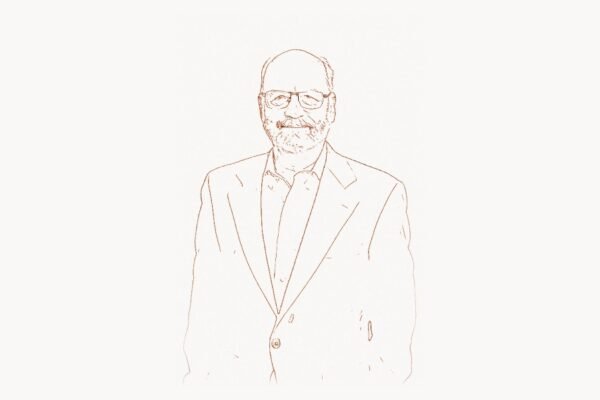
In the late 1990s, rumors of a secret invention codenamed “Ginger” spread through Silicon Valley like wildfire. Steve Jobs reportedly said it would be bigger than the personal computer. Jeff Bezos flew to New Hampshire just to see a prototype. John Doerr, the legendary venture capitalist, predicted it would be more significant than the Internet. When the Segway was finally unveiled in December 2001, many felt the hype machine had overdelivered. But to dismiss Dean Kamen as “the Segway guy” is to fundamentally misunderstand one of America’s most prolific inventors — a man whose medical devices have saved hundreds of thousands of lives, whose water purification system could transform the developing world, and whose robotics competition has inspired millions of young people to pursue careers in science and engineering.
Early Life and the Invention Bug
Dean Lawrence Kamen was born on April 5, 1951, in Rockville Centre, New York, into a household that valued both art and science. His father, Jack Kamen, was an illustrator for EC Comics, known for his work on titles like Tales from the Crypt and Weird Science. His mother was a teacher. From an early age, Dean showed a restless curiosity about how things worked — he would take apart household appliances and, with varying degrees of success, attempt to put them back together.
By his teenage years, Kamen’s tinkering had become something more focused. While still a high school student on Long Island, he began designing automated lighting and sound systems for New York City’s Hayden Planetarium and several local museums. These were not toy projects — the systems earned him enough money to pay for college. He enrolled at Worcester Polytechnic Institute (WPI) in Massachusetts, but never completed his degree. Like many inventors before him, including Steve Wozniak, Kamen found that the constraints of formal education couldn’t keep pace with the speed of his ideas.
What pulled him away from school was not a startup pitch or a Silicon Valley opportunity. It was a conversation with his older brother Barton, who was completing medical school. Barton described the tedious, imprecise process of delivering medication to patients intravenously — the constant manual adjustments, the risk of human error. Dean saw a problem that engineering could solve, and at the age of 19, he built his first major invention: the first portable infusion pump.
Career and Revolutionary Medical Devices
Technical Innovation: The AutoSyringe and Beyond
Kamen’s portable infusion pump, commercialized through his company AutoSyringe, was a genuinely transformative device. Before its invention, patients requiring continuous medication — including insulin for diabetics and chemotherapy drugs for cancer patients — were effectively tethered to hospital IV stands. Kamen’s pump was small enough to be worn on the body, precisely controlled enough to deliver exact dosages, and reliable enough for unsupervised home use.
The core engineering challenge was miniaturization combined with precision. The pump needed to deliver fluid at rates as low as 0.1 milliliters per hour with less than 5% variance — all while running on batteries small enough to be portable. Kamen’s solution used a stepper motor driving a lead screw mechanism that advanced a syringe plunger at programmable intervals. The control circuit, designed in the late 1970s, was remarkably elegant for its era:
// Conceptual model: stepper motor control for infusion pump
// Demonstrates the precise timing logic Kamen pioneered

#define STEPS_PER_ML     200    // stepper motor resolution
#define MIN_RATE_UL_HR   100    // 0.1 mL/hr minimum
#define MAX_RATE_ML_HR   999    // 999 mL/hr maximum

typedef struct {
    uint16_t rate_ul_per_hr;    // delivery rate in microliters/hr
    uint32_t step_interval_ms;  // milliseconds between motor steps
    uint8_t  occlusion_thresh;  // pressure sensor threshold
    bool     bolus_mode;        // rapid delivery flag
} InfusionConfig;

uint32_t calculate_step_interval(uint16_t rate_ul_hr) {
    // Convert desired flow rate to motor step timing
    // Each step delivers (1000 / STEPS_PER_ML) microliters = 5 uL
    // Steps per hour = rate_ul_hr / 5
    // Interval (ms) = 3600000 / steps_per_hour
    uint32_t steps_per_hour = rate_ul_hr / (1000 / STEPS_PER_ML);
    return 3600000UL / steps_per_hour;
}

void monitor_delivery(InfusionConfig *cfg) {
    uint8_t pressure = read_pressure_sensor();
    if (pressure > cfg->occlusion_thresh) {
        trigger_alarm(ALARM_OCCLUSION);
        halt_motor();
    }
}
Baxter International eventually acquired AutoSyringe, but Kamen had already moved on. In 1982, he founded DEKA Research and Development Corporation (an acronym of his name, DEan KAmen) in Manchester, New Hampshire. DEKA became the engine for nearly all of his subsequent inventions, a private R&D lab staffed with engineers who shared Kamen’s obsession with solving problems that others considered too difficult or too unprofitable.
At DEKA, Kamen developed the HomeChoice peritoneal dialysis machine for Baxter, which allowed kidney disease patients to perform dialysis at home while sleeping — freeing them from the grueling schedule of hospital visits. He also created the first insulin pump small enough for everyday use, a device that has fundamentally changed life for millions of Type 1 diabetics worldwide. The principle of designing medical technology around the patient’s life, rather than forcing the patient to organize their life around the technology, became a hallmark of Kamen’s approach — a philosophy that echoes Don Norman’s principles of human-centered design.
Why It Mattered: Freeing Patients from Institutions
The impact of Kamen’s medical devices cannot be overstated. Before portable infusion pumps, a diabetic patient requiring continuous insulin delivery had to remain in or near a hospital. Chemotherapy patients faced the same constraint. Kamen’s technology didn’t just improve convenience — it fundamentally altered the relationship between patients and the medical system, shifting the locus of care from institution to individual.
By the early 2000s, derivatives of Kamen’s original pump designs were being used by over 300,000 patients daily in the United States alone. The economic impact was equally significant: home-based dialysis using Kamen’s technology costs roughly 40% less than in-center hemodialysis, while producing equivalent or better clinical outcomes. This represented a paradigm shift in healthcare engineering — proving that sophisticated medical technology could be made robust enough, simple enough, and affordable enough for home use.
This human-first engineering approach mirrors what we see in the best technology project management today.
Other Contributions
The iBot: A Wheelchair That Climbs Stairs
In the early 1990s, Kamen watched a young man in a wheelchair struggle to navigate a curb. The scene haunted him. Over the next several years, DEKA developed the iBot — a powered wheelchair that could climb stairs, traverse sand and gravel, raise the user to eye level with standing people, and balance on two wheels using gyroscope-based dynamic stabilization technology.
The iBot was, in many ways, more technically impressive than the Segway (which was derived from the same balancing technology). It used a cluster of six wheels arranged in pairs that could rotate around each other, combined with a suite of gyroscopes and accelerometers that continuously adjusted the chair’s center of gravity. The user could ascend a standard staircase, navigate curbs, and raise themselves to a six-foot standing height — all while maintaining stability. The technology represented a fusion of mechanical engineering, control systems, and embedded computing that was years ahead of its time, reminiscent of the advanced engineering that Federico Faggin brought to microprocessor design.
Johnson & Johnson partnered with DEKA to manufacture the iBot under its Independence Technology subsidiary, but the chair’s $25,000 price tag and limited insurance coverage led to disappointing sales. Production was discontinued in 2009. However, in 2016, Toyota licensed the technology and partnered with DEKA to develop a next-generation version, and the iBot was relaunched in 2019 at a lower price point.
The Segway: A Bold Idea Ahead of Its Time
The Segway Personal Transporter, unveiled in December 2001, was directly descended from the iBot’s balancing technology. Kamen envisioned it as a revolution in urban transportation — a device that would make cars unnecessary for short trips and fundamentally redesign how cities were built. The technology itself was remarkable: five gyroscopes, two tilt sensors, and a pair of computers processing data 100 times per second to keep the rider upright.
The Segway’s commercial failure is well-documented, but the narrative is more nuanced than “overhyped product flops.” The real obstacles were regulatory (cities didn’t know how to classify it — sidewalk vehicle? road vehicle?), cultural (riders looked awkward), and economic ($5,000 was too expensive for casual adoption). What is often overlooked is that the underlying technology was genuinely revolutionary. The self-balancing platform spawned an entire industry of personal electric vehicles — from hoverboards to electric scooters — that now represent a multi-billion dollar market. The Segway was less a failure than a premature arrival.
Slingshot: Purifying Water Anywhere
Perhaps Kamen’s most ambitious project is the Slingshot water purifier, a vapor compression distillation system the size of a small refrigerator that can turn virtually any water source — including ocean water, river water contaminated with sewage, or chemical runoff — into clean drinking water. The machine requires no filters (which need replacement), no chemical treatment, and can produce approximately 250 gallons of clean water per day using the same amount of electricity as a hair dryer.
The name references the biblical story of David and Goliath — a small, elegant solution to a massive global problem. Kamen partnered with Coca-Cola in 2012 to distribute Slingshot units across Africa, Latin America, and Southeast Asia. The engineering is elegant: contaminated water is heated to vapor, and the vapor is then condensed into pure water. The system’s key innovation is a counter-flow heat exchanger that recaptures nearly all of the energy used in the distillation process, making it dramatically more efficient than conventional distillation.
FIRST Robotics: Inspiring the Next Generation
Ask Dean Kamen what he considers his most important contribution, and he won’t mention the Segway, the insulin pump, or the iBot. He’ll point to FIRST — For Inspiration and Recognition of Science and Technology — the robotics competition he founded in 1989.
FIRST began with 28 teams in a New Hampshire high school gymnasium. By 2024, it had grown to include over 670,000 students on more than 60,000 teams across nearly 100 countries. The program operates at multiple levels: FIRST LEGO League for younger students, FIRST Tech Challenge for intermediate students, and FIRST Robotics Competition (FRC) for high schoolers, where teams of students build 120-pound robots in six weeks to compete in complex challenges.
The organizational complexity of running a FIRST team — managing budgets, deadlines, specialized sub-teams, sponsor relationships, and technical deliverables — mirrors the challenges of professional software development.
Kamen’s thesis was that American culture celebrates athletes and entertainers but ignores scientists and engineers. FIRST was designed to make technology “cool” — to give young engineers the same recognition and excitement that varsity athletes receive. The impact has been measurable: FIRST alumni are significantly more likely to pursue STEM careers, major in engineering or computer science, and earn STEM-related degrees. They are, in Kamen’s words, creating a culture where the inventors and problem-solvers are the heroes — a mission that resonates with the spirit of pioneers like Douglas Engelbart, who believed technology’s purpose was to augment human capability.
Philosophy and Approach to Innovation
Kamen’s approach to invention is distinctive in an era of software startups and minimum viable products. He builds physical things that solve physical problems, and he works on timescales measured in years, not sprint cycles. His worldview is shaped by an engineer’s conviction that most problems are solvable if you have the right tools, the right team, and enough stubbornness to ignore people who say it can’t be done.
His engineering methodology can be summarized through the control loop that governs much of DEKA’s work:
# Dean Kamen's iterative invention process
# modeled as an engineering control loop

class InventionProcess:
    def __init__(self, problem):
        self.problem = problem
        self.constraints = self.identify_real_constraints()
        self.prototype_count = 0
        self.solved = False

    def identify_real_constraints(self):
        """Separate physics constraints from assumed limitations.
        Most 'impossible' problems are only limited by convention."""
        physics_limits = analyze_fundamental_laws(self.problem)
        assumed_limits = gather_conventional_wisdom(self.problem)
        return {
            'real': physics_limits,
            'imagined': assumed_limits  # these can be broken
        }

    def iterate(self):
        while not self.solved:
            self.prototype_count += 1
            prototype = build_and_test(
                self.problem,
                ignore=self.constraints['imagined']
            )
            feedback = measure_against_real_world(prototype)

            if feedback.meets_requirements:
                self.solved = True
            else:
                self.refine_understanding(feedback)

    def refine_understanding(self, feedback):
        """Every failed prototype teaches something.
        The question is never 'did it work?' but
        'what did we learn?'"""
        self.constraints = update_model(
            self.constraints,
            feedback.new_observations
        )
Key Principles
- Physics is the only real constraint. Regulations, market assumptions, and conventional wisdom are human constructs that can be changed. The laws of thermodynamics cannot. Kamen starts every project by asking what physics permits, not what the market expects.
- Build for the hardest case first. The iBot was designed for stair climbing — arguably the hardest mobility challenge. The Segway fell out of that effort as a simpler application of the same technology. Hard problems generate more useful intellectual property than easy ones.
- Make scientists into heroes. The FIRST program is not charity work — it is Kamen’s strategic bet that cultural change can produce more engineers, which in turn produces more solutions to the problems he cares about.
- Prototype relentlessly. DEKA’s workshop in Manchester runs around the clock. Kamen has said that every idea gets built, tested, and broken as fast as possible. Analysis without physical testing is speculation.
- Solve for the patient, not the hospital. Kamen’s medical devices all share a common design philosophy: move care from institutions to individuals. The technology must adapt to the human, not the reverse.
- Ignore the market timing question. The Segway was “too early.” The Slingshot may still be too early. Kamen has stated repeatedly that he doesn’t ask whether the world is ready for an invention — he asks whether the invention is necessary.
This bias toward action and iteration has parallels in computing history. Grace Hopper’s famous dictum — “It’s easier to ask forgiveness than it is to get permission” — captures the same spirit of building first and explaining later that drives Kamen’s work.
Legacy and Ongoing Impact
Dean Kamen holds over 1,000 patents. He has received the National Medal of Technology and Innovation from President Clinton, been inducted into the National Inventors Hall of Fame, and received the Lemelson-MIT Prize — one of the most prestigious awards in American invention. He is a member of the National Academy of Engineering and has received honorary degrees from dozens of universities, including the one he never graduated from.
Yet his most significant legacy may not be any single device. It is the demonstration, repeated across four decades, that independent invention labs can tackle problems traditionally reserved for governments and large corporations. DEKA operates with roughly 400 employees — a fraction of the size of a major pharmaceutical or defense contractor — yet has produced innovations in medical devices, mobility, water purification, energy, and prosthetics (including the LUKE Arm, an advanced prosthetic developed for DARPA that was cleared by the FDA in 2014).
Kamen’s influence extends into communities that might not immediately recognize his name. The self-balancing technology from the Segway and iBot laid the groundwork for modern personal electric vehicles. His medical devices established the template for home-based chronic disease management that is now a multi-billion dollar industry. And FIRST has created an alumni network of over 2 million young people who experienced hands-on engineering before they could vote — a pipeline of talent that feeds into every major technology company and research institution in the country.
He lives on a private island in Long Island Sound (North Dumpling Island, which he jokingly “seceded” from the United States) and commutes to DEKA’s Manchester headquarters by helicopter — one he is licensed to fly himself. He has never married, has no children, and has stated that DEKA and FIRST are his legacy. He still works on problems that most people would consider unsolvable, including a Stirling engine-based power generator designed to work with the Slingshot water purifier to provide both clean water and electricity to off-grid communities.
In an age when “innovation” often means a new social media feature or a slightly better recommendation algorithm, Kamen represents a fundamentally different vision of what technology is for. Like Vint Cerf with the Internet or Ray Kurzweil with artificial intelligence, Kamen has spent his career working on technologies whose full impact may not be visible for decades. His bet is that clean water, accessible healthcare, and a new generation of engineers matter more than market timing or quarterly earnings. It’s a bet that history is likely to vindicate.
Key Facts
- Full name: Dean Lawrence Kamen
- Born: April 5, 1951, Rockville Centre, New York
- Education: Attended Worcester Polytechnic Institute (did not graduate); holds multiple honorary doctorates
- Company: DEKA Research and Development Corporation (founded 1982)
- Key inventions: Portable infusion pump, insulin pump, HomeChoice dialysis machine, iBot wheelchair, Segway, Slingshot water purifier, LUKE Arm prosthetic
- Patents: Over 1,000 U.S. and international patents
- Awards: National Medal of Technology and Innovation (2000), Lemelson-MIT Prize, National Inventors Hall of Fame inductee
- FIRST Robotics: Founded 1989; reaches 670,000+ students across nearly 100 countries
- Notable trait: Almost always seen wearing denim — his unofficial uniform since the 1980s
- Residence: North Dumpling Island, Long Island Sound, Connecticut
Frequently Asked Questions
What is Dean Kamen most famous for?
While Kamen is most widely recognized as the inventor of the Segway personal transporter, his most impactful inventions are in medical technology. His portable infusion pump, developed when he was just 19 years old, revolutionized drug delivery for patients requiring continuous medication. He also developed the first wearable insulin pump for diabetics and the HomeChoice peritoneal dialysis machine. Additionally, he founded FIRST Robotics in 1989, a global program that has engaged over 2 million students in science and engineering competitions.
How does the Slingshot water purifier work?
The Slingshot uses vapor compression distillation to purify water from virtually any source, including saltwater, sewage-contaminated water, and chemical runoff. Contaminated water is heated until it vaporizes, leaving behind contaminants, bacteria, and dissolved solids. The vapor is then condensed into clean drinking water. The system’s key breakthrough is a counter-flow heat exchanger that recovers most of the thermal energy used in the process, making it efficient enough to run on roughly the same power as a household hair dryer while producing about 250 gallons of clean water per day. Unlike filter-based systems, the Slingshot requires no consumable parts, making it ideal for deployment in remote or resource-limited areas.
What is FIRST Robotics and why did Kamen create it?
FIRST (For Inspiration and Recognition of Science and Technology) is a global youth robotics organization founded by Kamen in 1989. It operates competitions at multiple levels, from FIRST LEGO League for elementary-age children to the FIRST Robotics Competition (FRC), where high school teams build and program robots to compete in annual engineering challenges. Kamen created FIRST because he believed American culture disproportionately celebrated athletes and entertainers while ignoring scientists and engineers. He wanted to create an experience where young people could experience the thrill of engineering problem-solving with the same community enthusiasm found in varsity sports. Studies have shown that FIRST alumni are significantly more likely to pursue STEM degrees and careers than their peers — a metric Seymour Cray, who lamented the decline of American engineering ambition, would have appreciated.
Did the Segway fail as a product?
The Segway underperformed relative to the extraordinary expectations set before its launch — predictions that it would reshape cities and replace cars for short-distance travel. Commercially, it sold roughly 140,000 units in its first seven years, far below projections of 50,000 to 100,000 units in the first year alone. However, calling it a pure failure overlooks its lasting technical impact. The self-balancing platform technology pioneered by the Segway and the iBot wheelchair directly influenced the development of modern electric scooters, hoverboards, and personal mobility devices — an industry now worth billions of dollars. The Segway brand was acquired by Ninebot (a Xiaomi-backed company) in 2015 and continues to produce electric transportation devices based on Kamen’s original balancing technology. The original Segway PT was discontinued in 2020.