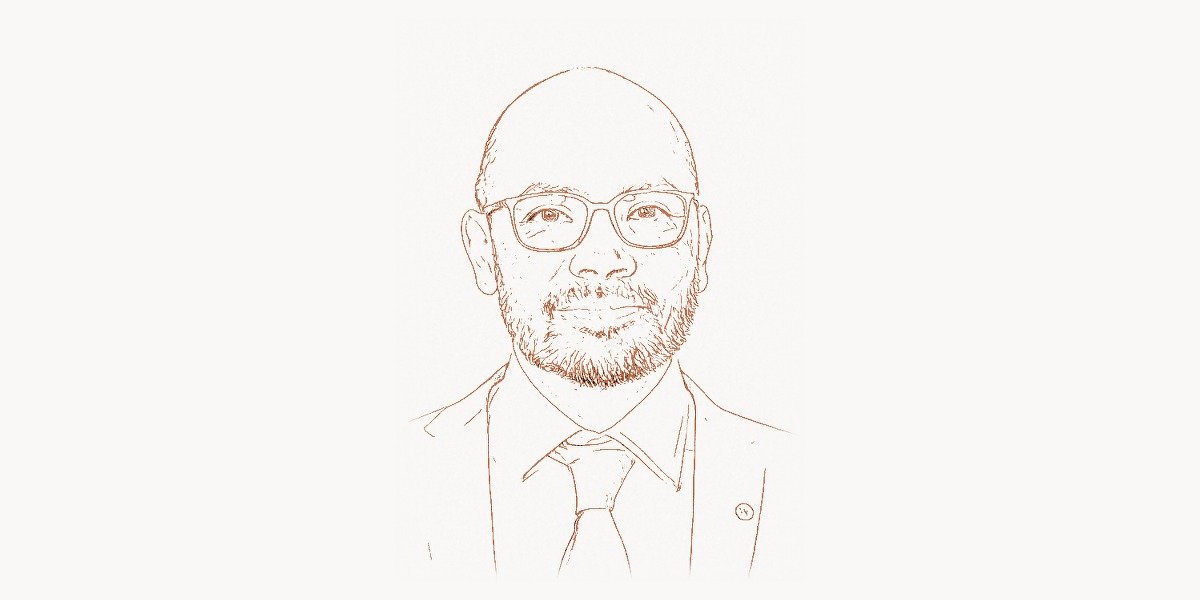
In November 2024, Demis Hassabis stood in Stockholm to receive the Nobel Prize in Chemistry. He was not a chemist. He was an artificial intelligence researcher who had built a system called AlphaFold that solved one of biology’s oldest and most consequential problems: predicting the three-dimensional structure of proteins from their amino acid sequences. The problem had resisted fifty years of sustained scientific effort. Thousands of researchers in hundreds of labs around the world had worked on it since Christian Anfinsen first demonstrated in the 1960s that a protein’s sequence determines its structure. Progress was incremental and painfully slow. A single protein structure could take a graduate student an entire Ph.D. to determine experimentally. Then AlphaFold arrived and predicted the structures of virtually every known protein — over 200 million of them — with accuracy that matched experimental methods. It was the kind of result that redefines what people think is possible. And it came from a company, DeepMind, that Hassabis had founded with the improbable mission of solving intelligence and then using it to solve everything else.
Early Life and Education
Demis Hassabis was born on July 27, 1976, in north London, to a Greek-Cypriot father and a Singaporean-Chinese mother. He showed extraordinary intellectual aptitude from an early age. At the age of four, he taught himself to play chess by watching his father and uncle play. By thirteen, he had achieved the rank of master, making him the second-highest-rated player in the world for his age at the time. His chess career was not just a childhood hobby — it was an early demonstration of the pattern recognition abilities and competitive drive that would define his later work in artificial intelligence.
But Hassabis was not content to be defined by a single domain. At seventeen, he joined the legendary game studio Bullfrog Productions, co-founded by Peter Molyneux, where he served as lead programmer and co-designer on Theme Park, a business simulation game that sold millions of copies and won a Golden Joystick Award. He was still a teenager working alongside experienced game developers, designing systems that simulated complex emergent behavior — visitors moving through parks, making purchasing decisions, responding to dynamic pricing and ride quality. Game design, it would turn out, was not a detour from his scientific ambitions but an early training ground for thinking about complex systems, reward functions, and agent behavior.
After his early success in the gaming industry, Hassabis pursued a double first in computer science at Queens’ College, Cambridge. The degree was a formality in some respects — he was already an accomplished programmer and systems thinker — but Cambridge gave him access to the theoretical foundations of computation and mathematics that would prove essential for his later work. After graduating, he returned to the games industry and founded Elixir Studios, which developed the AI-driven strategy games Republic: The Revolution and Evil Genius. The company was ambitious but commercially unsuccessful, and Hassabis shut it down in 2005. The experience taught him hard lessons about the gap between technical ambition and market viability — lessons that would inform how he later structured DeepMind.
It was at this point that Hassabis made a pivotal decision. Rather than continuing in the games industry, he went back to academia to study neuroscience. He earned his Ph.D. from University College London (UCL) in 2009, working in the field of cognitive neuroscience under Eleanor Maguire. His doctoral research produced several high-profile papers, including a 2007 study published in Science demonstrating that patients with hippocampal damage who could not form new memories also could not imagine new experiences. This finding — that memory and imagination share neural substrates — was recognized by Science magazine as one of the top ten breakthroughs of the year. The research gave Hassabis deep insight into how biological intelligence works, particularly the mechanisms of memory, planning, and mental simulation that would later influence the design of DeepMind’s AI systems.
The DeepMind Story
In 2010, Hassabis co-founded DeepMind Technologies in London with Shane Legg and Mustafa Suleiman. The company’s mission statement was audacious: “Solve intelligence, and then use that to solve everything else.” At a time when most AI startups were focused on narrow, commercially viable applications — better recommendation engines, improved ad targeting, smarter spam filters — DeepMind declared that it was pursuing artificial general intelligence (AGI). The company attracted early investment from Peter Thiel and Elon Musk, among others, and assembled a research team that combined expertise in machine learning, neuroscience, and engineering.
Google acquired DeepMind in January 2014 for approximately 500 million dollars. The acquisition gave DeepMind access to Google’s vast computational resources while, critically, Hassabis negotiated significant research independence. DeepMind would operate as a semi-autonomous unit within Google (later Alphabet), maintaining its focus on fundamental AI research rather than being folded into the company’s product divisions. This structural independence was essential to the breakthroughs that followed — it meant DeepMind could pursue high-risk, high-reward research programs that might not produce commercial returns for years.
The AlphaGo Breakthrough
Technical Innovation
The first result that brought DeepMind to global attention was AlphaGo. The game of Go had long been considered a grand challenge for artificial intelligence. Unlike chess, which IBM’s Deep Blue had conquered in 1997 through brute-force search, Go has approximately 10^170 possible board positions — more than the number of atoms in the observable universe. Traditional game-tree search was computationally infeasible. Expert systems that encoded human Go knowledge performed poorly. Most AI researchers believed that a computer program capable of defeating a professional Go player was decades away.
AlphaGo combined deep neural networks with Monte Carlo tree search (MCTS) in a novel architecture. Two neural networks worked in tandem: a “policy network” that predicted the most promising moves to explore (dramatically pruning the search space), and a “value network” that evaluated board positions to estimate which player was likely to win. Both networks were initially trained on a dataset of 30 million moves from expert human games, and then improved further through reinforcement learning — playing millions of games against itself and learning from the outcomes.
"""
Simplified Monte Carlo Tree Search with neural network guidance,
illustrating the core algorithm behind AlphaGo and AlphaZero.
The neural network replaces random rollouts with learned evaluation.
"""
import math
import random

class MCTSNode:
    """
    Each node in the search tree represents a board state.
    AlphaGo's key insight: use a neural network to evaluate
    positions (value head) and suggest moves (policy head),
    replacing the random simulations of traditional MCTS.
    """
    def __init__(self, state, parent=None, prior_prob=0.0):
        self.state = state
        self.parent = parent
        self.children = {}
        self.visit_count = 0
        self.total_value = 0.0
        self.prior_prob = prior_prob  # From policy network

    def ucb_score(self, exploration_weight=1.4):
        """
        Upper Confidence Bound for Trees (UCT).
        Balances exploitation (high win rate) with exploration
        (under-visited moves with high prior probability).
        """
        if self.visit_count == 0:
            return float('inf')
        avg_value = self.total_value / self.visit_count
        # Exploration bonus weighted by the policy network's prior
        exploration = exploration_weight * self.prior_prob * \
            math.sqrt(self.parent.visit_count) / (1 + self.visit_count)
        return avg_value + exploration

    def select_child(self):
        """Select the child with the highest UCB score."""
        return max(self.children.values(), key=lambda c: c.ucb_score())

    def expand(self, policy_network_output):
        """
        Expand node using the policy network's move probabilities.
        Instead of considering all legal moves equally, AlphaGo
        focuses search on moves the policy network deems promising.
        """
        for move, prob in policy_network_output.items():
            if move not in self.children:
                new_state = self.state.apply_move(move)
                self.children[move] = MCTSNode(
                    state=new_state,
                    parent=self,
                    prior_prob=prob
                )

    def backpropagate(self, value):
        """
        Propagate the value network's evaluation back up the tree.
        This replaces random rollouts to end-of-game — a critical
        improvement that made Go tractable for neural network search.
        """
        self.visit_count += 1
        self.total_value += value
        if self.parent:
            # Negate value: opponent's loss is our gain
            self.parent.backpropagate(-value)


def mcts_search(root, policy_network, value_network, num_simulations=800):
    """
    Run MCTS guided by neural networks.
    AlphaGo used 1600 simulations per move in competition;
    AlphaZero uses the same framework but learns entirely
    from self-play without any human game data.
    """
    for _ in range(num_simulations):
        node = root
        # Selection: traverse tree using UCB scores
        while node.children:
            node = node.select_child()

        # Expansion: use policy network to suggest moves
        if not node.state.is_terminal():
            policy_output = policy_network.predict(node.state)
            node.expand(policy_output)

            # Evaluation: use value network instead of random rollout
            value = value_network.predict(node.state)
        else:
            value = node.state.get_outcome()

        # Backpropagation: update all ancestors
        node.backpropagate(value)

    # Select the most visited move (most robust choice)
    best_move = max(root.children.items(),
                    key=lambda item: item[1].visit_count)
    return best_move[0]
In October 2015, AlphaGo defeated Fan Hui, the European Go champion, 5-0 in a closed match. The result was published in Nature in January 2016 and stunned the AI community. But the defining moment came in March 2016, when AlphaGo faced Lee Sedol, one of the greatest Go players in history, in a five-game match broadcast live to over 200 million viewers worldwide. AlphaGo won 4-1. Move 37 of Game 2 became legendary: AlphaGo placed a stone on a position that no human expert would have considered, a move that violated centuries of accumulated Go wisdom. Commentators initially thought it was a mistake. Fifteen moves later, it became clear that AlphaGo had found a strategy that humans had never discovered in thousands of years of play.
Why It Mattered
The AlphaGo result mattered far beyond the game of Go. It demonstrated that deep reinforcement learning — the combination of deep neural networks with reinforcement learning algorithms — could master domains of extraordinary complexity. Go was considered a benchmark for intuitive, creative reasoning, not just raw calculation. The fact that an AI system could not only match but exceed the best human players suggested that machine learning had crossed a critical threshold. The techniques developed for AlphaGo — combining learned evaluation with guided search — have since been applied to problems ranging from chip design to mathematical theorem proving.
The cultural impact was equally significant. In South Korea and across East Asia, where Go holds a status comparable to chess in the West, the match was front-page news for weeks. It catalyzed massive government and private investment in AI research across the region. Lee Sedol retired from professional Go in 2019, saying that AI could not be defeated. The AlphaGo match became a landmark moment in the public understanding of artificial intelligence — a point at which the abstract concept of “machine intelligence” became viscerally real to hundreds of millions of people. The event paralleled, in many ways, the moment when Alan Turing first posed the question of whether machines could think, except that now the answer was being demonstrated in real time.
Other Major Contributions
AlphaZero. In December 2017, DeepMind published AlphaZero, a generalization of the AlphaGo approach that learned to play chess, shogi (Japanese chess), and Go at superhuman levels — starting from nothing more than the rules of each game. Unlike AlphaGo, which was initially trained on human expert games, AlphaZero learned entirely through self-play reinforcement learning. Given only the rules of chess, AlphaZero played 44 million games against itself over nine hours of training and achieved a level of play that exceeded the strongest existing chess engines, including Stockfish. Its playing style was described by chess grandmasters as alien and beautiful — it developed strategies that humans had never conceived, such as willingly sacrificing material for long-term positional advantages in ways that contradicted established chess theory. AlphaZero demonstrated that general reinforcement learning algorithms could discover domain-specific knowledge that surpassed millennia of accumulated human expertise.
AlphaFold and AlphaFold 2. The protein folding problem — predicting a protein’s three-dimensional structure from its amino acid sequence — had been an open challenge in biology since the 1960s. The problem is staggeringly complex: a typical protein consists of hundreds of amino acids, and the number of possible configurations is astronomically large. Experimental methods for determining protein structures (X-ray crystallography, cryo-electron microscopy, NMR spectroscopy) are slow, expensive, and technically demanding. A single structure determination can take months or years of laboratory work.
AlphaFold, introduced in 2018, applied deep learning to this problem and placed first in the 13th Critical Assessment of Protein Structure Prediction (CASP13) competition. But it was AlphaFold 2, presented at CASP14 in November 2020, that represented a true paradigm shift. The system achieved a median Global Distance Test (GDT) score of 92.4 out of 100 — a level of accuracy comparable to experimental methods. The scientific community was astonished. John Moult, the CASP organizer, called it a transformational development. AlphaFold 2’s architecture used a novel attention-based mechanism called the Evoformer, which operated on representations of both the protein sequence and its evolutionary relationships, iteratively refining its prediction of the 3D structure through a process analogous to the way deep neural networks learn hierarchical representations of data.
In July 2021, DeepMind released the AlphaFold Protein Structure Database in partnership with the European Bioinformatics Institute (EMBL-EBI), initially containing over 350,000 predicted structures. By 2022, this was expanded to over 200 million structures — covering nearly every known protein. The database was made freely available, representing one of the most significant contributions to open science in the 21st century. Researchers worldwide now use AlphaFold predictions to accelerate drug discovery, understand disease mechanisms, design enzymes for industrial applications, and investigate fundamental questions in biology. The 2024 Nobel Prize in Chemistry, awarded to Hassabis and John Jumper for the development of AlphaFold, recognized both the scientific achievement and its transformative impact on biology and medicine.
Gemini. Following the restructuring of Google’s AI efforts, Hassabis was appointed CEO of Google DeepMind in April 2023, merging DeepMind with Google Brain. Under his leadership, the combined organization developed Gemini, Google’s family of multimodal large language models designed to compete with OpenAI’s GPT-4 and other frontier models. Gemini represents a different phase in Hassabis’s career — the transition from pure research to building AI products at massive scale. The model integrates capabilities in language, vision, audio, and code generation, reflecting Hassabis’s long-standing belief that general intelligence requires the ability to process and reason across multiple modalities simultaneously. This vision places him alongside figures like Sam Altman in shaping the trajectory of frontier AI development, though with a distinctly more research-driven approach. Teams building applications on top of these multimodal AI platforms increasingly rely on structured project management workflows to coordinate the complex integration of language, vision, and code generation capabilities.
Philosophy and Approach
Key Principles
Hassabis’s approach to AI is distinguished by several principles that set him apart from many of his peers in the field. The first and most fundamental is the conviction that neuroscience and AI should inform each other. His doctoral work on the hippocampus and imagination directly influenced the design of DeepMind’s systems. The concept of experience replay — storing and re-using past experiences to improve learning — which was a critical component of DeepMind’s early Atari-playing agents, was inspired by the role of the hippocampus in consolidating memories during sleep. While many AI researchers treat neural networks as purely mathematical objects, Hassabis has consistently argued that understanding how biological brains solve problems can reveal algorithmic insights that would be difficult to discover through purely computational approaches.
The second principle is a commitment to generality over specialization. From the beginning, Hassabis has pursued systems that can learn to solve a wide range of problems rather than being engineered for a single task. AlphaZero’s ability to master chess, shogi, and Go with the same algorithm — learning only from the rules and self-play — exemplifies this philosophy. The progression from game-playing systems to protein structure prediction demonstrates that general learning algorithms can be transferred to domains far removed from their original application. This stands in contrast to the approach taken by many AI companies, which focus on building narrow systems optimized for specific commercial applications.
The third principle is what Hassabis calls “solving intelligence as a scientific problem.” He views AI not primarily as an engineering discipline but as a scientific endeavor aimed at understanding the nature of intelligence itself. This perspective shapes both the kinds of problems DeepMind pursues and the way it publishes its results. DeepMind has published hundreds of papers in top scientific journals, including Nature and Science, treating its work as contributions to fundamental knowledge rather than proprietary trade secrets. The AlphaFold database’s release as open science is the clearest expression of this philosophy — a commercially valuable asset made freely available because the scientific mission took priority.
The fourth principle concerns the responsible development of increasingly powerful AI systems. Hassabis has consistently advocated for safety research and cautious deployment of advanced AI. DeepMind established one of the first dedicated AI safety research teams in the industry, and Hassabis has spoken publicly about the importance of developing AI systems that are aligned with human values. While his rhetoric on AI risk has been more measured than some of the more extreme voices in the debate, he has been clear that the development of AGI requires careful thought about governance, control, and societal impact. Building AI products that serve real business needs while adhering to responsible development practices is a challenge that modern web development agencies face daily as they integrate AI-powered features into client projects.
Legacy and Impact
Demis Hassabis occupies a unique position in the history of artificial intelligence. He is simultaneously a researcher who has produced landmark scientific results, a company builder who has created one of the world’s most influential AI laboratories, and a public intellectual who has shaped the conversation about AI’s future. Few figures in the field have combined these roles as effectively.
His scientific legacy centers on three demonstrations that redefined what AI could achieve. AlphaGo showed that reinforcement learning combined with deep neural networks could master domains requiring intuitive, creative reasoning. AlphaZero showed that a single general algorithm could surpass all prior human and machine knowledge in multiple domains simultaneously. AlphaFold showed that AI could solve fundamental scientific problems that had resisted decades of traditional approaches. Each result, in its own way, expanded the boundary of what was considered possible.
The AlphaFold contribution is particularly significant because it demonstrated that AI could produce not just competitive performance but genuine scientific discoveries with immediate practical value. The protein structure database is being used by researchers worldwide to develop new drugs, understand genetic diseases, design sustainable materials, and investigate the fundamental mechanisms of life. It is rare for a single computational tool to have such broad and immediate impact across the biological sciences.
As CEO of Google DeepMind, Hassabis now leads an organization of over 2,000 researchers and engineers at the forefront of AI development. The technical lineage connecting his work to the broader AI ecosystem is profound. The reinforcement learning techniques pioneered at DeepMind are now standard in robotics, autonomous systems, and game design. The attention mechanisms developed for AlphaFold contributed to the broader development of transformer architectures that power modern large language models. The research methodology that Hassabis established — combining insights from neuroscience with scalable engineering, publishing in top journals, and releasing tools for the scientific community — has influenced how AI research is conducted worldwide.
His career trajectory — from child chess prodigy to teenage game designer to neuroscience Ph.D. to AI company founder to Nobel laureate — is itself a demonstration of the kind of cross-domain transfer learning that his AI systems perform. Each phase of his career contributed capabilities and insights that proved essential for the next. Chess taught pattern recognition and strategic thinking. Game design taught him about complex systems, reward functions, and agent behavior. Neuroscience taught him about the biological algorithms that natural intelligence uses. And all of these converged in the design of AI systems that have proven capable of extraordinary feats of learning and reasoning.
In the landscape of contemporary AI, where Yann LeCun advances self-supervised learning at Meta, Sam Altman scales large language models at OpenAI, and governments worldwide grapple with AI governance, Hassabis represents a distinctive vision: that the path to the most powerful and beneficial AI runs through fundamental scientific understanding, not just engineering scale. Whether this vision ultimately prevails — whether the future of AI is shaped more by scientific insight or by brute computational force — remains one of the defining questions of the field. But Hassabis’s results so far suggest that the scientific approach has extraordinary power when combined with sufficient resources and talent.
The broader legacy extends to the idea that AI can serve science itself. Before AlphaFold, AI was primarily perceived as a tool for automation and optimization — making existing processes faster and cheaper. AlphaFold demonstrated that AI could be a tool for discovery, generating genuinely new scientific knowledge that humans had been unable to produce on their own. This notion — AI as scientific partner rather than mere computational tool — may prove to be Hassabis’s most enduring contribution to how humanity thinks about artificial intelligence. Drawing a line from John McCarthy’s original vision of artificial intelligence in the 1950s through to Hassabis’s achievements today reveals just how far the field has come, and how much further it may yet go.
Key Facts
- Born: July 27, 1976, London, England
- Education: Double First in Computer Science, Queens’ College, Cambridge; Ph.D. in Cognitive Neuroscience, University College London
- Co-founded DeepMind: 2010 (acquired by Google in 2014 for approximately $500 million)
- AlphaGo defeats Lee Sedol: March 2016 (4-1 victory, watched by 200+ million viewers)
- AlphaZero: December 2017 (mastered chess, shogi, and Go from self-play alone)
- AlphaFold 2: November 2020 (solved protein structure prediction at CASP14)
- CEO of Google DeepMind: April 2023 (following merger of DeepMind and Google Brain)
- Nobel Prize in Chemistry: 2024 (shared with John Jumper, for AlphaFold)
- Other honors: Commander of the Order of the British Empire (CBE), Fellow of the Royal Society, Breakthrough Prize in Life Sciences
- Early career: Child chess prodigy (master by age 13); co-designed Theme Park at age 17
- Key philosophy: “Solve intelligence, then use that to solve everything else”
Frequently Asked Questions
What is AlphaFold and why did it win the Nobel Prize?
AlphaFold is an AI system developed by DeepMind that predicts the three-dimensional structure of proteins from their amino acid sequences. Protein structure prediction had been one of biology’s grand challenges for over fifty years because the number of possible configurations for even a single protein is astronomically large. AlphaFold 2, released in 2020, solved this problem with accuracy comparable to experimental laboratory methods. The system’s predictions for over 200 million proteins were made freely available to the global scientific community, accelerating research in drug discovery, disease understanding, enzyme design, and fundamental biology. Demis Hassabis and John Jumper received the 2024 Nobel Prize in Chemistry for this work because it represented a transformative advance in structural biology made possible by artificial intelligence.
How did Demis Hassabis go from video games to winning a Nobel Prize?
Hassabis’s career path, while unconventional, followed a coherent intellectual thread. His early work in game design — co-creating Theme Park at seventeen and later founding Elixir Studios — gave him deep experience with complex systems, agent behavior, and reward-driven design. These are precisely the concepts that underlie reinforcement learning, the AI approach that powered AlphaGo and AlphaZero. After the games industry, he pursued a Ph.D. in cognitive neuroscience at University College London, studying how the brain handles memory and imagination. This neuroscience background directly influenced the design of DeepMind’s AI systems, including the concept of experience replay. When he co-founded DeepMind in 2010, he brought together his expertise in games (complex system design), neuroscience (biological intelligence), and computer science (machine learning algorithms). Each career phase provided essential knowledge for the next, culminating in the breakthroughs that earned the Nobel Prize.
What is the difference between AlphaGo and AlphaZero?
AlphaGo (2016) was designed specifically to play the board game Go and was initially trained on a large dataset of human expert games before improving through self-play reinforcement learning. AlphaZero (2017) was a more general system that learned to play chess, shogi, and Go starting from only the rules of each game — with no human game data at all. AlphaZero learned entirely through self-play, playing millions of games against itself and gradually improving. In nine hours of self-play training on chess, AlphaZero surpassed the world’s strongest chess engine (Stockfish) and developed novel strategies that surprised grandmasters. The significance of AlphaZero is that it demonstrated a single general algorithm could achieve superhuman performance in multiple domains without any domain-specific human knowledge, suggesting that general-purpose learning algorithms may be more powerful than specialized systems built with extensive human expertise.