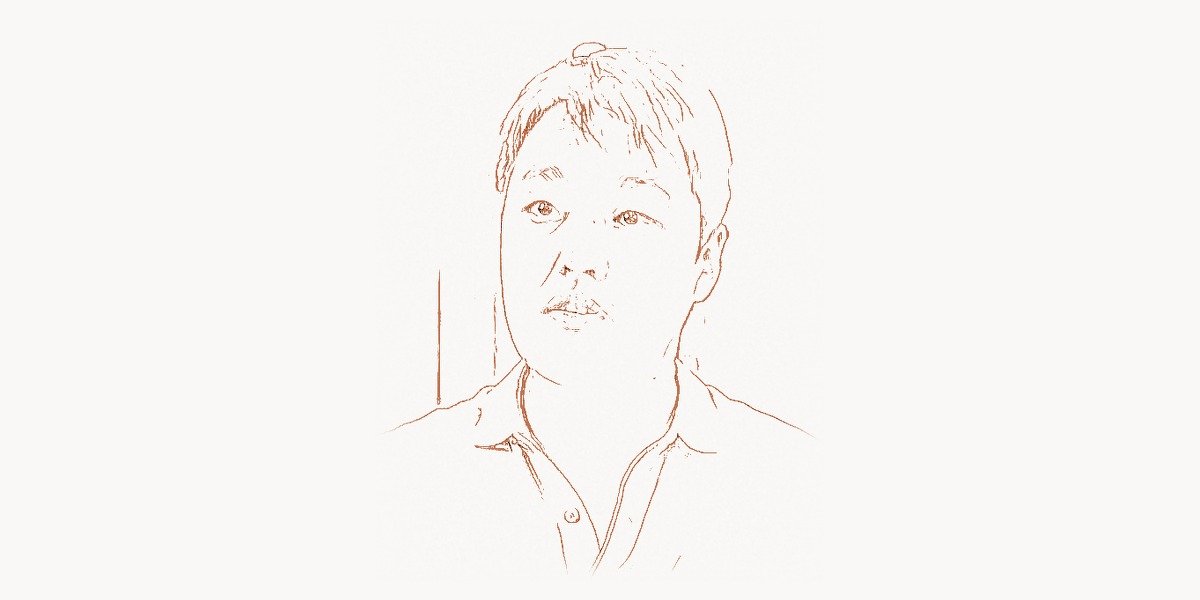
In May 2022, approximately $40 billion in cryptocurrency value evaporated in less than a week. The Terra blockchain — once ranked among the top ten cryptocurrency projects by market capitalization — experienced a catastrophic failure of its algorithmic stablecoin mechanism, triggering a death spiral that wiped out the savings of hundreds of thousands of investors worldwide. At the center of this collapse was Do Kwon, a Stanford-educated computer scientist who had built one of the most technically ambitious projects in decentralized finance. His story is not simply one of fraud or incompetence — it is the story of a genuinely innovative technical concept that carried fundamental risks its creator either failed to understand or chose to ignore. The Terra/Luna collapse remains the single largest failure of an algorithmic system in financial history, and its consequences reshaped regulatory approaches to cryptocurrency across the globe. Do Kwon’s trajectory — from celebrated blockchain innovator to international fugitive to convicted felon — is one of the most consequential cautionary tales in the history of technology.
Early Life and Technical Education
Kwon Do-hyung, known professionally as Do Kwon, was born on September 6, 1991, in Seoul, South Korea. He grew up in a country that was rapidly becoming one of the most technologically advanced societies on earth — South Korea’s internet penetration rate exceeded 90% by the time Kwon was a teenager, and its gaming and digital infrastructure industries were world-leading. This environment shaped a generation of Korean technologists who were deeply fluent in distributed systems and digital platforms.
Kwon attended Daewon Foreign Language High School, one of the most competitive and prestigious secondary schools in South Korea, known for producing students who go on to elite universities worldwide. From there, he was accepted to Stanford University in California, where he studied computer science. Stanford’s computer science department — the academic institution most closely associated with Silicon Valley innovation — provided Kwon with both a rigorous technical education and immersion in the culture of technology entrepreneurship.
At Stanford, Kwon studied distributed systems, cryptography, and software engineering. He graduated in 2015 with a bachelor’s degree in computer science. After graduation, he briefly worked at Microsoft and later at Apple, gaining experience in large-scale software systems before turning his attention to the cryptocurrency space that was beginning to attract serious technical talent from traditional tech companies.
Kwon’s first venture into blockchain was Anyfi, a startup focused on peer-to-peer mesh networking technology. The company aimed to create decentralized communication networks that could operate without traditional infrastructure. While Anyfi did not achieve major commercial success, the project demonstrated Kwon’s interest in decentralized architectures and peer-to-peer protocols — interests that would directly inform his later work on Terra. The experience also gave him his first exposure to the challenges of building distributed consensus systems that operate without central authorities.
The Creation of Terra and the Algorithmic Stablecoin Vision
The Technical Problem
To understand what Do Kwon built — and why it failed — requires understanding the fundamental problem of stablecoins. In the cryptocurrency ecosystem, most tokens (Bitcoin, Ethereum, and thousands of others) are highly volatile. Their prices can swing 10-20% in a single day, making them impractical for everyday transactions, lending, savings, and the other financial operations that require price stability. Stablecoins are cryptocurrencies designed to maintain a stable value, typically pegged to one US dollar.
By the mid-2010s, two approaches to stablecoins had emerged. The first was collateralized stablecoins — tokens backed by actual reserves of dollars, treasury bills, or other assets held in bank accounts. Tether (USDT) and Circle’s USDC are examples. These work, but they require trust in a centralized entity that holds the reserves and they are subject to regulation, seizure, and counterparty risk. The second approach was overcollateralized crypto-backed stablecoins like MakerDAO’s DAI, which are backed by cryptocurrency collateral locked in smart contract frameworks. These are more decentralized but capital-inefficient — to mint $100 of DAI, you typically need to lock up $150 or more in ETH.
Do Kwon, along with co-founder Daniel Shin (a Korean entrepreneur who had founded TMON, a major e-commerce platform), proposed a third approach: a purely algorithmic stablecoin that would maintain its peg through an automated mechanism involving two tokens — without any collateral backing at all. This was the core innovation of Terra, launched in January 2018 through their company Terraform Labs, headquartered in Singapore.
The Technical Architecture
The Terra protocol was built on the Cosmos SDK using a Tendermint-based Byzantine Fault Tolerant (BFT) consensus mechanism. It supported smart contracts through CosmWasm, a WebAssembly-based runtime. The blockchain itself was technically sound — fast, with low transaction costs and finality measured in seconds rather than the minutes required by Bitcoin or Ethereum at the time. These characteristics made it attractive for web-based decentralized applications and payment platforms.
But the real innovation — and the fatal vulnerability — was the dual-token mechanism that maintained the peg of Terra’s stablecoin, UST (TerraUSD). The system worked through an arbitrage relationship between two tokens: UST (the stablecoin, targeted at $1.00) and LUNA (the governance and staking token, with a floating market price). The mechanism can be expressed in simplified form:
# Terra/Luna Algorithmic Peg Mechanism (Simplified)
# The mint-burn arbitrage system that maintained UST's $1 peg

class TerraProtocol:
    def __init__(self):
        self.ust_target_price = 1.00  # USD
        self.luna_market_price = 0    # Floating, set by market
        self.ust_supply = 0
        self.luna_supply = 0

    def mint_ust(self, luna_amount):
        """
        BURN LUNA → MINT UST
        When UST > $1.00, arbitrageurs profit by:
        1. Burning $1 worth of LUNA
        2. Receiving 1 newly minted UST
        3. Selling UST on market for > $1.00
        This increases UST supply → pushes UST price down toward $1
        """
        usd_value = luna_amount * self.luna_market_price
        ust_to_mint = usd_value / self.ust_target_price
        self.luna_supply -= luna_amount   # LUNA is burned (destroyed)
        self.ust_supply += ust_to_mint    # New UST is created
        return ust_to_mint

    def redeem_ust(self, ust_amount):
        """
        BURN UST → MINT LUNA
        When UST < $1.00, arbitrageurs profit by:
        1. Buying UST on market for < $1.00
        2. Burning 1 UST at the protocol
        3. Receiving $1 worth of newly minted LUNA
        4. Selling LUNA on market
        This decreases UST supply → pushes UST price up toward $1

        CRITICAL FLAW: If LUNA price is ALSO falling,
        more LUNA must be minted per UST redeemed,
        which further dilutes LUNA, crashing its price,
        which requires even MORE LUNA to be minted...
        → DEATH SPIRAL (reflexive feedback loop)
        """
        luna_to_mint = (ust_amount * self.ust_target_price) / self.luna_market_price
        self.ust_supply -= ust_amount      # UST is burned
        self.luna_supply += luna_to_mint    # New LUNA is created
        return luna_to_mint

    # The mechanism assumes:
    # 1. LUNA always has non-zero market value
    # 2. Arbitrageurs always act to restore the peg
    # 3. Redemption demand never overwhelms LUNA's market cap
    # All three assumptions failed catastrophically in May 2022
The elegance of this design was undeniable. If it worked, it would create a fully decentralized stablecoin with no collateral requirements, no centralized reserves, and no regulatory chokepoints. It was the holy grail of decentralized finance — a stable medium of exchange that existed entirely on-chain, governed by mathematics rather than institutions. This vision attracted some of the most sophisticated investors and developers in the cryptocurrency space.
The Rise: Anchor Protocol and Explosive Growth
Terra's ecosystem grew steadily from 2018 to 2020, with real adoption in South Korea through the Chai payments app, which processed transactions for millions of users. But the explosive growth that turned Terra into a top-ten cryptocurrency project came from a single application: Anchor Protocol, launched in March 2021.
Anchor offered a fixed yield of approximately 19.5% APY on UST deposits. In a world of near-zero interest rates (global central banks had kept rates at historic lows since the 2008 financial crisis), this yield was extraordinary. Users could deposit UST into Anchor and earn nearly 20% per year, paid in UST. The yield was funded partly by staking returns on the collateral that Anchor borrowers posted, but the actual revenue generated by borrowing was far less than the 19.5% being paid out. The difference was subsidized by Terraform Labs from a "yield reserve" fund.
This subsidy model was, in retrospect, one of the central vulnerabilities. It attracted enormous capital inflows — by early 2022, over $14 billion in UST was deposited in Anchor, representing roughly 75% of all UST in circulation. The yield attracted depositors, who needed to acquire UST, which required burning LUNA, which reduced LUNA supply and drove up LUNA's price, which increased the total value backing UST, which gave the system an appearance of health and stability. It was a reflexive feedback loop — but one that worked in both directions.
At its peak in April 2022, LUNA traded at approximately $116 per token, giving it a market capitalization of over $40 billion. UST's total supply reached $18.7 billion, making it the third-largest stablecoin in cryptocurrency. Do Kwon had become one of the most prominent figures in the crypto industry, known for his brash confidence on social media and his dismissive attitude toward critics who questioned the sustainability of the system. Terraform Labs raised hundreds of millions from tier-one venture capital firms including Galaxy Digital, Pantera Capital, and Coinbase Ventures. The Luna Foundation Guard (LFG), a non-profit established to support the Terra ecosystem, accumulated a reserve of over $3 billion in Bitcoin as an emergency backstop.
The Collapse: May 2022
The death spiral that skeptics had warned about began on May 7, 2022. Large withdrawals from Anchor Protocol — approximately $2 billion over two days — coincided with large UST sell-offs on the Curve decentralized exchange. Whether these were coordinated attacks, panic selling, or rational profit-taking remains debated. The effect was immediate: UST began losing its peg, dropping to $0.98, then $0.95.
The protocol responded as designed: UST holders could burn UST for $1 worth of LUNA. But as UST selling accelerated, the amount of LUNA being minted grew exponentially. LUNA's price, which had been over $80 at the start of May, began falling as billions of new LUNA tokens flooded the market. The falling LUNA price meant that even more LUNA had to be minted per UST redeemed, which crashed LUNA's price further, which required even more minting — the death spiral that was embedded in the mechanism's core logic.
The Luna Foundation Guard deployed its $3 billion Bitcoin reserve to buy UST and defend the peg, but the selling pressure was overwhelming. By May 10, UST had fallen to $0.67. By May 11, it was below $0.30. LUNA, which had been worth $80 five days earlier, was trading at $0.10. By May 13, LUNA's price had effectively reached zero — it was trading at fractions of a cent — and UST was worth approximately $0.15. The Terra blockchain was temporarily halted on May 12 when LUNA's price fell so low that the network's governance mechanisms became dysfunctional.
The numbers are staggering. Approximately $40 billion in combined UST and LUNA value was destroyed in less than a week. The Anchor Protocol deposits — $14 billion in UST savings — became nearly worthless. The Bitcoin reserve was entirely depleted. Hundreds of thousands of retail investors, many of whom had deposited their life savings into Anchor attracted by the 19.5% yield, lost everything. Reports emerged of suicides linked to the crash in South Korea, the United States, and elsewhere. The collapse sent shockwaves through the entire cryptocurrency market, contributing to the broader "crypto winter" of 2022 that saw Bitcoin fall from $40,000 to under $16,000.
The Technical Post-Mortem
Why the Mechanism Failed
From a purely technical standpoint, the Terra/Luna collapse revealed fundamental limitations in the algorithmic stablecoin model. The core problem is what economists call "reflexivity" — in Kwon's system, the value backing the stablecoin (LUNA) was itself dependent on confidence in the stablecoin. This creates a circular dependency that is stable under normal conditions but catastrophically unstable under stress.
Traditional stablecoins backed by dollar reserves do not have this problem: even if confidence in Tether collapses completely, the actual dollars in reserve still exist and have value. LUNA's value, by contrast, was largely derived from its role in the Terra ecosystem. When confidence in UST evaporated, LUNA's value evaporated simultaneously, removing the very mechanism that was supposed to restore the peg.
# The Death Spiral — formal representation of the reflexive failure

"""
The Terra system contained a hidden circular dependency:

    UST_confidence → UST_demand → LUNA_burn → LUNA_scarcity → LUNA_price↑
                                                                    ↓
    UST_stability ←←←←←←←←←←←← LUNA_market_cap (backing value) ←←←←

When the loop reverses:

    UST_depeg → UST_redemption → LUNA_mint → LUNA_dilution → LUNA_price↓
                                                                    ↓
    UST_further_depeg ←←←←←←← LUNA_market_cap↓ (backing shrinks) ←←

The critical threshold occurs when:
    UST_supply * $1.00 > LUNA_total_market_cap

At this point, there are not enough LUNA tokens (at current prices)
to redeem all UST at par. Rational actors front-run the insolvency
by selling UST immediately, accelerating the spiral.

On May 9, 2022:
    UST supply:      ~$18.7 billion (at par)
    LUNA market cap:  ~$22 billion (and falling fast)

When LUNA market cap fell below UST supply, the system became
mathematically insolvent. No amount of minting could restore the peg
because each new LUNA token further diluted the remaining value.

This is analogous to a central bank printing currency to defend
a fixed exchange rate — it works until confidence breaks, then
the printing itself destroys the currency's value (hyperinflation).
"""
Multiple researchers and analysts had identified this vulnerability before the collapse. Critics on social media and in academic papers pointed out that the system's stability depended on LUNA maintaining sufficient market capitalization to absorb UST redemptions — and that this capitalization was itself a function of ecosystem confidence. Kevin Zhou of Galois Capital, among others, publicly warned that the system was vulnerable to a bank-run scenario. Do Kwon's response to these critics was characteristically dismissive; he famously tweeted that he would not debate "poor people" and expressed unwavering confidence that the system was robust.
Lessons for Systems Design
The Terra collapse offers important lessons for developers building complex technical systems. First, reflexive feedback loops in critical systems can mask fragility behind apparent stability. A system that appears robust under normal conditions may harbor catastrophic failure modes that only manifest under stress. Second, subsidized yields (like Anchor's 19.5% APY) that exceed the system's organic revenue generation create artificial demand that hides fundamental imbalances. Third, aggressive dismissal of critics and failure to conduct rigorous stress-testing represents a failure of engineering discipline, regardless of the domain. Modern project management frameworks emphasize risk assessment precisely because systems that appear stable can fail in non-linear ways.
Criminal Charges, Extradition, and Conviction
In September 2022, South Korean prosecutors issued an arrest warrant for Do Kwon on charges of fraud and violations of capital markets law. Kwon was not in South Korea at the time. Interpol issued a Red Notice for his arrest. Kwon initially claimed on social media that he was not "on the run" and was cooperating with authorities, but his whereabouts remained unknown for months. He was later traced to Serbia, Singapore, and eventually Montenegro.
In March 2023, Kwon was arrested at Podgorica Airport in Montenegro while attempting to travel using a forged Costa Rican passport. He also possessed a forged Belgian passport. The use of fraudulent travel documents added to the charges against him and undermined any remaining credibility that the collapse had been merely a technical failure rather than a situation involving deliberate deception.
Both South Korea and the United States sought Kwon's extradition. In the US, the Securities and Exchange Commission (SEC) filed a civil complaint in February 2023 alleging that Kwon and Terraform Labs had orchestrated a multi-billion-dollar securities fraud. The SEC alleged that Kwon had misled investors about Terra's stability, about a Korean payment system called Chai (claiming it used the Terra blockchain when transactions were actually processed through conventional payment rails), and about the sustainability of Anchor's yields. In April 2024, a jury in the SEC's civil case found Terraform Labs and Kwon liable for fraud, and the company agreed to pay $4.47 billion in penalties and disgorgement.
Montenegro's courts approved Kwon's extradition to the United States. He was extradited in late 2024 and faced federal criminal charges in the Southern District of New York, including securities fraud, wire fraud, commodities fraud, and conspiracy. In January 2026, Do Kwon pleaded guilty to multiple federal charges related to fraud and market manipulation. He admitted to misleading investors about critical aspects of the Terra ecosystem. He awaits sentencing as of early 2026, facing potentially decades in federal prison.
The case established significant legal precedents. It confirmed that algorithmic tokens could be classified as securities under US law, it demonstrated that cryptocurrency founders could face criminal prosecution for the failure of their protocols when accompanied by deceptive statements, and it signaled that international cooperation in crypto-related criminal cases had matured significantly — Kwon's arrest in Montenegro and extradition to the US involved coordination between multiple national law enforcement agencies.
Legacy and Historical Significance
Do Kwon's legacy is deeply contradictory. The technical architecture of Terra was genuinely innovative. The Cosmos SDK-based blockchain was well-engineered, the CosmWasm smart contract platform was technically respected, and the concept of an algorithmic stablecoin — while ultimately flawed in Terra's implementation — represented a serious attempt to solve one of decentralized finance's core problems. Several elements of Terra's technical infrastructure have been adopted or adapted by other blockchain projects.
But the human cost of the collapse was enormous. The $40 billion in destroyed value represented real savings, retirement funds, and financial security for hundreds of thousands of people. The collapse contributed to broader market contagion that affected entities like Three Arrows Capital, Celsius Network, and Voyager Digital, amplifying the total damage across the cryptocurrency industry. The regulatory response — including proposed stablecoin legislation in the US, EU's MiCA regulation, and tightened rules in South Korea, Singapore, and elsewhere — was directly catalyzed by Terra's failure.
The Terra/Luna collapse is now studied in university courses on financial engineering, systems design, and technology ethics. It stands alongside the 2008 financial crisis and the dot-com bust as a case study in how innovative financial instruments can create systemic risk. For technologists working in blockchain, fintech, or any domain involving complex automated systems, the lesson is clear: technical elegance is not the same as robustness, growth metrics are not the same as sustainability, and the dismissal of legitimate criticism is not a sign of confidence but of dangerous hubris.
Do Kwon's story is ultimately inseparable from the broader arc of the tech pioneers who have shaped the cryptocurrency industry — a field where the line between visionary innovation and catastrophic failure has proven disturbingly thin. His technical ability was real. His ambition was enormous. And the consequences of his project's failure affected more people, more severely, than perhaps any other single event in cryptocurrency history. Whether future algorithmic stablecoin designs can succeed where Terra failed remains an open question — but any such attempt will be built on the wreckage of what Do Kwon created and destroyed. Effective software evaluation and independent technical auditing have never been more critical. Tools like Taskee help teams maintain rigorous project oversight, while platforms such as Toimi enable structured risk assessment — disciplines that might have changed the outcome of the Terra story had they been applied with the seriousness the situation demanded.
Key Facts
- Born: September 6, 1991, Seoul, South Korea
- Education: B.S. Computer Science, Stanford University (2015)
- Known for: Co-founding Terraform Labs, creating Terra/LUNA and the algorithmic stablecoin UST
- Key projects: Terra blockchain, UST stablecoin, Anchor Protocol, Luna Foundation Guard
- Peak valuation: LUNA market cap ~$40 billion, UST supply ~$18.7 billion (April 2022)
- Collapse: May 7-13, 2022 — ~$40 billion in value destroyed in under one week
- Legal status: Pleaded guilty to federal fraud charges in January 2026; awaiting sentencing
- Previous work: Microsoft, Apple, Anyfi (mesh networking startup)
Frequently Asked Questions
Who is Do Kwon?
Do Kwon (Kwon Do-hyung) is a South Korean computer scientist and entrepreneur who co-founded Terraform Labs in 2018. He is best known as the creator of the Terra blockchain and its algorithmic stablecoin UST (TerraUSD), which collapsed catastrophically in May 2022, destroying approximately $40 billion in value. Kwon studied computer science at Stanford University and worked at Microsoft and Apple before entering the cryptocurrency industry. He was arrested in Montenegro in March 2023 and later extradited to the United States, where he pleaded guilty to federal fraud charges in January 2026.
What was Terra/Luna and how did it work?
Terra was a blockchain platform built on the Cosmos SDK that powered an algorithmic stablecoin called UST (TerraUSD). Unlike conventional stablecoins backed by dollar reserves, UST maintained its $1 peg through an automated mint-burn mechanism with a companion token called LUNA. When UST traded above $1, users could burn LUNA to mint new UST (increasing supply, pushing price down). When UST traded below $1, users could burn UST to mint LUNA (decreasing supply, pushing price up). This arbitrage mechanism maintained the peg under normal conditions but contained a fatal reflexive flaw: if confidence collapsed simultaneously in both tokens, the minting mechanism would accelerate rather than halt the decline.
What caused the Terra/Luna crash?
The crash began on May 7, 2022, when large withdrawals from Anchor Protocol (approximately $2 billion) and significant UST sell-offs on decentralized exchanges caused UST to lose its dollar peg. As UST holders rushed to redeem their tokens, the protocol minted enormous quantities of new LUNA, crashing LUNA's price. The falling LUNA price meant more LUNA had to be minted per redemption, creating a death spiral. The Luna Foundation Guard deployed its $3 billion Bitcoin reserve to defend the peg, but selling pressure overwhelmed the defense. Within six days, both UST and LUNA had lost virtually all their value.
What happened to Do Kwon legally?
Following the collapse, South Korean prosecutors issued an arrest warrant for Kwon in September 2022, and Interpol issued a Red Notice. After months as an international fugitive, Kwon was arrested in Montenegro in March 2023 while attempting to travel on a forged Costa Rican passport. The US SEC filed civil fraud charges, and a jury found Terraform Labs and Kwon liable, resulting in $4.47 billion in penalties. Kwon was extradited to the United States in late 2024, where he faced federal criminal charges. In January 2026, he pleaded guilty to securities fraud, wire fraud, and related charges, and awaits sentencing.
What lessons did the Terra collapse teach the tech industry?
The Terra/Luna collapse demonstrated several critical principles for technology builders. Reflexive systems — where the value backing a mechanism depends on confidence in the mechanism itself — can appear stable for extended periods before failing catastrophically. Subsidized growth (Anchor's 19.5% yield) can mask fundamental unsustainability. Dismissing technical criticism rather than engaging with it represents a failure of engineering discipline. The collapse also accelerated cryptocurrency regulation worldwide and established legal precedents for treating algorithmic tokens as securities. For software engineers and system architects in any domain, it reinforced that stress-testing under adversarial conditions, not just optimistic scenarios, is essential for any system that manages assets or critical infrastructure.