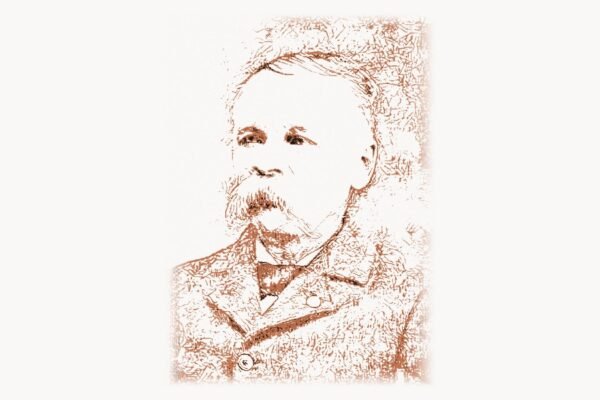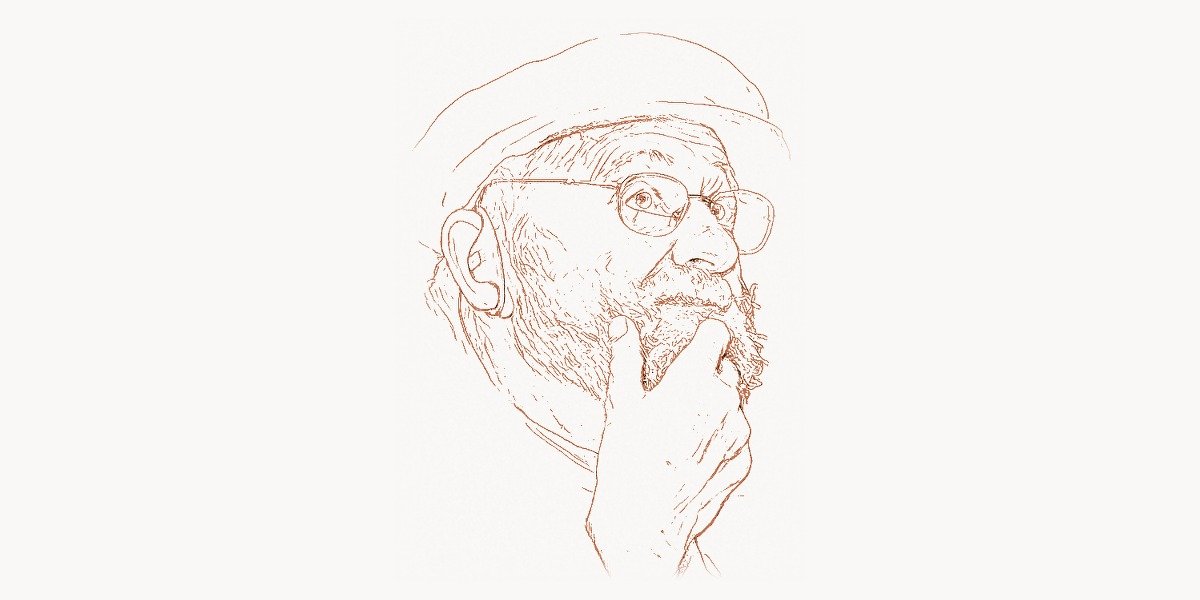
In 1993, a cognitive scientist at Apple Computer chose an unusual job title for himself: User Experience Architect. It was the first time anyone in the technology industry had placed the words “user” and “experience” together to describe a professional discipline. That scientist was Don Norman, and in doing so, he did not merely coin a phrase — he defined an entire field that now shapes how billions of people interact with digital products every single day. More than three decades later, the principles he articulated continue to guide designers, developers, and product teams worldwide.
Early Life and the Path to Cognitive Science
Donald Arthur Norman was born on December 25, 1935, in a world that had not yet imagined the personal computer, the smartphone, or the internet. Growing up with a natural curiosity about how things work, Norman pursued his education in electrical engineering at the Massachusetts Institute of Technology, earning his Bachelor of Science degree. But the circuits and signal processing of traditional engineering left him wanting something deeper — an understanding of the human mind itself.
Norman continued his academic journey at the University of Pennsylvania, where he earned his PhD in mathematical psychology. This pivotal transition from engineering to cognitive science would define his entire career. Rather than building machines, he wanted to understand the people who used them. At a time when computer science departments cared exclusively about algorithmic efficiency and hardware performance, Norman was asking a different question: why do people struggle to use well-engineered products?
He joined the faculty at the University of California, San Diego, where he helped establish the Department of Cognitive Science — one of the first of its kind in the world. His early research explored human memory, attention, and the mental models people construct to understand complex systems. This academic foundation would later prove invaluable when he turned his attention to the design of consumer products and technology interfaces. Like Grace Hopper, who fought to make programming accessible to humans rather than forcing humans to think like machines, Norman championed the idea that technology must adapt to people, not the other way around.
The Design of Everyday Things: A Breakthrough in Thinking
The Technical Innovation Behind Human-Centered Design
In 1988, Don Norman published what would become one of the most influential design books ever written: The Design of Everyday Things (originally titled The Psychology of Everyday Things). The book was revolutionary not because it introduced new technology, but because it introduced a new way of thinking about technology. Norman argued that when people have trouble using a product, the fault lies not with the user but with the designer.
At the heart of the book were two concepts that would reshape the design world. The first was affordances — the properties of objects that suggest how they should be used. A door handle affords pulling; a flat plate affords pushing. When a door has a handle but requires pushing, that is a design failure Norman famously called a “Norman Door.” The second concept was signifiers — signals that communicate where an action should take place and how it should be performed.
Norman also introduced the concept of conceptual models — the mental frameworks users build to understand how a system works. When a designer’s model matches the user’s model, the interface feels intuitive. When they diverge, confusion and errors result. He articulated the Gulf of Execution (the gap between a user’s intention and the actions available) and the Gulf of Evaluation (the gap between the system’s state and the user’s ability to perceive it).
These principles can be expressed in a structured framework that modern UX designers and front-end developers use when building interfaces:
/**
 * Don Norman's Core Design Principles
 * A framework for evaluating user experience quality
 * Based on "The Design of Everyday Things" (1988, revised 2013)
 */

const normanDesignPrinciples = {
  visibility: {
    definition: "Users can see what actions are possible",
    test: (element) => {
      // Is the control visible in the current context?
      // Does its appearance communicate its function?
      return element.isVisible && element.communicatesFunction;
    }
  },

  feedback: {
    definition: "Users receive immediate, clear response to actions",
    test: (interaction) => {
      // Does the system respond within 100ms?
      // Is the feedback appropriate to the action?
      return interaction.responseTime < 100
        && interaction.feedbackMatchesAction;
    }
  },

  constraints: {
    definition: "Limits on interaction prevent errors",
    types: ["physical", "cultural", "semantic", "logical"],
    test: (action) => {
      // Are impossible actions prevented, not just warned?
      return action.invalidStatesAreUnreachable;
    }
  },

  mapping: {
    definition: "Controls relate naturally to their effects",
    test: (control, effect) => {
      // Does the spatial/logical relationship feel natural?
      // Example: left knob controls left burner
      return control.spatialRelation === effect.spatialRelation;
    }
  },

  consistency: {
    definition: "Similar operations use similar elements",
    test: (interface) => {
      // Are patterns reused throughout the system?
      return interface.patternsAreConsistent;
    }
  },

  affordance: {
    definition: "Design suggests how to interact with it",
    test: (element) => {
      // Does the shape/texture/appearance suggest usage?
      // A button looks pressable; a slider looks draggable
      return element.perceivedAction === element.actualAction;
    }
  }
};

// The Seven Stages of Action (Norman's Action Cycle)
const sevenStagesOfAction = [
  "1. Forming the goal",
  "2. Forming the intention",
  "3. Specifying an action",
  "4. Executing the action",
  "5. Perceiving the state of the world",
  "6. Interpreting the state of the world",
  "7. Evaluating the outcome"
];

// Gulf Analysis: measuring usability gaps
function analyzeGulfs(interface) {
  const gulfOfExecution = measureGap(
    "user intention",
    "available actions"
  );
  const gulfOfEvaluation = measureGap(
    "system state",
    "user perception"
  );

  return {
    executionGulf: gulfOfExecution,
    evaluationGulf: gulfOfEvaluation,
    usabilityScore: 1 - (gulfOfExecution + gulfOfEvaluation) / 2
  };
}
Why It Mattered
Before The Design of Everyday Things, the technology industry largely treated usability as an afterthought. Engineers built systems to be technically impressive, and if users could not operate them, the conventional wisdom was that users needed better training. Norman flipped this assumption entirely. He demonstrated with rigorous cognitive science that poor design was the problem, not poor users.
The book arrived at a critical moment. Personal computers were entering homes and offices at an accelerating rate, yet many people found them baffling. Graphical user interfaces were emerging — thanks in part to the work of pioneers like Alan Kay, who envisioned the personal computer as a creative tool for everyone — but the principles governing their design were ad hoc at best. Norman provided the theoretical scaffolding that would allow designers to create interfaces with intention and rigor.
The book has sold hundreds of thousands of copies, been translated into dozens of languages, and remains required reading in virtually every design program in the world. Its influence extends far beyond technology — architects, urban planners, medical device manufacturers, and automotive designers all draw on Norman’s principles. Today, when digital agencies like Toimi build products for clients, the vocabulary and frameworks Norman established are embedded in every design review and usability study.
Other Contributions: From Apple to the Nielsen Norman Group
Norman’s impact extends far beyond a single book. In 1993, he joined Apple Computer as Vice President of the Advanced Technology Group, where he formally introduced the term “User Experience” as a professional designation. He chose this phrase deliberately — he felt that existing labels like “human interface” and “usability” were too narrow. He wanted a term that encompassed every aspect of a person’s experience with a system: the industrial design, the interface, the physical interaction, the emotional response, and even the experience of purchasing and unboxing the product.
At Apple, Norman championed user-centered design at a time when the company was struggling with product proliferation and inconsistent user experiences. His tenure coincided with a turbulent period in Apple’s history, but the principles he embedded in the company’s design culture would bear fruit years later when Steve Jobs returned and Apple launched products like the iMac, iPod, and eventually the iPhone — devices celebrated precisely for the quality of their user experience.
In 1998, Norman co-founded the Nielsen Norman Group with Jakob Nielsen, a fellow usability pioneer. The consultancy became the world’s most respected authority on evidence-based user experience. Their approach was methodical: rather than relying on aesthetic intuition, they conducted rigorous usability studies, established heuristics, and published research that helped organizations make data-driven design decisions. The ten usability heuristics developed by Nielsen, deeply influenced by Norman’s cognitive science work, became the industry standard for interface evaluation.
Norman also served as a professor at Northwestern University, where he joined the Segal Design Institute. He continued to write prolifically, publishing books including Emotional Design (2004), which argued that aesthetics are not superficial but fundamental to how people perceive usability, and Living with Complexity (2010), which challenged the oversimplified notion that all design should be “simple.” He argued instead that the world is complex and design should manage that complexity rather than pretend it does not exist.
His work on emotional design introduced the three levels of design processing: visceral (immediate, instinctive reaction), behavioral (the experience of use), and reflective (the memories and self-image associated with a product). This framework gave designers a rigorous way to think about the emotional dimension of their work — something that had previously been dismissed as subjective and unmeasurable.
Philosophy: Human-Centered Design as a Discipline
Key Principles
Don Norman’s design philosophy rests on a foundation that he has refined over decades but whose core has remained remarkably consistent. At its center is a radical commitment to understanding human cognition before writing a single line of code or sketching a single wireframe.
Design is communication. Every interface element communicates something to the user — whether the designer intended it or not. A button’s shape, color, and position all send signals about what it does and how important it is. Norman insists that designers must be as intentional about this communication as writers are about their words.
Errors are design failures, not user failures. Perhaps Norman’s most consequential principle is the insistence that when a user makes an error, the system is to blame. This seemingly simple idea has profound implications. It means that every error message represents a failure of the designer, not the user. It means that “user error” is not a valid category in a well-designed system. This philosophy aligns with the work of Tim Berners-Lee, who designed the World Wide Web to be universally accessible, rejecting the notion that the internet should be reserved for technical specialists.
Knowledge in the world, not in the head. Norman argues that good design places the information users need in the environment rather than requiring them to memorize it. This principle drives everything from clear labeling to progressive disclosure in software interfaces. When teams use project management platforms like Taskee to coordinate design work, they embody this principle by making project status visible to everyone rather than keeping it locked in individual memories.
Design for the full spectrum of human ability. Norman has been a vocal advocate for inclusive design long before it became a fashionable buzzword. He argues that designing for people with disabilities improves design for everyone — a principle now known as the “curb cut effect.” When Hakon Wium Lie co-created CSS, the separation of content from presentation made it possible to build accessible websites that could adapt to different abilities and devices. Norman’s philosophy provides the theoretical justification for why this matters.
These principles translate directly into modern web development practices. Consider how Norman’s thinking maps to accessible interface design:
<!-- Norman's Principles Applied to Accessible Web Design -->

<!-- PRINCIPLE: Visibility + Signifiers -->
<!-- Clear, descriptive labels communicate function -->
<nav aria-label="Main navigation">
  <ul role="menubar">
    <li role="none">
      <a role="menuitem" href="/products"
         aria-current="page"
         aria-expanded="false"
         aria-haspopup="true">
        Products
      </a>
    </li>
  </ul>
</nav>

<!-- PRINCIPLE: Feedback -->
<!-- Every action produces visible, immediate response -->
<button
  type="submit"
  aria-live="polite"
  aria-busy="false"
  class="btn-primary">
  <span class="btn-label">Save Changes</span>
  <span class="btn-loading" hidden>
    <span class="spinner" aria-hidden="true"></span>
    Saving...
  </span>
  <span class="btn-success" hidden>
    <svg aria-hidden="true"><!-- checkmark --></svg>
    Saved!
  </span>
</button>

<!-- PRINCIPLE: Constraints -->
<!-- Prevent errors rather than reporting them -->
<input
  type="email"
  required
  pattern="[a-z0-9._%+-]+@[a-z0-9.-]+\.[a-z]{2,}$"
  aria-describedby="email-help"
  autocomplete="email"
  inputmode="email" />
<p id="email-help" class="help-text">
  Enter your work email address (e.g., name@company.com)
</p>

<!-- PRINCIPLE: Mapping -->
<!-- Controls relate spatially to their effects -->
<fieldset>
  <legend>Text Formatting</legend>
  <div role="toolbar" aria-label="Formatting options">
    <button aria-pressed="false" title="Bold (Ctrl+B)">
      <strong>B</strong>
    </button>
    <button aria-pressed="false" title="Italic (Ctrl+I)">
      <em>I</em>
    </button>
    <button aria-pressed="false" title="Underline (Ctrl+U)">
      <u>U</u>
    </button>
  </div>
</fieldset>

<!-- PRINCIPLE: Error Prevention + Recovery -->
<!-- Errors are system failures; help users recover -->
<div role="alert" aria-live="assertive" class="error-msg">
  <p><strong>Unable to save your document.</strong></p>
  <p>Your internet connection was interrupted.
     Your changes have been saved locally and
     will sync automatically when you reconnect.</p>
  <button>Try Again Now</button>
</div>
Legacy: Shaping How Humanity Interacts with Technology
Don Norman’s legacy is measured not in lines of code or patents filed, but in a fundamental shift in how the technology industry thinks about its relationship with human beings. Before Norman, the dominant paradigm was technology-centered: build it well, and users will learn. After Norman, the paradigm shifted to human-centered: understand users first, then build.
The term “User Experience” that he coined in 1993 has grown into a global profession employing millions of practitioners. UX design is now a standard department in every major technology company, a required course in most computer science and design programs, and a critical factor in product success. When Marc Andreessen built Mosaic, the first widely popular web browser, he was solving a UX problem — making the internet usable for ordinary people. Norman’s frameworks explain precisely why Mosaic succeeded where previous browsers had failed.
Norman’s influence shaped the design philosophy of Apple, a company that would go on to become the most valuable in the world in large part because of the quality of its user experience. His thinking is embedded in the Human Interface Guidelines that Apple publishes for developers, in the design systems of Google, Microsoft, and Meta, and in the work of every UX professional who conducts a usability test or maps a user journey.
The principles from The Design of Everyday Things have transcended their original context. Hospital administrators use Norman’s error analysis framework to redesign medication dispensing systems, reducing life-threatening errors. Aviation engineers apply his mental model theory to cockpit design. Automotive designers use his affordance principles to create dashboards that drivers can operate without looking away from the road. Even the push toward web standards championed by figures like Jeffrey Zeldman reflects Norman’s core insight that technology should serve people through clarity, consistency, and predictability.
Perhaps most remarkably, at the age of 90, Norman continues to contribute to the field. His more recent work has expanded to address design at a systemic level — tackling climate change, social equity, and the design of complex sociotechnical systems. He argues that the same principles that make a good door handle also apply to designing institutions, policies, and entire societies. This expansion of scope is characteristic of Norman’s career: he has always followed the implications of his ideas to their logical conclusion, regardless of disciplinary boundaries.
What Steve Wozniak did for hardware — making personal computing technically possible — Don Norman did for the human side of the equation. He gave the technology industry a language, a methodology, and a moral imperative to design for human beings. In doing so, he changed not just how products are made, but how we think about the relationship between people and the technologies they use.
Key Facts About Don Norman
- Full name: Donald Arthur Norman
- Born: December 25, 1935
- Education: BS in Electrical Engineering from MIT; PhD in Mathematical Psychology from the University of Pennsylvania
- Coined the term: “User Experience” while serving as VP at Apple Computer in 1993
- Most famous book: The Design of Everyday Things (1988, revised 2013)
- Co-founded: Nielsen Norman Group with Jakob Nielsen in 1998
- Academic positions: Professor at UC San Diego (co-founded Dept. of Cognitive Science), Northwestern University (Segal Design Institute), KAIST (Korea)
- Apple role: Vice President of the Advanced Technology Group (1993–1998)
- Other major books: Emotional Design (2004), Living with Complexity (2010), Design for a Better World (2023)
- Key concepts: Affordances, signifiers, conceptual models, Gulf of Execution, Gulf of Evaluation, the Seven Stages of Action
- Awards: Lifetime achievement awards from ACM SIGCHI, UXPA, and numerous design organizations
- Known for: “Norman Doors” — doors where the design does not communicate whether to push or pull
Frequently Asked Questions
What does “User Experience” mean as Don Norman defined it?
When Don Norman coined the term in 1993, he intended it to cover every aspect of a person’s interaction with a company, its services, and its products. This was deliberately broader than existing terms like “usability” or “human-computer interaction.” For Norman, user experience encompasses the visual design, the industrial design, the physical feel of the product, the emotional response it evokes, the process of discovering it, purchasing it, unboxing it, learning it, using it, and even getting support for it. He has often said he regrets that the term has been narrowed by many practitioners to mean only digital interface design, when he intended it to describe something much more comprehensive.
Why is The Design of Everyday Things still relevant decades after publication?
The book’s enduring relevance comes from the fact that Norman grounded his principles in cognitive science rather than in any specific technology. Human cognition has not changed since 1988: people still form mental models, still need feedback from their actions, and still blame themselves when designs fail them. The principles of visibility, feedback, constraints, mapping, consistency, and affordance apply equally to a physical door handle and a mobile application interface. The revised 2013 edition updated many examples to include modern technology, but the underlying framework required almost no modification. This is because Norman was describing how human minds work, and minds do not become obsolete.
How did Don Norman influence Apple’s design philosophy?
Norman joined Apple in 1993 as Vice President of the Advanced Technology Group, where he advocated for user-centered design methodology throughout the organization. While his tenure predated Apple’s most celebrated design era under Steve Jobs and Jony Ive, Norman embedded principles into Apple’s engineering culture that persisted. His insistence that design begins with understanding human needs, that prototyping and testing with real users is essential, and that the entire experience matters — not just the screen — helped establish the philosophical foundation that Apple would later execute with extraordinary commercial success. The idea that an Apple product should feel intuitive from the moment you open the box is a direct descendant of Norman’s holistic definition of user experience.
What is a “Norman Door” and why does the concept matter for web design?
A “Norman Door” is a door whose design tells you to do the opposite of what is actually required — for example, a door with a handle (which suggests pulling) that must be pushed to open. The term emerged from examples in The Design of Everyday Things and has become shorthand for any design that confuses users about how to interact with it. In web design, Norman Doors appear as clickable-looking elements that are not interactive, navigation patterns that contradict user expectations, icons without labels whose meaning is ambiguous, or form buttons that do not clearly communicate what will happen when pressed. The concept matters because it reminds designers that the appearance of an interface element must honestly communicate its behavior — what Norman calls the relationship between perceived and actual affordance.