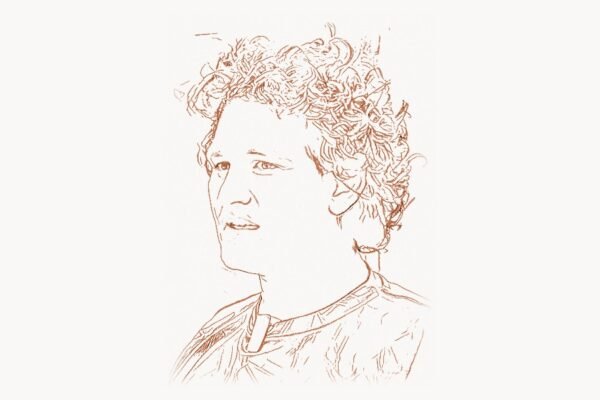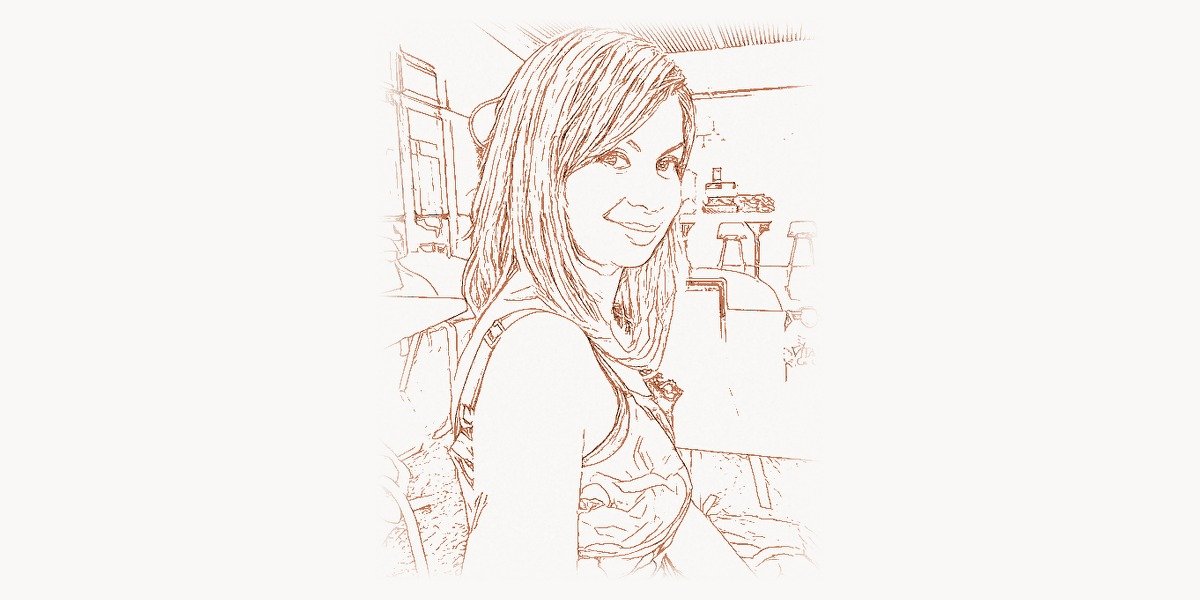
When Microsoft needed someone to lead a global community of 17 million beta testers who collectively shape the future of Windows, they chose a software engineer who also runs an ethical fashion label, has published four books, and openly talks about navigating a career in computer science with dyslexia. Dona Sarkar is not the kind of tech leader you can place into a single category, and that refusal to be boxed in is precisely what made her one of the most influential community builders in the modern software industry. Her career at Microsoft spans over two decades and touches everything from core Windows engineering and mixed-reality headsets to accessibility advocacy and AI developer relations, proving that the strongest technical leaders are often those who see technology as a fundamentally human endeavor.
From Michigan to Microsoft: The Early Engineering Years
Dona Sarkar grew up with a deep curiosity for how things work. She studied computer science at the University of Michigan, where she built the foundation for a career that would unfold across nearly every major product wave at Microsoft. After graduation, she joined the Windows team as a software engineer in 2005, a period when Windows Vista was taking shape and Microsoft was the undisputed giant of the desktop computing world.
Her early assignments placed her right in the plumbing of the operating system. She worked on Bluetooth integration, Blu-ray support, and the Autoplay feature in Windows Vista, the kind of infrastructure-level work that most users never consciously notice but interact with daily. Within a year, she moved into an engineering lead role, taking responsibility for the search features of Windows 7 and Windows 8, as well as the roaming platform that synchronized user settings across devices in Windows 8.1.
This progression through foundational Windows engineering gave Sarkar a rare perspective. She understood the operating system not as a monolithic product but as a living ecosystem of interrelated features, each one shaped by user behavior and hardware constraints. That systems-level thinking would later prove essential when she took on roles that required bridging the gap between engineering teams and millions of end users.
HoloLens and the Mixed-Reality Frontier
In January 2014, Sarkar transitioned into one of the most ambitious hardware projects Microsoft had undertaken in years: HoloLens. As a Principal Product Manager for the mixed-reality headset, she worked at the intersection of hardware engineering, spatial computing, and user experience design. HoloLens represented a fundamentally different challenge from desktop operating systems. The team was defining an entirely new interaction paradigm, one where digital objects coexist with the physical world.
Sarkar spent two years on the HoloLens project, helping to shape how users would interact with holograms in professional and creative environments. The experience reinforced her conviction that technology products succeed when they are designed around human needs rather than technical specifications. This human-centered approach would become the defining philosophy of her next and most visible role.
Building for Spatial Computing
The HoloLens team operated under conditions closer to a startup than a typical Microsoft division. Rapid prototyping, cross-functional collaboration, and constant user testing defined the workflow. For Sarkar, this was formative. She learned how to manage feedback loops at high velocity and how to translate raw user frustration into actionable engineering decisions, skills that perfectly prepared her for leading the Windows Insider Program.
Leading the Windows Insider Program: 17 Million Beta Testers
In June 2016, Sarkar succeeded Gabe Aul as the head of the Windows Insider Program, the largest public beta-testing community in the software industry. Under her leadership from 2016 to 2019, the program grew into a co-creation engine that fundamentally changed how Microsoft developed Windows. Instead of treating beta testers as passive recipients of pre-release builds, Sarkar reimagined them as active collaborators whose feedback directly shaped product decisions.
The scale was staggering. Seventeen million participants across virtually every country on Earth, each running pre-release Windows builds on their personal machines and reporting bugs, usability issues, and feature requests. Managing that volume of input required both sophisticated tooling and a deep understanding of community psychology. Sarkar excelled at both.
The Feedback Pipeline Architecture
One of Sarkar’s key contributions was systematizing how Insider feedback flowed from individual users to engineering teams. The process she championed combined automated telemetry with structured human feedback, creating a pipeline that could surface critical issues from millions of data points.
# Conceptual model of the Windows Insider feedback pipeline
# Demonstrates the multi-stage triage process Sarkar championed

class InsiderFeedbackPipeline:
    """
    Multi-stage feedback processing system for the Windows Insider Program.
    Combines automated telemetry with human-reported issues to prioritize
    engineering work across Windows feature teams.
    """

    SEVERITY_LEVELS = {
        'critical': 1,    # System crash, data loss, security vulnerability
        'high': 2,        # Feature broken, significant UX regression
        'medium': 3,      # Cosmetic issues, minor functionality gaps
        'low': 4,         # Enhancement requests, polish items
    }

    def __init__(self, insider_ring: str):
        self.ring = insider_ring  # 'fast', 'slow', 'release_preview'
        self.telemetry_store = TelemetryAggregator()
        self.feedback_hub = FeedbackHubConnector()

    def ingest_telemetry(self, build_number: str):
        """Collect automated crash reports, performance metrics, and usage data."""
        raw_signals = self.telemetry_store.query(
            build=build_number,
            ring=self.ring,
            metrics=['crash_rate', 'boot_time', 'feature_usage', 'error_codes']
        )
        return self.deduplicate_and_cluster(raw_signals)

    def ingest_human_feedback(self, build_number: str):
        """Pull structured feedback from the Feedback Hub application."""
        submissions = self.feedback_hub.fetch(
            build=build_number,
            min_upvotes=10,
            categories=['bug', 'feature_request', 'usability']
        )
        return self.classify_by_severity(submissions)

    def merge_and_prioritize(self, telemetry, human_feedback):
        """
        Cross-reference automated signals with human reports.
        Issues flagged by BOTH systems get priority escalation.
        """
        combined = []
        for issue in human_feedback:
            telemetry_match = telemetry.find_correlated(issue)
            if telemetry_match:
                issue.severity = min(issue.severity, telemetry_match.severity)
                issue.confidence = 'high'
            combined.append(issue)
        return sorted(combined, key=lambda x: x.severity)

    def route_to_teams(self, prioritized_issues):
        """Distribute triaged issues to the appropriate Windows feature teams."""
        for issue in prioritized_issues:
            team = self.identify_owning_team(issue.component)
            team.backlog.add(issue, sprint='current' if issue.severity <= 2 else 'next')
This model reflects the core philosophy Sarkar brought to the Insider Program: automated systems handle volume, but human judgment handles nuance. The most valuable Insider feedback was not raw bug counts but qualitative descriptions of user frustration that telemetry alone could never capture.
Expanding Into Emerging Markets
One of Sarkar's most distinctive initiatives was expanding the Insider Program's reach into emerging markets, particularly East and West Africa. Recognizing that the next billion Windows users would come from regions with fundamentally different technology needs, she and her team created entrepreneurship bootcamps for startup founders in Nigeria, Kenya, Uganda, Tanzania, and Rwanda. These were not marketing events. They were structured programs designed to help Microsoft understand how Windows was actually used in environments with intermittent connectivity, shared devices, and mobile-first workflows.
This emerging-market focus influenced real engineering decisions. Features like data-saver modes, offline capabilities, and lightweight build options were directly informed by feedback gathered through these bootcamps. In a company the size of Microsoft, getting the voice of African startup founders into the Windows engineering pipeline was a significant achievement, and it happened because Sarkar understood that community building is not just about numbers but about representation.
Power Platform Advocacy and the Low-Code Revolution
After leaving the Insider Program in October 2019, Sarkar moved into a role leading advocacy for Microsoft's Power Platform, a suite of low-code and no-code tools that includes Power Apps, Power Automate, Power BI, and Power Virtual Agents. This transition reflected a broader shift in her thinking about who technology is for.
Sarkar identified three distinct audiences her team would serve worldwide: young professionals under 25 who lacked guidance into technology careers, mid-career workers seeking to upskill or change direction, and experienced developers looking to work more efficiently. The Power Platform, with its visual development environment and minimal coding requirements, was perfectly suited to all three groups.
A Framework for Beta Community Management
The community management methodology Sarkar refined through the Insider Program and carried into Power Platform advocacy can be modeled as a structured framework for building and sustaining large-scale beta testing communities.
// Beta community management framework inspired by Sarkar's methodology
// Applicable to any large-scale software feedback program

const CommunityEngagementFramework = {
  rings: {
    // Tiered release rings control blast radius of changes
    canary:         { audience: 'internal_dogfood', risk: 'high', feedback_latency: '24h' },
    fast:           { audience: 'enthusiast_insiders', risk: 'medium', feedback_latency: '48h' },
    slow:           { audience: 'mainstream_insiders', risk: 'low', feedback_latency: '1_week' },
    release_preview: { audience: 'it_professionals', risk: 'minimal', feedback_latency: '2_weeks' }
  },

  feedbackChannels: [
    { channel: 'telemetry',     type: 'automated', signal: 'crash_dumps, perf_counters, usage_stats' },
    { channel: 'feedback_hub',  type: 'structured', signal: 'categorized_reports, upvotes, screenshots' },
    { channel: 'community_forum', type: 'unstructured', signal: 'discussion_threads, sentiment_analysis' },
    { channel: 'field_bootcamp', type: 'qualitative', signal: 'in_person_observation, contextual_inquiry' }
  ],

  engagementCycle: {
    // Sarkar's "co-creation" loop: ship, listen, respond, repeat
    build_release:    'Push new build to appropriate ring',
    active_listening: 'Monitor all feedback channels for 48-72 hours',
    triage:           'Cross-reference automated + human signals, assign severity',
    public_response:  'Acknowledge top issues via blog post or community call',
    engineering_fix:  'Route prioritized issues to owning feature teams',
    close_loop:       'Notify reporters when their feedback ships in next build'
  },

  emergingMarketStrategy: {
    // Direct community engagement in underrepresented regions
    bootcamps:        'Multi-day workshops with local startup founders',
    localPartners:    'Collaborate with regional tech hubs and universities',
    offlineFirst:     'Prioritize feedback about connectivity and device constraints',
    feedbackToEng:    'Structured pipeline from field observations to feature backlog'
  }
};
This framework captures Sarkar's core insight: the most effective beta programs are not just bug-hunting exercises but ongoing relationships between users and engineering teams. The tiered ring system manages technical risk, while the diverse feedback channels ensure that quantitative data and qualitative human experience both inform product decisions. It is an approach that companies building collaborative project management tools and digital product development agencies increasingly adopt when managing their own user feedback loops.
Accessibility Advocacy and Dyslexia
Throughout her career, Sarkar has been a vocal advocate for accessibility in technology. She served as Director of Technology for Microsoft Accessibility, a role that positioned her to influence how the company's products serve users with disabilities. But her advocacy goes beyond professional responsibility. At Microsoft's ninth annual Ability Summit, Sarkar publicly disclosed that she has dyslexia, a condition she was diagnosed with after struggling to read an eye chart.
Her openness about dyslexia was a deliberate leadership choice. As a high-profile engineering leader, she believed it was her responsibility to show vulnerability and demonstrate that disabilities are not barriers to technical excellence. She has noted that computer science is, in many ways, an ideal field for people with dyslexia because the compiler provides immediate, objective feedback when something is wrong. There is no ambiguity in a compiler error message, unlike the ambiguity of reading printed text.
This perspective, that technology can be a great equalizer when designed with inclusion in mind, runs through all of Sarkar's work. Whether she was building Windows features, leading the Insider Program, or advocating for Power Platform adoption, the underlying question was always the same: who is this technology serving, and who is it leaving behind?
The Author, Designer, and Entrepreneur
Sarkar's career defies the narrow definition of what a tech leader is supposed to look like. In 2009, she launched Prima Dona Studios, an ethical luxury fashion brand based in Seattle that produces bespoke dresses and handbags using artisans and fabrics sourced from around the world. The brand reflects her commitment to ethical production and global craftsmanship.
She is also the published author of four books. Her early novels, How to Salsa in a Sari, Shrink to Fit, and Haute Date, were published through HarperCollins' Kimani Tru line. She later wrote You Had Me at Hello, World, a collection of mentoring sessions with leaders at Microsoft, Facebook, Google, Amazon, and Zynga, followed by #DoTheThing, a workbook that uses fiction-writing techniques to help readers push past their comfort zones.
Her speaking career is equally prolific. She has keynoted at Harvard, Stanford, MIT, Oxford, Cambridge, the Grace Hopper Celebration, and the United Nations, among dozens of other venues. She was named one of Fast Company's 100 Most Productive People and Cosmopolitan magazine's Businessperson of the Year, recognitions that reflect the breadth of her impact across technology, fashion, and mentorship.
AI, Copilot, and the Current Chapter
Sarkar currently leads a Developer Relations program at Microsoft focused on AI, Copilot, and Agents Skilling. In this role, she is helping developers understand and adopt Microsoft's rapidly expanding AI ecosystem, from Copilot integrations in development tools to the emerging landscape of AI agents that automate complex workflows.
The role is a natural evolution of everything she has done before. The community-building skills she honed with the Insider Program, the developer advocacy experience from Power Platform, the accessibility-first mindset from her Director of Technology role, all converge in the challenge of helping the global developer community navigate the most transformative technology shift since the internet itself.
Her team's approach to AI skilling mirrors the methodology she developed for emerging markets: meet developers where they are, understand their actual constraints and goals, and build programs that bridge the gap between cutting-edge capability and practical daily use. Whether the audience is a startup founder in Lagos or a .NET developer in Munich, the principle is the same, technology adoption happens through relationships, not announcements.
Legacy and Impact on Community-Driven Development
Dona Sarkar's career offers a blueprint for how large technology companies can build authentic relationships with their user communities. The Windows Insider Program, under her leadership, demonstrated that beta testing at scale can be more than a quality assurance exercise. It can be a genuine co-creation partnership that shapes product direction and gives users a meaningful voice in the development process.
Her expansion of the Insider Program into emerging markets showed that inclusion is not just an ethical imperative but a strategic one. The insights gathered from startup founders in East Africa led to engineering changes that benefited all Windows users, proof that diverse perspectives produce better technology.
And her personal story, a woman of color with dyslexia who became one of the most visible engineering leaders at the world's largest software company while simultaneously running a fashion brand and publishing books, challenges every narrow assumption about who belongs in technology and what a successful tech career looks like. As she wrote in #DoTheThing, comfort zones are boring. Her career is the evidence.
The leadership model Sarkar pioneered, combining technical depth with community empathy, accessibility advocacy with business strategy, and global vision with local engagement, has influenced how companies across the industry think about developer relations and user feedback. In an era where the relationship between technology companies and their users is increasingly fraught, Sarkar's work stands as proof that trust-based communities can be built and sustained at massive scale, and that the people who build them are among the most important leaders in technology.
Frequently Asked Questions
What is Dona Sarkar best known for in the tech industry?
Dona Sarkar is best known for leading the Windows Insider Program at Microsoft from 2016 to 2019, managing a global community of 17 million beta testers who provided feedback on pre-release Windows builds. She transformed the program from a traditional beta-testing channel into a co-creation platform where user feedback directly influenced engineering decisions. Beyond this role, she is recognized for her work on HoloLens, Microsoft Accessibility, Power Platform advocacy, and her current focus on AI developer relations.
How did Dona Sarkar change the Windows Insider Program?
Sarkar shifted the program from a one-directional feedback model to a true co-creation partnership. She systematized the feedback pipeline to combine automated telemetry with structured human reports, ensuring that both quantitative data and qualitative user experience informed product decisions. She also expanded the program into emerging markets in Africa, creating entrepreneurship bootcamps that helped Microsoft understand technology needs in regions with different infrastructure constraints. This emerging-market feedback led to tangible engineering improvements in Windows.
What is Dona Sarkar's connection to accessibility and dyslexia advocacy?
Sarkar served as Director of Technology for Microsoft Accessibility and has been a vocal advocate for inclusive design. She publicly disclosed her dyslexia diagnosis at Microsoft's Ability Summit, deliberately using her visibility as a senior engineering leader to normalize conversations about disabilities in the technology workplace. She has argued that computer science is well-suited for people with dyslexia because compilers provide clear, unambiguous feedback, and she champions the idea that technology should serve all users, not just those who fit traditional assumptions.
What other ventures does Dona Sarkar pursue outside of Microsoft?
Sarkar runs Prima Dona Studios, an ethical luxury fashion brand producing bespoke dresses and handbags with artisans and fabrics from around the world. She has published four books, including three novels through HarperCollins and two non-fiction career development titles. She is also an in-demand keynote speaker who has presented at Harvard, Stanford, MIT, Oxford, Cambridge, the United Nations, and the Grace Hopper Celebration. Fast Company named her one of its 100 Most Productive People.
What is Dona Sarkar working on currently at Microsoft?
Sarkar currently leads a Developer Relations program focused on AI, Copilot, and Agents Skilling at Microsoft. In this role, she helps developers worldwide understand and adopt Microsoft's AI ecosystem, from Copilot integrations in development tools to emerging AI agent technologies. Her approach draws on the same community-building and developer advocacy methodologies she developed during her time leading the Windows Insider Program and Power Platform advocacy team.