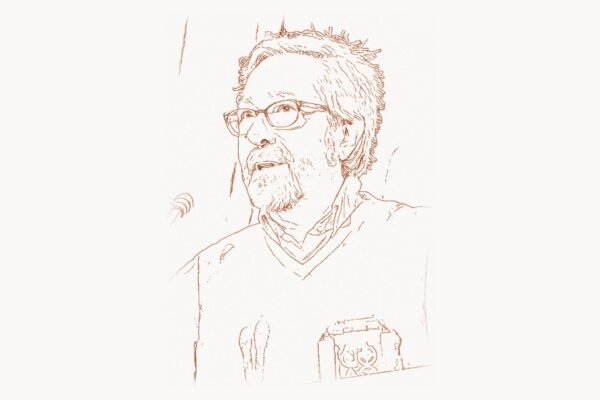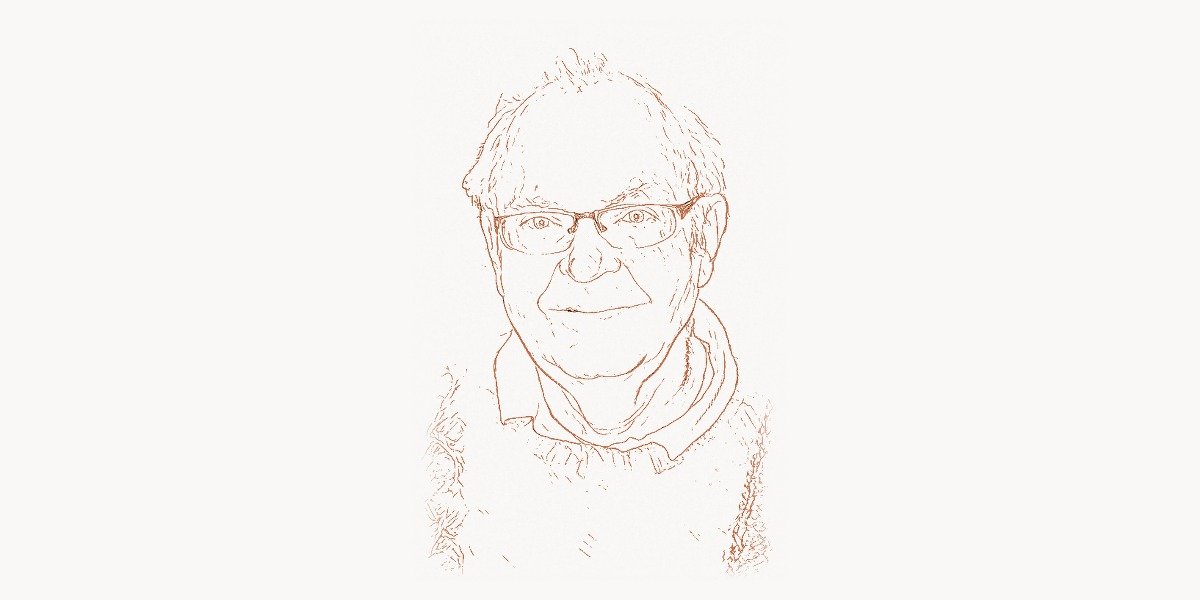
In 1962, a 24-year-old mathematician at Caltech began writing a book about compilers. He expected it to take a single volume — maybe 600 pages. Six decades later, that project has grown into “The Art of Computer Programming” (TAOCP), a multi-volume masterwork that is widely regarded as the most comprehensive treatise on algorithms ever written, and it remains unfinished. The author is Donald Ervin Knuth, a Stanford professor emeritus who has spent his career pursuing a single, audacious goal: to build a rigorous, complete, and beautiful foundation for the analysis of algorithms. Along the way, he became dissatisfied with the quality of digital typesetting, so he created TeX — a typesetting system that has become the universal standard for scientific and mathematical publishing. He also created METAFONT, a language for designing typefaces with mathematical precision. He introduced literate programming, a methodology that treats source code as literature intended to be read by humans. He received the Turing Award in 1974, at the age of 36, making him one of the youngest recipients in the award’s history. Bill Gates once said that anyone who could work through the whole of TAOCP should send him a resume. Knuth is not merely a contributor to computer science — he is one of the architects of the intellectual framework that gives the field its mathematical rigor.
Early Life and Education
Donald Ervin Knuth was born on January 10, 1938, in Milwaukee, Wisconsin. His father, Ervin Henry Knuth, was a bookkeeper and teacher who ran a small printing business, and his mother, Louise Marie Bohning Knuth, was a homemaker. The combination of his father’s love of language and the family printing press would prove prophetic — decades later, Knuth would revolutionize how text is typeset by computers.
Knuth’s intellectual gifts became apparent early. In eighth grade, he entered a contest sponsored by a candy company that asked participants to find the most words that could be formed from the letters in “Ziegler’s Giant Bar.” While the judges had identified about 2,500 possible words, the 13-year-old Knuth submitted over 4,500 by systematically working through an unabridged dictionary. He won the contest and earned a television set for his school. The episode revealed a pattern that would define his entire career: an obsessive thoroughness, a refusal to settle for approximate answers, and an ability to reduce problems to systematic search.
Knuth enrolled at the Case Institute of Technology (now Case Western Reserve University) in Cleveland in 1956, initially planning to study physics. He soon switched to mathematics, drawn by the subject’s precision and elegance. During his freshman year, he encountered the IBM 650, one of the first mass-produced computers, and was captivated. He began writing programs for the machine and quickly demonstrated an unusual talent for both practical programming and the theoretical analysis of algorithms. By the time he graduated in 1960, his academic work was so outstanding that the faculty awarded him both a Bachelor of Science and a Master of Science simultaneously — an unprecedented honor at Case.
He pursued his doctorate at the California Institute of Technology (Caltech) under the supervision of Marshall Hall Jr., a distinguished mathematician specializing in combinatorics. Knuth received his Ph.D. in mathematics in 1963 with a dissertation on the mathematical theory of context-free languages — one of the foundational topics in compiler design. He joined Caltech’s faculty immediately upon completing his degree and began the work that would become “The Art of Computer Programming.” In 1968, he moved to Stanford University, where he would remain for the rest of his academic career.
The Art of Computer Programming
Origins and Scope
In 1962, an editor at Addison-Wesley approached the young Knuth about writing a textbook on compilers. Knuth agreed, but as he began organizing his notes, the scope of the project expanded dramatically. He realized that to write properly about compilers, he needed to write about sorting, searching, and data structures. To write about those, he needed to write about fundamental algorithms and their mathematical analysis. To write about analysis, he needed to establish notation, methodology, and a body of theory that did not yet exist in any coherent form. What began as a compiler textbook became, in Knuth’s hands, the first systematic attempt to build a complete mathematical foundation for computer science.
The planned structure eventually grew to seven volumes. Volume 1, “Fundamental Algorithms” (1968), covered basic concepts, information structures, and mathematical foundations. Volume 2, “Seminumerical Algorithms” (1969), addressed random number generation, arithmetic, and numerical methods. Volume 3, “Sorting and Searching” (1973), provided exhaustive treatments of sorting algorithms (including the merge sort invented by John von Neumann) and search techniques like hashing and balanced trees. Volume 4, focused on combinatorial algorithms, has been released in fascicles (partial installments) since 2005, with Volume 4A published in 2011 and subsequent fascicles continuing to appear. Volumes 5 through 7, covering syntactic algorithms, the theory of context-free languages, and compiler techniques, remain in progress.
The books are notable for their mathematical rigor. Knuth does not merely describe algorithms — he analyzes them with the precision of a pure mathematician. Each algorithm is presented using MIX (later MMIX), an assembly language for a hypothetical computer that Knuth designed specifically for the series. This choice was deliberate: by using a machine-level language rather than a high-level one, Knuth forces readers to understand exactly what the computer does at each step, with no abstraction hiding the true cost of an operation. Every algorithm is accompanied by a mathematical analysis of its running time, typically expressed as exact formulas rather than asymptotic approximations.
/* Knuth's Algorithm 6.2.2T: Tree Search (from TAOCP Vol. 3)
 * Binary search tree lookup — the foundation Knuth used
 * to analyze expected path lengths and comparison counts.
 *
 * Knuth proved the average search cost in a random BST
 * is ~1.386 * log2(n) comparisons — a key result in
 * the mathematical analysis of algorithms.
 */

#include <stdio.h>
#include <stdlib.h>

typedef struct node {
    int key;
    struct node *left;
    struct node *right;
} Node;

Node *create_node(int key) {
    Node *n = malloc(sizeof(Node));
    n->key = key;
    n->left = n->right = NULL;
    return n;
}

/* Algorithm T (Tree search and insertion) */
Node *tree_insert(Node *root, int key) {
    if (root == NULL)
        return create_node(key);
    if (key < root->key)
        root->left = tree_insert(root->left, key);
    else if (key > root->key)
        root->right = tree_insert(root->right, key);
    return root;
}

/* Search: follows Knuth's step-by-step algorithm */
Node *tree_search(Node *root, int key, int *comparisons) {
    *comparisons = 0;
    Node *p = root;
    while (p != NULL) {
        (*comparisons)++;
        if (key == p->key)
            return p;           /* T4. Found. */
        else if (key < p->key)
            p = p->left;       /* T2. Go left. */
        else
            p = p->right;      /* T3. Go right. */
    }
    return NULL;                /* T5. Not found. */
}

/* Demonstrate: build a BST, measure search cost */
int main() {
    int data[] = {5, 3, 7, 1, 4, 6, 8, 2};
    int n = sizeof(data) / sizeof(data[0]);
    Node *root = NULL;

    for (int i = 0; i < n; i++)
        root = tree_insert(root, data[i]);

    /* Average search cost across all keys */
    int total = 0;
    for (int i = 0; i < n; i++) {
        int cmp = 0;
        tree_search(root, data[i], &cmp);
        total += cmp;
    }
    printf("Average comparisons: %.2f\n",
           (double)total / n);
    /* Output: Average comparisons: 2.50 */
    /* Knuth's formula: ~1.386 * log2(8) = 4.16 for   */
    /* random insertion order; this specific order is   */
    /* well-balanced, giving better-than-average cost.  */
    return 0;
}
This code illustrates the kind of algorithm Knuth analyzes in TAOCP Volume 3: a binary search tree with precise comparison counting. Knuth’s contribution was not inventing these structures — many predated his work — but establishing the mathematical apparatus to analyze their behavior exactly. Before Knuth, computer scientists often relied on informal arguments about efficiency. After Knuth, the field had a rigorous standard for how algorithms should be evaluated.
Impact on Computer Science
TAOCP established algorithm analysis as a central discipline within computer science. Before Knuth’s work, algorithms were often judged by informal criteria — does it work? Is it fast enough in practice? Knuth demanded a different standard: what is the exact number of operations this algorithm performs, as a function of its input size, averaged over all possible inputs? His insistence on mathematical precision transformed how computer scientists think about efficiency and complexity. The Big-O notation that every programmer encounters today was popularized (though not invented) by Knuth in his 1976 paper on the subject, where he also formally introduced Big-Theta and Big-Omega notation for tight and lower bounds.
The books also influenced the practice of programming. Knuth’s detailed walkthroughs of algorithms — showing not just the final code but the process of designing, testing, and optimizing it — set a standard for technical writing that persists today. Edsger Dijkstra, who advocated disciplined approaches to programming, shared Knuth’s conviction that algorithms should be understood with mathematical precision. The exercises in TAOCP, graded on a difficulty scale from 0 (trivial) to 50 (unsolved research problems), have served as training material for generations of computer scientists. Many fundamental results in the field were first published as exercises in TAOCP — tucked into the margins of a textbook rather than presented as standalone papers.
TeX and the Revolution in Digital Typesetting
The Problem
In 1977, Knuth received the galley proofs for a new edition of Volume 2 of TAOCP and was appalled. The publisher had switched to a new phototypesetting system, and the output was — in Knuth’s estimation — aesthetically unacceptable. The mathematical formulas were poorly spaced, the line breaks were ugly, and the overall quality was far below the standard of the hot-metal typesetting used in the original edition. For most authors, this would have been a minor annoyance to be negotiated with the publisher. For Knuth, it was a problem that needed to be solved from first principles.
He decided to create his own typesetting system. What was initially planned as a summer project consumed nearly a decade of his life. The result was TeX (pronounced “tech,” from the Greek root of “technology” and “technique”), released in 1978 with a major revision (TeX82) in 1982. TeX is a typesetting system that takes a plain text file with markup commands and produces publication-quality output, with particular strength in mathematical formulas. It is essentially a programming language for documents, with control sequences, macros, conditional logic, and a precise algorithm for paragraph layout.
Technical Design
TeX’s paragraph-breaking algorithm is a masterpiece of applied optimization. Unlike word processors that break lines one at a time (greedily filling each line before moving to the next), TeX considers the entire paragraph as an optimization problem. It evaluates all possible line-break points and selects the combination that minimizes a penalty function measuring the total “badness” of the paragraph — accounting for uneven spacing, hyphenation, and aesthetic considerations like avoiding “widow” and “orphan” lines. This global optimization approach produces consistently better results than greedy line-breaking, and the algorithm runs in time roughly proportional to the length of the paragraph, making it efficient enough for practical use.
Alongside TeX, Knuth developed METAFONT, a language for defining typefaces mathematically. Rather than storing fonts as fixed bitmaps or outlines, METAFONT describes each character as a program that draws the character using mathematical curves. This means a single METAFONT program can generate a character at any size and resolution, with adjustable parameters for stroke width, serif shape, and other design variables. The Computer Modern family of typefaces, designed by Knuth using METAFONT, became the default fonts for TeX documents and are instantly recognizable to anyone who has read academic papers in mathematics, physics, or computer science.
TeX’s influence on scientific publishing has been profound and lasting. The system — typically used today through Leslie Lamport’s LaTeX macro package — is the universal standard for mathematical and scientific typesetting. Virtually every mathematics, physics, and computer science paper published in the last four decades has been typeset using TeX or one of its derivatives. The preprint server arXiv, which hosts the majority of new research in these fields, is overwhelmingly a TeX-based ecosystem. When developers today use modern code editors to write LaTeX, they are working within the typesetting paradigm that Knuth invented.
Knuth’s approach to TeX development also established important precedents in software engineering. He offered a reward (originally $2.56 — one “hexadecimal dollar” — later increased to $327.68) for every bug found in TeX, and he kept a meticulous public log of every error. The version number of TeX converges asymptotically toward pi (the current version is 3.141592653), while METAFONT’s version number converges toward e (Euler’s number) — a mathematical joke that is entirely characteristic of Knuth. After decades of debugging, TeX is considered one of the most error-free large programs ever written.
Literate Programming
In 1984, Knuth introduced the concept of literate programming, a methodology that inverts the traditional relationship between code and documentation. In conventional programming, the code is primary and comments are secondary — annotations sprinkled among the instructions. In literate programming, the human-readable explanation is primary, and the code is embedded within it. A literate program reads like an essay or a book chapter, with code fragments interspersed at the points where they are most naturally explained. Special tools (WEB for Pascal, CWEB for C) then extract the code from the literary document and assemble it into a compilable program.
Knuth practiced what he preached. Both TeX and METAFONT were written as literate programs and published as books: “TeX: The Program” (1986) and “METAFONT: The Program” (1986). These volumes present the complete source code of each system, woven together with extensive narrative explanation of the design decisions, algorithms, and data structures. They are simultaneously working software and technical literature — artifacts that can be read, studied, and understood by humans, not merely compiled by machines.
The literate programming philosophy has influenced modern software development practices in several ways. The rise of computational notebooks (Jupyter, R Markdown), where explanatory text and executable code are interleaved, echoes Knuth’s vision. Documentation-as-code methodologies, where documentation is maintained alongside source code and generated from it, reflect the same principle. Programming languages like Niklaus Wirth’s Pascal — which Knuth initially used for his WEB system — were designed with readability as a core goal, sharing Knuth’s belief that code should communicate with human readers as clearly as with machines.
Contributions to Algorithm Analysis
Foundational Results
Knuth’s contributions to the mathematical analysis of algorithms are too numerous to catalog in a single article. Among the most significant: he performed the first rigorous average-case analysis of many fundamental algorithms, including sorting algorithms (quicksort, radix sort, tree sort), searching algorithms (binary search trees, hashing), string matching algorithms, and graph algorithms. His analysis of the Knuth-Morris-Pratt (KMP) string matching algorithm, developed in collaboration with James Morris and Vaughan Pratt, provided a linear-time algorithm for pattern matching that remains a standard reference in the field.
He developed the mathematical tools needed for algorithm analysis, drawing heavily on combinatorics, generating functions, and asymptotic analysis. His treatment of generating functions as a tool for solving recurrence relations — which arise naturally in the analysis of recursive algorithms — gave computer scientists a powerful technique borrowed from analytic number theory and combinatorics. The connection between algorithms and pure mathematics that Knuth established influenced later work by researchers like Alan Turing’s intellectual successors in theoretical computer science.
Knuth also introduced the concept of amortized analysis informally (later formalized by Robert Tarjan), the analysis of algorithms under random input models, and the mathematical framework for analyzing the performance of data structures like skip lists, B-trees, and hash tables. His analysis of the “birthday problem” and its application to hashing collisions, his work on optimal binary search trees (Knuth’s optimization), and his studies of random graphs and permutations all became standard material in algorithms courses worldwide.
# Knuth-Morris-Pratt (KMP) String Matching Algorithm
# Co-developed by Knuth, Morris, and Pratt (1977)
# Achieves O(n + m) time — a fundamental result in
# the analysis of string algorithms.

def kmp_build_failure(pattern):
    """
    Build the failure function (partial match table).
    failure[i] = length of longest proper prefix of
    pattern[0..i] that is also a suffix.
    Knuth's key insight: precompute where to resume
    matching after a mismatch, avoiding backtracking.
    """
    m = len(pattern)
    failure = [0] * m
    j = 0  # length of previous longest prefix-suffix

    for i in range(1, m):
        while j > 0 and pattern[i] != pattern[j]:
            j = failure[j - 1]  # fall back
        if pattern[i] == pattern[j]:
            j += 1
        failure[i] = j
    return failure

def kmp_search(text, pattern):
    """
    Search for pattern in text using KMP.
    Never backtracks in the text — O(n + m) guaranteed.
    """
    n, m = len(text), len(pattern)
    if m == 0:
        return []

    failure = kmp_build_failure(pattern)
    matches = []
    j = 0  # characters matched in pattern

    for i in range(n):
        while j > 0 and text[i] != pattern[j]:
            j = failure[j - 1]
        if text[i] == pattern[j]:
            j += 1
        if j == m:
            matches.append(i - m + 1)
            j = failure[j - 1]  # look for next match

    return matches

# Example: find all occurrences of "ABC" in text
text = "ABCABDABCABCABC"
pattern = "ABC"
result = kmp_search(text, pattern)
print(f"Pattern found at positions: {result}")
# Output: Pattern found at positions: [0, 7, 10, 12]
print(f"Comparisons bounded by: {len(text) + len(pattern)}")
# Output: Comparisons bounded by: 18
Philosophy and Working Methods
Intellectual Principles
Knuth’s approach to computer science is defined by a distinctive combination of mathematical rigor, aesthetic sensibility, and monastic dedication. Several principles emerge consistently from his decades of work.
First, thoroughness over speed. Where other researchers might publish a result and move on, Knuth exhaustively explores every facet of a topic before committing it to paper. TAOCP is not a survey — it is an attempt at a complete, self-contained treatment. This thoroughness extends to his software: TeX was debugged for years, tested against thousands of edge cases, and refined until Knuth was confident enough to offer cash bounties for any remaining errors.
Second, aesthetics matter. Knuth believes that programs should be elegant, that mathematical proofs should be beautiful, and that typeset pages should be visually pleasing. This is not a superficial concern — he argues that aesthetic quality correlates with correctness and clarity. A well-structured program is easier to verify, a beautiful proof is more likely to illuminate the underlying truth, and properly typeset mathematics communicates more effectively. TeX exists because Knuth could not tolerate ugly typesetting; literate programming exists because he could not tolerate ugly code.
Third, work at the lowest level of abstraction necessary. Knuth uses assembly language (MIX/MMIX) in TAOCP because he believes that understanding algorithms requires understanding exactly what the machine does. He wrote TeX in a language (WEB) that compiles to Pascal (and later C), giving him fine-grained control over every aspect of the system’s behavior. This philosophy stands in contrast to modern software development’s emphasis on abstraction and high-level languages, and it reflects Knuth’s conviction that genuine understanding requires seeing through abstractions to the underlying reality.
Fourth, disconnect to focus. In 1990, Knuth stopped using email, explaining that email is suited for people whose role is to be on top of things, while his role is to be on the bottom of things — doing deep, sustained work that requires uninterrupted concentration. He receives physical mail, which his assistant batches for him. This decision, radical for a computer scientist, anticipated by decades the modern discourse about digital distraction and deep work. For teams that need to balance deep technical work with the practical demands of coordination, tools like Taskee can help manage project workflows without fragmenting the focused attention that complex engineering demands.
The Pursuit of Completeness
Knuth’s commitment to TAOCP is perhaps the most extraordinary aspect of his career. He has been working on the series for over sixty years, and he continues to write new fascicles into his late eighties. The project is a life’s work in the most literal sense — an attempt by one person to build a comprehensive monument to the field he helped create. When asked why he does not delegate parts of the work to collaborators, Knuth has explained that consistency of treatment requires a single authorial voice, and that the process of writing forces him to understand each topic at a depth that mere reading cannot achieve.
This kind of sustained, single-minded intellectual effort is rare in modern academia, where careers are built on many short publications rather than a few monumental works. Knuth’s approach is closer to that of historical figures like John Backus, who spent years developing Fortran with methodical thoroughness, or the great encyclopedists of earlier centuries who attempted to organize entire domains of knowledge into coherent systems. Organizations managing similarly ambitious long-term technical projects often benefit from the kind of structured digital workflows that agencies like Toimi help design — ensuring that the scope and quality of complex endeavors remain manageable over years of sustained effort.
Awards and Recognition
Knuth’s contributions have been recognized with virtually every major award in computer science and mathematics. He received the ACM Turing Award in 1974 — the highest honor in computer science — for his contributions to the analysis of algorithms and the design of programming languages, with particular reference to TAOCP. He was 36 years old, one of the youngest Turing laureates ever. He received the National Medal of Science in 1979, the John von Neumann Medal from the IEEE in 1995, and the Kyoto Prize in 1996. He is a Fellow of the American Academy of Arts and Sciences, a member of the National Academy of Sciences, and a foreign member of the Royal Society. In 2003, he was elected to the American Philosophical Society.
The ACM established the annual Donald E. Knuth Prize in 1996, awarded for outstanding contributions to the foundations of computer science. The Knuth Prize is considered one of the most prestigious awards in theoretical computer science, alongside the Turing Award and the Godel Prize. Past recipients include Andrew Yao, László Lovász, and Christos Papadimitriou.
Legacy and Modern Relevance
Knuth’s influence on modern computing operates at multiple levels. At the most direct level, TeX and LaTeX are used daily by millions of scientists, mathematicians, and engineers worldwide. Every research paper with properly typeset equations, every thesis with beautiful mathematical notation, every textbook with consistent formatting owes its appearance to the system Knuth created. The TeX ecosystem — including BibTeX for bibliography management, TikZ for diagrams, and Beamer for presentations — constitutes one of the most enduring and widely used software platforms in history.
At the algorithmic level, Knuth’s analyses remain foundational. The techniques he developed for analyzing sorting, searching, hashing, tree structures, and string matching are taught in every serious algorithms course. The mathematical framework he established — using generating functions, asymptotic expansions, and probabilistic analysis to characterize algorithm behavior — is the standard methodology of the field. When a modern developer uses a hash table, a balanced tree, or a pattern-matching function, the theoretical understanding of why those structures work and how fast they operate traces back to Knuth’s analyses.
At the philosophical level, Knuth’s insistence that computer science is a mathematical discipline — that algorithms should be analyzed with the same rigor applied to theorems in number theory or topology — shaped the intellectual identity of the field. Before Knuth, computer science was in danger of being perceived as mere engineering, an applied craft lacking theoretical depth. TAOCP demonstrated that the subject had a rich mathematical structure worthy of serious intellectual attention. This was also the vision shared by Dijkstra, who advocated for formal methods and mathematical proofs in programming, and by the broader community of researchers like Dennis Ritchie and Ken Thompson, who built the foundational systems — Unix and C — on which modern computing infrastructure still runs.
Knuth’s work ethic and methodology also serve as a model. In an era of rapid publication cycles and incremental advances, Knuth represents an alternative approach: slow, thorough, cumulative, aimed at permanence rather than novelty. TAOCP is designed to remain useful for centuries — and given the fundamental nature of the algorithms it covers, it may well achieve that goal. The books are updated and corrected continuously, with Knuth maintaining an errata list for each volume that documents every known error and its correction.
Donald Knuth continues to work on TAOCP at his home near the Stanford campus. He gives an annual Christmas lecture at Stanford, writes new fascicles of Volume 4, plays the pipe organ (his other great passion), and corresponds with readers who find errors in his books. At 88 years old, he has spent more than half a century on a single intellectual project — and he is not finished. Every time a scientist types a LaTeX equation, every time an algorithm textbook analyzes the expected running time of quicksort, every time a programmer uses the KMP algorithm to search a string, they are building on the foundation that Donald Knuth laid.
Key Facts
- Born: January 10, 1938, Milwaukee, Wisconsin, United States
- Known for: “The Art of Computer Programming” (TAOCP), TeX typesetting system, METAFONT, literate programming, Knuth-Morris-Pratt algorithm, mathematical analysis of algorithms
- Key projects: TAOCP (1968–present), TeX (1978), METAFONT (1979), WEB/CWEB literate programming systems, MMIX hypothetical computer architecture
- Awards: Turing Award (1974), National Medal of Science (1979), John von Neumann Medal (1995), Kyoto Prize (1996), Faraday Medal (2011)
- Education: B.S. and M.S. in Mathematics from Case Institute of Technology (1960), Ph.D. in Mathematics from California Institute of Technology (1963)
- Positions: Professor Emeritus of The Art of Computer Programming, Stanford University (1968–present)
- Programming legacy: Established algorithm analysis as a rigorous mathematical discipline; TeX remains the universal standard for scientific typesetting after four decades
Frequently Asked Questions
What is “The Art of Computer Programming”?
“The Art of Computer Programming” (TAOCP) is a multi-volume work by Donald Knuth that provides a comprehensive, mathematically rigorous treatment of fundamental algorithms and data structures. The series began in 1968 with Volume 1, “Fundamental Algorithms,” and currently includes Volumes 1 through 3 (covering fundamental algorithms, seminumerical algorithms, and sorting and searching) plus portions of Volume 4 on combinatorial algorithms. Seven volumes are planned in total. TAOCP is widely considered the most authoritative reference on algorithms ever written. It is notable for its use of MIX/MMIX assembly language to present algorithms at the machine level, its exhaustive mathematical analysis of algorithm performance, and its graded exercises ranging from trivial to unsolved research problems. The series has sold over a million copies and has been translated into numerous languages.
What is TeX and why did Knuth create it?
TeX is a typesetting system that Knuth created beginning in 1977, primarily to produce high-quality mathematical and scientific documents. Knuth was motivated by dissatisfaction with the quality of phototypesetting applied to a new edition of TAOCP. Rather than accept inferior output, he designed a complete typesetting system from scratch. TeX’s key technical innovation is its paragraph-breaking algorithm, which treats line breaking as a global optimization problem rather than making greedy local decisions. This produces consistently superior typography. TeX is typically used today through Leslie Lamport’s LaTeX macro package, which provides a document markup language built on top of TeX’s primitives. LaTeX is the de facto standard for scientific publishing in mathematics, physics, computer science, and many other technical fields. The system is free, open-source, and runs on all major operating systems.
What is the Knuth-Morris-Pratt algorithm?
The Knuth-Morris-Pratt (KMP) algorithm is a string-matching algorithm developed by Donald Knuth, James Morris, and Vaughan Pratt and published in 1977. It finds all occurrences of a pattern string within a text string in O(n + m) time, where n is the length of the text and m is the length of the pattern. The key insight is a preprocessing step that constructs a “failure function” for the pattern, which records, for each position in the pattern, the length of the longest proper prefix that is also a suffix. When a mismatch occurs during matching, the failure function tells the algorithm exactly where to resume matching in the pattern, avoiding the need to backtrack in the text. This guarantees linear-time performance regardless of the input — a significant improvement over naive string matching, which can require O(n * m) time in the worst case. The KMP algorithm is a standard topic in algorithms courses and is used in text editors, search utilities, and bioinformatics software.
What is literate programming?
Literate programming is a software development methodology introduced by Donald Knuth in 1984. It reverses the traditional relationship between code and documentation: instead of writing code with occasional comments, the programmer writes a human-readable document (an essay, a chapter, or a book) with code fragments embedded within it. The literate program is processed by two tools: one (called “tangle”) extracts the code and assembles it into a compilable program, while another (called “weave”) produces a formatted document for human reading. Knuth developed the WEB system for literate programming in Pascal and the CWEB system for C. He used literate programming to write both TeX and METAFONT, publishing the complete source code of each as readable books. The methodology has influenced modern practices including computational notebooks (Jupyter), documentation generators, and the broader movement toward treating documentation as a first-class concern in software development.