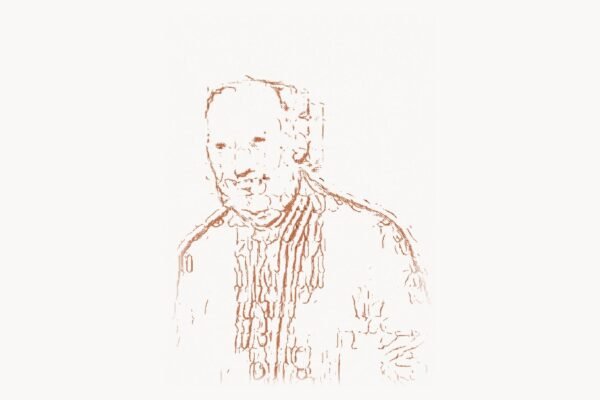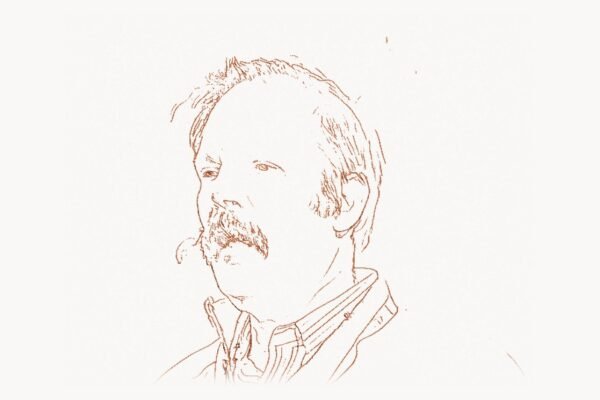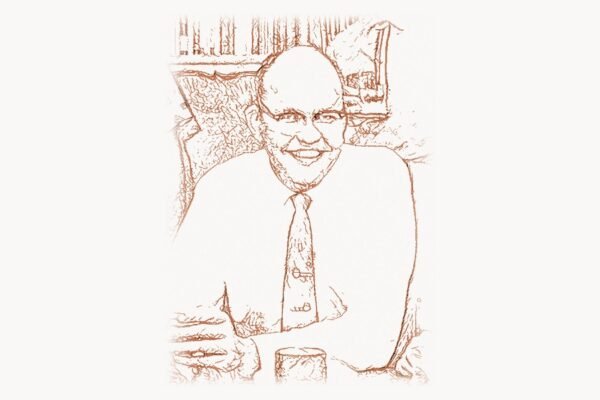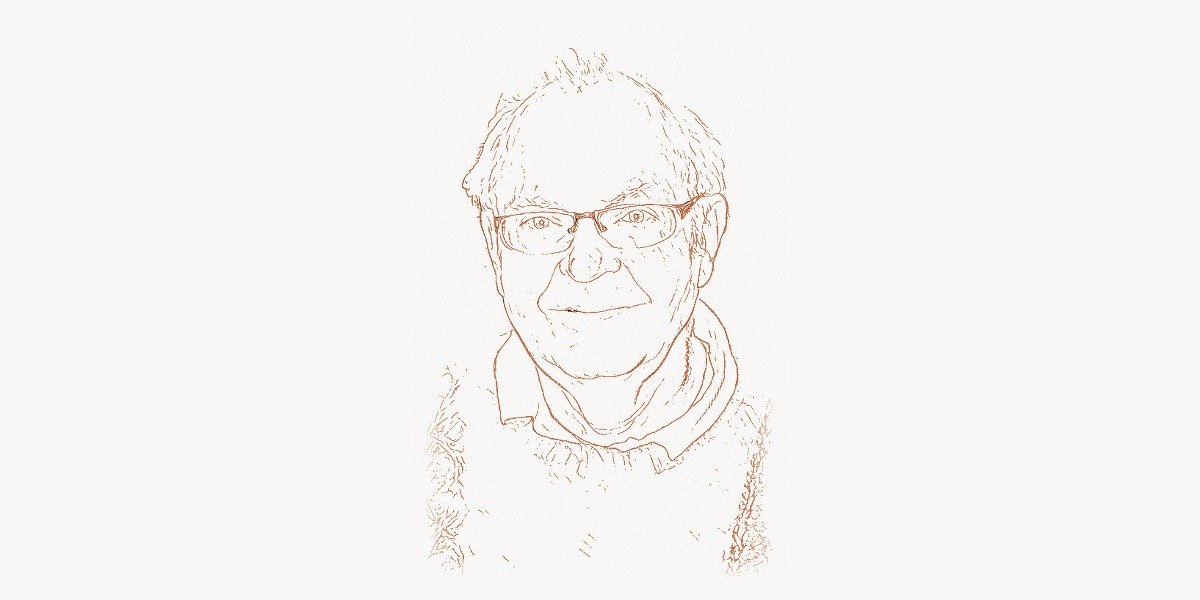
In 1962, a 24-year-old mathematics prodigy named Donald Knuth signed a contract with Addison-Wesley to write a book on compiler design. That single book grew into a multi-volume work titled The Art of Computer Programming (TAOCP), a project that has consumed more than 60 years of Knuth’s life and remains unfinished. Three complete volumes and parts of a fourth have been published so far — covering fundamental algorithms, seminumerical algorithms, sorting, searching, and combinatorial algorithms — totaling over 3,000 pages of dense, rigorous, and beautifully written mathematics of computing. Bill Gates once said of TAOCP: “If you think you’re a really good programmer, read Knuth’s Art of Computer Programming. You should definitely send me a resume if you can read the whole thing.” Steve Jobs kept a set on his bookshelf. The books are widely considered the definitive work on computer science fundamentals, and Knuth is regarded by many as the greatest computer scientist alive. But TAOCP is only part of the story. When Knuth was dissatisfied with the typesetting quality of the second edition of Volume 2 in the mid-1970s, he did not simply complain — he spent nearly a decade creating TeX, a typesetting system so precise and powerful that it became the standard for scientific and mathematical publishing worldwide. He also created METAFONT for designing typefaces, developed the concept of literate programming, and made fundamental contributions to the analysis of algorithms. Knuth does not just write about computer science — he has shaped its practice, its standards, and its aesthetic sensibility.
Early Life and Path to Technology
Donald Ervin Knuth was born on January 10, 1938, in Milwaukee, Wisconsin. His father, Ervin Henry Knuth, was a teacher and bookkeeper at a Lutheran school, and his mother, Louise Marie Bohning Knuth, was a homemaker. From an early age, Knuth showed exceptional mathematical talent and an obsessive attention to detail that would characterize his entire career.
A pivotal moment came in eighth grade when Knuth entered a contest sponsored by the Ziegler candy company: contestants had to find the most words that could be formed from the letters in “Ziegler’s Giant Bar.” Using an unabridged dictionary that he studied for hours, Knuth found 4,500 words — more than twice the number the judges had found. His school won a television set and enough candy bars for all the students. This combination of obsessive thoroughness and creative problem-solving would become Knuth’s trademark.
Knuth attended the Case Institute of Technology (now Case Western Reserve University) in Cleveland, Ohio, where he studied mathematics and physics. He was introduced to programming through the IBM 650 computer, which the university had recently acquired. Knuth quickly became obsessed with programming and began writing software. He became so proficient that he rewrote the compiler for the university’s computer, and his grade point average was so high that the faculty voted to award him a simultaneous B.S. and M.S. in mathematics when he graduated in 1960. He then went to Caltech for his Ph.D. in mathematics, which he completed in 1963. He joined the faculty at Caltech immediately, then moved to Stanford University in 1968, where he has been ever since, holding the title of Professor Emeritus of The Art of Computer Programming.
The Breakthrough: The Art of Computer Programming and TeX
The Technical Innovation
Knuth began working on what would become TAOCP in 1962, when he was 24. His original plan was a single book on compilers, but the scope kept expanding as he realized that compiler design depended on understanding fundamental algorithms, which depended on understanding data structures, which depended on understanding mathematical analysis. The single book grew to a projected seven volumes, of which three (plus parts of Volume 4) have been published: Volume 1: Fundamental Algorithms (1968), Volume 2: Seminumerical Algorithms (1969), Volume 3: Sorting and Searching (1973), and Volume 4A: Combinatorial Algorithms, Part 1 (2011), with fascicles of Volume 4B released through 2023.
TAOCP is distinguished by its mathematical rigor, its encyclopedic coverage, and Knuth’s insistence on precise analysis of algorithm performance. Where other textbooks might describe an algorithm and give its time complexity as O(n log n), Knuth provides exact formulas, complete with constant factors and lower-order terms. His analysis uses a hypothetical computer called MIX (and its successor MMIX), allowing him to count exact instruction cycles rather than relying on asymptotic approximations.
// MMIX assembly — Knuth's hypothetical processor for algorithm analysis
// This is Euclid's algorithm for GCD as Knuth would analyze it

// Knuth uses MMIX to count EXACT operation costs, not just Big-O
// This precision is what distinguishes TAOCP from other textbooks

        LOC  #100
gcd     CMP  t,$1,$2      // Compare m and n        (1 cycle)
        BZ   t,done        // If equal, done         (1 cycle if taken)
        BP   t,bigger      // If m > n, skip swap    (1 cycle)
        // Swap m and n
        SET  t,$1          // t = m                  (1 cycle)
        SET  $1,$2         // m = n                  (1 cycle)
        SET  $2,t          // n = t                  (1 cycle)
bigger  SUB  $1,$1,$2      // m = m - n              (1 cycle)
        JMP  gcd           // Repeat                 (1 cycle)
done    POP  1,0           // Return m (the GCD)

// Knuth would then analyze: for random inputs of size N,
// what is the AVERAGE number of iterations?
// Answer involves the golden ratio and logarithms.
// This level of precision is unique to TAOCP.
In 1977, when Knuth received the galley proofs for the second edition of Volume 2, he was dismayed by the quality of the typesetting. The original edition had been typeset using Monotype, a hot-metal system that produced beautiful results. But the publishing industry had switched to phototypesetting, which Knuth found ugly — particularly for mathematical formulas. Rather than accept inferior typography, Knuth decided to build his own typesetting system.
The result was TeX (pronounced “tech,” from the Greek letters tau, epsilon, chi), released in 1978 and substantially rewritten as TeX82 in 1982. TeX was designed with one goal: to produce the most beautiful printed pages possible, especially for mathematics. Its line-breaking algorithm considers entire paragraphs at once (rather than line by line) to find the optimal placement of words. Its mathematical typesetting handles everything from simple fractions to complex multi-line equations with extraordinary precision.
% TeX example — Knuth's typesetting system
% This is how virtually all scientific papers are written today

\documentclass{article}
\usepackage{amsmath}

\begin{document}

\section{Euler's Identity}
Euler's identity connects five fundamental mathematical constants:
\[ e^{i\pi} + 1 = 0 \]

\section{The Gaussian Integral}
The integral that appears throughout probability theory and physics:
\[ \int_{-\infty}^{\infty} e^{-x^2} \, dx = \sqrt{\pi} \]

\section{Knuth's Exact Analysis}
Where other texts write $O(n \log n)$, Knuth gives:
\[ T(n) = n \lg n - 1.4427n + O(\log n) \]
with the exact constant $\frac{2\ln 2 - 1}{\ln 2} \approx 1.4427$.

% TeX's paragraph-breaking algorithm considers all possible
% line breaks simultaneously and selects the combination
% that minimizes total "badness" — a measure of how much
% spaces must stretch or shrink from their ideal width.

\end{document}
TeX’s version numbering reflects Knuth’s personality: each version gets one digit closer to pi. The current version is 3.141592653. METAFONT, the font design system Knuth created alongside TeX, converges toward the number e (current version: 2.7182818). Knuth considers both programs to be essentially finished, with any remaining changes limited to bug fixes.
Why It Mattered
TAOCP set the standard for what it means to understand algorithms. Before Knuth, algorithm analysis was informal and inconsistent. Knuth established the Big-O, Big-Omega, and Big-Theta notations that are now standard in computer science (though Big-O existed earlier, Knuth popularized and formalized its use in algorithm analysis). His encyclopedic treatment of fundamental algorithms — from sorting and searching to random number generation to combinatorial optimization — created a shared foundation that the entire field builds upon.
TeX and its derivative LaTeX (created by Leslie Lamport in 1984) are the standard tools for writing scientific papers, theses, and books in mathematics, physics, computer science, and many other fields. Virtually every paper published in these disciplines is typeset with TeX/LaTeX. The ACM, IEEE, Springer, Elsevier, and most major academic publishers provide LaTeX templates. When you read a published paper with beautifully formatted equations, you are seeing Knuth’s work. TeX has been used to typeset Dijkstra’s EWDs, Lamport’s papers on distributed systems, and millions of other documents.
Beyond TAOCP and TeX: Other Contributions
Knuth introduced the concept of literate programming in 1984 — the idea that programs should be written as literature, with the logic explained in natural language interspersed with code. His WEB system (for Pascal) and CWEB system (for C) allow programmers to write documents that contain both the explanation and the code, which can be “tangled” into compilable source code or “woven” into typeset documentation. While literate programming has not been widely adopted in industry, it influenced tools like Jupyter notebooks, R Markdown, and documentation generators.
His contributions to the analysis of algorithms are foundational. He popularized the study of expected-case analysis (as opposed to worst-case), developed the mathematical tools for analyzing recursive algorithms, and contributed extensively to the theory of random number generation. His treatment of sorting algorithms in Volume 3 of TAOCP remains the most comprehensive analysis ever published.
Knuth also made significant contributions to the theory of context-free languages and parsing. His work on LR parsing (1965) provided the theoretical foundation for parser generators like YACC and its descendants, which are used in compilers for languages including C, C++, Java, and many web development tools. The LR(1) parsing technique Knuth developed is the basis for most practical parser implementations.
He is also known for the Knuth-Morris-Pratt (KMP) string matching algorithm (1977, with James H. Morris and Vaughan Pratt), which finds occurrences of a pattern in a text in O(n + m) time. This algorithm is used in text editors, search tools like code editors, and string processing libraries.
Philosophy and Engineering Approach
Key Principles
Knuth’s most famous quote is: “Premature optimization is the root of all evil.” This statement, from his 1974 paper “Structured Programming with go to Statements,” is one of the most cited lines in software engineering. It is frequently misunderstood as an argument against optimization altogether, but Knuth’s actual point was more nuanced: programmers should write clear, correct code first and optimize only the parts that actually cause performance problems. He estimated that “about 97% of the time, premature optimization is the root of all evil,” but that the remaining 3% — the critical inner loops — should be optimized aggressively.
Another core principle is thoroughness. Knuth does not believe in approximations or hand-waving. When he analyzes an algorithm, he produces exact results — not just asymptotic bounds but precise constants and lower-order terms. This thoroughness extends to his typesetting: TeX’s algorithms for hyphenation, line breaking, and page layout are designed to produce optimal results, not merely adequate ones. Knuth has famously offered $2.56 (one hexadecimal dollar) to anyone who finds a bug in his published work, and the checks are so prized that most recipients frame them rather than cashing them.
Knuth is also deeply committed to the idea that computer science is both an art and a science. The title of his magnum opus — The Art of Computer Programming — is deliberate. He believes that writing good programs requires not just technical knowledge but aesthetic sensibility — an eye for elegance, clarity, and beauty. This perspective puts him at odds with purely commercial approaches to software development, but it resonates with programmers who take pride in their craft.
Since January 1, 1990, Knuth has not used email. He decided that email was consuming too much of his time and prevented the sustained concentration necessary for writing TAOCP. He communicates by postal mail, which his secretary batches for him to read periodically. This radical disconnection from digital communication — by one of the greatest computer scientists in history — is itself a statement about the relationship between technology and productivity.
Legacy and Modern Relevance
Knuth remains active at Stanford, continuing work on TAOCP Volume 4B and beyond. As of 2024, at age 86, he gives annual Christmas lectures at Stanford and continues to write fascicles of Volume 4. He has said he expects to complete Volume 5 (Syntactic Algorithms) but is uncertain about Volumes 6 (The Theory of Context-Free Languages) and 7 (Compiler Techniques).
TAOCP’s influence is pervasive. Every algorithms textbook published after 1968 builds on the foundations Knuth laid. The notation, the analytical methods, and many of the specific algorithms he described are standard material in every computer science degree program. When a developer implements a hash table, uses a sorting algorithm, generates random numbers, or analyzes the performance of code, they are working with concepts Knuth formalized.
TeX and LaTeX dominate scientific publishing. ArXiv, the preprint server used by physicists, mathematicians, and computer scientists, receives hundreds of thousands of TeX-formatted papers annually. Python’s scientific community (NumPy, SciPy, Matplotlib) uses LaTeX for mathematical notation in plots and documentation. Overleaf, an online LaTeX editor, has over 10 million users. The infrastructure of scientific communication runs on software Knuth wrote.
Knuth received the Turing Award in 1974, at age 36, for “major contributions to the analysis of algorithms and the design of programming languages, and in particular for his contributions to the ‘art of computer programming’ through his well-known books in a continuous series by this title.” He also received the National Medal of Science (1979), the John von Neumann Medal (1995), the Kyoto Prize (1996), the BBVA Foundation Frontiers of Knowledge Award (2010), and numerous other honors. In 2003, he was named a Fellow of the Royal Society.
His influence extends beyond specific technical contributions. Knuth demonstrated that computer science could be treated with the same mathematical rigor as physics or pure mathematics. He showed that software tools (like TeX) could be built to standards of perfection rarely seen in commercial software. And he proved that a single individual, working carefully and systematically over decades, could create works of lasting value in a field that often prioritizes speed over quality.
Key Facts
- Born: January 10, 1938, Milwaukee, Wisconsin, USA
- Known for: The Art of Computer Programming, TeX typesetting system, analysis of algorithms, literate programming, Knuth-Morris-Pratt algorithm
- Key projects: TAOCP (1968–present), TeX (1978/1982), METAFONT, WEB/CWEB literate programming systems, MMIX processor architecture
- Awards: Turing Award (1974), National Medal of Science (1979), Kyoto Prize (1996), Fellow of the Royal Society (2003)
- Education: B.S./M.S. from Case Institute of Technology (1960), Ph.D. from Caltech (1963)
- Career: Stanford University (1968–present, Professor Emeritus since 1993)
Frequently Asked Questions
Who is Donald Knuth?
Donald Ervin Knuth (born 1938) is an American computer scientist and mathematician, Professor Emeritus at Stanford University, widely considered one of the greatest computer scientists in history. He is the author of The Art of Computer Programming (TAOCP), a multi-volume work that is the definitive reference on fundamental algorithms. He created TeX, the typesetting system used for virtually all scientific and mathematical publishing. He received the Turing Award in 1974.
What did Donald Knuth create?
Knuth created The Art of Computer Programming (1968–present), the most comprehensive work on algorithms ever written. He created TeX (1978), the typesetting system that powers scientific publishing worldwide, and METAFONT, a system for designing digital typefaces. He co-invented the Knuth-Morris-Pratt string matching algorithm (1977). He introduced literate programming (1984) and the WEB/CWEB systems. He developed the theory of LR parsing (1965), foundational to modern compiler construction. He popularized and formalized the use of asymptotic notation (Big-O) in algorithm analysis.
Why is Donald Knuth important?
Knuth is important because TAOCP established the rigorous mathematical foundation for algorithm analysis that the entire field of computer science uses. His TeX system enabled high-quality scientific publishing and is used by millions of researchers worldwide. His work on parsing theory underpins modern compilers. His contributions to random number generation, sorting algorithms, and combinatorial optimization are foundational. His insistence on precision, elegance, and thoroughness set a standard for the field, and his famous dictum about premature optimization is one of the most important guidelines in software engineering.