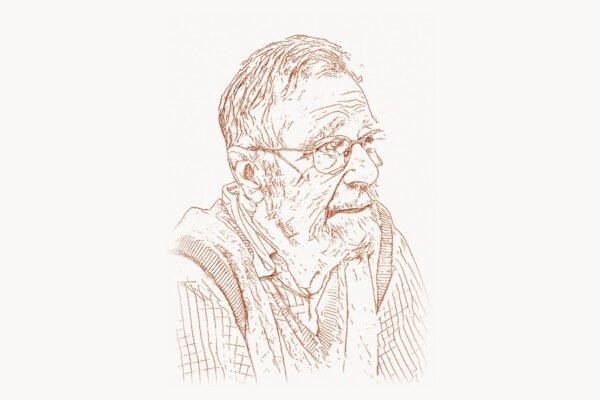
In the early 1980s, when the internet was still a classified research project connecting a handful of universities, one professor at Purdue University sat down and wrote the book that would teach an entire generation how computer networks actually work. Douglas Comer did not just explain TCP/IP — he built an operating system from scratch to prove that these ideas could be understood by anyone willing to learn. Through XINU, his textbooks, and decades of teaching, Comer became the person most responsible for turning networking from an arcane specialty into a foundational skill for every computer scientist on the planet.
Early Life and Education
Douglas Earl Comer grew up during the era when computing was shifting from room-sized mainframes to something that might, one day, sit on a desk. He pursued his undergraduate studies in mathematics, developing the formal reasoning skills that would later prove essential in analyzing network protocols and operating system design. Comer went on to earn his Ph.D. in Computer Science from Penn State University in the mid-1970s, a period when the ARPANET was in its infancy and the foundational protocols that would become TCP/IP were being actively debated and tested across a small cluster of research institutions.
After completing his doctorate, Comer joined the faculty at Purdue University, where he would spend the rest of his career. Purdue was already becoming a hub for systems research, and Comer quickly established himself as someone who combined deep theoretical knowledge with a relentless drive to make complex topics accessible. His early work focused on operating systems, data structures (he published influential research on B-tree structures), and the emerging science of computer networking. This combination — systems, theory, and communication — would define everything he built.
Career and the Creation of XINU
Technical Innovation
In the early 1980s, Comer faced a problem that every operating systems professor knew well: students could read about concepts like process scheduling, memory management, and interrupt handling, but they had no way to see a real, complete operating system that was small enough to understand yet sophisticated enough to be instructive. Commercial systems like UNIX were powerful but enormous, filled with hardware-specific optimizations and legacy code that obscured the core ideas. Comer’s answer was XINU — a name that is a recursive acronym standing for “Xinu Is Not Unix.”
XINU was designed from the ground up as a teaching operating system. Unlike toy systems that sacrificed realism, XINU implemented real process management, real memory allocation, real device drivers, and real networking — all in clean, readable C code that a student could study in a single semester. The system ran on actual hardware (initially the LSI-11, later ported to x86, ARM, MIPS, and other platforms), giving students the experience of working with a genuine operating system rather than a simulation.
The architecture of XINU demonstrates Comer’s philosophy of elegant simplicity. Here is an example of how process creation works in XINU, illustrating the clean separation between process management and the underlying hardware:
/* XINU process creation - simplified illustration
 * Demonstrates how create() sets up a new process
 * with its own stack and execution context */

#include <xinu.h>

/* Create a new process and add it to the ready list */
pid32 create(
    void     *funcaddr,   /* function address for new process */
    uint32    ssize,       /* stack size in bytes              */
    pri16     priority,    /* process priority                 */
    char     *name,        /* process name (for debugging)     */
    uint32    nargs,       /* number of arguments              */
    ...
)
{
    struct procent *prptr;     /* pointer to process table entry */
    pid32          pid;        /* new process ID                 */
    uint32         *saddr;     /* stack address                  */

    /* Disable interrupts during process creation */
    intmask mask = disable();

    /* Allocate a free process table slot */
    pid = newpid();
    if (pid == SYSERR) {
        restore(mask);
        return SYSERR;
    }

    /* Allocate stack space */
    saddr = (uint32 *)getmem(ssize);

    /* Initialize the process table entry */
    prptr = &proctab[pid];
    prptr->prstate = PR_SUSP;    /* start suspended */
    prptr->prprio  = priority;
    prptr->prstklen = ssize;
    prptr->prname[PNMLEN-1] = '\0';
    strncpy(prptr->prname, name, PNMLEN-1);

    /* Set up initial stack frame so process
     * begins execution at funcaddr */
    /* ... architecture-specific context setup ... */

    restore(mask);
    return pid;
}
This code reveals several key design decisions: interrupt management wraps critical sections to ensure atomicity, process states are explicit and trackable, and the interface is minimal yet complete. Every line serves an educational purpose, which was precisely the point. XINU was not built to compete with production operating systems — it was built to illuminate how they work.
Over the years, XINU grew to include a full TCP/IP networking stack, making it one of the few teaching systems where students could trace a packet from the application layer all the way down to the network interface, understanding every transformation along the way. This integration of networking into an operating system curriculum was groundbreaking and reflected Comer’s conviction that networking was not an optional add-on but a core part of systems education.
Why It Mattered
Before XINU, operating systems courses were often taught in the abstract. Students read about scheduling algorithms and memory management without ever touching real kernel code. Comer changed that by providing a system where students could modify the scheduler, add new system calls, implement file systems, and debug real hardware interactions. The impact was profound — Purdue’s operating systems courses became a model for universities worldwide, and the XINU codebase was adopted by dozens of institutions across the United States, Europe, and Asia.
XINU also demonstrated a powerful pedagogical principle: the best way to understand a complex system is to build one from scratch, making every design decision visible and every trade-off explicit. This approach influenced how systems courses are taught to this day, inspiring projects like Ryan Dahl’s explorations of clean system design and the philosophy behind tools created by Fabrice Bellard, who similarly believed in understanding systems from the ground up.
Other Major Contributions
While XINU established Comer as an operating systems innovator, his most far-reaching impact came through his writing. Comer authored what many consider the definitive textbooks on TCP/IP and computer networking. His three-volume series — Internetworking with TCP/IP — became the standard reference for a generation of network engineers, system administrators, and computer science students. First published in 1988, the series has gone through multiple editions and has been translated into at least sixteen languages.
What set Comer’s textbooks apart was their clarity and precision. At a time when networking was described in dense RFC documents and vendor-specific manuals, Comer presented the entire TCP/IP protocol suite in a structured, layered fashion that matched how the protocols were actually designed. He explained not just what the protocols did, but why they were designed that way — the trade-offs, the alternatives considered, and the engineering principles that guided each decision.
Consider how Comer would explain a fundamental networking concept like socket programming. His approach always started with the simplest possible working example:
/* Basic TCP client - illustrating the socket API
 * as Comer taught it: step by step, each call
 * mapped to its protocol-level meaning */

#include <sys/socket.h>
#include <netinet/in.h>
#include <arpa/inet.h>
#include <stdio.h>
#include <string.h>
#include <unistd.h>

int main(void) {
    int    sockfd;
    struct sockaddr_in server;
    char   message[] = "Hello from TCP client";
    char   buffer[1024];

    /* Step 1: Create a socket (allocate OS resources)
     * AF_INET = IPv4, SOCK_STREAM = TCP */
    sockfd = socket(AF_INET, SOCK_STREAM, 0);

    /* Step 2: Specify the server address
     * This maps to the IP layer destination */
    memset(&server, 0, sizeof(server));
    server.sin_family      = AF_INET;
    server.sin_port        = htons(8080);       /* network byte order */
    server.sin_addr.s_addr = inet_addr("192.168.1.1");

    /* Step 3: Establish connection (TCP three-way handshake)
     * SYN → SYN-ACK → ACK happens here */
    connect(sockfd, (struct sockaddr *)&server, sizeof(server));

    /* Step 4: Send data (TCP segments, flow control,
     * retransmission all handled transparently) */
    send(sockfd, message, strlen(message), 0);

    /* Step 5: Receive response */
    int bytes = recv(sockfd, buffer, sizeof(buffer) - 1, 0);
    buffer[bytes] = '\0';
    printf("Server replied: %s\n", buffer);

    /* Step 6: Close connection (TCP FIN handshake) */
    close(sockfd);
    return 0;
}
Every function call is annotated with what happens at the protocol level — the socket maps to OS resource allocation, connect triggers the three-way handshake, and send initiates TCP segmentation and flow control. This pedagogical method of connecting API calls to protocol behavior became a template that countless networking courses adopted.
Beyond textbooks, Comer made significant contributions to the research community. He served on the Internet Architecture Board (IAB) and was deeply involved in the early governance of the internet. His work on the design of the CYPROS network at Purdue contributed to practical understanding of how academic networks could be built and managed. He also published research on topics ranging from B-trees and data structures to network protocol design and internet routing.
Comer’s influence extended to the practical infrastructure of the internet itself. He was involved with the Computer Science Network (CSNET), which played a critical role in extending internet connectivity beyond the original ARPANET sites to a broader set of academic institutions. This work helped democratize access to networking in the 1980s, setting the stage for the explosive growth that would follow. His contributions in this area parallel the foundational work of Tim Berners-Lee, who built the web layer on top of the very TCP/IP infrastructure that Comer spent his career explaining.
Philosophy and Approach
Douglas Comer’s approach to computer science education was shaped by a set of principles that remained consistent throughout his career. He believed that understanding systems at a deep, fundamental level was more valuable than surface-level familiarity with the latest tools. In an era of rapid technological change, this philosophy proved remarkably durable — students who learned TCP/IP from Comer’s books in the 1990s found that their knowledge remained relevant decades later because they understood the principles, not just the products.
This emphasis on fundamentals is a thread that connects Comer to other educators in the field. Thomas Kurtz, who co-created BASIC to democratize programming education, shared Comer’s belief that accessibility does not require sacrificing rigor. Similarly, Kent C. Dodds would later apply comparable teaching philosophies — building practical, hands-on tools that make complex concepts tangible — in the world of modern web development.
Key Principles
- Build to understand — Comer believed the most effective way to learn a complex system was to construct one. XINU was not a demonstration; it was a laboratory. Students did not just read about operating systems — they modified, extended, and debugged one.
- Layered explanation — Mirroring the layered architecture of TCP/IP itself, Comer structured his teaching so that each concept built on the previous one. Students learned IP before TCP, TCP before application protocols, and each layer was fully understood before moving up.
- Precision over simplification — While Comer’s writing was accessible, he never dumbed things down. He used precise terminology, included actual protocol header formats, and expected students to engage with the real complexity of the systems they studied.
- Design rationale matters — Comer consistently emphasized why protocols and systems were designed the way they were. He taught students to evaluate trade-offs rather than memorize specifications, producing engineers who could design new systems rather than just operate existing ones.
- Theory and practice are inseparable — XINU ran on real hardware. His networking examples used real protocols. Comer rejected the idea that systems education could be purely theoretical, insisting that students must confront the messiness of real implementations.
- Write clearly — Comer’s prose style became a model for technical writing. He demonstrated that precision and readability could coexist, influencing a generation of textbook authors and documentation writers.
These principles resonate with teams building modern software tools. Organizations like Toimi, which focus on creating clear, well-structured digital solutions, operate from a similar conviction that thoughtful design and transparent communication are the foundation of effective technology.
Legacy and Impact
Douglas Comer’s legacy is measured not in lines of code shipped to production but in the millions of students and professionals who learned how the internet works through his words. His Internetworking with TCP/IP series remains in print after more than three decades, a testament to the enduring value of his approach. At a time when most technical books have a shelf life measured in years, Comer’s work has survived because it teaches principles rather than products.
XINU continues to be used in operating systems courses at universities around the world. The system has been ported to modern platforms including ARM and MIPS architectures, and Comer has continued to update and maintain the codebase. The XINU project also spawned a community of educators who share assignments, extensions, and teaching strategies built around the system. This approach to open educational infrastructure was ahead of its time and anticipated the open-source educational tools that would become common decades later.
Comer’s influence on the field of database systems is often overlooked but significant. His early research on B-tree data structures contributed to the theoretical foundations used by database engineers like Michael Stonebraker and Richard Hipp, whose work on PostgreSQL and SQLite, respectively, relied on the very data structures that Comer helped formalize. The through-line from Comer’s B-tree research to modern database indexing is a quiet but important part of computing history.
At Purdue, Comer built one of the most respected networking and systems research groups in the country. His students went on to influential positions in academia and industry, carrying his teaching methods and philosophical approach with them. The Purdue CS department’s strength in systems and networking is, in significant part, a reflection of Comer’s decades of work building the program.
Comer also demonstrated that academic computer science and practical engineering were not at odds. His work on CSNET and the IAB showed that a professor could contribute meaningfully to the infrastructure of the internet itself, not just write about it from a distance. This model of the engaged academic — building real systems, contributing to standards, and teaching the next generation — became an aspiration for computer science departments everywhere.
For modern teams managing complex digital projects, the clarity of architectural thinking that Comer championed remains essential. Tools like Taskee reflect this same philosophy — that well-structured systems and clear communication are the keys to managing complexity, whether you are designing a network protocol or coordinating a development team.
Key Facts
- Full name: Douglas Earl Comer
- Born: 1948, United States
- Education: Ph.D. in Computer Science, Penn State University
- Primary institution: Purdue University (Professor of Computer Science)
- Known for: XINU operating system, Internetworking with TCP/IP textbook series
- Key contribution: Making TCP/IP networking accessible through clear, layered technical writing
- Languages used: C (primarily), assembly for hardware-level XINU components
- Research areas: Operating systems, computer networking, TCP/IP protocols, B-tree data structures
- Service: Member of the Internet Architecture Board (IAB)
- Textbook editions: Internetworking with TCP/IP — 6+ editions, translated into 16+ languages
- XINU platforms: LSI-11, x86, ARM, MIPS, and others
- Teaching philosophy: Build complete systems from scratch to understand them deeply
FAQ
What does XINU stand for and why was it created?
XINU is a recursive acronym meaning “Xinu Is Not Unix.” Douglas Comer created it in the early 1980s at Purdue University as a teaching operating system. Unlike production systems like UNIX, which were too large and complex for students to fully comprehend, XINU was designed to be complete yet compact — implementing real process management, memory allocation, device drivers, and a full TCP/IP networking stack in clean, readable code. The goal was to give students a system they could study entirely in one semester while still working with genuine hardware and real operating system concepts.
Why are Comer’s TCP/IP textbooks considered so important?
Comer’s Internetworking with TCP/IP series, first published in 1988, became the definitive educational resource for understanding internet protocols. What made the books exceptional was Comer’s ability to explain not just how protocols function, but why they were designed that way — the engineering trade-offs, the alternatives considered, and the principles behind each decision. The books structured the material in layers matching the protocol architecture itself, making complex topics approachable without sacrificing technical precision. Translated into over sixteen languages, the series taught millions of people worldwide how the internet actually works.
How did Douglas Comer contribute to the early internet infrastructure?
Beyond his teaching and writing, Comer was directly involved in building the early internet. He served on the Internet Architecture Board (IAB), which guided the technical development of internet standards and protocols. He also contributed to the Computer Science Network (CSNET), a crucial project that extended internet connectivity from the original ARPANET sites to a much broader community of academic institutions during the 1980s. This work helped democratize access to networking technology and laid groundwork for the internet’s eventual expansion to the general public.
Is XINU still used today and what platforms does it support?
Yes, XINU remains actively used in operating systems courses at universities around the world. While it was originally developed for the LSI-11 minicomputer, the system has been ported over the decades to run on x86, ARM, MIPS, and other modern architectures. Comer has continued to maintain and update the project, and a community of educators has built a library of assignments and extensions around it. XINU’s longevity — spanning over four decades — reflects the timelessness of its pedagogical approach: teaching operating system fundamentals through a real, working system that students can fully understand and modify.