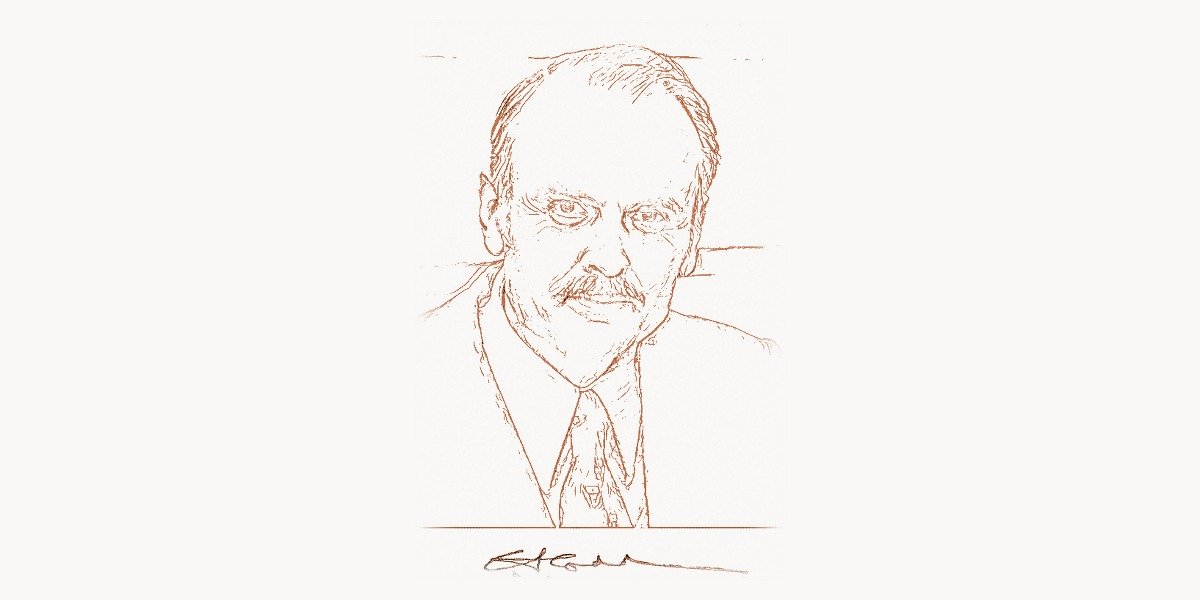
In June 1970, a 47-year-old mathematician working at IBM’s San Jose Research Laboratory published a paper in the journal Communications of the ACM. The paper was titled “A Relational Model of Data for Large Shared Data Banks.” It was 11 pages long. At the time, almost no one in the computing industry understood it. IBM’s own management was hostile to it — they had spent years and millions of dollars building IMS, a hierarchical database, and had no desire to see it made obsolete by one of their own researchers. The paper’s author, Edgar Frank Codd, was not a product manager or a senior executive. He was a quiet, stubborn, Oxford-trained mathematician who believed that database management was a solved mathematical problem — if only the industry would bother to look at the mathematics. Within fifteen years, that 11-page paper would destroy the hierarchical and network database models, spawn a multi-billion-dollar industry, and become the foundation of virtually every business application on earth. Today, when a developer writes a SQL query against a PostgreSQL database or an analyst pulls data from a warehouse, they are working within the framework Edgar Codd invented. He did not build a product. He built the theory that made all the products possible.
Early Life and Path to Technology
Edgar Frank Codd was born on August 19, 1923, in Fortuneswell, on the Isle of Portland, Dorset, England. He was the youngest of seven children. His father was a leather manufacturer. Codd attended Poole Grammar School and showed a strong aptitude for mathematics from an early age. He went on to study mathematics and chemistry at Exeter College, Oxford, but his studies were interrupted by World War II.
During the war, Codd served as a pilot in the Royal Air Force. He flew in the Coastal Command, which patrolled the North Atlantic and the English Channel to protect Allied shipping from German U-boats and to conduct anti-submarine warfare. It was dangerous, demanding work, and it gave Codd a practical orientation that would later complement his theoretical brilliance. After the war, he returned to Oxford and completed his degree in mathematics in 1948.
In 1948, Codd emigrated to the United States, where he worked briefly for IBM in New York as a mathematical programmer. He then moved to Ann Arbor, Michigan, where he earned his M.Sc. and Ph.D. in communication sciences from the University of Michigan. His doctoral work focused on cellular automata — self-reproducing machines, a topic inspired by John von Neumann’s theoretical work. This background in mathematical logic and formal systems would prove essential to his later work on databases. Unlike most people working on data management in the 1960s, who approached it as an engineering problem, Codd approached it as a mathematician. That difference in perspective changed everything.
After completing his doctorate, Codd returned to IBM in 1963 and joined the Research Division at the San Jose Research Laboratory (later renamed the Almaden Research Center) in California. For several years he worked on various research projects, including multiprogramming and the theory of cellular automata. But by the mid-1960s, he had become interested in a problem that most computer scientists considered mundane: how to organize and retrieve data stored on computers.
The Relational Model Breakthrough
Technical Innovation
In the late 1960s, the dominant approaches to data management were the hierarchical model (exemplified by IBM’s IMS) and the network model (exemplified by the CODASYL standard). Both required the programmer to navigate through data by following physical pointers — chains of links that connected records in a predetermined structure. Changing the structure of the data, adding new types of queries, or reorganizing how data was stored required rewriting application programs. The programmer had to know the physical layout of the data on disk in order to retrieve it. This coupling between the logical content of the data and its physical storage was the fundamental problem of 1960s database systems.
Codd’s insight was that this coupling was unnecessary. Drawing on his training in mathematical logic, he proposed that data should be organized in relations — mathematical structures equivalent to simple tables of rows and columns. Each row represented a fact; each column represented an attribute. The programmer should specify what data they wanted, not how to find it. The system itself should determine the most efficient way to retrieve the data. This separation of logical content from physical storage — which Codd called data independence — was the central contribution of the relational model.
Codd formalized this idea using the language of first-order predicate logic and set theory. He defined a relational algebra: a set of operations (select, project, join, union, difference, and Cartesian product) that could be applied to relations to produce new relations. These operations were mathematically complete — any query that could be expressed in first-order logic could be expressed as a composition of relational algebra operations. This meant that the relational model was not just a convenient way to organize data; it was a mathematically rigorous framework with provable properties.
-- Edgar Codd's relational algebra, expressed in modern SQL.
-- Each SQL query corresponds to operations Codd defined in 1970.

-- SELECTION (σ): Filter rows by a predicate
-- Codd's notation: σ(department='Research')(Employees)
SELECT * FROM employees WHERE department = 'Research';

-- PROJECTION (π): Select specific columns
-- Codd's notation: π(name, salary)(Employees)
SELECT name, salary FROM employees;

-- JOIN (⋈): Combine two relations on a shared attribute
-- Codd's notation: Employees ⋈(dept_id=id) Departments
SELECT e.name, d.dept_name
FROM employees e
JOIN departments d ON e.dept_id = d.id;

-- COMPOSITION: The power of relational algebra is composition.
-- Complex queries are built from simple, composable operations.
-- This query uses selection, projection, and join together:
SELECT e.name, e.salary, d.dept_name
FROM employees e
JOIN departments d ON e.dept_id = d.id
WHERE e.salary > 80000
  AND d.location = 'San Jose'
ORDER BY e.salary DESC;
The paper also introduced the concept of normalization — the process of organizing data to reduce redundancy and prevent update anomalies. Codd showed that certain table structures were inherently prone to inconsistencies (for example, if the same fact was stored in multiple places, updating it in one place but not another would create a contradiction), and he defined a series of normal forms that eliminated these problems. The first three normal forms (1NF, 2NF, 3NF) addressed the most common types of redundancy, while Boyce-Codd Normal Form (BCNF), which he defined later, handled more subtle cases.
Why It Mattered
The practical implications of Codd’s model were enormous, though they took years to materialize. By separating the logical structure of data from its physical storage, the relational model made it possible to change the physical organization of data — indexing strategies, storage formats, disk layouts — without modifying application programs. It made it possible to write ad hoc queries without knowing how the data was physically stored. And it made it possible to reason formally about the correctness and completeness of queries, because the relational algebra provided a mathematical framework for doing so.
Before Codd, every database query was essentially a program that navigated a physical data structure. After Codd, a query was a logical declaration of what data was desired. The system — the relational database management system (RDBMS) — was responsible for figuring out how to retrieve it efficiently. This shift from imperative to declarative data access was as fundamental as the shift from assembly language to high-level programming languages that John Backus had championed in the 1950s.
The reaction within IBM was complex. IBM had a massive commercial investment in IMS, and many within the company viewed Codd’s relational model as a threat to that product. IBM eventually funded the System R research project, which demonstrated that a relational system could be built with acceptable performance, and which developed the SQL language that became the industry standard. But it was outside IBM — at the University of California, Berkeley, where Michael Stonebraker built Ingres, and at a small startup called Relational Software Inc. (later renamed Oracle Corporation), where Larry Ellison built the first commercial SQL database — that Codd’s ideas were most aggressively pursued. Stonebraker’s Ingres proved the model was viable in an open academic setting; Oracle proved it was commercially viable. Both owed their existence to Codd’s 1970 paper.
Other Contributions
Codd’s influence extended well beyond the original 1970 paper. Throughout the 1970s and 1980s, he continued to refine and defend the relational model with a rigor that was sometimes controversial but always mathematically precise.
In 1985, Codd published his famous 12 Rules (actually 13, numbered 0 through 12) for what constitutes a fully relational database system. These rules were partly a scientific definition and partly a political weapon. By the mid-1980s, many database vendors were marketing their products as “relational” while supporting only a subset of the relational model. Codd’s rules set a strict standard: a truly relational system must store all data in tables and nothing but tables (Rule 1), support null values for missing data (Rule 3), provide a comprehensive data sublanguage (Rule 5), support view updating (Rule 6), ensure physical data independence (Rule 8) and logical data independence (Rule 9), and guarantee that integrity constraints are stored in the catalog, not in application programs (Rule 10). No commercial product at the time — including IBM’s own DB2 — satisfied all 12 rules. The rules forced the industry to take the relational model seriously as a complete system, not just a convenient storage format.
Codd also made foundational contributions to normalization theory. His original paper introduced the concept of the first normal form (1NF). He subsequently defined second normal form (2NF) and third normal form (3NF), and later, with Raymond Boyce, developed Boyce-Codd Normal Form (BCNF). These normal forms provided a systematic way to design database schemas that avoid redundancy and update anomalies — problems that plague poorly designed databases to this day. Every database design course in every university in the world teaches Codd’s normalization theory. When a modern development team designs a database schema for a new application, they are applying principles Codd formalized decades ago.
In the early 1990s, Codd turned his attention to OLAP (Online Analytical Processing). In a 1993 white paper, he defined 12 rules for OLAP systems, analogous to his earlier rules for relational databases. Codd argued that relational databases, optimized for transactional processing (OLTP), were inadequate for the kind of multidimensional analysis that business analysts needed. He proposed a new category of software — OLAP — designed specifically for complex analytical queries over large datasets. This work helped define the distinction between OLTP and OLAP that remains fundamental to modern data architecture. Technologies like data warehouses, OLAP cubes, and modern analytical engines like ClickHouse and Apache Druid all trace their conceptual lineage to the framework Codd articulated.
Codd’s work on null values and three-valued logic was another significant contribution. He recognized that real-world data frequently contains missing or unknown information, and that a two-valued logic (true/false) was insufficient to handle this. He proposed extending the relational model to use three-valued logic (true/false/unknown), where comparisons involving null values evaluate to “unknown” rather than true or false. This approach was adopted by SQL and remains the standard handling of nulls in all relational databases. It is also a source of endless confusion for programmers — the behavior of NULL in SQL is one of the most frequently misunderstood aspects of the language, precisely because three-valued logic is counterintuitive. But Codd’s analysis of the problem was mathematically correct, and no better solution has been found in over 50 years.
Philosophy and Engineering Approach
Key Principles
Codd was, above all, a mathematician who believed that engineering problems should be solved with mathematical rigor. He did not tinker with systems and see what worked; he formulated abstract models, proved their properties, and then insisted that implementations conform to the model. This approach put him in frequent conflict with IBM’s product divisions and with the broader database industry, which was often more interested in shipping products than in mathematical purity.
His central principle was data independence: the absolute separation of the logical representation of data from its physical storage. Codd believed that application programmers should never need to know or care about indexes, file organizations, disk layouts, or access paths. The database system should handle all of that automatically. This principle was radical in the 1970s, when programmers routinely wrote code that depended on the physical structure of data, and it took two decades for the industry to fully embrace it. Today, data independence is so deeply embedded in how we build software that most developers do not even think about it — which is precisely what Codd intended.
Codd also believed strongly in the principle of declarative specification. Users should say what they want, not how to get it. This principle, embodied in SQL, was influenced by his mathematical training — in mathematics, you define conditions; you do not describe procedures. The declarative approach had profound implications for system design: it meant the database system itself was responsible for query optimization, which created an entire subfield of computer science (query optimization) that employs techniques from statistics, combinatorics, and dynamic programming.
He was famously uncompromising. When the industry began marketing databases as “relational” that did not fully implement the relational model, Codd responded by publishing increasingly strict definitions of what “relational” meant. His 12 Rules were explicitly designed to prevent vendors from diluting the term. When critics argued that the relational model was too slow for practical use, Codd insisted that this was an implementation problem, not a theoretical one — and he was proved right, as advances in query optimization, indexing, and hardware eventually made relational databases the fastest option for most workloads.
His relationship with IBM was complicated and often adversarial. IBM employed Codd and funded some of his research, but the company was slow to build a commercial relational database and actively discouraged customers from considering relational systems over IMS. Codd felt that IBM had failed to capitalize on the relational model, and he was particularly frustrated that System R, IBM’s internal research prototype, was never directly commercialized. (IBM’s DB2, which did become a commercial product, was a separate development effort influenced by but not directly derived from System R.) In 1984, Codd left IBM to found his own consulting company, where he continued to advocate for strict adherence to the relational model until his death.
Legacy and Modern Relevance
Edgar Codd’s relational model is the foundation of the modern data economy. Oracle, MySQL, PostgreSQL, SQL Server, DB2, SQLite — every relational database in existence implements the model Codd described in 1970. When a startup stores user data, when a bank processes transactions, when a hospital manages patient records, when an project management tool organizes tasks and workflows — they are all using relational databases built on Codd’s principles.
The SQL language, derived from the relational algebra and tuple relational calculus that Codd formalized, is the most widely used programming language in the world for data access. Virtually every developer, data analyst, and data scientist knows SQL. It is taught in every computer science program. It is embedded in every major web framework. The fact that a language designed to implement a mathematical model from 1970 remains the industry standard more than 55 years later is a testament to how fundamentally correct Codd’s model was.
Even the NoSQL movement of the 2010s — which explicitly rejected the relational model for certain use cases — ended up proving Codd’s point. Many NoSQL databases eventually added SQL-like query interfaces (CQL in Cassandra, N1QL in Couchbase, PartiQL across AWS services), recognizing that declarative query languages are simply more productive than imperative data access. And the “NewSQL” databases that followed (CockroachDB, TiDB, Google Spanner) returned to the full relational model while solving the scalability problems that had motivated the NoSQL departure. The gravitational pull of Codd’s ideas proved too strong to escape.
Codd received the ACM Turing Award in 1981 for his fundamental contributions to the theory and practice of database management systems. The Turing Award citation credited him with defining the relational model, demonstrating the feasibility of relational languages, and establishing the theoretical foundations of database design through normalization theory. He joined a list that includes Edsger Dijkstra, Donald Knuth, and other figures who transformed computing through mathematical insight rather than product development.
-- Codd's normalization theory in practice.
-- A poorly designed table (violating 3NF):

-- BAD: Redundant data, update anomalies possible
-- CREATE TABLE orders_bad (
--   order_id INT,
--   customer_name VARCHAR(100),
--   customer_email VARCHAR(100),  -- repeated for every order
--   customer_city VARCHAR(100),   -- repeated for every order
--   product_name VARCHAR(100),
--   quantity INT
-- );

-- GOOD: Normalized to 3NF following Codd's principles
CREATE TABLE customers (
    customer_id SERIAL PRIMARY KEY,
    name VARCHAR(100) NOT NULL,
    email VARCHAR(100) UNIQUE NOT NULL,
    city VARCHAR(100)
);

CREATE TABLE products (
    product_id SERIAL PRIMARY KEY,
    name VARCHAR(100) NOT NULL,
    price DECIMAL(10,2) NOT NULL
);

CREATE TABLE orders (
    order_id SERIAL PRIMARY KEY,
    customer_id INT REFERENCES customers(customer_id),
    product_id INT REFERENCES products(product_id),
    quantity INT NOT NULL,
    order_date TIMESTAMP DEFAULT CURRENT_TIMESTAMP
);

-- Each fact is stored exactly once.
-- No update anomalies. No redundancy.
-- This is Codd's normalization theory at work.
Codd died on April 18, 2003, in Williams Island, Florida, at the age of 79. He had been suffering from Alzheimer’s disease. His death received relatively little public attention compared to other technology figures, perhaps because his contribution was theoretical rather than commercial — he never built a company, never became wealthy from his invention, never achieved the public profile of an Ellison or a Gates. But his impact was arguably greater than any of them. The relational model did not just create a product category; it created the conceptual infrastructure that made the data-driven world possible. Every time a modern developer writes a JOIN clause, defines a foreign key, or normalizes a schema, they are working within the intellectual framework that Edgar Codd built from pure mathematics over fifty years ago.
Key Facts
- Born: August 19, 1923, Fortuneswell, Isle of Portland, Dorset, England
- Died: April 18, 2003, Williams Island, Florida, United States
- Known for: Inventing the relational model of data, founding relational database theory, normalization, Codd’s 12 Rules, OLAP
- Key work: “A Relational Model of Data for Large Shared Data Banks” (1970), normalization theory (1970s), 12 Rules for relational databases (1985), OLAP rules (1993)
- Awards: ACM Turing Award (1981), IBM Fellow, inducted into the National Academy of Engineering
- Education: B.A. in Mathematics from Exeter College, Oxford; M.Sc. and Ph.D. from the University of Michigan
Frequently Asked Questions
Who is Edgar F. Codd?
Edgar Frank Codd (1923–2003) was a British-American computer scientist and mathematician who invented the relational model of data — the theoretical foundation of all relational databases. Working at IBM’s San Jose Research Laboratory, he published his landmark 1970 paper “A Relational Model of Data for Large Shared Data Banks,” which proposed organizing data in tables (relations) and querying it with a mathematically rigorous set of operations (relational algebra). He received the ACM Turing Award in 1981 for this work, which spawned the entire relational database industry including Oracle, PostgreSQL, MySQL, and SQL Server.
What did Edgar F. Codd invent?
Codd invented the relational model of data (1970), which defines how data should be organized in tables and queried using relational algebra. He developed normalization theory (1NF, 2NF, 3NF, and Boyce-Codd Normal Form), which provides rules for designing database schemas that avoid redundancy and inconsistencies. He published the 12 Rules (1985) that define what constitutes a truly relational database system. He also formalized the concept of OLAP (Online Analytical Processing) in 1993, which shaped the modern distinction between transactional and analytical database systems. His work on null values and three-valued logic became the standard approach used in SQL.
Why is Codd’s relational model important?
Codd’s relational model is important because it separated the logical structure of data from its physical storage — a concept called data independence. Before Codd, programmers had to navigate physical data structures (hierarchical or network databases) to retrieve information, making applications fragile and difficult to maintain. After Codd, programmers could declare what data they wanted using a high-level language (SQL), and the database system would determine how to retrieve it efficiently. This declarative approach made databases enormously more productive, adaptable, and reliable, and it remains the foundation of virtually every data management system in use today, over 55 years after Codd proposed it.
How did Codd’s work influence modern databases?
Codd’s 1970 paper directly inspired the creation of System R at IBM (which developed SQL), Ingres at Berkeley (built by Michael Stonebraker, which later evolved into PostgreSQL), and Oracle (the first commercial SQL database). Every modern relational database — from SQLite embedded in mobile apps to distributed systems like Google Spanner and CockroachDB — implements the relational model Codd defined. His normalization theory is taught in every database course worldwide. His 12 Rules set the standard that the database industry spent decades trying to achieve. Even NoSQL databases have moved back toward relational concepts, with many adopting SQL-like query languages, validating the enduring power of Codd’s mathematical framework.