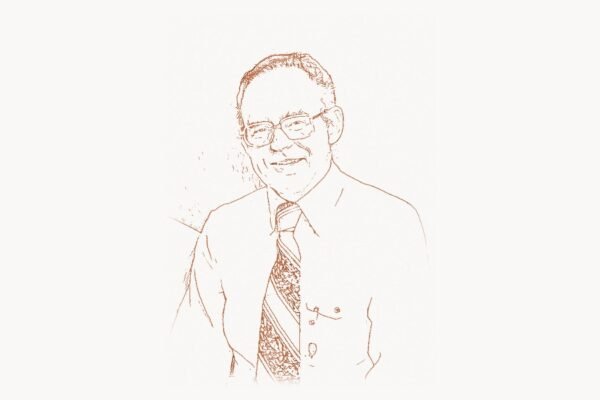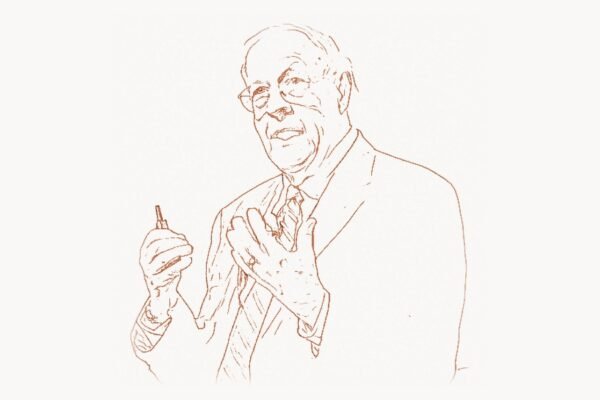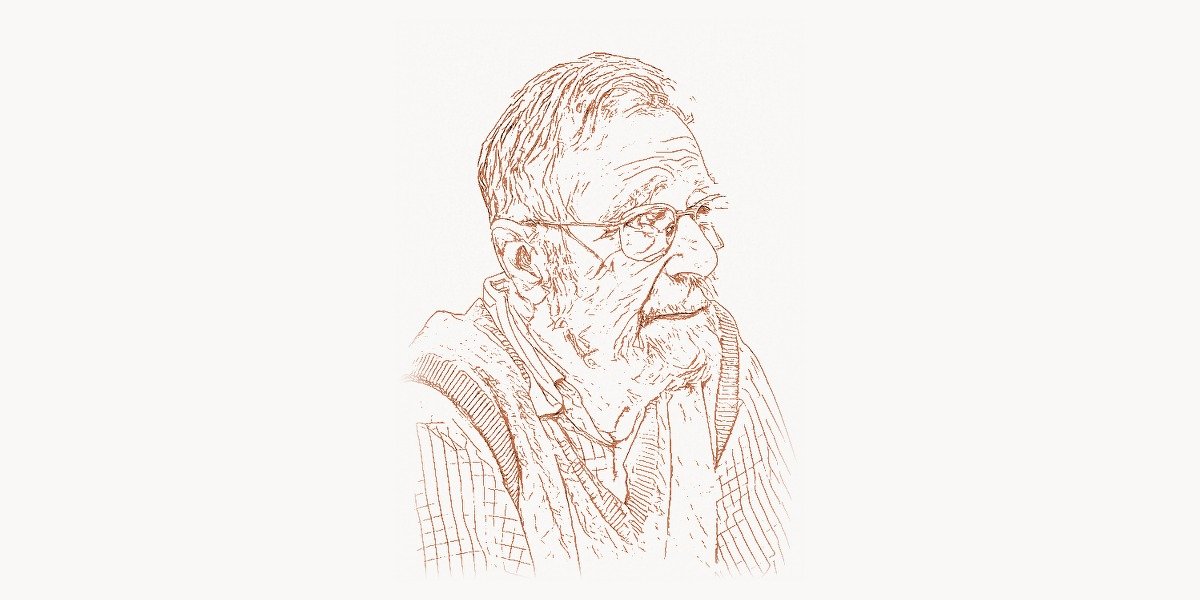
On March 11, 1968, the Communications of the ACM published a letter from Edsger W. Dijkstra with the editorial title “Go To Statement Considered Harmful.” The letter was barely two pages long, but it detonated like a bomb in the programming community. Dijkstra argued that the GOTO statement — a fundamental control flow mechanism present in virtually every programming language of the era — was harmful to program clarity and should be abolished in favor of structured constructs like loops and conditionals. The reaction was furious. Programmers who had spent their careers writing GOTO-laden code felt personally attacked. The debate raged for years, spawning response papers like “GOTO Considered Harmful Considered Harmful” and “‘GOTO Considered Harmful’ Considered Harmful Considered Harmful.” But Dijkstra won. By the late 1970s, structured programming had become the dominant methodology, and languages like Pascal were designed specifically to support it. Modern languages have effectively eliminated GOTO (or relegated it to rare special cases), and every for-loop, while-loop, and if-else block in JavaScript, Python, or any other modern language exists because Dijkstra proved that structured control flow was both sufficient and superior. But the GOTO letter was only one episode in a career of extraordinary breadth. Dijkstra invented the shortest path algorithm that bears his name, pioneered the formal verification of programs, solved the mutual exclusion problem in concurrent programming, created the concept of structured programming, and wrote over 1,300 numbered manuscripts (the EWDs) that constitute one of the most remarkable intellectual archives in computing history.
Early Life and Path to Technology
Edsger Wybe Dijkstra was born on May 11, 1930, in Rotterdam, the Netherlands. His father, Douwe Wybe Dijkstra, was a chemist who served as president of the Dutch Chemical Society. His mother, Brechtje Cornelia Kluyver, was a mathematician who never held a formal position but had a strong influence on her son’s intellectual development. Growing up in a household where both parents were scientifically minded, Dijkstra developed an early love of mathematics and analytical thinking.
Dijkstra enrolled at the University of Leiden in 1948, initially studying theoretical physics. In 1951, he attended a three-week programming course at the Mathematical Centre in Amsterdam, taught by Adriaan van Wijngaarden. This experience introduced him to programming and computing, and van Wijngaarden — who would become a lifelong mentor — offered Dijkstra a part-time job as a programmer at the Mathematical Centre. For several years, Dijkstra pursued both physics and programming simultaneously, unsure which field would become his career.
The turning point came in 1956. Dijkstra’s parents expressed concern that there was no respectable career path in programming — it was not yet recognized as a legitimate profession, let alone an academic discipline. Dijkstra went to van Wijngaarden for advice, and van Wijngaarden told him that he might be the person who made programming a respectable discipline. Dijkstra decided to commit to computing. He earned his Ph.D. from the University of Amsterdam in 1959 (his thesis, supervised by van Wijngaarden, was on communication with an automatic computer) and began a career that would reshape the field.
The Breakthrough: Shortest Path Algorithm and Structured Programming
The Technical Innovation
In 1956, Dijkstra was working at the Mathematical Centre in Amsterdam when he developed what is now known as Dijkstra’s algorithm — an algorithm for finding the shortest path between nodes in a weighted graph. The problem arose from a practical demonstration: the Centre had built the ARMAC computer, and Dijkstra wanted to show it could do something impressive for a non-technical audience. He chose to find the shortest route between two cities in the Netherlands.
Dijkstra designed the algorithm in about 20 minutes while sitting at a cafe terrace with his fiancee. He did not publish it until 1959 (in a paper titled “A Note on Two Problems in Connexion with Graphs”), by which time it had already become one of the most important algorithms in computer science.
# Dijkstra's shortest path algorithm (1956)
# Used today in GPS navigation, network routing, game AI,
# and countless other applications

import heapq

def dijkstra(graph, start):
    """
    Find shortest paths from start to all other nodes.
    graph: dict of {node: [(neighbor, weight), ...]}

    This is the algorithm Dijkstra conceived in 20 minutes
    at a cafe in Amsterdam in 1956.
    """
    distances = {node: float('infinity') for node in graph}
    distances[start] = 0
    previous = {node: None for node in graph}
    priority_queue = [(0, start)]
    visited = set()

    while priority_queue:
        current_distance, current_node = heapq.heappop(priority_queue)

        if current_node in visited:
            continue
        visited.add(current_node)

        for neighbor, weight in graph[current_node]:
            distance = current_distance + weight

            if distance < distances[neighbor]:
                distances[neighbor] = distance
                previous[neighbor] = current_node
                heapq.heappush(priority_queue, (distance, neighbor))

    return distances, previous

# Example: finding shortest route between cities
roads = {
    'Amsterdam':  [('Utrecht', 52), ('The Hague', 65)],
    'Utrecht':    [('Amsterdam', 52), ('Eindhoven', 100), ('The Hague', 60)],
    'The Hague':  [('Amsterdam', 65), ('Utrecht', 60), ('Rotterdam', 25)],
    'Rotterdam':  [('The Hague', 25), ('Eindhoven', 120)],
    'Eindhoven':  [('Utrecht', 100), ('Rotterdam', 120)]
}

distances, paths = dijkstra(roads, 'Amsterdam')
# distances['Eindhoven'] = 152 (via Utrecht)
The algorithm works by maintaining a set of unvisited nodes and a table of the shortest known distance from the source to every node. At each step, it selects the unvisited node with the smallest known distance, marks it as visited, and updates the distances to its neighbors. It is a greedy algorithm — it always expands the nearest unvisited node — and Dijkstra proved that this greedy choice always produces the optimal result (for graphs with non-negative edge weights).
Dijkstra's other foundational contribution was structured programming. In his 1968 letter and subsequent papers, Dijkstra argued that programs should be constructed from three basic control structures: sequence (one statement after another), selection (if-then-else), and iteration (while-loops). He showed that any computation expressible with GOTO could also be expressed with these three structures — a result related to the Bohm-Jacopini theorem (1966) — and that programs written with structured control flow were dramatically easier to reason about, test, and verify.
Why It Mattered
Dijkstra's algorithm is one of the most widely used algorithms in computing. Every GPS navigation system uses variants of it (typically A*, which extends Dijkstra's algorithm with heuristics) to find driving routes. Internet routing protocols like OSPF (Open Shortest Path First) use Dijkstra's algorithm to find the best paths for network packets. Game AI uses it for pathfinding. Social network analysis uses it to compute degrees of separation. Compiler optimizers use it for register allocation. It appears in virtually every algorithms textbook and is a standard topic in computer science education worldwide.
The impact of structured programming was equally profound. Before Dijkstra's advocacy, large programs were typically tangled masses of GOTO jumps — "spaghetti code" that was nearly impossible to understand, maintain, or verify. Structured programming provided a discipline: every block of code had a single entry point and a single exit point, control flow followed a clear hierarchy, and programs could be understood by reading them top-to-bottom. This discipline made large-scale software development feasible. Every modern web framework, every CI/CD pipeline, every application you use today is written using the structured programming principles Dijkstra championed.
Beyond Algorithms: Other Contributions
Dijkstra's contributions to concurrent programming are fundamental. In 1965, he formulated and solved the mutual exclusion problem — the problem of ensuring that two concurrent processes cannot simultaneously access a shared resource. His semaphore mechanism (named using the operations P and V, from the Dutch words passering/probeer and vrijgave/verhoog) became the standard synchronization primitive in operating system design. Semaphores are still used in modern operating systems and threading libraries.
He also formulated the dining philosophers problem (1965), a classic illustration of synchronization and deadlock issues in concurrent programming. Five philosophers sit around a table, each needing two forks to eat, with only one fork between each pair. The problem illustrates how concurrent processes can deadlock (all pick up one fork and wait forever for the second) and has been used in countless operating systems courses to teach concurrency concepts.
Dijkstra was a pioneer of formal program verification — proving mathematically that a program is correct. His book A Discipline of Programming (1976) presented a systematic method for developing programs hand-in-hand with their proofs of correctness. His predicate transformer semantics provided a mathematical framework for reasoning about program behavior. While formal verification has not been adopted as widely as Dijkstra hoped, it is used in safety-critical systems (aerospace, medical devices, nuclear systems) and is experiencing a renaissance through tools like Coq, Isabelle, and TLA+.
His self-stabilization concept (1974) — the idea that a distributed system can recover from any arbitrary transient fault and converge to correct behavior without external intervention — has become increasingly relevant in the era of distributed computing, cloud infrastructure, and microservices. Self-stabilizing algorithms are used in network protocols, distributed databases, and fault-tolerant systems.
Philosophy and Engineering Approach
Key Principles
Dijkstra was famous — some would say infamous — for his uncompromising intellectual standards. He believed that programming should be a mathematical discipline, not a craft or an art. Programs should be provably correct, not merely tested. He wrote: "Program testing can be used to show the presence of bugs, but never to show their absence!" This statement remains true and is a foundational principle of formal methods.
He was deeply skeptical of complexity. He argued against feature-rich languages, complex tools, and large software systems. His ideal was a small, clean program that could be understood in its entirety and proven correct by mathematical reasoning. This put him at odds with industrial software development practices, which prioritized shipping features over mathematical rigor, but his warnings about the costs of complexity have been vindicated repeatedly by the history of software failures.
/* Dijkstra's semaphore — the foundation of concurrent programming */
/* Invented in 1965, still used in every operating system today */

/* P (probeer/wait) — decrement the semaphore, block if zero */
/* V (verhoog/signal) — increment the semaphore, wake a waiting process */

#include <semaphore.h>
#include <pthread.h>
#include <stdio.h>

sem_t mutex;      /* Dijkstra's binary semaphore */
int shared = 0;   /* Shared resource */

void* increment(void* arg) {
    for (int i = 0; i < 100000; i++) {
        sem_wait(&mutex);    /* P operation — enter critical section */
        shared++;             /* Safe: only one thread here at a time */
        sem_post(&mutex);    /* V operation — leave critical section */
    }
    return NULL;
}

/* Without Dijkstra's semaphores, concurrent programming
   would lack its most fundamental synchronization tool.
   Modern mutexes, locks, and condition variables all
   descend from this 1965 invention. */
Dijkstra was also a prodigious and distinctive writer. Over his career, he produced over 1,300 numbered manuscripts known as EWDs (Edsger W. Dijkstra manuscripts), which he hand-wrote in his distinctive script and distributed as photocopies. These ranged from short notes to substantial papers, and they covered topics from algorithms to mathematics to education to the nature of computing itself. He wrote beautifully and often provocatively, and the EWDs are now archived and available online at the University of Texas at Austin.
He had strong opinions about computing education. He opposed the teaching of programming through specific languages, arguing that students should learn to think about computation abstractly. He was critical of languages like BASIC ("It is practically impossible to teach good programming to students that have had a prior exposure to BASIC"), FORTRAN, PL/I, and C++. He advocated for mathematical rigor in CS curricula at a time when most programs emphasized practical skills.
Legacy and Modern Relevance
Dijkstra died on August 6, 2002, in Nuenen, the Netherlands, at the age of 72, from cancer. His influence on computing is immense and operates at every level, from the theoretical foundations to daily practice.
Dijkstra's algorithm is taught in every data structures and algorithms course worldwide. It appears in coding interviews at every major technology company. Its applications span navigation (Google Maps, Waze), network engineering (OSPF routing), game development (NPC pathfinding), logistics (delivery route optimization), and bioinformatics (sequence alignment). The A* algorithm, which extends Dijkstra's with heuristic guidance, is the workhorse of practical pathfinding in real-time applications.
Structured programming is now so deeply embedded in software development that most developers do not even think about it — they simply write code using loops, conditionals, and functions, never considering that these constructs were once controversial. Every TypeScript function, every Python class, every React component follows structured programming principles that Dijkstra fought to establish.
His work on concurrent programming — semaphores, mutual exclusion, the dining philosophers — is the foundation of modern multi-threaded and distributed computing. Every web server handling multiple requests, every database managing concurrent transactions, every operating system scheduling multiple processes uses concepts Dijkstra formalized in the 1960s.
Dijkstra received the Turing Award in 1972 for "fundamental contributions to programming as a high, intellectual challenge; for eloquent insistence and practical demonstration that programs should be composed correctly, not just debugged into correctness." He was a Fellow of the ACM and the British Computer Society, a member of the Royal Netherlands Academy of Arts and Sciences, and a recipient of the ACM PODC Influential Paper Award (2002). He held the Schlumberger Centennial Chair in Computer Sciences at the University of Texas at Austin from 1984 until his retirement in 1999.
His insistence that programming is a mathematical discipline remains a minority position in industry, but it is gaining ground. The growing adoption of type systems (TypeScript, Rust, Kotlin), property-based testing, and formal verification in safety-critical systems all reflect Dijkstra's influence. His warning that testing alone cannot ensure correctness is now widely acknowledged, even if most software is still developed primarily through testing. The gap between industrial practice and Dijkstra's ideals has narrowed, but it has not closed — and his writings remain as challenging and relevant as they were half a century ago.
Key Facts
- Born: May 11, 1930, Rotterdam, the Netherlands
- Died: August 6, 2002, Nuenen, the Netherlands
- Known for: Dijkstra's algorithm, structured programming, semaphores, formal program verification, self-stabilization
- Key projects: Shortest path algorithm (1956), "Go To Statement Considered Harmful" (1968), THE multiprogramming system, A Discipline of Programming (1976), EWD manuscripts (1,300+)
- Awards: Turing Award (1972), ACM Fellow, Royal Netherlands Academy of Arts and Sciences member
- Education: Theoretical physics and mathematics, University of Leiden; Ph.D. from University of Amsterdam (1959)
Frequently Asked Questions
Who is Edsger Dijkstra?
Edsger W. Dijkstra (1930–2002) was a Dutch computer scientist who made fundamental contributions to programming methodology, algorithm design, and concurrent computing. He invented the shortest path algorithm that bears his name, pioneered structured programming (arguing against the GOTO statement), invented semaphores for concurrent process synchronization, and developed formal methods for proving program correctness. He received the Turing Award in 1972.
What did Edsger Dijkstra create?
Dijkstra created the shortest path algorithm (1956), used worldwide in navigation, networking, and AI. He invented semaphores (1965), the foundational mechanism for concurrent programming synchronization. He co-developed the THE multiprogramming operating system, which pioneered software layering. He developed predicate transformer semantics for formal program verification. He formulated the dining philosophers problem and the concept of self-stabilization in distributed systems. He also wrote over 1,300 manuscripts (EWDs) that influenced the field profoundly.
Why is Edsger Dijkstra important?
Dijkstra is important because his shortest path algorithm is one of the most widely applied algorithms in computing, used in GPS navigation, network routing, and game AI. His advocacy for structured programming eliminated the GOTO-based coding style that made large programs unmaintainable, enabling modern software engineering. His semaphores remain the foundation of concurrent programming in every operating system. His insistence on mathematical rigor in programming established formal methods as a discipline and continues to influence language design and verification practices today.