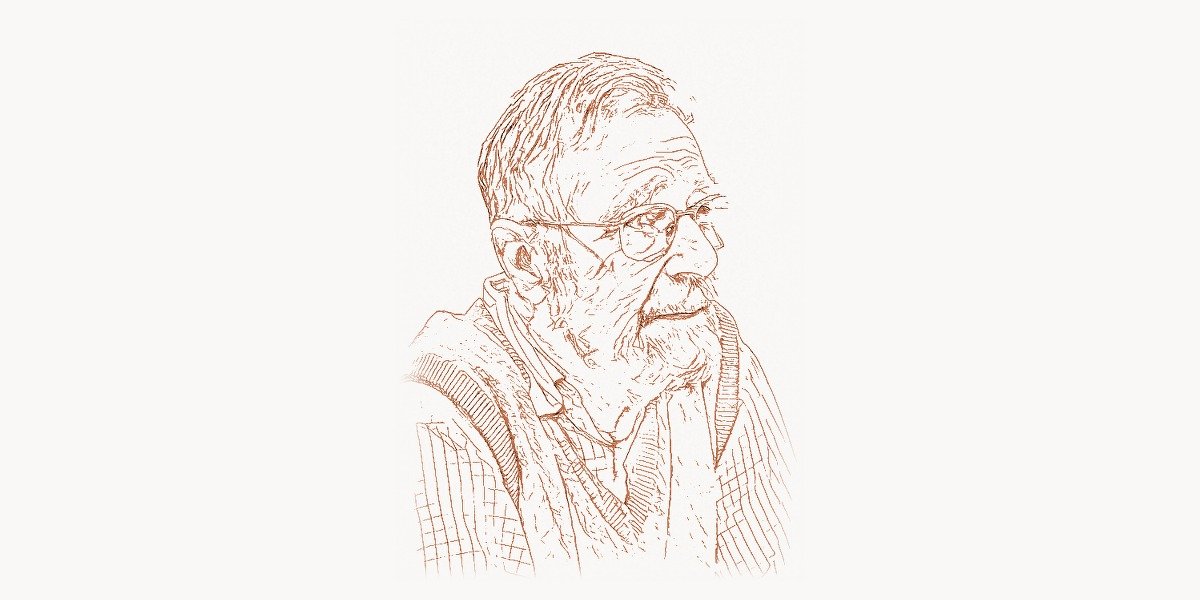
In the spring of 1968, the Communications of the ACM received a short letter from a Dutch computer scientist named Edsger W. Dijkstra. The editor, Niklaus Wirth, gave it the provocative title “Go To Statement Considered Harmful.” At just over two pages, the letter argued that the GOTO statement — the primary control flow mechanism in nearly every programming language of the era — made programs intellectually unmanageable and should be replaced by structured constructs: sequences, selections, and iterations. The reaction was volcanic. Programmers who had spent entire careers navigating tangled webs of GOTO jumps felt personally attacked. Response papers appeared with titles like “GOTO Considered Harmful Considered Harmful.” But Dijkstra was right, and the world eventually came around. Structured programming became the dominant paradigm, languages like Pascal were designed to enforce it, and every for-loop, while-loop, and if-else block written today in Python, JavaScript, Rust, or any other modern language traces its lineage to Dijkstra’s insistence that programs should be composed with intellectual discipline, not patched together with unconditional jumps. Yet the GOTO letter was only one facet of a career of staggering breadth. Dijkstra invented the shortest path algorithm that bears his name, created semaphores for concurrent process synchronization, built the THE multiprogramming system that pioneered software layering, developed formal methods for proving programs correct, and wrote over 1,300 hand-written manuscripts that form one of the most extraordinary intellectual archives in the history of computing. He received the Turing Award in 1972 — not for any single invention, but for elevating programming from a mechanical trade to an intellectual discipline.
Early Life and the Road to Computing
Edsger Wybe Dijkstra was born on May 11, 1930, in Rotterdam, the Netherlands, into a family steeped in science. His father, Douwe Wybe Dijkstra, was a chemist who eventually became president of the Dutch Chemical Society. His mother, Brechtje Cornelia Kluyver, was a trained mathematician who, despite never holding a formal academic position, instilled in her son a deep reverence for mathematical reasoning. Growing up in wartime Rotterdam — the city was devastated by German bombing in 1940 — Dijkstra found refuge in the precision and clarity of mathematics.
He enrolled at the University of Leiden in 1948 to study theoretical physics. In 1951, his trajectory changed permanently when he attended a three-week programming course at the Mathematical Centre in Amsterdam, taught by Adriaan van Wijngaarden, one of the pioneering figures of Dutch computing. Van Wijngaarden recognized Dijkstra’s talent immediately and offered him a part-time position as a programmer. For the next several years, Dijkstra led a double life — studying physics by day and programming by night — unsure which path to commit to.
The decisive moment came in 1956. Dijkstra’s parents were alarmed that their son was spending so much time on something as disreputable as “programming” — a trade, not a profession, in the eyes of the Dutch academic establishment. Dijkstra sought counsel from van Wijngaarden, who told him something remarkable: programming might not yet be a respectable discipline, but Dijkstra could be the person who made it one. That conversation settled the matter. Dijkstra abandoned physics, completed his Ph.D. at the University of Amsterdam in 1959 under van Wijngaarden’s supervision, and devoted the rest of his life to transforming programming into a rigorous intellectual endeavor. It is worth noting that when he married Maria (Ria) Debets in 1957, the Dutch civil authorities refused to accept “programmer” as his profession on the marriage certificate — the occupation did not officially exist.
The Shortest Path: Twenty Minutes at a Cafe
In 1956, the Mathematical Centre had just completed a new computer called ARMAC, and Dijkstra wanted to demonstrate its capabilities to a non-technical audience. He chose the problem of finding the shortest route between two cities in the Netherlands — a problem with obvious practical appeal. Sitting at a cafe terrace in Amsterdam with his fiancee, he designed the complete algorithm in approximately twenty minutes, without pencil and paper. He did not publish it until 1959, in a three-page paper titled “A Note on Two Problems in Connexion with Graphs,” but by then it had already become one of the foundational algorithms of computer science.
The algorithm works on weighted graphs — networks where each connection between nodes has an associated cost (distance, time, or any other metric). Starting from a source node, it maintains a set of unvisited nodes and a table recording the shortest known distance from the source to every other node. At each step, it selects the unvisited node with the smallest tentative distance, marks it as visited, and updates the distances to all its neighbors. The key insight is that this greedy strategy — always expanding the nearest unvisited node — produces globally optimal results when all edge weights are non-negative.
# Dijkstra's shortest path algorithm (1956)
# Conceived in 20 minutes at an Amsterdam cafe
# Now used in GPS navigation, network routing, and game AI worldwide

import heapq
from typing import Dict, List, Tuple, Optional

def dijkstra(graph: Dict[str, List[Tuple[str, int]]],
             start: str,
             end: str) -> Tuple[int, List[str]]:
    """
    Find the shortest path between two nodes in a weighted graph.

    Dijkstra's original problem: shortest route between
    Dutch cities, demonstrated on the ARMAC computer in 1956.

    Returns (total_distance, path_as_list_of_nodes).
    """
    # Distance table: shortest known distance from start to each node
    distances = {node: float('infinity') for node in graph}
    distances[start] = 0

    # Track the previous node in the optimal path
    previous = {node: None for node in graph}

    # Priority queue: (distance, node) — always expand nearest first
    # This greedy choice is what makes the algorithm work
    pq = [(0, start)]
    visited = set()

    while pq:
        current_dist, current = heapq.heappop(pq)

        if current in visited:
            continue
        visited.add(current)

        # Early termination if we reached the destination
        if current == end:
            break

        # Relax edges: check if going through current node
        # offers a shorter path to any neighbor
        for neighbor, weight in graph[current]:
            if neighbor in visited:
                continue
            new_dist = current_dist + weight
            if new_dist < distances[neighbor]:
                distances[neighbor] = new_dist
                previous[neighbor] = current
                heapq.heappush(pq, (new_dist, neighbor))

    # Reconstruct the shortest path
    path = []
    node = end
    while node is not None:
        path.append(node)
        node = previous[node]
    path.reverse()

    return distances[end], path


# Example: Dijkstra's original problem — Dutch city routes
netherlands = {
    'Amsterdam':  [('Utrecht', 52), ('The Hague', 65), ('Haarlem', 20)],
    'Haarlem':    [('Amsterdam', 20), ('The Hague', 55), ('Leiden', 32)],
    'Leiden':     [('Haarlem', 32), ('The Hague', 16), ('Utrecht', 62)],
    'The Hague':  [('Amsterdam', 65), ('Haarlem', 55), ('Leiden', 16),
                   ('Rotterdam', 25)],
    'Utrecht':    [('Amsterdam', 52), ('Leiden', 62), ('Eindhoven', 100),
                   ('Groningen', 185)],
    'Rotterdam':  [('The Hague', 25), ('Eindhoven', 120)],
    'Eindhoven':  [('Utrecht', 100), ('Rotterdam', 120), ('Groningen', 250)],
    'Groningen':  [('Utrecht', 185), ('Eindhoven', 250)]
}

dist, route = dijkstra(netherlands, 'Amsterdam', 'Eindhoven')
print(f"Shortest route: {' → '.join(route)}")
print(f"Total distance: {dist} km")
# Output: Amsterdam → Utrecht → Eindhoven, 152 km
The impact of this twenty-minute insight is difficult to overstate. Today, Dijkstra's algorithm — along with its heuristic extension A* — powers every GPS navigation system on the planet. Internet routing protocols like OSPF (Open Shortest Path First) use it to determine optimal paths for network packets. Game engines use it for NPC pathfinding. Social network platforms use it to compute degrees of separation. Logistics companies use it to optimize delivery routes. Compiler optimizers use it for register allocation. It is taught in every algorithms course at every university worldwide and appears in virtually every technical interview at major technology companies. A single algorithm, conceived without pencil and paper at a cafe, became one of the most ubiquitous computational tools in human civilization.
The Crusade for Structured Programming
If Dijkstra's algorithm was his most famous invention, structured programming was his most consequential campaign. By the mid-1960s, Dijkstra had become deeply troubled by the state of software development. Programs were growing in size and complexity, but the tools for managing that complexity had not kept pace. The primary control flow mechanism in most languages was the GOTO statement — an unconditional jump that could transfer execution to any labeled point in the program. Large programs written with liberal use of GOTO quickly became what programmers would later call "spaghetti code": tangled, incomprehensible masses of criss-crossing control flow that were nearly impossible to read, debug, or verify.
Dijkstra's insight, informed by the Bohm-Jacopini theorem of 1966 (which proved that any algorithm could be expressed using only three control structures), was that programs should be composed exclusively from sequence (executing statements one after another), selection (if-then-else), and iteration (while-loops). These three constructs, combined with subroutines, were sufficient to express any computation — and programs written with them had a critical property: they could be read and understood sequentially, from top to bottom, because each block had exactly one entry point and one exit point.
His 1968 letter to the Communications of the ACM crystallized this argument with memorable force. He observed that a programmer's ability to reason about a program depended on being able to map the program's textual structure to its dynamic behavior — to understand, by reading the code, what the program would do at runtime. GOTO made this mapping impossibly complex. With structured control flow, the mapping was straightforward: the textual nesting of the code directly reflected the logical nesting of the computation.
The reaction was fierce. Many experienced programmers viewed Dijkstra's position as elitist and impractical. Donald Knuth, whom Dijkstra respected enormously, wrote a careful paper arguing that GOTO had legitimate uses in certain situations — a position Dijkstra acknowledged but never conceded. The debate raged through the 1970s, but Knuth and others gradually came to agree that structured programming represented a fundamental advance. Languages designed in the structured era — Pascal, Modula-2, Ada — either eliminated GOTO entirely or made it a discouraged relic. By the 1980s, the battle was won. Today, structured programming is so deeply embedded in software development practice that most programmers never even think about it — they write loops, conditionals, and functions as naturally as breathing, unaware that these constructs were once controversial.
THE Multiprogramming System and Semaphores
While advocating for structured programming in theory, Dijkstra was simultaneously demonstrating its power in practice. Between 1965 and 1968, he led the design and implementation of the THE multiprogramming system at the Technische Hogeschool Eindhoven (hence "THE"). This operating system was revolutionary not for what it did — it managed batch jobs on an Electrologica X8 computer — but for how it was built. THE was organized as a strict hierarchy of layers, each providing services to the layer above and using services from the layer below. This was the first operating system to use a layered architecture, and the concept influenced virtually every subsequent OS design, from Unix to modern concurrent systems.
To make THE work, Dijkstra needed to solve a fundamental problem: how could multiple processes share resources (memory, peripherals, the processor itself) without interfering with each other? His solution, invented in 1965, was the semaphore — a synchronization primitive consisting of an integer variable and two atomic operations. He named the operations P and V, from the Dutch words "proberen" (to test) and "verhogen" (to increment). A P operation decrements the semaphore and blocks the process if the result is negative; a V operation increments the semaphore and wakes a blocked process if one is waiting. With these two simple operations, Dijkstra showed that mutual exclusion, process ordering, and resource allocation could all be managed safely and efficiently.
To illustrate the subtleties of concurrent programming, Dijkstra also formulated the dining philosophers problem in 1965. Five philosophers sit around a circular table, each alternating between thinking and eating. Between each pair of philosophers lies a single fork, and each philosopher needs two forks to eat. The problem demonstrates how concurrent processes competing for shared resources can deadlock (all pick up one fork and wait forever for the other) or starve (some philosophers never get to eat). This thought experiment became the standard teaching tool for concurrency in computer science courses worldwide and remains relevant in every system that manages concurrent access to shared resources — from database transaction managers to web servers handling thousands of simultaneous requests.
# Dijkstra's Dining Philosophers (1965)
# A classic demonstration of concurrency, deadlock, and resource sharing
# Still taught in every operating systems course today

import threading
import time
import random

class DiningPhilosophers:
    """
    Dijkstra's solution using semaphores (resource hierarchy).
    Philosophers pick up lower-numbered fork first to prevent deadlock.
    This ordering strategy — the resource hierarchy solution — was
    one of several approaches Dijkstra analyzed.
    """

    def __init__(self, num_philosophers: int = 5):
        self.num = num_philosophers
        # Each fork is a semaphore (binary: 0 or 1)
        # Dijkstra's P/V operations map to acquire/release
        self.forks = [threading.Semaphore(1) for _ in range(num_philosophers)]
        self.meals_eaten = [0] * num_philosophers

    def philosopher(self, id: int, num_meals: int = 3):
        for _ in range(num_meals):
            # Think
            self._think(id)

            # Pick up forks in order (lower index first)
            # This resource hierarchy prevents circular wait = no deadlock
            first = min(id, (id + 1) % self.num)
            second = max(id, (id + 1) % self.num)

            self.forks[first].acquire()   # P(fork[first])
            self.forks[second].acquire()  # P(fork[second])

            # Eat (critical section — both forks held)
            self._eat(id)
            self.meals_eaten[id] += 1

            self.forks[second].release()  # V(fork[second])
            self.forks[first].release()   # V(fork[first])

    def _think(self, id: int):
        print(f"Philosopher {id} is thinking...")
        time.sleep(random.uniform(0.1, 0.3))

    def _eat(self, id: int):
        print(f"Philosopher {id} is eating (meal #{self.meals_eaten[id] + 1})")
        time.sleep(random.uniform(0.1, 0.2))

    def run(self):
        threads = [
            threading.Thread(target=self.philosopher, args=(i,))
            for i in range(self.num)
        ]
        for t in threads:
            t.start()
        for t in threads:
            t.join()
        print(f"\nAll philosophers finished. Meals: {self.meals_eaten}")

# Run the simulation
dp = DiningPhilosophers(5)
dp.run()
Formal Methods and the Quest for Correctness
Dijkstra's deepest intellectual commitment was to the idea that programs should be proven correct through mathematical reasoning, not merely tested until no more bugs were found. He captured this philosophy in one of his most famous aphorisms: "Program testing can be used to show the presence of bugs, but never to show their absence." This statement is not mere rhetoric — it is a logical truth. No finite set of tests can verify that a program behaves correctly for all possible inputs. Only a mathematical proof can provide that guarantee.
In his 1976 book A Discipline of Programming, Dijkstra presented a systematic method for developing programs and their correctness proofs simultaneously. Rather than writing code first and testing it later, a programmer should start with a formal specification of what the program must accomplish, then derive the program step by step, proving at each step that the code satisfies the specification. His predicate transformer semantics — particularly the concept of the weakest precondition — provided the mathematical framework for this approach. Given a program statement and a desired postcondition (what must be true after the statement executes), the weakest precondition is the least restrictive condition that must hold before execution to guarantee the postcondition.
While full formal verification has not become standard practice in mainstream software development, Dijkstra's influence on this front is growing. Modern type systems in languages like Rust, TypeScript, and Kotlin embody a lightweight form of his philosophy — they prove certain properties of programs (type safety, memory safety, null safety) at compile time rather than relying on runtime testing. Tools like TLA+ (created by Leslie Lamport, who credits Dijkstra's influence), Coq, and Isabelle bring rigorous formal verification to safety-critical systems in aerospace, medical devices, and financial infrastructure. Amazon Web Services uses TLA+ to verify the correctness of core distributed systems — a direct descendant of Dijkstra's vision that programs should be provably correct. The gap between industrial practice and Dijkstra's ideals has narrowed considerably, even if it has not yet closed.
Self-Stabilization and Distributed Systems
In 1974, Dijkstra introduced another concept that was ahead of its time: self-stabilization. A self-stabilizing system is one that, regardless of its initial state — even if that state is completely corrupted — will eventually converge to correct behavior without any external intervention. The system does not need to be rebooted, manually reset, or repaired by an operator. It heals itself.
When Dijkstra first proposed self-stabilization, it was largely a theoretical curiosity. Computers were expensive, centralized machines operated by trained professionals who could manually intervene when something went wrong. But as computing became distributed — first with local area networks, then with the internet, then with cloud infrastructure and microservices — the ability of systems to recover from arbitrary faults without human intervention became essential. Modern distributed databases, consensus protocols, and cloud orchestration systems all incorporate self-stabilizing principles. When a Kubernetes cluster detects a failed pod and automatically spins up a replacement, when a distributed database re-replicates data after a node failure, when a network routing protocol reconverges after a link goes down — these are all practical manifestations of the principle Dijkstra articulated in 1974.
The EWD Manuscripts and the Art of Writing
Throughout his career, Dijkstra produced over 1,300 numbered manuscripts known as EWDs (Edsger W. Dijkstra manuscripts). These were handwritten in his distinctive, meticulous script — Dijkstra never typed and was famously suspicious of word processors — and distributed as photocopies to colleagues around the world. They ranged from brief technical notes to extended philosophical essays on the nature of computing, education, and intellectual life.
The EWDs cover an astonishing range of topics: algorithms, programming methodology, operating systems, formal methods, mathematical elegance, the teaching of computer science, and the relationship between computing and mathematics. They are written with a clarity and precision that is rare in any field, and with a rhetorical force that could be both inspiring and infuriating. Dijkstra was never afraid to state his opinions bluntly, and many EWDs contain withering assessments of technologies, languages, and practices he considered intellectually dishonest. He was deeply critical of BASIC, FORTRAN, COBOL, PL/I, and later C++, arguing that each encouraged habits of mind that were antithetical to clear reasoning about programs.
The entire archive of EWDs is now preserved and available online at the University of Texas at Austin, where Dijkstra held the Schlumberger Centennial Chair in Computer Sciences from 1984 until his retirement in 1999. These manuscripts constitute one of the richest primary sources in the history of computer science and continue to be studied by researchers, practitioners, and students seeking to understand not just the technical details of Dijkstra's work but the intellectual framework from which they emerged.
Philosophy and the Elevation of Programming
More than any specific algorithm or system, Dijkstra's greatest contribution was his insistence that programming is — or should be — a branch of mathematics. He believed that the intellectual challenge of programming lay not in wrestling with machines but in managing complexity through disciplined thought. A well-structured program, in his view, was a mathematical object that could be reasoned about, verified, and understood with the same rigor applied to a theorem in algebra or analysis.
This philosophy shaped everything he did. It drove his advocacy for structured programming (because structured code is amenable to mathematical proof). It drove his formal methods research (because proofs, not tests, are the mathematician's standard of certainty). It drove his criticism of complex languages and tools (because complexity is the enemy of understanding). And it drove his distinctive approach to education — he believed computer science students should spend more time learning mathematics and less time learning specific programming languages, because languages come and go but mathematical thinking endures.
His influence on computing education was substantial. At the Technische Hogeschool Eindhoven and later at the University of Texas at Austin, he developed curricula that emphasized mathematical reasoning, formal methods, and the derivation of programs from specifications. Many of his students went on to become influential researchers in their own right, carrying his emphasis on rigor and clarity into new areas of computing. His pedagogical writings — many preserved in the EWDs — remain influential in discussions about how to teach computer science effectively, particularly as the field grapples with the tension between practical skills and theoretical foundations.
Legacy and Lasting Influence
Edsger Dijkstra died on August 6, 2002, in Nuenen, the Netherlands, at the age of 72, after a long struggle with cancer. His influence on computing is pervasive and operates at every level, from foundational theory to daily practice.
Every time a GPS device calculates a driving route, it uses Dijkstra's algorithm or its descendant A*. Every time a network packet finds its way across the internet via OSPF routing, Dijkstra's algorithm is at work. Every time a programmer writes a for-loop or an if-else block instead of a GOTO, they are benefiting from the structured programming revolution Dijkstra championed. Every time an operating system manages concurrent threads using semaphores or mutexes, it uses synchronization primitives Dijkstra invented. Every time a modern computing system recovers from a fault without human intervention, it embodies the self-stabilization principle Dijkstra formulated.
His tools and ideas continue to shape how teams build software. Modern project management platforms that help developers coordinate concurrent workflows owe a conceptual debt to Dijkstra's work on process synchronization. The structured approach to software design that he pioneered is embedded in every code editor that provides structured folding, in every linter that enforces control flow discipline, and in every web development workflow that emphasizes clean architecture and maintainable code. The entire discipline of software engineering — the idea that building software is a rigorous, principled activity rather than a chaotic process of trial and error — rests on foundations that Dijkstra laid.
Dijkstra received the Turing Award in 1972, with a citation that honored his "fundamental contributions to programming as a high, intellectual challenge" and his "eloquent insistence and practical demonstration that programs should be composed correctly, not just debugged into correctness." He was a Fellow of the ACM and the British Computer Society, a member of the Royal Netherlands Academy of Arts and Sciences, and a recipient of numerous other honors. But his most enduring legacy is not any award or title — it is the transformation of programming from a mechanical trade into an intellectual discipline, a transformation that he pursued with unmatched rigor, eloquence, and determination for nearly half a century.
Key Facts
- Born: May 11, 1930, Rotterdam, the Netherlands
- Died: August 6, 2002, Nuenen, the Netherlands
- Known for: Structured programming, Dijkstra's shortest path algorithm, semaphores, formal program verification, self-stabilization, THE multiprogramming system
- Key works: "Go To Statement Considered Harmful" (1968), A Discipline of Programming (1976), EWD manuscripts (1,300+), "A Note on Two Problems in Connexion with Graphs" (1959)
- Awards: Turing Award (1972), ACM Fellow, British Computer Society Fellow, Royal Netherlands Academy of Arts and Sciences member
- Education: University of Leiden (theoretical physics), Ph.D. from University of Amsterdam (1959, supervisor: Adriaan van Wijngaarden)
- Positions: Technische Hogeschool Eindhoven (1962-1984), University of Texas at Austin (1984-1999)
Frequently Asked Questions
Who was Edsger Dijkstra?
Edsger Wybe Dijkstra (1930-2002) was a Dutch computer scientist who is widely regarded as one of the most influential figures in the history of computing. He invented the shortest path algorithm that bears his name, pioneered structured programming by arguing against the use of GOTO statements, created semaphores for concurrent process synchronization, built the THE multiprogramming system with its groundbreaking layered architecture, and developed formal methods for proving program correctness. He received the Turing Award in 1972 and produced over 1,300 handwritten manuscripts (EWDs) that form a unique intellectual archive spanning algorithms, philosophy, education, and software methodology.
What is structured programming and why did Dijkstra advocate for it?
Structured programming is a methodology in which programs are built exclusively from three control structures: sequence (executing statements in order), selection (if-then-else), and iteration (while-loops). Dijkstra advocated for it because programs written with unrestricted GOTO statements became incomprehensible "spaghetti code" as they grew in size. Structured programming made it possible to read and reason about programs sequentially — each block having one entry and one exit point — which in turn made programs easier to verify, debug, and maintain. The Bohm-Jacopini theorem proved that these three constructs were sufficient to express any computation, eliminating any theoretical justification for GOTO. Today, structured programming is the universal default in all modern programming languages.
How does Dijkstra's shortest path algorithm work?
Dijkstra's algorithm finds the shortest path between a source node and all other nodes in a weighted graph with non-negative edge weights. It maintains a table of the shortest known distance from the source to every node, initialized to infinity for all nodes except the source (which is zero). At each step, it selects the unvisited node with the smallest tentative distance, marks it as visited, and updates the distances to its neighbors if a shorter path through the current node is found. This greedy approach — always expanding the nearest unvisited node — provably yields the optimal result. The algorithm runs in O((V + E) log V) time with a priority queue, where V is the number of vertices and E is the number of edges.
What are semaphores and why are they important?
Semaphores are synchronization primitives that Dijkstra invented in 1965 to solve the mutual exclusion problem in concurrent programming. A semaphore is an integer variable accessed through two atomic operations: P (proberen/wait), which decrements the value and blocks the process if the result is negative, and V (verhogen/signal), which increments the value and wakes a blocked process. Semaphores allow multiple concurrent processes to safely share resources without interference. They are the foundation of all modern synchronization mechanisms — mutexes, condition variables, read-write locks — used in operating systems, threading libraries, database engines, and web servers to manage concurrent access to shared resources.
What was the THE multiprogramming system?
THE (named after the Technische Hogeschool Eindhoven where it was built) was an operating system developed by Dijkstra and his team between 1965 and 1968. Its significance lies not in its functionality — it managed batch processing on an Electrologica X8 — but in its architecture. THE was the first operating system designed as a strict hierarchy of abstraction layers, where each layer provided services to the layer above it and used only services from the layer below. This layered design made the system intellectually manageable and verifiable. The concept of layered software architecture became one of the most important design principles in computing, influencing the design of Unix, the OSI network model, and virtually every modern software system that separates concerns through abstraction layers.
Why does Dijkstra's work still matter today?
Dijkstra's contributions are not historical curiosities — they are active infrastructure. His shortest path algorithm runs inside every GPS device, every network router using OSPF, and every game engine computing NPC paths. His structured programming principles are embedded in every modern language. His semaphores underpin every multi-threaded application and concurrent system. His formal methods influence the design of type systems in TypeScript, Rust, and Kotlin, and are used directly in safety-critical verification at companies like Amazon Web Services. His self-stabilization concept is essential to distributed systems design in the cloud computing era. And his insistence on intellectual discipline in programming continues to shape how the best software engineers think about their craft.