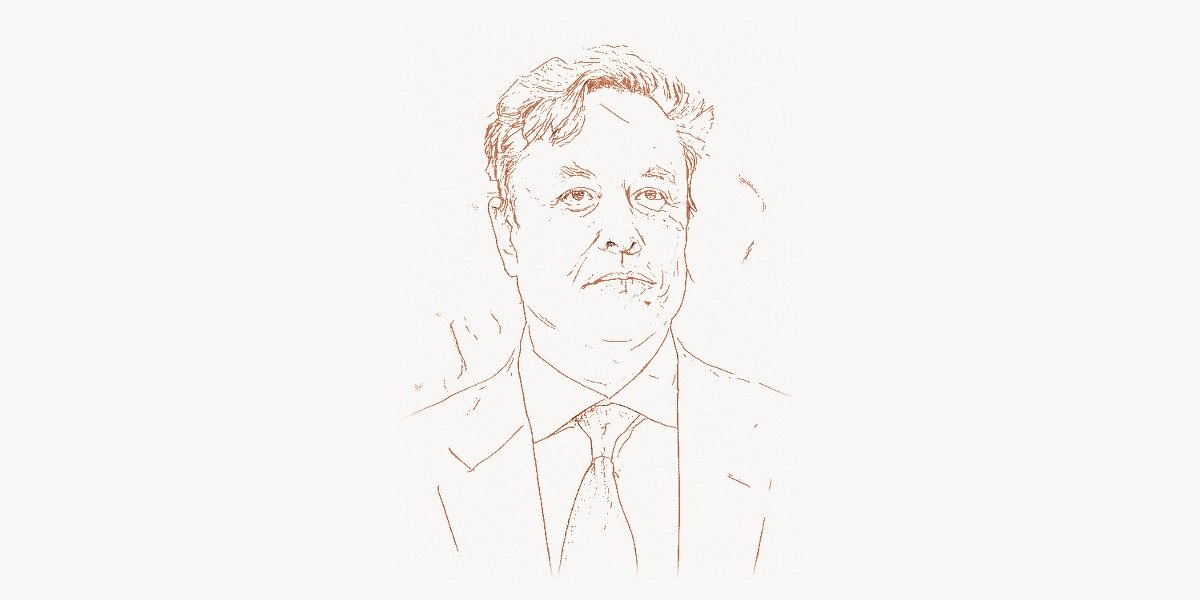
On the morning of December 21, 2015, a Falcon 9 rocket lifted off from Cape Canaveral, climbed through the atmosphere, deployed eleven Orbcomm satellites into low Earth orbit — and then did something no orbital-class rocket had ever done before. It turned around, reignited its engines, and landed upright on a concrete pad at Landing Zone 1, just ten miles from where it had launched. The sonic booms crackled across the Florida coast. Engineers at SpaceX mission control erupted. The internet watched in disbelief. Reusable orbital rocketry — a concept NASA had attempted and abandoned, a goal the entire aerospace industry had dismissed as economically impractical — was no longer theoretical. And the man who had staked his personal fortune on making it happen, who had been told by virtually every rocket scientist he consulted that it was impossible, was Elon Musk. That landing was not a lucky stunt; it was the culmination of thirteen years of relentless iteration, catastrophic failures, and a willingness to risk everything on first-principles reasoning. It reshaped the economics of space access, and it was only one chapter in a career that has simultaneously transformed electric vehicles, energy storage, neural interfaces, and artificial intelligence.
Early Life and the Path to Technology
Elon Reeve Musk was born on June 28, 1971, in Pretoria, South Africa, to Maye Musk, a Canadian-South African model and dietitian, and Errol Musk, a South African electromechanical engineer. By his own account, Musk had a difficult childhood — he was bullied severely at school and had a fraught relationship with his father. He found refuge in books and computers. He read voraciously, reportedly consuming the entire Encyclopaedia Britannica as a child, and taught himself to program on a Commodore VIC-20 at the age of ten. By twelve, he had written and sold a video game called Blastar to a South African magazine for approximately $500.
Musk left South Africa at seventeen, partly to avoid mandatory military service under apartheid and partly because he saw North America as the place where technology companies were built. He moved to Canada in 1989, attending Queen’s University in Kingston, Ontario, before transferring to the University of Pennsylvania, where he earned dual bachelor’s degrees in physics and economics from the Wharton School. He briefly enrolled in a Ph.D. program in energy physics at Stanford University in 1995 but dropped out after two days. The internet was exploding, and Musk wanted to be part of it.
Zip2 and PayPal: The Internet Apprenticeship
Musk’s first company, Zip2, founded in 1995 with his brother Kimbal, provided online city guide content to newspapers — essentially an early version of Google Maps combined with Yelp. The company was primitive by modern standards, but it solved a real problem: newspapers needed a way to bring their business directories online. Compaq acquired Zip2 in 1999 for $307 million, and Musk, who owned roughly 7% of the company, walked away with $22 million.
He immediately invested almost all of it into his next venture: X.com, an online financial services company launched in 1999. X.com merged with Confinity, a company founded by Peter Thiel and Max Levchin that operated a money transfer service called PayPal. The merged entity eventually took the PayPal name. Musk served as CEO until he was replaced by Thiel in a boardroom coup in 2000, partly over disagreements about the technology stack (Musk favored Microsoft’s platform; the engineering team preferred Unix). When eBay acquired PayPal in 2002 for $1.5 billion, Musk, as the largest shareholder, received approximately $180 million. His experience with PayPal taught him lessons about scaling SaaS platforms and managing engineering teams at breakneck speed — lessons he would apply at far greater scale.
SpaceX: Rewriting the Economics of Space
The Technical Vision
In 2002, Musk founded Space Exploration Technologies Corp. — SpaceX — with a stated goal of reducing the cost of space transportation and eventually enabling the colonization of Mars. The aerospace establishment treated this as fantasy. Rockets were built by governments and massive defense contractors — Boeing, Lockheed Martin, Northrop Grumman — with cost-plus contracts and decades of institutional knowledge. The idea that a startup founded by an internet entrepreneur could compete, let alone revolutionize the industry, was considered absurd.
Musk approached rocketry the way a software engineer approaches a legacy codebase: question every assumption, rebuild from first principles, and iterate rapidly. He famously calculated that the raw materials for a rocket comprised only about 2% of the typical launch price, concluding that the rest was inefficiency, monopoly pricing, and bureaucratic overhead. SpaceX would build its own engines, its own avionics, its own structures — vertically integrating to a degree unprecedented in aerospace. The company’s agile development methodology stood in stark contrast to the traditional waterfall processes used by legacy aerospace contractors.
The early years were brutal. The first three Falcon 1 launches, between 2006 and 2008, all failed. Musk was simultaneously pouring money into Tesla, which was also hemorrhaging cash. By the summer of 2008, both companies were nearly bankrupt, Musk’s marriage had ended, and he was borrowing money from friends to pay rent. The fourth Falcon 1 launch, on September 28, 2008, succeeded — the first privately developed liquid-fueled rocket to reach orbit. A $1.6 billion NASA contract for Commercial Resupply Services followed weeks later, saving SpaceX from extinction.
What followed was a decade of relentless scaling. The Falcon 9, a much larger rocket, first flew in 2010. SpaceX began landing and reusing Falcon 9 boosters in 2015, cutting launch costs dramatically. By 2025, SpaceX had completed over 300 successful missions, was launching more mass to orbit than all other launch providers combined, and had driven the cost per kilogram to orbit down by roughly an order of magnitude compared to the early 2000s.
The Starship Program
SpaceX’s Starship — the largest and most powerful rocket ever built — represents Musk’s ultimate bet on reusable space architecture. The concept is audacious: a fully reusable two-stage system where both the Super Heavy booster and the Starship upper stage return to the launch site and are caught by mechanical arms on the launch tower. The economics are compelling — if successful, Starship could reduce the cost of placing a kilogram in orbit to under $100, compared to roughly $2,700 for Falcon 9 and over $50,000 for the Space Shuttle.
The trajectory optimization problem that SpaceX engineers solve for every mission illustrates the kind of computational challenges involved in rocket reuse. Here is a simplified pseudocode representation of the landing burn optimization:
# Simplified SpaceX booster landing trajectory optimization
# Real implementation uses convex optimization (lossless convexification)

import numpy as np
from scipy.optimize import minimize

def landing_burn_optimization(state_initial, target_pad, constraints):
    """
    Compute optimal thrust vector profile for booster landing.
    Based on Lars Blackmore's convex optimization approach (2010).

    state: [x, y, z, vx, vy, vz, mass]
    The key insight: fuel-optimal powered descent guidance
    can be reformulated as a second-order cone program (SOCP).
    """

    # Physical constants
    g = 9.81  # m/s^2 gravitational acceleration
    Isp = 282  # seconds, Merlin 1D sea-level specific impulse
    T_max = 845000  # Newtons, single Merlin 1D thrust
    n_engines = 3  # landing burn uses 1-3 engines

    # State propagation with 6-DOF dynamics
    def dynamics(state, thrust_vector, dt):
        x, y, z, vx, vy, vz, mass = state
        T = np.linalg.norm(thrust_vector)

        # Thrust acceleration
        ax = thrust_vector[0] / mass
        ay = thrust_vector[1] / mass
        az = thrust_vector[2] / mass - g

        # Mass flow rate: dm/dt = -T / (Isp * g0)
        mass_flow = -T / (Isp * g)

        # Euler integration (real code uses RK4)
        new_state = [
            x + vx * dt,
            y + vy * dt,
            z + vz * dt,
            vx + ax * dt,
            vy + ay * dt,
            vz + az * dt,
            mass + mass_flow * dt
        ]
        return np.array(new_state)

    # Constraints for convex optimization:
    # 1. Thrust magnitude: T_min <= ||T|| <= T_max
    # 2. Thrust pointing: cos(theta_max) <= T_z / ||T||
    # 3. Glideslope: z >= tan(gamma) * sqrt(x^2 + y^2)
    # 4. Terminal: position = pad, velocity = 0, attitude = vertical

    # Key innovation: "lossless convexification"
    # Replace ||T|| constraints with convex relaxation
    # Blackmore proved the relaxation is tight (optimal solution
    # of relaxed problem = optimal solution of original problem)

    # Solve SOCP for fuel-optimal trajectory
    # Returns: thrust_profile[t] for each timestep

    return optimize_trajectory(state_initial, target_pad, constraints)

# This algorithm runs in real-time on Falcon 9's flight computer,
# recalculating the optimal landing trajectory multiple times
# per second during the final landing burn.
This kind of real-time computational guidance, running on custom flight hardware, is what makes the seemingly impossible spectacle of a 70-meter rocket landing on a dime look routine. It represents a convergence of software engineering, control theory, and aerospace engineering that did not exist before SpaceX created it.
Tesla: Making Electric Vehicles Mainstream
The Master Plan
Musk did not found Tesla Motors — Martin Eberhard and Marc Tarpenning incorporated the company in 2003 — but he led its Series A funding round in 2004, invested $6.5 million of his own money, became chairman of the board, and has been the driving force behind the company’s strategy, product design, and engineering philosophy ever since. He became CEO in 2008 during the financial crisis, a role he holds to this day.
In 2006, Musk published his “Secret Master Plan” for Tesla, remarkable for its clarity and ambition: build an expensive sports car (the Roadster), use that money to build an affordable luxury car (the Model S), use that money to build an even more affordable car (the Model 3), and while doing all that, also provide zero-emission electric power generation options. It was a startup strategy document disguised as a manifesto, and Tesla has executed it with surprising fidelity.
The Tesla Autopilot system represents one of the most ambitious applications of deep learning in production. The neural network architecture processes inputs from eight cameras, twelve ultrasonic sensors, and a forward-facing radar (in earlier hardware versions) to build a real-time 3D representation of the vehicle’s environment. Here is a conceptual overview of the vision pipeline:
# Tesla Autopilot Vision Pipeline — Conceptual Architecture
# Based on Karpathy's AI Day presentations (2021-2022)

class TeslaVisionPipeline:
    """
    End-to-end neural network architecture for autonomous driving.
    Processes 8 camera feeds into unified 3D vector space.

    Key architectural decisions:
    - Vision-only approach (removed radar dependency in 2021)
    - BEV (Bird's Eye View) representation via transformers
    - Temporal fusion across multiple frames
    - Occupancy networks for 3D scene understanding
    """

    def __init__(self):
        # Multi-camera feature extraction (RegNet backbone)
        self.backbone = RegNetFeatureExtractor(
            input_cameras=8,  # surround view: 3 front, 2 side, 2 rear-quarter, 1 rear
            resolution=(1280, 960),
            output_features=256
        )

        # Transformer-based BEV fusion
        # Maps 2D image features to 3D bird's-eye-view space
        self.bev_transformer = SpatialTransformer(
            image_features_dim=256,
            bev_grid_size=(200, 200),  # meters around vehicle
            num_attention_heads=8,
            positional_encoding="learned_3d"
        )

        # Temporal module — fuses current frame with recent history
        self.temporal_module = VideoModule(
            feature_queue_length=16,  # ~2 seconds of context
            spatial_rnn=True,  # maintains spatial memory
            ego_motion_compensation=True  # accounts for vehicle movement
        )

        # Task-specific heads
        self.detection_head = ObjectDetectionHead(
            classes=["vehicle", "pedestrian", "cyclist",
                     "traffic_light", "sign", "cone"],
            predict_velocity=True,
            predict_acceleration=True
        )

        self.lane_head = LaneDetectionHead(
            output="polyline",  # continuous lane geometry
            predict_lane_type=True  # solid, dashed, double
        )

        self.occupancy_head = OccupancyNetwork(
            voxel_grid=(200, 200, 16),  # 3D occupancy prediction
            predict_semantics=True,
            predict_flow=True  # motion of occupied voxels
        )

        # Planning network — outputs trajectory
        self.planner = TrajectoryPlanner(
            horizon_seconds=8.0,
            trajectory_samples=2000,
            scoring="learned_cost_function"
        )

    def forward(self, camera_inputs, vehicle_state):
        # Step 1: Extract features from all 8 cameras
        features = self.backbone(camera_inputs)

        # Step 2: Project into unified BEV space
        bev_features = self.bev_transformer(features)

        # Step 3: Fuse with temporal context
        fused = self.temporal_module(bev_features, vehicle_state)

        # Step 4: Run task-specific heads in parallel
        detections = self.detection_head(fused)
        lanes = self.lane_head(fused)
        occupancy = self.occupancy_head(fused)

        # Step 5: Plan trajectory
        trajectory = self.planner(detections, lanes, occupancy, vehicle_state)

        return trajectory  # [x, y, heading, velocity] at each timestep
The scale of Tesla’s data advantage is staggering. With millions of vehicles on the road, each one collecting driving data, Tesla has assembled what is arguably the largest real-world driving dataset ever created. This data flywheel — where more vehicles generate more data, which trains better models, which attract more customers — is a competitive moat that established automakers have struggled to replicate. The approach reflects the same data-centric engineering philosophy that powers modern CI/CD pipelines and performance optimization in software development.
Neuralink, The Boring Company, and xAI
Musk’s ventures extend well beyond rockets and cars. Neuralink, founded in 2016, is developing implantable brain-computer interfaces. The company’s N1 chip, implanted in its first human patient in January 2024, contains 1,024 electrodes on 64 ultra-thin threads that are inserted into the motor cortex. The patient, Noland Arbaugh, who is quadriplegic, was able to control a computer cursor with his thoughts within weeks of the implant surgery — a milestone in brain-computer interface technology that has profound implications for treating paralysis, neurological disorders, and eventually augmenting human cognitive capabilities.
The Boring Company, launched in 2016, aims to reduce tunneling costs by an order of magnitude through smaller tunnel diameters and continuous boring operations. In 2023, Musk founded xAI, an artificial intelligence company positioned as a competitor to OpenAI (which Musk co-founded in 2015 but later departed from). xAI’s Grok model, trained in part on data from Musk’s social media platform X (formerly Twitter, acquired by Musk in 2022 for $44 billion), represents Musk’s bet that AI development should not be controlled by a small number of companies. This mirrors broader industry debates about open-source versus proprietary AI that are reshaping the landscape of developer tools and platforms.
Engineering Philosophy and Leadership Style
First-Principles Thinking
Musk’s engineering philosophy centers on what he calls “first-principles reasoning” — breaking a problem down to its fundamental truths and reasoning upward, rather than reasoning by analogy with existing solutions. When SpaceX engineers needed to reduce the cost of a rocket fairing, Musk did not ask “How much cheaper can we make a carbon fiber fairing?” He asked “What is carbon fiber actually made of, and what does it cost per kilogram at the commodity level?” The gap between the commodity price and the aerospace price represented the inefficiency he intended to eliminate.
This approach has produced remarkable results but also generates controversy. Musk sets aggressive, often seemingly impossible timelines — and routinely misses them. The Model 3 production ramp was a year late and involved what Musk described as “production hell.” Starship’s development timeline has slipped repeatedly. The Cybertruck, announced in 2019, did not reach volume production until 2024. Critics point to these delays as evidence of reckless over-promising; supporters argue that the targets, even when missed, drive faster progress than conservative estimates would.
Work Culture and Management
Musk’s management style is famously intense. He demands extreme working hours from his teams, has been known to sleep on factory floors during production crises, and is characteristically direct — some would say brutal — in his criticism. Turnover at his companies is high, but so is the caliber of engineers they attract. For a certain type of engineer, the opportunity to work on rockets that land themselves, neural implants, or fully autonomous vehicles outweighs the demands of the work environment. This intense culture has parallels to how high-performing engineering teams operate in modern project management systems, where velocity and iteration speed are prioritized.
His approach to managing across multiple companies simultaneously — serving as CEO of SpaceX and Tesla while actively directing Neuralink, The Boring Company, xAI, and X — defies conventional management wisdom. Whether this “context switching” approach is sustainable remains one of the most debated questions in technology leadership.
Controversies and Criticism
No honest assessment of Musk can omit the controversies. His acquisition of Twitter in 2022, the mass layoffs that followed, and his active political commentary on the platform have made him one of the most polarizing public figures in the world. His public statements on social and political issues have drawn criticism from scientists, engineers, and business leaders who previously admired his technical achievements. Tesla has faced scrutiny over Autopilot safety claims and workplace conditions at its factories. SpaceX has been investigated for environmental impact at its Boca Chica, Texas facility.
Musk’s relationship with regulatory bodies has been contentious. He was sued by the SEC in 2018 over tweets about taking Tesla private, resulting in a settlement that required him to step down as Tesla’s chairman and pay a $20 million fine. These controversies are inseparable from his impact. The same traits that drive his achievements — relentless ambition, willingness to take enormous risks, impatience with institutional caution — also generate the conflicts. Understanding Musk requires holding both realities simultaneously.
Legacy and Modern Relevance
Whatever one thinks of Musk personally, the scale of his technological impact is difficult to dispute. Before Tesla, the global automotive industry’s commitment to electric vehicles was tepid at best. Tesla demonstrated that electric cars could be desirable, high-performance vehicles — and the rest of the industry followed. Before SpaceX, launch costs had been stagnant for decades. SpaceX reduced them by a factor of ten and proved that reusable rockets were not only possible but commercially viable. Before Neuralink, brain-computer interfaces were a research curiosity confined to academic laboratories.
Musk’s companies have created technology that interacts with the work of Jeff Bezos’s Blue Origin in the space domain, competes with the AI efforts of Meta and Google, and pushes the boundaries of what engineers using tools like Taskee and Toimi build toward every day. His emphasis on vertical integration, rapid iteration, and first-principles engineering has influenced how an entire generation of technology founders thinks about building companies. The ultimate measure of Musk’s legacy will depend on outcomes that remain uncertain — but either way, the industries he has disrupted will never return to their pre-Musk state.
Key Facts
- Born: June 28, 1971, Pretoria, South Africa
- Known for: Founding SpaceX, co-founding Tesla, Neuralink, The Boring Company, xAI; co-founding PayPal and OpenAI
- Key companies: Zip2 (1995), X.com/PayPal (1999), SpaceX (2002), Tesla (joined 2004, CEO 2008), Neuralink (2016), The Boring Company (2016), xAI (2023)
- Key achievements: First privately developed liquid-fueled rocket to reach orbit (2008), first reusable orbital-class rocket booster landing (2015), mass-market electric vehicle (Model 3), first human Neuralink implant (2024)
- Education: B.S. in Physics, B.S. in Economics (University of Pennsylvania)
- Net worth: Varies significantly with Tesla and SpaceX valuations; has been both the wealthiest and one of the most indebted individuals in recent history
Frequently Asked Questions
What companies has Elon Musk founded?
Elon Musk founded or co-founded several major technology companies. He co-founded Zip2 (1995, online city guides), X.com (1999, which merged with Confinity to become PayPal), SpaceX (2002, space transportation), Neuralink (2016, brain-computer interfaces), The Boring Company (2016, tunnel infrastructure), and xAI (2023, artificial intelligence). He joined Tesla as lead investor and chairman in 2004 and became CEO in 2008. He also co-founded OpenAI in 2015 but departed from its board in 2018.
How did SpaceX achieve reusable rockets?
SpaceX achieved reusable orbital-class rocketry through a combination of vertical integration, rapid iteration, and advanced computational guidance systems. The company built its own engines (Merlin, then Raptor), developed real-time trajectory optimization algorithms based on convex optimization research, and tested relentlessly — accepting failures as data rather than disasters. The first successful Falcon 9 booster landing occurred in December 2015, after years of failed attempts. By 2025, SpaceX had reflown Falcon 9 boosters over 300 times, reducing launch costs by approximately 90% compared to expendable rockets.
What is Tesla Autopilot and how does it work?
Tesla Autopilot is an advanced driver-assistance system that uses a neural network architecture to process inputs from eight cameras mounted around the vehicle. The system creates a bird’s-eye-view representation of the surrounding environment using transformer-based spatial fusion, detects objects and lane markings, predicts the behavior of other road users, and plans a trajectory for the vehicle. Tesla’s vision-only approach, championed by former AI director Andrej Karpathy, relies on massive amounts of real-world driving data collected from Tesla’s fleet of millions of vehicles to continuously improve the system’s performance.
What is Neuralink and what has it achieved?
Neuralink is a neurotechnology company developing implantable brain-computer interfaces (BCIs). The company’s N1 chip contains 1,024 electrodes distributed across 64 ultra-thin polymer threads, which are surgically inserted into the brain’s motor cortex by a custom-built robotic surgeon. In January 2024, Neuralink implanted its first human patient, Noland Arbaugh, who was able to control a computer cursor using only his thoughts. The technology aims to restore mobility for paralyzed individuals and, in the longer term, to create high-bandwidth communication between the human brain and digital systems.
How has Elon Musk influenced the technology industry?
Musk’s influence extends far beyond his individual companies. Tesla forced the global automotive industry to accelerate its electric vehicle programs by proving that EVs could be both desirable and profitable. SpaceX revitalized the commercial space industry and inspired a new generation of space startups. His emphasis on first-principles thinking, vertical integration, and aggressive iteration timelines has become a model for technology founders worldwide. His public advocacy for multi-planetary civilization, sustainable energy, and safe artificial intelligence has shaped public discourse on these topics, even as his management style and political activities have generated significant controversy.