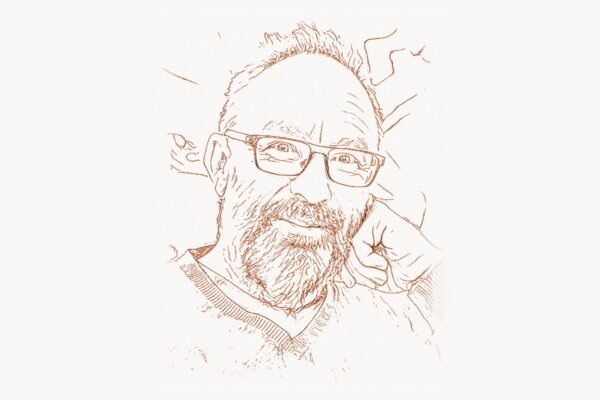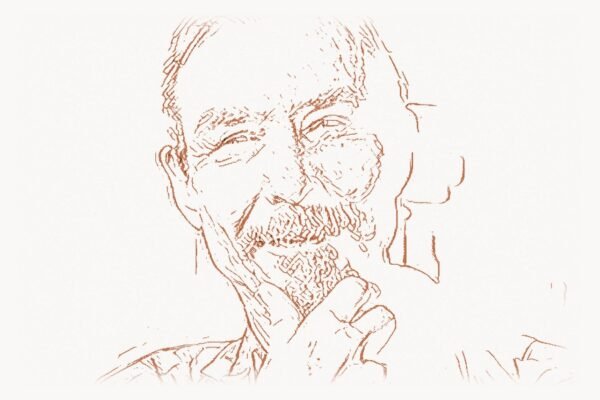
In a world where generative AI was rapidly becoming the exclusive domain of well-funded labs behind closed doors, one entrepreneur made a bold — and controversial — bet: that the most powerful AI image generation model on the planet should be free for everyone. Emad Mostaque, the founder of Stability AI, launched Stable Diffusion in August 2022 and ignited a revolution in open-source artificial intelligence. Within weeks, millions of people could generate stunning images from text prompts on their own hardware, fundamentally reshaping creative industries and the AI landscape forever.
Early Life and Education
Emad Mostaque was born in Amman, Jordan, in 1983 to a Bangladeshi father and a British-Jordanian mother. His family relocated to the United Kingdom when he was young, and he grew up primarily in England. From an early age, Mostaque showed a keen interest in mathematics and technology, displaying the kind of analytical mind that would later drive his career in quantitative finance and artificial intelligence.
Mostaque attended the University of Oxford, where he studied mathematics and computer science at Mansfield College. His education at Oxford gave him a rigorous foundation in both pure mathematics and algorithmic thinking — skills that would prove essential in his later work bridging the gap between complex machine learning research and real-world applications. During his time at Oxford, he became fascinated with the intersection of data-driven analysis and practical problem-solving, interests that guided his early career in the hedge fund industry.
After graduating, Mostaque entered the world of finance, working as an analyst and eventually as a portfolio manager at several investment firms. He spent over a decade in quantitative finance, specializing in emerging markets and macro-economic analysis. His experience in finance gave him a deep understanding of how capital allocation shapes technological development — and how entrenched gatekeepers can slow innovation. This frustration with centralized control over powerful technologies would eventually become the driving force behind Stability AI.
Before founding Stability AI, Mostaque was also involved in philanthropic and advisory work. He co-founded Symmitree, a project focused on using technology for humanitarian purposes, and served as an advisor to various organizations working on global health and education. These experiences broadened his perspective on how technology could serve humanity at scale, rather than remaining locked behind corporate paywalls.
The Stable Diffusion Breakthrough
Technical Innovation
Stable Diffusion, released in August 2022, was not built from scratch by Stability AI alone. Instead, it was the result of a collaboration between Stability AI, the CompVis group at Ludwig Maximilian University of Munich, and Runway ML. The model built upon the latent diffusion architecture described by Robin Rombach, Andreas Blattmann, Dominik Lorenz, Patrick Esser, and Björn Ommer in their 2021 paper. Mostaque’s critical contribution was providing the computational resources — reportedly tens of millions of dollars worth of GPU time — to train the model at scale on the LAION-5B dataset, and then making the trained weights freely available to the public.
What made Stable Diffusion technically revolutionary was its approach to diffusion in a compressed latent space rather than in pixel space. Traditional diffusion models operated directly on high-resolution images, making them computationally expensive and impractical for consumer hardware. The latent diffusion architecture encoded images into a much smaller latent representation using a variational autoencoder (VAE), performed the diffusion process in that compressed space, and then decoded the result back to pixel space.
Here is a simplified illustration of how the latent diffusion pipeline works conceptually:
import torch
from diffusers import StableDiffusionPipeline

# Load the open-source Stable Diffusion model
pipe = StableDiffusionPipeline.from_pretrained(
    "stabilityai/stable-diffusion-2-1",
    torch_dtype=torch.float16
)
pipe = pipe.to("cuda")

# Generate an image from a text prompt
# The pipeline handles:
# 1. Text encoding via CLIP
# 2. Iterative denoising in latent space (UNet)
# 3. Decoding latent representation to pixel space (VAE)
prompt = "A futuristic city skyline at sunset, digital art"
image = pipe(
    prompt,
    num_inference_steps=50,
    guidance_scale=7.5
).images[0]

image.save("generated_cityscape.png")
The architecture consisted of three main components: a text encoder (based on CLIP, developed by Alec Radford and colleagues at OpenAI), a UNet denoising network operating in latent space, and the VAE encoder-decoder. During generation, the model started with random noise in latent space and iteratively refined it, guided by the text embedding from the user’s prompt. This architecture reduced the computational requirements by orders of magnitude compared to pixel-space diffusion models, enabling high-quality 512×512 image generation on consumer GPUs with as little as 4-8 GB of VRAM.
The decision to release the model weights openly was technically significant as well. It allowed researchers, developers, and artists worldwide to fine-tune, modify, and optimize the model. Within months, the community produced DreamBooth personalization, ControlNet for precise spatial control, LoRA adapters for efficient fine-tuning, and SDXL for higher-resolution outputs — a cascade of innovation that would have been impossible under a closed model.
Why It Mattered
Before Stable Diffusion, state-of-the-art AI image generation was controlled by a handful of companies. OpenAI had developed DALL-E 2 but kept it behind a restrictive API with a waitlist. Midjourney offered access only through a Discord bot. Google’s Imagen was a research paper with no public access at all. The message from Big Tech was clear: generative AI was too powerful, too dangerous, or too profitable to let ordinary people use freely.
Mostaque rejected this premise. By releasing Stable Diffusion under a permissive license (the CreativeML Open RAIL-M license), he ensured that anyone could download, run, modify, and build upon the model. This single act of open-sourcing catalyzed an explosion of creativity and innovation. Within the first month, over 10 million people had used Stable Diffusion. Independent developers built desktop applications like Automatic1111’s WebUI and InvokeAI, making the technology accessible even to non-technical users. Artists, game designers, architects, and marketers suddenly had access to a tool that previously would have required either a massive budget or deep connections in Silicon Valley.
The impact was comparable to the way Linus Torvalds made Linux freely available, fundamentally shifting the economics and accessibility of an entire technological domain. Just as Linux proved that open-source software could compete with — and eventually surpass — proprietary alternatives, Stable Diffusion demonstrated that open-source AI models could match or exceed closed-source offerings, provided they had enough community support and compute behind their initial training.
Other Major Contributions
While Stable Diffusion remains Mostaque’s most well-known contribution, his work at Stability AI extended across multiple domains of generative AI. He oversaw the development and release of several other significant open-source models:
StableLM — Stability AI’s family of open-source large language models, designed to compete with models like OpenAI’s GPT series. StableLM demonstrated that text generation, not just image generation, could be democratized through open-source releases. The models were trained on a curated subset of The Pile and other datasets, and released with commercial-friendly licenses.
StableAudio — An AI model for generating music and sound effects from text descriptions, pushing the boundaries of generative AI beyond visual content into the auditory domain. This was significant for game developers, filmmakers, and content creators who needed custom audio without licensing costs.
StableCode — An open-source code generation model aimed at assisting developers, positioning Stability AI as a competitor in the coding assistant space alongside GitHub Copilot. The model supported multiple programming languages and was designed for code completion, generation, and transformation tasks.
Stability Animation and Video — Early research and models targeting video generation and frame interpolation, areas that would become fiercely competitive in subsequent years with the emergence of tools like Sora and Runway Gen-2.
Beyond model development, Mostaque was a vocal advocate for AI governance and the importance of open-source development in ensuring that AI benefits humanity broadly. He frequently appeared at conferences, policy roundtables, and media events arguing that concentrated AI power in a few companies posed existential risks to democracy and economic opportunity. His perspective was shaped partly by the work of AI researchers like Yoshua Bengio, who similarly emphasized the societal implications of advanced AI systems.
Under Mostaque’s leadership, Stability AI also launched the Stability AI Developer Platform, providing APIs and infrastructure for businesses to integrate generative AI into their products. The company attracted significant investment, raising over $100 million at a reported valuation of approximately $1 billion, making it one of the most prominent AI startups of the 2022-2023 period.
Philosophy and Approach
Emad Mostaque’s philosophy was rooted in a fundamental belief that access to advanced AI should not be restricted to wealthy corporations and governments. His approach was shaped by his diverse background spanning finance, philanthropy, and technology, and by his observations of how information asymmetry creates and perpetuates inequality.
Mostaque often described AI as a foundational technology — akin to electricity or the internet — that would reshape every aspect of human life. From this perspective, allowing a handful of companies to control AI was as dangerous as allowing a single corporation to control the power grid. He argued that open-source AI development was not just a technical preference but a moral imperative.
His approach also reflected the decentralized ethos championed by figures like Richard Stallman in free software and Vitalik Buterin in decentralized computing. Mostaque believed that when powerful technologies are controlled by centralized entities, they inevitably serve the interests of those entities first. Open-source development, by contrast, creates a form of technological commons where innovation can flourish without permission.
Key Principles
- AI as a public utility — Advanced AI models should be accessible to everyone, not locked behind corporate APIs. Mostaque frequently compared restricting AI access to restricting access to clean water or education.
- Open weights over open APIs — Simply providing API access to a model is not true openness. Genuine democratization requires releasing model weights so that users can run, modify, and audit the technology independently.
- Compute is the bottleneck — The primary barrier to AI development is not algorithmic innovation but access to computational resources. Stability AI’s role was to fund the massive GPU training runs and then give the results away freely.
- Community-driven innovation — A single company cannot anticipate every use case for a technology. By releasing models openly, the global community of researchers, developers, and artists can drive innovation faster and more creatively than any centralized lab.
- Responsible openness — Transparency in AI development enables better safety. When model weights are open, security researchers can identify vulnerabilities and biases faster than they can with black-box APIs.
- National AI sovereignty — Countries and organizations should be able to build on foundational AI models without depending on American or Chinese technology companies, ensuring technological independence and cultural relevance.
Below is an example showing how the open-source ecosystem around Stable Diffusion enabled rapid community innovation through fine-tuning:
#!/bin/bash
# Example: Fine-tuning Stable Diffusion with DreamBooth
# This workflow was only possible because model weights were open

# Install dependencies
pip install diffusers transformers accelerate

# Download a pre-trained Stable Diffusion checkpoint
# The open weights mean anyone can build on top of the base model
python -c "
from diffusers import StableDiffusionPipeline
pipe = StableDiffusionPipeline.from_pretrained(
    'stabilityai/stable-diffusion-2-1-base'
)
pipe.save_pretrained('./sd-base-model')
"

# Launch DreamBooth fine-tuning with personal images
# Community-built tool leveraging open model architecture
accelerate launch train_dreambooth.py \
    --pretrained_model_name_or_path="./sd-base-model" \
    --instance_data_dir="./my-training-images" \
    --instance_prompt="a photo of sks person" \
    --resolution=512 \
    --train_batch_size=1 \
    --learning_rate=5e-6 \
    --max_train_steps=800 \
    --output_dir="./my-custom-model"

echo "Custom model saved. Community innovation in action."
Legacy and Impact
Emad Mostaque’s legacy is complex and contested — a reflection of the man himself and the turbulent era of AI development he helped shape. On one side, he is celebrated as the person who broke open the AI image generation space, putting tools of extraordinary creative power into the hands of millions. On the other, he faced criticism over Stability AI’s business model sustainability, copyright concerns surrounding training data, and the eventual challenges that led to his departure as CEO in March 2024.
The positive impact is undeniable. Stable Diffusion spawned an entire ecosystem of tools, platforms, and businesses. Companies like Civitai created marketplaces for community-trained model variants. Applications like Automatic1111’s WebUI and ComfyUI became standard tools for digital artists. The model influenced major advances in AI-powered design tools, from Figma’s AI features to Adobe’s Firefly. The concept of releasing powerful AI models as open source — once considered reckless by many in the industry — became a legitimate and respected approach, subsequently adopted by Meta with LLaMA, Mistral AI, and others.
Mostaque also helped shift the public conversation about AI governance. His arguments that open-source AI is safer than closed AI — because it allows for public scrutiny, independent auditing, and distributed control — became increasingly influential in policy debates. While not everyone agreed (and the debate continues), his position helped prevent a regulatory framework that would have exclusively favored large incumbents.
However, the journey was not without significant controversy. Stability AI faced lawsuits from Getty Images and groups of artists alleging copyright infringement in the training data. The company experienced financial difficulties, high employee turnover, and questions about Mostaque’s leadership and some of his public claims, including the specifics of his educational background. In March 2024, Mostaque stepped down as CEO and from the board of directors, stating he wanted to decentralize AI development further. His departure marked the end of an era but not the end of his influence — the open-source genie he helped release from the bottle cannot be put back.
The broader significance of Mostaque’s work extends beyond any single company. He demonstrated that a well-funded, mission-driven effort to open-source AI could fundamentally alter the competitive landscape. In a period when Geoffrey Hinton and other AI luminaries warned about the risks of advanced AI, Mostaque offered an alternative vision: that the greater risk lay in concentrating AI power rather than distributing it. History will judge which perspective proves more prescient, but there is no question that Mostaque’s actions permanently expanded the boundaries of what open-source AI can achieve.
For teams building products on modern AI infrastructure, understanding the ecosystem Mostaque helped create is essential. Platforms like Toimi leverage advances in AI and web technology to deliver cutting-edge digital solutions, while project management tools such as Taskee help teams coordinate the increasingly complex workflows that AI-powered development demands.
Key Facts
- Full name: Emad Mostaque
- Born: 1983 in Amman, Jordan
- Nationality: British
- Education: University of Oxford (Mathematics and Computer Science)
- Known for: Founding Stability AI and releasing Stable Diffusion as open source
- Company: Stability AI (founded 2020, headquartered in London)
- Key release: Stable Diffusion v1 (August 2022)
- Funding raised: Over $100 million at approximately $1 billion valuation
- Previous career: Quantitative finance, hedge fund management (10+ years)
- Stepped down as CEO: March 2024
- Philosophy: Open-source AI as essential infrastructure for humanity
- Impact: Catalyzed the open-source AI movement, with Stable Diffusion used by tens of millions globally
FAQ
What is Stable Diffusion and why was it important?
Stable Diffusion is an open-source AI model for generating images from text descriptions. Released in August 2022, it was the first state-of-the-art text-to-image model whose weights were made freely available to the public. This was important because it democratized access to AI image generation — previously, comparable technology was only available through restricted APIs from companies like OpenAI (DALL-E 2) and Google (Imagen). By making the model open source, Emad Mostaque and Stability AI enabled millions of developers, artists, and researchers to use, modify, and improve the technology on their own hardware, sparking an explosion of creative applications and community-driven innovation that continues to this day.
Why did Emad Mostaque leave Stability AI?
Emad Mostaque resigned as CEO and from the board of Stability AI in March 2024. In his public statements, he said the decision was motivated by a desire to work on decentralized AI development outside the constraints of a single company. However, the departure came amid significant challenges for Stability AI, including ongoing copyright lawsuits from Getty Images and artists, financial pressures, reports of high employee turnover, and scrutiny over certain claims Mostaque had made publicly. His resignation was interpreted both as a principled move toward his broader mission and as a response to mounting operational difficulties at the company he founded.
How did Stable Diffusion change the AI industry?
Stable Diffusion fundamentally shifted the AI industry in several ways. First, it proved that open-source AI models could match the quality of closed-source alternatives, encouraging other companies like Meta (LLaMA) and Mistral to follow suit with their own open releases. Second, it created an entirely new ecosystem of tools, fine-tuning techniques, and creative applications — from DreamBooth personalization to ControlNet for precise image control. Third, it forced competitors to reconsider their strategies: OpenAI accelerated DALL-E’s public availability, and Midjourney expanded its offerings. Finally, it brought generative AI into the mainstream consciousness, making AI image generation a topic of conversation far beyond the tech industry, influencing debates about copyright, creativity, and the future of work.
What is the controversy around AI training data and copyright?
One of the most significant controversies surrounding Stable Diffusion involved its training data. The model was trained on the LAION-5B dataset, which contained billions of image-text pairs scraped from the internet. Many of these images were copyrighted works by professional photographers, illustrators, and artists who had not consented to their work being used for AI training. Getty Images filed a lawsuit against Stability AI in both the US and UK, and a group of artists filed a class-action lawsuit. These legal battles raised fundamental questions about whether training AI models on copyrighted content constitutes fair use. The outcome of these cases has implications not just for Stability AI but for the entire AI industry, as virtually all large-Scale AI models are trained on data scraped from the web.