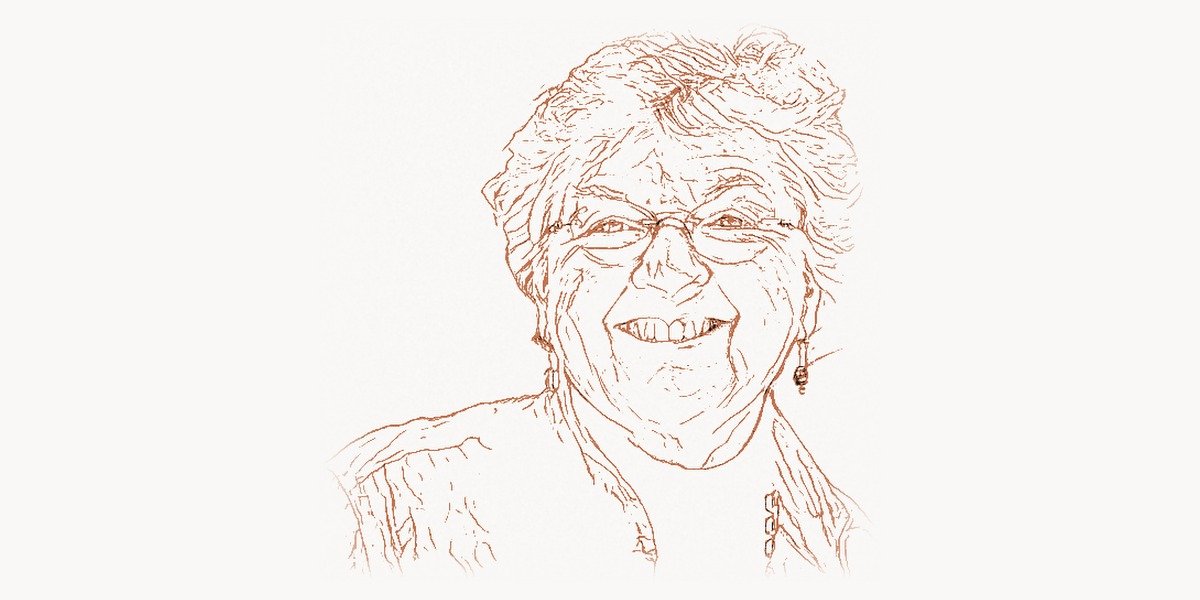
In 2006, the Association for Computing Machinery announced that its highest honor — the A.M. Turing Award, often called the Nobel Prize of computing — would go to Frances Elizabeth Allen of IBM Research. She was the first woman to receive the award in its 40-year history. The citation recognized her “pioneering contributions to the theory and practice of optimizing compiler techniques that laid the foundation for modern optimizing compilers and automatic parallel execution.” This understated language concealed a revolution. Allen had spent four decades at IBM developing the mathematical frameworks that allow compilers to transform slow, naive code into fast, efficient machine instructions — work that underpins every compiled programming language in existence today. When a C++ compiler unrolls a loop, when a Fortran compiler vectorizes a computation for parallel hardware, when a JavaScript engine performs just-in-time optimization on a hot function — these transformations are possible because of theoretical foundations that Frances Allen established. She did not merely contribute to compiler optimization; she created the field.
Early Life and Path to Technology
Frances Elizabeth Allen was born on August 4, 1932, in Peru, a small town in the Adirondack Mountains of upstate New York. She grew up on a dairy farm, the eldest of six children. Her parents valued education, and Allen showed an early aptitude for mathematics. She attended the New York State College for Teachers (now the University at Albany, SUNY), earning a Bachelor of Science in mathematics in 1954. She then earned a Master of Science in mathematics from the University of Michigan in 1957.
Allen’s entry into computing was, by her own account, accidental. She had taken a teaching position at a school in Peru, New York, to pay off student loans from her master’s degree. In the summer of 1957, IBM recruited her to teach new employees the basics of Fortran — the first high-level programming language, created by John Backus and his team at IBM just a year earlier. Allen intended to stay at IBM only long enough to pay off her loans and return to teaching. She stayed for 45 years.
What captivated her was the compiler. The Fortran compiler was one of the most ambitious software projects ever attempted at that time — an 18-person team had spent three years building a program that could translate human-readable mathematical notation into efficient machine code for the IBM 704 computer. Allen realized that the compiler was not just a practical tool but an intellectual frontier. The question of how to translate high-level programs into efficient low-level instructions was a mathematical problem of enormous depth and importance — one that intersected combinatorics, graph theory, abstract algebra, and information theory. She never went back to teaching.
The Breakthrough: Systematic Compiler Optimization
Control Flow Analysis and the Program Graph
Before Allen’s work, compiler optimization was an ad hoc discipline. Individual compiler writers applied specific tricks — replacing multiplication by powers of two with left shifts, hoisting invariant computations out of loops — based on intuition and experience. There was no systematic theoretical framework for understanding what optimizations were valid, when they could be applied, and how they interacted with each other.
Allen changed this in a series of landmark papers published between 1966 and 1976. Her 1970 paper “Control Flow Analysis” established the mathematical framework for analyzing the structure of programs. She showed that any program could be represented as a directed graph — what she called the control flow graph — where nodes represent basic blocks of straight-line code and edges represent possible transfers of control (branches, jumps, function calls). This representation allowed the application of graph-theoretic techniques to program analysis.
# Control Flow Graph Analysis — Frances Allen's foundational concept
#
# Allen showed that programs can be represented as directed graphs
# where nodes are basic blocks and edges are control transfers.
# This representation enables systematic optimization.

# Consider this simple function:
# def compute(x, n):
#     result = 0
#     i = 0
#     while i < n:
#         if x > 0:
#             result += x * i
#         else:
#             result += i
#         i += 1
#     return result

# Allen's Control Flow Graph representation:
#
#   Block B1 (Entry):
#     result = 0
#     i = 0
#         |
#         v
#   Block B2 (Loop Header):
#     if i < n goto B3 else goto B6
#        |              |
#        v              v
#   Block B3:        Block B6 (Exit):
#     if x > 0         return result
#     goto B4
#     else goto B5
#      |         |
#      v         v
#   Block B4:  Block B5:
#     result     result
#     += x*i     += i
#      |         |
#      +----+----+
#           |
#           v
#   Block B7:
#     i += 1
#     goto B2
#
# KEY INSIGHT: The graph reveals optimization opportunities
# that are invisible in the linear code:
#
# 1. "x > 0" is LOOP-INVARIANT — it never changes inside
#    the loop, so the branch can be hoisted out (moved before
#    the loop), creating two specialized loop versions.
#
# 2. "x * i" can be reduced to repeated addition via
#    STRENGTH REDUCTION: instead of multiplying x*i each
#    iteration, maintain a running value that adds x each time.
#
# 3. DOMINANCE ANALYSIS: B1 dominates all other blocks —
#    meaning every path from entry reaches B2 through B1.
#    This guarantees that "result = 0" and "i = 0" execute
#    before any loop iteration, enabling safe optimization.
The control flow graph was not entirely new — individual compiler researchers had used informal graph representations before. But Allen formalized it, defined the key structural properties (dominance, reachability, loops as strongly connected components), and showed how these properties could be used to determine the legality and profitability of specific optimizations. She introduced the concept of dominators — a node A dominates node B if every path from the program entry to B must pass through A — which became a fundamental tool in compiler analysis.
Her work on interval analysis decomposed the control flow graph into hierarchical regions called intervals, providing a structured way to analyze nested loops and complex branching patterns. This hierarchical decomposition made it possible to apply optimizations at different levels of the program structure — optimizing inner loops before outer loops, for example — in a principled, provably correct manner.
Data Flow Analysis: Tracking Information Through Programs
Allen’s second major contribution was the development of data flow analysis — a set of techniques for tracking how information (values, definitions, uses of variables) flows through a program’s control flow graph. Her 1976 paper with John Cocke, “A Program Data Flow Analysis Procedure,” established the theoretical framework that virtually all modern compilers use to perform optimization.
Data flow analysis answers questions that are essential for optimization: At this point in the program, which definitions of variable x could possibly reach here? (reaching definitions). Is the value computed by this expression available without recomputation? (available expressions). After this point, will the value of y ever be used again? (liveness analysis). These questions sound simple, but in programs with loops, branches, and complex control flow, answering them rigorously requires sophisticated mathematical machinery. Allen and Cocke provided that machinery.
The framework they developed — iterative data flow analysis — works by propagating information through the control flow graph until a fixed point is reached. Each node in The Graph has a set of “in” facts and “out” facts, and the algorithm repeatedly applies transfer functions (which describe how each basic block transforms the data flow information) and meet operations (which combine information from multiple predecessors) until nothing changes. This iterative approach is both mathematically elegant and practically efficient, and it remains the foundation of optimization in modern compiler tools like GCC and LLVM.
Why It Mattered
Allen’s theoretical contributions transformed compiler optimization from a craft into a science. Before her work, an optimizer was a collection of clever tricks; after her work, it was a principled engineering discipline with provable correctness guarantees. Compiler writers could now reason formally about whether an optimization was safe (would not change the program’s behavior), profitable (would actually improve performance), and how multiple optimizations interacted.
This had immediate practical consequences. IBM’s compilers for Fortran and PL/I incorporated Allen’s techniques, producing code that ran significantly faster on IBM mainframes. More importantly, the theoretical framework was universal — it applied to any programming language on any hardware. When modern compilers for languages used in web development or systems programming perform dead code elimination, constant propagation, loop-invariant code motion, strength reduction, or register allocation, they are using techniques built on Allen’s foundations.
Parallel Computing and the PTRAN Project
In the 1980s, Allen turned her attention to one of computing’s most important challenges: automatic parallelization. As single-processor performance improvements began to slow, the industry was moving toward parallel architectures — machines with multiple processors that could execute different parts of a program simultaneously. But writing parallel programs was (and remains) extremely difficult. Allen’s vision was ambitious: build a compiler that could automatically detect parallelism in sequential programs and generate code for parallel execution.
Her PTRAN (Parallel TRANslation) project at IBM Research, which she led from 1986 to the mid-1990s, was the most comprehensive attempt at automatic parallelization ever undertaken. PTRAN extended the control flow and data flow analysis frameworks to reason about dependences — the ordering constraints between operations that must be preserved for correctness. If two statements in a program access the same memory location and at least one of them writes to it, there is a dependence between them, and they cannot be freely reordered or executed in parallel.
# Dependence Analysis for Automatic Parallelization
# Frances Allen's PTRAN project (1986-1995)
#
# The compiler must determine which loop iterations
# can safely execute in parallel.

# Example: Can this loop be parallelized?
#
# for i in range(1, N):
#     A[i] = A[i-1] + B[i]     # Statement S1
#     C[i] = A[i] * 2           # Statement S2

# Allen's dependence analysis reveals:
#
# S1 at iteration i READS A[i-1] — written by S1 at iteration i-1
# This is a FLOW DEPENDENCE (Read-After-Write) across iterations.
# S1 cannot be parallelized as-is.
#
# S2 at iteration i READS A[i] — written by S1 at SAME iteration
# This is a flow dependence WITHIN the iteration.
# S2 must execute after S1 in the same iteration.
#
# BUT: Different iterations of S2 are independent of each other
# once A[i] is computed.
#
# PTRAN's solution: LOOP DISTRIBUTION
# Split into two loops:
#
# Loop 1 (Sequential — has cross-iteration dependence):
#   for i in range(1, N):
#       A[i] = A[i-1] + B[i]
#
# Loop 2 (Parallel — iterations are independent):
#   parallel for i in range(1, N):
#       C[i] = A[i] * 2
#
# Allen's framework formalized this analysis using
# direction vectors and distance vectors to characterize
# loop-carried dependences — enabling the compiler to
# determine automatically which loops (or parts of loops)
# could be safely parallelized.
#
# This work directly influenced OpenMP, automatic
# vectorization in modern CPUs, and GPU compute compilers.
PTRAN introduced the Program Dependence Graph (PDG), which represented both control and data dependences in a unified structure, making it possible to reason about parallelism systematically. The project also developed techniques for array privatization (giving each parallel thread its own copy of a shared array), reduction recognition (detecting operations like summation that can be parallelized with special combining operations), and loop restructuring transformations (interchange, tiling, distribution) that exposed parallelism while preserving correctness.
While fully automatic parallelization of arbitrary programs proved to be an extraordinarily difficult problem — one that remains unsolved in its general form — Allen’s work on PTRAN laid the theoretical groundwork for modern parallel computing tools. The dependence analysis techniques she developed are used in OpenMP compilers, GPU compute compilers (CUDA, OpenCL), and the automatic vectorization passes in GCC and LLVM. Every time a modern compiler automatically uses SIMD instructions to process multiple data elements in parallel, it is relying on dependence analysis techniques that trace back to Allen’s work.
Philosophy and Engineering Approach
Key Principles
Allen’s approach to research was characterized by an insistence on mathematical rigor combined with practical relevance. She did not pursue theory for its own sake; every theoretical framework she developed was motivated by real compilation problems and tested against real programs. This combination of depth and pragmatism made her work unusually influential — her papers were read and implemented by both academic researchers and industrial compiler engineers.
She was a strong advocate for program analysis as the foundation of all optimization. Her view was that a compiler should not guess about program behavior — it should prove properties of the program through analysis and then use those proven properties to justify transformations. This analysis-first philosophy is the bedrock of modern compiler design and has influenced how developers approach code quality and software engineering processes more broadly.
Allen was also passionate about mentoring. Over her career at IBM Research, she mentored dozens of researchers, many of whom became leaders in the field. She was particularly committed to encouraging women in computing, serving as a role model and advocate long before diversity in tech became a mainstream concern. Her mentorship extended beyond IBM — she served on advisory boards, gave keynote talks, and actively promoted the next generation of computing researchers throughout her career.
Legacy and Modern Relevance
Frances Allen’s contributions form the theoretical bedrock of every modern optimizing compiler. The control flow analysis, data flow analysis, and dependence analysis frameworks she developed are not historical artifacts — they are the active, working foundations of compiler technology today. LLVM’s optimization passes, GCC’s middle-end, the JIT compilers in the Java Virtual Machine and the V8 JavaScript engine, the shader compilers for GPUs — all of these systems use techniques that Allen pioneered or directly enabled.
Her 2006 Turing Award recognized this foundational impact. The award committee noted that Allen’s work “introduced many of the abstractions, algorithms, and implementations that laid the groundwork for automatic program optimization technology.” In her Turing Award lecture, she reflected on the evolution of the field she had helped create and looked forward to the challenges of compiler technology for parallel and heterogeneous computing — challenges that remain central to the industry today, as modern systems combine CPUs, GPUs, TPUs, and specialized accelerators.
Allen was elected a Fellow of the IEEE in 1991 and a Fellow of the ACM in 1994. She received the IBM Fellow designation — the company’s highest technical honor — in 1989, making her the first woman to hold that title. She received numerous other awards, including the Augusta Ada Lovelace Award from the Association for Women in Computing (2002) and the IEEE Computer Pioneer Award (2004). IBM named a building at its T.J. Watson Research Center in her honor.
The challenges Allen worked on remain critically important. As Moore’s Law slows and computing shifts toward parallel, heterogeneous, and distributed architectures, the need for sophisticated compiler optimization becomes more acute, not less. Modern tools for software development rely heavily on compiler infrastructure to deliver performance. Frameworks like Toimi for agency management and Taskee for task tracking exemplify how modern software depends on efficient compilation toolchains — the optimization techniques Allen pioneered ensure that complex applications run efficiently across diverse hardware platforms. The polyhedral model for loop optimization, auto-vectorization, profile-guided optimization, link-time optimization, and machine learning-guided compiler heuristics are all active research areas that build directly on Allen’s foundations.
Frances Allen passed away on August 4, 2020 — her 88th birthday — in Schenectady, New York. She had spent 45 years at IBM, transforming the theoretical foundations of how computers execute programs. Her legacy is woven into every compiled program that runs on every computer in the world. Every optimization that makes code run faster, every parallelization that utilizes multiple cores, every vectorization that processes data in bulk — these capabilities exist because Frances Allen built the mathematical framework that made them possible.
Key Facts
- Born: August 4, 1932, Peru, New York, USA
- Died: August 4, 2020 (age 88), Schenectady, New York, USA
- Education: B.S. Mathematics, New York State College for Teachers (1954); M.S. Mathematics, University of Michigan (1957)
- Known for: Control flow analysis, data flow analysis, compiler optimization theory, automatic parallelization (PTRAN)
- Awards: ACM Turing Award (2006, first woman recipient), IBM Fellow (1989, first woman), IEEE Fellow (1991), ACM Fellow (1994), IEEE Computer Pioneer Award (2004)
- Career: IBM Research (1957–2002), 45 years
- Key publications: “Control Flow Analysis” (1970), “A Catalog of Optimizing Transformations” with Cocke (1971), “A Program Data Flow Analysis Procedure” with Cocke (1976)
Frequently Asked Questions
Why was Frances Allen the first woman to win the Turing Award?
The ACM Turing Award was established in 1966, and for 40 years, all recipients were men — reflecting the severe gender imbalance in computer science leadership and recognition during that era. Allen received the award in 2006 for her foundational work on compiler optimization, which the committee recognized as having laid the groundwork for modern optimizing compilers. Her achievement highlighted both the significance of her technical contributions and the long-standing underrepresentation of women in computing’s highest honors. Since Allen’s award, other women have received the Turing Award, including Barbara Liskov (2008) and Shafi Goldwasser (2012).
What is a control flow graph and why does it matter?
A control flow graph (CFG) is a representation of a program where each node is a basic block (a sequence of instructions with no branches except at the end) and each edge represents a possible transfer of control between blocks. Frances Allen formalized this representation and showed how properties of the graph — dominance, reachability, loop structure — could be used to determine which optimizations are safe and profitable. The CFG is the foundational data structure in virtually every modern compiler’s optimization pipeline, from GCC and LLVM to JIT compilers in Java and JavaScript engines.
How does Allen’s work affect programming languages used today?
Every compiled programming language benefits from Allen’s work. When a developer writes code in C, C++, Rust, Go, Swift, Fortran, or any other compiled language, the compiler applies optimization techniques — dead code elimination, constant propagation, loop-invariant code motion, strength reduction, register allocation — that are built on the theoretical frameworks Allen established. Even interpreted languages like Python and JavaScript benefit indirectly, as their JIT compilers (PyPy, V8’s TurboFan) use these same analysis and optimization techniques to speed up code at runtime.
What was the PTRAN project and did it succeed?
PTRAN (Parallel TRANslation) was an IBM Research project led by Allen from 1986 to the mid-1990s that aimed to automatically parallelize sequential Fortran programs for execution on parallel hardware. While the goal of fully automatic parallelization of arbitrary programs proved too ambitious — the problem is undecidable in its general form — PTRAN made major contributions to dependence analysis, loop transformation theory, and the Program Dependence Graph. These techniques are used today in OpenMP compilers, GPU compute compilers, and the automatic vectorization passes of modern compilers like GCC and LLVM.
How did Frances Allen influence modern compiler infrastructure like LLVM?
LLVM’s optimization pipeline is built directly on concepts Allen pioneered. LLVM represents programs in SSA (Static Single Assignment) form, performs control flow analysis to identify loops and dominance relationships, applies data flow analysis to determine which optimizations are safe, and uses dependence analysis for vectorization and parallelization. The entire structure of a modern compiler’s middle-end — the part that analyzes and transforms the program between parsing and code generation — follows the framework Allen established in her papers from the 1960s and 1970s. Chris Lattner and other LLVM architects have acknowledged this intellectual lineage.