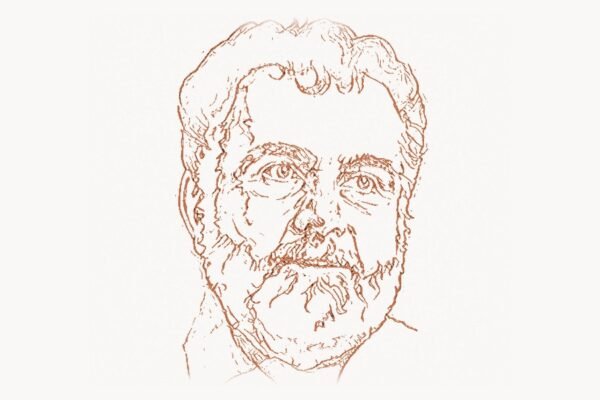
In the annals of computing history, few stories carry as much weight — or as much tragedy — as that of Gary Kildall. Before Microsoft became a household name, before IBM PCs dominated every office desk, there was a brilliant computer scientist in Pacific Grove, California, who had already solved the fundamental problem of making microcomputers usable. His creation, CP/M (Control Program for Microcomputers), was the operating system that transformed hobbyist microprocessors into genuine personal computers. Yet a single fateful afternoon in 1980, when IBM came knocking and Kildall was not there to answer, would reshape the entire technology industry — redirecting billions of dollars and decades of innovation away from the man who arguably deserved it most. Gary Kildall did not just write software; he defined the very architecture of how humans interact with small computers, establishing patterns that persist in every device we touch today.
Early Life and Path to Technology
Gary Arlen Kildall was born on May 19, 1942, in Seattle, Washington, into a family of Scandinavian heritage. His father was a sea captain, and the maritime culture of the Pacific Northwest instilled in young Gary a practical, hands-on approach to problem-solving that would later define his engineering style. Growing up in Seattle during the postwar technology boom, he was surrounded by the nascent aerospace and electronics industries that were rapidly transforming the region.
Kildall’s early academic path was not a straight line into computer science — the field barely existed as a formal discipline during his youth. He initially studied mathematics at the University of Washington, where he earned his bachelor’s degree. It was during his graduate studies that he first encountered computers, and the experience was transformative. He went on to earn a PhD in computer science from the University of Washington in 1972, writing his dissertation on compiler optimization techniques — a topic that would prove prophetic given his later work on programming languages for microcomputers.
After completing his doctorate, Kildall took a position as a professor at the Naval Postgraduate School (NPS) in Monterey, California. This academic setting proved to be the perfect incubator for his ideas. At NPS, he had access to computing resources and — crucially — the intellectual freedom to experiment with the new microprocessor chips that Intel was beginning to produce. It was Intel’s 4004 and later the 8008 and 8080 processors that captured Kildall’s imagination. While most established computer scientists dismissed these tiny chips as toys, Kildall saw their revolutionary potential. He recognized that these microprocessors could become the brains of affordable, personal computers — but only if someone wrote the software to make them useful.
This insight placed Kildall in a rare position. He was among the first academically trained computer scientists to take microprocessors seriously, bridging the gap between the theoretical rigor of university computing and the scrappy, practical world of early microcomputer hobbyists. His background in compiler design and operating systems theory, combined with his willingness to get his hands dirty with actual hardware, made him uniquely qualified to create the foundational software layer that microcomputers desperately needed. In many ways, Kildall’s journey parallels that of other visionary computer scientists like Dennis Ritchie and Ken Thompson, who similarly saw the need to create accessible, portable software for emerging hardware platforms.
The Breakthrough: Creating CP/M
The Technical Innovation
In 1974, Gary Kildall created CP/M — the Control Program for Microcomputers — and in doing so, solved a problem that was strangling the nascent personal computing industry. Before CP/M, every microcomputer was essentially an island. Each hardware manufacturer created its own ad-hoc software environment. If you wrote a program for one machine, it would not run on another, even if both used the same Intel 8080 processor. There was no standard way to manage files, no consistent interface for loading and running programs, and no abstraction layer between the hardware and the software.
CP/M changed everything by introducing a layered architecture that separated hardware-dependent code from the operating system logic. This was Kildall’s most brilliant insight: the creation of the BIOS (Basic Input/Output System) concept. The BIOS was a thin layer of code that handled the specific quirks of each hardware platform — how to read from a disk drive, how to send characters to a screen, how to receive input from a keyboard. Above this layer sat CP/M itself, which provided a consistent set of services regardless of the underlying hardware.
The architecture was elegant in its simplicity. CP/M consisted of three main components: the BIOS (hardware abstraction), the BDOS (Basic Disk Operating System, which managed files and system calls), and the CCP (Console Command Processor, which provided the user interface). This layered design meant that porting CP/M to a new hardware platform required only rewriting the BIOS — the BDOS and CCP remained unchanged. The concept was revolutionary for the microcomputer world, though it drew on principles familiar from mainframe and minicomputer operating systems that Kildall had studied during his academic career.
; CP/M Architecture - Simplified BIOS Entry Points
; The BIOS provided a standardized jump table that CP/M used
; to communicate with hardware-specific code

BIOS_BASE:
    JMP  BOOT        ; Cold start - initialize system
    JMP  WBOOT       ; Warm start - reload CCP and BDOS
    JMP  CONST       ; Console status - check if key pressed
    JMP  CONIN       ; Console input - read character from keyboard
    JMP  CONOUT      ; Console output - write character to screen
    JMP  LIST        ; List output - send character to printer
    JMP  PUNCH       ; Punch output - send to paper tape
    JMP  READER      ; Reader input - read from paper tape
    JMP  HOME        ; Move disk head to track 0
    JMP  SELDSK      ; Select disk drive
    JMP  SETTRK      ; Set track number
    JMP  SETSEC      ; Set sector number
    JMP  SETDMA      ; Set DMA address (memory buffer)
    JMP  READ        ; Read one sector from disk
    JMP  WRITE       ; Write one sector to disk

; Each hardware vendor only needed to implement these routines
; for their specific hardware. The rest of CP/M worked unchanged.
; This separation of concerns was Kildall's masterstroke.
CP/M provided a file system based on the concept of named files organized on disk, a command-line interface for user interaction, and a set of system calls (accessed through the BDOS) that application programs could use to perform I/O operations. The file system used an allocation table to track disk space — a concept that would later be directly echoed in MS-DOS’s FAT (File Allocation Table) system. Programs could be loaded and executed from disk using simple commands, and transient programs could be written that made standard system calls, ensuring portability across any CP/M system.
Why It Mattered
The impact of CP/M on the personal computing industry cannot be overstated. Before CP/M, the microcomputer market was fragmented into incompatible silos. After CP/M, there was a common platform on which an entire software ecosystem could flourish. By the late 1970s, CP/M had been ported to hundreds of different hardware platforms and had become the de facto standard operating system for business microcomputers. Thousands of applications were written for CP/M, including early word processors like WordStar, spreadsheet programs like SuperCalc, and database managers like dBASE II.
This ecosystem effect was perhaps CP/M’s greatest contribution. Kildall had demonstrated that a standard operating system could unify a diverse hardware market, creating network effects that benefited everyone — hardware makers, software developers, and users alike. The principle that an OS should be a platform, not merely a control program, was a conceptual leap that defined the entire PC industry going forward. Modern project management tools like Taskee and collaborative platforms owe their existence to the ecosystem-driven approach to software that Kildall pioneered — the idea that standardization creates markets where specialized applications can thrive.
CP/M also established many of the conventions that PC users would use for decades. The A: and B: drive letter designations, the concept of a command-line prompt, the use of file extensions to indicate file types, and the general workflow of loading a program from disk and executing it — all of these originated with or were popularized by CP/M. When MS-DOS later arrived, it adopted virtually all of these conventions wholesale, a fact that was not lost on Kildall or on industry observers.
PL/M, Digital Research, and the Software Empire
CP/M was not Kildall’s only creation, nor was it developed in isolation. Before CP/M, Kildall had already made a significant contribution to computing by creating PL/M (Programming Language for Microcomputers) in 1973 under contract with Intel. PL/M was a high-level programming language specifically designed for the Intel 8008 and later the 8080 microprocessor. It was essentially a systems programming language — a scaled-down, microprocessor-targeted relative of PL/I — that allowed developers to write software for microprocessors without resorting to tedious assembly language.
PL/M was significant because it demonstrated that high-level language concepts, previously reserved for mainframes and minicomputers, could be applied to microprocessors. This was philosophically aligned with what John Backus had achieved with FORTRAN for mainframes and what Niklaus Wirth accomplished with Pascal for structured programming — making computers more accessible by raising the level of abstraction at which programmers worked. Kildall’s PL/M became the language in which much of CP/M itself was written, and it was widely used within Intel for firmware development.
In 1976, recognizing the commercial potential of his work, Kildall and his wife Dorothy McEwen founded Digital Research, Inc. (DRI). The company, initially operated from their home in Pacific Grove, California, became the leading microcomputer software company of the late 1970s. DRI licensed CP/M to hardware manufacturers, who would then customize the BIOS for their specific machines. The business model was effectively the first successful software licensing scheme for personal computers — a model that would later be adopted, with enormous success, by Microsoft.
At its peak, Digital Research was a powerhouse. CP/M ran on machines from dozens of manufacturers, and the company was the dominant force in microcomputer operating systems. Kildall expanded the company’s offerings to include MP/M (a multi-user version of CP/M), CP/NET (a networking extension), and various language tools. Digital Research was, for a brief window, what Microsoft would later become — the essential software company that every hardware maker needed as a partner.
The IBM Deal That Changed Everything
The most famous episode in Gary Kildall’s life — and one of the most consequential moments in computing history — occurred in 1980, when IBM came looking for an operating system for its forthcoming personal computer. The story has been told many times, often inaccurately, but the core facts are well established.
IBM’s representatives first approached Microsoft, led by the young Bill Gates, about providing an operating system. Gates, who at the time was primarily selling programming languages (notably BASIC), did not have an operating system to offer. He directed IBM to Digital Research and Gary Kildall, acknowledging that CP/M was the industry standard. IBM sent a team to Pacific Grove to negotiate a licensing deal with DRI.
What happened next has become the stuff of legend — and considerable controversy. The most common version of the story holds that Kildall was out flying his airplane when the IBM representatives arrived, and that Dorothy Kildall and DRI’s attorney refused to sign IBM’s nondisclosure agreement, causing the meeting to stall. The reality was more nuanced. Kildall did have a prior commitment that day, but he returned later and did meet with the IBM team. The sticking point was not mere absence but rather substantive disagreements about licensing terms. Kildall wanted to retain the right to sell CP/M to other customers (a per-copy royalty model), while IBM wanted an exclusive or at least a very favorable arrangement.
Frustrated by the slow progress with DRI, IBM returned to Microsoft. Gates then acquired QDOS (Quick and Dirty Operating System) from Seattle Computer Products — a system that its creator, Tim Paterson, had explicitly modeled on CP/M’s API and command structure — and licensed it to IBM as PC-DOS. The rest is history: IBM’s PC became the industry standard, MS-DOS became the dominant operating system, and Microsoft began its ascent to becoming the most valuable company in the world.
For Kildall, the loss was devastating — not just financially, but intellectually. He publicly stated on multiple occasions that MS-DOS was essentially a clone of CP/M, and the similarities were undeniable. The QDOS system calls, file system structure, command syntax, and overall architecture bore unmistakable resemblance to CP/M. In a settlement, IBM agreed to offer CP/M-86 as an alternative operating system for the IBM PC, but priced it at $240 compared to $40 for PC-DOS — ensuring that virtually no one chose it. This pricing disparity, widely seen as unfair to DRI, cemented the outcome.
GEM, DR-DOS, and Continued Innovation
Despite the IBM setback, Kildall did not stop innovating. In 1985, Digital Research released GEM (Graphical Environment Manager), a graphical user interface that ran on top of DOS. GEM was inspired by the Xerox PARC concepts and Apple’s Macintosh, providing windows, icons, and a mouse-driven interface to PC users. GEM was technically accomplished and in some ways ahead of its time — Atari licensed it for their ST line of computers, where it became the standard interface.
However, GEM’s success on IBM-compatible PCs was cut short by legal threats from Apple, which claimed that GEM’s desktop metaphor infringed on the Macintosh’s “look and feel.” Digital Research was forced to significantly reduce GEM’s capabilities on PC-compatible machines, limiting its desktop to a single fixed window. This legal pressure, combined with Microsoft’s growing dominance, prevented GEM from becoming a serious competitor to what would eventually become Windows.
Kildall also developed DR-DOS, a fully compatible alternative to MS-DOS that in many respects was technically superior. DR-DOS included features like disk compression, memory management, and networking support before Microsoft added equivalent capabilities to MS-DOS. DR-DOS attracted significant corporate customers, including being bundled with some Novell systems. However, Microsoft employed aggressive competitive tactics — including alleged hidden error messages in Windows 3.1 beta versions that falsely warned users about running on DR-DOS — that undermined DR-DOS’s market position. This behavior later became part of the antitrust cases against Microsoft.
Throughout these struggles, Kildall’s technical vision remained sharp. He was among the first to recognize the importance of optical media, and Digital Research developed one of the first CD-ROM file systems. He also explored multimedia computing, hosting a television show called “Computer Chronicles” and producing interactive video content at a time when most of the industry still thought of PCs as text-only business machines. His vision of computing as a multimedia, interconnected experience was years ahead of mainstream adoption. In the same spirit, modern platforms like Toimi continue to push the integration of technology into everyday business workflows — a vision that Kildall would have recognized and embraced.
Philosophy and Engineering Approach
Key Principles
Kildall’s engineering philosophy was rooted in several principles that remain relevant to software development today. First and foremost was the principle of abstraction through layers. His BIOS concept — separating hardware-dependent code from the operating system — was a practical application of the information-hiding principles being formalized by Edsger Dijkstra and others in academic computer science. Kildall believed that good software design meant creating clean boundaries between system components, allowing each layer to evolve independently.
Second was his commitment to portability. Kildall understood early that the value of software multiplied with each platform it could run on. His design of CP/M’s portable architecture, requiring only a BIOS rewrite for new hardware, was a precursor to the portability concerns that would later drive Linus Torvalds’s work on Linux and the broader open-source movement. The idea that an operating system should be a stable platform, independent of specific hardware, is so fundamental today that we take it for granted — but it was Kildall who first proved it could work for personal computers.
Third was his belief in standardization as an enabler. Kildall was not interested in lock-in; he wanted to create standards that would grow the entire market. His willingness to license CP/M broadly, rather than tying it exclusively to one hardware platform, reflected a philosophical commitment to openness that was unusual in the proprietary software world of the 1970s and 1980s. This approach anticipated the platform thinking that would later define the most successful technology companies.
; CP/M BDOS System Call Interface
; Programs communicated with CP/M through standardized function calls
; This interface remained consistent across ALL CP/M machines

; To make a system call:
;   Load C register with function number
;   Load DE register pair with parameter
;   Call address 0005h (BDOS entry point)

; Example: Print a string to console
;   Function 9 - Print String (terminated by '$')

        ORG  0100h           ; CP/M programs loaded at 100h (TPA)

START:  MVI  C, 09h          ; Function 9: Print string
        LXI  D, MESSAGE      ; DE = address of string
        CALL 0005h           ; Call BDOS
        MVI  C, 00h          ; Function 0: System reset
        CALL 0005h           ; Return to CP/M

MESSAGE: DB  'Hello from CP/M!$'

; This same code ran on ANY CP/M machine — from an Altair
; to an Osborne to a Kaypro — because the BDOS interface
; was identical everywhere. Only the BIOS changed per machine.
;
; Compare with MS-DOS INT 21h interface:
;   MOV AH, 09h     ; Same function number
;   MOV DX, MESSAGE  ; Same parameter convention
;   INT 21h          ; Different calling mechanism, same concept
;
; The similarity was not coincidental.
Fourth, Kildall championed the idea of software as intellectual work deserving protection and fair compensation. He was among the first to successfully license operating system software as a commercial product, establishing that software had independent economic value separate from hardware. This was a radical concept in an era when many hardware companies considered software a freebie bundled with machines. His business model — licensing the OS to hardware OEMs — became the template for the entire PC software industry.
Finally, Kildall valued technical elegance over marketing. This was both his greatest strength and, commercially, his fatal weakness. He consistently produced software that was technically superior to competing products but failed to match the aggressive marketing and business tactics of competitors like Microsoft. His story serves as a cautionary tale about the relationship between technical merit and commercial success — a tension that echoes through the history of computing, from Alan Turing’s theoretical work being overlooked in his lifetime to the many technically superior products that have lost to better-marketed alternatives.
Legacy and Modern Relevance
Gary Kildall died on July 11, 1994, in Monterey, California, at the tragically young age of 52. The circumstances of his death were disputed — officially attributed to head injuries sustained in a fall at a biker bar, though some accounts suggest complications were more complex. His passing deprived the computing world of one of its most original thinkers at a time when the industry was undergoing massive transformation with the rise of the World Wide Web.
Kildall’s legacy is everywhere, even if his name is not widely known outside of computing history circles. Every time a computer boots up and its BIOS initializes the hardware before handing control to the operating system, that is Kildall’s architectural vision at work. Every time a program makes a system call to read a file or write to a screen, it is using the paradigm that Kildall popularized with CP/M. The entire concept of a standard operating system API — the idea that application programmers should be shielded from hardware details — was brought to the personal computer world by Kildall.
The BIOS concept, in particular, proved extraordinarily durable. The original BIOS design philosophy — a firmware layer that abstracts hardware specifics and presents a uniform interface to the operating system — survived in PC architecture for over three decades, only being gradually replaced by UEFI (Unified Extensible Firmware Interface) starting in the 2010s. Even UEFI follows the same fundamental principle that Kildall established: separate the hardware-dependent initialization code from the operating system. The concepts Kildall pioneered influenced generations of systems designers, including those who later worked on Unix portability (as championed by Ritchie and Thompson) and microkernel architectures explored by Andrew Tanenbaum with MINIX.
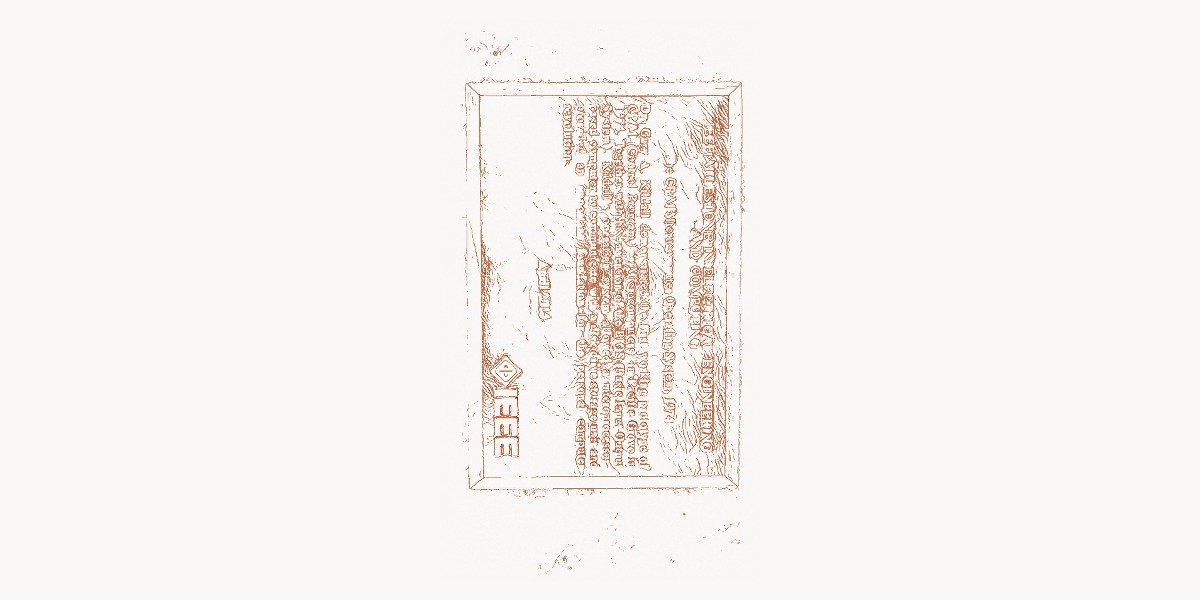
In the broader sweep of computing history, Kildall occupies a position similar to other pioneers whose contributions were foundational yet whose names were eclipsed by those who followed. Like Ada Lovelace, whose early vision of computing’s potential was only fully recognized long after her death, Kildall’s true significance has grown with historical perspective. In 2014, the Computer History Museum posthumously awarded him the IEEE Computer Pioneer Award, and he was recognized as one of the most important figures in the development of the personal computer.
For modern software engineers, Kildall’s story carries lessons that transcend technology. The importance of clean abstractions, the power of standardization, the value of portable software design, and the recognition that technical excellence alone does not guarantee market success — these are themes that resonate in every era of computing. His work also reminds us that the history of technology is not always written by the best engineers, but often by the best negotiators, the most aggressive competitors, or simply those who happened to be in the right room at the right time.
The principles Kildall championed — layered architecture, hardware abstraction, portable system calls, and standard interfaces — form the invisible foundation on which all modern computing rests. From the servers running in cloud data centers to the smartphones in our pockets, every device contains echoes of the architectural decisions Gary Kildall first implemented in a small lab at the Naval Postgraduate School in the early 1970s. His vision of computing as an accessible, standardized, and portable technology was realized — just not under his name.
Key Facts
- Full name: Gary Arlen Kildall (May 19, 1942 – July 11, 1994)
- Birthplace: Seattle, Washington
- Education: PhD in Computer Science from the University of Washington (1972)
- Academic position: Professor at the Naval Postgraduate School, Monterey, California
- Key creation: CP/M (Control Program for Microcomputers), released 1974 — the first widely adopted microcomputer operating system
- Programming language: Created PL/M (Programming Language for Microcomputers) for Intel in 1973
- Company: Co-founded Digital Research, Inc. (DRI) in 1976 with Dorothy McEwen
- Architectural innovation: Pioneered the BIOS concept, separating hardware-dependent code from OS logic
- Other creations: GEM (Graphical Environment Manager), DR-DOS, MP/M (multi-user CP/M), CP/NET
- IBM incident: In 1980, IBM bypassed CP/M for what became MS-DOS, altering computing history
- Media work: Hosted and produced segments for the television show “Computer Chronicles”
- Recognition: Posthumously awarded IEEE Computer Pioneer Award (2014) by the Computer History Museum
Frequently Asked Questions
What exactly was CP/M, and why was it so important?
CP/M, short for Control Program for Microcomputers, was the first commercially successful operating system designed specifically for personal microcomputers. Created by Gary Kildall in 1974, it provided a standardized software layer that sat between application programs and the computer hardware. Before CP/M, every microcomputer had its own incompatible software environment, which meant programs written for one machine could not run on another. CP/M solved this by introducing a portable architecture with a standardized API (the BDOS interface) and a hardware abstraction layer (the BIOS). This allowed thousands of software applications to be written once and run on hundreds of different hardware platforms. By the late 1970s, CP/M was running on over 250 different computer models and had become the standard platform for business microcomputing, with applications ranging from word processors to accounting software. It was the dominant microcomputer OS until IBM’s PC and MS-DOS displaced it in the early 1980s.
Did Microsoft really copy CP/M to create MS-DOS?
The relationship between CP/M and MS-DOS is one of the most debated topics in computing history. The facts are as follows: Microsoft did not write the original code that became MS-DOS. Instead, Microsoft purchased QDOS (Quick and Dirty Operating System) from Seattle Computer Products, which had been written by Tim Paterson. Paterson has acknowledged that he used CP/M’s published API documentation as a reference, designing QDOS to be compatible with CP/M’s system call interface so that existing CP/M programs could be more easily ported. The command structure, file system concepts, and system call numbers bore strong similarities to CP/M. Kildall himself stated publicly that he believed MS-DOS was derived from CP/M. However, no court ever made a definitive ruling on the matter. IBM did settle with Digital Research by agreeing to offer CP/M-86 alongside PC-DOS on the IBM PC, though the pricing disparity ($240 vs. $40) effectively negated any competitive benefit. The technical similarities between the two systems remain a matter of historical record.
How did Gary Kildall influence modern operating system design?
Kildall’s influence on modern operating system design is profound, even though it is often unacknowledged. His most enduring contribution is the BIOS concept — the idea of a firmware layer that abstracts hardware-specific details and presents a uniform interface to the operating system. This principle of hardware abstraction became a cornerstone of PC architecture and persisted for over 30 years before being superseded by UEFI, which nonetheless follows the same fundamental design philosophy. Kildall also pioneered the concept of a standardized system call interface for microcomputers, allowing application portability across different hardware — an idea that directly influenced MS-DOS, Windows, and indirectly shaped how modern operating systems like Linux expose kernel services to user applications. His work on PL/M demonstrated that high-level languages could be used for systems programming on resource-constrained platforms, a principle that would later be taken further by Bjarne Stroustrup’s C++ and modern systems languages like Rust. Furthermore, his vision of a graphical desktop environment (GEM) and multimedia computing anticipated the direction the entire industry would eventually take. In a very real sense, the layered, abstracted, portable architecture that characterizes every modern operating system traces a direct lineage back to the design decisions Gary Kildall made in the 1970s.