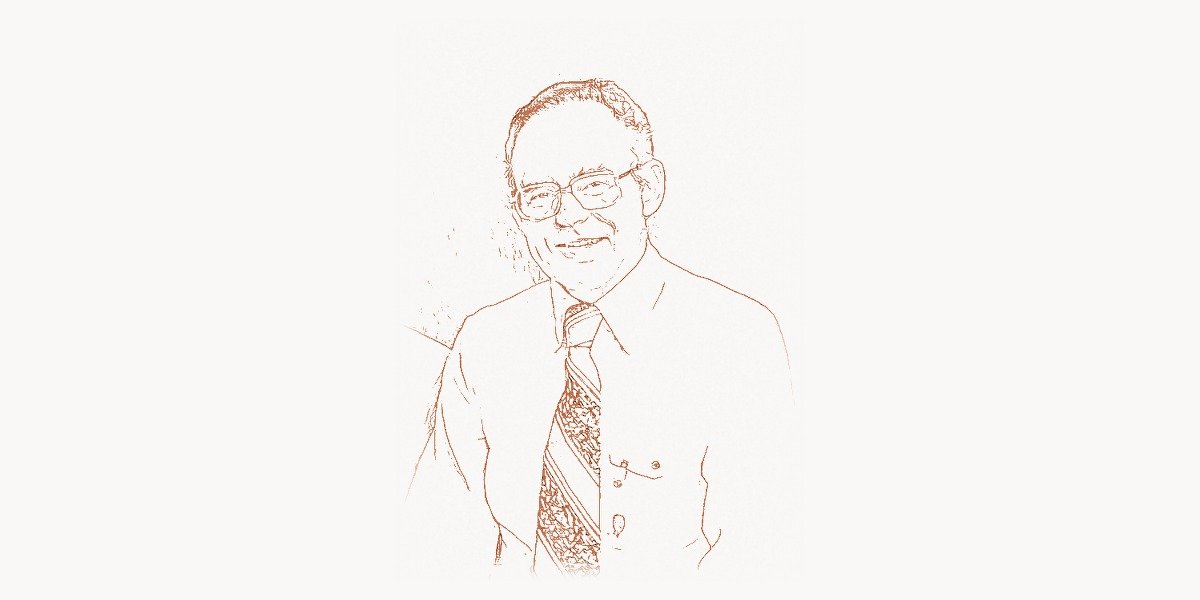
In 1965, a chemist-turned-electronics-engineer named Gordon Moore sat down to write an article for the 35th anniversary issue of Electronics magazine. Asked to predict what would happen in the semiconductor industry over the next decade, Moore examined the data — the number of transistors on integrated circuits had been roughly doubling every year since the technology’s invention — and made a projection that would become the most famous prediction in the history of technology. He wrote that the number of components on a chip would continue doubling approximately every year for at least another decade. That observation, refined in 1975 to a doubling every two years, became known as Moore’s Law. It was not a law of physics. It was not inevitable. It was an empirical observation that became a self-fulfilling prophecy — a target that the entire semiconductor industry organized itself around achieving. For more than fifty years, Moore’s Law drove the exponential growth of computing power that transformed every aspect of modern life. And Gordon Moore did not merely predict this revolution. As co-founder of Fairchild Semiconductor and then Intel Corporation, he built the companies that made it happen.
Early Life and Education
Gordon Earle Moore was born on January 3, 1929, in San Francisco, California, and grew up in the small coastal town of Pescadero, about fifty miles south of the city. His father was a county sheriff’s deputy, and his mother managed the household. Pescadero in the 1930s was rural and quiet — a far cry from the Silicon Valley that Moore would later help create just a few miles to the north.
Moore showed an early aptitude for science. As a boy, he received a chemistry set that ignited his fascination with how things worked at the molecular level. He later recalled that the thing he liked most about chemistry was that you could make explosions. This combination of curiosity and practical experimentation would define his entire career. He attended San Jose State University for two years before transferring to the University of California, Berkeley, where he earned a Bachelor of Science in chemistry in 1950.
After Berkeley, Moore pursued a Ph.D. in chemistry and physics at the California Institute of Technology (Caltech), one of the premier science and engineering institutions in the world. He completed his doctorate in 1954, writing his dissertation on infrared spectroscopy of chemical compounds. At Caltech, Moore absorbed a culture of rigorous quantitative thinking and learned to work at the intersection of fundamental science and practical engineering — a skill that would prove essential in the semiconductor industry.
After graduating, Moore took a position at the Applied Physics Laboratory at Johns Hopkins University in Maryland, where he worked on basic research. But he soon realized that pure research, while intellectually stimulating, did not satisfy his desire to build things that mattered commercially. This restlessness led him, in 1956, to accept an invitation that would change the course of technology history.
The Moore’s Law Breakthrough
Technical Innovation
To understand Moore’s Law, you first need to understand the problem it described. In the early 1960s, integrated circuits — chips containing multiple transistors on a single piece of silicon — were a new technology. The first practical IC had been demonstrated by Jack Kilby at Texas Instruments in 1958 and independently by Robert Noyce at Fairchild Semiconductor in 1959. These early chips contained only a handful of transistors. The question facing the industry was: how far could this technology scale?
Moore, then the director of research and development at Fairchild Semiconductor, studied the data carefully. He noticed that the number of transistors that could be economically placed on an integrated circuit had been doubling approximately every year. In his 1965 paper for Electronics magazine, he extrapolated this trend forward, predicting that by 1975, a single chip would contain 65,000 components. At the time, the most advanced chips had about 64 transistors. The prediction seemed audacious.
But Moore’s insight was not just about counting transistors. He understood that this scaling produced compound effects. As transistors got smaller, they also got faster, consumed less power per transistor, and cost less per transistor to manufacture. This meant that the performance-per-dollar of computing would improve exponentially — not linearly. The implications were staggering. A technology that doubled in capability every one to two years while halving in cost would, over decades, produce improvements of millions-fold.
# Illustrating Moore's Law: transistor count doubling
# This models the exponential growth Gordon Moore predicted in 1965

def moores_law_projection(start_year, end_year, initial_transistors, doubling_period=2):
    """
    Project transistor counts based on Moore's Law.

    Moore's original 1965 paper: doubling every year
    Revised in 1975: doubling every ~2 years
    Industry standard: 18-24 month doubling period
    """
    projections = {}
    years = end_year - start_year
    for y in range(years + 1):
        current_year = start_year + y
        doublings = y / doubling_period
        transistor_count = initial_transistors * (2 ** doublings)
        projections[current_year] = int(transistor_count)
    return projections

# Intel's actual milestone chips vs Moore's Law prediction
actual_chips = {
    1971: ("Intel 4004",           2_300),
    1978: ("Intel 8086",          29_000),
    1982: ("Intel 80286",        134_000),
    1989: ("Intel 486",        1_200_000),
    1993: ("Pentium",          3_100_000),
    1999: ("Pentium III",     9_500_000),
    2004: ("Pentium 4 HT",  125_000_000),
    2012: ("Core i7-3770", 1_400_000_000),
    2020: ("Apple M1",    16_000_000_000),
}

# Project from 1971 with 2,300 transistors
projected = moores_law_projection(1971, 2020, 2300, doubling_period=2)

print(f"{'Year':<6} {'Chip':<20} {'Actual':>16} {'Predicted':>16} {'Ratio':>8}")
print("-" * 70)
for year, (name, actual) in actual_chips.items():
    pred = projected.get(year, 0)
    ratio = actual / pred if pred else 0
    print(f"{year:<6} {name:<20} {actual:>16,} {pred:>16,} {ratio:>8.2f}x")
In 1975, Moore revised his prediction: the doubling rate would slow from every year to approximately every two years. This revised timeline turned out to be remarkably accurate. From the Intel 4004 in 1971 (2,300 transistors) to modern processors containing tens of billions of transistors, the industry maintained exponential growth for over five decades. No other technology in human history has sustained such a rate of improvement for so long.
Why It Mattered
Moore’s Law mattered because it transformed computing from a specialized tool for governments and large corporations into a universal technology that reshaped every aspect of human life. When Moore made his prediction in 1965, a computer cost hundreds of thousands of dollars and filled a room. The exponential improvement he described meant that the same computing power would eventually fit in a pocket-sized device costing a few hundred dollars. That is exactly what happened.
But Moore’s Law was more than a prediction — it became a planning tool. The semiconductor industry used it as a roadmap. Chip designers knew they needed to deliver a doubling of transistors every two years. Equipment manufacturers designed lithography machines to achieve ever-smaller feature sizes. Software developers knew they could count on exponentially more powerful hardware. This coordinated expectation created a virtuous cycle: because everyone expected Moore’s Law to continue, they invested in making it continue, which meant it did continue. The entire modern technology stack — from the Linux kernel running on servers to the development tools programmers use daily — was built on the assumption that hardware would keep getting exponentially more powerful and cheaper.
The economic consequences were profound. Moore himself observed that semiconductors became the foundational technology of the modern economy. The computing revolution enabled the internet revolution, which enabled the mobile revolution, which enabled the AI revolution. Each wave built on the exponentially increasing transistor density that Moore had predicted. Every person reading this article on a device with a modern processor is a direct beneficiary of the trend Gordon Moore identified in 1965.
Other Major Contributions
Fairchild Semiconductor and the Traitorous Eight
Before Moore’s Law, before Intel, there was Fairchild Semiconductor — and before Fairchild, there was William Shockley’s laboratory. In 1956, Shockley — co-inventor of the transistor and future Nobel laureate — established Shockley Semiconductor Laboratory in Mountain View, California. He recruited some of the brightest young scientists in the country, including Gordon Moore. But Shockley proved to be a brilliant scientist and a terrible manager. His erratic leadership, paranoid behavior, and insistence on pursuing impractical technologies drove his best people away.
In 1957, eight of Shockley’s researchers — Gordon Moore, Robert Noyce, Julius Blank, Victor Grinich, Jean Hoerni, Eugene Kleiner, Jay Last, and Sheldon Roberts — resigned en masse. Shockley called them “the traitorous eight.” They secured funding from Sherman Fairchild’s Fairchild Camera and Instrument Corporation and founded Fairchild Semiconductor. This act of corporate defection established the culture of Silicon Valley: the idea that talented engineers could and should leave established companies to start their own ventures.
At Fairchild, Moore led the research and development efforts that produced breakthrough innovations in semiconductor manufacturing. Robert Noyce invented the planar integrated circuit at Fairchild — a method of building entire circuits on a flat silicon surface that became the basis of all modern chip manufacturing. Moore’s team developed the processes and techniques needed to manufacture these circuits reliably and at scale. Fairchild became the most important semiconductor company of the early 1960s, and its alumni went on to found dozens of other companies — a phenomenon that earned the network the nickname “Fairchildren.”
Founding Intel
By 1968, Moore and Noyce had grown frustrated with Fairchild’s parent company, which they felt was mismanaging the semiconductor division. In July 1968, they left Fairchild to found a new company. They originally wanted to call it “Moore Noyce Electronics,” but that name sounded too much like “more noise” — not ideal for an electronics company. They settled on Intel, short for Integrated Electronics.
Arthur Rock, one of the original investors in Fairchild, raised $2.5 million in venture capital for Intel in less than two days. Moore’s and Noyce’s reputations were such that investors lined up to fund them. Andy Grove, a chemical engineer who had followed Moore from Fairchild, became Intel’s first employee and would later succeed Moore as CEO.
Intel’s early breakthroughs came in memory chips. In 1969, Intel produced the 3101, one of the first static RAM chips, followed by the 1103 dynamic RAM chip in 1970 — the first commercially successful DRAM product. But Intel’s most transformative product was the microprocessor. In 1971, Intel engineer Ted Hoff, working with Federico Faggin and Stanley Mazor, designed the Intel 4004 — the first commercially available single-chip microprocessor. Moore recognized the significance immediately: a general-purpose processor on a single chip meant that computing power could be embedded in any device. The microprocessor was the physical realization of the trend Moore had predicted in 1965.
Under Moore’s leadership — first as executive vice president, then as president and CEO (1975-1987), and finally as chairman of the board (1979-1997) — Intel grew from a startup into the dominant semiconductor company in the world. The x86 processor architecture, introduced with the Intel 8086 in 1978, became the foundation of the personal computer revolution. When IBM chose the Intel 8088 for its first PC in 1981, it cemented Intel’s position at the center of the computing industry. Moore’s management philosophy was to invest heavily in manufacturing technology, maintaining Intel’s ability to produce chips at the cutting edge of what was physically possible. This capital-intensive strategy required enormous investments — new fabrication plants (fabs) cost billions of dollars — but it kept Intel ahead of competitors for decades. The theoretical foundations of computing laid by earlier pioneers were made tangible through the hardware Intel produced.
Philanthropy
Gordon Moore was not only one of the most successful technology entrepreneurs in history but also one of the most generous philanthropists. In 2000, Moore and his wife Betty established the Gordon and Betty Moore Foundation with a gift of approximately $5 billion — at the time, the largest single philanthropic gift in history. The foundation focuses on environmental conservation, scientific research, and patient care improvement.
The Moore Foundation has donated over $5 billion since its founding. Major initiatives include significant funding for the Thirty Meter Telescope project in Hawaii, conservation programs protecting critical ecosystems in the Amazon, Andes, and Pacific Ocean, and substantial grants to Caltech and other research universities. Moore also donated $600 million to Caltech in 2001, the largest gift ever received by a university at that time.
Moore’s philanthropic approach reflected the same data-driven, long-term thinking that characterized his business career. He focused on problems where large investments could produce measurable, lasting impact — particularly in environmental science and conservation, areas he believed were critically underfunded relative to their importance. His approach to project management in philanthropy mirrored the systematic, goal-oriented methodology he applied at Intel.
Philosophy and Approach
Key Principles
Gordon Moore’s approach to technology and business was characterized by several distinctive principles that set him apart from many of his contemporaries.
First, he believed in the primacy of manufacturing technology. While many semiconductor companies focused on circuit design, Moore understood that the ability to manufacture chips at smaller and smaller feature sizes was the fundamental competitive advantage. Intel’s willingness to invest billions in new fabrication technology — even when returns were uncertain — reflected Moore’s conviction that manufacturing capability was destiny. He once observed that if you could not fabricate something, the design did not matter.
Second, Moore practiced data-driven decision making long before the term became fashionable. His famous law was not a guess or a wish — it was an extrapolation from observed data. He studied manufacturing yield curves, cost-per-transistor trends, and scaling limits with the same rigor he had applied to infrared spectroscopy at Caltech. This empirical approach gave him confidence in predictions that others found implausibly optimistic.
Third, Moore valued simplicity and understatement. Despite building one of the most successful companies in history and giving away billions of dollars, he remained remarkably low-key. Colleagues described him as quiet, modest, and more interested in technical problems than in corporate politics. He let the data and the products speak for themselves. This stands in contrast to the more flamboyant style of many modern technology leaders.
Fourth, Moore believed in long-term thinking. Moore’s Law itself was a long-term prediction — it looked decades ahead at a time when most business planning extended only a few years. His philanthropic work similarly focused on long-term challenges like environmental conservation and fundamental scientific research. He understood that the most important outcomes often required patient, sustained investment. Modern teams building technology products can draw on web development strategies that echo Moore’s principle of iterative, compounding improvement.
These principles — manufacturing excellence, empirical rigor, personal modesty, and long-term vision — defined not just Moore’s career but the culture of Intel and, to a significant degree, the culture of Silicon Valley itself.
Legacy and Impact
Gordon Moore’s influence on modern technology is difficult to overstate. Moore’s Law became the metronome of the digital age — the steady beat of exponential improvement that the entire technology industry marched to for over fifty years. Chip designers, software engineers, and business strategists all built their plans around the assumption that computing power would continue to double every two years. This expectation shaped everything from programming language design to venture capital investment strategies.
The companies Moore co-founded — Fairchild Semiconductor and Intel — were the engines that drove this exponential growth. Fairchild’s innovations in planar processing made modern chip manufacturing possible. Intel’s microprocessors powered the personal computer revolution, the internet revolution, and much of the cloud computing infrastructure that runs the modern world. The x86 architecture that Intel introduced in 1978 remains, in its 64-bit descendant, the dominant processor architecture for servers and PCs nearly fifty years later.
Moore’s cultural impact extended beyond his companies. The act of leaving Shockley’s laboratory to found Fairchild established the Silicon Valley pattern of spin-offs and startups. The “Fairchildren” — the companies founded by former Fairchild employees — include not just Intel but also AMD, LSI Logic, and dozens of others. The venture capital model that funded these companies, pioneered by Arthur Rock in his funding of Fairchild and Intel, became the standard model for financing technology innovation. The entire ecosystem of Silicon Valley — the startups, the venture capital firms, the culture of risk-taking and reinvention — traces its lineage back to the traitorous eight and, specifically, to Moore and Noyce’s willingness to leave security for the unknown.
As of the 2020s, Moore’s Law in its original formulation has slowed. The physical limits of silicon — particularly the difficulty of manufacturing features smaller than a few nanometers — have made it increasingly expensive and technically challenging to maintain the historical doubling rate. But the spirit of Moore’s Law — the expectation of continuous, compounding improvement in technology — lives on in new forms: advances in chip architecture, specialized processors for AI workloads, new materials, and novel computing paradigms like quantum computing. The fundamental insight — that technology improves exponentially, not linearly — remains the most important idea in the technology industry.
Gordon Moore passed away on March 24, 2023, at his home in Hawaii, at the age of 94. He had lived long enough to see his 1965 prediction vindicated beyond anything he could have imagined. The world he helped create — a world of smartphones, cloud computing, artificial intelligence, and ubiquitous connectivity — was built on the exponential curve he first described in a magazine article nearly sixty years earlier. His legacy is not just a law but an entire civilization built on the power of compound improvement. The work of pioneers like Grace Hopper in software and John von Neumann in computer architecture found their fullest expression through the hardware advances Moore’s companies delivered decade after decade.
Key Facts
- Born: January 3, 1929, San Francisco, California, United States
- Died: March 24, 2023, Waimea, Hawaii, United States
- Known for: Moore’s Law, co-founding Intel Corporation, co-founding Fairchild Semiconductor, semiconductor industry leadership, major philanthropy
- Key milestones: Co-founded Fairchild Semiconductor (1957), published Moore’s Law (1965), co-founded Intel (1968), Intel 4004 microprocessor (1971), Gordon and Betty Moore Foundation (2000)
- Awards: National Medal of Technology (1990), IEEE Medal of Honor (2008), Presidential Medal of Freedom (2002), Bower Award for Business Leadership (2002)
- Education: B.S. in Chemistry from UC Berkeley (1950), Ph.D. in Chemistry and Physics from Caltech (1954)
- Net worth at peak: Approximately $12 billion; donated over $5 billion to philanthropy
Frequently Asked Questions
What exactly is Moore’s Law and is it still valid today?
Moore’s Law is the observation, first made by Gordon Moore in 1965, that the number of transistors on an integrated circuit doubles approximately every two years (originally every year, revised in 1975). It is not a law of physics but an empirical trend that the semiconductor industry sustained for over fifty years through enormous investments in manufacturing technology. As of the mid-2020s, the original formulation has slowed — transistor density improvements now take longer than two years and cost significantly more per generation. However, the broader principle of exponential improvement in computing capability continues through advances in chip architecture, specialized processors (such as GPUs and AI accelerators), 3D chip stacking, and new materials. The spirit of Moore’s Law — that computing gets better and cheaper over time at a rate that compounds dramatically — remains the defining dynamic of the technology industry.
How did Gordon Moore and Robert Noyce’s partnership shape Silicon Valley?
Moore and Noyce’s partnership was one of the most consequential in technology history. Their complementary skills — Noyce was the charismatic visionary and inventive circuit designer, Moore was the methodical scientist and strategic thinker — made them extraordinarily effective as co-founders. Together, they first co-founded Fairchild Semiconductor in 1957 as part of the “traitorous eight” who left Shockley Semiconductor. Their departure established the precedent that talented engineers should start their own companies rather than remain at institutions where they were undervalued — a principle that became the DNA of Silicon Valley. When they founded Intel in 1968, they again demonstrated this model, and Intel’s success attracted a generation of entrepreneurs and venture capitalists to the region. The information theory underpinning digital communications found practical application through the chips Moore and Noyce’s companies produced.
What is Gordon Moore’s most lasting contribution beyond Moore’s Law?
While Moore’s Law is his most famous contribution, Moore’s impact through institution-building may be equally significant. Co-founding both Fairchild Semiconductor and Intel, he helped create the organizational models and manufacturing methodologies that the entire semiconductor industry adopted. Fairchild’s planar process became the standard method for making integrated circuits. Intel’s strategy of investing aggressively in fabrication technology — building the most advanced manufacturing facilities in the world — set the template for semiconductor competitiveness. Moore’s philanthropic work through the Gordon and Betty Moore Foundation, with over $5 billion in donations focused on environmental conservation and scientific research, represents another dimension of lasting impact. His $600 million gift to Caltech transformed the institution’s research capabilities. In total, Moore’s legacy encompasses not just a prediction about transistors but the companies, manufacturing techniques, business strategies, and philanthropic institutions that translated that prediction into the modern digital world.