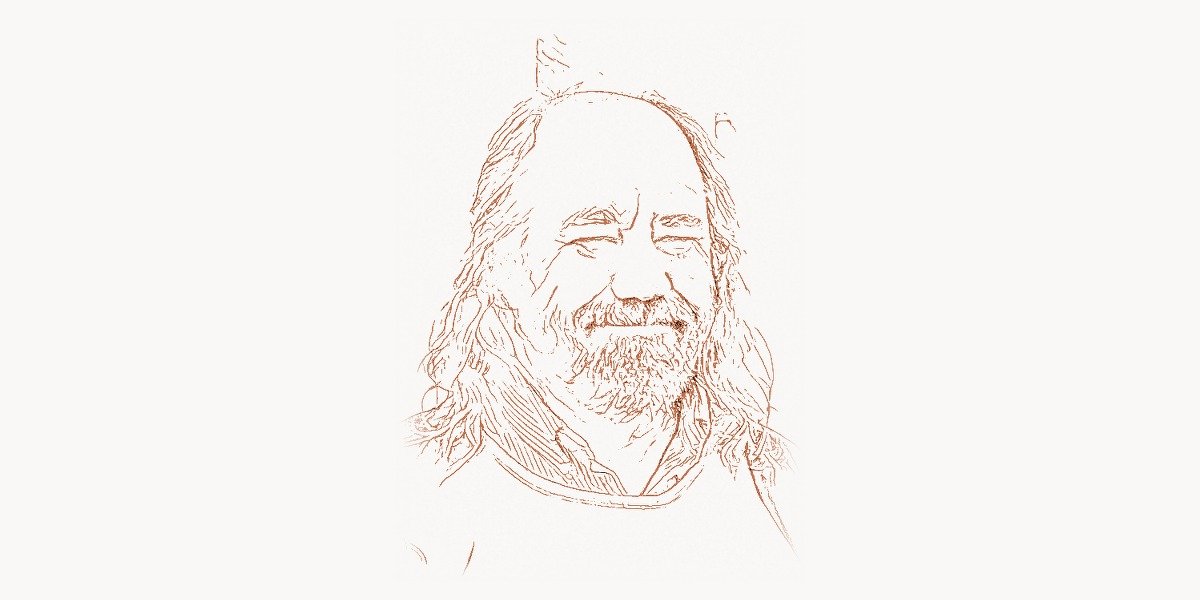
In the late 1980s, the software industry faced a crisis that had nothing to do with bugs or hardware failures. The crisis was one of communication. Teams of engineers building increasingly complex systems had no shared visual language to describe what they were building. Architects drew boxes and arrows on whiteboards that meant one thing to one person and something entirely different to the next. The result was wasted effort, misunderstood requirements, and projects that collapsed under the weight of their own ambiguity. Into that chaos stepped Grady Booch, an engineer with the rare ability to see both the forest and the trees — someone who could look at a sprawling software system and distill it into a set of visual notations that anyone on the team could understand. His work on object-oriented analysis and design, his Booch method, and his central role in creating the Unified Modeling Language (UML) didn’t just give the industry a diagramming standard — it gave software engineering a common tongue.
Early Life and Education
Grady Booch was born on February 27, 1955, in Amarillo, Texas. Growing up in the American Southwest, he developed an early fascination with how complex systems work — a curiosity that would define his entire career. He pursued his education at the United States Air Force Academy, where he earned a Bachelor of Science degree in 1977. The military academy provided him not only with technical training but also with a disciplined approach to problem-solving that would influence his later methodological work.
After completing his undergraduate degree, Booch went on to earn a Master of Science in Electrical Engineering from the University of California, Santa Barbara. It was during this period that he began engaging seriously with the emerging field of software engineering, which in the late 1970s was still struggling to establish itself as a rigorous discipline. The software crisis — a term coined in the late 1960s to describe the growing difficulty of building reliable software — was still very much unresolved, and Booch recognized that part of the problem was the lack of systematic approaches to software design.
The Object-Oriented Revolution
Booch joined Rational Software Corporation in the early 1980s, a period when object-oriented programming was transitioning from an academic curiosity into an industrial necessity. Languages like Smalltalk, pioneered by Alan Kay, had demonstrated the power of thinking about software in terms of objects that encapsulate data and behavior. Meanwhile, Bjarne Stroustrup was developing C++, which would bring object-oriented concepts to the systems programming world.
But there was a gap between writing object-oriented code and designing object-oriented systems. Developers could use classes and inheritance in their code, but they lacked a rigorous way to think about and communicate the architecture of entire systems before writing a single line. Booch set out to close that gap.
In 1986, he published an influential article introducing what would become known as the Booch method — a set of notations and processes for object-oriented analysis and design (OOAD). The Booch method emphasized the importance of identifying key abstractions in a problem domain, defining the relationships between those abstractions, and iteratively refining the design through multiple passes. Unlike the rigid waterfall models that dominated the era, Booch advocated for an iterative and incremental approach, recognizing that software design is inherently a process of discovery.
The Booch Method in Practice
The Booch method introduced several diagram types that became foundational to how engineers think about software architecture. Class diagrams showed the static structure of a system — the classes, their attributes and operations, and the relationships between them. Object diagrams captured snapshots of a running system at a particular moment. State transition diagrams described the dynamic behavior of individual objects over time. Interaction diagrams illustrated how objects collaborated to accomplish tasks.
What set the Booch method apart was its emphasis on the design process itself, not just the notation. Booch argued that good software design requires identifying “key abstractions” — the essential concepts in a problem domain that should be represented as classes in the software. He stressed the importance of understanding both the static structure and the dynamic behavior of a system, and he introduced the idea of design patterns years before the famous Gang of Four book formalized the concept.
His 1991 book, Object-Oriented Analysis and Design with Applications, became one of the most influential texts in software engineering. It provided a comprehensive framework for thinking about software design in object-oriented terms, complete with real-world examples and practical guidance. The book went through multiple editions and was translated into dozens of languages, becoming essential reading for a generation of software architects, much like Donald Knuth’s algorithmic works were for computer scientists.
The Birth of UML
By the early 1990s, the object-oriented community faced a new problem: there were too many competing methodologies. The Booch method was one of the most popular, but it wasn’t alone. Ivar Jacobson had developed the Object-Oriented Software Engineering (OOSE) method, which introduced the concept of use cases — descriptions of how users interact with a system that became fundamental to requirements engineering. James Rumbaugh had created the Object Modeling Technique (OMT), which was particularly strong in data modeling and analysis.
Each method had its strengths, but the proliferation of competing notations was fragmenting the community. A developer trained in the Booch method couldn’t easily read diagrams produced by someone using OMT, and vice versa. This was exactly the kind of communication breakdown that had plagued software engineering for decades.
In a move that would reshape the industry, Booch, Rumbaugh, and Jacobson — who became known as the “Three Amigos” — joined forces at Rational Software to create a unified modeling language. Their collaboration began in 1994 when Rumbaugh joined Booch at Rational, and Jacobson followed in 1995. Together, they synthesized the best ideas from all three methods into a single, comprehensive notation.
The Unification Process
The unification was not a simple merger. Each method brought distinct perspectives that had to be carefully integrated. From Booch’s method came the emphasis on iterative design and architectural description. From Rumbaugh’s OMT came the strength in data modeling and class relationships. From Jacobson’s OOSE came use cases and the actor-system interaction model. The Three Amigos had to negotiate which concepts to keep, which to modify, and how to create a coherent whole from these different traditions.
The first public draft, UML 0.8, appeared in October 1995. After extensive feedback from the software engineering community and contributions from companies including IBM, Hewlett-Packard, Microsoft, and Oracle, UML 1.0 was submitted to the Object Management Group (OMG) in January 1997. The OMG adopted UML 1.1 as a standard in November 1997, marking the moment when the software industry finally had a shared visual vocabulary.
Understanding UML: The Language of Software Architecture
UML provides 14 diagram types organized into two categories: structural diagrams that describe the static architecture of a system, and behavioral diagrams that capture how the system acts over time. Among the most widely used are class diagrams, sequence diagrams, use case diagrams, activity diagrams, and state machine diagrams.
A class diagram, the most fundamental UML artifact, shows the classes in a system along with their attributes, operations, and relationships. Consider a simplified example of modeling a project management system — the kind of tool that teams use daily for organizing complex work (platforms like Taskee exemplify how these architectural principles translate into production-ready task management):
+-------------------+       1..*   +------------------+
|     Project       |◆------------|      Task        |
+-------------------+              +------------------+
| - name: String    |              | - title: String  |
| - startDate: Date |              | - status: Enum   |
| - deadline: Date  |              | - priority: Int  |
+-------------------+              +------------------+
| + addTask()       |              | + assign()       |
| + getProgress()   |              | + changeStatus() |
| + getOverdueTasks()|             | + getDuration()  |
+-------------------+              +------------------+
        |                                  |
        | 1                                | *
        |                                  |
+-------------------+              +------------------+
|    TeamMember     |              |    Comment       |
+-------------------+              +------------------+
| - name: String    |              | - text: String   |
| - role: String    |              | - timestamp: Date|
| - email: String   |              | - author: String |
+-------------------+              +------------------+
| + getAssignments()|              | + edit()         |
| + getWorkload()   |              | + delete()       |
+-------------------+              +------------------+
This class diagram communicates the structure of the system at a glance: a Project contains multiple Tasks, each Task can have multiple Comments, and TeamMembers are associated with Projects. The filled diamond (◆) indicates composition — Tasks cannot exist independently of their Project. This kind of visual precision eliminates entire categories of misunderstanding that plague software teams working from prose-only specifications.
Sequence diagrams capture the dynamic interactions between objects over time. Here is an example showing how the Observer design pattern — one of the foundational object-oriented patterns — operates when a subject notifies its observers of a state change:
    Client          Subject         Observer1        Observer2
      |                |                |                |
      |  setState(val) |                |                |
      |--------------->|                |                |
      |                |                |                |
      |                |--- notify() -->|                |
      |                |                |                |
      |                |    update()    |                |
      |                |<---------------|                |
      |                |                |                |
      |                |--- notify() ---|--------------->|
      |                |                |                |
      |                |                |    update()    |
      |                |<---------------|----------------|
      |                |                |                |
      |   ack          |                |                |
      |<---------------|                |                |
      |                |                |                |
This sequence diagram shows the temporal flow of messages: the Client changes the Subject’s state, the Subject notifies each registered Observer, each Observer calls back to get the updated state, and finally the Client receives acknowledgment. Without a notation like UML, describing this interaction in plain text would be far more verbose and far more prone to misinterpretation — a challenge that structured methodologies like those promoted by Edsger Dijkstra sought to address from the very earliest days of computer science.
The Rational Unified Process
UML gave the industry a shared notation, but notation alone doesn’t tell you how to build software. Recognizing this, Booch and his colleagues at Rational Software developed the Rational Unified Process (RUP), a comprehensive software development framework that prescribed how to use UML within an iterative development lifecycle.
RUP organized software development into four phases: inception, elaboration, construction, and transition. Each phase consisted of multiple iterations, and each iteration produced a working increment of the software. This was a deliberate rejection of the waterfall model, in which all requirements were gathered up front, all design was done before coding, and testing happened only at the end. Booch and his colleagues had seen too many projects fail under the waterfall approach, and RUP embodied their conviction that software development is inherently iterative.
The elaboration phase was particularly innovative. During this phase, teams were expected to identify and mitigate the highest-risk elements of the project — the parts most likely to cause failure if not addressed early. This risk-driven approach ensured that teams confronted their biggest challenges at the beginning of a project, when there was still time and flexibility to adjust, rather than discovering insurmountable problems late in the game. This philosophy of managing complexity through early architectural exploration would later influence agile methodologies and modern approaches to professional web development.
IBM Fellow and the Architecture of Complex Systems
In 2003, IBM acquired Rational Software, and Booch became an IBM Fellow — one of the company’s highest technical honors. As an IBM Fellow, he turned his attention to what he considered the most important unsolved problem in software engineering: the architecture of complex systems.
Booch argued that as software systems grow in size and complexity, architectural decisions become the single most important factor in determining whether a project succeeds or fails. A poor algorithm can be optimized later, and a buggy function can be fixed, but a fundamentally flawed architecture often cannot be corrected without starting over. He drew parallels to physical architecture — just as a building’s structural decisions constrain everything that follows, a software system’s architectural choices determine what is possible and what is prohibitively difficult.
His work on software architecture emphasized several key principles. First, architecture is about making decisions that are costly to change. Second, good architecture enables independent development — different teams should be able to work on different parts of the system without constantly stepping on each other’s toes. Third, architecture must address not just functional requirements but also quality attributes like performance, security, and maintainability. These insights resonated powerfully with practitioners working on large-scale systems, from enterprise applications to the kind of complex distributed systems that James Gosling’s Java made possible.
The Handbook of Software Architecture
At IBM, Booch embarked on an ambitious project: documenting the architecture of real-world software systems in a comprehensive handbook. He studied hundreds of systems, analyzing their architectural patterns, the forces that shaped their design, and the trade-offs their architects had to navigate. This empirical approach — studying what actually works in practice rather than proposing theoretical ideals — was characteristic of Booch’s career-long commitment to bridging theory and practice.
The project revealed recurring architectural patterns across different domains. Systems that needed to scale horizontally tended to converge on similar decomposition strategies. Systems that prioritized real-time responsiveness made similar trade-offs around caching and data locality. Booch documented these patterns and their associated trade-offs, creating a body of architectural knowledge that practitioners could draw upon when facing similar challenges.
Contributions to AI and Computing Heritage
In recent years, Booch has become an outspoken commentator on artificial intelligence, its capabilities, and its implications for society. Drawing on his decades of experience with complex systems, he has argued for a careful, evidence-based approach to AI development. He has been particularly vocal about the importance of distinguishing between narrow AI — systems that excel at specific tasks — and artificial general intelligence, which remains a distant and uncertain goal.
Booch’s perspective on AI is informed by his deep understanding of software systems and their limitations. He has pointed out that many of the challenges facing AI today — questions of reliability, interpretability, and alignment — are extensions of problems that software engineers have grappled with for decades. His experience with UML and formal modeling gives him a unique perspective on the importance of being able to understand and reason about the behavior of complex systems, whether those systems are traditional software or machine learning models — a concern shared by AI pioneers like Peter Norvig.
He has also been a passionate advocate for preserving the history of computing. Through his work on the Computer History Museum’s collection and his prolific engagement on social media, Booch has worked to ensure that the stories of computing’s pioneers are documented and accessible. He has argued that understanding the history of computing is not merely an academic exercise but an essential foundation for making good decisions about the future of technology.
Legacy and Influence
Grady Booch’s influence on software engineering is difficult to overstate. UML became the de facto standard for software modeling and is used by millions of developers and architects worldwide. While the intensity of its use has evolved — some teams use it extensively for formal documentation, while others employ it selectively for communication and brainstorming — the fundamental concepts that Booch helped establish have become part of the vocabulary of every software professional.
His contributions have been recognized with numerous honors. He is a Fellow of the Association for Computing Machinery (ACM) and a Fellow of the IEEE. He has received the Lovelace Medal from the British Computer Society, named after the pioneering mathematician Ada Lovelace. He was inducted into the inaugural class of the OMG Fellows for his contributions to modeling standards.
Perhaps more importantly, Booch’s work changed how the industry thinks about software development. Before the Booch method, UML, and RUP, software design was often an ad hoc activity — something that talented individuals could do well but that was difficult to teach, communicate, or scale. Booch helped transform software design into a discipline with shared concepts, shared notation, and shared processes. He demonstrated that the hardest problems in software engineering are not problems of coding but problems of communication and understanding — and that visual modeling is a powerful tool for addressing both.
The principles he championed — iterative development, architecture-centric design, visual modeling, and risk-driven planning — continue to shape how software is built today. Modern agile frameworks, microservice architectures, and domain-driven design all carry DNA from the ideas Booch helped develop and popularize. His career stands as a testament to the power of giving engineers better ways to think and communicate about the systems they build.
Frequently Asked Questions
What is UML and why did Grady Booch create it?
UML (Unified Modeling Language) is a standardized visual notation for specifying, visualizing, constructing, and documenting the artifacts of software systems. Booch co-created UML with Ivar Jacobson and James Rumbaugh in the mid-1990s to solve the problem of competing and incompatible modeling notations. Before UML, different software methodologies used different symbols and diagrams, making it difficult for engineers trained in one method to collaborate with those trained in another. UML unified the best ideas from the Booch method, the Object Modeling Technique (OMT), and Object-Oriented Software Engineering (OOSE) into a single, comprehensive standard adopted by the Object Management Group in 1997.
How does the Booch method differ from other software design approaches?
The Booch method was one of the first comprehensive object-oriented analysis and design methodologies. It distinguished itself through its emphasis on iterative and incremental development at a time when the waterfall model dominated. Unlike other approaches that focused primarily on either analysis or implementation, the Booch method covered the entire lifecycle from identifying key abstractions through detailed design. It also placed particular emphasis on the architectural dimension of software — how components are organized and how they interact — rather than focusing solely on data modeling or process flows. Its notation introduced visual conventions for classes, objects, state machines, and interactions that became foundational to UML.
Is UML still relevant in modern software development?
Yes, though its usage has evolved significantly since its peak in the early 2000s. While formal, tool-driven UML modeling has declined in some sectors — particularly in agile teams that favor lighter-weight documentation — the core concepts of UML remain deeply embedded in how software professionals communicate. Class diagrams, sequence diagrams, and state machine diagrams are still widely used for architectural documentation, design discussions, and onboarding new team members. Many modern tools and frameworks incorporate UML concepts even when they don’t use the full UML notation. The language remains an ISO standard (ISO/IEC 19505) and continues to be taught in computer science programs worldwide.
What is the Rational Unified Process (RUP) and how does it relate to agile?
The Rational Unified Process is an iterative software development framework developed by Booch and his colleagues at Rational Software. It organizes development into four phases — inception, elaboration, construction, and transition — with multiple iterations within each phase. While RUP is more prescriptive than most agile methods, it shares several fundamental principles with agile: iterative development, continuous integration, risk-driven planning, and the importance of working software over comprehensive documentation. In many ways, RUP served as a bridge between the heavyweight processes of the 1990s and the agile movement that emerged in the 2000s. Several key figures in the agile movement were influenced by RUP’s iterative approach.
What are Grady Booch’s views on artificial intelligence?
Booch has been an active and thoughtful commentator on AI, advocating for a measured, evidence-based approach to its development. He distinguishes carefully between narrow AI systems that perform specific tasks and the broader concept of artificial general intelligence. Drawing on his decades of experience with complex software systems, he emphasizes the importance of understanding, testing, and verifying AI systems with the same rigor applied to any critical software. He has cautioned against both uncritical hype and unfounded fear, arguing instead for informed public discourse about the real capabilities and limitations of AI technologies.