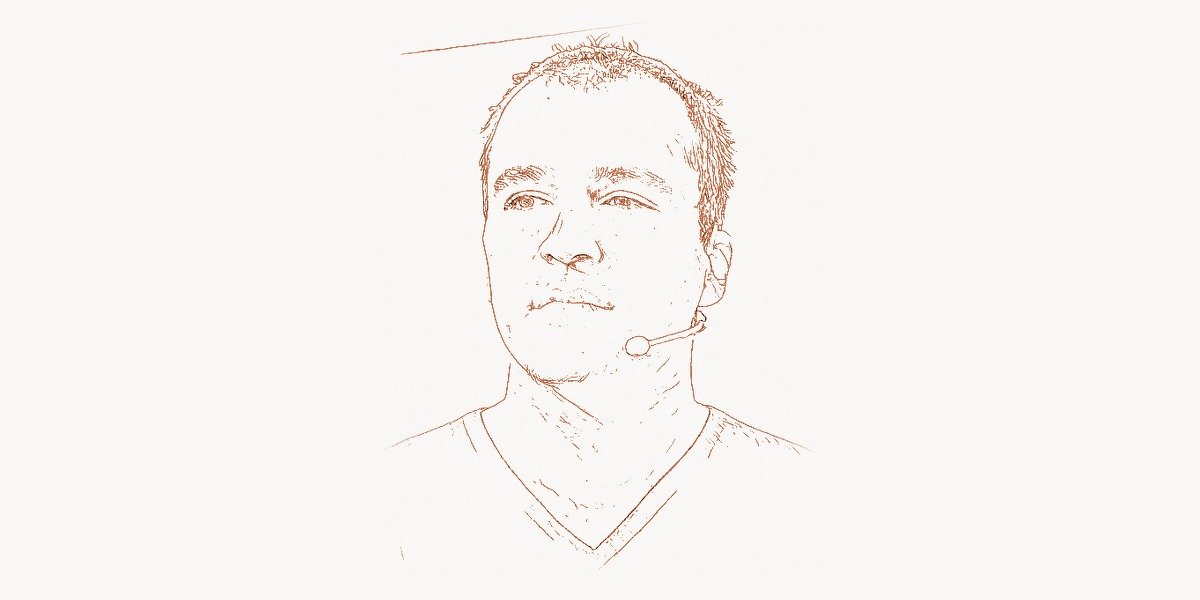
On November 30, 2022, a research lab in San Francisco released a chatbot. Within five days, it had one million users. Within two months, it had one hundred million — the fastest-growing consumer application in history. ChatGPT did not appear from nowhere. It was the product of seven years of relentless engineering, organizational design, and strategic decision-making at OpenAI. And at the center of that effort, building the systems, hiring the researchers, and holding the infrastructure together through every scaling crisis, was Greg Brockman. He was not the scientist who designed the neural architectures or the CEO who negotiated the billion-dollar partnerships. He was the engineer who made it all work — the person who turned a nonprofit research lab staffed with idealistic academics into an organization capable of training the largest and most complex AI systems ever built. His career, from a small-town upbringing in North Dakota to the CTO of Stripe and co-founder of OpenAI, traces one of the most consequential engineering journeys in the history of technology.
Early Life and Education
Greg Brockman was born in 1988 and grew up in Thompson, North Dakota, a town of roughly a thousand people. His childhood was defined by open space, long winters, and a household that encouraged curiosity. Brockman discovered programming early, teaching himself to code on the family computer. By his teenage years, he was building projects that went far beyond school assignments — writing software, exploring algorithms, and developing an intuition for systems that would serve him for the rest of his career.
Brockman enrolled at Harvard University, where he initially studied mathematics. He was drawn to the rigor of formal reasoning but restless with the pace of academia. After one year, he transferred to the Massachusetts Institute of Technology, where he dove deeper into computer science and mathematics. But even MIT could not hold him. Brockman dropped out before completing his degree, convinced that building real systems would teach him more than any classroom. This decision — choosing practice over theory, execution over credentials — was characteristic of a mindset that would define his entire career. He was not uninterested in ideas; he was impatient to implement them.
The decision to leave MIT placed Brockman in the tradition of technology founders who traded academic completion for direct impact. But unlike many dropouts who launched startups immediately, Brockman chose to join an existing company and learn how world-class engineering organizations operate at scale. That company was Stripe.
The OpenAI Breakthrough
Technical Innovation
In December 2015, Sam Altman, Elon Musk, Greg Brockman, Ilya Sutskever, and several other researchers and entrepreneurs announced the founding of OpenAI. The organization’s stated mission was to ensure that artificial general intelligence (AGI) benefits all of humanity. Brockman became the CTO and, in practice, the chief architect of OpenAI’s engineering infrastructure. If Sutskever was the scientific visionary who decided what to research, Brockman was the engineering leader who decided how to build it.
The technical challenges were extraordinary. Training large neural networks requires distributing computation across hundreds or thousands of GPUs, managing petabytes of training data, maintaining numerical stability across weeks-long training runs, and debugging failures in systems so complex that no single person can hold the entire state in their head. Brockman built the engineering culture and infrastructure that made this possible. He recruited top systems engineers, established the tooling and workflows for large-scale distributed training, and personally contributed to the codebase that powered OpenAI’s most ambitious experiments.
One of Brockman’s critical contributions was the development of OpenAI’s internal training infrastructure. Before commercial solutions like NVIDIA’s Megatron-LM or Google’s TPU pods became standard, OpenAI had to build its own frameworks for model parallelism, data parallelism, and pipeline parallelism — the techniques that allow a single model to be split across many machines. Brockman led the engineering effort that produced these systems, enabling OpenAI to train GPT-2 (1.5 billion parameters in 2019), GPT-3 (175 billion parameters in 2020), and eventually GPT-4.
import math

# Conceptual demonstration of distributed training challenges
# that Brockman's infrastructure team solved at OpenAI

class DistributedTrainingPlanner:
    """
    When training models like GPT-3 (175B parameters),
    the model doesn't fit on a single GPU. Brockman's team
    built systems to split models and data across thousands
    of GPUs while maintaining training efficiency.
    """

    def __init__(self, model_params_billions, gpu_memory_gb=80):
        self.model_params = model_params_billions * 1e9
        self.gpu_memory = gpu_memory_gb
        # Each parameter needs ~20 bytes during training
        # (fp16 param + fp32 master + optimizer states)
        self.bytes_per_param = 20

    def memory_required_gb(self):
        """Total GPU memory needed for model + optimizer states."""
        return (self.model_params * self.bytes_per_param) / 1e9

    def min_gpus_for_model(self):
        """Minimum GPUs just to hold the model in memory."""
        return math.ceil(self.memory_required_gb() / self.gpu_memory)

    def plan_parallelism(self, total_gpus):
        """
        Determine how to split work across available GPUs.
        OpenAI combined multiple parallelism strategies:

        - Tensor parallelism: split individual layers across GPUs
        - Pipeline parallelism: split model layers across stages
        - Data parallelism: replicate model, split training data

        The interplay of these strategies is what makes
        distributed training an engineering problem, not just
        a research problem.
        """
        min_model_gpus = self.min_gpus_for_model()
        tensor_parallel = min(8, min_model_gpus)  # within a node
        pipeline_stages = math.ceil(min_model_gpus / tensor_parallel)
        data_parallel = total_gpus // (tensor_parallel * pipeline_stages)

        return {
            "model_memory_gb": round(self.memory_required_gb(), 1),
            "tensor_parallel": tensor_parallel,
            "pipeline_stages": pipeline_stages,
            "data_parallel_replicas": max(1, data_parallel),
            "total_gpus_used": (tensor_parallel
                                * pipeline_stages
                                * max(1, data_parallel)),
            "utilization": round(
                (tensor_parallel * pipeline_stages * max(1, data_parallel))
                / total_gpus * 100, 1
            )
        }

# GPT-3 scale planning
planner = DistributedTrainingPlanner(
    model_params_billions=175,
    gpu_memory_gb=80  # A100 80GB
)

plan = planner.plan_parallelism(total_gpus=1024)
print(f"GPT-3 (175B params) distributed training plan:")
print(f"  Model memory requirement: {plan['model_memory_gb']} GB")
print(f"  Tensor parallelism: {plan['tensor_parallel']} GPUs per layer")
print(f"  Pipeline stages: {plan['pipeline_stages']}")
print(f"  Data parallel replicas: {plan['data_parallel_replicas']}")
print(f"  Total GPUs used: {plan['total_gpus_used']} of 1024")
print(f"  GPU utilization: {plan['utilization']}%")

# The real challenge: keeping thousands of GPUs synchronized
# while handling failures, network bottlenecks, and numerical
# instability across weeks-long training runs.
# This is what Brockman's engineering organization solved.
The infrastructure challenge was not merely about raw compute. It was about reliability. A single GPU failure during a multi-week training run could corrupt the entire experiment. Network bottlenecks between nodes could slow gradient synchronization to the point where training efficiency collapsed. Numerical instabilities — loss spikes, gradient explosions, NaN propagation — could silently corrupt model weights. Brockman’s team built monitoring systems, checkpointing strategies, and failure-recovery mechanisms that allowed OpenAI to run training jobs of unprecedented scale with acceptable reliability. This was engineering at its most demanding: invisible when it works, catastrophic when it fails.
Why It Mattered
The significance of Brockman’s engineering contributions becomes clear when you consider the counterfactual. OpenAI’s scientific insights — the scaling laws discovered by Jared Kaplan and his collaborators, Sutskever’s conviction that scale would produce emergent capabilities, the RLHF alignment techniques developed by the safety team — were necessary but not sufficient. Without the engineering infrastructure to actually train models at the required scale, these ideas would have remained theoretical. Many research labs had talented scientists with similar intuitions about scale. What distinguished OpenAI was its ability to execute — to actually build and train the models, to manage the compute, to ship the products. That execution capability was largely Brockman’s creation.
This pattern — the critical importance of engineering execution in translating research into impact — is one of the underappreciated lessons of the AI revolution. The deep learning pioneers provided the scientific foundation. The hardware innovators provided the compute. But without engineers who could build the systems to connect theory to silicon, the revolution would have stalled. Brockman exemplifies this bridge role, and his work at OpenAI is perhaps the most consequential example of it in the history of AI.
Other Major Contributions
Before OpenAI, Brockman spent four years at Stripe, joining as one of the company’s earliest engineers and eventually becoming its CTO. Stripe, founded by Patrick and John Collison, was attempting to solve one of the most important problems in internet commerce: making it easy for developers to accept payments online. When Brockman joined, Stripe was a small startup processing modest transaction volumes. By the time he left in 2015, it was one of the most valuable private companies in the world, processing billions of dollars annually and serving as the payments infrastructure for companies from Lyft to Shopify.
At Stripe, Brockman developed several of the skills that would prove essential at OpenAI. He learned how to build and scale engineering teams in a high-growth environment. He gained deep experience with distributed systems — the same class of problems he would later face when distributing neural network training across GPU clusters. He developed an understanding of API design that influenced OpenAI’s later decision to offer its models as API services. And perhaps most importantly, he learned how to build developer tools — products whose primary users are other engineers. The OpenAI API, which has become the standard interface for accessing large language models, reflects Brockman’s Stripe-era instincts about developer experience.
Brockman’s role in the ChatGPT launch was pivotal. While the RLHF research that made ChatGPT possible was a team effort involving many researchers, the decision to ship it as a public product — and the engineering work required to serve millions of concurrent users — fell squarely within Brockman’s domain. The system had to handle a level of traffic that even most large-scale web services never experience, and it had to do so while running inference on models that required multiple GPUs per request. The scaling challenges were similar to what Brockman had faced at Stripe but at a different order of magnitude, involving not just database queries and API calls but GPU inference pipelines running in real time. For teams building and deploying AI-powered applications, platforms like Taskee provide the kind of structured project management that complex engineering launches demand.
In August 2023, Brockman took a leave of absence from OpenAI. During the November 2023 board crisis that briefly ousted Sam Altman, Brockman resigned in solidarity with Altman. When Altman was reinstated, Brockman returned but maintained a period of extended leave. His precise role at OpenAI has been in flux since then, but his contributions to building the organization remain foundational. Every model OpenAI trains, every API call it serves, every product it ships runs on infrastructure that Brockman helped design and build.
Beyond the specific products, Brockman played a crucial role in navigating OpenAI’s unusual organizational structure. OpenAI began as a nonprofit, transitioned to a “capped-profit” structure in 2019 to attract the massive investment needed for large-scale training, and secured a landmark $1 billion investment from Microsoft that year (followed by additional investments totaling over $13 billion). Each of these transitions required reconciling commercial pressures with the organization’s original mission. As CTO and president, Brockman was deeply involved in these decisions, balancing the need for resources against the risk of mission drift. Managing this tension well is essential for any tech organization navigating complex stakeholder environments, and platforms like Toimi help teams maintain clarity in their digital strategy even through periods of rapid organizational change.
Philosophy and Approach
Key Principles
Brockman’s approach to technology and leadership is built on several principles that have remained consistent throughout his career. The first is what might be called engineering pragmatism — the conviction that the value of technology lies in what it can do, not in its theoretical elegance. This is the mindset of a builder, not an academic. At Stripe, it meant prioritizing API usability over architectural purity. At OpenAI, it meant investing heavily in infrastructure and tooling rather than publishing papers. Brockman has always been more interested in working systems than in proofs of concept.
The second principle is the importance of team design. Brockman has spoken frequently about how the structure of an engineering organization determines the quality of the systems it produces — a direct application of Conway’s Law, which states that organizations design systems that mirror their communication structures. At OpenAI, he was deliberate about creating small, autonomous teams with clear ownership, minimal bureaucracy, and direct access to compute resources. This organizational philosophy allowed OpenAI to move with a speed that larger, more hierarchical organizations could not match.
The third principle is radical transparency within the engineering team. Brockman advocated for shared codebases, open internal communication, and a culture where any engineer could understand and contribute to any part of the system. This was particularly important at OpenAI, where training runs involved the coordination of research scientists, systems engineers, data engineers, and infrastructure specialists. Siloed knowledge in such an environment would have been fatal to productivity.
A fourth principle, evident in both his Stripe and OpenAI careers, is the belief that developer experience matters as much as raw capability. The OpenAI API — with its clean REST interface, predictable pricing, and comprehensive documentation — reflects the same design philosophy that made Stripe’s API the gold standard in payments. Brockman understood that the most powerful model in the world is useless if developers cannot easily integrate it into their applications. This insight shaped OpenAI’s go-to-market strategy and was instrumental in the rapid adoption of GPT-based applications across industries.
# Brockman's API design philosophy: simplicity enables adoption
# Stripe and OpenAI APIs share the same core principles

# Stripe's API (c. 2012-2015, Brockman as CTO)
# One line to charge a card — revolutionary simplicity
import stripe
stripe.api_key = "sk_test_..."
charge = stripe.Charge.create(
    amount=2000,       # $20.00 in cents
    currency="usd",
    source="tok_visa",
    description="Order #1234"
)

# OpenAI's API (2020+, Brockman as CTO/president)
# One call to generate text — same philosophy
from openai import OpenAI
client = OpenAI()
response = client.chat.completions.create(
    model="gpt-4",
    messages=[
        {"role": "system", "content": "You are a helpful assistant."},
        {"role": "user", "content": "Explain distributed training."}
    ]
)
print(response.choices[0].message.content)

# Both APIs share Brockman's design principles:
# 1. Sensible defaults — works without configuration
# 2. Progressive disclosure — simple for basics, powerful when needed
# 3. Predictable structure — consistent patterns across endpoints
# 4. Developer empathy — error messages that help, not hinder
# 5. Idempotency — safe to retry on failure

# This design philosophy drove adoption:
# Stripe: from startup to processing billions annually
# OpenAI API: from launch to millions of developers in months
print("Good API design is a force multiplier.")
print("Both Stripe and OpenAI proved this at global scale.")
Finally, Brockman brings a deep sense of mission to his work. His involvement in OpenAI from its founding was motivated not by commercial ambition but by a genuine belief that artificial general intelligence is coming and that its development should be guided by people who care about its impact on humanity. This idealism has sometimes collided with commercial realities — the tension between mission and market is inherent in OpenAI’s structure — but it has also been a source of the intensity and commitment that allowed the organization to achieve what it has. Brockman’s ability to hold both the idealistic vision and the practical engineering requirements in his head simultaneously is one of his distinguishing qualities as a leader.
Legacy and Impact
Greg Brockman’s legacy is the legacy of the engineer who builds the machine that changes the world. He did not invent deep learning or discover the scaling laws that make large language models work. What he did was build the organization, the infrastructure, and the engineering culture that turned those scientific insights into ChatGPT — a product that has fundamentally altered how hundreds of millions of people interact with technology. This is not a lesser contribution; it is a different and equally essential one.
His career demonstrates a pattern that recurs throughout the history of technology: the transformative impact of exceptional engineering leadership. Just as Alan Turing needed the engineering teams at Bletchley Park to turn his theoretical insights into working code-breaking machines, the AI researchers at OpenAI needed Brockman to turn their scientific hypotheses into working models. The theory says what should be possible; the engineer makes it actual. Brockman’s particular genius was recognizing that training frontier AI models was fundamentally an engineering problem — a problem of systems, infrastructure, reliability, and scale — and building an organization optimized to solve it.
His influence on developer tooling extends beyond OpenAI. The API-first approach that Brockman championed at both Stripe and OpenAI has become the standard model for how AI capabilities are delivered to developers. Today, hundreds of companies offer AI services through APIs that follow patterns Brockman helped establish: clean endpoints, token-based pricing, streaming responses, and comprehensive SDKs. The ecosystem of AI-powered applications — from code editors with AI completion to REST API-based integrations — owes a conceptual debt to the developer experience principles Brockman brought from Stripe to OpenAI.
The organizational innovations are equally significant. OpenAI’s capped-profit structure, its partnership with Microsoft, its transition from research lab to product company — all of these were decisions made under immense pressure with enormous consequences. Brockman was central to navigating each transition, and the model OpenAI established has influenced how other AI labs structure themselves. Dario Amodei and Daniela Amodei, who left OpenAI to found Anthropic, built their own organizational structure in part as a response to OpenAI’s model — a response that would not exist without the original template Brockman helped create.
For the next generation of engineers building AI systems, Brockman’s career offers a clear lesson: the ability to build reliable, scalable infrastructure is not a support function — it is the core capability that determines whether scientific breakthroughs become products that change the world. In an era where AI research papers are published by the thousands every month, the bottleneck is rarely ideas. It is execution. Greg Brockman, more than almost anyone else in the field, has demonstrated what exceptional execution looks like.
Key Facts
- Born: 1988, Thompson, North Dakota, United States
- Nationality: American
- Known for: Co-founding OpenAI, serving as CTO and president of OpenAI, former CTO of Stripe, building the engineering infrastructure behind GPT and ChatGPT
- Education: Attended Harvard University and MIT (did not complete degree)
- Career: Stripe — early engineer and CTO (2010–2015); OpenAI — co-founder, CTO, and president (2015–present)
- Key achievements: Built OpenAI’s distributed training infrastructure, led engineering for GPT series and ChatGPT launch, helped design OpenAI’s API platform, scaled Stripe’s engineering from startup to billions in transactions
- Organizational role: Instrumental in OpenAI’s transition from nonprofit to capped-profit, Microsoft partnership, and ChatGPT product launch
- Philosophy: Engineering pragmatism, team autonomy, developer-first API design, mission-driven technology development
Frequently Asked Questions
Who is Greg Brockman and what is his role at OpenAI?
Greg Brockman is a co-founder of OpenAI and has served as both its CTO and president since the organization’s founding in December 2015. His primary role has been building and leading the engineering organization responsible for training OpenAI’s AI models, including the GPT series and ChatGPT. Before OpenAI, Brockman was the CTO of Stripe, the payments technology company, where he led engineering during a period of massive growth. At OpenAI, he built the distributed training infrastructure that made it possible to train models with hundreds of billions of parameters, recruited and organized the engineering teams, and oversaw the technical systems that serve the OpenAI API and ChatGPT to millions of users worldwide.
What did Greg Brockman do at Stripe before OpenAI?
Brockman joined Stripe as one of its earliest engineers around 2010 and became its CTO. At Stripe, he helped build the payments infrastructure that processes billions of dollars in transactions annually for companies ranging from startups to Fortune 500 enterprises. His work at Stripe gave him deep expertise in distributed systems, API design, and scaling engineering organizations — all skills that proved essential at OpenAI. The clean, developer-friendly API design philosophy that made Stripe’s payment integration famous directly influenced how OpenAI later designed its own API, making it straightforward for developers to integrate GPT models into their applications with just a few lines of code.
How did Brockman contribute to the development of ChatGPT?
Brockman’s contributions to ChatGPT were primarily on the engineering and infrastructure side. He built and led the team responsible for the distributed training systems that trained the underlying GPT models. When ChatGPT launched in November 2022, the product had to scale from zero to a hundred million users in two months — a traffic surge that exceeded virtually every precedent in consumer technology. Brockman’s infrastructure had to support not only the unprecedented user load but also real-time GPU inference for every single request, a challenge fundamentally different from serving traditional web applications. His experience scaling Stripe’s transaction processing infrastructure helped prepare him for this challenge, though the compute requirements for AI inference at ChatGPT’s scale were without precedent.
What is the significance of Brockman’s engineering approach to AI development?
Brockman’s career demonstrates that building frontier AI systems is as much an engineering challenge as a scientific one. While AI researchers like Ilya Sutskever provided the scientific direction for OpenAI’s work, Brockman built the engineering infrastructure that made it possible to actually train and deploy models at the required scale. His approach — prioritizing reliable distributed systems, investing in developer tooling, maintaining small autonomous teams, and treating infrastructure as a first-class concern — has become a template for how AI organizations operate. The lesson of his career is that exceptional engineering execution is not secondary to scientific innovation; it is the mechanism through which scientific innovation becomes real-world impact.