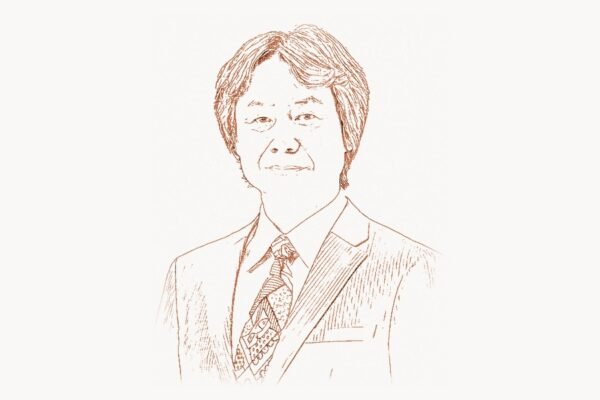
There is a particular kind of genius that does not seek to build empires but instead labors to perfect the tools with which others build. Guy Lewis Steele Jr. is that kind of genius. Over a career spanning five decades, he has shaped the very grammar and logic of programming — co-creating Scheme, one of the most influential programming languages ever designed; authoring the Java Language Specification that gave billions of devices a common tongue; co-defining Common Lisp; and delivering some of the most profound insights into how languages should grow and evolve. If programming languages are the medium through which human intent becomes machine action, then Steele is among the foremost architects of that medium. His fingerprints are on virtually every modern language, from JavaScript to Clojure, yet his name rarely appears in mainstream headlines — a fact that would probably suit him just fine.
Early Life and Path to Technology
Guy Lewis Steele Jr. was born on October 2, 1954, in Missouri. From an early age, he displayed the kind of intellectual voracity that would define his career. He was drawn to mathematics, logic, and puzzles — the type of structured thinking that maps naturally onto computation. His academic trajectory was nothing short of extraordinary: he attended the Boston Latin School, one of the oldest and most rigorous public schools in the United States, before entering Harvard University, where he earned his Bachelor of Arts in applied mathematics in 1975.
But it was at the Massachusetts Institute of Technology that Steele’s intellectual life truly ignited. He pursued graduate work at MIT’s Artificial Intelligence Laboratory — a place that, in the 1970s, was the undisputed epicenter of programming language research and artificial intelligence. The AI Lab was a cauldron of radical ideas. Researchers were rethinking computation from first principles, exploring how machines could reason, learn, and manipulate symbolic knowledge. The dominant language of the lab was Lisp, the creation of John McCarthy — a language that treated code as data and vice versa, enabling a form of programming that was as much philosophy as engineering.
It was in this environment that Steele met Gerald Jay Sussman, a young professor whose restless curiosity matched his own. Together, they would embark on a project that started as an educational exercise and ended up reshaping the theoretical foundations of computer science. Steele earned his Master’s degree and then his PhD from MIT, writing a dissertation on compiler optimization techniques for Scheme — the very language he had helped create. The tight loop between language design, theoretical insight, and practical implementation became the hallmark of his approach to computer science.
The Breakthrough: Co-Creating Scheme and the Lambda Papers
In 1975, Steele and Sussman began working on what they initially conceived as a small experiment. They wanted to understand the actor model of computation — a theoretical framework proposed by Carl Hewitt for reasoning about concurrent systems. To explore these ideas, they decided to build a tiny programming language, a stripped-down dialect of Lisp that would be as minimal as possible while still being powerful enough to express complex computations. They called it Scheme.
What started as a pedagogical tool became a revolution. Between 1975 and 1980, Steele and Sussman published a series of technical memos at the MIT AI Lab that became known collectively as the “Lambda Papers.” These documents — with titles like “Scheme: An Interpreter for Extended Lambda Calculus,” “Lambda: The Ultimate Imperative,” and “Lambda: The Ultimate Declarative” — did something remarkable: they demonstrated that a language built on just a few core principles could express virtually any programming paradigm. The lambda calculus, a formalism invented by Alonzo Church in the 1930s, was not just an abstract mathematical curiosity — it was a practical foundation for programming language design.
The Technical Innovation
Scheme’s technical contributions were numerous and profound, but three stand out as particularly transformative for the entire field of programming language design.
Lexical scoping. Before Scheme, most Lisp dialects used dynamic scoping — a system where a variable’s value depended on the calling context rather than the textual structure of the code. This made programs difficult to reason about and nearly impossible to optimize efficiently. Steele and Sussman made the radical choice to adopt lexical scoping, where a variable’s binding is determined by its position in the source code. This single decision made Scheme programs dramatically easier to understand, debug, and compile. It also enabled closures — functions that capture their lexical environment — which became one of the most powerful and widely adopted features in modern programming. Today, closures are fundamental to JavaScript, Python, Ruby, Swift, and virtually every modern language.
First-class continuations. Scheme introduced the concept of first-class continuations through its call-with-current-continuation (or call/cc) primitive. A continuation represents “the rest of the computation” at any given point in a program’s execution. By making continuations first-class values that could be stored, passed around, and invoked, Scheme provided a single mechanism that could express exceptions, coroutines, backtracking, and even multitasking. It was an astonishingly elegant abstraction — one mechanism to rule them all.
Tail call optimization. Steele’s PhD work focused heavily on proving that tail calls — function calls that are the last operation in a procedure — could be optimized to use constant stack space, effectively turning recursion into iteration without the programmer having to manually restructure their code. This was not merely an optimization trick; it was a statement about the nature of computation. It meant that recursive algorithms, which are often the most natural and elegant expression of a solution, could be as efficient as hand-written loops. Here is a classic example in Scheme that illustrates this principle:
;; Computing factorial using tail recursion in Scheme
;; Thanks to tail call optimization, this runs in constant stack space
;; — no matter how large n becomes, the stack never grows

(define (factorial n)
  (define (fact-iter product counter)
    (if (> counter n)
        product
        (fact-iter (* product counter)
                   (+ counter 1))))
  (fact-iter 1 1))

;; The key insight: fact-iter's recursive call is in "tail position"
;; — it is the very last thing the function does.
;; Scheme guarantees this will be optimized into a simple loop.
;; This means (factorial 1000000) won't overflow the stack.

;; Contrast with the naive recursive version:
(define (factorial-naive n)
  (if (<= n 1)
      1
      (* n (factorial-naive (- n 1)))))
;; This version builds up n stack frames — it will crash for large n.

;; Steele proved that any program using only tail calls
;; can be compiled into code as efficient as a GOTO-based loop.
;; Lambda: The Ultimate GOTO.
The title of one of the Lambda Papers — “Lambda: The Ultimate GOTO” — encapsulated this insight perfectly. Steele demonstrated that the humble lambda abstraction, when properly optimized, was at least as powerful and efficient as the low-level control flow mechanisms that systems programmers relied upon. You did not need to abandon elegance for performance; with the right compiler, you could have both.
Why It Mattered
The Lambda Papers and Scheme itself had an influence that radiated far beyond the Lisp community. The ideas Steele and Sussman articulated became the intellectual foundation for an enormous amount of subsequent programming language research and practical language design.
Brendan Eich has stated explicitly that Scheme was the primary influence on JavaScript‘s design — particularly its first-class functions, closures, and lexical scoping. When Eich was given ten days to create what would become the world’s most widely used programming language, it was Scheme’s elegant function model he reached for, wrapping it in a syntax that resembled Java to satisfy management requirements. Every time a web developer writes a callback function or uses a closure, they are working with ideas that Steele helped pioneer.
Rich Hickey’s Clojure, Guido van Rossum’s Python, and countless other languages adopted lexical scoping, first-class functions, and closure semantics directly from the template that Scheme established. The Scheme standard — known as the Revised^n Report on the Algorithmic Language Scheme (RnRS) — became a model for how language specifications could be simultaneously rigorous and minimal. Steele was a key author of several revisions of this standard.
Scheme also became the teaching language of choice at dozens of leading universities. MIT’s legendary introductory computer science course, 6.001, used Scheme as its language alongside the textbook “Structure and Interpretation of Computer Programs” (SICP) by Abelson and Sussman. For decades, some of the brightest minds in computer science cut their teeth on Scheme, absorbing its lessons about abstraction, recursion, and the power of simplicity. The influence of that pedagogy on the software industry is incalculable.
Common Lisp and the Art of Language Standardization
While Scheme was deliberately minimalist — a language defined by what it left out — the broader Lisp community in the early 1980s faced the opposite problem: too many incompatible dialects. MacLisp, Interlisp, Lisp Machine Lisp, and others had fragmented the ecosystem, making it difficult to share code or collaborate across institutions. The U.S. Department of Defense, which funded much of the AI research that depended on Lisp, was particularly eager to see a unified standard.
Steele played a central role in the effort to consolidate these dialects into Common Lisp. In 1984, he published “Common Lisp: The Language” (often abbreviated CLtL) — a comprehensive specification that synthesized features from multiple Lisp dialects into a single, coherent language. The book was a tour de force of technical writing, running to over 1,000 pages and covering everything from basic data types to the Common Lisp Object System (CLOS), one of the most sophisticated object-oriented programming systems ever designed.
The work required extraordinary diplomatic skill as well as technical acumen. Steele had to mediate between research groups with deeply held convictions about the “right” way to do Lisp. The result was not a lowest-common-denominator compromise but a genuinely powerful and expressive language that satisfied most of the community’s needs. Common Lisp remains in active use today, powering applications in artificial intelligence, bioinformatics, finance, and aerospace. The approach Steele took — building consensus through rigorous specification while respecting the diversity of existing practice — became a model for subsequent language standardization efforts.
The Java Language Specification
In the mid-1990s, Steele was working at Sun Microsystems when a new language called Java was preparing to take the world by storm. James Gosling had designed the language, but turning a working prototype into a precise, unambiguous specification that could be implemented by multiple parties required a different kind of expertise — exactly the kind Steele possessed.
Together with Gosling, Bill Joy, and Gilad Bracha, Steele co-authored “The Java Language Specification” (JLS). This document defined, with mathematical precision, what every Java program meant — how expressions were evaluated, how types were checked, how exceptions propagated, how classes were loaded and linked. The JLS was essential to Java’s “write once, run anywhere” promise: without a precise specification, different Java implementations would have produced different results, shattering the portability that was Java’s primary selling point.
// A demonstration of Java features that Steele helped specify precisely
// in the Java Language Specification

public class LanguageSpecExample {

    // The JLS rigorously defines how generics work,
    // including type erasure and bounded type parameters
    public static <T extends Comparable<T>> T findMax(T[] array) {
        if (array == null || array.length == 0) {
            throw new IllegalArgumentException("Array must not be empty");
        }
        T max = array[0];
        for (int i = 1; i < array.length; i++) {
            // The JLS specifies exactly how compareTo behaves,
            // how autoboxing works, and how the for-loop
            // evaluates its components at each iteration
            if (array[i].compareTo(max) > 0) {
                max = array[i];
            }
        }
        return max;
    }

    public static void main(String[] args) {
        Integer[] numbers = {42, 17, 93, 8, 61};
        // Autoboxing, array covariance, generic type inference —
        // all precisely defined in the spec Steele co-authored
        System.out.println("Maximum: " + findMax(numbers));
    }
}
Steele’s experience with Scheme and Common Lisp — years of thinking rigorously about language semantics — made him uniquely qualified for this work. He understood that a language specification is not merely documentation; it is a contract between the language designers and every developer who will ever write a line of code in that language. The JLS became one of the most cited and referenced language specifications in history, and its precision was a key factor in Java’s successful adoption across the enterprise software world. Today, managing the complexity of large-scale Java projects — the kind that the JLS made possible — often requires sophisticated coordination tools. Platforms like Taskee help development teams keep track of the myriad tasks involved in maintaining enterprise Java applications, from specification compliance to deployment pipelines.
Growing a Language: Steele’s Most Famous Talk
In 1998, Guy Steele delivered a keynote address at the ACM OOPSLA conference titled “Growing a Language.” It is, by widespread consensus, one of the greatest talks in the history of computer science — not just for its content but for its extraordinary rhetorical structure.
Steele began the talk by imposing a constraint on himself: he would only use one-syllable words unless he first defined a longer word in terms of one-syllable words he had already used. He then spent the first portion of the talk painstakingly building up a vocabulary — defining “type” as “a set of things that share some trait,” “class” as “a type whose things are made by a plan,” and so on. The audience initially found this puzzling, then amusing, and finally deeply moved, because the talk was itself a demonstration of its thesis: that a language must grow from small beginnings, and that a language designer’s most important job is not to build a large language but to design a small one that users can extend.
The implications for programming language design were profound. Steele argued that no language designer could anticipate every need of every user. Instead, the designer should provide powerful mechanisms for abstraction and extension — macros, operator overloading, user-defined types, domain-specific sublanguages — that allow the language’s users to grow it in directions the designer never imagined. This philosophy informed the design of languages from Common Lisp (with its macro system) to Scala (with its extensible syntax) and is reflected in the modern emphasis on libraries and frameworks as extensions of the base language.
Fortress and Parallel Computing
From the mid-2000s onward, Steele turned his attention to what he saw as the next great challenge in programming language design: parallelism. As Moore’s Law shifted from delivering faster clock speeds to delivering more processor cores, the software industry faced a crisis. Most existing programming languages made concurrent and parallel programming extremely difficult, leading to bugs that were nearly impossible to reproduce or fix.
Steele led the design of Fortress at Sun Microsystems, a language intended to be the successor to Fortran for high-performance scientific computing. Fortress was radical in its ambitions: it aimed to make parallelism the default rather than the exception, to support mathematical notation directly in source code (including Unicode subscripts and superscripts), and to provide a type system rich enough to catch errors at compile time that would otherwise manifest as subtle runtime bugs. Though Fortress was eventually discontinued after Oracle’s acquisition of Sun, the ideas it explored — implicit parallelism, mathematical syntax, and sophisticated type systems — continue to influence language design research.
Steele’s work on parallel computing also produced important theoretical contributions, including algorithms for performing associative reductions and prefix computations on parallel hardware. These results have practical applications in GPU programming, distributed systems, and the design of data-parallel languages. His thinking about parallelism reflected the same principles he had applied throughout his career: find the right abstractions, make the common case elegant, and let the compiler handle the mechanical details. This is the same ethos that informed the work of Edsger Dijkstra, who insisted that programmers should reason about correctness rather than fight with implementation details.
Philosophy and Engineering Approach
Guy Steele’s contributions span so many areas that it can be difficult to see the common thread. But there is one, and it runs through everything from the Lambda Papers to the Java Language Specification to “Growing a Language”: a commitment to principled minimalism, mathematical rigor, and the belief that the right abstraction is worth any amount of effort to discover.
Key Principles
Minimalism as a design philosophy. Scheme was defined by what it excluded. Where Common Lisp had hundreds of built-in functions, Scheme had a few dozen. Where other languages provided multiple mechanisms for the same task, Scheme provided one — and made it general enough to subsume the rest. Steele understood that every feature added to a language is a feature that every user must learn, every implementer must support, and every future designer must maintain. Simplicity is not laziness; it is the hardest-won form of elegance.
Rigor in specification. Whether writing the Scheme standard, Common Lisp: The Language, or the Java Language Specification, Steele insisted on precision. A language specification that leaves behavior undefined is not freeing — it is a trap. It means that programs will behave differently on different implementations, that bugs will be unreproducible, and that developers will lose trust in their tools. Steele’s specifications were exhaustive because he respected the developers who would depend on them.
Languages should grow, not be designed. The central insight of “Growing a Language” was that no single designer can foresee all the ways a language will be used. The designer’s job is to create a kernel — small, powerful, and composable — and then provide the mechanisms by which users can extend it. This principle connects directly to the macro systems of Lisp, the extension methods of modern languages, and the library ecosystems that define contemporary software development.
Theory and practice are not opposed. Steele’s career demonstrates that deep theoretical understanding leads to better practical tools. His knowledge of the lambda calculus did not make him an ivory-tower theorist; it made him a better compiler writer, a better language designer, and a better specifier. The tail call optimization work, rooted in formal proofs about the lambda calculus, had immediate practical consequences for every programmer who used recursion. The same spirit animated the work of Donald Knuth, who famously insisted that the art of computer programming required both mathematical beauty and engineering pragmatism.
Collaboration is a multiplier. Steele’s most important work was collaborative — with Sussman on Scheme, with the Common Lisp community, with Gosling on Java. He has consistently sought out partnerships that combine complementary strengths, and his ability to synthesize diverse perspectives into coherent specifications is perhaps his rarest skill. In an industry that often celebrates the lone genius, Steele’s career is a reminder that the most enduring contributions are usually collaborative.
Legacy and Modern Relevance
Guy Steele’s influence permeates modern programming in ways that most practitioners encounter daily without realizing it. Every time a JavaScript developer writes a closure, they are using an idea that Steele helped formalize. Every time a Java program is compiled and runs identically on a different platform, it is the specification Steele co-authored that makes that possible. Every time a language designer argues for a small core with powerful extension mechanisms, they are echoing the philosophy Steele articulated.
The awards and honors are commensurate with the contributions. Steele is a Fellow of the Association for Computing Machinery (ACM), a member of the National Academy of Engineering, and a Fellow of the American Academy of Arts and Sciences. He has received the ACM SIGPLAN Programming Languages Achievement Award and the Dr. Dobb’s Journal Excellence in Programming Award. But the truest measure of his legacy is not in awards — it is in the code.
Scheme continues to be taught at universities worldwide and remains the foundation of important pedagogical texts. Its descendants and inspired languages — Clojure, Racket, Guile — carry forward its ideas of minimalism, macros, and functional elegance. The Java Language Specification continues to be updated as Java evolves, but its foundational structure — the rigorous, precise approach to defining language semantics — remains the framework Steele helped establish. The principles of the Lambda Papers — lexical scoping, tail call optimization, the power of lambda abstraction — have become so thoroughly absorbed into mainstream programming that they are no longer seen as innovations but as self-evident truths.
In the contemporary landscape, where AI-assisted programming tools are generating code at unprecedented scale, Steele’s emphasis on precise language semantics becomes even more critical. A language that is ambiguously defined cannot be reliably targeted by automated tools. The rigor Steele championed is not a relic of a more careful era — it is a prerequisite for the AI-augmented programming future. Agencies like Toimi that work at the intersection of technology strategy and digital product design understand that the foundational clarity Steele insisted upon is what separates systems that scale from systems that crumble.
At a time when programming languages proliferate faster than ever, Steele’s career offers a timeless lesson: the most powerful languages are not the ones with the most features, but the ones with the most carefully chosen abstractions. Power comes not from accumulation but from composition. The lambda, properly understood and properly optimized, truly is the ultimate.
Key Facts
- Born Guy Lewis Steele Jr. on October 2, 1954
- Earned his BA in Applied Mathematics from Harvard University in 1975
- Received his MS and PhD in Computer Science from MIT, studying at the AI Laboratory
- Co-created the Scheme programming language with Gerald Jay Sussman in 1975
- Co-authored the “Lambda Papers” (1975-1980) — foundational documents in programming language theory
- Published “Common Lisp: The Language” (1984), the definitive specification for Common Lisp
- Co-authored “The Java Language Specification” with James Gosling, Bill Joy, and Gilad Bracha
- Delivered the legendary “Growing a Language” keynote at OOPSLA 1998
- Led the design of the Fortress programming language for parallel computing at Sun Microsystems
- Worked at Sun Microsystems and later Oracle Labs
- Fellow of the Association for Computing Machinery (ACM)
- Member of the National Academy of Engineering
- Recipient of the ACM SIGPLAN Programming Languages Achievement Award
Frequently Asked Questions
What is Scheme and why is it considered so influential despite being relatively niche?
Scheme is a minimalist dialect of Lisp that Guy Steele and Gerald Jay Sussman created at MIT in 1975. Unlike many programming languages that achieve influence through widespread industrial adoption, Scheme achieved its enormous impact primarily through ideas. It pioneered lexical scoping, first-class closures, tail call optimization, and first-class continuations — concepts that were subsequently adopted by dozens of mainstream languages. JavaScript, the most widely used programming language in the world, was directly inspired by Scheme’s function model. Python, Ruby, Swift, and Kotlin all incorporate closure semantics that trace back to Scheme. The language also served as the teaching vehicle for MIT’s influential introductory computer science course for over two decades, shaping how an entire generation of software engineers thought about abstraction and computation. Scheme proves that a language’s influence is measured not by the number of production applications written in it, but by the quality of its ideas and how widely those ideas propagate.
How did Guy Steele’s work on the Java Language Specification differ from James Gosling’s creation of Java?
James Gosling designed and implemented the Java programming language — he conceived its syntax, its object model, its virtual machine architecture, and its core libraries. He was the inventor. Steele’s role was fundamentally different but equally essential: he took Gosling’s creation and specified it with the mathematical precision necessary for it to be implemented independently by multiple parties. A language implementation is a program; a language specification is a contract. Gosling built the first compiler and the first virtual machine; Steele defined, in rigorous detail, exactly what every valid Java program must mean — how type conversions work, how method overloading is resolved, how memory is managed, what happens when exceptions are thrown. Without this level of precision, Java’s promise of cross-platform portability would have been impossible to fulfill, because different implementations would inevitably have diverged in their behavior. Steele’s decades of experience specifying Scheme and Common Lisp made him uniquely qualified to bring this rigor to Java, and the JLS he co-authored remains one of the most thoroughly specified documents in the history of programming languages.
What was the significance of Guy Steele’s “Growing a Language” talk?
Steele’s 1998 OOPSLA keynote “Growing a Language” is widely regarded as one of the most brilliant presentations in computing history, remarkable both for its content and its form. Steele imposed a constraint: he would only use one-syllable words unless he first defined a multi-syllable word from simpler words he had already introduced. This constraint forced him to literally grow his vocabulary during the talk, mirroring his central thesis about programming languages. His argument was that language designers cannot anticipate every future need, so the most important thing they can do is design a small, powerful core that users can extend — through macros, operator overloading, libraries, and domain-specific abstractions. The talk challenged the prevailing approach of designing large, feature-rich languages and instead advocated for languages that empower their communities to evolve the language organically. This philosophy has proven prescient: the most successful modern languages are those with rich extension mechanisms and thriving library ecosystems. The talk remains required viewing in many computer science programs and continues to influence how language designers think about their craft decades later.