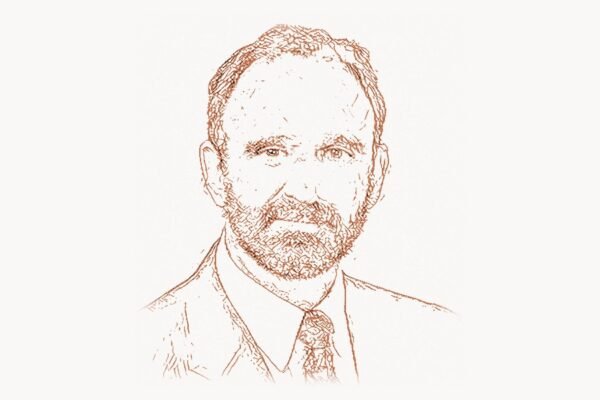
On March 14, 2017, a SpaceX Falcon 9 rocket touched down on Landing Zone 1 at Cape Canaveral after delivering the EchoStar XXIII communications satellite into geostationary transfer orbit. It was a routine mission by SpaceX standards — routine in the way that only a company that had already landed ten orbital-class rockets could call a rocket landing routine. But for the person who had negotiated the contract, managed the launch manifest, overseen the engineering teams, and built the business infrastructure that made reusable rockets commercially viable, that moment represented something far larger than a single mission. Gwynne Shotwell, President and Chief Operating Officer of SpaceX, had spent fifteen years transforming a startup with no rockets, no launch pads, and no customers into the most prolific launch provider on Earth. She had done it by combining an aerospace engineer’s deep technical fluency with an executive’s ruthless focus on cost, schedule, and customer relationships. While Elon Musk provided the vision — Mars colonization, fully reusable launch vehicles, a multi-planetary species — Shotwell provided the operational machinery that turned those visions into revenue, contracts, and flight heritage. She is the person who made SpaceX a business, and in doing so, she fundamentally changed the economics of space access for the entire world.
Early Life and Path to Aerospace
Gwynne Shotwell was born on November 23, 1963, in Libertyville, Illinois, a suburb north of Chicago. Her father was a brain surgeon, and her mother was an artist. The combination of analytical precision and creative thinking that characterized her childhood home would later define her approach to the aerospace industry. She grew up in an era when the space program was transitioning from the Apollo triumphs of the late 1960s to the Space Shuttle era of the 1980s, and while she was interested in science, her initial career ambitions did not point toward rockets.
The turning point came during her junior year of high school, when her mother took her to a Society of Women Engineers event at the Illinois Institute of Technology. There, Shotwell heard a mechanical engineer speak about her work and was captivated — not by any particular technical detail, but by the engineer’s evident passion for problem-solving. That evening, Shotwell decided she would study mechanical engineering. She enrolled at Northwestern University, where she earned a Bachelor of Science in Mechanical Engineering in 1986, followed by a Master of Science in Applied Mathematics in 1988.
After Northwestern, Shotwell joined the Aerospace Corporation, a federally funded research and development center in El Segundo, California, that provides technical guidance to the United States Air Force and the National Reconnaissance Office on space systems. She spent a decade at Aerospace Corp working on military space programs, including satellite systems and launch vehicle integration. Her work focused on the intersection of engineering analysis and program management — understanding not just how systems worked technically, but how to manage the complex organizational processes that brought them from concept to orbit. She became an expert in space launch vehicle economics, developing cost models for expendable and reusable launch systems that would prove directly relevant to her future role.
During her time at Aerospace Corp, Shotwell developed a reputation for being unusually effective at communicating complex technical issues to non-technical stakeholders — a skill that would become central to her success at SpaceX. She could explain why a particular rocket design decision affected cost per kilogram to orbit, or why a specific testing regime was necessary, in terms that program managers, military officers, and eventually commercial customers could understand and act on.
Joining SpaceX: Employee Number Seven
The Early Years
Elon Musk founded SpaceX in May 2002 with the goal of reducing space transportation costs to enable Mars colonization. The company’s first employee was Tom Mueller, a propulsion engineer. Gwynne Shotwell joined in 2002 as Vice President of Business Development, making her approximately the seventh employee. At the time, SpaceX had no rockets, no launch facilities, no flight heritage, and no customers. What it had was Musk’s personal fortune from PayPal, a small team of exceptionally talented engineers, and the audacious claim that it could build and launch rockets at a fraction of the cost of established providers like Lockheed Martin, Boeing, and Arianespace.
Shotwell’s job was to turn that claim into contracts. She was the person who walked into meetings with satellite operators, government agencies, and military procurement offices and sold a rocket that did not yet exist, built by a company with no track record, led by an internet entrepreneur with no aerospace experience. The technical credibility she had built at Aerospace Corp was essential — she could speak the language of the space industry, understand the risk frameworks that customers used, and address technical objections with engineering substance rather than marketing rhetoric.
Her first major sale was a contract with the Department of Defense’s Operationally Responsive Space Office. She also secured early contracts with NASA and commercial satellite operators. These early contracts provided not just revenue but validation — proof that serious institutional customers were willing to bet on SpaceX. Each contract she closed made the next one easier, building a flywheel of credibility that would eventually make SpaceX the dominant player in the commercial launch market.
Surviving Failure
SpaceX’s first three Falcon 1 launches — in 2006, 2007, and 2008 — all failed. These were existential crises for the company. Musk had invested nearly his entire fortune, and there was enough money for only one more attempt. Shotwell’s role during these failures was critical: she had to maintain customer confidence, prevent contract cancellations, and keep the business pipeline alive while the engineering team diagnosed and fixed the problems. A lesser executive might have lost customers after the first failure, let alone the third. Shotwell kept them.
The fourth Falcon 1 launch, on September 28, 2008, succeeded — making SpaceX the first privately funded company to put a liquid-fueled rocket into Earth orbit. The relief was enormous, but the real business inflection point came just weeks later, when NASA awarded SpaceX a $1.6 billion contract under the Commercial Resupply Services program to deliver cargo to the International Space Station. Shotwell had been cultivating that relationship for years, and the contract transformed SpaceX from a promising startup into a serious aerospace company with long-term revenue visibility.
Building the SpaceX Business Machine
Shotwell was promoted to President and COO of SpaceX in 2008, a role she has held ever since. In this position, she oversees the company’s day-to-day operations, including manufacturing, launch operations, government relations, legal affairs, and business development. Musk focuses on engineering design and long-term vision; Shotwell focuses on execution, customer relationships, and organizational management. This division of labor has been remarkably effective — arguably the most successful founder-operator partnership in the history of the aerospace industry.
Under Shotwell’s operational leadership, SpaceX grew from fewer than 500 employees in 2008 to over 13,000 by 2024. The company’s launch cadence increased from a single launch per year to nearly 100 annual missions. She built the organizational infrastructure — hiring systems, supply chain management, quality assurance processes, launch operations protocols — that enabled this scaling while maintaining the engineering quality required for orbital spaceflight.
# Falcon 9 Launch Sequence — Automated Mission Timeline
# This represents the software-controlled sequence that SpaceX
# developed for the world's first routinely reusable orbital rocket
# Shotwell's operational team manages 90+ missions/year on this platform

class Falcon9LaunchSequence:
    """
    Automated launch sequence for Falcon 9 Block 5.
    T-minus times in seconds. Negative = before liftoff.
    Each step is software-verified before proceeding.
    """

    TIMELINE = {
        # Pre-launch automated sequence
        -2700: "Launch director verifies GO for propellant load",
        -2100: "RP-1 (kerosene) loading begins — first stage",
        -2100: "RP-1 loading begins — second stage",
        -1920: "LOX (liquid oxygen) loading begins — first stage",
        -1920: "LOX loading begins — second stage",
        -420:  "Falcon 9 transitions to internal power",
        -240:  "Pre-valve checks complete",
        -60:   "Flight computer enters terminal count",
        -45:   "SpaceX launch director confirms final GO",
        -30:   "Launch sequence initiated — automated control",
        -16:   "Flight computer confirms all systems nominal",
        -3:    "Merlin 1D engine ignition sequence — 9 engines",
        -1:    "Thrust verification: 7,607 kN total at sea level",
        0:     "LIFTOFF — holddown clamps release",

        # Ascent profile
        58:    "Max-Q: maximum aerodynamic pressure",
        162:   "MECO: main engine cutoff — first stage",
        164:   "Stage separation — pneumatic pushers fire",
        167:   "Second stage MVac engine ignition",
        210:   "Fairing deployment (if applicable)",

        # First stage recovery — the reusability revolution
        220:   "Boostback burn initiation — 3 engines",
        380:   "Entry burn — 3 engines, decelerating through atmosphere",
        480:   "Landing burn — single engine, final approach",
        495:   "Landing leg deployment — 4 legs extend",
        500:   "Touchdown — autonomous drone ship or landing zone",

        # Second stage orbital insertion
        520:   "Second stage engine cutoff — SECO-1",
        1800:  "Coast phase to precise orbit",
        2700:  "SECO-2 — final orbital insertion burn",
        3000:  "Payload deployment — mission complete",
    }

    def execute_sequence(self):
        for time_mark, event in sorted(self.TIMELINE.items()):
            status = self.verify_system_state(time_mark)
            if not status.nominal:
                return self.execute_abort(time_mark, status)
            self.log_telemetry(time_mark, event)

    def verify_system_state(self, t):
        """
        Every step is software-verified.
        Automated hold/abort if any parameter out of range.
        SpaceX launches are among the most software-intensive
        operations in aerospace — each mission runs millions
        of lines of verification code in real time.
        """
        pass  # Telemetry verification logic

    def execute_abort(self, t, status):
        """Auto-abort: system shuts down safely if anomaly detected."""
        pass  # Abort sequence logic
One of Shotwell’s most significant contributions was developing SpaceX’s pricing strategy. When SpaceX entered the commercial launch market, the going rate for placing a satellite into geostationary transfer orbit was approximately $100–200 million. SpaceX initially priced Falcon 9 launches at $62 million — a price that established competitors dismissed as unsustainable. Shotwell’s cost models, built on her decade of launch economics experience at Aerospace Corp, proved that SpaceX’s vertically integrated manufacturing model and reusable first stages could indeed deliver launches at that price while maintaining healthy margins. By 2024, SpaceX had captured over 60% of the global commercial launch market.
The relationship management aspect of Shotwell’s role cannot be overstated. She is the primary interface between SpaceX and its most important customers: NASA, the Department of Defense, commercial satellite operators, and international space agencies. Managing these relationships requires balancing SpaceX’s disruptive culture — fast iteration, aggressive timelines, a willingness to accept and learn from failures — with the conservative, process-heavy expectations of institutional customers. Shotwell has done this with remarkable skill, maintaining customer trust even through launch failures and schedule delays that would typically end business relationships in the aerospace industry.
Starlink: From Concept to Constellation
Perhaps the most operationally complex program under Shotwell’s management is Starlink, SpaceX’s satellite internet constellation. The concept — providing global broadband internet coverage from a constellation of thousands of low-Earth orbit satellites — had been proposed by others, but no one had attempted it at the scale SpaceX envisioned. Shotwell was instrumental in securing the regulatory approvals, managing the manufacturing ramp-up, and building the customer acquisition infrastructure for the service.
Starlink required SpaceX to become not just a launch company but a satellite manufacturer and an internet service provider — three fundamentally different businesses with different technical challenges, regulatory frameworks, and customer expectations. Shotwell built the organizational structures to manage all three simultaneously. By 2025, Starlink had deployed over 6,000 satellites, served millions of subscribers across more than 70 countries, and was generating annual revenue estimated at over $6 billion — making it one of the fastest-growing telecommunications services in history. The program also demonstrates the power of agile project management applied at an extraordinary scale.
# Starlink Constellation Management System
# Simplified model of the orbital management challenges
# SpaceX operates the largest satellite constellation in history

import math
from dataclasses import dataclass
from typing import List, Tuple

@dataclass
class StarlinkSatellite:
    """Each Starlink satellite is a flat-panel design
    with autonomous collision avoidance powered by
    onboard ion thrusters and GPS navigation."""
    norad_id: int
    orbital_shell: int         # 1-5 (different altitude bands)
    altitude_km: float         # Operational: 540-570 km
    inclination_deg: float     # 53.0° or 97.6° (polar)
    mean_anomaly_deg: float    # Position in orbit
    raan_deg: float            # Right ascension of ascending node
    status: str                # "operational", "raising", "deorbiting"
    laser_links: int           # V2 Mini sats: 4 laser crosslinks

    @property
    def orbital_period_minutes(self) -> float:
        """Kepler's third law — orbital period calculation."""
        R = 6371 + self.altitude_km  # km from Earth center
        return 2 * math.pi * math.sqrt(R**3 / 398600.4418) / 60

@dataclass
class OrbitalShell:
    """SpaceX files orbital shells with the FCC.
    Each shell has a specific altitude, inclination,
    and number of orbital planes."""
    shell_id: int
    altitude_km: float
    inclination_deg: float
    num_planes: int
    sats_per_plane: int
    total_sats: int

# Starlink constellation architecture (FCC-approved shells)
CONSTELLATION_DESIGN = [
    OrbitalShell(1, 550, 53.0, 72, 22, 1584),
    OrbitalShell(2, 540, 53.2, 72, 22, 1584),
    OrbitalShell(3, 570, 70.0, 36, 20, 720),
    OrbitalShell(4, 560, 97.6, 6,  58, 348),
    OrbitalShell(5, 560, 97.6, 4,  43, 172),
]

class ConstellationManager:
    """
    Manages 6,000+ active satellites simultaneously.
    Key challenges Shotwell's team solves daily:
    - Collision avoidance with 30,000+ tracked objects
    - Optimal coverage over subscriber regions
    - Satellite replacement scheduling (5-year lifespan)
    - Coordinating with 90+ launches per year
    """
    def __init__(self):
        self.satellites: List[StarlinkSatellite] = []
        self.conjunction_threshold_km = 1.0

    def check_conjunction(self, sat: StarlinkSatellite,
                          debris_catalog: list) -> List[dict]:
        """Autonomous collision avoidance — satellites maneuver
        themselves using ion thrusters when conjunction
        probability exceeds threshold."""
        warnings = []
        for obj in debris_catalog:
            miss_distance = self._compute_miss_distance(sat, obj)
            if miss_distance < self.conjunction_threshold_km:
                warnings.append({
                    "satellite": sat.norad_id,
                    "object": obj["norad_id"],
                    "miss_distance_km": miss_distance,
                    "action": "autonomous_avoidance_maneuver"
                })
        return warnings

    def plan_replacement_cycle(self) -> dict:
        """Satellites deorbit after ~5 years.
        With 6,000+ active sats, SpaceX must launch
        ~100 replacements per month to maintain coverage.
        This is why launch cadence matters so much."""
        aging = [s for s in self.satellites
                 if self._age_years(s) > 4.5]
        return {
            "satellites_approaching_eol": len(aging),
            "replacement_launches_needed": math.ceil(len(aging) / 23),
            "estimated_monthly_cadence": len(aging) // 12
        }
The Starlink program also showcases Shotwell’s ability to navigate complex regulatory environments. Satellite internet requires approvals from telecommunications regulators in every country where service is offered, coordination with international bodies like the International Telecommunication Union, and compliance with space debris mitigation guidelines. Shotwell built the government affairs and regulatory teams that secured these approvals, often moving faster than regulators expected and occasionally faster than they were comfortable with.
Philosophy and Leadership Approach
Key Principles
Shotwell’s leadership philosophy centers on several principles that she has articulated consistently throughout her career. The first is radical transparency with customers. When SpaceX experiences a failure — a launch anomaly, a schedule delay, a technical problem — Shotwell communicates directly and honestly with affected customers. This approach, unusual in an industry where failures are often obscured by layers of bureaucratic language, has built extraordinary customer loyalty.
The second principle is speed of decision-making. Shotwell has spoken frequently about the importance of making decisions quickly, even with incomplete information. She argues that in a fast-moving industry, the cost of delay often exceeds the cost of an imperfect decision. This philosophy aligns with the iterative development approaches used in modern software engineering — ship fast, learn from results, and iterate. SpaceX’s willingness to test hardware aggressively, accept failures as learning opportunities, and move quickly to the next iteration is fundamentally different from the traditional aerospace approach of exhaustive analysis followed by cautious execution.
The third principle is vertical integration. Under Shotwell’s operational leadership, SpaceX manufactures approximately 80% of its components in-house, from Merlin rocket engines to avionics to the Starlink satellites themselves. This vertical integration gives SpaceX control over cost, quality, and schedule that companies relying on external supply chains cannot match. It is a manufacturing philosophy more commonly associated with companies like high-performance technology firms than with traditional aerospace contractors. Managing complex, vertically integrated projects at this scale requires the kind of project management discipline that Shotwell has instilled throughout the organization.
Fourth, Shotwell emphasizes the importance of hiring and retaining exceptional people. She has described SpaceX’s hiring process as focused on finding people who are both technically brilliant and deeply motivated by the company’s mission. She argues that mission-driven employees work harder, stay longer, and produce better results than those motivated primarily by compensation — though SpaceX’s equity compensation has made many early employees wealthy. For teams looking to build similarly motivated organizations, modern task management platforms can help align individual work with overarching mission objectives.
The Musk-Shotwell Partnership
The working relationship between Musk and Shotwell is one of the most consequential partnerships in modern industry. Musk is the visionary — he sets the technical direction, pushes for seemingly impossible timelines, and makes the bold public commitments that drive SpaceX’s engineering ambition. Shotwell is the operator — she translates those visions into executable plans, manages the business relationships that fund the vision, and builds the organizational infrastructure that makes execution possible.
Shotwell has described this relationship with characteristic directness: Musk sets the technical bar impossibly high, and her job is to figure out how to reach it — or to get close enough that the result is still revolutionary. She has also been the diplomatic counterbalance to Musk’s occasionally abrasive public persona, smoothing relationships with government customers, regulators, and industry partners. When agencies like professional service firms study effective leadership structures, the Musk-Shotwell dynamic offers a compelling model of how visionary ambition and operational excellence can complement each other.
Impact on the Space Industry
The space industry before SpaceX and the space industry after SpaceX are fundamentally different, and Shotwell’s contributions to that transformation extend far beyond any single technical achievement. She built the commercial infrastructure that proved private companies could compete with — and ultimately outperform — government space agencies and traditional defense contractors in reliable, affordable access to orbit.
The pricing pressure SpaceX created under Shotwell’s commercial leadership forced the entire industry to restructure. United Launch Alliance (the Boeing-Lockheed Martin joint venture that had monopolized U.S. military launches) was compelled to develop the Vulcan Centaur rocket with dramatically lower costs. Arianespace accelerated development of the Ariane 6. Rocket Lab, Relativity Space, and dozens of other new launch companies entered the market, all building business cases that were only viable because SpaceX had proven the market existed. SpaceX did not just compete in the launch market — it created a new launch market.
Shotwell’s management of the Crew Dragon program — which restored American human spaceflight capability after the retirement of the Space Shuttle in 2011 — was a particular milestone. The Commercial Crew Program, which Shotwell had been involved with since its inception, was a new model for NASA: instead of specifying every detail of a spacecraft and contracting for its construction, NASA defined requirements and purchased transportation services from commercial providers. This model, which Shotwell helped negotiate and champion, has become the template for future NASA programs including the Human Landing System for Artemis and the Commercial Low Earth Orbit Destinations program.
The economic impact is staggering. SpaceX’s launch prices — enabled by first-stage reusability, which Shotwell’s business case validated years before it was technically demonstrated — have reduced the cost of placing payload in low Earth orbit from approximately $54,500 per kilogram (Space Shuttle era) to under $2,720 per kilogram on Falcon 9. When Starship becomes fully operational, SpaceX projects costs below $100 per kilogram. This cost reduction is not incremental improvement — it is a fundamental change in the economics of space that enables entirely new categories of activity, from mega-constellations like Starlink to commercial space stations to, eventually, Musk’s vision of Mars colonization.
Challenges and Controversies
Shotwell’s tenure has not been without challenges. SpaceX’s rapid growth has been accompanied by reports of intense work culture, with long hours and high pressure that some employees have found unsustainable. As the person responsible for day-to-day operations, Shotwell bears responsibility for workplace culture in ways that the more publicly visible Musk does not. She has acknowledged the intensity while arguing that the mission requires it, a position that resonates with some employees and alienates others.
The Starlink program has generated controversy among astronomers, who argue that the bright streaks left by Starlink satellites in telescope images are degrading ground-based astronomical observations. Shotwell has been the primary SpaceX spokesperson on this issue, engaging with the astronomical community and funding engineering solutions (satellite visors, darkened coatings) to reduce brightness. The tension between commercial satellite operations and astronomical research is genuine and unresolved, and Shotwell’s handling of it has been a mix of genuine engagement and corporate defensiveness.
SpaceX’s relationship with environmental regulators, particularly regarding the Starship launch site at Boca Chica, Texas, has also been contentious. Launch operations affect local wildlife habitats, and SpaceX’s aggressive construction timelines have sometimes clashed with environmental review processes. Shotwell has managed these regulatory relationships with the same direct, problem-solving approach she applies to customer relationships, though environmental advocates have criticized SpaceX for prioritizing speed over environmental compliance. Managing such complex cross-functional workflows at the intersection of engineering, regulation, and public policy is among the most demanding aspects of her role.
Legacy and Modern Relevance
Gwynne Shotwell’s career demonstrates a model of technical leadership that is increasingly relevant in an era when the most important problems — climate change, space access, artificial intelligence, global communications — require both engineering excellence and business execution. She is not a founder, not a celebrity CEO, not a public visionary. She is an operator: the person who builds the organizational machinery that turns ambitious ideas into functioning systems.
Her influence on the aerospace industry is difficult to overstate. She proved that a startup could compete with entrenched government contractors. She built the business case for reusable rockets before the technology existed. She managed the most rapid growth in aerospace history while maintaining launch reliability above 98%. She navigated SpaceX through existential crises — three consecutive launch failures, the 2016 pad explosion, the COVID-19 pandemic — without losing a single major customer. She built Starlink from concept to the world’s largest satellite constellation and a multi-billion-dollar revenue stream.
For the broader technology industry, Shotwell’s career offers lessons about the value of operational excellence. In a culture that celebrates founders, visionaries, and disruptors, she represents the equally essential role of the person who makes things actually work. Every complex technical system, whether it is a rocket or a software platform, requires someone who can translate vision into execution, manage the organizational complexity that scale demands, and maintain the customer relationships that sustain the business. Gwynne Shotwell is the most accomplished practitioner of that discipline in modern aerospace, and her influence will shape the industry for decades to come.
Key Facts
- Born: November 23, 1963, Libertyville, Illinois, USA
- Role: President and Chief Operating Officer of SpaceX (since 2008)
- Education: B.S. Mechanical Engineering, Northwestern University (1986); M.S. Applied Mathematics, Northwestern University (1988)
- Known for: Building SpaceX from a startup into the world’s dominant launch provider, managing Starlink constellation deployment, overseeing Commercial Crew program
- Key achievements: Grew SpaceX from ~7 employees to 13,000+; scaled launch cadence to 90+ missions/year; captured 60%+ of global commercial launch market; built Starlink into a multi-billion-dollar business
- Previous role: Space Systems Group, The Aerospace Corporation (1988–2002)
- Recognition: Named to Forbes Most Powerful Women list, inducted into the Women in Technology International Hall of Fame, honorary doctorate from Northwestern University
Frequently Asked Questions
Who is Gwynne Shotwell?
Gwynne Shotwell is the President and Chief Operating Officer of SpaceX, the aerospace company founded by Elon Musk in 2002. She joined SpaceX as its approximately seventh employee and has been responsible for the company’s day-to-day operations, business development, and customer relationships since being promoted to President and COO in 2008. Under her leadership, SpaceX grew from a startup with no rockets to the world’s most prolific launch provider, operating over 90 missions per year and capturing more than 60% of the global commercial launch market. She oversees all SpaceX operations including Falcon 9, Falcon Heavy, Dragon, Starship, and the Starlink satellite internet constellation.
What is Gwynne Shotwell’s role at SpaceX?
As President and COO, Shotwell manages SpaceX’s entire business operation. While Elon Musk focuses on engineering vision and technical direction, Shotwell oversees manufacturing, launch operations, business development, government relations, legal affairs, human resources, and customer relationships. She is the primary interface between SpaceX and its most important customers, including NASA, the U.S. Department of Defense, and commercial satellite operators. She also manages the Starlink business, including regulatory approvals, subscriber growth, and satellite manufacturing. The Musk-Shotwell partnership is widely regarded as one of the most effective founder-operator relationships in modern industry.
How did Gwynne Shotwell help make SpaceX successful?
Shotwell’s contributions to SpaceX’s success span three critical areas. First, she built the commercial business that funds SpaceX’s operations — she sold the first Falcon 1 and Falcon 9 contracts, secured the $1.6 billion NASA Commercial Resupply Services contract, and developed the pricing strategy that undercut established competitors by 60% or more. Second, she built the organizational infrastructure that enabled SpaceX to scale from a handful of employees to over 13,000 while maintaining launch reliability above 98%. Third, she maintained customer confidence through multiple launch failures and technical setbacks, preventing the contract cancellations that would have killed the company in its early years. Without Shotwell’s business acumen and operational discipline, SpaceX’s technical achievements would never have reached the market.
What is the Starlink program and how does Shotwell manage it?
Starlink is SpaceX’s satellite internet constellation, designed to provide global broadband internet coverage from thousands of low-Earth orbit satellites. As of 2025, Starlink has over 6,000 active satellites, serves millions of subscribers in more than 70 countries, and generates an estimated $6+ billion in annual revenue. Shotwell manages Starlink as a business within SpaceX, overseeing satellite manufacturing (SpaceX builds multiple satellites per day), launch operations for deployment missions, regulatory approvals in dozens of countries, subscriber acquisition and customer service, and coordination with the FCC and international telecommunications regulators. Starlink represents the convergence of SpaceX’s launch capabilities with a direct-to-consumer business model, and Shotwell’s ability to manage both simultaneously is central to its success.
Why is Gwynne Shotwell considered a tech pioneer?
Shotwell is considered a tech pioneer because she fundamentally changed the economics and business model of the space industry. Before SpaceX, access to space was controlled by a small number of government-backed contractors charging $100–200 million per launch. Shotwell built the commercial infrastructure that proved a private startup could compete with these entrenched players, reduce launch costs by an order of magnitude, and eventually dominate the market. She demonstrated that operational excellence and customer focus — principles common in the technology industry but rare in aerospace — could transform an industry that had been stagnant for decades. Her career also serves as a model for technical leaders who operate behind the scenes, proving that the person who makes things work is just as important as the person who sets the vision.