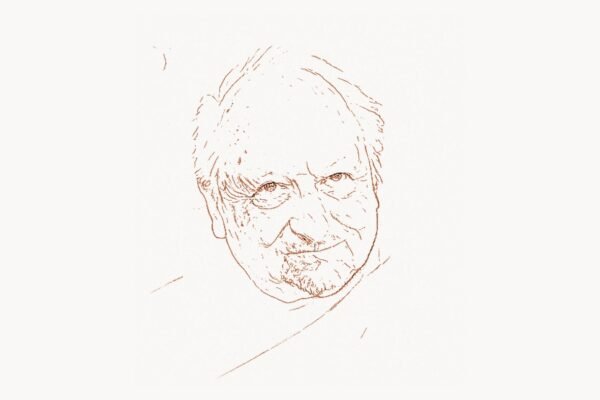
In October 1994, a Norwegian computer scientist named Håkon Wium Lie published a nine-page proposal that would fundamentally change how the web looks, works, and evolves. The document, titled “Cascading HTML style sheets — a proposal,” outlined a mechanism for separating visual presentation from document structure on the World Wide Web. At a time when web pages were styled by hacking HTML attributes — bgcolor on body tags, font tags wrapped around every paragraph, spacer GIFs holding layouts together — Lie proposed something radical: let authors write style rules in a separate language, and let those rules cascade through a priority system that balanced the wishes of authors, readers, and browsers. That language became CSS, Cascading Style Sheets, and it became one of the three foundational pillars of the web alongside HTML and JavaScript. Every website you have ever visited renders its visual design through CSS. Every color, font, layout, animation, and responsive breakpoint on the modern web exists because Håkon Wium Lie saw, three decades ago, that content and presentation must be separate concerns.
Early Life and Education
Håkon Wium Lie was born on July 5, 1965, in Halden, Norway, a small town near the Swedish border. He grew up in a country that would later become one of the most digitally connected societies in the world, but in the 1970s and early 1980s, computers were still rare outside universities and large corporations. Lie developed an early interest in technology and communications, though his path to computer science was not direct.
He studied at the Norwegian Institute of Technology (NTH, now part of the Norwegian University of Science and Technology — NTNU) in Trondheim, earning a degree in computer science. His academic work gave him a strong foundation in systems thinking and information architecture. After completing his studies in Norway, Lie pursued graduate work at MIT’s Media Lab in Boston, Massachusetts, where he was exposed to some of the most forward-thinking research in digital media, interactive systems, and human-computer interaction. The Media Lab’s culture of interdisciplinary experimentation — combining technology, design, art, and communication — profoundly shaped Lie’s thinking about how technology should serve human expression.
After MIT, Lie worked at several organizations focused on electronic publishing and digital media. He spent time at INRIA (the French National Institute for Research in Digital Science and Technology) and took a position at CERN — the same European particle physics laboratory where Tim Berners-Lee had invented the World Wide Web just a few years earlier. It was at CERN in 1994, working directly alongside Berners-Lee, that Lie encountered the problem that would define his career: the web had structure but no style system.
The CSS Breakthrough
The Technical Innovation
By 1994, the World Wide Web was growing explosively — from a few hundred websites at the start of the year to thousands by year’s end. But the web had a serious design problem. HTML was a structural language. It defined headings, paragraphs, lists, and links. It was never intended to control how content looked — what color a heading should be, how wide a paragraph should render, where images should sit relative to text. Yet as the web grew beyond academic circles into commercial use, designers and businesses demanded visual control. The browser vendors responded with presentational hacks: Netscape introduced the <font> tag, the <center> tag, and proprietary attributes for colors and sizes. Web pages became tangled mixtures of content and formatting instructions, making them fragile, hard to maintain, and impossible to adapt for different screen sizes or output devices.
Lie was not the only person who recognized the problem. At least ten different style sheet proposals were circulating in 1994-1995, including Pei-Yuan Wei’s Viola browser styles, Robert Raisch’s RRP (Request for Comments: a simple style sheet mechanism), and several SGML-derived approaches. What made Lie’s proposal different — and ultimately victorious — was the concept of cascading.
The cascade was a priority system that acknowledged a fundamental tension: who controls how a web page looks? The author who wrote the page has design intentions. The reader viewing the page may have accessibility needs — larger fonts, higher contrast, specific color schemes. The browser itself has default rendering rules. Previous proposals gave absolute control to one party. Lie’s cascade created a weighted system where all three voices were heard, with rules for resolving conflicts. Author styles could override browser defaults. Reader styles could override author styles for accessibility. Specificity rules determined which of multiple matching selectors applied. This was not merely a technical mechanism — it was a philosophical statement about the web as a collaborative medium between producers and consumers of content.
Lie found a critical collaborator in Bert Bos, a Dutch computer scientist who had independently developed a style sheet proposal called “Stream-based Style Sheet Proposal” (SSP) for the Argo browser. Bos’s proposal had strengths that complemented Lie’s work — particularly in areas like layout models, page formatting, and the separation of element selection from property assignment. The two merged their efforts in 1995, and the combined Lie-Bos design became the CSS specification that was submitted to the W3C. Bos brought rigorous formalism to the property model and selector syntax, while Lie contributed the cascade mechanism and the pragmatic approach to implementation. Their partnership produced a spec that was both theoretically clean and practically implementable.
/* CSS1 (1996) — The original specification co-authored by
   Håkon Wium Lie and Bert Bos. These properties changed
   how every web page in the world would be styled. */

/* The cascade in action: browser defaults → user styles → author styles */

body {
  font-family: Georgia, "Times New Roman", serif;
  font-size: 16px;
  line-height: 1.6;
  color: #1c1917;
  background-color: #ffffff;
  margin: 0;
  padding: 20px;
}

h1 {
  font-size: 2em;
  font-weight: bold;
  color: #292524;
  margin-top: 0.67em;
  margin-bottom: 0.67em;
}

/* Before CSS, this required wrapping EVERY link in <font> tags */
a:link    { color: #0000ee; text-decoration: underline; }
a:visited { color: #551a8b; }
a:hover   { color: #ee0000; }
a:active  { color: #ff0000; }

/* Separation of concerns: one rule set styles ALL paragraphs.
   Change it once, every paragraph on the site updates. */
p {
  text-indent: 1.5em;
  margin-bottom: 1em;
}

/* CSS1 already supported class selectors — the foundation
   of every component-based design system used today */
.highlight {
  background-color: #ffffcc;
  padding: 4px;
  border: 1px solid #cccc00;
}
The CSS Level 1 specification was published as a W3C Recommendation on December 17, 1996. It defined 53 properties covering fonts, colors, text formatting, margins, padding, borders, and basic layout. By modern standards, CSS1 was severely limited — no floats, no positioning, no z-index, no media queries, no flexbox, no grid. But it established the architecture that every subsequent version has built upon: selectors target HTML elements, declarations assign property-value pairs, and the cascade resolves conflicts through specificity and source order.
Why It Mattered
CSS mattered because it made the web scalable as a design medium. Without CSS, every visual change on a website required editing the HTML of every affected page. Want to change the heading color across a 500-page site? Open 500 files and modify the <font> tags around every heading. Want to offer a high-contrast version for visually impaired users? Duplicate the entire site with different formatting. Want the site to look different on a mobile phone versus a desktop monitor? Build two separate sites with separate HTML.
CSS solved all of these problems with a single architectural decision: separate structure from presentation. Write one HTML document containing your content and semantic markup. Write one or more CSS files containing your design rules. The browser combines them at render time. Change the CSS, and every page referencing that stylesheet updates instantly. Write a different stylesheet for print, for mobile, for screen readers, and the same HTML adapts to every context. This is the principle that Brendan Eich’s JavaScript later complemented by handling the behavioral layer — HTML for structure, CSS for presentation, JavaScript for interaction. The separation of concerns that Lie championed became the foundational architecture of web development, influencing frameworks, code editors, and build tools for decades to come.
CSS also enabled the democratization of web design. Because CSS is a declarative language — you describe what you want, not how to compute it — designers without programming backgrounds could learn it and use it effectively. This was by design. Lie understood that the web needed a styling language that visual thinkers, not just engineers, could master. The syntax was deliberately readable: color: red; font-size: 18px; margin-left: 20px; reads almost like natural language. This accessibility lowered the barrier to web design and opened the profession to people from graphic design, typography, and visual arts backgrounds who might never have learned a procedural programming language.
Beyond CSS: Opera, Web Standards, and the Open Web
In 1999, Håkon Wium Lie joined Opera Software, the Norwegian browser company, as Chief Technology Officer. Opera was always the underdog in the browser market — never commanding the market share of Internet Explorer, Firefox, or Chrome — but under Lie’s technical leadership, it became a crucial force for web standards and innovation. Opera was consistently among the first browsers to implement emerging CSS specifications correctly, and the company’s engineers contributed significantly to W3C working groups that developed CSS2, CSS3 modules, and related standards.
Lie used Opera as a platform for web standards advocacy. Opera’s relatively small market share paradoxically gave it moral authority: the company had no incentive to create proprietary extensions (as Microsoft and Netscape had done during the browser wars) and every incentive to push for standards compliance, since Opera could only compete if websites were built to open standards rather than browser-specific features. Under Lie’s leadership, Opera pioneered several innovations that larger browsers later adopted: Opera was one of the first browsers to support tabbed browsing, user stylesheets (allowing readers to override author CSS, just as Lie’s cascade had envisioned), and small-screen rendering for mobile devices. Opera Mini and Opera Mobile became dominant browsers in developing countries and on feature phones, bringing web access to millions of users who would not get smartphones for years. This aligned perfectly with Lie’s belief that the web should be universally accessible, not just optimized for the latest hardware in wealthy markets.
One of Lie’s most persistent advocacy projects was CSS-based printing and paged media. He championed the idea that CSS should be powerful enough to typeset books, academic papers, and professional print documents — not just web pages. The CSS Paged Media specification and the CSS Generated Content for Paged Media specification defined properties for page breaks, running headers and footers, page margins, footnotes, cross-references, and other features familiar from traditional publishing. Lie developed a tool called Prince (later PrinceXML) alongside Michael Day, which implemented these specifications to convert HTML+CSS documents into high-quality PDF output suitable for professional printing. This vision — that a single source document in HTML could be styled by one CSS file for screen display and a different CSS file for print production — represented the logical extension of the separation of content from presentation that Lie had championed since 1994.
Lie was also an early and vocal advocate for web fonts. In the early web, designers were limited to a handful of “web-safe” fonts that could be assumed to exist on most operating systems: Arial, Times New Roman, Verdana, Georgia. Any other font choice was a gamble — if the user’s system didn’t have the font installed, the browser would substitute a fallback. Lie pushed for @font-face — a CSS rule that allows web pages to download and use custom fonts from the server. The @font-face rule had actually been included in CSS2 (1998), but browser implementation was incomplete and inconsistent for over a decade. It wasn’t until 2009-2010, with the WOFF (Web Open Font Format) specification and consistent browser support, that web fonts finally became practical. Today, services like Google Fonts serve web fonts to billions of page views daily, and custom typography is so common that developers take it for granted. But it was Lie and his collaborators who fought for the technical infrastructure that made it possible, often years before the browser ecosystem was ready to implement it.
Lie completed his PhD at the University of Oslo in 2005, with a thesis titled “Cascading Style Sheets” that documented the history, design rationale, and technical evolution of the language he had co-created. The thesis remains one of the most comprehensive technical histories of CSS and its relationship to the broader web standards ecosystem.
Philosophy and Vision
Key Principles
Lie’s work across three decades reflects a set of consistent principles that have informed both his technical designs and his advocacy.
Separation of concerns is non-negotiable. From his earliest CSS proposal through his work on paged media and beyond, Lie has consistently argued that mixing content with presentation creates systems that are fragile, inaccessible, and impossible to maintain at scale. This principle — which predates Lie’s work, originating in computer science concepts of modularity and in the SGML community’s distinction between structure and formatting — found its most consequential expression in CSS. When modern developers use tools like Rich Harris’s Svelte or component libraries that scope CSS to individual components, they are working within an architectural paradigm that Lie helped establish. Even when frameworks blur the line between structure and style (CSS-in-JS, utility-first frameworks like Tailwind), the underlying principle that the visual layer is a separate concern from the content layer remains foundational.
The user must have a voice. Lie’s cascade was revolutionary not just technically but philosophically, because it gave readers the ability to override author styles. This was not an afterthought — it was central to the design. Lie believed that the web was not a broadcast medium where authors dictated and users consumed; it was a negotiation between author intent and reader needs. A visually impaired user should be able to force large text and high contrast. A user with a slow connection should be able to disable background images. A user reading in bright sunlight should be able to switch to a dark-on-light color scheme. The cascade made these accommodations structurally possible without requiring authors to anticipate every scenario. Today, this principle lives on in user preference media queries (prefers-color-scheme, prefers-reduced-motion, prefers-contrast) and in the growing emphasis on accessible design across the web industry. Teams using project management platforms like Taskee to coordinate design sprints routinely build accessibility requirements into their workflows — a practice that traces back to the values embedded in CSS from the beginning.
Open standards over proprietary control. Lie’s entire career has been organized around the principle that web technologies must be developed through open, consensus-based processes and freely implementable by anyone. His work at the W3C, at Opera, and in standards bodies has consistently opposed vendor lock-in. When Microsoft’s Internet Explorer dominated the market with proprietary extensions, Lie argued through Opera and the W3C for standards compliance. When browser vendors were slow to implement CSS specifications, he built tools (like Prince) that demonstrated what compliant implementations could achieve, creating pressure for browser makers to catch up. When professional web agencies build sites to W3C standards rather than targeting a single browser, they are working within the ecosystem that Lie, Berners-Lee, and the standards community fought to create.
Progressive enhancement and graceful degradation. CSS was designed so that browsers that didn’t understand a property would simply ignore it, rendering the content without that style rather than breaking entirely. This principle — that a web page should be functional in any browser and enhanced in capable ones — became a cornerstone of professional web development. It meant that new CSS features could be added to the specification without breaking older browsers, enabling the language to evolve incrementally over decades rather than requiring disruptive version upgrades.
Legacy and Modern Relevance
The CSS specification that Lie co-created in 1994-1996 has evolved into one of the most powerful and widely deployed design languages in computing history. CSS3, organized as a collection of independent modules rather than a monolithic specification, includes capabilities that would have been unimaginable in 1996: CSS Grid and Flexbox for two-dimensional and one-dimensional layout (replacing decades of float-based hacks and table layouts), CSS Custom Properties (variables) for design tokens, CSS Transitions and Animations for motion design, CSS Media Queries for responsive design across device sizes, CSS Containment for rendering performance optimization, and CSS Nesting for improved selector organization. Each of these modules went through the W3C standardization process that Lie helped establish, balancing innovation with interoperability and backward compatibility.
/* The evolution from CSS1 (1996) to modern CSS (2025) —
   The architectural foundation Lie designed has scaled
   to handle capabilities far beyond the original spec */

/* CSS Custom Properties (variables) — design tokens */
:root {
  --color-primary: #c2724e;
  --color-text: #1c1917;
  --font-heading: 'Space Grotesk', sans-serif;
  --font-body: 'IBM Plex Sans', sans-serif;
  --space-unit: 0.5rem;
}

/* CSS Grid — true two-dimensional layout.
   This replaced a decade of float hacks and table layouts */
.article-grid {
  display: grid;
  grid-template-columns: 1fr min(65ch, 100%) 1fr;
  gap: calc(var(--space-unit) * 4);
}

.article-grid > * {
  grid-column: 2;
}

/* Container Queries — responsive to parent, not viewport */
@container (min-width: 600px) {
  .card {
    grid-template-columns: 200px 1fr;
  }
}

/* Cascade Layers — Lie's cascade, evolved for modern scale */
@layer base, components, utilities;

@layer components {
  .button {
    background: var(--color-primary);
    color: white;
    border-radius: calc(var(--space-unit) * 1.5);
    transition: transform 0.2s ease, box-shadow 0.2s ease;
  }
  .button:hover {
    transform: translateY(-1px);
    box-shadow: 0 4px 12px rgba(0, 0, 0, 0.15);
  }
}

/* prefers-reduced-motion — Lie's vision of user agency.
   The cascade gives users the final word on their experience */
@media (prefers-reduced-motion: reduce) {
  *, *::before, *::after {
    animation-duration: 0.01ms !important;
    transition-duration: 0.01ms !important;
  }
}
The latest evolution of the cascade — CSS Cascade Layers, introduced in 2022 — is a direct descendant of Lie’s original cascading concept, extended to handle the complexity of modern web applications where styles come from design systems, component libraries, third-party widgets, and utility frameworks all competing for specificity. Lie’s insight that style conflicts are inevitable and must be resolved through a principled priority system has proven more relevant, not less, as web applications have grown in complexity.
CSS is now used by an estimated 97% of all websites. It is taught in every web development curriculum on earth. It is implemented in every major browser engine — Blink (Chrome, Edge, Opera), Gecko (Firefox), and WebKit (Safari). The responsive design revolution — the ability of a single web page to adapt its layout from a phone screen to a desktop monitor — was made possible by CSS Media Queries. The design systems that companies like Google (Material Design), Apple (Human Interface Guidelines for the web), and GitHub (Primer) distribute to thousands of developers are CSS at their core. When developers use jQuery or modern browser APIs to manipulate styles dynamically, they are interacting with the CSS object model that descends from Lie and Bos’s original specification.
Lie stepped down as CTO of Opera in 2016 but remains active in web standards discussions and continues to advocate for the open web. His contributions — from CSS itself to web fonts, paged media, browser innovation, and standards advocacy — form a body of work that shapes the daily experience of billions of web users and the daily workflow of millions of web developers. He demonstrated that a well-designed abstraction, introduced at the right moment and standardized through open processes, can scale to define the visual layer of the entire digital world.
Key Facts
- Born: July 5, 1965, Halden, Norway
- Known for: Co-creating CSS (Cascading Style Sheets) with Bert Bos (1994-1996)
- Education: Computer science degree from Norwegian Institute of Technology (NTH/NTNU); graduate studies at MIT Media Lab; PhD from University of Oslo (2005)
- Key roles: CTO of Opera Software (1999-2016); researcher at CERN and W3C; CSS Working Group contributor
- Major contributions: CSS cascade mechanism, CSS Paged Media specifications, web fonts advocacy (@font-face), browser innovation at Opera
- Collaborators: Bert Bos (CSS co-author), Tim Berners-Lee (W3C/CERN), Michael Day (PrinceXML)
- CSS1 published: December 17, 1996 (W3C Recommendation)
- CSS adoption: Used on approximately 97% of all websites worldwide
- Philosophy: Separation of content from presentation, user agency in the cascade, open standards, progressive enhancement
Frequently Asked Questions
Who invented CSS and why was it necessary?
CSS was co-created by Håkon Wium Lie and Bert Bos between 1994 and 1996. Lie published the initial proposal in October 1994 while working at CERN alongside Tim Berners-Lee. Bos contributed a complementary style sheet proposal, and the two merged their work into what became the CSS specification. CSS was necessary because HTML was never designed to control visual presentation — it defined document structure (headings, paragraphs, links). As the web grew commercially, designers needed control over colors, fonts, layouts, and spacing, but the only available tools were presentational HTML hacks like <font> tags and table-based layouts. These hacks made websites brittle, hard to maintain, and inaccessible. CSS provided a clean, maintainable, and scalable solution by separating visual design from document content.
What is the CSS cascade and why does it matter?
The cascade is the priority system at the heart of CSS that determines which styles apply when multiple conflicting rules target the same element. It resolves conflicts by considering the source of the style (browser defaults, user preferences, author stylesheets), the specificity of the selector (how precisely it targets the element), and the order in which rules appear. The cascade matters because it acknowledges that styling a web page is a negotiation between multiple stakeholders: the designer who created the page, the user who has accessibility or preference needs, and the browser that provides sensible defaults. This system allows CSS to scale from a single-page personal site to a million-page enterprise application while maintaining predictable, resolvable behavior. Modern CSS Cascade Layers extend this concept further for today’s complex multi-library development environments.
What was Håkon Wium Lie’s role at Opera Software?
Lie served as Chief Technology Officer (CTO) of Opera Software from 1999 to 2016. In this role, he directed the browser’s technical strategy with a strong emphasis on web standards compliance, CSS implementation, and innovation for mobile devices. Under his leadership, Opera became known as a standards champion — consistently among the first browsers to correctly implement new CSS specifications and a strong voice in W3C working groups. Opera also pioneered features like tabbed browsing, user stylesheets, and small-screen rendering for mobile devices. Opera Mini became one of the most widely used mobile browsers in developing countries, bringing web access to users with limited bandwidth and older devices. Lie used his position at Opera to advocate for the open web and to demonstrate through working software that standards-compliant implementations could outperform proprietary approaches.