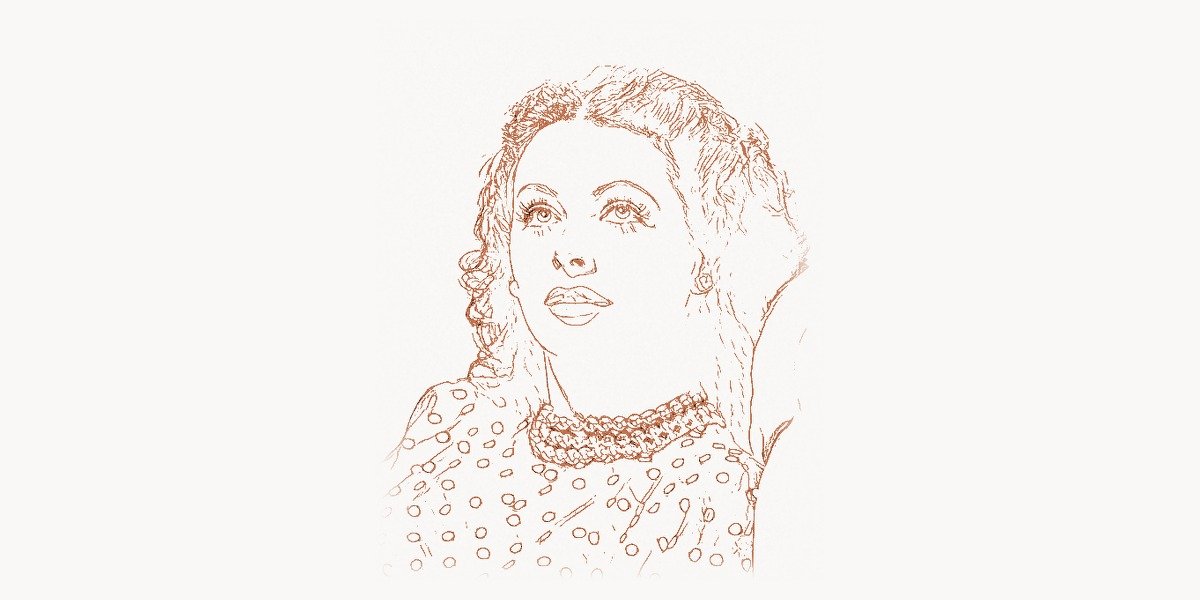
On August 11, 1942, the United States Patent Office issued Patent No. 2,292,387 for a “Secret Communication System.” The patent described a method for guiding torpedoes to their targets by rapidly switching the radio control signal across different frequencies in a synchronized pattern — making it virtually impossible for an enemy to detect or jam the signal. The inventors listed on the patent were George Antheil, an avant-garde composer famous for his “Ballet Mécanique” scored for sixteen synchronized player pianos, and Hedy Kiesler Markey — the legal name of Hedy Lamarr, one of the biggest movie stars in the world. A woman whom the studio publicity machine had called “the most beautiful woman in the world” had co-invented a technology that would become the foundation of modern wireless communication: frequency-hopping spread spectrum. The technology described in that 1942 patent is the direct ancestor of the protocols that power WiFi, Bluetooth, GPS, CDMA cellular networks, and virtually every secure wireless system in use today. Lamarr was 28 years old when the patent was granted, and she would wait more than fifty years before the world recognized the magnitude of what she had done.
Early Life and Path to Technology
Hedwig Eva Maria Kiesler was born on November 9, 1914, in Vienna, Austria-Hungary, to a prosperous Jewish family. Her father, Emil Kiesler, was a successful bank director with a passionate interest in technology and mechanical devices. Her mother, Gertrud, was a concert pianist from Budapest. From her father, young Hedy inherited an intense curiosity about how things worked — he would take her on long walks through Vienna, explaining the inner workings of streetcars, power plants, and printing presses. By the age of five, she had taken apart and reassembled a music box to understand its mechanism. By sixteen, she had dropped out of school to pursue acting and had landed her first film role.
In 1933, at the age of 18, Lamarr appeared in the Czech-Austrian film Ecstasy, which generated enormous controversy for its frank depiction of female desire. That same year, she married Fritz Mandl, an Austrian arms manufacturer and munitions dealer who was one of the wealthiest men in Europe. Mandl was controlling and possessive — he attempted to buy up every copy of Ecstasy to suppress it — but his business brought Lamarr into direct contact with the military-industrial world that would later inspire her invention. Mandl entertained scientists, military officials, and engineers at lavish dinner parties, and Lamarr listened. She sat through countless discussions about weapons technology, radio-controlled torpedoes, and the problem of signal jamming. She was not merely decorating Mandl’s arm — she was absorbing the technical details that would later fuel her breakthrough.
In 1937, Lamarr fled the marriage and Austria. She traveled to London, where she met Louis B. Mayer, head of Metro-Goldwyn-Mayer, on a transatlantic crossing. Mayer signed her to a contract, gave her the stage name “Hedy Lamarr,” and brought her to Hollywood. Within a year she was a major star. But throughout her film career, Lamarr maintained her technical interests — she kept a drafting table and invention workshop in her home, spending off-hours between takes designing and sketching mechanical improvements.
The Breakthrough: Frequency-Hopping Spread Spectrum
The Technical Innovation
The problem Lamarr set out to solve was torpedo guidance. During World War II, radio-controlled torpedoes existed but were vulnerable to a critical weakness: the enemy could detect the guidance signal’s frequency and broadcast jamming noise on that frequency, rendering the torpedo useless. If you transmitted on a single frequency, the enemy could find it and block it. This was a fundamental limitation of all radio-controlled weapons at the time.
Lamarr’s insight was elegant: instead of transmitting on a single frequency, rapidly switch the signal across many different frequencies in a pattern known only to the transmitter and receiver. If the frequency changed fast enough, an enemy interceptor would hear only a brief burst of noise on any given frequency — not enough to identify the signal or jam it effectively. The transmitter and receiver would stay synchronized by following the same predetermined sequence of frequency changes, hopping together from channel to channel in lockstep. This is frequency-hopping spread spectrum (FHSS).
The synchronization problem was the hardest part. How do you keep the transmitter on the ship and the receiver in the torpedo switching frequencies at exactly the same time? This is where George Antheil’s contribution was crucial. Antheil had spent years working on the problem of synchronizing multiple player pianos for his compositions. He proposed using a mechanism borrowed from player piano technology: identical rolls of paper tape (later slotted wheels) in both the transmitter and receiver, driven by clockwork mechanisms at the same speed. Each slot on the tape would correspond to a different frequency, and as the tapes advanced in sync, both devices would hop to the same frequency at the same time.
# Frequency-hopping spread spectrum — Lamarr & Antheil's concept
# Simplified pseudocode illustrating the core invention

import random

class FrequencyHopper:
    """
    Lamarr-Antheil frequency-hopping system (1942 patent).
    Both transmitter and receiver share the same hopping
    sequence — like two identical player piano rolls
    advancing at the same rate.
    """

    def __init__(self, num_frequencies=88, seed=None):
        # 88 frequencies — one for each piano key
        self.num_frequencies = num_frequencies
        self.frequencies = [
            30.0 + i * 0.5 for i in range(num_frequencies)
        ]  # MHz band allocation

        # Shared secret: the hopping sequence
        self.rng = random.Random(seed)
        self.sequence = self._generate_sequence()
        self.step = 0

    def _generate_sequence(self, length=1024):
        """Generate the hopping pattern — the shared secret."""
        return [
            self.rng.randint(0, self.num_frequencies - 1)
            for _ in range(length)
        ]

    def get_current_frequency(self):
        """Both transmitter and receiver call this in sync."""
        idx = self.sequence[self.step % len(self.sequence)]
        freq = self.frequencies[idx]
        self.step += 1
        return freq

# --- Demonstration ---
# Ship transmitter and torpedo receiver share the same seed
ship = FrequencyHopper(num_frequencies=88, seed=19420811)
torpedo = FrequencyHopper(num_frequencies=88, seed=19420811)

# Both hop through the same sequence in lockstep
for i in range(5):
    tx_freq = ship.get_current_frequency()
    rx_freq = torpedo.get_current_frequency()
    assert tx_freq == rx_freq  # Always synchronized
    print(f"Hop {i+1}: {tx_freq} MHz — matched: {tx_freq == rx_freq}")

# An enemy scanning a single frequency sees nothing useful:
# the signal was there for only ~10ms before hopping away
The patent (filed June 10, 1941, granted August 11, 1942) described a system with 88 frequencies — a number directly inspired by the 88 keys on a piano, reflecting Antheil’s musical background. The specification detailed the mechanical synchronization mechanism, the frequency allocation, and the anti-jamming properties of the system. It was a complete engineering design, not a vague concept.
Lamarr and Antheil donated the patent to the United States Navy, hoping it would be used in the war effort against Nazi Germany. The Navy, however, rejected the technology. The reasons were partly technical — the mechanical implementation was complex and fragile for use in torpedoes — and partly cultural. A film actress and a modernist composer were not the kind of inventors the military establishment took seriously. The patent was classified and shelved. It would not expire until 1959.
Why It Mattered
The fundamental insight of Lamarr and Antheil’s invention — that spreading a signal across multiple frequencies makes it resistant to interception and jamming — proved to be one of the most important ideas in the history of telecommunications. The concept is known as spread spectrum, and it comes in two main forms: frequency-hopping spread spectrum (FHSS), which is what Lamarr and Antheil patented, and direct-sequence spread spectrum (DSSS), which spreads the signal across a wide band using a pseudorandom code. Both approaches are foundational to modern wireless communication.
The principle that Claude Shannon would later formalize in information theory — that spreading a signal across bandwidth can increase its resilience to noise — is precisely what Lamarr intuited mechanically. Her frequency-hopping approach presaged the mathematical framework that would define modern telecommunications.
The U.S. military eventually implemented spread spectrum technology during the Cuban Missile Crisis in 1962, three years after Lamarr’s patent expired. The Navy used a version of frequency hopping for secure communications on ships deployed during the blockade of Cuba. From there, the technology evolved rapidly. In the 1980s, the military developed the GPS satellite navigation system, which uses spread spectrum to transmit precise timing signals that are resistant to jamming. CDMA (Code Division Multiple Access), the cellular technology developed by Qualcomm in the late 1980s and 1990s, is a direct descendant of spread spectrum principles. And in 1997, the IEEE 802.11 standard — WiFi — was published, using both FHSS and DSSS in its original specification. Bluetooth, ratified in 1998, uses adaptive frequency hopping across 79 channels. Every time a person connects to WiFi, pairs a Bluetooth headset, uses GPS navigation, or makes a phone call on a CDMA or LTE network, the underlying technology traces its lineage directly to a patent filed by a Hollywood actress and a concert pianist in 1941.
Beyond the Patent: Other Contributions and Inventions
Frequency hopping was not Lamarr’s only invention. Throughout her life she maintained her technical workshop and continued to design improvements to everyday technology. During the war, she worked with the National Inventors Council (a body established to evaluate civilian-submitted inventions for military use) on several projects. She designed an improved traffic signal and developed a tablet that, when dissolved in water, would create a carbonated drink similar to cola — an early instant soda concept (the product was reportedly not very good, which Lamarr herself admitted).
Her later inventions included an improved fluorescent light design and modifications to aircraft wing structure inspired by studying the fastest birds and fish. While none achieved the significance of the frequency-hopping patent, they demonstrate that Lamarr’s technical creativity was a sustained intellectual practice spanning decades.
What distinguished Lamarr as an inventor was her ability to see connections across domains. The frequency-hopping concept drew on her knowledge of military radio technology (absorbed during her marriage to Mandl), mechanical synchronization (from Antheil’s player piano expertise), and an intuitive grasp of information security — the principle that a predictable signal is a vulnerable signal. This cross-domain thinking is the hallmark of genuine innovation, the same kind of interdisciplinary approach that Ada Lovelace applied when she connected Babbage’s calculator to general-purpose computation, and that Bob Metcalfe demonstrated when he applied radio networking principles to wired LANs.
Hollywood Career and Dual Identity
Lamarr’s film career spanned nearly three decades. She appeared in more than 30 films, including Algiers (1938), Tortilla Flat (1942), and Samson and Delilah (1949). At the peak of her career, she was one of the highest-paid actresses in Hollywood. MGM marketed her almost exclusively on her beauty, a strategy that frustrated Lamarr — she maintained her invention workshop throughout, designing improvements to various devices between takes.
The tension between Lamarr’s public image and her private intellect defined much of her life. In Hollywood’s studio system, there was no template for a woman who was simultaneously a glamorous movie star and a serious inventor. When the frequency-hopping patent became public, the press treated it as a celebrity curiosity rather than a genuine technological contribution. It took decades for the significance of the invention to be recognized on its own merits.
This erasure reflects broader patterns in how women’s contributions to technology have been minimized. Grace Hopper faced similar dismissiveness when she proposed programming computers in English-like languages. Margaret Hamilton had to fight for “software engineering” to be taken seriously. Radia Perlman, who invented the Spanning Tree Protocol that makes Ethernet networks possible, has spent decades deflecting reductive gendered labels. In modern tech, teams using platforms like Taskee to manage complex engineering projects benefit from decades of contributions by women whose technical work was often overshadowed by societal expectations.
Philosophy and Engineering Approach
Key Principles
Lamarr’s approach to invention was characterized by several distinctive qualities. First, she was a relentless observer. Her technical knowledge of radio-controlled torpedoes came not from formal study but from careful listening during years of exposure to military-industrial discussions at her first husband’s dinner table. She extracted usable technical knowledge from social situations that most people would have experienced only as boring business talk. This observational intensity — the ability to absorb domain knowledge passively and then apply it creatively — is a trait shared by many successful inventors and entrepreneurs.
Second, she was a cross-domain thinker. The frequency-hopping concept required combining knowledge from three entirely separate fields: military radio engineering, mechanical music technology (player pianos), and what we would now call communication security. Lamarr did not have deep expertise in any one of these fields, but she had enough understanding of each to see the connection between them. This is analogous to how the most effective technology leaders today operate across the boundaries of engineering, design, and business strategy — understanding each domain well enough to synthesize insights that specialists in any single domain would miss. Modern digital agencies that integrate strategy, design, and engineering under one roof operate on a similar principle: breakthroughs happen at the intersections.
Third, she was practically minded. The 1942 patent is not a theoretical paper — it is a detailed engineering specification, complete with mechanical diagrams, frequency allocations, and synchronization mechanisms. Lamarr and Antheil were not proposing an abstract idea; they were designing a buildable system. The fact that the Navy deemed the specific mechanical implementation impractical for torpedo deployment does not diminish the engineering rigor of the design — it merely reflected the limitations of 1940s manufacturing rather than any flaw in the concept itself.
/* Modern spread spectrum — the evolution of Lamarr's concept */
/* From 88 mechanical frequencies to billions of digital hops */

/*
 * The core principle Lamarr identified in 1941:
 * A signal that stays on one frequency is vulnerable.
 * A signal that hops across many frequencies is resilient.
 *
 * This principle now underpins every major wireless standard:
 *
 * WiFi (IEEE 802.11):
 *   - Original 802.11 (1997): FHSS, 79 channels, 1 Mbps
 *   - 802.11b (1999): DSSS, 2.4 GHz, 11 Mbps
 *   - 802.11ax / WiFi 6 (2020): OFDMA, 1024-QAM, 9.6 Gbps
 *   Each generation uses spread spectrum in more sophisticated form
 *
 * Bluetooth (1998–present):
 *   - 79 channels in 2.4 GHz band
 *   - 1600 hops per second (adaptive frequency hopping)
 *   - Directly inspired by FHSS principles
 *
 * GPS (1978–present):
 *   - Uses DSSS with pseudorandom noise codes
 *   - Each satellite transmits on spread spectrum
 *   - Jam-resistant by design — Lamarr's original goal
 *
 * CDMA / LTE / 5G cellular:
 *   - CDMA: direct-sequence spread spectrum
 *   - LTE: OFDMA (orthogonal frequency division)
 *   - 5G NR: flexible numerology, massive MIMO
 *   All descendants of spread spectrum thinking
 */

/* The mathematical foundation:
 *
 * Shannon's channel capacity theorem (1948):
 * C = B * log2(1 + S/N)
 *
 * Where B = bandwidth, S = signal, N = noise
 *
 * Spread spectrum trades narrow bandwidth and high
 * signal-to-noise for wide bandwidth and low signal-to-noise
 * per channel. The total information capacity is preserved,
 * but the signal becomes invisible to narrowband listeners.
 *
 * Lamarr intuited this tradeoff six years before
 * Shannon formalized it mathematically. */
Legacy and Modern Relevance
Hedy Lamarr spent her later years in increasing seclusion. Her film career declined in the 1960s, and she faced financial difficulties and personal setbacks. She became reclusive, communicating with the outside world primarily by telephone. For decades, her frequency-hopping patent remained largely forgotten outside a small circle of telecommunications engineers who recognized its significance.
Recognition came late. In 1997, the Electronic Frontier Foundation awarded Lamarr and Antheil (posthumously — Antheil had died in 1959) the Pioneer Award for their contribution to wireless technology. When informed of the award by telephone, the 83-year-old Lamarr reportedly said: “It’s about time.” In 2014, Lamarr and Antheil were inducted into the National Inventors Hall of Fame. In 2015, a documentary film called Bombshell: The Hedy Lamarr Story brought her dual legacy as actress and inventor to a wide audience. November 9, Lamarr’s birthday, is celebrated in German-speaking countries as “Inventors’ Day” (Tag der Erfinder) in her honor.
Lamarr died on January 19, 2000, in Casselberry, Florida, at the age of 85. She did not live to see the full explosion of WiFi, Bluetooth, and modern cellular technology that her patent helped make possible. The global WiFi market alone — the most direct descendant of her frequency-hopping concept — was valued at over $25 billion by 2025, with billions of devices connected worldwide. Every smartphone, laptop, tablet, smart speaker, wireless headphone, IoT sensor, and connected vehicle uses technology that traces its conceptual lineage to a patent filed by a movie star and a composer in 1941.
The significance of Lamarr’s contribution extends beyond the specific technology. Her story illustrates how innovation often comes from unexpected sources — from people dismissed because they do not fit the profile of a “real” inventor. In the modern technology industry, where communication technology pioneers continue to reshape how the world connects, Lamarr’s example remains a powerful reminder that technical brilliance is not confined to any single background, gender, or profession.
Key Facts
- Born: November 9, 1914, Vienna, Austria-Hungary
- Died: January 19, 2000, Casselberry, Florida, United States (aged 85)
- Known for: Co-inventing frequency-hopping spread spectrum (FHSS), the foundational technology behind WiFi, Bluetooth, GPS, and CDMA cellular networks
- Key projects: U.S. Patent 2,292,387 — “Secret Communication System” (1942), co-invented with George Antheil
- Recognition: EFF Pioneer Award (1997), National Inventors Hall of Fame (2014), “Inventors’ Day” (November 9) in Austria/Germany/Switzerland
- Film career: Over 30 films for MGM and other studios (1933–1958), including Samson and Delilah, Algiers, and Tortilla Flat
- Also invented: Improved traffic signal design, fluorescent lighting modifications, instant carbonated drink tablet
Frequently Asked Questions
Who was Hedy Lamarr and what did she invent?
Hedy Lamarr (1914–2000) was an Austrian-American film actress and inventor. In 1941, together with composer George Antheil, she co-invented frequency-hopping spread spectrum (FHSS) — a method of transmitting radio signals by rapidly switching among many frequency channels in a synchronized pattern. This technique makes radio signals resistant to interception and jamming. The concept they patented became the technological foundation for modern WiFi, Bluetooth, GPS, and CDMA/LTE cellular networks. Lamarr was simultaneously one of the biggest movie stars in Hollywood and a serious inventor whose technical contributions were not widely recognized until decades after the patent was filed.
How does Hedy Lamarr’s invention relate to WiFi and Bluetooth?
WiFi (IEEE 802.11) and Bluetooth both use spread spectrum technology — the core concept of Lamarr and Antheil’s 1942 patent. The original WiFi standard (1997) used frequency-hopping spread spectrum directly. Later WiFi versions evolved to use more sophisticated spread spectrum variants (DSSS and OFDMA), but the underlying principle remains the same: spreading a signal across multiple frequencies for resilience and security. Bluetooth explicitly uses adaptive frequency hopping, switching among 79 channels 1,600 times per second in the 2.4 GHz band. The specific engineering has advanced enormously since 1942, but the conceptual insight — that a frequency-hopping signal is inherently more secure and reliable than a fixed-frequency signal — originated with Lamarr and Antheil.
Why was Hedy Lamarr’s patent not used during World War II?
The U.S. Navy rejected Lamarr and Antheil’s frequency-hopping system during World War II for several reasons. The mechanical synchronization mechanism (based on player piano technology) was considered too bulky and fragile for deployment inside torpedoes. There was also institutional skepticism about an invention submitted by a movie actress and a composer rather than established military engineers. Additionally, the Navy was pursuing other approaches to the torpedo guidance problem. The patent was classified and shelved. The military did not implement spread spectrum technology until the early 1960s, during the Cuban Missile Crisis, by which time electronic (rather than mechanical) implementations had become feasible. Lamarr’s patent expired in 1959, so she received no royalties from any subsequent military or commercial use of the technology.
What recognition did Hedy Lamarr eventually receive for her invention?
Recognition came very late in Lamarr’s life. In 1997, when she was 83 years old, the Electronic Frontier Foundation awarded her and George Antheil (posthumously) the Pioneer Award. In 2014, she and Antheil were inducted into the National Inventors Hall of Fame. Her birthday, November 9, is celebrated as “Inventors’ Day” in Austria, Germany, and Switzerland. A 2017 documentary, Bombshell: The Hedy Lamarr Story, brought her dual legacy as actress and inventor to mainstream attention. Despite the eventual recognition, Lamarr never received any financial compensation for the technology that became the basis of a multi-billion-dollar wireless industry.
What other inventions did Hedy Lamarr create?
Beyond frequency-hopping spread spectrum, Lamarr maintained an invention workshop throughout her life. She designed an improved traffic signal, developed a tablet that created an instant carbonated drink when dissolved in water, and proposed modifications to fluorescent lighting and aircraft wing designs. She worked with the National Inventors Council during World War II on defense-related projects. While none achieved the historical significance of the frequency-hopping patent, they demonstrate that her technical creativity was a lifelong practice.