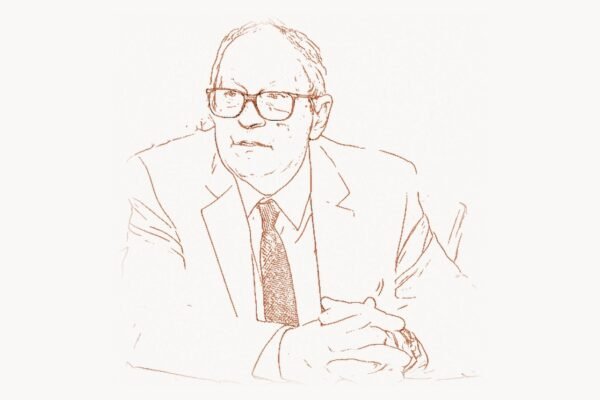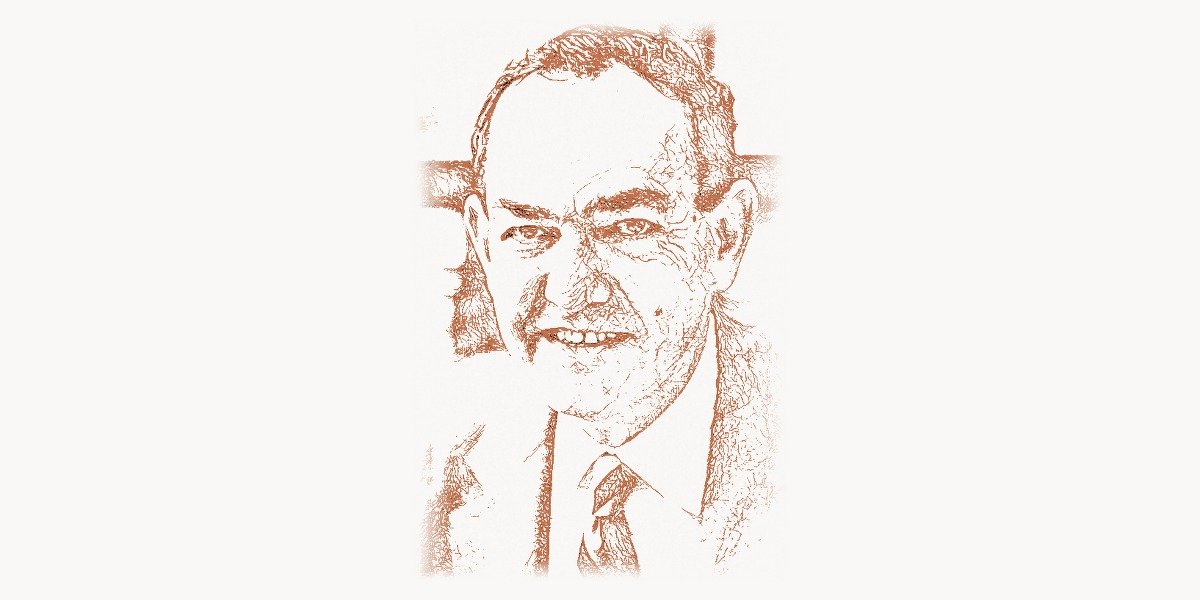
In 1956, a program called Logic Theorist proved a mathematical theorem from Bertrand Russell and Alfred North Whitehead’s Principia Mathematica — and did it more elegantly than the human authors themselves. The man behind that program was Herbert Alexander Simon, a polymath whose work stretched across artificial intelligence, cognitive psychology, economics, political science, and organizational theory. He won a Nobel Prize not for discovering a new particle or mapping a genome, but for showing that human decision-making is fundamentally bounded — limited by information, time, and cognitive capacity. Simon didn’t just theorize about thinking machines; he built them. And in doing so, he laid the intellectual foundations for entire fields that continue to shape our world today.
Early Life and Education
Herbert Alexander Simon was born on June 15, 1916, in Milwaukee, Wisconsin. His father, Arthur Simon, was an electrical engineer who had emigrated from Germany, and his mother, Edna Merkel Simon, was an accomplished pianist. The household was steeped in both technical and cultural influences — a combination that would define Herbert’s interdisciplinary instincts for the rest of his life.
Simon was a voracious reader from an early age. He attended Milwaukee’s public schools, where he excelled across subjects but showed particular fascination with science and social systems. His uncle, Harold Merkel, an economist, introduced him to the social sciences and planted seeds that would eventually grow into Simon’s revolutionary work on decision-making.
In 1933, Simon enrolled at the University of Chicago, where the interdisciplinary culture of the institution proved transformative. Rather than confining himself to a single department, he moved freely between political science, economics, mathematics, and logic. He studied under influential thinkers including Henry Schultz in econometrics and Rudolf Carnap in mathematical logic. Chicago’s intellectual environment — which encouraged crossing disciplinary boundaries — became a lifelong template for Simon’s approach to research.
Simon earned his bachelor’s degree in 1936 and immediately began graduate work in political science at Chicago, focusing on the study of administrative organizations. His doctoral dissertation, which would later become the book Administrative Behavior (1947), challenged the classical notion that organizations operate through fully rational decision-making. He received his PhD in 1943.
Career and the Birth of Artificial Intelligence
After completing his doctorate, Simon held positions at the University of California, Berkeley, and the Illinois Institute of Technology, where he began developing his theories of organizational decision-making. In 1949, he joined Carnegie Institute of Technology (now Carnegie Mellon University) in Pittsburgh, where he would remain for the rest of his career — over five decades of groundbreaking research.
It was at Carnegie that Simon’s career took its most dramatic turn. In the early 1950s, he began collaborating with Allen Newell, a researcher at the RAND Corporation, and programmer J.C. Shaw. Together, they set out to create a program that could actually think — or at least simulate human problem-solving in a meaningful way.
Technical Innovation
The result was the Logic Theorist, completed in 1955-1956. This program could prove theorems in propositional logic from Russell and Whitehead’s Principia Mathematica. It wasn’t a brute-force search; it used heuristics — rules of thumb — to guide its exploration of the proof space, much as a human mathematician would.
The Logic Theorist represented a fundamentally new idea: that intelligent behavior could be produced by manipulating symbolic representations according to rules. This was the birth of what became known as symbolic AI or the “physical symbol system hypothesis,” which Simon and Newell would later formalize.
To understand the approach, consider how the Logic Theorist explored a proof space using heuristic search rather than exhaustive enumeration:
# Simplified illustration of heuristic search in theorem proving
# Similar to the approach used by Logic Theorist (1956)

class TheoremProver:
    def __init__(self, axioms, rules_of_inference):
        self.axioms = axioms
        self.rules = rules_of_inference
        self.proven = set(axioms)

    def heuristic_score(self, expression, goal):
        """Estimate how 'close' an expression is to the goal.
        Logic Theorist used similarity metrics to prune search."""
        shared = len(set(expression) & set(goal))
        return shared / max(len(goal), 1)

    def prove(self, goal, max_depth=50):
        frontier = [(ax, [ax]) for ax in self.axioms]
        for step in range(max_depth):
            # Sort by heuristic — prioritize promising paths
            frontier.sort(
                key=lambda x: self.heuristic_score(x[0], goal),
                reverse=True
            )
            current, path = frontier.pop(0)
            if current == goal:
                return path  # Proof found
            # Apply rules of inference to generate new expressions
            for rule in self.rules:
                for derived in rule.apply(current, self.proven):
                    if derived not in self.proven:
                        self.proven.add(derived)
                        frontier.append((derived, path + [derived]))
        return None  # No proof found within depth limit
In the summer of 1956, Simon and Newell presented the Logic Theorist at the legendary Dartmouth Conference, organized by John McCarthy, Marvin Minsky, Nathaniel Rochester, and Claude Shannon. This conference is widely recognized as the founding event of artificial intelligence as a field. The Logic Theorist was the only working AI program demonstrated there.
Simon and Newell followed the Logic Theorist with the General Problem Solver (GPS) in 1957, an even more ambitious program designed to solve any problem that could be expressed as a well-formed set of initial conditions, operators, and goals. GPS introduced the concept of means-ends analysis — breaking a problem down by identifying the difference between the current state and the goal state, then selecting operators to reduce that difference.
Why It Mattered
The significance of Simon’s work in AI cannot be overstated. Before Logic Theorist and GPS, the idea that machines could exhibit intelligent behavior was science fiction. Simon and Newell demonstrated that it was engineering — difficult, incomplete, but real. Their physical symbol system hypothesis — the claim that a system capable of manipulating symbols has the necessary and sufficient means for general intelligent action — became the dominant paradigm in AI research for decades.
More fundamentally, Simon established the methodology of AI research: build computational models of cognitive processes, test them against human behavior, and refine them iteratively. This approach influenced generations of researchers, from early symbolic AI to the modern work of pioneers like Alan Turing, whose theoretical foundations Simon built upon directly, and later practitioners like Jeff Dean, who scaled computational intelligence to industrial dimensions.
Simon’s insistence on understanding how humans actually solve problems — rather than how they ideally should — connected AI directly to cognitive psychology and created the new field of cognitive science.
Other Major Contributions
What made Simon truly exceptional was the breadth of his contributions. He didn’t just pioneer AI — he reshaped multiple fields simultaneously.
Bounded Rationality and the Nobel Prize. Simon’s most famous theoretical concept is bounded rationality. Classical economics assumed that decision-makers have perfect information, unlimited computational ability, and always optimize. Simon showed this was nonsense. Real humans “satisfice” — they search for a solution that is good enough rather than optimal. This concept, developed in Administrative Behavior and later works, earned Simon the 1978 Nobel Memorial Prize in Economic Sciences.
Organizational Theory. Simon’s work on how organizations make decisions — his analysis of authority, communication channels, and the limits of rationality within bureaucracies — became foundational in management science and public administration. His ideas about organizational design continue to influence how modern tech companies structure their teams, making his work relevant to platforms like Toimi, which helps agencies manage project workflows efficiently.
Cognitive Psychology. With Newell, Simon developed the theory of human information processing. Their work on problem-solving, verbal protocols, and expert behavior helped establish cognitive psychology as a rigorous experimental science. The book Human Problem Solving (1972) remains a landmark text.
Information Processing Language (IPL). To build the Logic Theorist, Simon, Newell, and Shaw created IPL — one of the first list-processing programming languages. IPL introduced concepts like linked lists, dynamic memory allocation, and recursive functions that directly influenced John McCarthy’s development of Lisp and, through it, the entire functional programming tradition.
The design philosophy of IPL — treating data and programs as equivalent symbolic structures — was revolutionary:
;; IPL's influence on Lisp: symbolic list processing
;; IPL pioneered the idea that programs are data structures
;; that can be manipulated by other programs

;; A simple means-ends analysis in Lisp,
;; inspired by Simon & Newell's GPS approach

(defun solve (current-state goal operators)
  "Recursively reduce differences between current and goal state."
  (if (equal current-state goal)
      (list 'SOLVED current-state)
      (let ((diff (find-difference current-state goal)))
        (dolist (op operators)
          (when (reduces-difference-p op diff)
            (let ((new-state (apply-operator op current-state)))
              (when new-state
                (let ((result (solve new-state goal operators)))
                  (when result
                    (return
                      (cons (list 'APPLY op) result)))))))))))

;; This pattern of recursive goal reduction became
;; central to AI planning systems for decades
Expert Systems and Production Rules. Simon’s later work on expert behavior and the nature of expertise contributed to the development of production rule systems — the basis for expert systems that became commercially important in the 1980s. His research showed that experts rely on large stores of pattern-chunk associations built through roughly ten years of deliberate practice (the “10-year rule”), a finding that influenced fields from education to modern AI research.
Philosophy and Approach
Simon was not just a technician or theorist — he was a deeply philosophical thinker about the nature of knowledge, complexity, and the scientific enterprise itself. His 1969 book The Sciences of the Artificial introduced the concept of “sciences of the artificial” — disciplines that study human-made systems as opposed to natural phenomena. This framing gave intellectual legitimacy to computer science, management science, and design as fields worthy of the same rigor as physics or biology.
Key Principles
- Satisficing over optimizing. In a world of limited information and cognitive capacity, seeking a “good enough” solution is not laziness — it is rationality. This principle applies to human decisions, organizational strategy, and algorithm design alike.
- The ant on the beach. Simon’s famous parable compared human behavior to an ant walking on a beach. The ant’s path appears complex, but the complexity lies in the environment, not the ant. Similarly, much of the apparent complexity of human behavior arises from the environment, not from complex internal mechanisms.
- Near-decomposability. Complex systems are hierarchically organized into semi-independent subsystems. This architectural principle — which Simon called “near-decomposability” — applies to biological organisms, social organizations, and software systems. It anticipates modern microservice architectures and modular design patterns used in tools like Taskee for managing complex project breakdowns.
- Empiricism in AI. Simon insisted that AI claims should be tested against empirical data about human cognition. He rejected both pure formalism disconnected from reality and vague speculation disconnected from implementation.
- Interdisciplinary thinking as necessity. Simon believed that the most important problems sit at the boundaries between disciplines. His own career — spanning economics, political science, psychology, computer science, and philosophy — was living proof of this conviction.
- Attention as the scarce resource. Decades before the attention economy became a buzzword, Simon observed that in an information-rich world, the scarce resource is not information but attention. This insight is profoundly relevant to modern challenges of information overload.
Legacy and Impact
Herbert Simon’s influence radiates through virtually every domain of contemporary technology and social science. In artificial intelligence, his symbolic approach dominated the field for its first three decades and continues to inform hybrid AI systems that combine neural networks with symbolic reasoning — a direction many researchers, including those building on work by Ashish Vaswani and Kyunghyun Cho, are now revisiting.
His concept of bounded rationality transformed economics and spawned behavioral economics — the field later popularized by Daniel Kahneman and Amos Tversky, who explicitly acknowledged Simon’s foundational influence. The Nobel committee recognized Simon precisely because his work demolished the fiction of the perfectly rational economic agent, replacing it with something far more realistic and useful.
In computer science, the programming concepts pioneered in IPL — list processing, dynamic memory, recursion — became the bedrock of languages like Lisp, which in turn influenced the development of every modern programming language. The problem-solving methods from GPS evolved into the planning algorithms used in robotics, logistics, and game AI. Researchers like Rob Pike, who designed modern systems programming languages, inherited a lineage of language design thinking that traces back through Lisp to Simon’s IPL.
Simon’s organizational theory continues to shape management practice. His analysis of how information flows through hierarchies, how decisions get made under uncertainty, and how organizations can be designed for better outcomes is standard curriculum in every MBA program. Modern agile methodologies and decentralized organizational structures owe a debt to Simon’s insights about the limits of centralized rational planning.
Perhaps most importantly, Simon demonstrated that one mind, if sufficiently disciplined and curious, could make fundamental contributions across multiple fields. He received the ACM Turing Award in 1975 (with Newell), the Nobel Prize in Economics in 1978, the National Medal of Science in 1986, and the American Psychological Association’s Award for Outstanding Lifetime Contributions to Psychology in 1993 — a breadth of recognition unlikely ever to be matched.
Herbert Simon passed away on February 9, 2001, in Pittsburgh, at the age of 84. He left behind not just theories and programs, but entire fields of human inquiry that would not exist in their current form without his work.
Key Facts
- Full name: Herbert Alexander Simon
- Born: June 15, 1916, Milwaukee, Wisconsin, USA
- Died: February 9, 2001, Pittsburgh, Pennsylvania, USA
- Education: BA (1936) and PhD (1943), University of Chicago
- Known for: Bounded rationality, Logic Theorist, General Problem Solver, satisficing, Sciences of the Artificial
- Awards: ACM Turing Award (1975), Nobel Prize in Economics (1978), National Medal of Science (1986), APA Lifetime Contribution Award (1993)
- Languages created: Information Processing Language (IPL), co-developed with Newell and Shaw
- Key collaborator: Allen Newell (co-creator of Logic Theorist, GPS, and the physical symbol system hypothesis)
- Primary institution: Carnegie Mellon University (1949–2001)
- Major publications: Administrative Behavior (1947), Human Problem Solving (1972), The Sciences of the Artificial (1969)
FAQ
What is bounded rationality and why does it matter?
Bounded rationality is Herbert Simon’s concept that human decision-making is limited by available information, cognitive capacity, and time constraints. Unlike classical economic theory, which assumed people always make optimal choices, Simon showed that people “satisfice” — they search for solutions that are satisfactory and sufficient rather than perfect. This idea matters because it provides a far more realistic model of how people, organizations, and even AI systems actually operate. It influenced the rise of behavioral economics and remains central to understanding decision-making in fields from public policy to user experience design.
How did Herbert Simon contribute to the founding of artificial intelligence?
Simon, along with Allen Newell and J.C. Shaw, created the Logic Theorist in 1955-1956 — widely considered the first artificial intelligence program. They presented it at the 1956 Dartmouth Conference, the founding event of AI as a discipline. Simon and Newell then developed the General Problem Solver (GPS), which introduced means-ends analysis. Their “physical symbol system hypothesis” — the idea that symbol manipulation is both necessary and sufficient for intelligence — became the dominant paradigm in AI research for decades. Simon also co-received the 1975 Turing Award for these foundational contributions.
What is the difference between the Logic Theorist and the General Problem Solver?
The Logic Theorist (1956) was designed specifically to prove theorems in propositional logic. It used heuristic search to find proofs from Russell and Whitehead’s Principia Mathematica. The General Problem Solver (1957) was far more ambitious — it was designed as a universal problem-solving architecture that could handle any problem expressible as an initial state, a goal state, and a set of operators. GPS introduced means-ends analysis, where the system identifies differences between current and goal states and selects operators to reduce those differences. While neither system achieved truly general intelligence, GPS pioneered problem-solving architectures that influenced AI planning and search for decades.
Why did Herbert Simon win the Nobel Prize in Economics rather than a science prize?
Simon won the 1978 Nobel Memorial Prize in Economic Sciences for his theory of bounded rationality and his pioneering research on the decision-making process within economic organizations. The Nobel committee recognized that his work fundamentally challenged the standard economic assumption of perfect rationality and replaced it with a more empirically grounded understanding of how economic actors actually behave. While Simon also made foundational contributions to computer science and AI (recognized by the Turing Award), there is no Nobel Prize for computer science. His economic work was considered independently worthy of the highest recognition because it transformed how economists model human behavior and organizational dynamics.