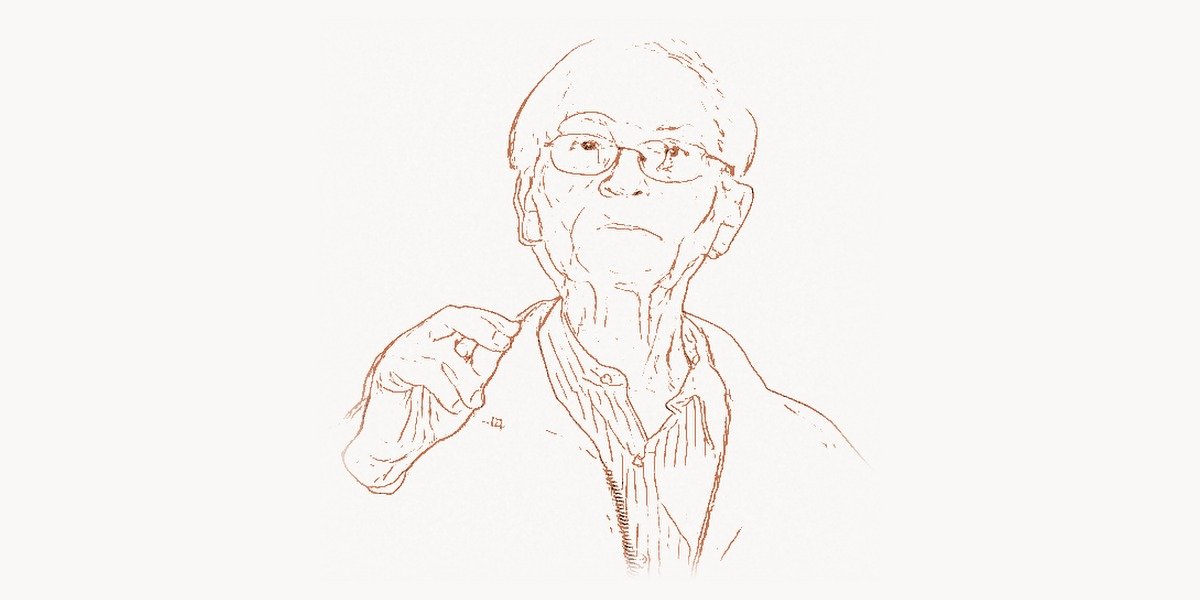
Every time you download a ZIP file, open a PNG image, stream a video, or browse a website, you are relying on technology that traces directly back to one man’s groundbreaking insight. Jacob Ziv, alongside his colleague Abraham Lempel, fundamentally transformed how computers handle data by proving that it was possible to compress information without any prior knowledge of its statistical properties. Before their work, compression algorithms demanded that engineers study data sources in advance and build custom encoding tables. Ziv and Lempel demolished that limitation, creating a family of algorithms — LZ77 and LZ78 — that learn the structure of data on the fly. These algorithms became the invisible foundation of the digital world, embedded in standards from GIF and PNG to gzip and DEFLATE. Ziv’s contributions to information theory earned him the IEEE Richard W. Hamming Medal, the Israel Prize, and ultimately the 2021 IEEE Medal of Honor, placing him among the most consequential figures in the history of computing.
Early Life and Academic Formation in Israel
Jacob Ziv was born on November 27, 1931, in Tiberias, during the British Mandate for Palestine. Growing up in a region undergoing profound political and social transformation, Ziv developed an early fascination with mathematics and the physical sciences. He pursued his undergraduate education at the Technion — Israel Institute of Technology in Haifa, earning a degree in electrical engineering in 1954. The Technion would become not just his alma mater but the institution with which his entire career would be intertwined.
After completing his undergraduate studies, Ziv served in the Israel Defense Forces, working on communications systems — an experience that gave him firsthand exposure to the practical challenges of transmitting information reliably across noisy channels. This military background in signal processing would deeply influence his later theoretical work, grounding it in real-world engineering problems rather than pure abstraction.
Ziv then traveled to the United States to pursue graduate studies at the Massachusetts Institute of Technology, where he earned his Doctor of Science degree in 1962. At MIT, he immersed himself in the rapidly evolving field of information theory, a discipline that Claude Shannon had essentially created just over a decade earlier with his landmark 1948 paper. Shannon’s work established the theoretical limits of data compression and reliable communication, but the practical question of how to approach those limits efficiently remained wide open. Ziv returned to the Technion determined to tackle exactly that challenge.
The State of Data Compression Before Ziv
To appreciate the magnitude of Ziv’s contributions, it helps to understand what data compression looked like in the 1960s and early 1970s. The dominant approach was rooted in Shannon’s information theory: analyze the statistical properties of a data source, then assign shorter codes to more frequent symbols and longer codes to less frequent ones. David Huffman’s 1952 algorithm was the gold standard — it produced optimal prefix-free codes for a known probability distribution.
The problem was the word “known.” Huffman coding and similar methods required a two-pass approach or prior statistical knowledge. You either needed to scan the entire data source first to build a frequency table, or you needed to assume a particular statistical model. For many practical applications — compressing arbitrary files, transmitting data in real time, handling sources whose statistics changed over time — these requirements were serious obstacles. Engineers needed something that could adapt on the fly, that could compress data from sources it had never seen before, and that could still approach the theoretical limits Shannon had identified.
This was the problem that consumed Jacob Ziv through the 1970s, and his solution would change everything. His approach drew on deep theoretical insights about what Alan Turing and others had established about the nature of computation and algorithmic complexity, but translated those insights into practical, implementable algorithms.
LZ77: The Sliding Window Revolution
In 1977, Jacob Ziv and Abraham Lempel published their first landmark paper, “A Universal Algorithm for Sequential Data Compression,” in the IEEE Transactions on Information Theory. The algorithm described in this paper, now universally known as LZ77, introduced a radically different approach to compression: instead of relying on statistical models, it exploited the repetitive structure inherent in most real-world data.
The core idea of LZ77 is the sliding window. The algorithm maintains a buffer of recently processed data (the “search buffer” or “dictionary”) and a look-ahead buffer containing data yet to be compressed. At each step, it searches the dictionary for the longest match to the current look-ahead data. If it finds a match, it encodes the data as a reference — a (distance, length) pair pointing back to the earlier occurrence — rather than storing the raw bytes. If no match is found, it outputs the literal symbol.
What made this revolutionary was the concept of universality. Ziv and Lempel proved mathematically that their algorithm would asymptotically achieve the entropy rate of any stationary ergodic source — meaning it would eventually compress data as efficiently as theoretically possible, without ever being told anything about the source’s statistical properties. The algorithm learned the structure of the data purely from the data itself.
The following code block illustrates the core LZ77 encoding logic, showing how the sliding window search identifies repeated patterns and encodes them as back-references:
def lz77_encode(data, window_size=4096, lookahead_size=18):
    """
    LZ77 encoder using a sliding window approach.
    Outputs a list of (offset, length, next_char) tuples.

    Jacob Ziv and Abraham Lempel's 1977 insight: replace repeated
    byte sequences with pointers to earlier occurrences, enabling
    universal compression without prior source statistics.
    """
    encoded = []
    position = 0

    while position < len(data):
        best_offset = 0
        best_length = 0

        # Define the search window boundaries
        search_start = max(0, position - window_size)
        search_end = position
        lookahead_end = min(position + lookahead_size, len(data))

        # Scan the search buffer for the longest match
        for offset_start in range(search_start, search_end):
            match_length = 0
            while (position + match_length < lookahead_end
                   and data[offset_start + match_length] == data[position + match_length]):
                match_length += 1
                # Allow matches that extend into the lookahead buffer
                # (enables run-length-like encoding of repeats)
                if offset_start + match_length >= search_end:
                    break

            if match_length > best_length:
                best_length = match_length
                best_offset = position - offset_start

        # Output: (distance_back, match_length, next_literal_character)
        if best_length > 0 and position + best_length < len(data):
            next_char = data[position + best_length]
            encoded.append((best_offset, best_length, next_char))
            position += best_length + 1
        else:
            # No match found — emit literal byte
            next_char = data[position]
            encoded.append((0, 0, next_char))
            position += 1

    return encoded


# Demonstration with a repetitive string
sample = "AABABCABABCABABCABD"
result = lz77_encode(sample.encode(), window_size=16, lookahead_size=8)
for i, (offset, length, char) in enumerate(result):
    symbol = chr(char) if isinstance(char, int) else char
    if length > 0:
        print(f"Token {i}: back {offset}, copy {length}, then '{symbol}'")
    else:
        print(f"Token {i}: literal '{symbol}'")
This deceptively simple mechanism — searching backward for repeated patterns — became the backbone of an enormous number of compression formats. The DEFLATE algorithm used in gzip, ZIP files, and PNG images is built directly on LZ77 combined with Huffman coding. When Tim Berners-Lee and others designed the protocols of the World Wide Web, gzip compression became a standard part of HTTP, meaning that LZ77 derivatives now compress a significant fraction of all internet traffic.
LZ78: Dictionary-Based Compression
Just one year later, in 1978, Ziv and Lempel published their second seminal paper: “Compression of Individual Sequences via Variable-Rate Coding.” This algorithm, known as LZ78, took a fundamentally different approach to the same problem. Instead of using a sliding window over recent data, LZ78 builds an explicit dictionary of phrases encountered during compression.
The LZ78 algorithm starts with an empty dictionary. As it processes the input, it identifies the longest string already present in the dictionary that matches the current input. It then outputs a pair: the dictionary index of that matching string and the next character that follows it. The concatenation of the matched string and the new character is added to the dictionary as a new phrase. Over time, the dictionary grows to capture increasingly long repeated patterns.
The elegance of LZ78 lies in its deterministic dictionary construction. Both the encoder and decoder build identical dictionaries from the data stream alone, so the dictionary never needs to be transmitted or stored separately. This property made LZ78 particularly attractive for real-time applications where simplicity and speed mattered.
The following code demonstrates the LZ78 dictionary-building process and how phrases are incrementally constructed during encoding:
def lz78_encode(data):
    """
    LZ78 encoder — builds an explicit phrase dictionary
    from input data, as described in Ziv & Lempel's 1978 paper.

    The dictionary grows incrementally: each new entry extends
    a previously seen phrase by one symbol. This enables the
    algorithm to capture arbitrarily long repeated patterns
    without any fixed window size.

    Returns a list of (dict_index, symbol) pairs where
    dict_index=0 means no prior match (new single character).
    """
    dictionary = {}     # Maps phrase → index
    dict_size = 1       # Next available dictionary index
    encoded_output = []

    current_phrase = ""

    for symbol in data:
        candidate = current_phrase + symbol

        if candidate in dictionary:
            # Extend the current match — keep looking
            # for a longer phrase in the dictionary
            current_phrase = candidate
        else:
            # Output the index of the longest matched prefix
            # plus the new symbol that breaks the match
            if current_phrase == "":
                prefix_index = 0
            else:
                prefix_index = dictionary[current_phrase]

            encoded_output.append((prefix_index, symbol))

            # Add the new extended phrase to the dictionary
            dictionary[candidate] = dict_size
            dict_size += 1

            # Reset — start matching from scratch
            current_phrase = ""

    # Handle any remaining partial match at end of input
    if current_phrase != "":
        encoded_output.append((dictionary[current_phrase], ""))

    return encoded_output, dictionary


# Example: compressing a string with repeated substrings
text = "ABABCBABABCABABABABCBA"
tokens, phrase_dict = lz78_encode(text)

print("LZ78 Encoding Results:")
print(f"Original length: {len(text)} symbols")
print(f"Encoded tokens:  {len(tokens)} pairs")
print(f"Dictionary size: {len(phrase_dict)} phrases\n")

print("Step | Output Token | New Dictionary Entry")
print("-" * 50)
for i, (idx, sym) in enumerate(tokens):
    entry_num = i + 1
    if idx == 0:
        prefix_str = ""
    else:
        # Reverse lookup for display purposes
        prefix_str = [k for k, v in phrase_dict.items() if v == idx][0]
    new_phrase = prefix_str + sym
    print(f"  {entry_num:2d} | ({idx:2d}, '{sym}')      | {entry_num}: \"{new_phrase}\"")
In 1984, Terry Welch published a practical variant of LZ78 called LZW (Lempel-Ziv-Welch), which simplified the output format by eliminating the explicit symbol from each token. LZW became the basis for the GIF image format and the Unix compress utility, bringing Ziv and Lempel’s theoretical work into millions of homes and offices. The GIF format alone, despite its relative simplicity, remains one of the most widely used image formats on the internet decades later.
Theoretical Foundations: Universal Source Coding
While the practical impact of LZ77 and LZ78 is enormous, Ziv’s contributions to the theoretical foundations of data compression are equally profound. Throughout his career, he developed rigorous mathematical frameworks for understanding what it means to compress data optimally without prior knowledge of the source.
Ziv’s work on universal source coding established that it is possible to design a single compression algorithm that performs asymptotically as well as the best possible algorithm designed for any specific stationary ergodic source. This is a remarkable result: it means you do not need to know the statistics of your data in advance. A universal compressor will eventually figure out the structure on its own and compress accordingly.
This theoretical result connected deeply to the work of Claude Shannon on entropy rates and channel capacity. Shannon had shown that the entropy rate sets a fundamental lower bound on the average number of bits needed per symbol. Ziv proved that his algorithms could approach this bound without the encoder having access to the source’s probability distribution — a result that was far from obvious and required sophisticated mathematical machinery from ergodic theory and combinatorics.
Ziv also made significant contributions to the related problem of universal hypothesis testing and to the theory of finite-state compressibility. His notion of compressibility for individual sequences — as opposed to probabilistic ensembles — provided a more robust framework for analyzing real-world data, which rarely conforms neatly to idealized statistical models. This individual-sequence perspective influenced later work in algorithmic information theory and Kolmogorov complexity, domains explored by researchers such as Donald Knuth in the context of algorithm analysis.
Career at the Technion and Leadership
Jacob Ziv spent virtually his entire academic career at the Technion, where he rose through the ranks to become a full professor and eventually served as Dean of the Faculty of Electrical Engineering. Under his leadership, the Technion’s electrical engineering department became one of the most respected programs in the world, particularly in the areas of information theory, signal processing, and communications.
Ziv’s influence extended well beyond the classroom. He mentored generations of students who went on to make their own significant contributions to information theory and related fields. His collaborative approach to research — exemplified by his partnership with Abraham Lempel — fostered an environment at the Technion where theoretical rigor and practical application were not seen as opposing forces but as complementary aspects of good engineering.
He also spent periods as a visiting researcher at Bell Laboratories in the United States, where he interacted with many of the leading figures in communications theory. Bell Labs during this era was a remarkable concentration of talent in information theory and signal processing, and Ziv’s time there enriched both his own work and the broader research community. The cross-pollination between Israeli and American research institutions that Ziv helped facilitate proved enormously productive for the field.
Beyond academia, Ziv served on numerous advisory boards and committees for the Israeli government and military, applying his expertise in communications theory to national defense challenges. His ability to bridge the gap between abstract mathematical theory and pressing engineering problems made him an invaluable advisor. The tools and techniques that modern development teams use to manage and optimize software delivery — such as the project management methodologies described at toimi.pro — ultimately depend on the efficient data transmission infrastructure that Ziv’s algorithms made possible.
The Impact: Where LZ Compression Lives Today
The practical legacy of Ziv’s work is almost impossible to overstate. LZ-family algorithms and their descendants are embedded so deeply in modern computing infrastructure that most users interact with them dozens or hundreds of times per day without any awareness.
File Compression and Archiving
The ZIP file format, created by Phil Katz in 1989, uses the DEFLATE algorithm — a combination of LZ77 and Huffman coding. ZIP remains one of the most widely used archive formats in the world. The gzip utility, which uses the same DEFLATE algorithm, is a standard tool on virtually every Unix-like operating system. The 7z format uses LZMA (Lempel-Ziv-Markov chain Algorithm), another direct descendant of LZ77. When Linus Torvalds built Git, he chose zlib (a DEFLATE implementation) as the compression layer for object storage, meaning that every Git repository in the world relies on Ziv’s algorithms.
Image Formats
The GIF format uses LZW compression. The PNG format, designed as a patent-free alternative to GIF, uses DEFLATE. The TIFF format supports LZW compression as an option. Even modern image formats like WebP incorporate LZ77-based techniques in their compression pipelines.
Web and Network Protocols
HTTP compression, which reduces the size of web pages, JavaScript files, CSS stylesheets, and API responses transmitted between servers and browsers, relies overwhelmingly on gzip and its successor Brotli — both of which are LZ77-based. The HTTP/2 protocol uses HPACK header compression, which incorporates Huffman coding but operates within an ecosystem built on LZ-based content compression. Modern teams building web applications frequently analyze compression efficiency as part of their delivery optimization workflows — an area where platforms like taskee.pro help coordinate the complex interplay of performance, deployment, and quality assurance tasks.
Operating Systems and Firmware
The Linux kernel uses LZ-family algorithms extensively: LZO and LZ4 for real-time compression of file systems (Btrfs, ZFS), zlib for in-kernel networking, and LZMA for initial ramdisk compression. Windows uses LZ-based compression for its NTFS file system compression feature and for the Cabinet (.cab) archive format used in software distribution. Even embedded systems and firmware updates typically use LZ-based compression to minimize storage requirements.
Awards, Recognition, and Legacy
Jacob Ziv received virtually every major award available in his field. He was awarded the Israel Prize in Exact Sciences in 1993, Israel’s highest civilian honor. The IEEE recognized him with the Richard W. Hamming Medal in 1995 for his exceptional contributions to information sciences. In 2021, at the age of 89, he received the IEEE Medal of Honor — the organization’s highest award — for his fundamental contributions to information theory and data compression technology.
Ziv was elected a member of the Israel Academy of Sciences and Humanities, a foreign associate of the United States National Academy of Engineering, and a foreign member of the National Academy of Sciences. He was an IEEE Life Fellow and received numerous honorary doctorates. The breadth of these recognitions reflects the dual nature of his contributions: theoretically profound and practically transformative.
His legacy extends through the researchers he trained and influenced. The information theory group at the Technion, which Ziv built over decades, continues to produce world-class research. His former students and collaborators hold positions at leading universities and research laboratories around the world, carrying forward his commitment to rigorous, practical information theory.
Jacob Ziv passed away on March 25, 2023, at the age of 91. The tributes that poured in from the global information theory community reflected not just admiration for his intellectual achievements but deep affection for the man himself — consistently described as generous, humble, and deeply committed to mentoring the next generation. In an era when the algorithms that shape our digital lives are often taken for granted, Ziv’s work stands as a reminder that the most impactful innovations are sometimes the most invisible ones.
Ziv’s Approach to Research: Lessons for Modern Engineers
What set Jacob Ziv apart was not just brilliance but a distinctive approach to research that combined theoretical depth with relentless attention to practical applicability. He did not pursue elegant mathematics for its own sake, nor did he chase incremental engineering improvements. Instead, he identified fundamental problems — like the need for universal compression — and developed solutions that were simultaneously theoretically optimal and practically implementable.
This approach offers valuable lessons for modern software engineers and researchers. In an era of increasing specialization, Ziv’s career demonstrates the power of deep engagement with both theory and practice. His algorithms succeeded not because they were the most mathematically sophisticated compression schemes conceivable, but because they achieved an extraordinary balance between compression efficiency, computational simplicity, and generality. The LZ algorithms work well on virtually any kind of data, run in linear time, and require modest memory — properties that made them suitable for embedding in everything from tiny microcontrollers to massive data centers.
The spirit of Ziv’s work — finding simple, general solutions to fundamental problems — resonates with the philosophy of pioneers like Edsger Dijkstra, who championed elegance and clarity in algorithm design, and Brian Kernighan, who advocated for simplicity and practicality in software engineering. Ziv belonged to a generation of researchers who proved that the most powerful ideas are often the most understandable ones.
Frequently Asked Questions
What is the difference between LZ77 and LZ78?
LZ77 uses a sliding window over recently processed data to find repeated patterns, encoding matches as (offset, length) pairs that point backward in the data stream. LZ78 takes a different approach by building an explicit dictionary of phrases encountered during compression, encoding matches as (dictionary index, next symbol) pairs. LZ77 tends to be more memory-efficient since it only maintains a fixed-size window, while LZ78 can capture longer-range repetitions through its growing dictionary. In practice, LZ77 derivatives like DEFLATE have become more widely used in modern compression formats, while LZ78’s variant LZW found success in formats like GIF.
Why are LZ algorithms considered “universal” compressors?
Ziv and Lempel proved mathematically that their algorithms achieve the entropy rate of any stationary ergodic source as the input length grows toward infinity. This means the algorithms will eventually compress data as efficiently as theoretically possible for any data source, without requiring any prior knowledge of the source’s statistical properties. The compressor learns the structure of the data purely from the data itself, making it “universal” in the sense that a single algorithm works optimally across all well-behaved data sources. This was a groundbreaking result because earlier compression methods like Huffman coding required explicit knowledge of symbol probabilities.
Which modern file formats and tools use LZ compression?
LZ-family algorithms are pervasive in modern computing. ZIP and gzip use DEFLATE, which combines LZ77 with Huffman coding. The PNG image format also uses DEFLATE. GIF uses LZW, a variant of LZ78. The 7z archive format uses LZMA, an advanced LZ77 derivative. Git uses zlib for object storage. Web servers use gzip and Brotli (an LZ77-based algorithm from Google) for HTTP compression. The Linux kernel uses LZ4 and LZO for file system and memory compression. Virtually every modern operating system, web browser, and network protocol relies on some form of LZ compression.
What was Jacob Ziv’s most important contribution beyond the LZ algorithms?
Beyond the LZ algorithms themselves, Ziv’s most significant contribution was establishing the theoretical framework for universal source coding. He developed rigorous mathematical proofs showing that it is possible to compress data optimally without prior knowledge of the data source — a result that had profound implications for information theory, communications engineering, and computer science. He also contributed to universal hypothesis testing, finite-state compressibility, and the theory of individual sequence compression, which provided alternatives to purely probabilistic models of data. His theoretical work gave the field a solid mathematical foundation that continues to guide research in data compression and information theory.
How did Ziv and Lempel’s collaboration work?
Jacob Ziv and Abraham Lempel were both professors at the Technion — Israel Institute of Technology, where they worked in the Department of Electrical Engineering. Their collaboration was remarkable for its productivity and complementary strengths. The two published their landmark papers in 1977 and 1978, developing the algorithms through a process of deep theoretical discussion and rigorous mathematical proof. By convention, the algorithms are called “LZ” (Lempel-Ziv) with Lempel’s name first alphabetically, though Ziv is generally regarded as the senior author and the driving force behind the theoretical framework of universal compression. Their partnership exemplifies how sustained collaboration between researchers with shared values but different perspectives can produce work far greater than either could achieve alone.